
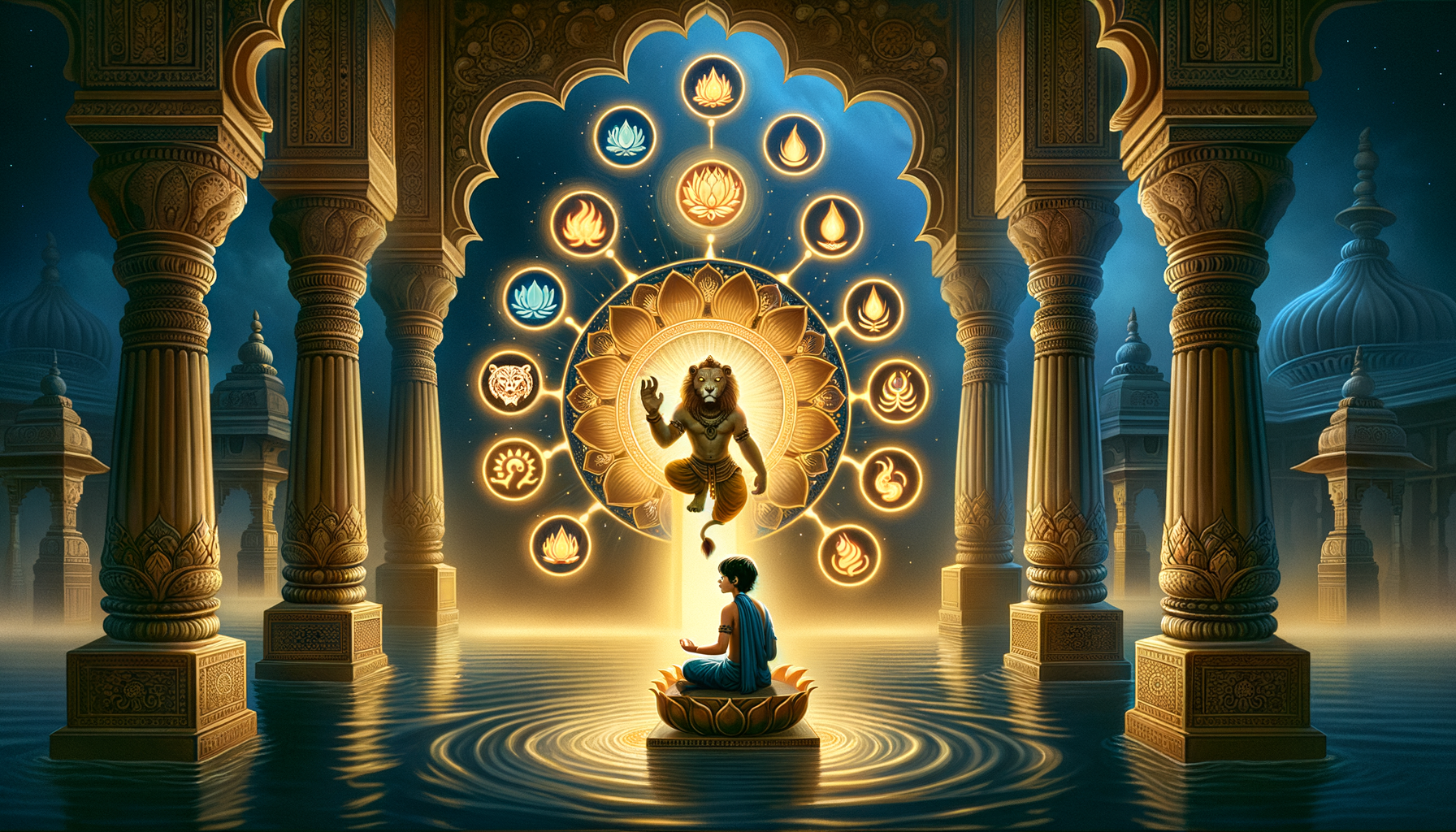
The narrative of Prahlada’s unwavering bhakti and Lord Vishnu’s steadfast protection stands as a luminous testimony to dharma and divine grace. Preserved in the Vishnu Purana, this account portrays how the asura king Hiranyakashipu, enraged by his son’s devotion to Lord Vishnu, launched eighteen distinct attempts to end Prahlada’s lifeeach one countered by the Lord’s compassionate intervention.
According to the Vishnu Purana (often referenced as Chapter 13 in several editions), the king’s campaigns ranged from sorcery to brute force. Hearing of Kritya’s failurea magical entity conjured to harm the childHiranyakashipu escalated the violence. Tradition further recounts that in the ensuing turmoil even the teachers were slain, only to be restored through Prahlada’s prayerful invocation, underscoring the protecting presence of Lord Vishnu.
The attempted slayings, remembered across regions and retellings, included poisoning, exposure to venomous serpents, casting into fire, submerging in water, hurling from heights, trampling by elephants, starvation, and assaults with weapons. Enchantments and malevolent mantras were also deployed. While the exact enumeration varies in different puranic recensions, the devotional memory of “eighteen attempts” emphasizes the breadth of perils surmounted through divine protection.
Each ordeal reveals a consistent thread: Prahlada’s serenity before danger and Lord Vishnu’s unobtrusive yet decisive guardianship. The child neither retaliated nor wavered; his bhakti transformed fear into fearlessness, presenting a living lesson in the supremacy of dharma over adharma.
The drama culminates in the iconic manifestation of Lord NarasimhaVishnu’s man-lion avatarfrom a palace pillar at twilight, on the threshold, beyond the bounds of day or night, inside or outside, weapon or no weapon. Hiranyakashipu’s tyranny ended, and the cosmic order was reasserted without transgressing the boons that once seemed to shield him from justice.
Beyond its theological depth, the story resonates emotionally with seekers who face moral trials. It suggests that inner alignment with truthexpressed here as devotion to Lord Vishnuanchors courage amid uncertainty. For many, Prahlada’s calm becomes a mirror for practicing steadiness in daily life when confronted by pressure, conflict, or doubt.
This message harmonizes with the broader ethos shared across dharmic traditionsHinduism, Buddhism, Jainism, and Sikhismthat esteem truthfulness, compassion, self-mastery, and moral courage. The emphasis on ethical resilience and non-sectarian virtue invites unity rather than division, encouraging communities to recognize shared values that uplift society.
Ritually and culturally, the tale shapes observances such as Holika Dahan during Holi and Narasimha Jayanti, reminding families and communities that righteousness is ultimately safeguarded. In classrooms, temples, and homes, the account of Prahlada offers a contemplative framework: steadfast devotion, ethical clarity, and trust in the protective power of the Divine.
In sum, the Vishnu Purana’s remembrance of these eighteen rescues is not merely hagiography; it is a study in applied dharma. By illustrating how bhakti informs courage and how grace accompanies integrity, the story continues to guide those seeking inner stability and compassionate strength in an ever-changing world.
Inspired by this post on Hindu Pad.
