
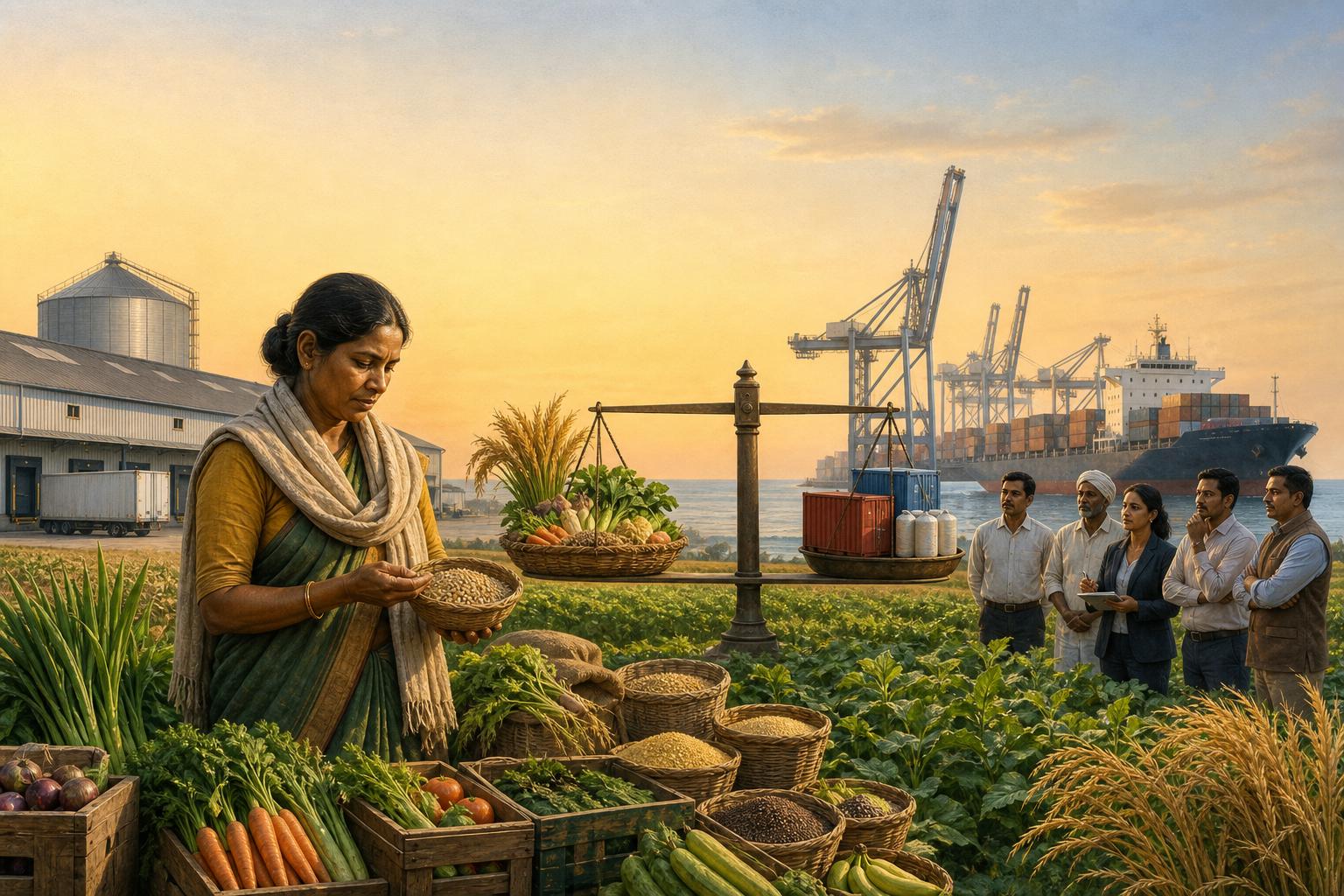
If you are trying to decide whether India should offer greater agricultural access to secure a wider agreement with the United States, the usual choice between free trade and protectionism will mislead you. A cheaper shipment can help a buyer today while weakening local production, farmer bargaining power, or food resilience tomorrow.
The useful question is narrower: which agricultural products can India open to greater competition, under what conditions, and only after which domestic weaknesses have been repaired? That test allows India to trade without treating food security and rural livelihoods as bargaining chips.
Food security changes the negotiating logic
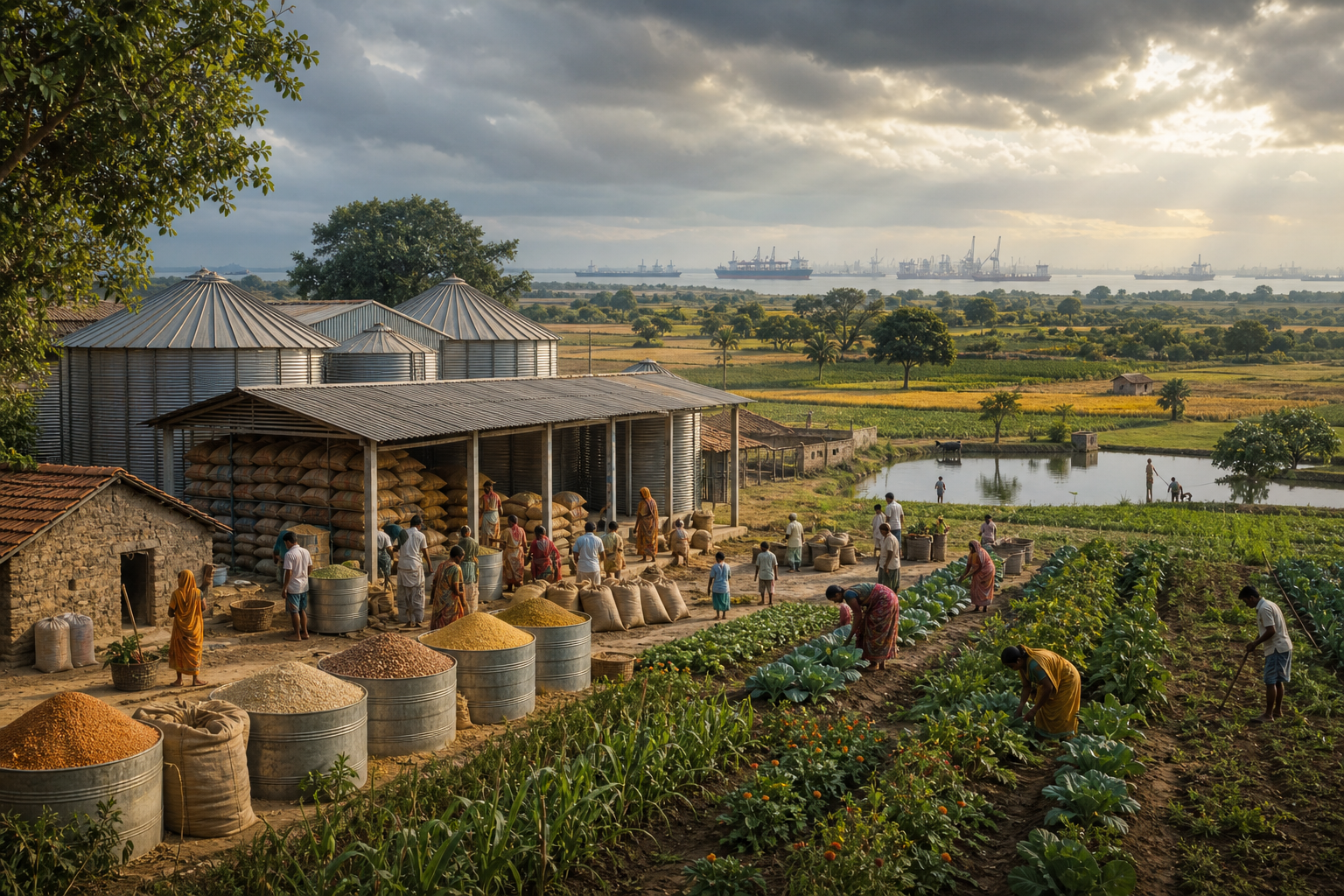
India’s caution did not arise from an abstract dislike of imports. After independence, the country faced famine, weak agricultural capacity, and dependence on global food aid. Building the ability to feed the population was a difficult national achievement. The memory of PL-480 therefore matters because it represents a period when food supply, foreign assistance, and national dependence became uncomfortably entangled.
That history does not prove that every import creates dependence. India can import food without surrendering sovereignty, just as domestic production alone cannot eliminate every disruption. But it does establish a sensible burden of proof: greater market access should strengthen the food system, or at least leave its essential capacity intact.
Agriculture also carries a social consequence that negotiations over many manufactured products do not. It sustains large numbers of people with limited financial protection. When lower-priced imports enter a market, consumers may see an immediate benefit, but losses can be concentrated among producers whose incomes are already fragile. A tariff concession is therefore also a decision about who absorbs economic risk.
Before supporting a concession, ask four concrete questions. Is the affected product important to India’s basic food resilience? Would the import fill a genuine gap or permanently displace viable domestic production? Can local farmers adapt without taking an income shock they cannot survive? If overseas supply is interrupted, can Indian production recover? A proposal that cannot answer these questions is not ready for approval merely because it promises a larger trade total.
Protection is defensible only when it builds capacity
Tariffs raise the cost of imports at the border. Non-tariff barriers regulate entry through standards, conditions, approvals, or administrative procedures. The United States has pressed India to reduce significant agricultural barriers, while India has treated those barriers as protection for a sensitive domestic system.
Protection can create breathing room, but breathing room is useful only when something is built inside it. An indefinite barrier can preserve inefficient supply chains just as easily as it can protect a vulnerable farmer. It can also benefit traders or entrenched intermediaries without delivering a stronger price to the cultivator.
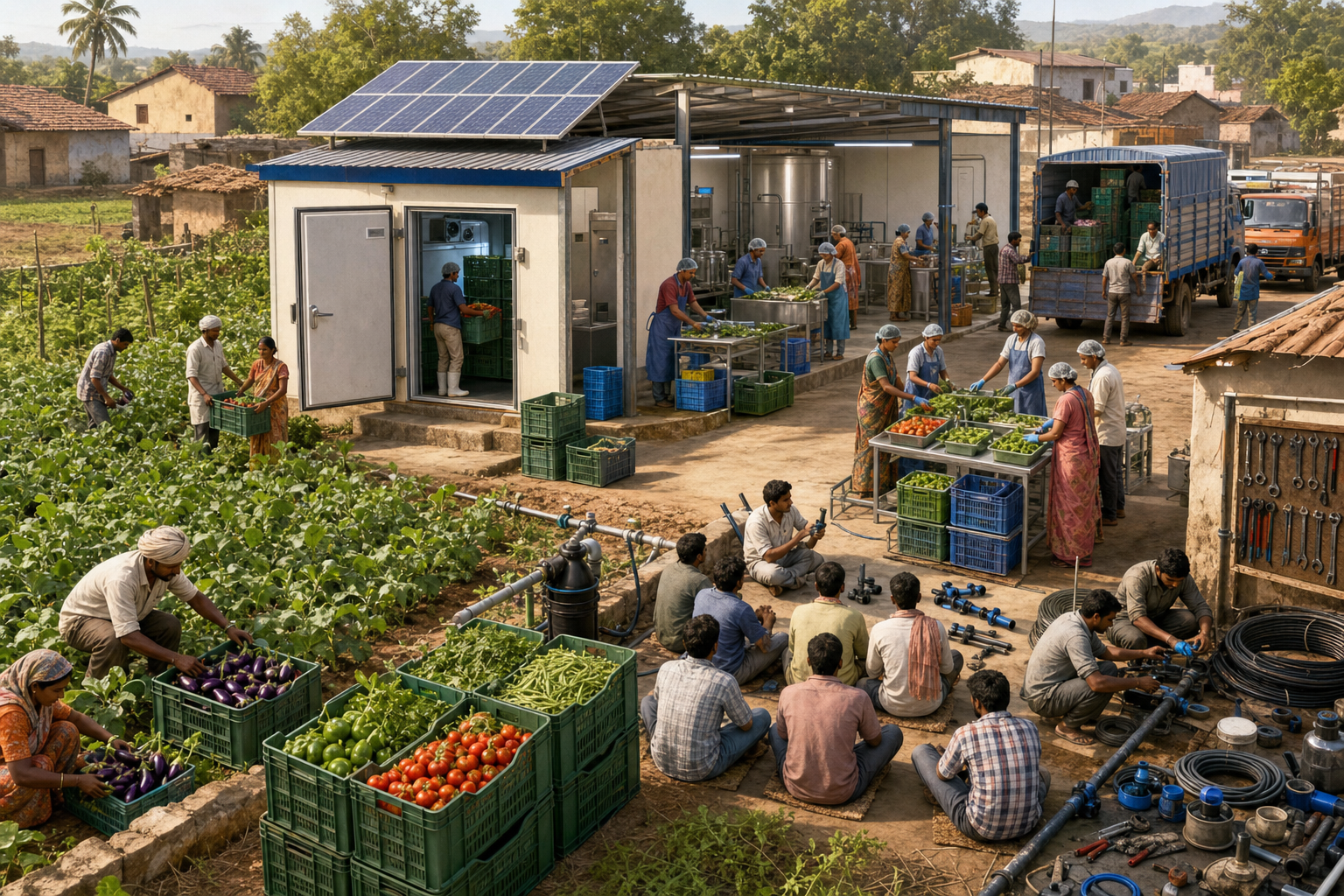
India should therefore treat every protective measure as a capacity-building instrument. The relevant investments are not vague promises of modernization. They include cold chains that reduce the distance between harvest and a saleable product, and food-processing capacity that lets more agricultural value remain within India. Where these systems are missing, a farmer may produce successfully yet still lose income through spoilage, weak market access, or an inability to convert a crop into a higher-value product.
- Name the beneficiary. Identify whether a barrier primarily protects cultivators, processors, intermediaries, or an inefficient incumbent. Protection justified in the farmer’s name should have a visible route to the farmer.
- Name the bottleneck being repaired. If cold-chain or processing capacity is the weakness, connect the protected period to investment in that capacity.
- Set a review condition. Reconsider the measure when the domestic weakness changes instead of allowing temporary protection to become automatic policy.
- Separate safety rules from commercial shelter. Health and ecological requirements should apply credibly to imported and domestic food rather than functioning as unexplained obstacles.
If policymakers cannot say what a barrier is accomplishing, who gains from it, and what improvement would permit its revision, the barrier is not an agricultural strategy. It is simply the status quo.
Domestic market reform must come before broad exposure
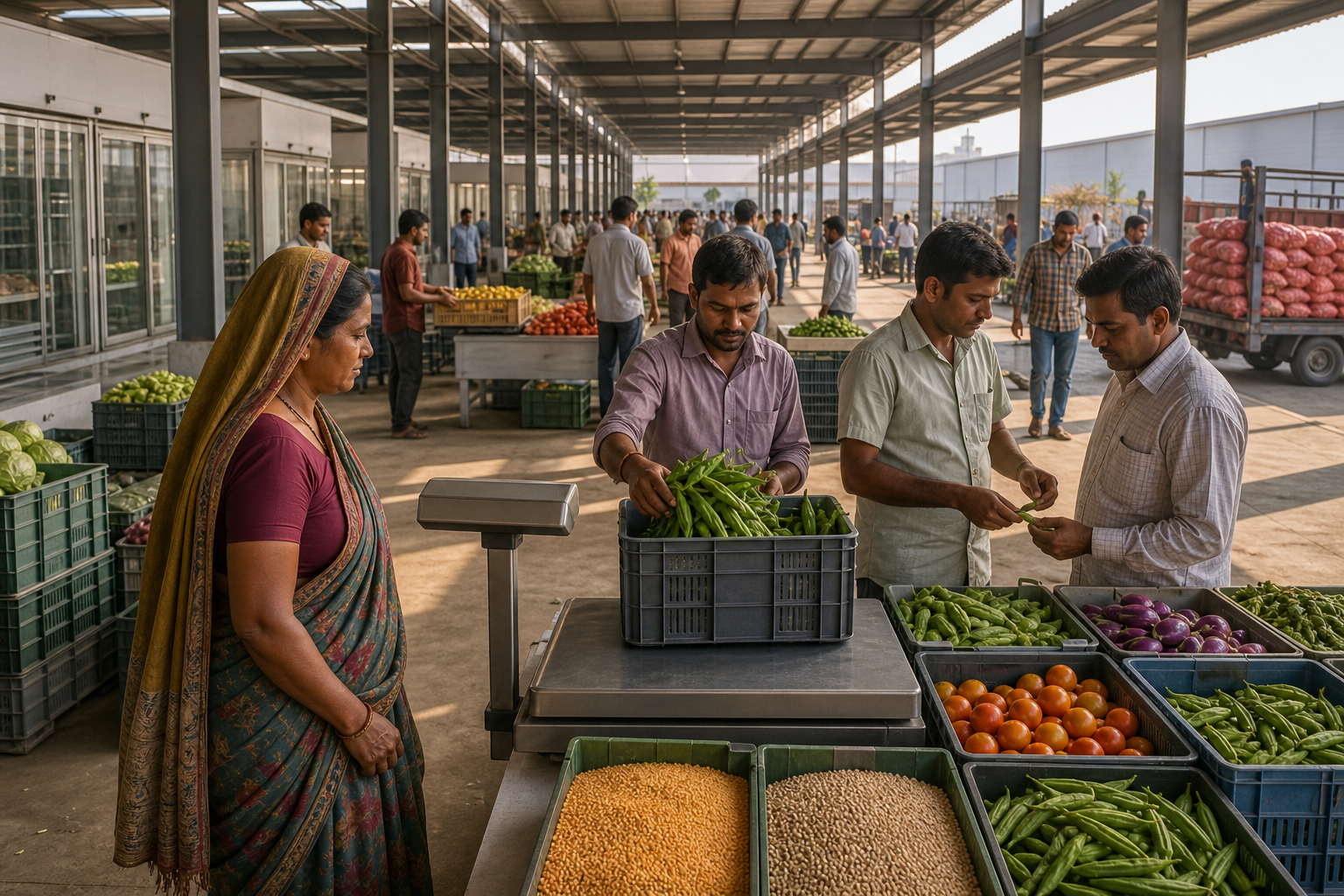
Rejecting indiscriminate import liberalization does not require defending every feature of India’s farm economy. Middlemen can dominate the route from farm to buyer and operate against the producer’s interests. In such a market, adding foreign competition does not automatically produce healthy competition. It may pressure the price received by the farmer while leaving the intermediary structure untouched.
This is why domestic reform and trade policy cannot be separated. A farmer with storage, processing options, and more than one credible route to market is better equipped to face competition than a farmer who must sell quickly to a limited set of buyers. Opening the border before improving that position transfers the adjustment burden to the person with the least bargaining power.
The farm laws introduced under the Modi administration were intended to improve outcomes for farmers but were ultimately retracted in the national interest. Whatever view you take of their provisions, the episode carries a practical lesson: reform cannot rest on technical logic alone. Its sequencing, legitimacy, and acceptance among the people expected to bear its consequences are part of whether it will work.
A sound sequence would begin with domestic capacity. Build cold-chain and processing infrastructure. Reduce the farmer’s dependence on a narrow sales channel. Let producers retain more value from what they grow. Then open selected segments in phases, watching whether pressure lands on wasteful margins or on already-fragile farm incomes. If the first visible effect is a weaker producer without a corresponding improvement in market structure, the sequence is wrong.
India’s ambition to raise farmer incomes cannot sit in one policy compartment while trade negotiators expand competitive exposure in another. Both decisions reach the same household. They should therefore be evaluated against the same outcome: whether the cultivator becomes more productive, more resilient, and less dependent on a chain of actors who capture the value.
Key takeaways: five tests for a market-access offer
- Make it product-specific. Do not support or reject agricultural access as one undifferentiated package. The resilience, livelihood, and health questions vary by product.
- Trace the income effect. Identify who receives the consumer benefit and who carries the producer loss. If the farmer bears the adjustment, the proposal needs a credible transition plan before implementation.
- Check infrastructure readiness. Greater competition is premature where inadequate cold chains or processing capacity already prevent Indian producers from realizing the value of their output.
- Protect food resilience. An import that supplements domestic capacity is different from an arrangement that allows essential capacity to disappear and become difficult to restore.
- Apply credible food standards. Access should depend on clear health and ecological conditions, applied consistently rather than relaxed for foreign commercial pressure or selectively invoked as protection.
These tests also prevent two common mistakes. One is treating every import as a threat. The other is assuming that every reduction in a trade barrier is automatically reform. Selective openness can be useful, but only when India knows which domestic capability it is willing to expose and why.
Food standards should reflect Indian priorities
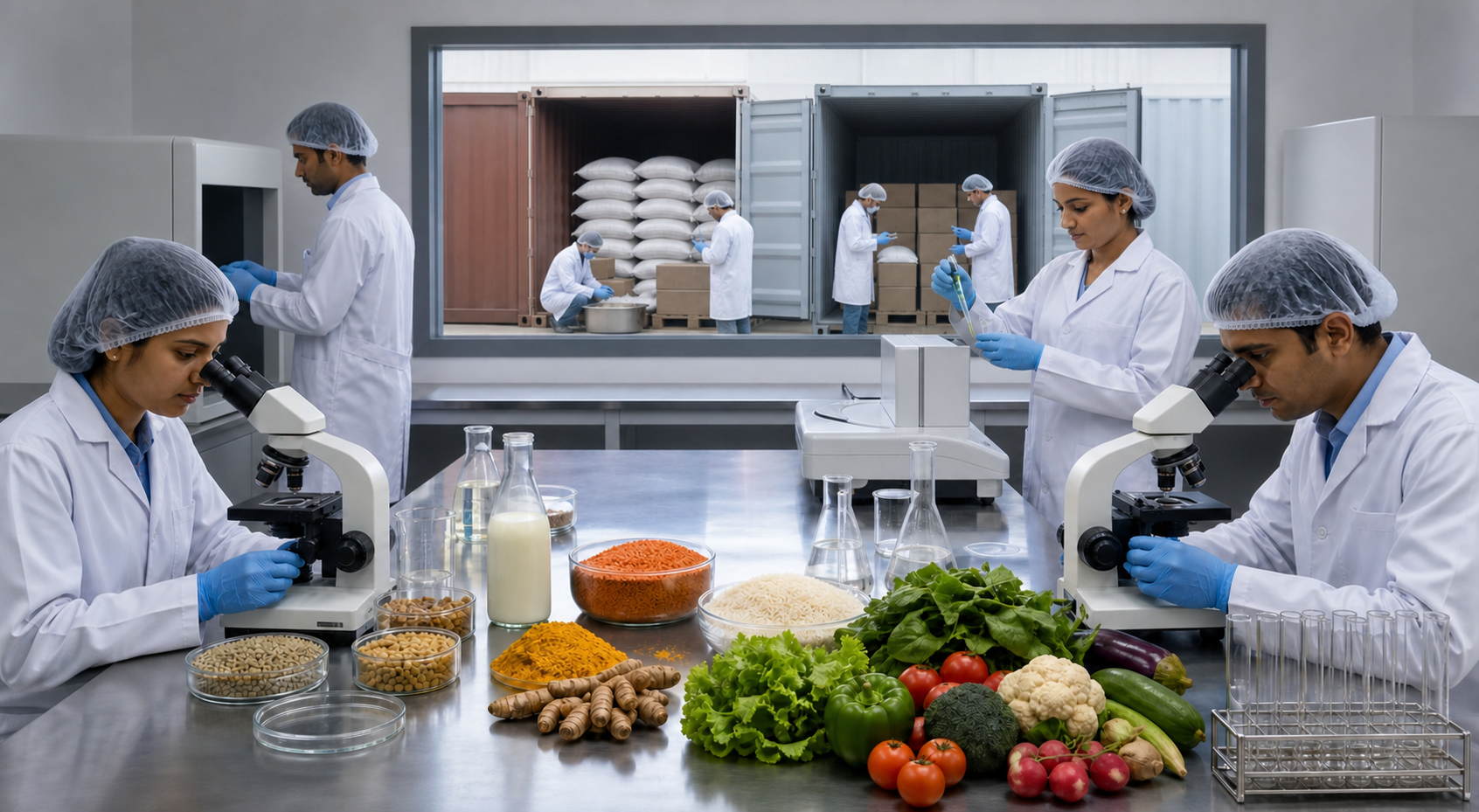
American exporters have a clear commercial reason to seek access to India’s large market. Possible changes associated with RFK Jr.’s Make America Healthy Again agenda could affect parts of the American food industry’s home market, giving companies an additional incentive to find demand elsewhere. That is a plausible commercial pressure, not proof that every U.S. proposal is harmful or that every American food product is unhealthy.
Country of origin is not a nutrition label. An American product is not automatically over-processed, and an Indian product is not automatically healthy or ecologically sound. India should judge food by the standards it wants for its own population and agricultural future, not by a blanket assumption about either country.
The concern about over-processed or chemically intensive food is still legitimate. But words such as natural and organic become useful trade policy only when translated into clear conditions. What methods are acceptable? What evidence supports an organic claim? What environmental cost is India unwilling to import along with a product? Do equivalent expectations apply to domestic producers? Without such clarity, a worthy principle can become an inconsistent slogan.
India should not weaken a defensible health or ecological requirement simply because an exporter wants easier entry. Nor should it hide ordinary commercial protection behind an unsupported health claim. The first sacrifices public priorities; the second undermines the credibility of genuine standards. Clear rules protect both sovereignty and honest producers.
The Dharmic case here is stewardship, not economic isolation. Food, soil, cultivators, consumers, and future generations belong to one chain of responsibility. Trade is acceptable when it serves that whole. It becomes dangerous when a short-term price advantage is counted while rural vulnerability, ecological damage, or strategic dependence is left outside the calculation.
When the next U.S.-India agricultural proposal appears, do not judge it by the advertised size of the wider trade package. Look for the covered products, the pace of opening, the expected effect on farmers, the infrastructure that will help them adapt, and the health and ecological conditions attached to entry. If the public case does not answer those questions, demand a product-by-product explanation before accepting either the promise of free trade or the politics of permanent protection.
References
- DharmaRenaissance Blog — Discover Why U.S.-India Agriculture Trade Talks Stall
