
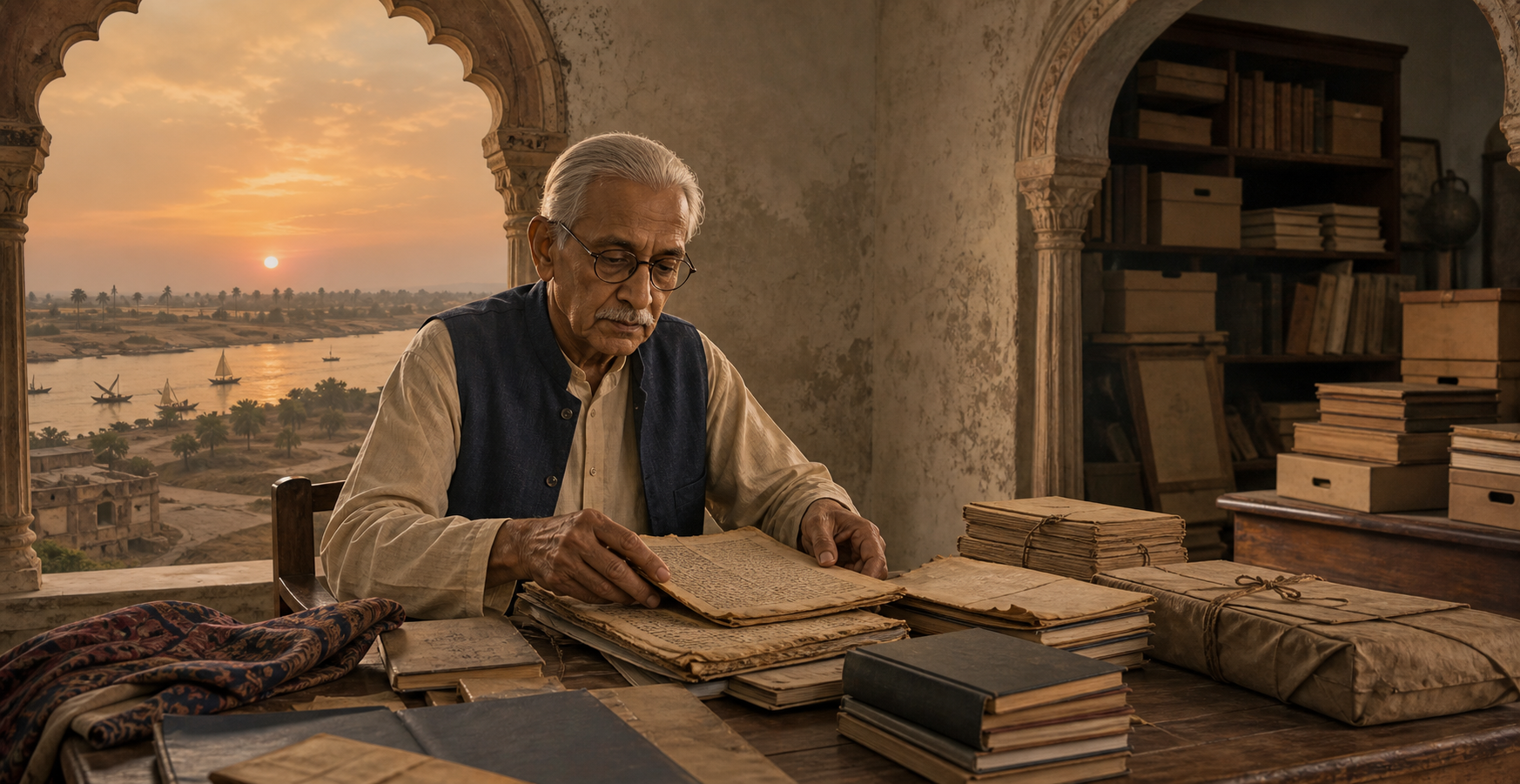
If you came across Gangaram Samrat’s name and wondered why he matters, the answer is larger than a list of books or professional titles. His life shows what historical preservation looks like when a homeland is divided, a community is displaced and its relationship with the past becomes vulnerable to political forgetting.
You can remember Samrat as an individual, but his greater value lies in the method his life reveals: educate, translate, publish, assist the living community and carry its memory across borders. That method remains useful to anyone trying to preserve the Hindu history of Sindh today.
Why Gangaram Samrat belongs in the history of Sindh
Born in 1918 in San, a village on the banks of the Indus River, Samrat began his working life as an English teacher at the school where he had studied. He later became known as a historian, journalist and Sindhi scholar concerned with India’s ancient heritage and Sindh’s intellectual inheritance.
Each part of that description matters. Calling him only a historian hides the channels through which he worked. Teaching transmits knowledge directly. Translation moves it across a language boundary. Journalism brings it into public life. Historical inquiry connects surviving material to a longer civilizational account. Samrat moved through all four activities.
That breadth is especially important in the case of Sindh. Partition placed the region inside Pakistan, but a new political border could not retroactively erase its Hindu communities, Dharmic associations or place within the wider history of Bharat. If you study Sindh only through the nation-state that governs it now, you begin the story too late. Samrat’s biography directs you back toward the Indus, the local community and the intellectual life that existed before displacement.
A useful first step is therefore simple: keep his identity anchored to a place. Record him as Gangaram Samrat of San in Sindh, not merely as an Indian writer who happened to have been born outside present-day India. The geographic detail preserves the historical relationship that Partition disrupted.
He preserved history by moving knowledge between worlds
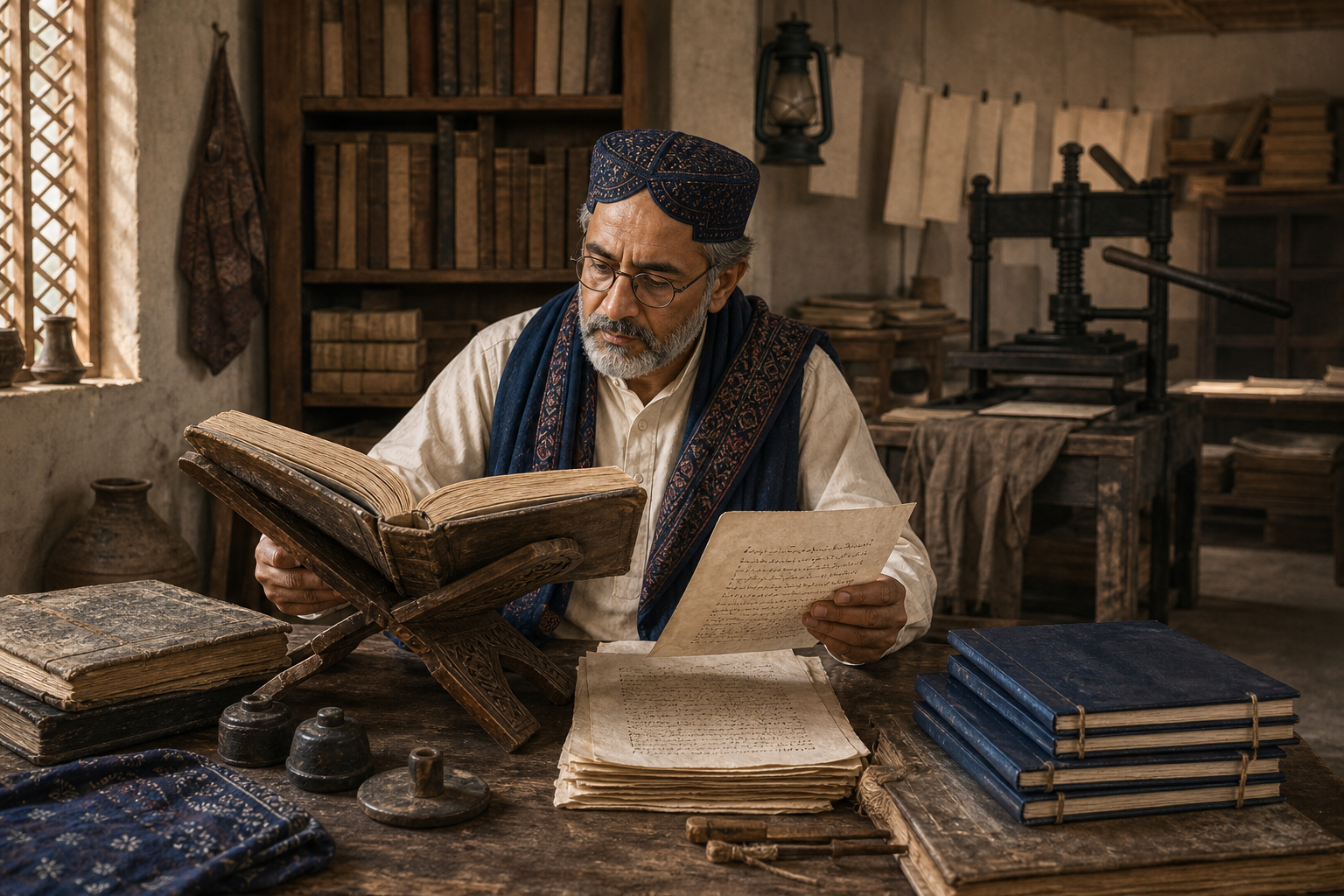
Samrat’s association with the Arya Samaj helped redirect his intellectual life. He began translating works by Arya scholars and ascetics into English. He eventually left teaching and joined the Sindhi newspaper Sansaar Samachar, where he worked for several years.
Notice the sequence. Knowledge available within a religious or scholarly circle was carried into another language; a teacher then became a journalist capable of addressing a wider reading public. Preservation here was not passive storage. It was circulation.
This distinction should shape your own preservation work. A manuscript that no one can locate is vulnerable. A text that younger family members cannot read is functionally receding from view. A historical claim repeated without a citation becomes difficult to defend. Keeping an object is only the first layer; cataloguing, translating and publishing it make the inheritance usable.
Samrat’s career also warns against inventing detail in the name of honouring someone. Until you have a verified bibliography, do not assign titles, publication counts or institutional positions to him. Repeat what can presently be checked: he taught English, translated works associated with Arya scholars and ascetics, entered Sindhi journalism and became known for historical scholarship. A precise account protects his reputation better than an embellished tribute.
Partition made preservation a duty toward living people
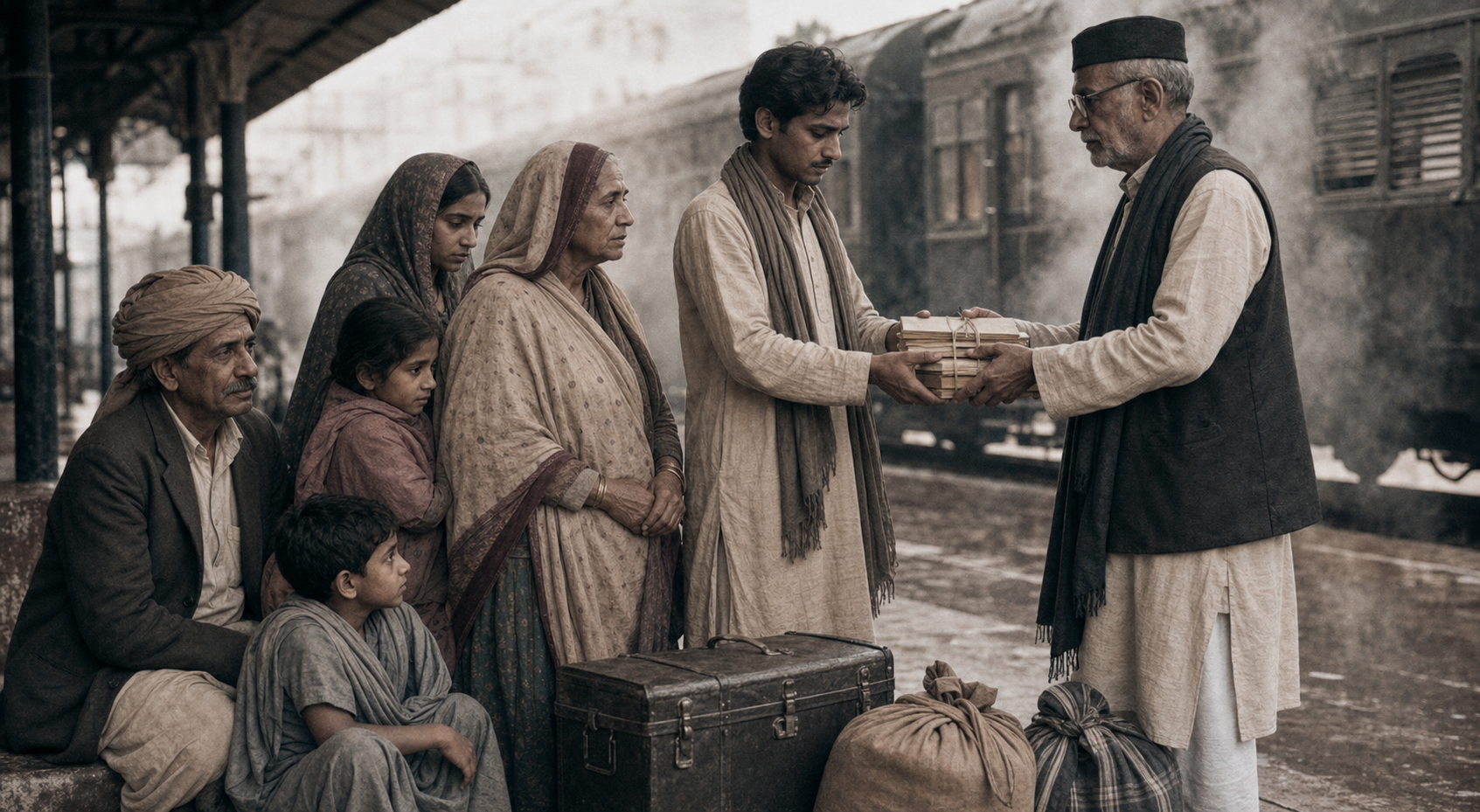
Samrat did not encounter Partition as a distant academic subject. He witnessed the upheaval, assisted Hindus fleeing Sindh and remained in his birthplace after the political order had changed. He ultimately left for India when persecution of Hindus made continued life there untenable.
The order of those facts deserves attention. He helped displaced people before becoming displaced himself. That prevents us from reducing him to either a scholar surrounded by books or a refugee defined only by loss. His scholarship and community responsibility belonged to the same life.
For Sindhi Hindu history, this is a crucial correction. Partition narratives often concentrate on the moment of migration. Preservation requires you to document what came before it and what people carried through it: schools, newspapers, religious associations, languages, occupations, villages, teachers, books and networks of assistance. Otherwise, a rooted community appears in the historical record only at the moment it becomes a refugee population.
Samrat died on August 20, 2004. The right way to mark that date is not to isolate it as an annual ritual of homage. Use it as a prompt to recover one verifiable item: a publication reference, a photograph with identified people, a family recollection tied to a place, or a Sindhi text that needs cataloguing.
How you can preserve Sindhi Hindu history responsibly
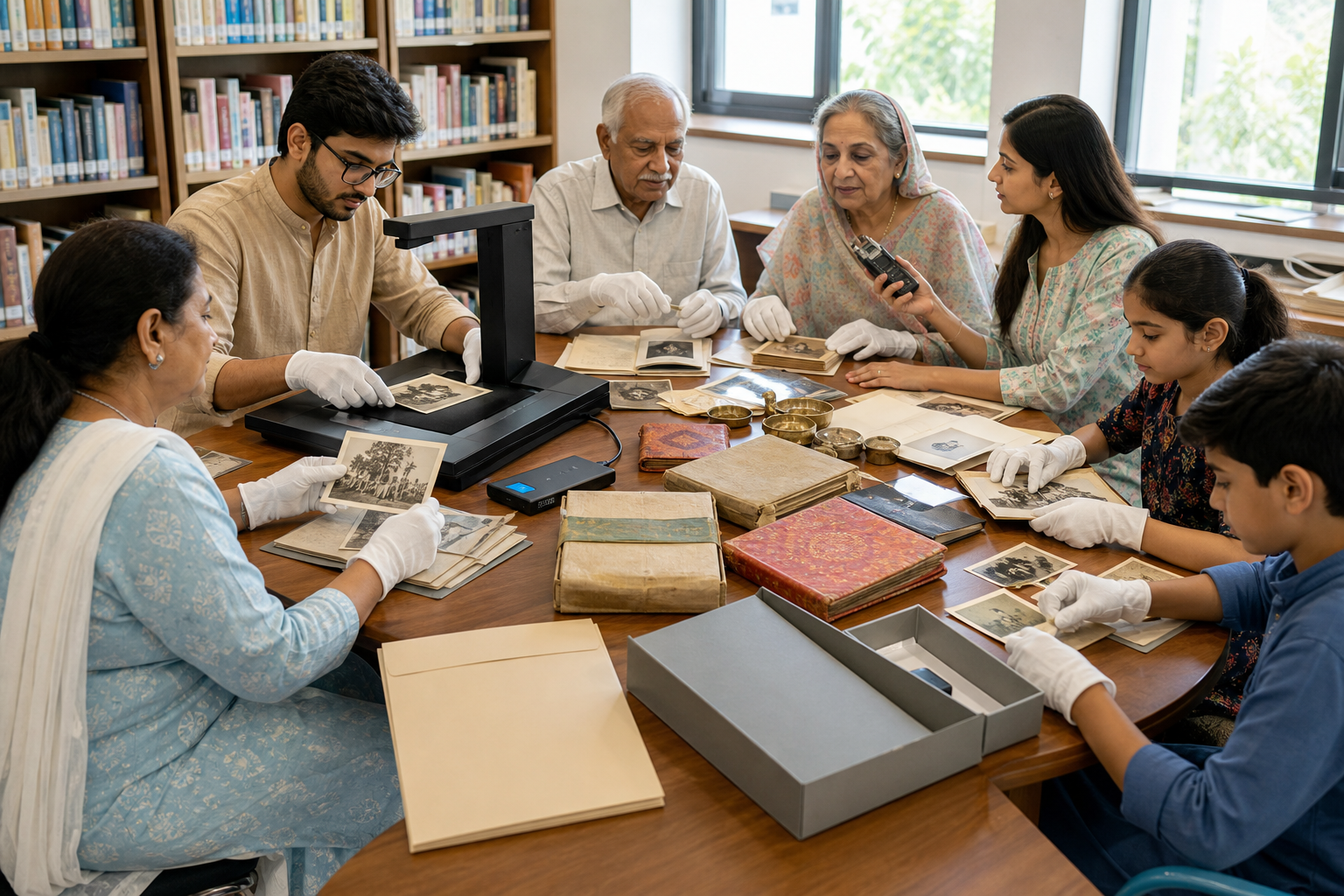
You do not need to be a professional historian to make a durable contribution. You do need a method that keeps evidence, memory and interpretation distinct. Start with one person or one family collection and follow these steps.
- Create a basic identity record. Write the full name, alternate spellings, birth and death years, birthplace, occupations, languages, organizations and migration route. For Samrat, the minimum verified frame includes 1918-2004, San in Sindh, English teaching, Arya Samaj-associated translation, Sindhi journalism, historical work and eventual migration to India.
- Attach evidence to individual claims. Do not place one link at the bottom of a page and expect it to support everything above it. Connect each date, position and biographical event to the location where it can be checked.
- Label interpretation as interpretation. “Samrat taught English at his former school” is a biographical fact. “Teaching prepared him to become a preserver of history” is a reasonable reading of his career. Both can be valuable, but they are not the same kind of statement.
- Build the bibliography from named items. Search family shelves, old periodicals and library catalogues for exact titles, editions and publication details. Record uncertain matches as leads, not facts. A smaller verified list is more useful than a longer speculative one.
- Preserve language information. Note whether an item is in Sindhi, English or another language, and record the script when you can identify it. Keep an image of the original alongside any transcription or translation so later readers can check the work.
- Interview relatives with precise prompts. Ask which village a person came from, how the place-name was spelled, what the person did before Partition, who witnessed the event being described and whether a letter, photograph or clipping survives. Mark second-hand family memory as oral testimony rather than silently converting it into a documented fact.
- Keep more than one copy. Retain the physical item when possible, create a clear digital copy and store that copy in more than one location. Catalogue material before making full reproductions public, and publish them only when you have the authority to do so.
This process may feel modest beside the scale of Sindh’s loss, but historical erasure often advances through small failures of identification. A photograph becomes “some relatives.” A village spelling disappears. A newspaper title is forgotten. A translation loses the name of its translator. Careful metadata interrupts that process.
Key takeaways
- Gangaram Samrat preserved Sindh’s inheritance through teaching, translation, journalism and historical scholarship rather than through one activity alone.
- His assistance to Hindus fleeing Sindh shows that preserving a community’s past cannot be separated from responsibility toward its living members.
- Sindh should be studied as an older civilizational and cultural region, not only through the political boundaries created by Partition.
- The best tribute is a verifiable contribution: identify one person, catalogue one item, confirm one citation or preserve one accurately labelled memory.
Choose one Sindhi family document, photograph or remembered name this week. Record what is known, mark what remains uncertain and give the file to another member of the family. That small transfer continues the work Samrat’s life represents: ensuring that displacement does not become disappearance.
References

Leave a Reply
You must be logged in to post a comment.