
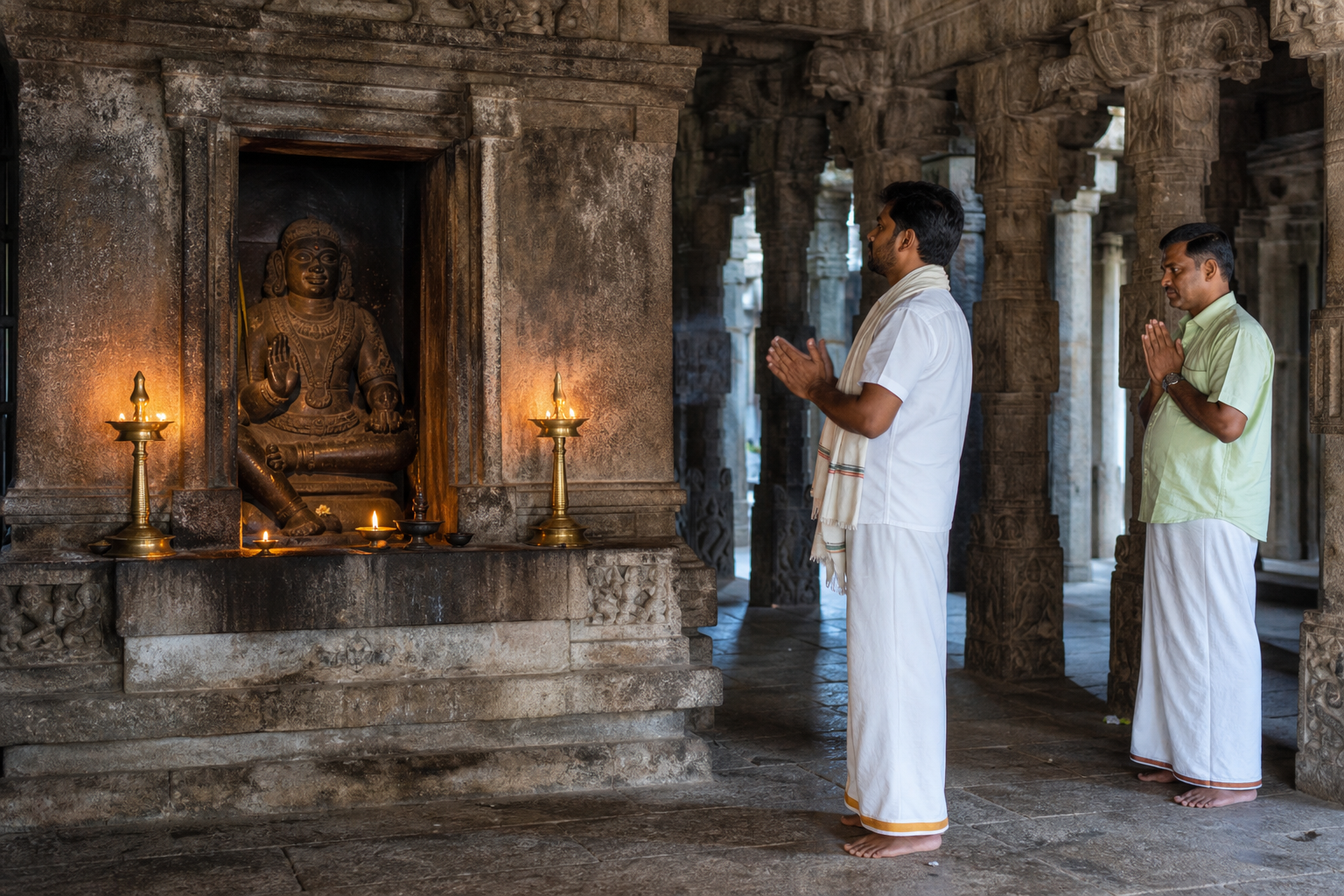
You have completed Shiva darshan, begun moving around the sanctum, and noticed people pause before a smaller shrine. One devotee snaps their fingers. Another gives a soft clap. If you are unsure whether to copy them, the first thing to understand is simple: this is not applause.
The gesture is a restrained acknowledgment of Chandikeshwara, the guardian associated with Shiva and the temple. You can observe it respectfully without treating one family’s explanation, one number of claps, or one temple’s procedure as a universal rule.
Who Chandikeshwara is within the Shiva temple
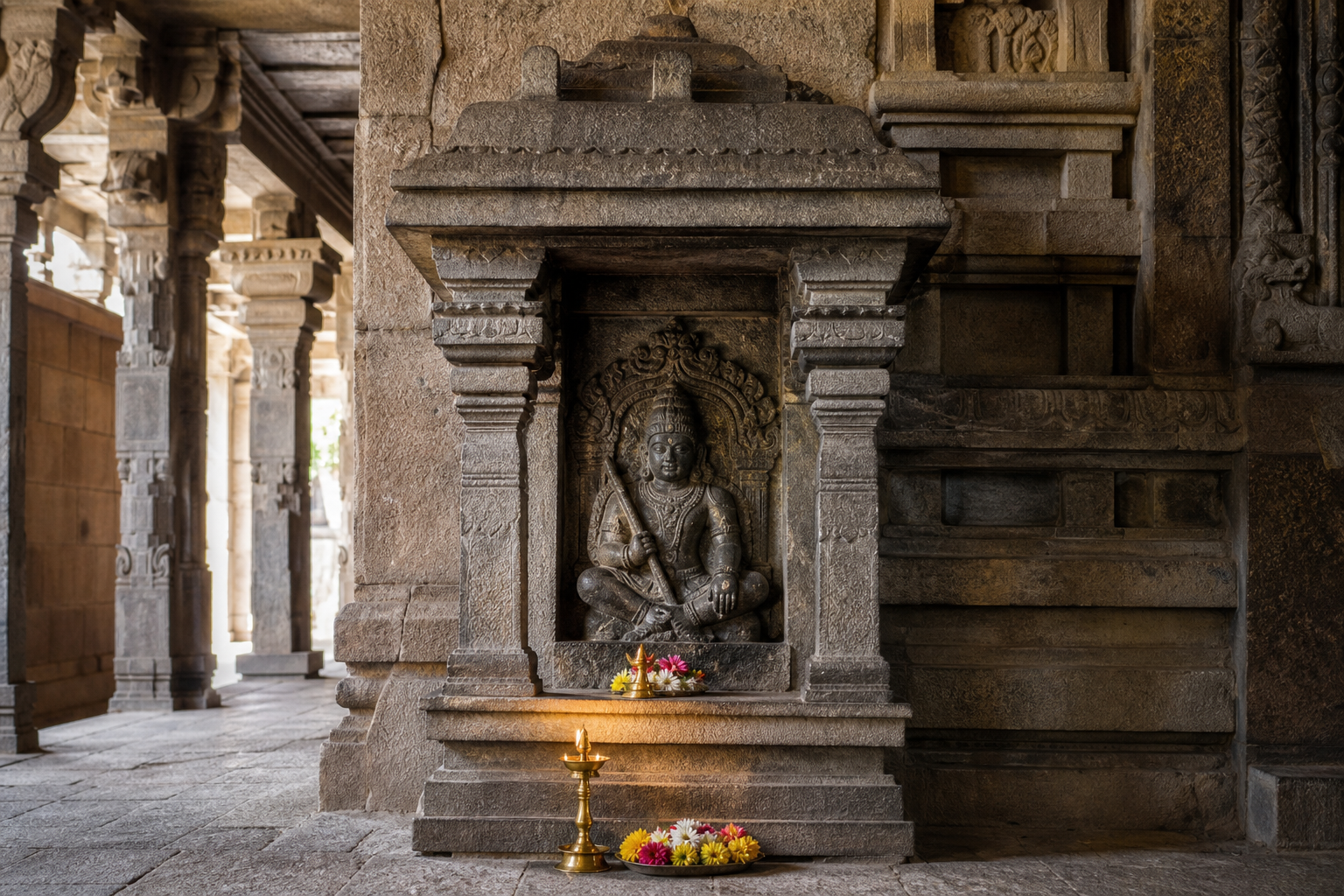
Chandikeshwara is revered in the Shaiva tradition as an exemplary devotee of Shiva and as a guardian or custodian of what belongs to Shiva. His presence near the sanctum is therefore not decorative. The shrine reminds you that worship includes responsibility as well as devotion.
This role gives the encounter an ethical weight. An offering made to the deity, an object used in worship, or any other temple possession is not something a visitor may casually claim. You take only what has been expressly returned or distributed to you as prasada. Reverence for the murti and care for the temple’s belongings are parts of the same discipline.
The shrine also changes the pace of your visit. Instead of finishing the principal darshan and immediately turning toward the exit, you pause before the silent guardian. That pause prevents the temple circuit from becoming a hurried sequence of things to see.
What the clap or finger snap is meant to express
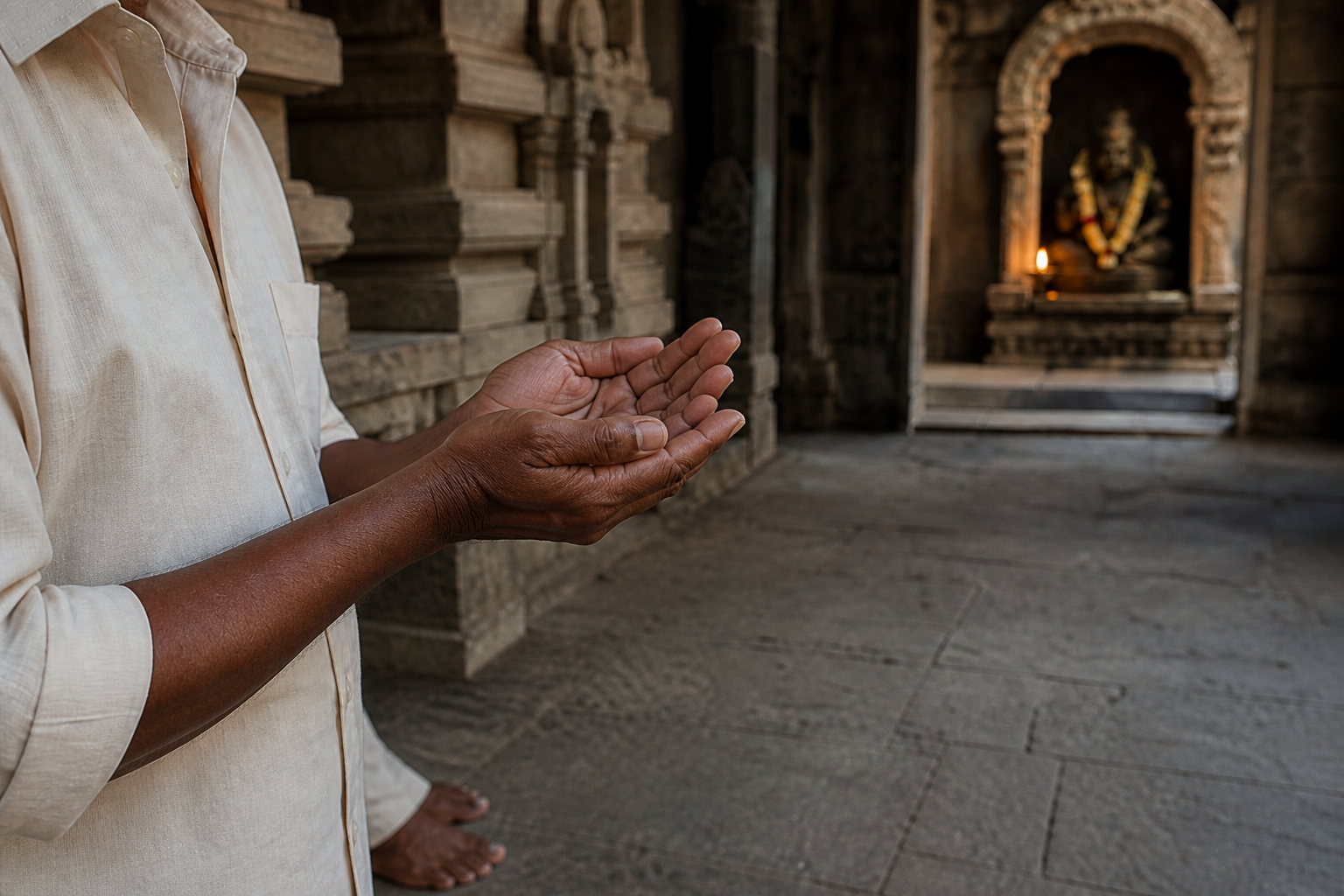
In Tamil Nadu Shiva temples, devotees may snap their fingers or clap before this particular figure. The sound is normally brief and controlled. Its function is to mark attention, not to create a spectacle.
Several customary explanations can sit behind that one action. In a common devotional understanding, Chandikeshwara is absorbed in contemplation, so the soft sound announces that a devotee has come before him. The point is not that a divine guardian is helplessly asleep. It is a ritual way of making yourself present instead of walking past inattentively.
The gesture can also mark the completion of your visit to Shiva’s sanctum. You acknowledge the guardian before continuing through the temple. Read this as a moment of closure: you have received darshan, and now you leave with awareness rather than simply drifting out with the crowd.
Another familiar explanation connects the visible hands with temple stewardship. By opening the hands or making a small clap, the devotee indicates that no temple property has been taken. That should not be reduced to a crude inspection for theft. Its more useful meaning is self-accountability: what belongs to the deity remains with the deity, unless the temple has given it to you as prasada.
These explanations need not be forced into a single, exclusive origin story. Living customs often carry devotional, ethical, and practical meanings at the same time. The durable core is an acknowledgment of Chandikeshwara joined to respect for Shiva’s temple.
How to observe the custom respectfully
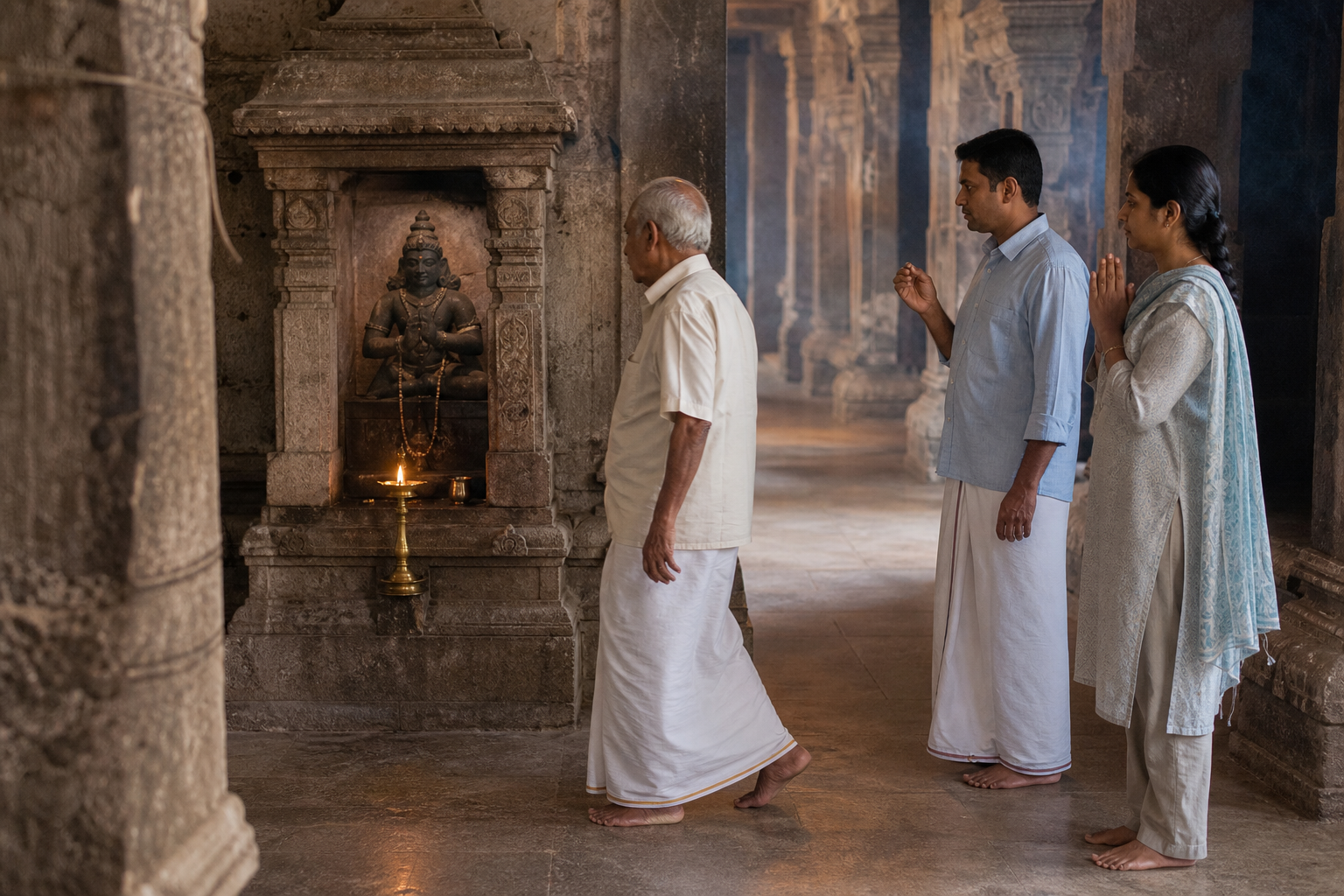
Temple practice is learned through attention. If you are visiting for the first time, watch how regular worshippers approach the Chandikeshwara sannidhi, the shrine dedicated to him. Follow the local rhythm rather than importing a procedure remembered from somewhere else.
- Identify the shrine before making the gesture. If the layout is unfamiliar, quietly ask a priest, attendant, or knowledgeable devotee where the Chandikeshwara sannidhi is.
- When your temple circuit brings you there, stop without obstructing the passage. Face the shrine and offer a namaskara or a brief inward acknowledgment.
- Use the form practiced in that temple: a restrained clap, a finger snap, or simply folded hands. The sound should be sufficient for the ritual gesture, not loud enough to dominate the space.
- Do not snap your fingers close to the murti, reach across a barrier, or turn the act into a performance. Physical boundaries around a shrine remain in force during every form of worship.
- Do not guess at a mandatory count. If that temple has taught you a particular procedure, follow it. Otherwise, one modest acknowledgment is more respectful than a conspicuous series copied without understanding.
- Move on without waiting for a dramatic sign or result. The act is a salutation and an ethical reminder, not a test of whether your prayer has been accepted.
If nobody around you is clapping or snapping, do not assume that they have forgotten the custom. The temple may preserve it differently, the ritual moment may be unsuitable for noise, or folded hands may be the local norm. A quiet namaskara is always a more prudent choice than insisting that every Tamil Shiva temple must look and sound the same.
Questions visitors commonly have
Is the clap a way of praising Chandikeshwara?
Not in the sense of applauding a performance. It is better understood as a small signal of presence and acknowledgment. The restrained manner matters because it distinguishes ritual attention from ordinary applause.
Does Chandikeshwara literally need to be awakened?
The language of awakening belongs to a popular devotional explanation of the gesture. You can understand it symbolically: the devotee approaches a guardian represented in contemplative stillness and announces their presence. The custom does not require a theological claim that divinity depends upon human noise.
Does leaving with prasada contradict the empty-hands meaning?
No. Prasada has been offered and then properly given to the devotee. The ethical distinction is between receiving what the temple distributes and taking an object, offering, flower, or other possession without permission. If you are uncertain whether something may be carried away, ask rather than assume.
Should you do this at every Shiva temple?
Do not turn a recognizable Tamil temple custom into a rule imposed everywhere. Temple traditions, layouts, and standards of conduct differ. Where the gesture is practiced, perform it quietly. Where it is absent or you are unsure, offer namaskara and follow local guidance.
On your next visit, let the Chandikeshwara shrine slow you down for a moment. A quiet acknowledgment, respect for the temple’s practice, and care with everything entrusted to the deity convey more than an unnecessarily loud clap ever could.
References
