
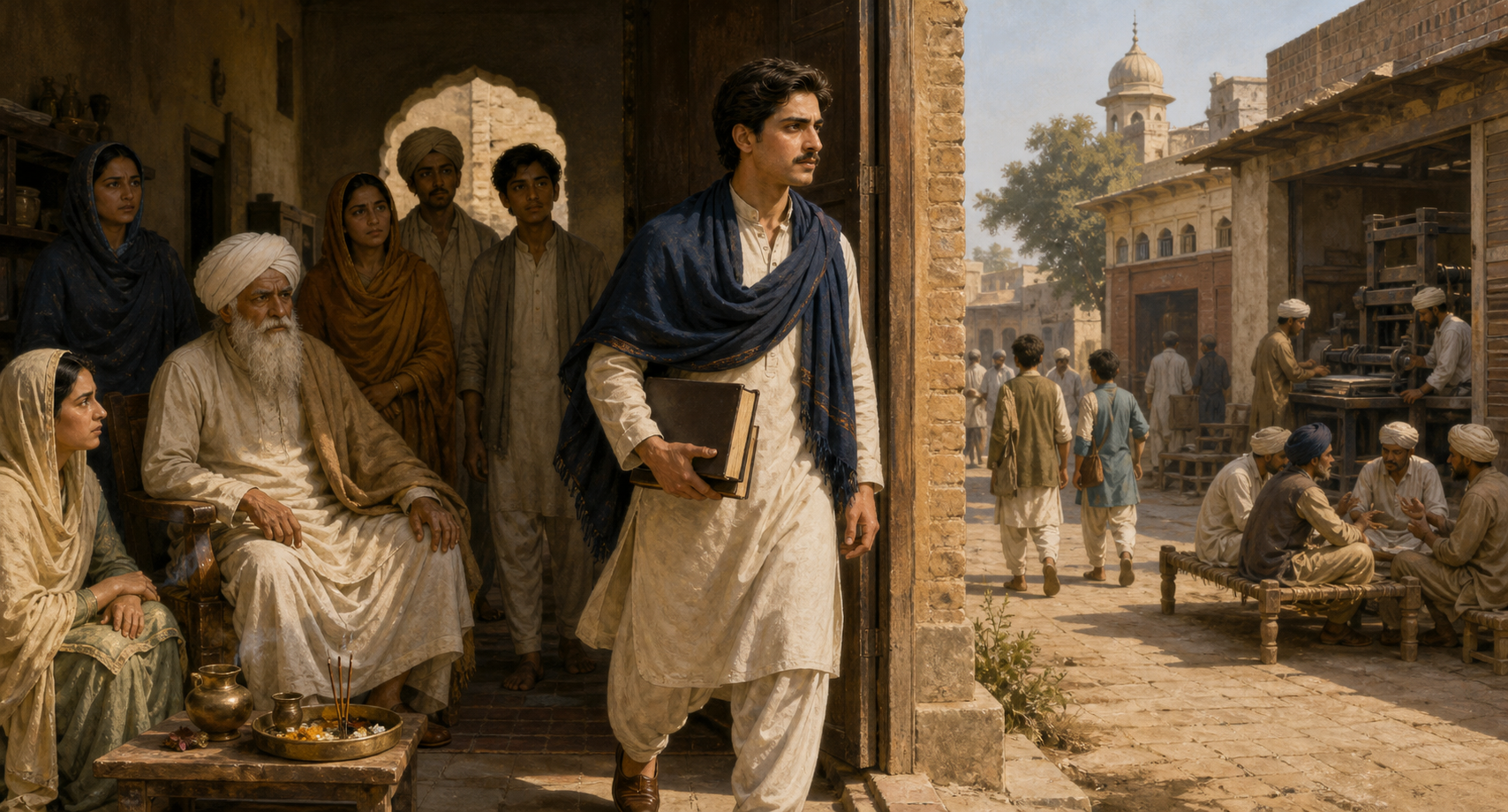
If you are trying to decide whether the Arya Samaj brought Hindu renewal or social disruption to Punjab, do not choose too quickly. The same act could look like recovered self-respect to an Arya, betrayal to a relative, provocation to a religious opponent, and disorder to an official.
The more useful question is what the movement disturbed. In this case, the answer reaches well beyond doctrine. Faith became entangled with family authority, education, occupation, professional ambition, public controversy, and the habit of obeying power. Once you follow those connections, Punjab’s upheaval becomes easier to understand without romanticising it or repeating the verdict of its opponents.
The first contest took place inside the family
A movement does not need to win an entire community before it changes social life. It can begin by making one young person reconsider whose advice deserves obedience.
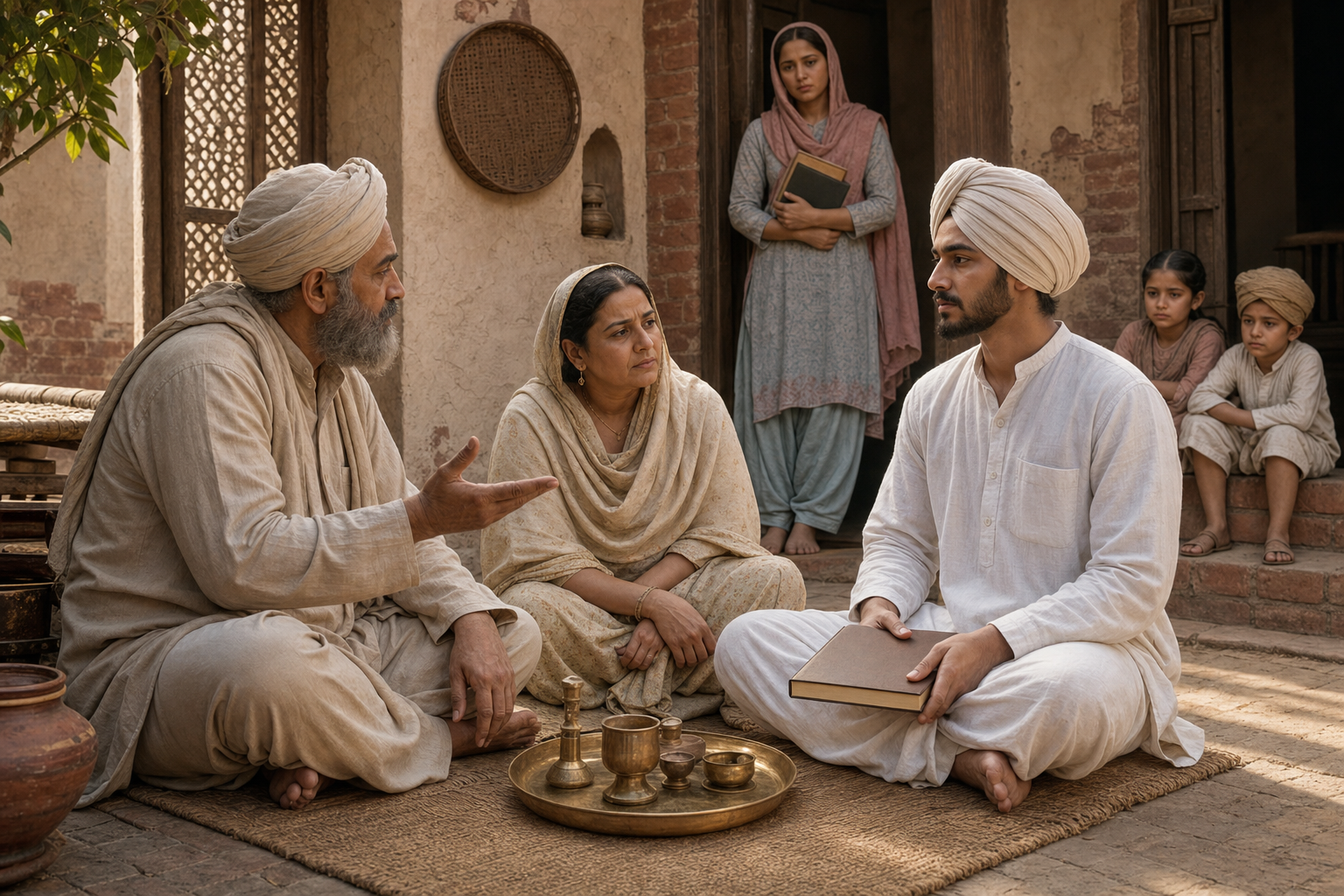
That pressure was visible in the relationship between Munshi Ram and a boy being raised as a Sikh. The boy’s father allowed him to speak with his new uncle but specifically warned him not to become an Arya. Christian missionary influence was also treated as a danger. Reverend Doctor Chatterjee gave the boy papers and magazines, encouraged his writing, and occupied another place in the competition for his intellectual formation.
The Arya-Sikh-Christian triangle matters because it shows that religious identity was being formed through living relationships, not merely inherited labels. The uncle, father, missionary, schoolmasters, and printed page could all pull a young mind in different directions. An argument about religion therefore became an argument about legitimate mentorship.
Appearance did not always settle affiliation either. Some of Munshi Ram’s zealous associates looked Sikh to observers while working for the Arya cause. You should resist forcing these people into tidy boxes. What mattered to the family was not merely how someone dressed or was raised, but which programme he advanced and whose authority he challenged.
The struggle also concerned the boy’s future. His father wanted to send him to England and hoped he might enter the Indian Civil Service or be called to the bar. Munshi Ram opposed both service and legal practice as desirable destinations. One path offered advancement through established institutions; the other redirected education and talent towards writing, preaching, and Hindu public work.
One household cannot represent every Punjabi household. It does, however, reveal the mechanism of upheaval. When you examine a reform movement, ask three concrete questions: who is trying to shape the young person’s faith, who controls the course of education, and which career is treated as honourable? When all three are disputed, the family is not peripheral to the conflict. It is one of its principal arenas.
Economic self-assertion gave reform material consequences

The Arya programme described by its contemporaries was not confined to sermons or doctrinal correction. Its activists wanted to put new spirit into Hindus and open economic opportunities by encouraging them to enter callings such as weaving, then regarded in their milieu as largely left to non-Hindus.
That detail changes the meaning of reform. A theological dispute may anger an opponent, but an occupational programme can alter livelihoods, status, and dependence. If members of a community acquire skills and enter work from which they have been absent, the existing distribution of economic roles begins to move. Even a proposed shift can provoke resistance because people understand its possible consequences before those consequences can be measured.
This does not establish that the Aryas transformed weaving across Punjab, nor does it tell us how successful the initiative became. It establishes something narrower and important: Hindu strengthening was conceived materially as well as morally. Economic participation was part of the intended recovery of confidence.
That distinction protects you from two common misreadings. Calling the programme merely communal overlooks its self-help dimension. Calling it merely economic ignores the fact that opportunity was being organised explicitly around Hindu consolidation. Its purpose and its social boundary cannot be separated.
A sound historical judgement should keep intention, method, and consequence apart. The intention was to strengthen Hindus and widen their opportunities. The method included agitation and entry into neglected occupations. The remembered immediate consequence included contention and ill-will. Good intentions do not erase those effects, but hostility from competitors or critics does not by itself discredit the aim.
Debate, print, and resistance converted reform into upheaval
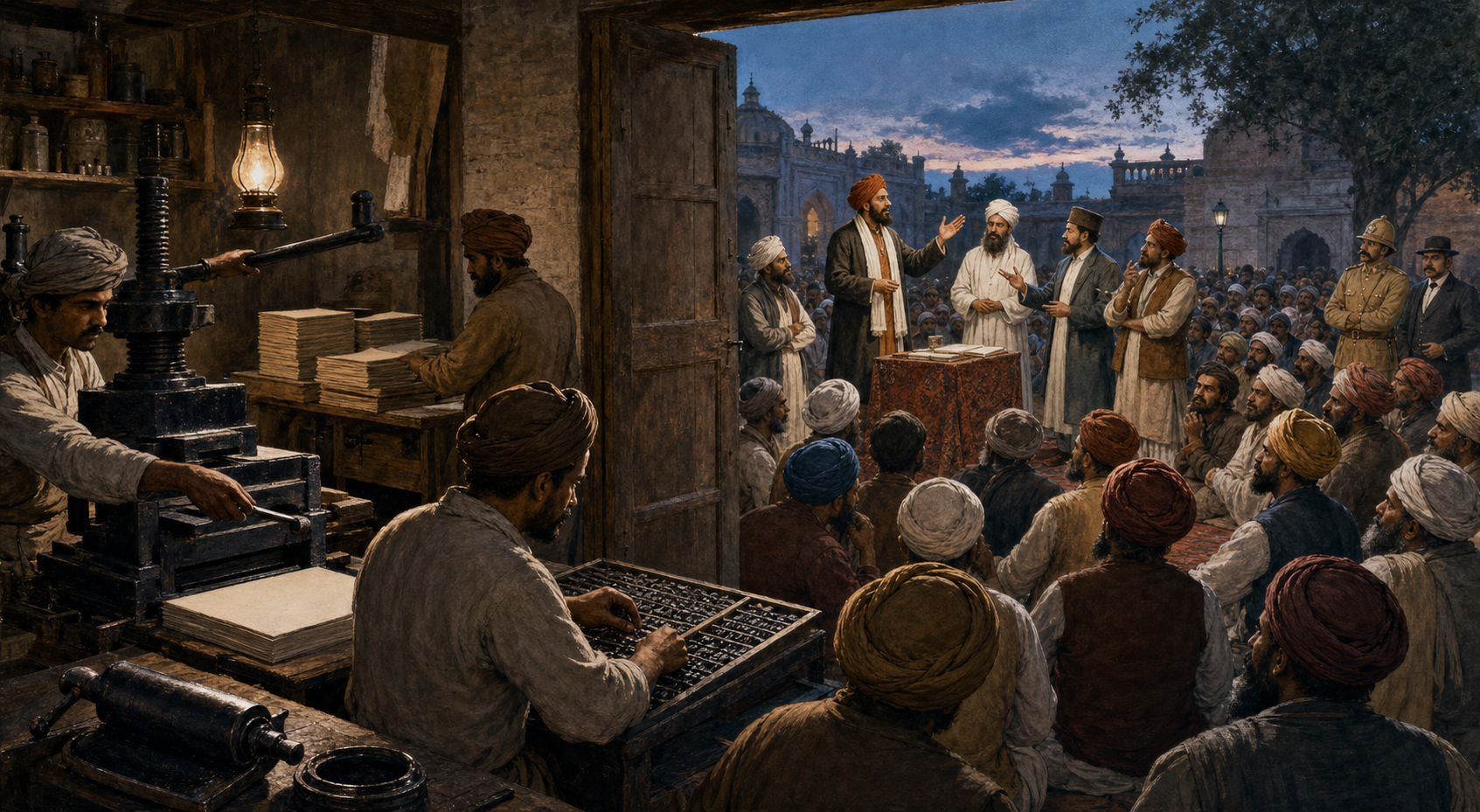
Munshi Ram and his companions did not keep conviction private. They debated, published, wrote, and preached. Public argument did several things at once: it recruited supporters, trained them to answer rivals, exposed inherited claims to challenge, and announced that Aryas would no longer accept deference as the price of peace.
The reaction crossed several social lines. Christians and Muslims became angry, while some Hindus blamed the Aryas for contention and the ill-will it brought upon them. The movement was therefore not facing one simple contest between Hindus and non-Hindus. It also faced disagreement among Hindus and anxiety within Sikh-connected families about the direction of reform.
Official hostility added another layer. Officials regarded the Aryas as disturbers of a population they preferred to call peaceful. Yet their objection was not politically neutral. The Aryas were remembered as people who refused to be habitual yes-men and encouraged others to stand upright before authority.
This is the point at which the meaning of order must be examined. An official can accurately notice that agitation produces conflict while still defining peace too narrowly. If peace means that established arrangements go publicly unchallenged, then self-respect will appear disorderly as soon as it becomes organised and audible.
The reverse error is equally tempting. Disturbance is not automatically virtuous. Polemics can clarify convictions, but they can also harden boundaries and make every disagreement a test of communal honour. A useful test is to ask what the confrontation built. Did it improve education, widen economic participation, or help people answer coercion? Or did it merely accumulate enemies? Courage and prudence have to be judged together.
The danger was not imaginary. Munshi Ram’s companion Pandit Lekh Ram was killed by a fanatic. No further identity or motive should be supplied without firmer evidence. What can be said is that the atmosphere surrounding public religious controversy had moved beyond sharp words into lethal violence.
That killing should not be romanticised as proof of righteousness, and responsibility should not be shifted from the killer to controversial speech. It should instead alert you to the stakes. Once religious argument becomes a public contest over dignity, authority, and collective strength, words operate inside a social field that may already be dangerously charged.
Munshi Ram represented disciplined rebellion, not aimless revolt
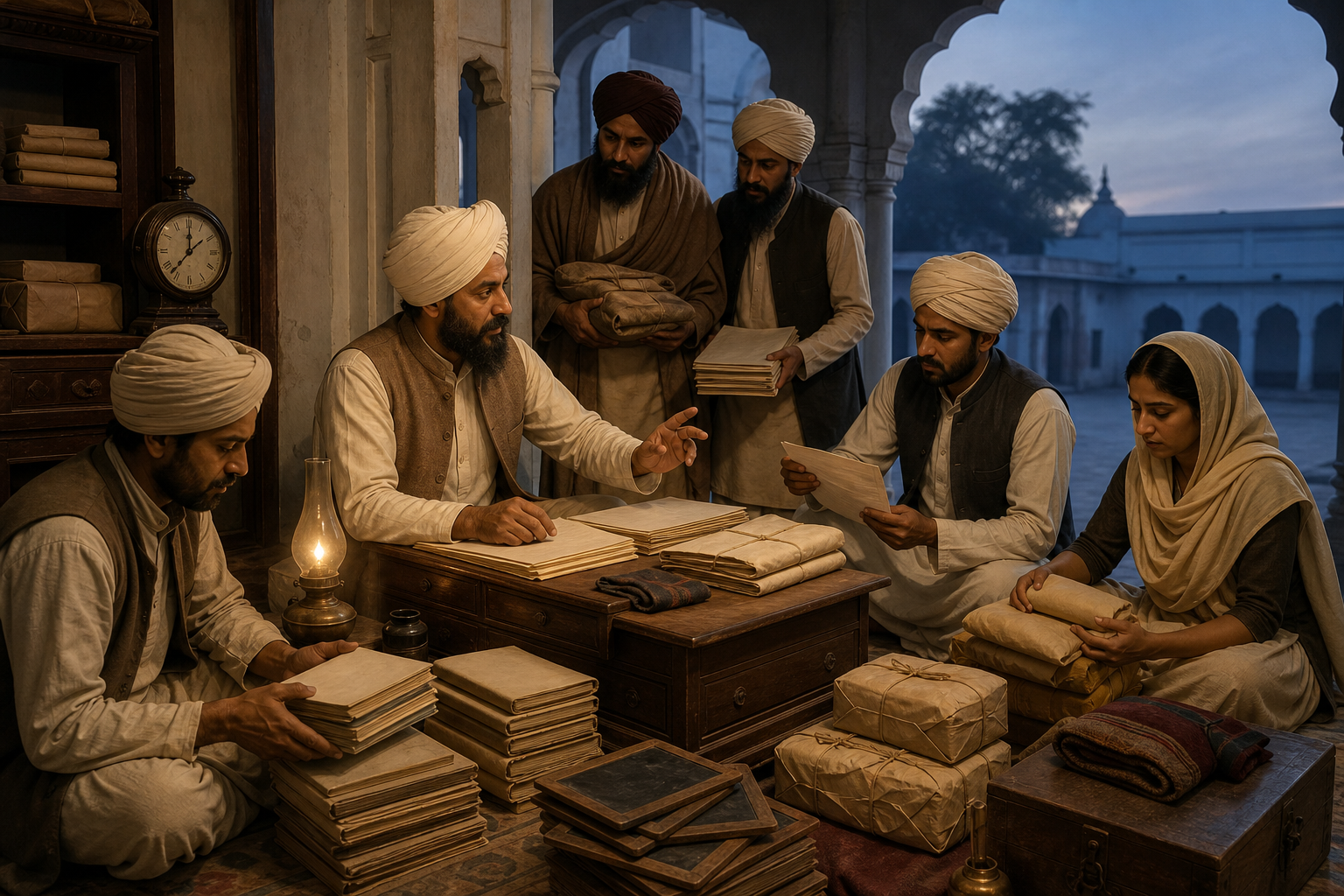
The personal choices of Munshi Ram help explain why Arya activism could command loyalty despite the trouble surrounding it. He practised law but came to regard much of its work as dishonest and crooked. He reduced the cases he accepted, seldom appeared in court, and longed to leave the profession so that he could devote himself to writing and preaching.
His rejection of a prestigious career was not a rejection of preparation. He told the boy that he himself had once neglected his studies, failed an examination, and disappointed his father. His advice was practical: complete school and college before giving one’s whole attention to writing. The cause required commitment, but commitment was not an excuse for avoidable failure.
That combination is easy to miss. Munshi Ram resisted professional respectability when he thought it compromised his purpose, yet he insisted that a young person first acquire discipline and education. His rebellion was directed against subordination and moral compromise, not against study, competence, or responsibility.
His critics nevertheless judged the reformer through his earlier life. The boy’s father mocked Munshi Ram’s turn towards piety as repentance undertaken only after a long record of wrongdoing. The taunt reveals a recurring problem for movements of renewal: personal transformation supplies their urgency, but the reformer’s past also gives opponents a ready argument about hypocrisy.
You do not have to resolve that problem by declaring the reformer either saint or fraud. Ask instead whether the change produced sustained conduct, sacrifice, and coherent counsel. Munshi Ram’s movement away from legal work, his desire to write and preach, and his insistence that the boy avoid his own educational mistake give you concrete behaviour to examine. That is more informative than either hagiography or ridicule.
The clash over vocation also exposes a deeper fault line in Punjab’s social order. A father could see the civil service or the bar as the summit of his son’s advancement. An Arya activist could see the same destination as service to an order from which an awakened Hindu should become independent. Social upheaval followed because the disagreement concerned not only how to succeed, but what success was for.
A practical test for judging the Arya upheaval
Use the following key takeaways when you encounter a sweeping claim that the Arya Samaj either saved Punjab or simply disturbed it:
- Start with the household. Look for disputes over religious allegiance, mentors, education, marriage, or vocation. These show where collective change entered personal life.
- Identify the material stake. In this case, occupational entry mattered alongside preaching. Ask who might gain independence, who might face competition, and which established relationship would change.
- Separate intention, method, and result. Hindu strengthening was the intention; agitation, print, debate, and occupational initiative were methods; acrimony and official hostility were among the immediate reactions. Do not treat one category as proof of another.
- Examine who defines order. Official dislike of unrest does not establish that the previous arrangement was just. At the same time, defiance alone does not establish that every tactic was wise.
- Keep identity boundaries historically open. A Sikh-raised boy could be drawn towards an Arya uncle, while men who appeared Sikh could advance the Arya cause. Appearance and inherited affiliation did not always predict active allegiance.
- Do not generalise one family into all of Punjab. Use the family conflict to understand a mechanism of change, not to manufacture an unsupported claim about prevalence.
Applied carefully, this test produces a precise verdict. The Arya Samaj unsettled Punjab because it made Hindu self-respect public and consequential. It connected conviction to occupation, redirected educated ambition away from unquestioned service, placed inherited identities under argument, and challenged the official preference for compliant quiet. Those actions could be experienced as regeneration and destabilisation at the same time.
A pro-Dharmic reading does not require you to erase the cost of acrimony. It asks you to distinguish the friction inherent in genuine reform from needless provocation, and to reject the assumption that social silence is proof of social health. It can honour the courage required to resist subordination while still judging the quality and consequences of public argument.
When you meet the next broad claim about the Arya Samaj, map four things: the household, the livelihood, the public forum, and the official response. If the claim cannot tell you which layer changed, it explains very little. If it can map all four, you will see why Arya activism became more than a religious disagreement: it forced faith to choose a vocation, a public voice, and a posture before power.
References
