
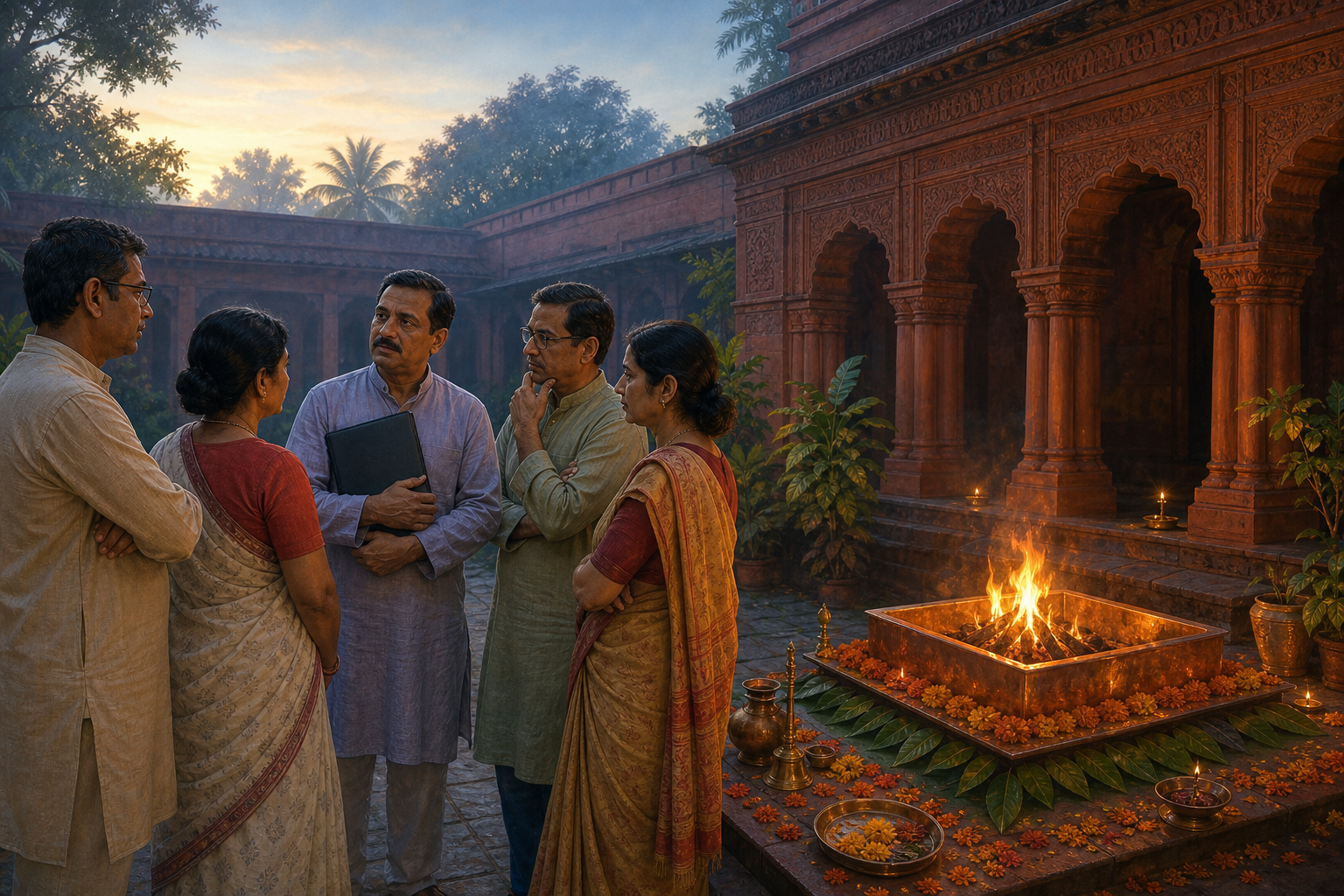
If you are deciding whether to support Bengal’s announced Sanatan Ghar Wapsi campaign, the useful question is not whether the idea of homecoming sounds inspiring. It is whether this particular effort can turn that aspiration into a voluntary, accountable, and lasting return to Sanatan Dharma.
The public claim is substantial: an upcoming campaign built around 1,008 yajnas, intended to bring people described as converted Hindus back into the Sanatan fold and framed as a response to demographic change. That establishes the campaign’s declared intention. It does not yet establish how many people will participate, how consent will be protected, how results will be counted, or what support returnees will receive after the ceremonies.
Separate the announcement from the eventual result

The announced plan calls for a total of 1,008 yajnas in Bengal. Its stated purpose is to facilitate the return of converted Hindus to the Sanatan fold, while its public rationale is to counter demographic change.
Keep three distinctions in view when you encounter claims about the campaign:
- An announced yajna is not a completed yajna. The number 1,008 describes the intended ritual scale until completion can be documented.
- A yajna is not a participant count. One ceremony may involve one person, several families, supporters who are not returning, or no completed homecoming at all. The number of fires cannot be treated as the number of returnees.
- A stated purpose is not a measured outcome. Describing the campaign as a response to demographic change does not demonstrate that it altered any demographic trend.
This is not hostile scrutiny. It is the minimum discipline required if a sacred undertaking is also going to make public claims. A photograph may establish that a ceremony occurred. It cannot, by itself, establish the identity, free decision, or continuing affiliation of each person present.
Ghar wapsi also operates on more than one level. The yajna provides a sacred form. The individual makes a religious decision. The surrounding Hindu community determines whether that person is genuinely received. The campaign’s public messaging then turns those personal events into a wider social claim. Each level requires its own evidence; none should be used as a substitute for another.
Dharmic legitimacy begins with consent and dignity
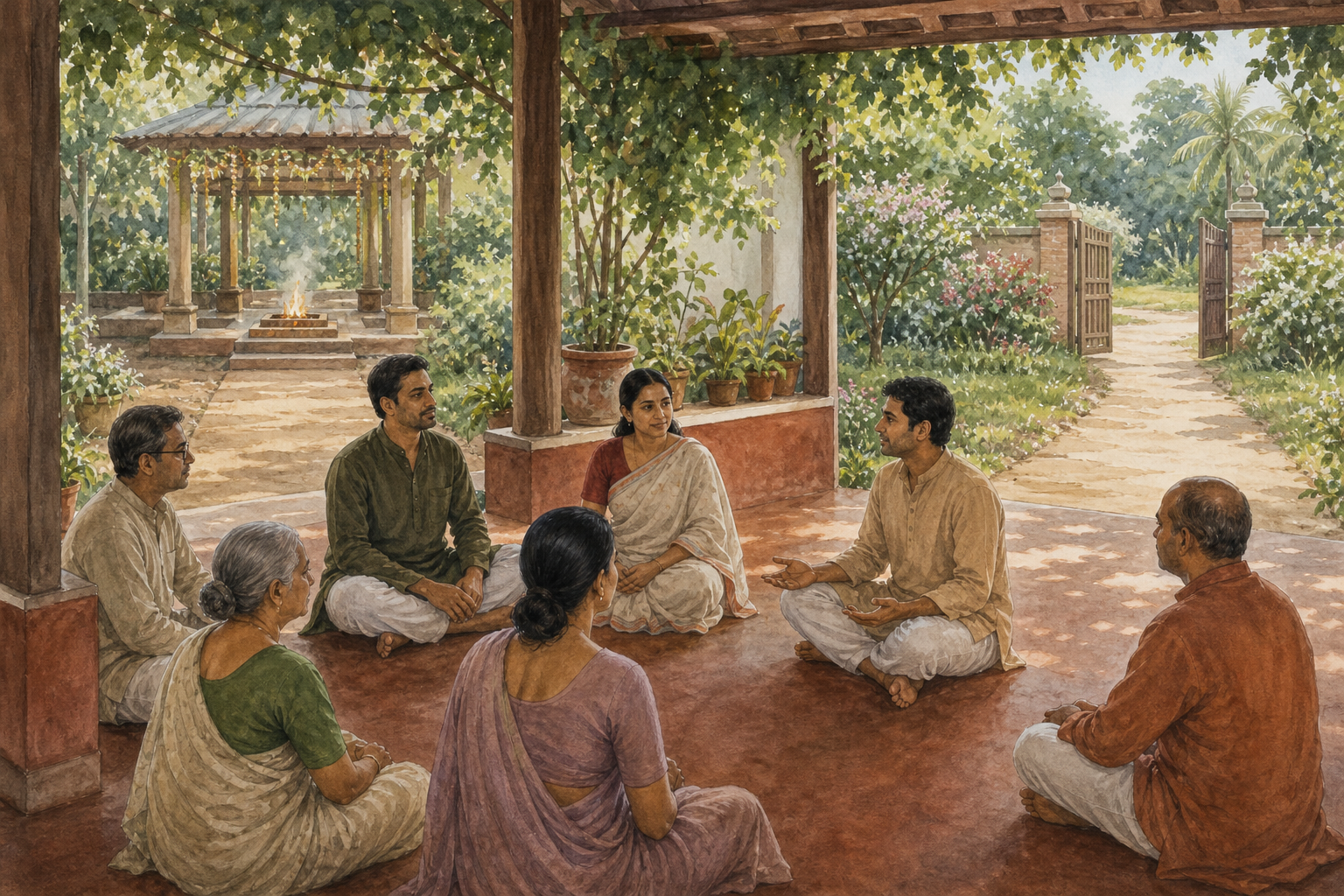
A Sanatan homecoming should treat the returning person as a moral agent, not as a unit in a demographic contest. If the decision is produced by intimidation, material leverage, family threats, humiliation, or fear of social exclusion, a ceremony cannot make it spiritually credible.
That standard matters especially in a public campaign. Some people may carry mixed family histories, observe practices from more than one tradition, or understand their identity differently from campaign workers. No one should be classified as a converted Hindu merely because an outsider has reconstructed that person’s ancestry. The person concerned must be able to say what return means and whether return is actually desired.
Before a yajna is presented as ghar wapsi, organizers should be able to demonstrate safeguards such as these:
- The participant personally affirms the decision and receives a clear explanation of what the ceremony means.
- The explanation is given in a language the participant understands, with space to ask questions privately.
- The participant can stop or withdraw without public shame, retaliation, or loss of ordinary community assistance.
- Food, employment, schooling, housing, debt relief, or another necessity is not made conditional on adopting a religious identity.
- Names, faces, family details, and testimonies are not published without separate and explicit permission.
- Children attending with parents are not presented as independent converts capable of making the same decision as an adult.
- A participant who reports pressure has access to someone outside the immediate recruitment chain who can hear the concern confidentially.
Privacy deserves particular attention. Publicity may help an organizer demonstrate scale, but it can expose a returnee to conflict at home, at work, or in the surrounding locality. Consent to a yajna is not automatically consent to appear in a video, disclose a former affiliation, or become the face of a campaign. Ask whether those permissions are handled separately.
These protections do not dilute ghar wapsi. They defend it. A campaign confident in its dharmic purpose should want every homecoming to withstand the simplest question: did this person choose freely?
The demographic argument requires a defined measure
“Countering demographic change” is a political and social claim, not a self-explanatory fact. Before you repeat it, ask what change is actually being measured. Religious affiliation, migration, birth patterns, marriage, and individual conversion can all affect the composition of a locality, but they are different processes. A ceremonial total cannot distinguish among them.
A credible demographic case should identify:
- The geography: Bengal as a whole, a district, a block, a municipality, or a particular village cannot be used interchangeably.
- The comparison period: a claim of change needs a defined starting point and ending point.
- The measure: population share, self-declared religious affiliation, recorded conversions, migration, or another indicator must be named.
- The method: organizers should explain how people are counted, how duplicate attendance is removed, and whether the count represents individuals or households.
- The limit of the conclusion: a local ghar wapsi event may matter deeply to its participants without proving a Bengal-wide demographic effect.
Until a baseline and counting method are provided, demographic change should be understood as the campaign’s motivating frame, not as a demonstrated result of the 1,008-yajna plan. That distinction allows you to support Hindu cultural continuity without passing an unverified claim from one person to another.
The same discipline applies to eventual participation figures. Organizers should distinguish people invited, people who attended, people who came as supporters, people who personally requested ghar wapsi, and people who completed a ceremony. Combining those groups into one large total would make the number impressive but unusable.
Use this checklist before giving money or endorsement
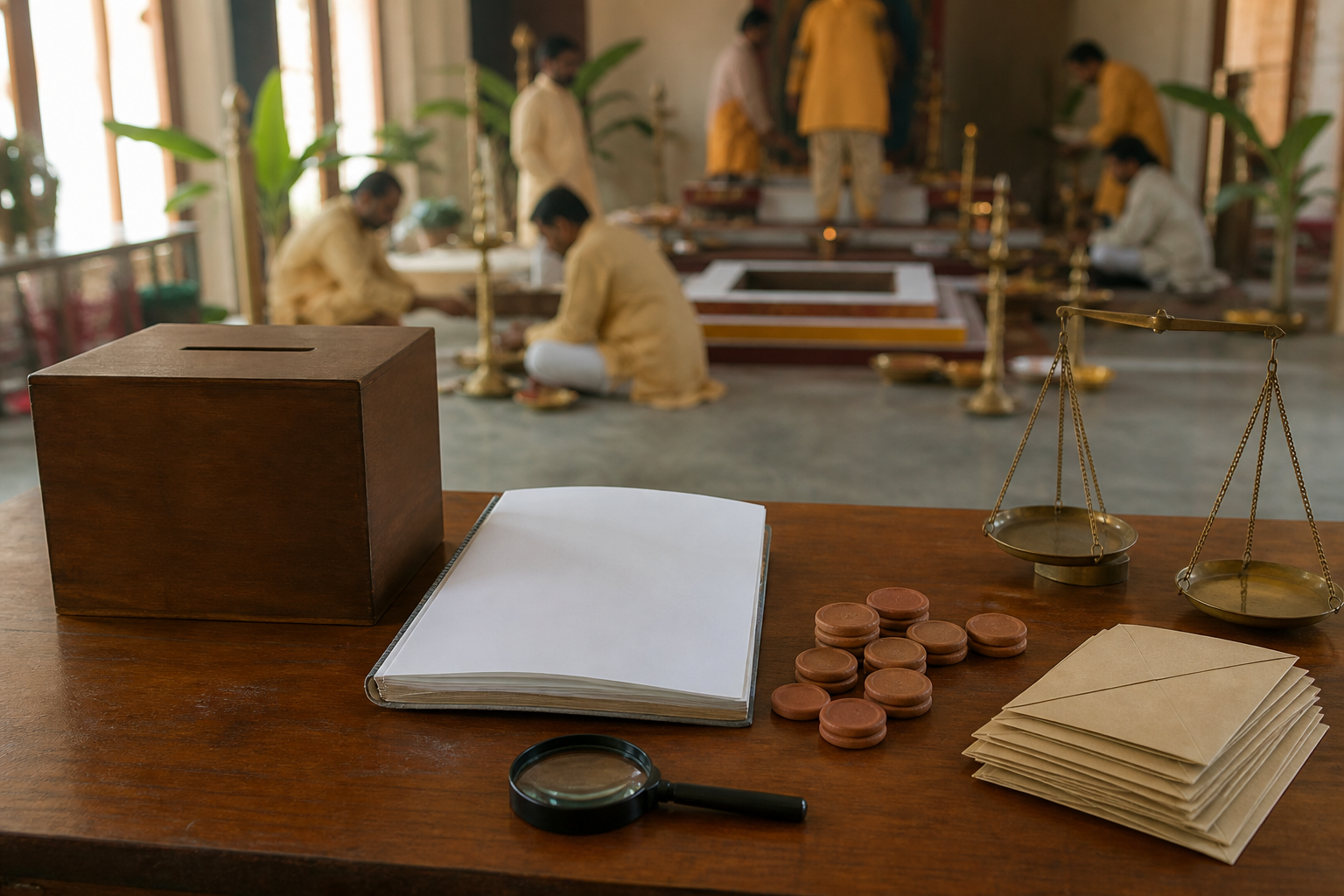
You do not need to choose between automatic applause and automatic rejection. Ask for enough information to decide responsibly. If you are approached as a donor, volunteer, temple representative, community elder, or prospective participant, put the following questions to the person responsible for the local event:
- Who is accountable? Obtain the name and contact details of the local organizer, the religious authority conducting the yajna, and the body responsible for complaints.
- What exactly does 1,008 count? Ask whether it means separate fires, separate venues, separate dates, or a total assembled through another method.
- Where and when will events occur? A campaign of this scale should be capable of publishing a schedule or explaining how local dates will be verified.
- How are participants identified? Ask whether a person requests ghar wapsi or is approached because someone else has classified the person as converted.
- How is free consent recorded? The method should protect privacy while still allowing organizers to demonstrate that participation was voluntary.
- How will personal information be protected? Ask who can access names, photographs, prior religious details, addresses, and family information, and whether participants can refuse publicity.
- What happens if someone withdraws? There should be a clear answer that does not involve shame, threats, or the loss of unrelated assistance.
- Where does donated money go? If funds are being collected, request a named recipient, a stated purpose, records of expenditure, and an account of unused funds.
- What follows the ritual? Ask which local temple, satsang, acharya, or community contact will remain available to the returnee after the yajna.
- How will completion be reported? Look for ceremony-by-ceremony accounting that does not inflate attendance into conversions or expose participants who requested confidentiality.
A missing answer need not prove misconduct. It may mean the campaign is still being organized. But uncertainty should change what you do: delay a financial contribution, avoid sharing participant details, and do not repeat a projected number as a completed achievement. Support can become firmer as accountability becomes clearer.
After the ceremonies, judge success by more than images of sacred fire. Ask whether returnees can affirm their decision privately, whether their information remained protected, whether complaints were addressed, and whether a functioning local community received them. A person welcomed during a public ritual but left isolated afterward has been counted more carefully than they have been cared for.
The strongest form of ghar wapsi is therefore not a single event. It is a durable relationship with Sanatan practice: access to worship, guidance, festivals, samskaras, community life, and the freedom to ask difficult questions. Organizers need not impose one uniform path, but they should be able to show where a returnee can turn once the gathering disperses.
Key takeaways
- The confirmed public claim is an upcoming Bengal campaign involving a planned total of 1,008 yajnas for Sanatan ghar wapsi.
- The yajna total must not be presented as a count of returnees or as proof of a demographic effect.
- Free individual consent, the ability to withdraw, and control over personal information are essential tests of dharmic credibility.
- A demographic claim needs a defined geography, period, measure, and counting method before you repeat it as fact.
- Before donating, volunteering, or publicly endorsing the campaign, identify the accountable local organizer and ask how participants will be protected and supported afterward.
If you want to help, begin with the proposed yajna nearest to you. Find the accountable person and submit these questions in writing. Offer your support when the answers protect the returnee as carefully as they protect Sanatan identity. A homecoming worthy of dharma should leave the participant with freedom, dignity, and a community that remains after the sacred fire is extinguished.
References
