
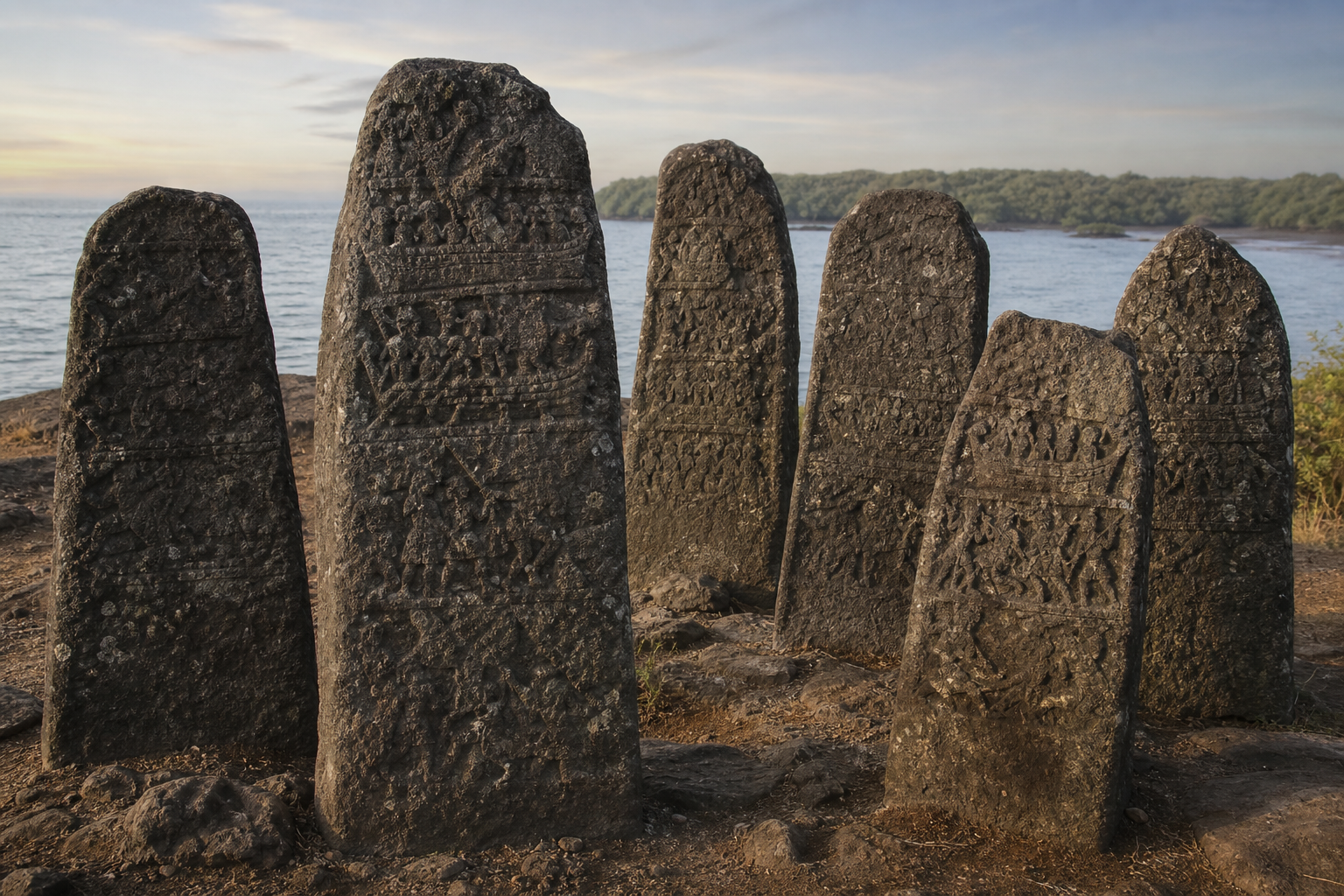
If you want material evidence that medieval Bharat fought organized wars at sea, don’t begin with a sweeping claim about an ancient navy. Begin with six carved stones at Eksar in Borivali West. Four of them show ships advancing, attacking, carrying commanders and returning from battle. All six place martial death inside a sacred journey.
These Eksar Viragals can change how you understand Mumbai’s coastline, but only if you read them carefully. They are strong evidence for a medieval maritime culture. They are not a licence to attach every carved vessel to whichever famous king or battle best suits a modern narrative.
Key takeaways before you examine the stones
- The six Viragals are generally dated to the eleventh century; four contain unmistakable naval scenes, while the first two concentrate on warfare on land.
- Read each slab from its battle scenes toward its heavenly panels. Combat, death, divine reception and worship belong to one memorial sequence.
- The fleets are not decorative background. Repeated ships, commanders, casualties, coordinated attacks, disembarkation and return voyages depict organized maritime warfare.
- Eksar’s connection with Sopara explains why this coast mattered strategically, but the damaged inscriptions prevent a confident identification of every warrior, ruler or engagement.
- The safe conclusion is substantial: medieval Konkan possessed a political and sacred vocabulary for commemorating men who died in conflicts fought on the water.
Read from the battlefield upward to Kailasa
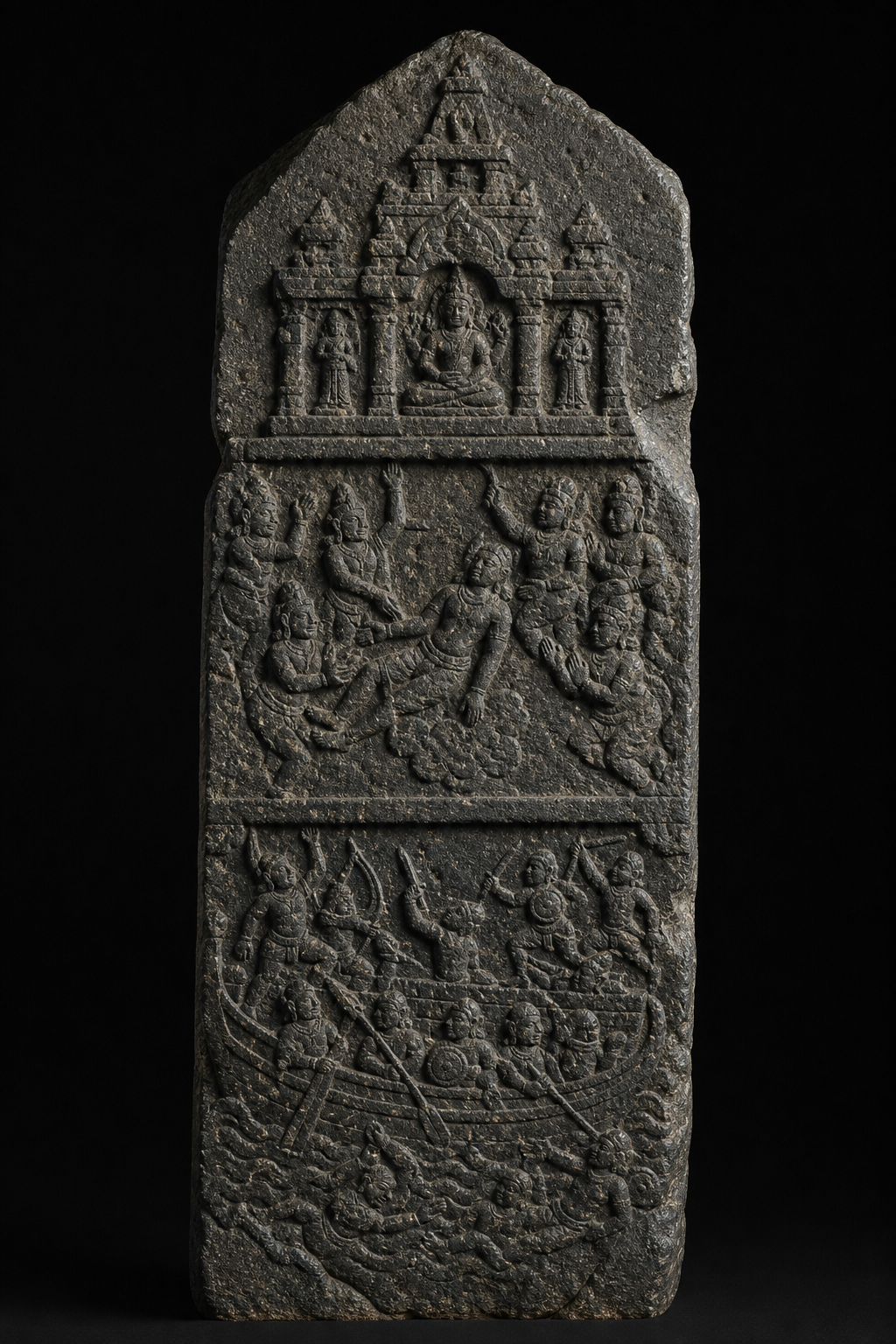
A Viragal is a hero stone: a memorial raised for an exceptional act of courage, commonly the death of a warrior, soldier or rescuer. The name joins vira, or hero, with kal, or stone. Its use in Marathi reflects Kannada influence; dagada is the ordinary Marathi word for stone. Hero stones occur widely in Maharashtra and southern Bharat, but the concentration of naval combat at Eksar makes this group unusual.
Start at the lowest surviving panel. That is where action usually belongs: cavalry charges, elephant combat, rows of ships, weapons, wounded men and bodies in the water. Then move upward. Apsaras receive or garland the dead, Gandharvas make music, worshippers approach a Sivalinga, and the warrior reaches Sivaloka or Kailasa. Several slabs culminate in Siva, Siva-Parvati or a heavenly temple; some also show a bone-relic casket being carried above the scene.
This direction matters. If you study only the ships, you reduce the memorial to military illustration. If you study only the divine register, you lose the specific act of courage being sanctified. The stone binds the two together: a violent death in the temporal world becomes honoured passage within a Saiva sacred order.
You should also distinguish a scene from a caption. A carving can show that several vessels fought, that men fell overboard or that a prominent figure travelled beneath a canopy. It cannot, by itself, tell you the person’s name, the fleet’s allegiance or the exact year. Use verbs such as “shows” for visible details and “may represent” for historical identifications. That small discipline prevents a plausible reading from hardening into a false certainty.
A stone-by-stone field guide to the six Viragals
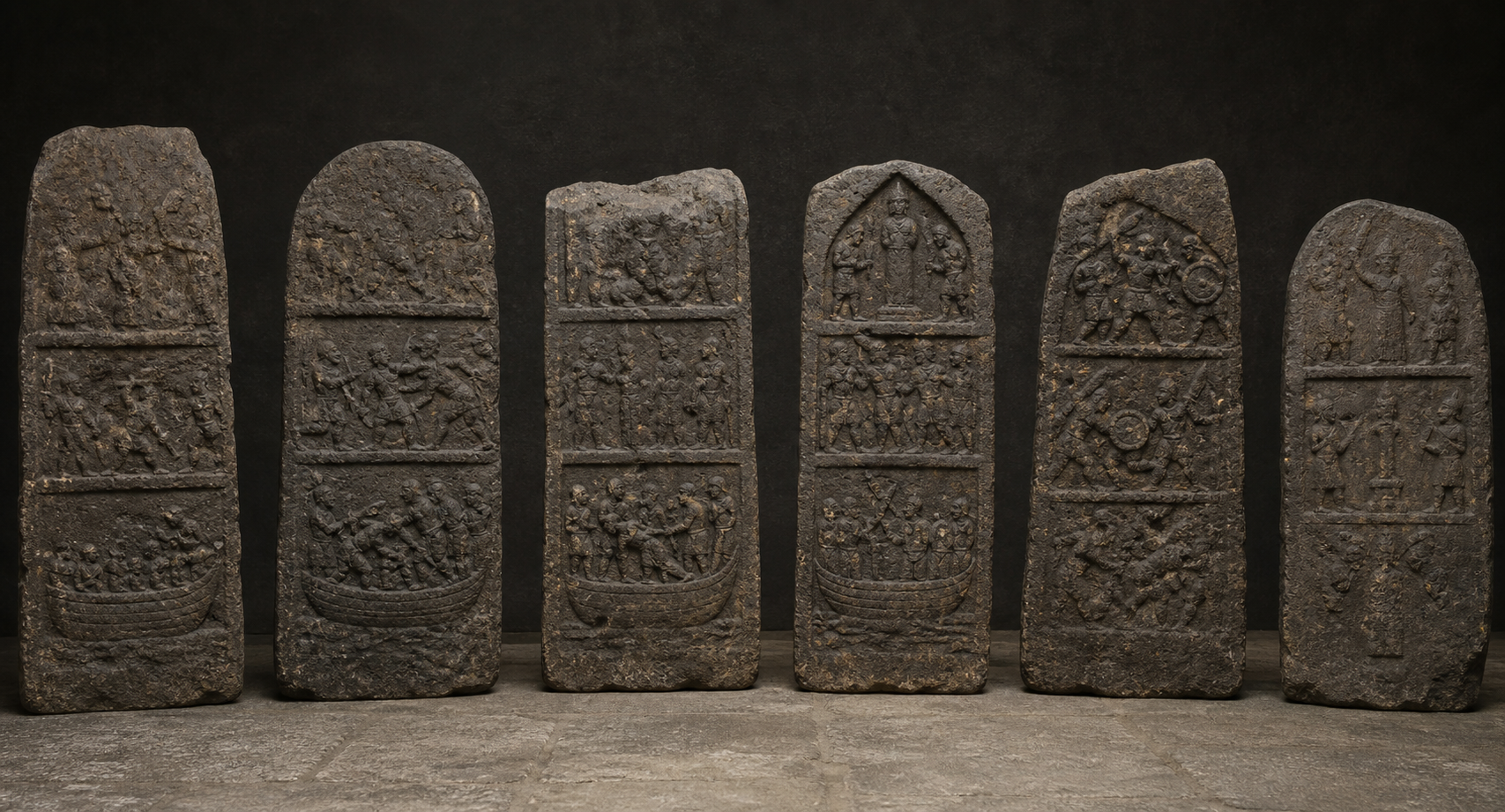
The six slabs do not repeat one standard image. Their panel sequences move through land combat, naval engagements, military return and divine reception. The following guide gives you a reliable order of attention.
| Viragal | What to notice | What follows the battle | What you can responsibly infer |
|---|---|---|---|
| 1 | Horsemen, archers, a lancer, swordsmen and elephants occupy the martial panels. One archer is left to face six horsemen. | The fallen rise with Apsaras, worship a Sivalinga and enter a realm of music; a bone-relic casket appears above. | The Eksar group preserves land warfare as well as naval warfare and treats death as a passage to Sivaloka. |
| 2 | Corpses, elephants, a ruler, a general, a minister and close combat establish a royal battlefield. One elephant flings and tramples a man. | The warrior reaches Kailasa amid garlands, singing and dancing, with a relic casket in the upper register. | The imagery joins personal valour to command hierarchy and royal warfare, although it does not identify the ruler by name. |
| 3 | Five mast-fitted rowing ships advance. In the next panel, four vessels attack a much larger ship while men fall into the sea. | Worshippers approach a Sivalinga, Gandharvas assemble, and Siva-Parvati appear on Kailasa. | This is direct visual evidence of a fleet engagement rather than a generic coastal or trading scene. |
| 4 | Eleven armed ships attack a vessel; five ships then assail a boat from the opposite side. Nine vessels return, troops disembark, an army marches, and an eminent person receives it. | Worship, Apsaras, Gandharvas, warriors, horns, conches, clappers and a heavenly Siva temple complete an eight-panel sequence. | Sea combat, landing, overland movement, ceremonial welcome and sacred commemoration appear as stages of one campaign narrative. |
| 5 | Six mast-and-oar ships advance, one carrying a king beneath a canopy. Three ships from each side collide as wounded and dead men fall into the water. | Apsaras garland the fallen; worship, offerings, music and dance lead to a heavenly royal court. | The canopy marks command aboard ship, while the matched groups of vessels make the naval character of the encounter unmistakable. |
| 6 | A compact lower panel shows a battle at sea. | The warrior sits in heaven in the upper panel. | The shortest slab states the memorial idea with exceptional economy: naval death below, honoured immortality above. |
Viragals 3 and 4 once carried eleventh-century inscriptions near their battle scenes, but those inscriptions are now undecipherable. That loss is decisive. The fleet imagery survives; the names and precise circumstances do not.
You may read the group as a connected visual epic because land and sea warfare, return, reception and heavenly reward recur across it. Stone 4 even contains much of that progression within a single slab. Yet the surviving imagery does not settle whether all six stones commemorate one campaign, several deaths in one conflict, or different engagements. The connected reading is illuminating, not proven.
What the struggle for Sopara explains—and what it cannot prove
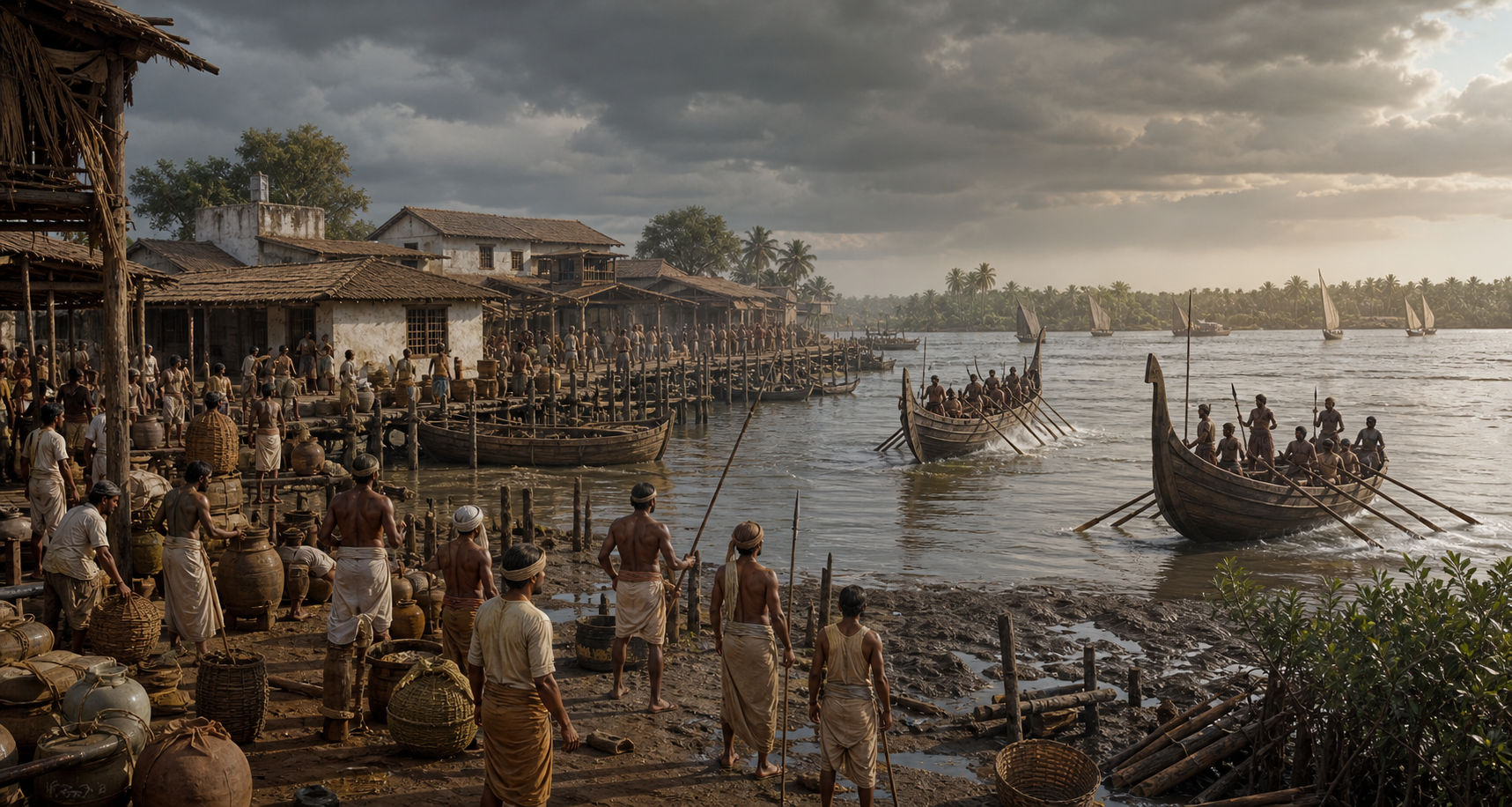
Eksar mattered because it served as a naval hub and strategic route toward Sopara, the prized port roughly 38 kilometres away. A fleet stationed or commemorated here therefore belongs to a wider contest over access, revenue and political control along the north Konkan coast. The history of that contest includes at least three notable conflicts.
In 1019, the Paramara ruler Bhoja conquered Konkan after defeating the Shilahara king Arikesari in a fierce naval engagement. The victory was also commemorated through land grants near Banaswada in Rajasthan and at Behama near Indore. Because this battle falls within the century assigned to the stones, it is a possible context for the Eksar imagery. The unreadable local inscriptions, however, prevent you from declaring that association as fact.
In the twelfth century, the Kadambas of Gopakapattana, or Goa, fought the Shilaharas of North Konkan near Sopara. The surviving references establish another maritime struggle but leave its details sparse. This conflict strengthens the larger picture of recurring competition for the port; an eleventh-century dating would place it after the carving of the Eksar set.
In 1265, the last Shilahara king, Someshvara, fought the Sevuna ruler Mahadeva in a final sea battle. Hemadri’s account presents Someshvara as choosing death in the sea rather than capture. It is a powerful episode in the naval history of the region, but it occurred too late to be the event depicted by eleventh-century stones.
This chronology gives you a useful three-level test. The visible facts are the ships, weapons, casualties, commanders and sacred panels. The strategic interpretation—warfare connected with control of Sopara—is strongly plausible. The assignment of a particular slab to Bhoja, Arikesari or another named combatant remains uncertain. Moti Chandra’s eleventh-century dating narrows the possibilities; it does not restore the lost inscriptions.
The restraint makes the case for Bharat’s naval heritage stronger, not weaker. You do not need to force all three wars onto the six slabs. Multiple Konkan powers repeatedly fought at sea for Sopara, while the Eksar carvings independently preserve the visual language of organized fleets. Together, the geographical setting, the regional chronology and the carved scenes establish a durable maritime tradition without requiring an unsupported identification.
Make a visit produce evidence, not just photographs
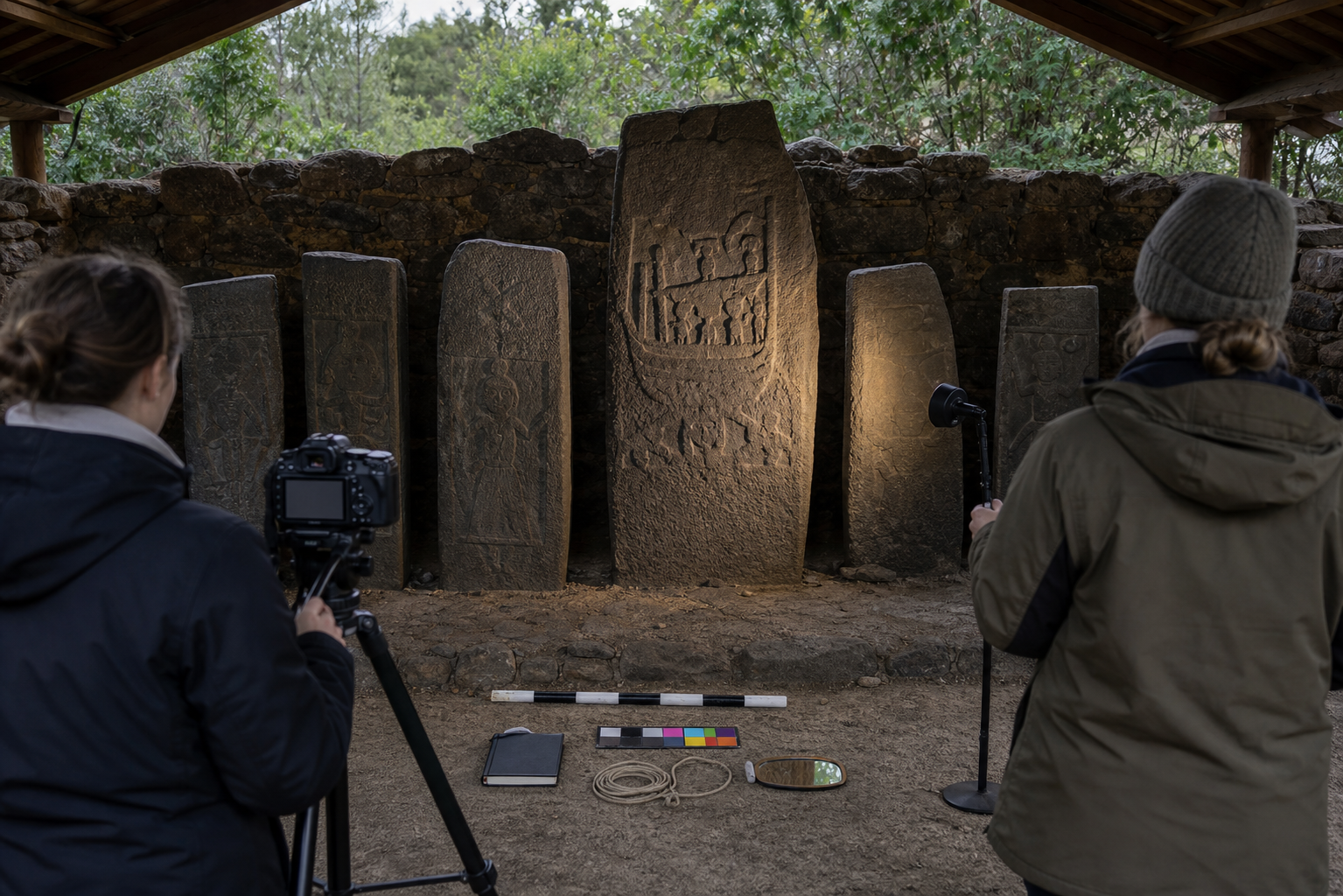
The historical landscape has nearly disappeared around the stones. Eksar is now enclosed by metropolitan Mumbai, with the small Gaon Devi Temple and the six Viragals surviving as its principal older traces. The slabs are kept in the compound of Club Aquaria, a private residential property. In the 1880s, by contrast, the six stones stood in a mango orchard on the west bank of a pond. British railway development had also alienated 701 acres in Eksar for the Baroda route through Borivali.
That transformation should shape your visit. A close photograph of a ship is valuable, but it cannot replace a record of the complete slab, its position, condition and relationship to the other five. Use this sequence if you receive permission to enter:
- Confirm access before travelling. The stones are within a private compound, so do not assume that a heritage interest creates a right of entry. Arrange permission and follow the property’s restrictions.
- Record the whole setting first. Photograph the row and each complete slab before moving to individual panels. Note the date, the Viragal number and the direction from which you photographed it.
- Work from bottom to top. Make one image of every panel in sequence. For Viragals 3 and 4, include the damaged inscription areas even if no letters are visible to you.
- Separate description from interpretation. Write “five mast-fitted ships advance” before writing “a royal fleet attacks.” Count ships, figures, oars and panels where they remain clear; mark every uncertain feature as uncertain.
- Do not alter the surface to improve an image. Avoid chalk, paint, oil, water, rubbing, scraping or amateur cleaning. Better light and a different camera angle are safer than applying anything to the stone.
- Caption the chronology accurately. Identify the set as eleventh-century, present 1019 only as a possible context, and treat the twelfth-century and 1265 wars as evidence of Sopara’s continuing strategic importance rather than as scenes on these slabs.
For a first close reading, begin with Viragal 4. Its eight panels let you follow ships into battle, back from the engagement and onto land before the narrative reaches worship and heaven. Then compare its vessels with Viragals 3, 5 and 6. Finish with the land battles on Viragals 1 and 2. This order will help you see the collection as more than six isolated sculptures without pretending that every slab records the same event.
Eksar does not need a grander legend imposed upon it. It needs legible panel records, responsible access, protection from physical interference and public teaching that preserves the boundary between evidence and conjecture. If you write, photograph or speak about the site, make that boundary visible. You will leave the next reader with something more useful than a slogan: a method for recognizing medieval Bharat’s naval inheritance in the stone that still survives.
References
