
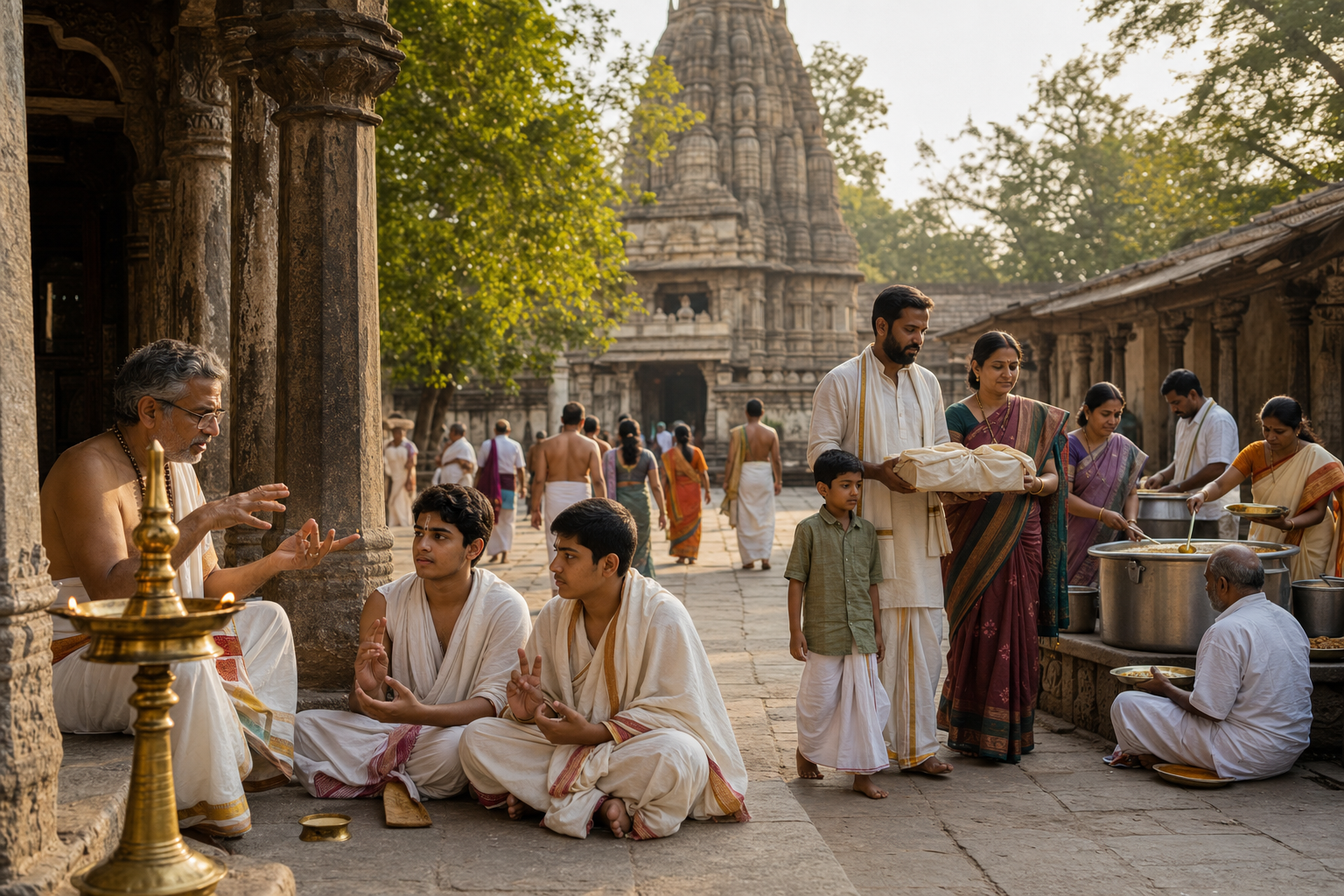
If you are worried that a temple controversy, a damaged monument, or a hostile narrative can sever Dharmic continuity, start by changing the unit of protection. A sacred place matters enormously, but heritage does not live in stone alone. It also lives in the person who knows a ritual sequence, the family that safeguards a pothi, the teacher who can explain a verse in a familiar language, the kitchen that serves a community, and the pilgrim route people still walk.
You can defend this inheritance without turning every dispute into a communal battle. The durable approach is to make knowledge harder to erase, institutions more accountable, public claims harder to distort, and the next generation capable of carrying more than a slogan.
Protect the whole inheritance, not only its monuments
Heritage failure often begins before any visible destruction. It begins when only one elder knows the family observance, nobody can read the script in which a manuscript is written, a festival continues without anyone understanding its meaning, or an institution depends on a single custodian with no successor.
Medieval Dharmic traditions endured political upheaval, episodes of temple desecration, lost libraries, and displaced scholars because continuity did not depend on one kind of institution. Households, village shrines, gurukuls, mathas, teachers, reciters, manuscript copyists, festivals, devotional gatherings, and pilgrimage networks all carried parts of the inheritance. When one centre became vulnerable, other custodians could continue the work.
Use that history as a practical model. Look at the heritage around you through four connected layers:
- Sacred places: temples, shrines, pilgrimage routes, monasteries, memorials, archaeological remains, and the landscapes that give them meaning.
- Knowledge: scriptures, commentaries, manuscripts, oral explanations, liturgies, music, regional languages, craft knowledge, and institutional records.
- Living practice: puja, meditation, recitation, festivals, vows, ethical disciplines, community meals, teaching, charity, and other forms of seva.
- Custodianship: families, acharyas, monks, nuns, granthis, teachers, artisans, temple workers, sangats, trusts, schools, and local volunteers.
A monument may remain standing while its language, ritual knowledge, and community function disappear. The reverse is also possible: a damaged institution may be rebuilt because practice and memory remain alive elsewhere. That is why preservation plans must connect all four layers.
Begin with a vulnerability audit of one tradition, place, or collection close to you. Ask what would disappear if the present custodian became unavailable. Identify which knowledge exists only in memory, which objects lack an intelligible record, which practices have no learner, and which files or manuscripts exist in only one location. Your first priority is not necessarily the most famous object. It is the point where one loss could break transmission.
Build a heritage register that another custodian can use
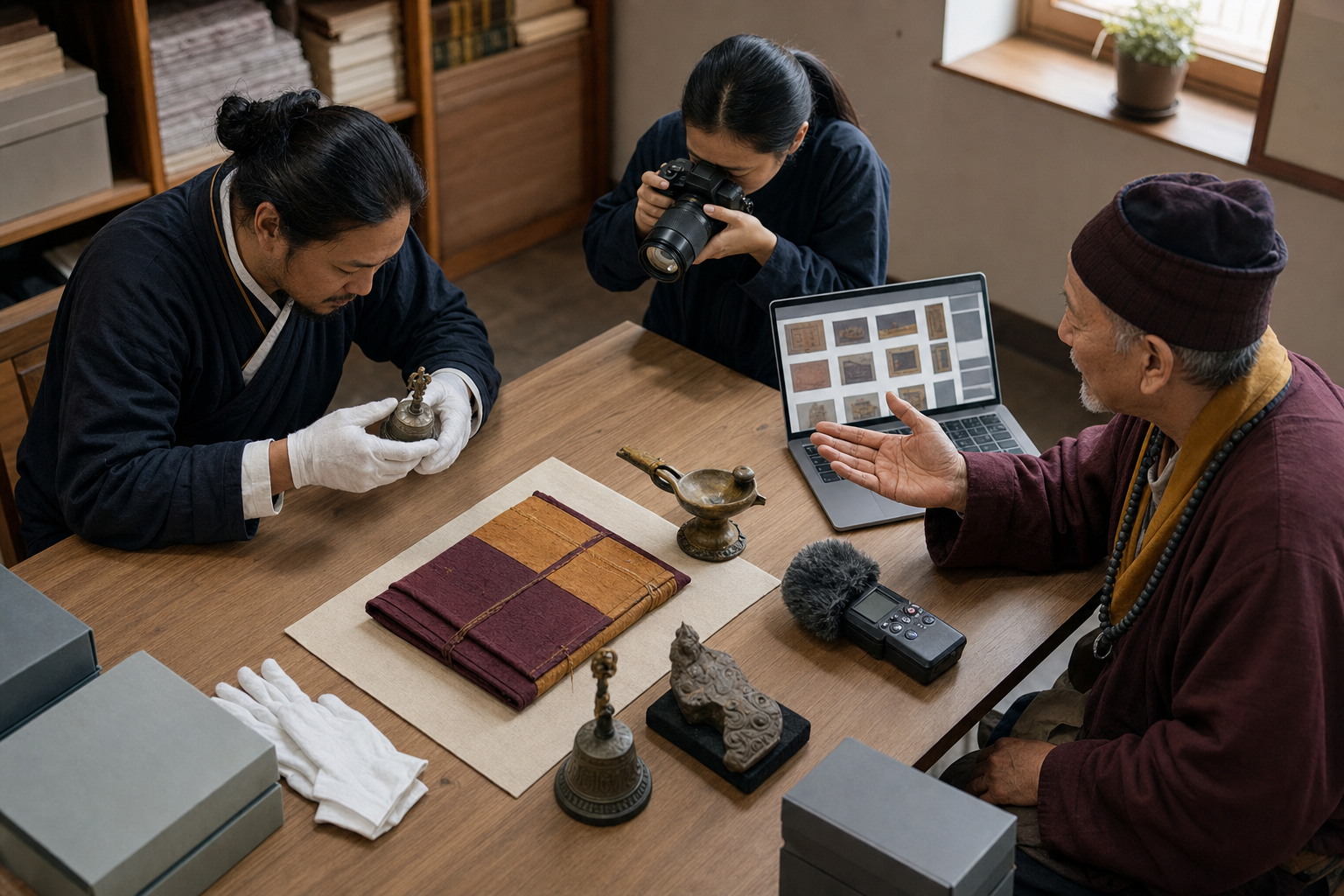
A cupboard full of unidentified manuscripts is storage, not yet preservation. A folder of ceremony videos is not enough if nobody knows the occasion, sequence, language, participants, or limits on access. Documentation must make an item understandable to an authorised person who was not present when it was created.
Create a simple heritage register in a notebook, spreadsheet, or community database. Start with a tractable collection rather than waiting for a grand institutional project. For each entry, record:
- What the item, practice, place, or oral account is called, including regional or sectarian names.
- Which language and script it uses, and who can currently read or explain it.
- How it is used: daily, seasonally, during a festival, at a life-cycle rite, in teaching, or in seva.
- Where it came from, separating documented provenance from family memory or local tradition.
- Who is responsible for its physical care, interpretation, and transmission.
- Where the working material and preservation copy are kept.
- Who may view, reproduce, teach, or publish it, especially when the material is private, initiatory, or institutionally restricted.
- What the next custodian still needs to learn.
Distributed copying protected manuscript traditions from a single catastrophic loss. Apply the same logic now. Keep preservation material apart from the version used in everyday work. Entrust an appropriate copy to another responsible custodian or repository. A digital copy is useful, but it should retain the description, language information, access conditions, and provenance that make the material intelligible.
Do not confuse preservation with unrestricted publication. Family records, internal institutional documents, sacred recitations, or initiation material may require limited access. Label those limits clearly. A protected archive can preserve knowledge without placing everything in public circulation.
Then test the register. Ask another authorised person to locate an entry, explain what it is, find the associated material, and identify the next responsible action. If that person cannot do so without calling the original custodian, the system still has a single point of failure.
Turn stored knowledge into living transmission
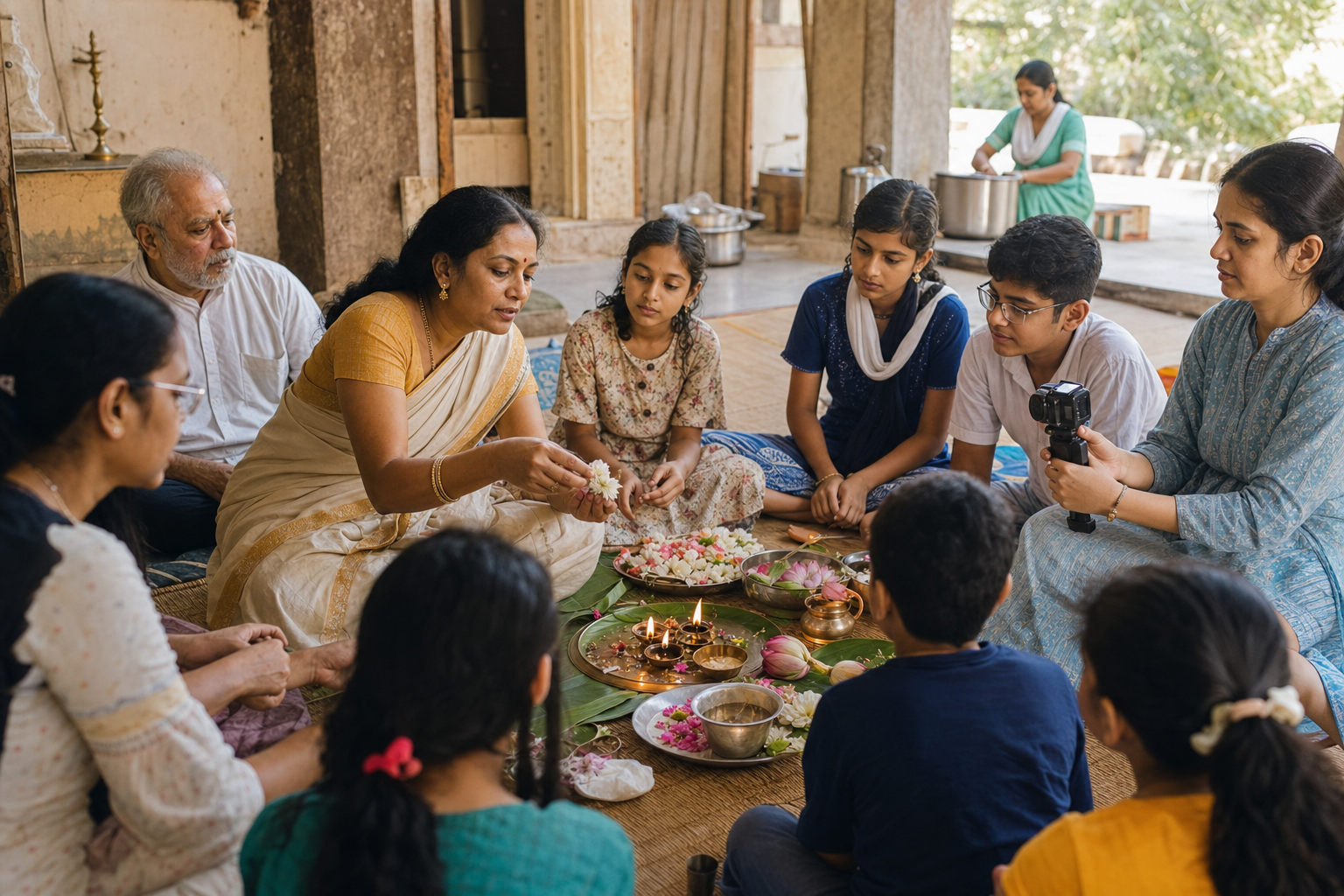
Archives preserve possibility; people preserve continuity. The decisive question is whether someone can perform, explain, and responsibly adapt what has been inherited.
Bhajans, kirtans, wandering teachers, vernacular expression, household worship, and local festivals carried sophisticated Dharmic ideas into ordinary life. Their strength came from joining memory to repetition and philosophy to forms people could understand and practise. Vernacular explanation was not necessarily a dilution of knowledge. It often widened the circle capable of preserving it.
When you teach a practice, include four things:
- Form: the words, gestures, materials, sequence, melody, or discipline as accurately as the lineage preserves them.
- Meaning: an explanation in language the learner understands, while retaining important original terms that resist simple translation.
- Responsibility: a real role for the learner, such as preparing materials, leading a response, reading a passage, recording an oral history, maintaining the register, or participating in seva.
- Correction: a trusted person who can distinguish an error from a legitimate family, regional, monastic, or sectarian variation.
Do not erase variation in the name of standardisation. Label it. A family observance can be identified as a family observance; a regional recension can remain regional; a sectarian interpretation can be taught with its lineage named. Clear labels allow traditions to differ without forcing one practice to impersonate a universal rule.
Transmission also becomes stronger when worship, learning, and service reinforce one another. Dharmasthala joins Hindu worship at the Sri Manjunatheshwara Temple with long-standing Jain stewardship under the Heggade family. Its annadāna, educational work, and healthcare outreach show how a sacred institution can make dharma visible as public good. The relationship is not incidental: worship gives service an ethical centre, while service gives the surrounding community a lived stake in the institution’s continuity.
Use that connection when deciding where to contribute time, skill, or money. Ask whether an institution is training future custodians, preserving original material, explaining it in accessible language, maintaining a living practice, and serving people beyond ceremonial occasions. A renovation may protect a structure. A capable successor, a usable archive, and an active community protect continuity.
Answer attacks with evidence, due process, and discipline
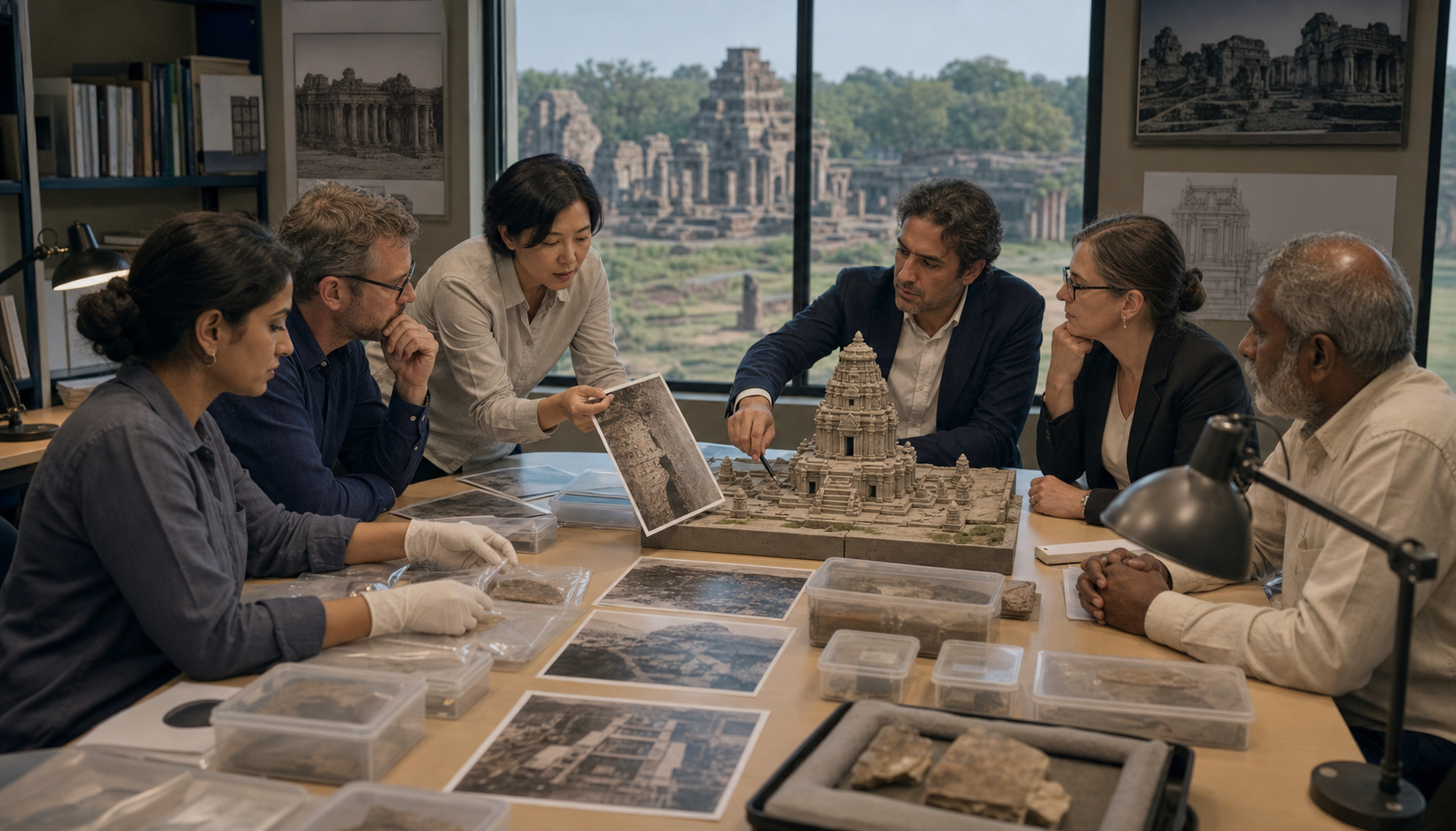
Protection becomes most difficult when an accusation, inflammatory claim, or misleading portrayal begins circulating. Two reactions are tempting and damaging. One is to amplify the claim immediately because outrage rewards speed. The other is to dismiss it without examination because the institution is sacred. Neither reaction protects credibility.
Contention around Dharmasthala has been framed as an attack on Hindu faith and on the wider civilizational meaning of a shared sacred institution. Devotees may therefore experience a charge against the institution as a charge against their identity. That emotional and cultural consequence is real, but it does not by itself prove or disprove an underlying allegation. Evidence must answer the factual question.
Use a disciplined response sequence:
- Pause before amplification. Save the exact claim and its original context. Do not spread a sensational version merely to condemn it.
- Define the target. Is the allegation about an individual, an administrative decision, a specific event, the sacred site itself, or an entire tradition? Do not let those levels collapse into one another.
- State what is known. Distinguish an allegation, supporting material, a disputed interpretation, an official finding, and a final judgment. Use the most accurate term available.
- Demand fair inquiry. Support transparent investigation, an opportunity to answer, preservation of relevant records, and correction when claims are unsupported or materially misleading.
- Reject collective blame. Misconduct by a person does not establish guilt for a temple, lineage, religion, or community. Likewise, reverence for a tradition does not place every officeholder beyond scrutiny.
- Keep the response dharmic. Do not threaten, dox, dehumanise, or invent counterclaims. Satya governs what you assert; ahimsa governs how you act; seva keeps protection connected to the welfare an institution exists to serve.
A short public statement can hold this line: identify the precise claim, say what evidence has and has not established, support a fair investigation, and oppose attempts to assign collective guilt. That is stronger than either reflexive denial or indiscriminate outrage because it does not make truth depend on political loyalty.
The same discipline applies to history. The medieval record contains documented destruction and displacement alongside negotiation, coexistence, Sufi interaction with local communities, and artistic exchange. A pro-Dharma account does not need to suppress either side. Name violence precisely where the evidence supports it, but do not turn every encounter into the same story. Exaggeration gives critics an easy way to evade the strongest evidence.
Before sharing a historical or contemporary claim, label it for yourself: documented fact, contested allegation, community memory, theological interpretation, or political opinion. If you cannot tell which it is, investigate before presenting it as settled. Cultural advocacy becomes more persuasive when the reader can see where certainty ends.
Key takeaways
- Protect sacred places together with their languages, practices, records, service functions, and human custodians.
- Find single points of failure: knowledge held by one person, material kept in one location, or a ritual with no learner.
- Create a usable heritage register with provenance, context, access conditions, responsible custodians, and a clear succession need.
- Teach form and meaning together, then give the learner a real responsibility within the tradition.
- Preserve regional, family, and sectarian variations by labelling them accurately rather than erasing them.
- When controversy arises, separate allegation from finding, individual conduct from collective identity, and devotion from institutional immunity.
- Let satya, ahimsa, and seva shape not only what you defend, but how you defend it.
Your next protection move should be close enough to complete. Choose one manuscript, oral account, observance, shrine, teaching lineage, or service institution that matters to you. Identify its weakest link, document what another custodian would need, and place one learner inside the living work. Civilizations endure when inheritance stops being something we merely admire and becomes something we are prepared to carry.
References
- DharmaRenaissance Blog — Essential Analysis: B.L. Santhosh on Dharmasthala Slander and a Path to Dharmic Unity
- DharmaRenaissance Blog — Discover Hinduism’s Indomitable Resilience: A Complete, Evidence-Based Medieval History
