
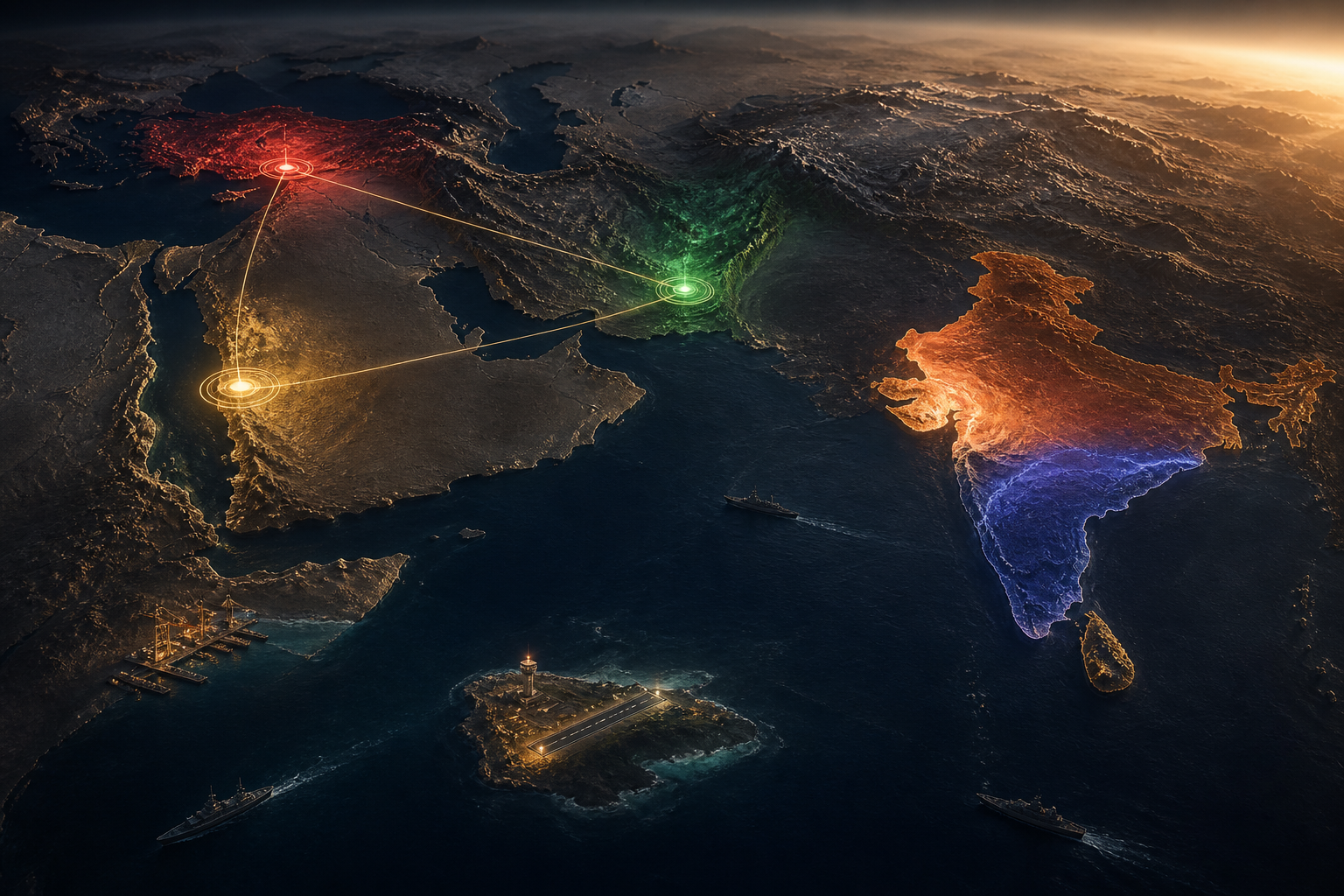
If you are trying to decide whether the Saudi-Pakistan-Turkiye alignment threatens Bharat, the short answer is: take it seriously, but do not mistake it for an automatic three-state war plan. The pact is a political commitment whose operational meaning has yet to be demonstrated.
The central risk is not that the three countries suddenly possess an identical list of enemies. They do not. It is that a shared Sunni identity may help them coordinate despite their different priorities. For Bharat, that calls for disciplined monitoring, continued bilateral diplomacy and readiness based on demonstrated capabilities rather than dramatic labels.
Read the pact in layers, not as an automatic war guarantee

The confirmed starting point is the signing of a mutual defence pact among Saudi Arabia, Pakistan and Turkiye. The crucial limitation is equally important: its war-entry threshold is not clear. An attack on one member does not yet tell you exactly when, how or even whether the other two would enter a conflict.
Four different levels of commitment are easily collapsed into the phrase “mutual defence”:
- Political solidarity: the three governments promise to stand together in broad terms.
- Crisis consultation: they agree to confer after an attack but retain separate control over the response.
- Operational assistance: they prepare specified forms of intelligence, logistical, diplomatic or military support.
- Automatic intervention: an attack triggers a defined military obligation without requiring a new political bargain.
The signing establishes political intent. It does not, by itself, establish an integrated command, forces reserved for collective action or an automatic promise to fight. Those would require additional evidence.
Whenever you see a new claim about the alignment, ask three questions. What event activates the commitment? Who decides the response? What action is actually promised? If the answers remain vague, you are looking primarily at a political signal. If they become precise and are backed by institutions and preparations, the strategic weight rises.
Shared identity connects three different threat maps

The alignment cannot be explained by a single common adversary. The apparent threat map places Iran at the centre of Saudi concern, Bharat at the centre of Pakistan’s hostility, and possibly Greece and Armenia among Turkiye’s concerns. In other words, the three capitals do not share one existential enemy.
That divergence is precisely why Sunni identity matters. It supplies a language of solidarity that can lower the political cost of cooperation when national threat perceptions do not otherwise line up. It can help leaders present coordination as natural, legitimate and larger than a temporary transaction.
This is where Samuel Huntington’s 1993 civilizational-conflict thesis offers a limited insight. Huntington argued that future conflict would not be shaped only by states; broad identities formed by religion, history, language and inherited cultural experience would also influence alignment and friction.
The pact illustrates part of that mechanism, but it does not prove that civilizations act as single strategic units. Religious affinity may facilitate cooperation, while national interests still determine what each government will risk, fund and fight for. Saudi Arabia does not automatically inherit Pakistan’s India policy, just as Pakistan does not automatically inherit every Saudi or Turkish dispute.
Use the civilizational lens as a question, not as a conclusion. When someone calls this a “Sunni bloc,” ask whether they mean shared rhetoric, formal institutions, operational integration or proven conduct in a crisis. The label cannot answer all four.
Keep another boundary clear: governments, alliances and strategic establishments are not interchangeable with ordinary Muslim communities. Turning interstate analysis into indiscriminate suspicion would produce a false diagnosis and distract from the state decisions that actually matter. For a Dharmic audience, precision is part of strategic seriousness.
The danger for Bharat is conversion, not mere association
Pakistan has an obvious incentive to convert a three-country pact into wider support against Bharat. The important question is whether Saudi Arabia and Turkiye permit that conversion. Their signatures alone do not show that Pakistan’s India-focused threat perception has become a collective position.
The risk could develop through several distinct channels:
- Narrative conversion: Pakistan tries to recast a bilateral dispute with Bharat as a concern for a wider Sunni alignment.
- Diplomatic conversion: Saudi Arabia or Turkiye begins repeatedly endorsing Pakistan’s framing during India-Pakistan tensions.
- Institutional conversion: the pact creates standing bodies in which Pakistan can place Bharat-related scenarios on a collective agenda.
- Operational conversion: joint planning, access arrangements or other preparations become usable in a Pakistan-centred crisis.
- Crisis conversion: one or both partners provides concrete assistance when Pakistan confronts Bharat.
These are pathways to watch, not completed facts. They also require different Indian responses. Hostile rhetoric calls for narrative and diplomatic work. Standing military machinery calls for closer capability assessment. Concrete crisis assistance calls for deterrence and contingency planning. Treating every stage as if the final stage has already arrived wastes attention and can push otherwise separable interests into a harder bloc.
Bharat should therefore preserve the distinction between the three bilateral relationships. Pakistan’s hostility is direct. Saudi and Turkish conduct must be judged separately, issue by issue. Where their interests diverge from Pakistan’s, Indian diplomacy should keep that space open. Where they adopt an anti-Bharat position, the response should address the specific action rather than assume permanent alignment on every question.
This approach is neither complacency nor appeasement. It is an attempt to prevent Pakistan from gaining what it wants most from the arrangement: acceptance of its own enemy as the natural enemy of all three members.
Use an evidence board to track whether the pact is deepening
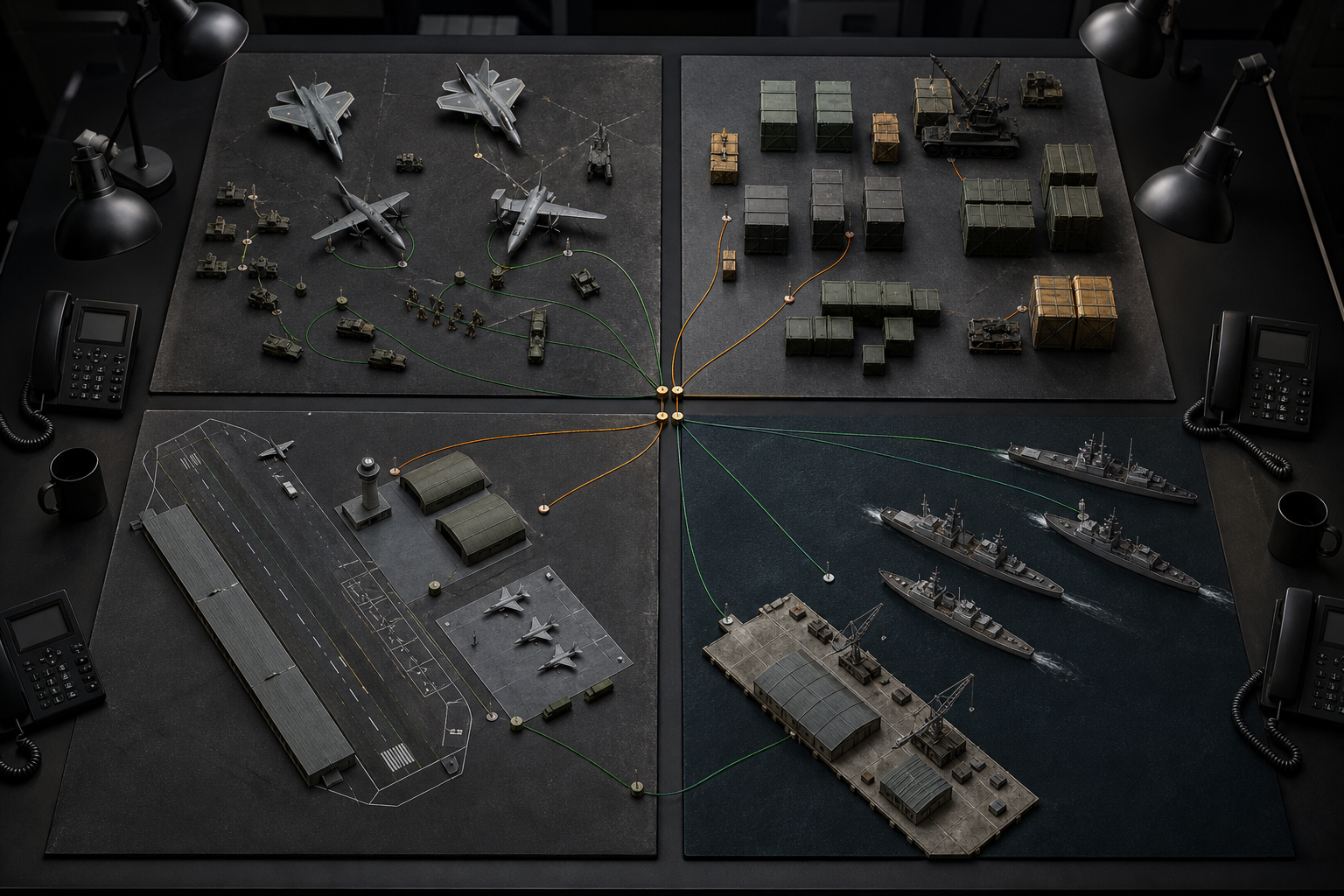
A signing ceremony is visible, but implementation determines strategic value. You can track that implementation without guessing by maintaining a simple, dated record of six types of evidence.
| Signal | What to look for | How to interpret it |
|---|---|---|
| Pact language | Definitions of an attack, geographic scope, consultation rules and promised responses | Precise clauses narrow the members’ room to avoid action; vague clauses preserve political discretion |
| Standing machinery | A permanent council, secretariat, liaison network or joint planning body | Regular institutions can turn occasional cooperation into a durable process |
| Operational activity | Recurring planning or exercises tied to identifiable collective-defence scenarios | Repeated preparation matters more than a ceremonial event because it builds usable coordination |
| Military enablers | Access, transport, communications, repair, refuelling or other logistical arrangements | Support mechanisms reveal whether political promises can be converted into action |
| Bharat-facing coordination | Saudi or Turkish adoption of Pakistan’s language and positions during India-Pakistan tensions | Repeated alignment would indicate that Pakistan is widening its bilateral agenda |
| Crisis performance | What each member actually supplies, withholds or conditions when another faces pressure | Conduct under cost is the strongest test of whether the pact is dependable |
For every entry, separate three labels: confirmed, claimed and inferred. A government announcement may confirm that a meeting occurred while leaving its operational consequence unknown. A commentator may claim an alliance-wide commitment that the public language does not contain. An analyst may reasonably infer a direction of travel, but the inference should remain clearly marked.
Also avoid double-counting. A speech repeated across several news reports is still one political signal. A sequence consisting of a defined obligation, a standing mechanism and repeated preparation is qualitatively different because each element adds something the others cannot provide.
The working rule is straightforward: commitment, capability and demonstrated will must be assessed separately. A strong statement without capability may be symbolic. Capability without a binding commitment may remain available but unused. A crisis decision reveals whether leaders will accept real costs.
Key takeaways
- The Saudi-Pakistan-Turkiye pact is a meaningful political signal, but its threshold for military intervention remains unclear.
- Shared Sunni identity helps explain cooperation among states whose principal security concerns are not identical.
- Huntington’s civilizational framework illuminates the role of identity, but it does not erase national interest or prove automatic bloc behaviour.
- Bharat’s immediate concern is whether Pakistan can convert the pact into Saudi or Turkish support for its India-focused agenda.
- The most useful indicators are precise obligations, permanent institutions, recurring operational preparation, logistical enablers and conduct during an actual crisis.
- Dharmic civilizational awareness is strategically useful only when it remains evidence-led and distinguishes state policy from entire religious communities.
The next consequential development may not be another ceremony. It may be a clause, institution, operational arrangement or coordinated crisis decision that converts solidarity into usable power. Watch for that conversion. Until it appears, Bharat’s sound course is firm and measured: strengthen readiness, engage each capital according to its own interests, challenge anti-Bharat coordination when it occurs and refuse both complacency and civilizational panic.
References
