
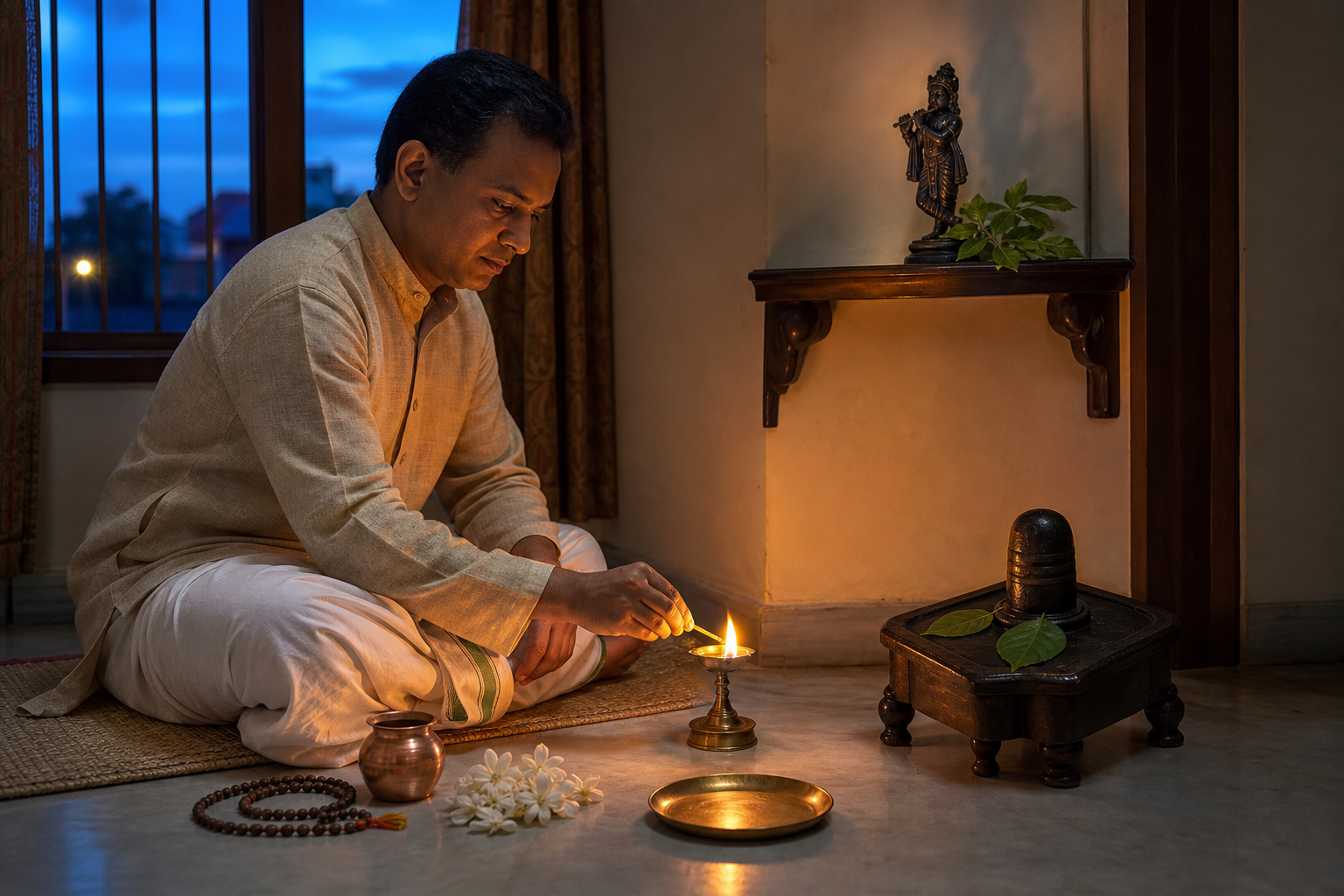
You want to observe Kartika sincerely, but the possibilities can feel like several different vows at once: offer a lamp to Krishna every evening, worship Shiva on Mondays, chant more, fast, read sacred texts, give charity, and change your conduct. The practical question is not which practice sounds most austere. It is which promise you can keep with attention throughout the month.
A workable Kartika observance has two layers. Set a small daily practice that does not collapse on busy days. Then add the Monday vrata, fasting, extended recitation, or community worship that belongs to your family and sampradaya. This gives you discipline without turning devotion into a contest of complexity.
Decide what your Kartika vrata will actually include
Kartika generally falls around October-November, intersects with Deepavali, and reaches its concluding point at Kartik Purnima. In Krishna-bhakti traditions it is widely observed as Damodara Month, while the Mondays of Karthika masam carry a distinct Shiva-centered vrata. These streams can coexist in a household, but they should not be blended carelessly or treated as compulsory parts of one universal procedure.
Make four decisions before your first day of worship:
- Fix the calendar. Use the panchanga followed by your household, temple, or trusted acharya. Mark the beginning and end of your observance, every Karthika Monday, Deepavali, and Kartik Purnima. Do not depend on a generic festival date if your established tradition follows a different reckoning.
- Name the devotional center. Decide whether your daily worship will center on Krishna as Damodara, whether you will undertake Karthika Somavara for Shiva, or whether your inherited practice includes both at their appropriate times.
- Set a daily minimum. Choose the shortest complete practice you can protect even on a demanding day. A lamp, one prayer, a fixed round of japa, and a moment of gratitude can form that minimum.
- Choose a discipline of conduct. Add something observable: truthful speech, sattvic eating, restraint, charity, seva, or a deliberate practice of compassion. A vrata should govern the hours outside the puja room as well as the moments before the deity.
Write your sankalpa in one plain sentence: During Kartika, I will perform this worship at this regular time, follow this restraint, and offer this form of service. A specific promise is easier to remember and harder to reinterpret when enthusiasm fades.
A formal Karthika Somavara vrata is traditionally begun on a Monday in Karthika or on a Monday coinciding with Krittika Nakshatra. If that detail governs your family observance, confirm it from the panchanga you already follow rather than trying to calculate the nakshatra from memory.
Build the daily Damodara practice around one lamp
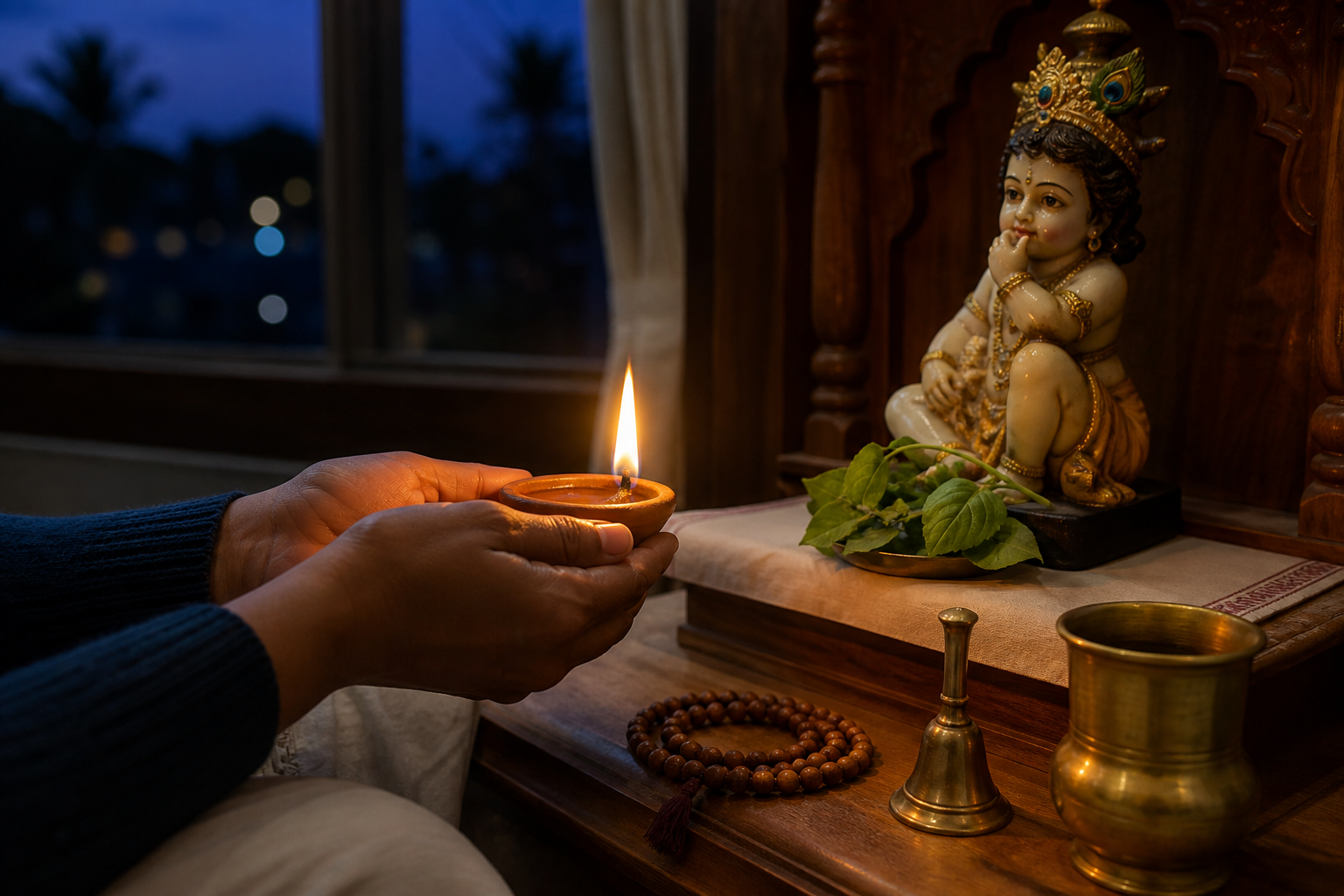
Damodara joins dama, meaning rope, with udara, meaning belly. The name recalls child Krishna accepting a cord around His waist. Its devotional force lies in a striking reversal: divine greatness willingly accepts the bond of a devotee’s affection. Kartika worship therefore calls for humility and loving attention, not merely correct ritual movement.
The Padma Purana-associated Kartika tradition gives you a clear home practice: offer a ghee lamp to Krishna as Damodara, recite the Damodarastakam, offer tulasi, perform japa, and cultivate gratitude and ethical living. You do not need an elaborate altar to preserve that center.
- Prepare before lighting the lamp. Clean the worship space and place the lamp, prayer text, tulasi, flowers, and any other offering within reach. Preparation keeps the worship from becoming a series of distracted interruptions.
- Choose a consistent time. Evening, often after sunset, is a common rhythm for the Damodara lamp. Attach the practice to a stable household event so that it is not left to whatever time remains.
- Light the ghee lamp. Place it before Krishna in His Damodara form. Pause long enough to recognize that the flame is an offering, not devotional decoration.
- Recite the Damodarastakam. If you are still learning it, read from a text rather than waiting until you have memorized every verse. Consistent recitation will build familiarity naturally.
- Offer tulasi according to your tradition. Make the offering reverently and follow the handling practices taught in your household or temple.
- Perform your fixed japa. Decide the amount in the sankalpa instead of renegotiating it each evening. On a difficult day, complete the promised minimum with full attention.
- Read and reflect. A short passage connected with Kartika, including the Kartika-mahatmya of the Padma Purana, can supply the meaning that repetition alone may lose. Ask what the Damodara image is correcting in you: pride, impatience, ingratitude, or resistance to loving duty.
- Close with gratitude. Offer a simple prayer for clearer conduct, family welfare, and community harmony. Then carry one concrete intention from the altar into the next day.
Because the practice uses an open flame, keep the lamp on a stable, fire-resistant surface away from curtains, loose clothing, and anything that can catch fire. A responsible adult should handle it, and the lamp should never be left burning in an unattended room. Fire safety does not diminish the offering; it protects the home in which the offering is made.
For a family observance, give each person a defined role. One person can prepare the flowers, another can hold the prayer text, and another can distribute prasada. An adult should remain responsible for the flame. Small, repeated responsibilities help children learn that Kartika is a lived household rhythm rather than a festival performance they merely watch.
Use Karthika Monday for a fuller Shiva practice
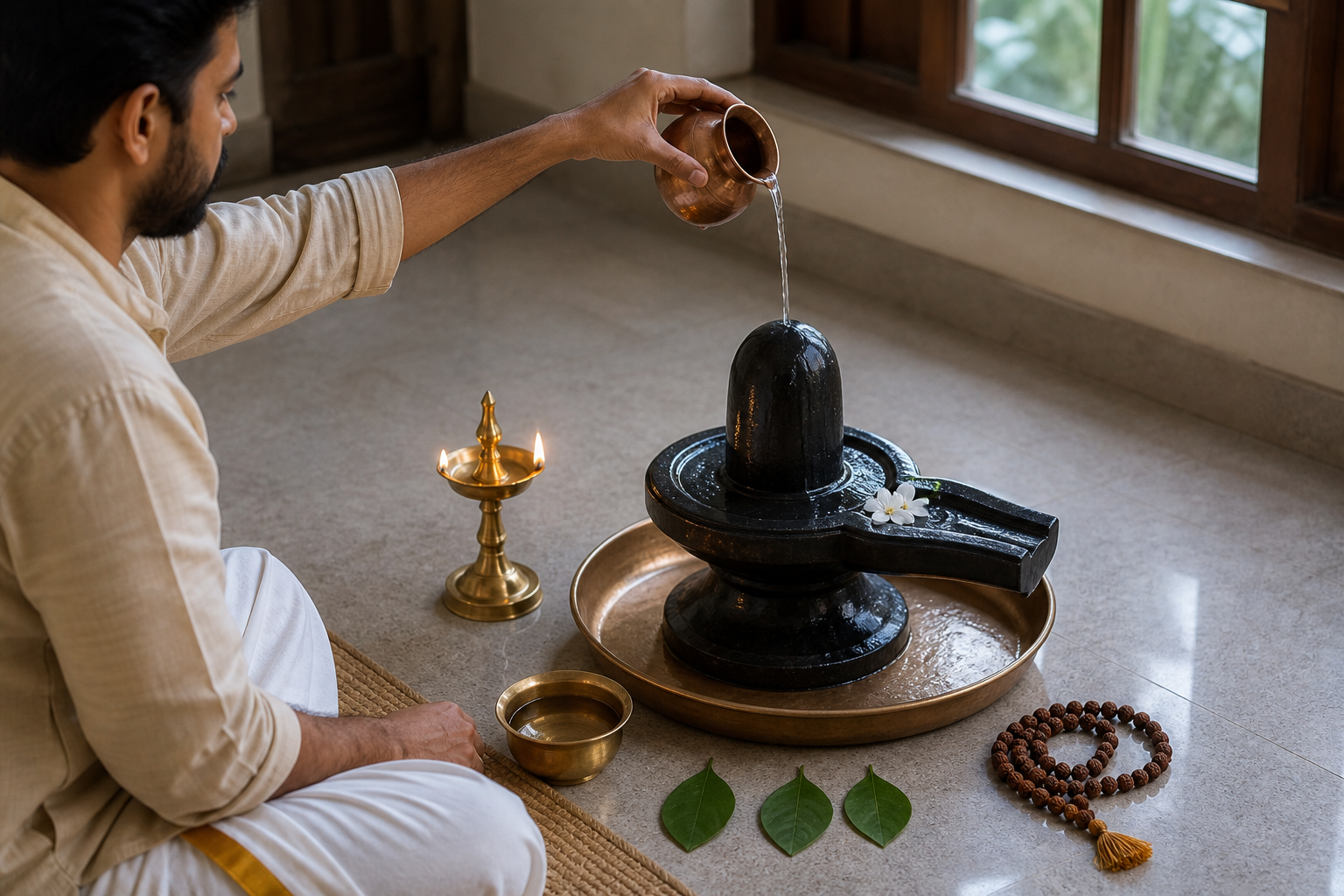
Karthika Somavara Vratham dedicates the Mondays of the month to Shiva. Its inner themes are purity, restraint, compassion, detachment, and steady attention. If this vrata belongs to your family or chosen practice, distinguish it from the daily Damodara offering by giving Monday a clear Shiva-centered sequence.
- Begin early with a ceremonial bath. Use the quiet morning to settle the mind as well as clean the body.
- Prepare the altar. Clean the area and arrange the lamp, water, flowers, bilva leaves, and simple naivedya before starting.
- State the sankalpa. Commit to sattvic conduct, truthfulness, restraint, and attentive Shiva worship for the day. Name the vrata you are undertaking instead of relying on a vague private intention.
- Light the deepa and invoke Ganesha. Begin by seeking the removal of obstacles, then turn fully toward Shiva worship.
- Offer water and flowers. Make each offering deliberately. Recite Om Namah Shivaya according to the practice you have received.
- Offer bilva patra. Bilva is traditionally associated with Shiva worship. Follow your household custom for the manner and number of offerings rather than inventing a rule.
- Present a modest naivedya. Simplicity is sufficient. The offering should support recollection, gratitude, and sharing, not become the day’s main logistical burden.
- Sit in silence before closing. Contemplate one quality of Shiva, such as compassion or detachment, and identify where that quality should govern your conduct that day.
Some Karthika Somavara traditions also prepare clean clay mixed with gandham, or sandalwood paste, as a sacred altar element. Treat this as a sampradaya-dependent observance, not a universal test of whether the puja is valid. Clean ordinary clay is an available option where this preparation is customary.
Close the day with gratitude, prayer for personal growth and family welfare, and distribution of prasada where appropriate. If your vrata includes eating only after the evening puja, decide the meal beforehand. That prevents hunger from turning the conclusion into hurried worship followed by unmindful eating.
Let fasting serve the vrata rather than replace it
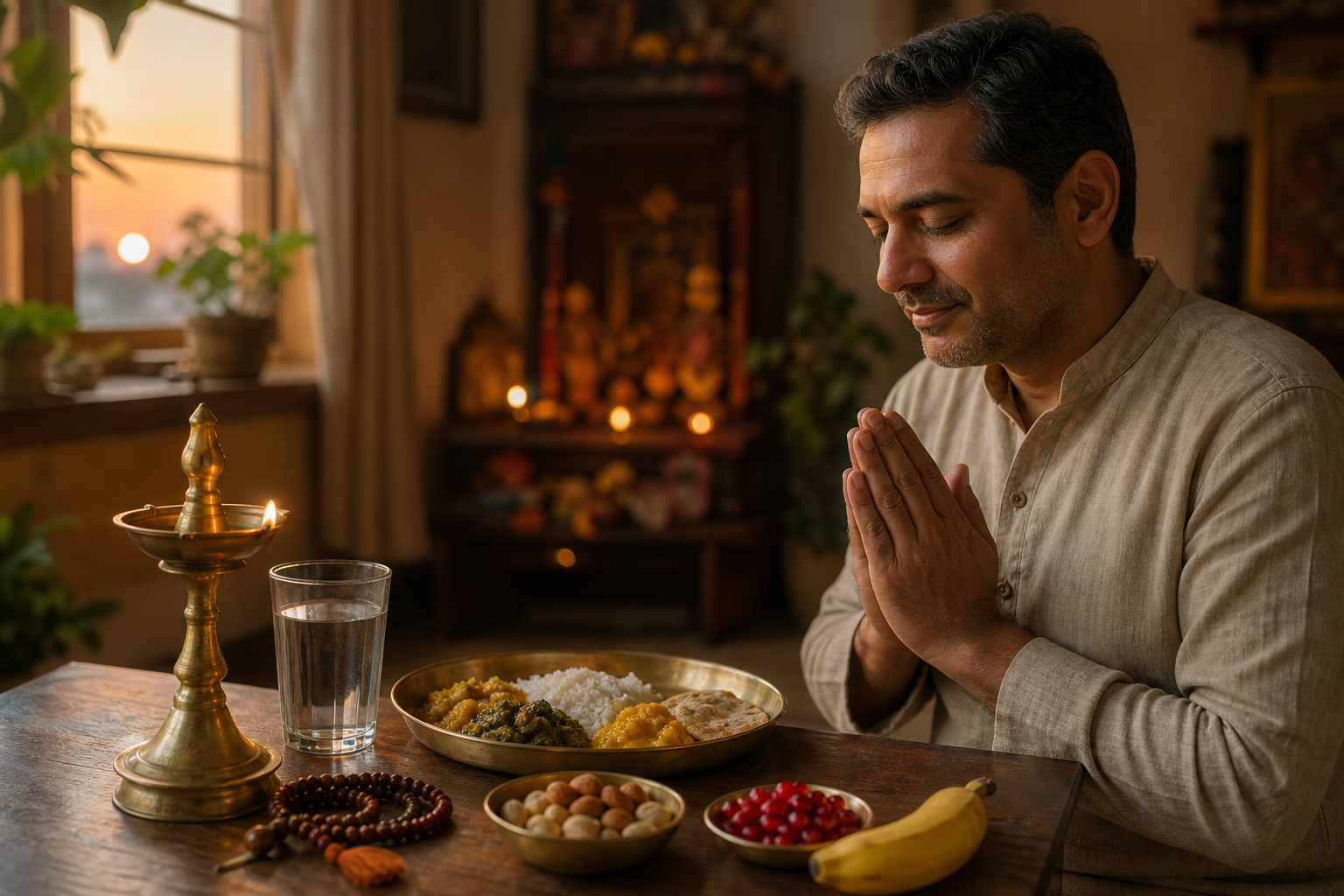
Food discipline during Karthika Somavara varies by family and region. Some devotees take fruits or other light food, while others have a light sattvic meal after evening worship. There is no reason to turn these variations into a hierarchy of devotion.
If fasting conflicts with your health needs, do not force a strict food restriction. Moderation, mindful eating, and an appropriate sattvic meal can preserve the spirit of the vrata. You can deepen the day through japa, silence, charity, self-restraint, or seva without making physical severity the measure of sincerity.
Watch for four ways a well-meant observance loses its center:
- Taking the largest possible vow. A demanding opening that cannot survive ordinary responsibilities often produces inconsistency. Establish the non-negotiable minimum first, then add more when time and capacity genuinely permit.
- Collecting rituals without a lineage. Regional and family variations are normal. Ask an elder or follow your established sampradaya when details conflict; do not assemble an improvised rulebook from every practice you encounter.
- Separating ritual from conduct. A lamp offered in the evening does not excuse falsehood, needless anger, or selfishness during the day. Truthfulness, compassion, restraint, and service are part of the vrata’s substance.
- Abandoning the month after one lapse. If you miss a practice, acknowledge it and resume at the next opportunity. If your tradition prescribes a particular remedial observance, ask the appropriate elder rather than inventing one.
The ethical vocabulary of ahimsa, self-restraint, compassion, and seva can also create genuine kinship among Hindu, Buddhist, Jain, and Sikh communities. That shared ground does not make their ritual forms interchangeable. The Damodara lamp and Karthika Somavara are specifically Hindu devotional observances; naming them accurately is compatible with respecting the broader Dharmic family.
Key takeaways for a steady Kartika month
- Fix your dates from the panchanga followed by your household or temple, and mark the Mondays before the month begins.
- Give the vrata a sustainable daily floor: a lamp, prayer or recitation, fixed japa, and one intention for conduct.
- For Damodara worship, center the evening on a ghee lamp, Damodarastakam, tulasi, remembrance, and gratitude.
- For Karthika Somavara, keep a Shiva-centered order: bath, sankalpa, deepa, Ganesha invocation, water and flowers, Om Namah Shivaya, bilva, naivedya, meditation, and gratitude.
- Choose fasting according to health, capacity, and family tradition. Physical severity is not a substitute for disciplined attention.
- Let truthfulness, restraint, charity, compassion, and seva show whether the worship is changing the rest of your day.
Before your first Kartika observance, write down the dates, the daily minimum, the Monday practice, and the restraint you will keep. Then prepare the lamp and prayer text in advance. The month will be shaped less by the grandeur of your first evening than by whether you return to the sacred promise with steadiness.
References
- DharmaRenaissance Blog — Discover Damodara Month: The Complete Guide to Kartika’s Meaning, Rituals, and Transformative Bhakti
- DharmaRenaissance Blog — Complete Karthika Somavara Vratham: Essential Steps to Master Shiva Pooja Procedure
