

If you encountered Tara through a fierce image or a string of bija sounds online, the first question is not which secret formula is strongest. It is what you can practice with reverence now, and what should wait until you receive diksha from a qualified guru.
You do not need an elaborate tantric ritual to begin relating to Maa Tara. A clean place, a steady intention, simple offerings, prayer, and silence can form a complete devotional practice. Initiated mantra sadhana is a different commitment: its mantra, method, discipline, and limits should come from the lineage that transmits it.
Begin with the crossing, not the promise of power

Tara is revered as the second of the ten Mahavidyas. Her name points toward crossing over: moving through fear, confusion, attachment, and limitation without being ruled by them. Her Shakti joins protection, liberating knowledge, and compassionate action. That makes Tara especially meaningful when you are facing a transition that demands both courage and discernment.
Crossing does not mean arranging life so that nothing difficult happens. It means becoming capable of meeting difficulty without abandoning dharma. Before beginning a Tara practice, name the crossing in front of you. Keep it concrete:
- What fear is influencing a decision you need to make?
- Where are you confusing urgency with clarity?
- What attachment are you defending even though it is narrowing your conduct?
- Who besides you should benefit if this practice bears fruit?
Your answer becomes the basis of sankalpa. A sound sankalpa is not a demand for control over another person. It is a commitment to clearer perception, steadier action, and a result aligned with dharma.
Tara’s iconography can be used as a map for that inner work. Although details vary by form and lineage, the lotus signifies purity amid complexity, the sword cuts through avidya, and the kapala points beyond constructions of ego. When you sit before her image, translate those symbols into immediate questions. Can you remain inwardly clean while circumstances are messy? What false belief needs to be cut? Which identity or grievance are you treating as more important than truth?
The forms of Tara reveal different emphases rather than a menu of powers to collect. Ugra Tara, often associated with Ekajata, carries fierce protection and decisive clarity. Nila Saraswati is connected with learning, eloquence, and mantra-shakti. Shyama Tara expresses the depth of nurturing compassion, while Tara Tarini remains a living focus of regional devotion. These forms share a current of liberation through knowledge, protection, and compassion, but their ritual details should not be casually mixed.
If you belong to a parampara, follow the form taught there. If you do not, address Maa Tara simply instead of assembling an improvised system from unrelated images and mantras. The fiercest-looking form is not automatically the most suitable starting point.
Tara is present in both Hindu and Buddhist traditions as compassionate wisdom and swift protection, but a shared sacred name does not make their liturgies interchangeable. Jain and Sikh paths differ in their orientation toward deity practice while sharing Dharmic commitments such as truthfulness, compassion, disciplined conduct, and non-harming. You can honor this common ethical ground without collapsing distinct traditions into a single ritual system.
Know which practices are open and which require diksha
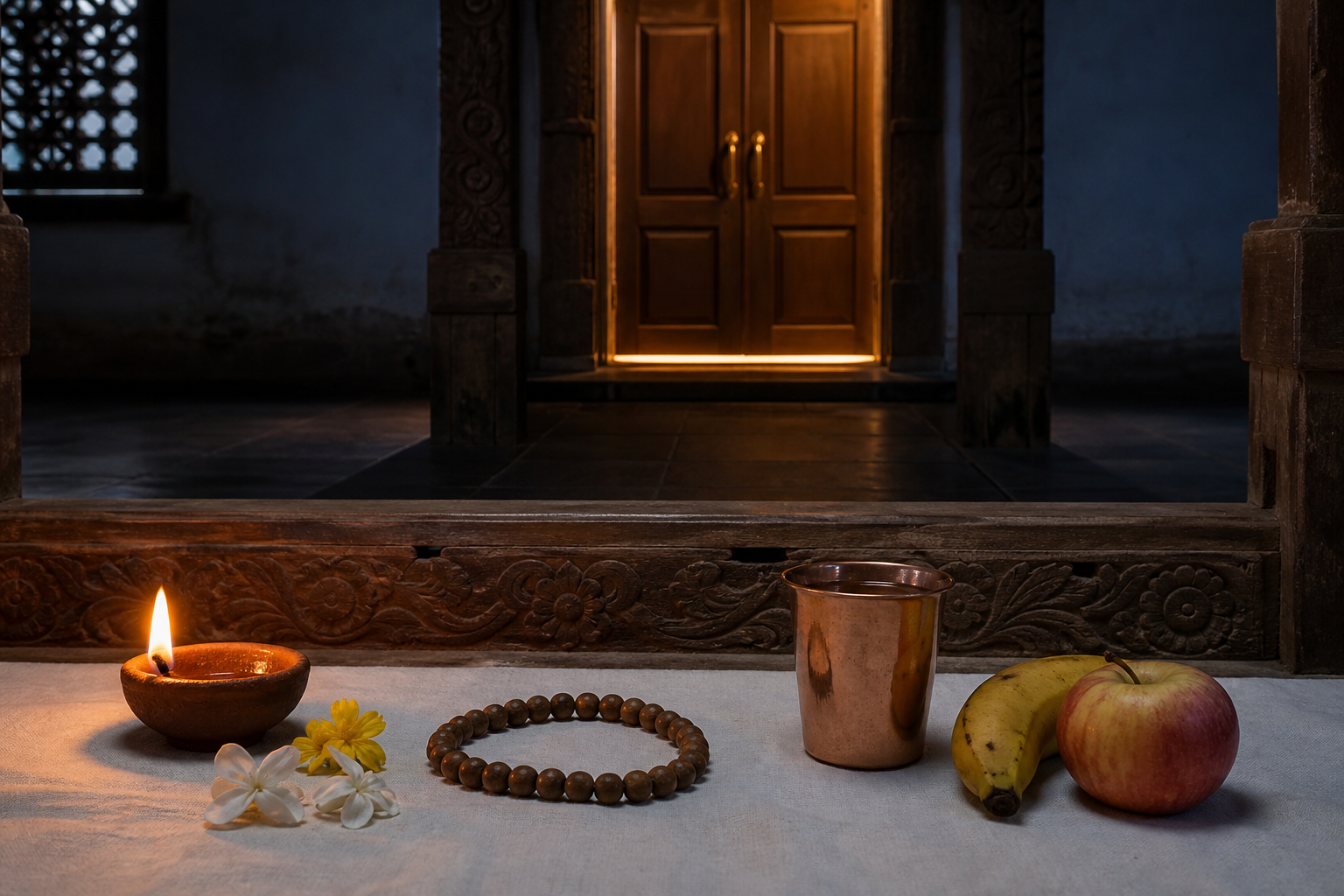
The safest boundary is straightforward: simple devotion is open, while lineage-specific mantra technology belongs with lineage instruction. This is not a judgement about whether your devotion is sincere. It is a recognition that a mantra is more than text on a screen.
- Simple devotional practice: A clean sacred space, a lamp, flowers, incense where appropriate, naivedya, prayer in your own language, quiet remembrance, and a closing aarti.
- Guru-guided mantra practice: Japa of the exact mantra received through diksha, with the pronunciation, count, visualization, conduct, and method taught by the guru.
- Lineage-specific observance: Use of a particular Tara yantra, specialized ritual sequence, fierce form, or intensified discipline according to the rules of the parampara.
Bija sounds such as Hreem and forms attributed to Tara such as Streem are treated as carriers of subtle power. Their appearance in public does not provide the full method or replace transmission. Many Tara lineages therefore place mantra practice under diksha and value fidelity to the parampara over public display.
If you have not received a Tara mantra, do not manufacture one by combining bija syllables. Pray to Maa Tara in your own language for clear sight, courage, protection, and compassion. Repetition of a borrowed formula is not more authentic than an honest prayer whose meaning you understand.
Before accepting a formal practice, ask the teacher practical questions. Which form of Tara does the mantra invoke? What pronunciation should you use? Is a mala count required? What are the daily commitments? Which offerings are appropriate? What should you do after a missed sitting? How is the practice formally closed? Clear answers protect you from mixing methods when uncertainty arises.
A responsible teacher should turn you toward ethical steadiness, humility, and compassion. Instructions aimed at harming, coercing, or manipulating another person contradict the direction of Tara sadhana described here. Intensity is not proof of spiritual depth.
Protect your physical and mental well-being as well. Keep breathing comfortable and do not add forceful pranayama, prolonged breath retention, fasting, sleep deprivation, or other austerities that were not prescribed for you. If a practice produces persistent distress or disrupts ordinary functioning, pause the unprescribed additions and consult an appropriate teacher or health professional. Spiritual practice is not a substitute for medical or psychological care.
A simple daily Tara puja you can sustain
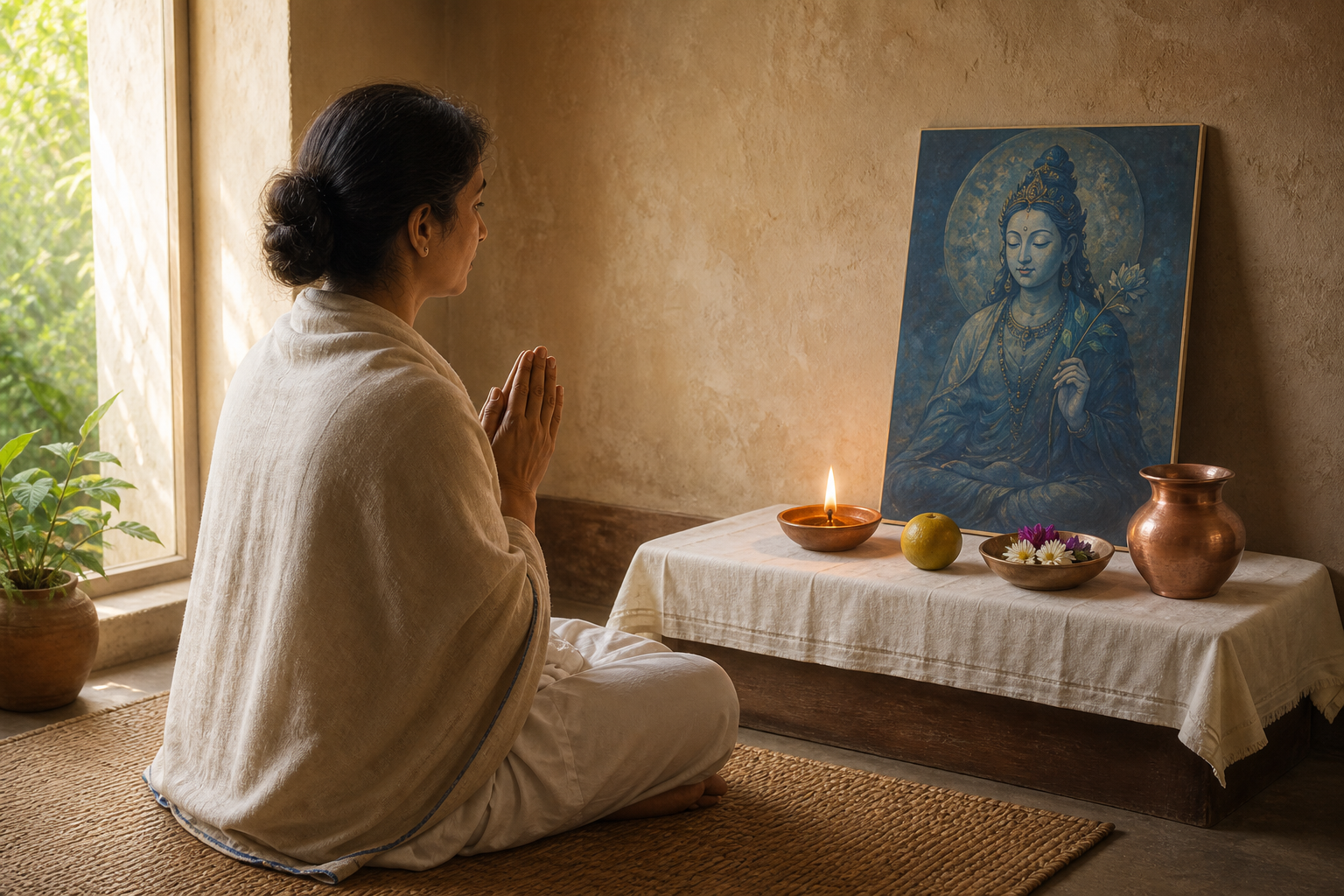
The following sequence is suitable as a modest, sattvic devotional framework. If your guru has given you a different vidhanam, that instruction takes precedence.
- Prepare yourself and the place. Bathe or wash, wear clean clothing, and clear the area where you will sit. Put away the phone and anything likely to divide your attention.
- Arrange a simple focus. Place a respectfully kept image of Tara, or a Tara yantra received and used according to proper instruction. If you have neither, a clean lamp can serve as the focus of a simple prayer.
- State your sankalpa. Name the crossing before you and the quality you seek to cultivate. Ask for clarity, courage, compassion, or ethical steadiness rather than control over someone else’s will.
- Settle into dhyana. Sit steadily and let the breath become measured without forcing it. Bring attention away from speculation and toward Tara’s protective, discerning presence.
- Open the worship. If it belongs to your household custom, sound a bell. Light a deepa with ghee or sesame oil, keeping the flame in a safe place and never leaving it unattended.
- Make the offerings. Offer gandha, flowers, dhupa, and naivedya as available. Blue or white flowers are simple options associated with Tara devotion. The care with which you offer matters more than the quantity.
- Pray or perform japa. If you have received a mantra, repeat it exactly as instructed. Upanshu japa, in a very low voice, or manasika japa, mentally, can support concentration when they accord with your teaching. A mala can maintain discipline, but it should not turn the sitting into an anxious contest over numbers. Without diksha, use a sincere prayer whose words you understand.
- Rest in silence and close. Sit quietly after the prayer or japa. Notice the next truthful action your sankalpa requires. Conclude with aarti or a simple expression of gratitude, then return to ordinary duties without treating the sacred mood as separate from conduct.
This sequence follows the core movement of centering, invocation, deepa, offerings, japa, contemplation, and grateful closure. You can shorten the external elements when necessary, but do not omit attention, ethical intention, and closure merely to accumulate more repetitions.
Amavasya, Ashtami, Tuesdays, and Fridays are observed as auspicious times in many Tara practices. They can provide a rhythm for special worship, but they are not a replacement for steadiness. Follow any intensified observance only as your tradition directs. A modest practice you can maintain is more useful than an elaborate one performed briefly and then abandoned.
When time is limited, preserve the heart of the practice: clean the place, light the lamp safely, remember Tara, make a sincere prayer, sit in silence, and close with gratitude. The purpose is not to reproduce complexity for its own sake. It is to bring Tara’s clarity into the decision or duty waiting beyond the altar.
Measure siddhi by the person you are becoming
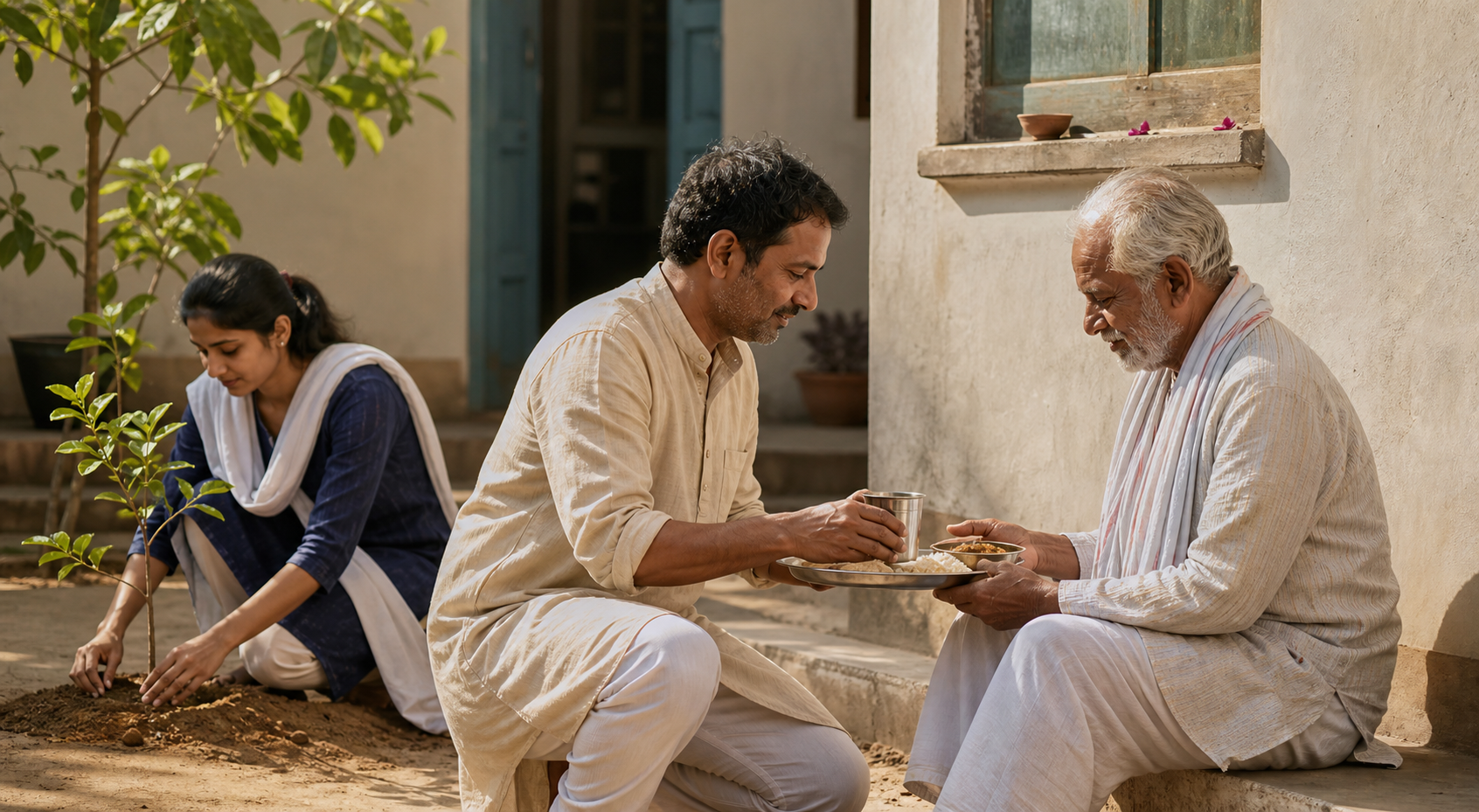
A dramatic vision, unusual sensation, or vivid dream is a poor basis for declaring mantra siddhi. Experiences can be meaningful to the practitioner, but they do not by themselves establish spiritual maturity. The more dependable test is whether your conduct is changing.
In Tara sadhana, the signs worth watching are a calmer and more lucid mind, less fear-driven reactivity, stronger ethical clarity, spontaneous compassion, resilience, and service. These qualities make the practice visible where it matters: in speech, decisions, relationships, and responsibility.
Use a periodic self-audit instead of chasing phenomena:
- When fear appears, can you pause before it controls your speech or action?
- When facts challenge your preference, can you choose truth over self-protection?
- Is your speech becoming clearer without becoming harsher?
- Are you less interested in displaying spiritual knowledge?
- Does your practice make you more dependable in seva and ordinary duty?
- Can you protect a boundary without feeding hatred?
If the answers are gradually becoming yes, the practice is moving in Tara’s direction. If you are becoming more obsessed with counts, more contemptuous of others, or more willing to justify manipulation, adding ritual intensity will not correct the problem. Return to ethical foundations, simplify unprescribed elements, and speak honestly with your teacher.
Do not turn reported benefits such as concentration, courage, or household harmony into guaranteed outcomes. Let them arise, if they do, as consequences of disciplined attention and better conduct. Your real obligation is to carry the clarity of worship into the next conversation, decision, and act of service.
Key takeaways
- Tara Mahavidya represents the Shakti that helps you cross fear and confusion through protective wisdom and compassionate action.
- Begin with the crossing in front of you and form a sankalpa around clarity, courage, ethics, and benefit beyond yourself.
- A simple sattvic puja can include purification, dhyana, a lamp, modest offerings, prayer, silence, and a grateful closing.
- Use a Tara mantra, bija, yantra, or specialized ritual exactly as taught when it belongs to an initiated lineage. Do not assemble a tantric method from disconnected public fragments.
- Respect different forms and traditions without casually mixing their mantras or ritual systems.
- Judge progress by reduced reactivity, sounder discernment, compassion, resilience, and seva rather than spectacle.
At your next sitting, begin with the smallest complete practice you can perform attentively. Clean the place, light a lamp safely, make a simple offering, name the crossing before you, pray, listen in silence, and close with gratitude. If a lineage later calls you, seek proper diksha and allow the guru to provide the mantra and its discipline. Until then, sincere simplicity is not a lesser path into Tara’s presence.
References
