
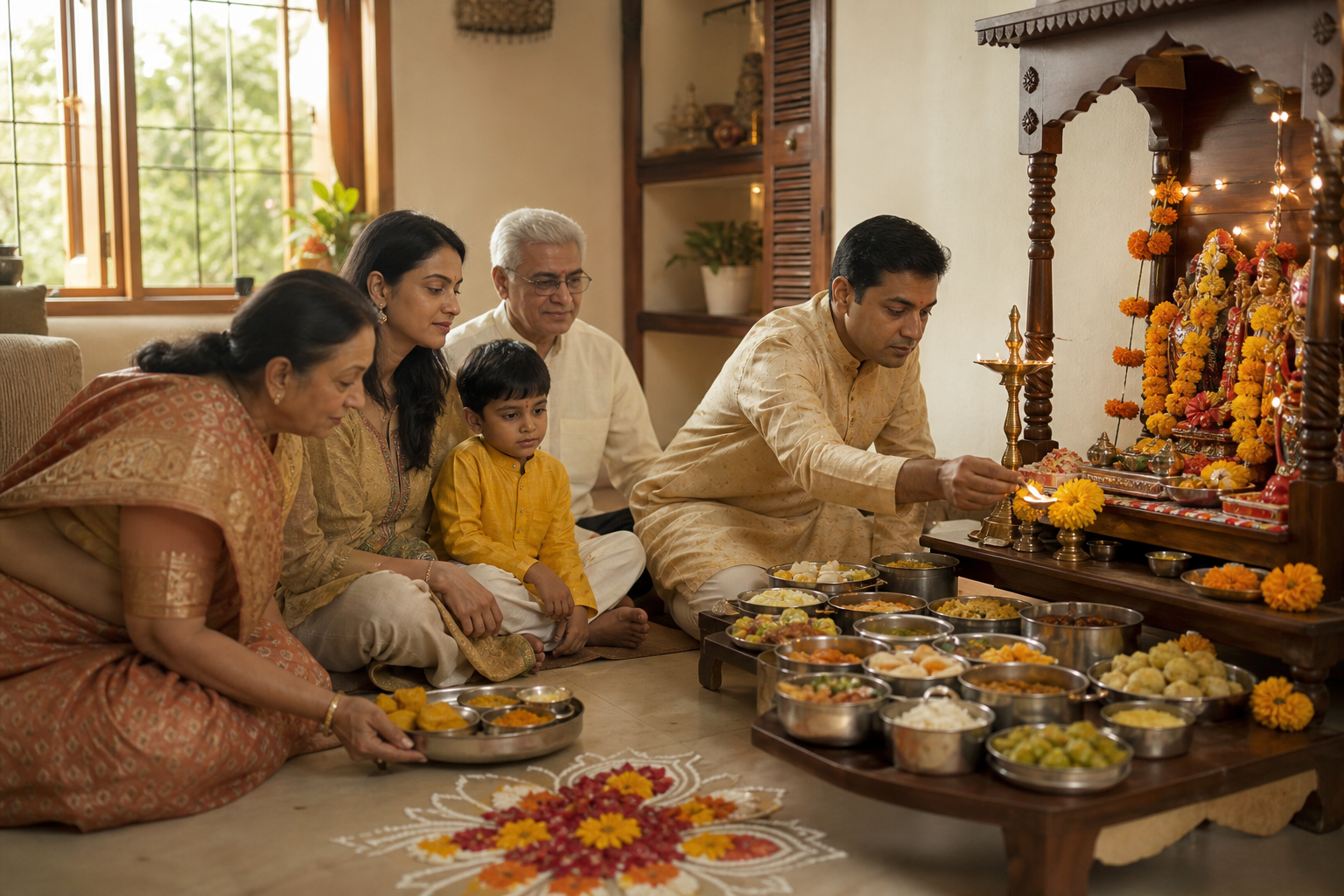
If Diwali night has ended and you are unsure whether the next morning is Gujarati New Year, Annakut, Govardhan Puja, or Bali Pratipada, you are not alone. Kartik Sud 1 can carry all of these layers, depending on your region, family tradition, and sampradaya.
You do not have to reproduce every regional custom or prepare a temple-sized feast. Confirm the tithi locally, identify the tradition your household follows, make a manageable offering, share prasad, and give the idea of renewal a concrete place in your day.
First, separate the tithi from the observance names
Kartik Sud 1 is the Gujarati name for Kartik Shukla Pratipada, the first day of the bright lunar fortnight of Kartik. In Gujarat, it is also the beginning of the new Vikram Samvat year and is celebrated as Nutan Varsh or Bestu Varsh. The calendar marker is one thing; the devotional and regional observances attached to it are several.
| Name | Primary emphasis | What you might do |
|---|---|---|
| Kartik Sud 1 | The first bright-half tithi of Kartik in the Gujarati calendar | Confirm the date and puja schedule through your local panchang or mandir |
| Nutan Varsh or Bestu Varsh | Gujarati New Year, auspicious beginnings, relationships, and righteous livelihood | Visit a mandir, exchange Saal Mubarak greetings, and renew a personal or family commitment |
| Annakut | Gratitude expressed through a sattvic food offering | Offer a modest selection of vegetarian preparations and share them as prasad |
| Govardhan remembrance | Devotion to Shri Krishna and gratitude for nourishment and the earth’s bounty | Join Govardhan Puja where it is customary, or make gratitude the intention behind your offering |
| Bali Pratipada, Bali Padyami, or Bali Pujan | Mahabali, Vamana, humility, generosity, and dharmic stewardship | Light a diya, offer naivedya, and recount the Vamana-Mahabali narrative according to family custom |
These names should not be treated as competing claims over the day. Annakut describes an offering, Nutan Varsh names the Gujarati New Year, and Bali Pratipada identifies a regional observance associated with Mahabali and Vamana. In Maharashtra, Gujarat, Telangana, Andhra Pradesh, and Karnataka, Bali Pratipada also marks the opening of Kartik in Amavasyant calendars. Your family may emphasize one layer while recognizing the others.
Begin with inherited practice rather than trying to combine everything. If your household has no established custom, follow the program of a trusted local mandir. That gives you a clear devotional center and avoids turning a sacred morning into a checklist of loosely connected rituals.
Build a home observance around a simple sequence
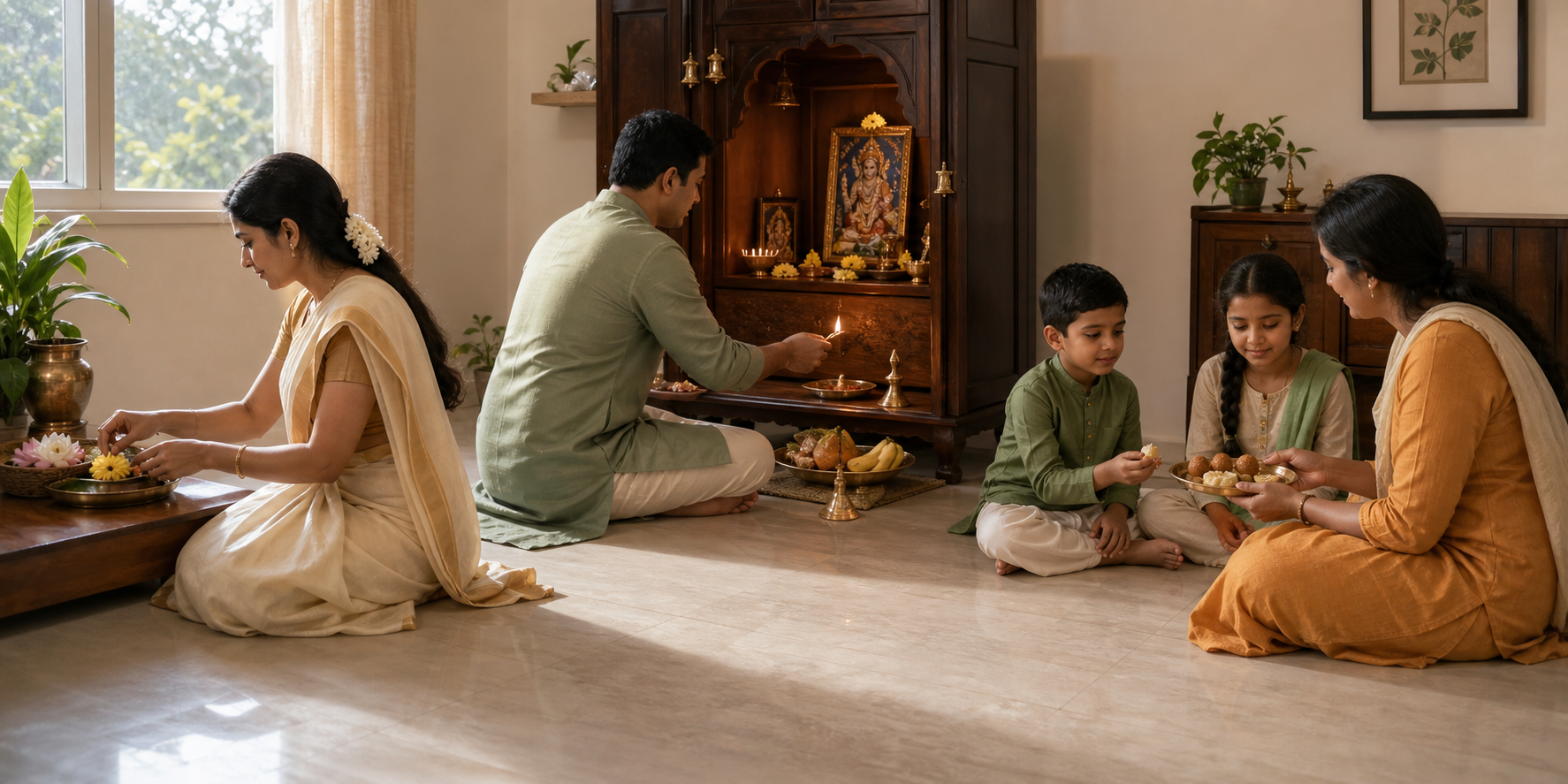
There is no need to invent an elaborate procedure. The following sequence gathers the practices most consistently associated with the day while leaving room for regional and sampradaya-specific instructions.
- Confirm the date and local timing. Kartik Sud 1 is a lunar tithi, so use the panchang followed by your family or mandir. Sunrise and tithi considerations can affect local schedules. For example, Wednesday, October 22 was the widely listed date for the 2025 observance; it should not be copied into another year’s calendar. Local temples may also schedule Annakut darshan and Govardhan Puja at different hours.
- Prepare the worship space. Clean the area, light a diya, and add a toran or rangoli if that belongs to your household custom. New clothes can express a fresh beginning, but they are not the substance of the observance.
- State the purpose of the day. Before adding food or decorations, pause for a short sankalpa. You can resolve to pursue honest livelihood, use resources responsibly, repair a family bond, or serve the community. Use the language and mantra prescribed by your tradition when you have one; a sincere statement in your own language is enough when you do not.
- Make a proportionate food offering. Annakut literally evokes a mountain of food, but a household can offer a small selection of sattvic vegetarian dishes. The offering should express gratitude, not anxiety about matching a large temple display.
- Choose the devotional narrative your family follows. A Vaishnava or Swaminarayan household may center Shri Krishna, Govardhan, and Annakut. A family observing Bali Pratipada may recount Mahabali’s devotion and Vamana’s restoration of balance. Give children one clear account and one ethical question to consider instead of presenting several names without context.
- Perform aarti and share the offering. After worship and darshan, distribute the sanctified food as prasad. Decide who will receive it before cooking so generosity remains practical and food is not left without a purpose.
- Extend the observance beyond the shrine. Exchange Saal Mubarak or Nutan Varsh Abhinandan greetings, visit or call relatives, and carry one New Year resolution into your work, household, or seva.
If you plan to attend a temple, verify its aarti and Annakut darshan schedule before leaving. Arriving early, dressing modestly, following the mandir’s rules for offerings, and volunteering with prasad distribution are more useful than bringing food the temple cannot accept.
Keep Annakut abundant without making it wasteful
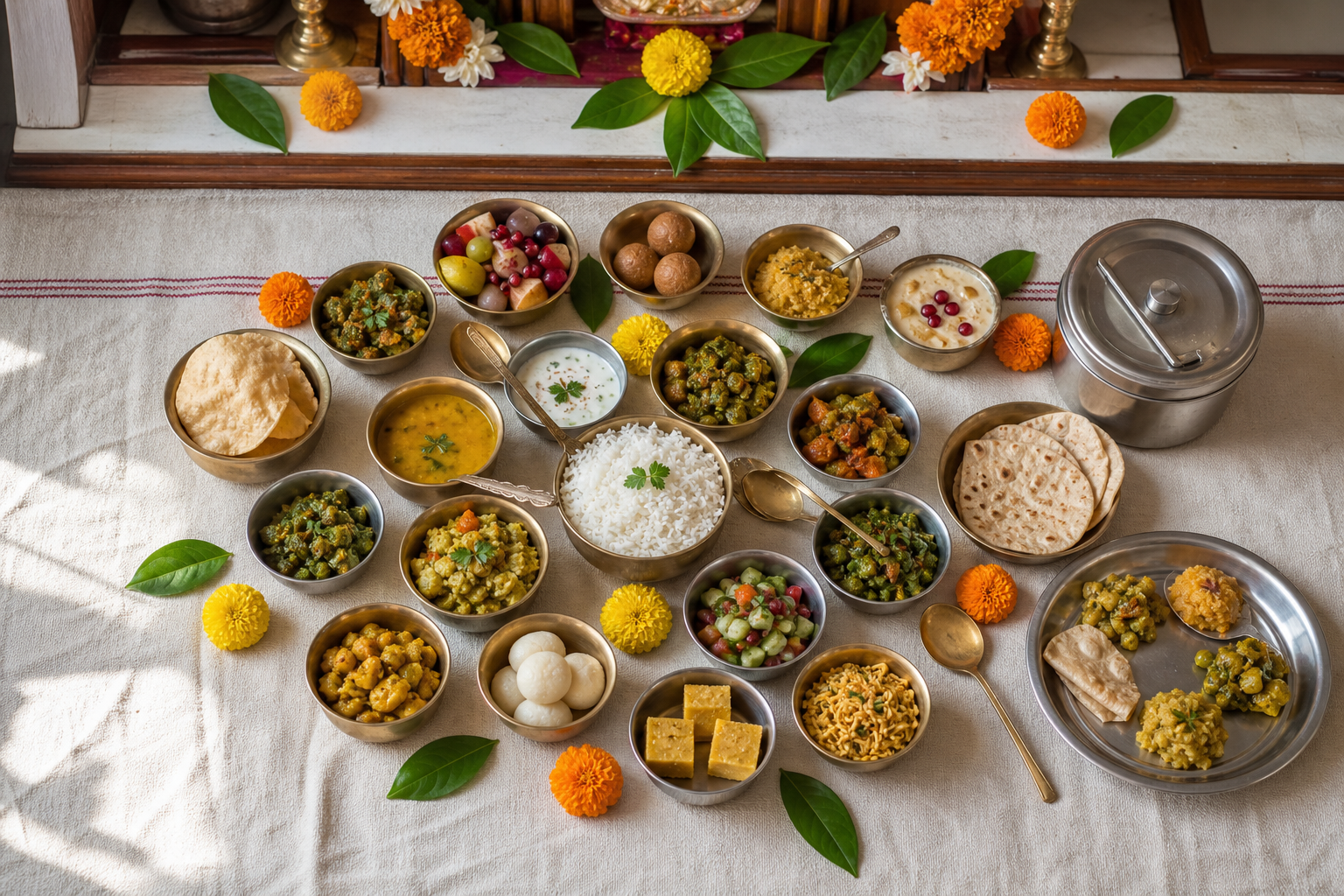
A large mandir may arrange grains, sweets, farsan, seasonal preparations, and other dishes in tiers before the murtis. That scale serves communal darshan and collective participation. It is not a minimum standard for a private home.
The heart of Annakut is gratitude, stewardship, and the sharing of prasad. At home, abundance can mean variety offered with care, enough food to nourish the people present, and a deliberate share reserved for others. It does not require preparing more than your household and community can respectfully distribute.
- Choose a few sattvic vegetarian dishes that your household can prepare calmly and offer according to its practice.
- Use seasonal and locally available ingredients where practical.
- Ask the mandir before carrying a homemade dish; each temple may have its own rules.
- Estimate the number of people who will receive prasad before deciding the quantities.
- Use reusable serving vessels where possible and organize distribution before the gathering begins.
- If you want to expand the observance, add seva or dana before adding more dishes.
This also makes the ritual easier for children to understand. Let them help arrange one dish, carry prasad, greet an elder, or assist with cleanup. They will remember participation more clearly than an unexplained display.
Turn New Year language into a real renewal
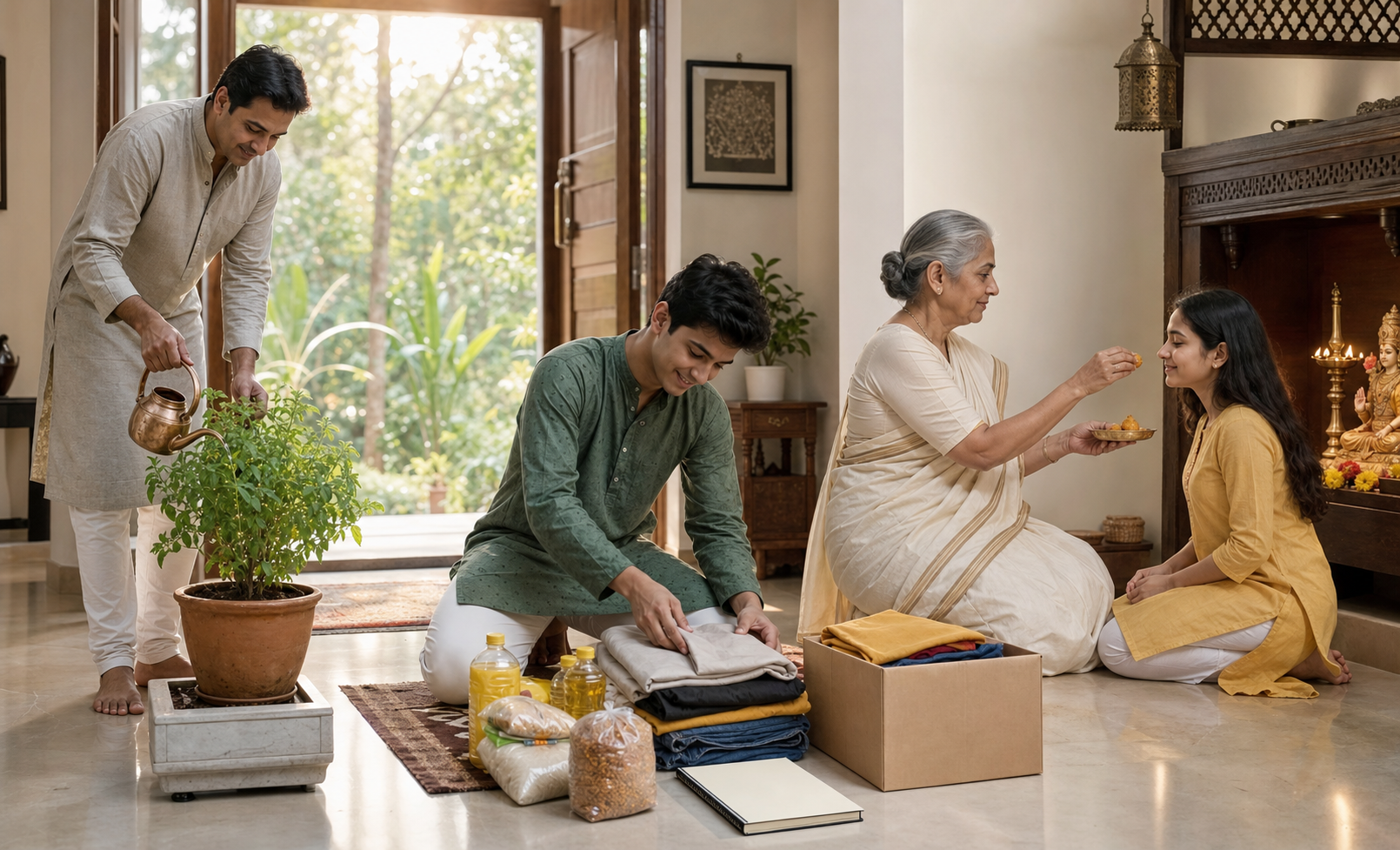
Nutan Varsh becomes thin when it is reduced to greetings and new clothes. The day traditionally connects spiritual intention with ordinary responsibility: family bonds, community well-being, the ethical use of resources, and the renewal of business commitments. Choose one action in each area that matters to you rather than making a long list that will be abandoned.
- For family: personally greet the relatives and elders you would otherwise reach only through a forwarded message.
- For livelihood: review one ledger, obligation, or working relationship and identify a commitment that needs to be honored in the new year.
- For community: volunteer at a mandir, help serve prasad, or direct part of your festival resources toward dana.
- For Kartik: select one sustainable discipline, such as an early-morning prayer or a vrata already recognized in your tradition, and decide when you will begin it.
The values surrounding the day also offer a respectful point of connection across the dharmic family. Annakut’s gratitude and sharing find ethical parallels in Jain commitments to ahimsa and dana, Sikh seva and langar, and Buddhist dana and mindfulness. These parallels do not make the religions or their calendars interchangeable. They show how distinct traditions can cultivate generosity, restraint, and responsibility through their own forms.
Bali Pratipada adds another useful test for renewal. Mahabali is remembered for generosity and devotion, while Vamana represents the restoration of balance. The practical question is not merely which figure your family honors. It is whether prosperity in the coming year will be governed by humility and dharma.
Key takeaways for the morning after Diwali
- Kartik Sud 1 is the tithi; Nutan Varsh, Annakut, Govardhan remembrance, and Bali Pratipada are overlapping calendrical, devotional, and regional layers.
- Follow your family tradition or local mandir rather than attempting every available observance.
- Check the current local panchang and temple schedule; do not reuse a date from an earlier year.
- A small, carefully distributed sattvic offering is a valid household expression of Annakut.
- Let prasad lead to sharing, and let New Year greetings lead to one concrete act of renewal.
- Teach children through a task, a narrative, and an ethical question they can understand.
Before the Diwali lamps are put away, make three decisions: which mandir or family practice you will follow, what manageable offering you will prepare, and what act of seva or renewed responsibility will carry the light into Kartik. That is enough to give Kartik Sud 1 a clear devotional center and a life beyond the festival morning.
References
- DharmaRenaissance Blog – Gujarati New Year 2025: Essential Guide to Nutan Varsh/Bestu Varsh and Vikram Samvat 2082
- DharmaRenaissance Blog – Annakut 2025 in Gujarat: Discover the Complete Guide to Kartik Sud 1 Diwali Puja
- DharmaRenaissance Blog – Discover Annakut Puja on Nutan Varsh: The Complete Guide to Gujarat’s New Year Tradition
- DharmaRenaissance Blog – Bali Pratipada 2025: Complete Guide to Bali Pujan after Diwali – Date, Meaning, Rituals
