
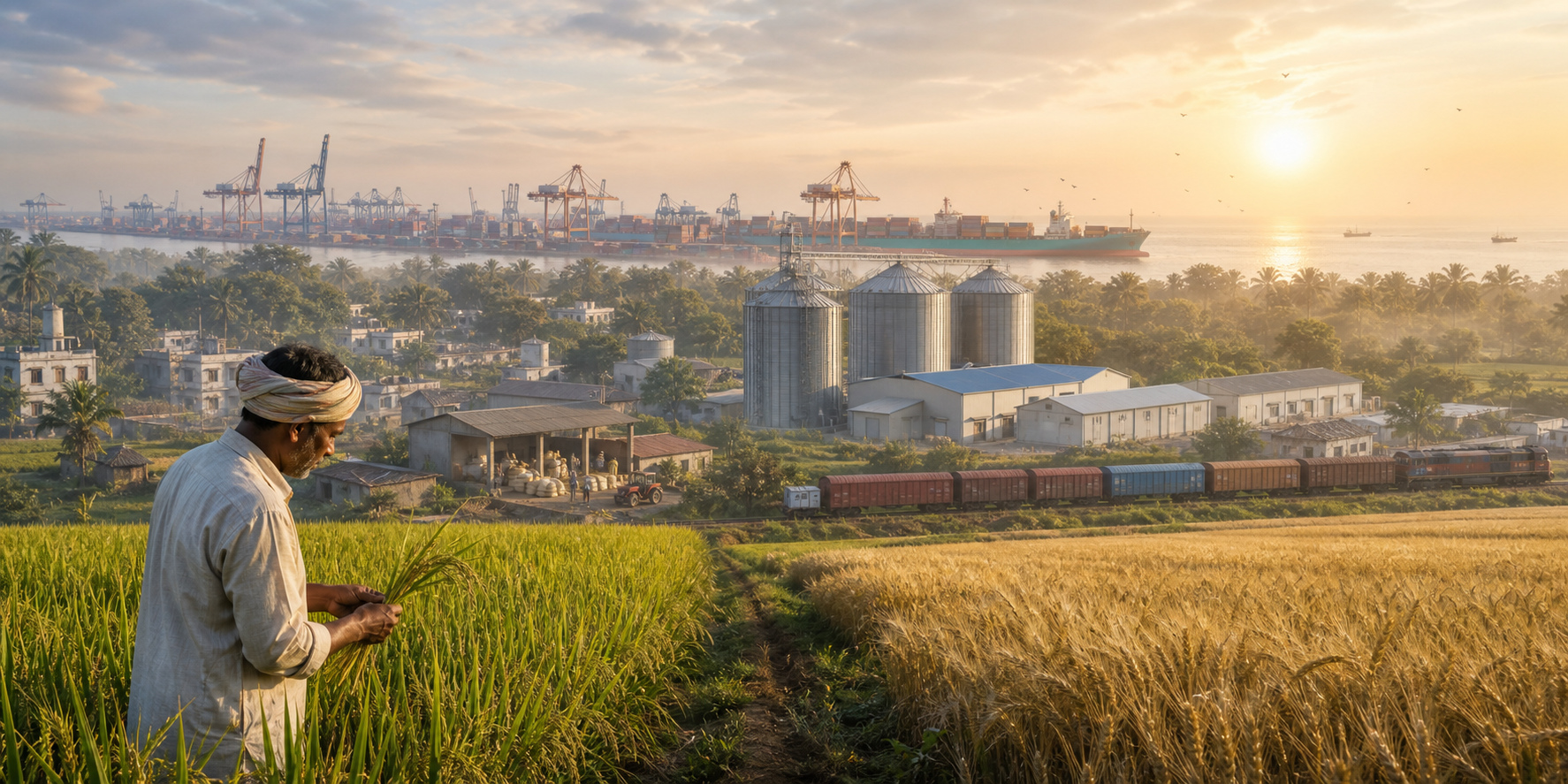
When you hear that India must choose between opening its farm market and protecting food security, reject the premise. The real decision is where to open, in what order, under which safeguards, and who will carry the transition risk.
If you are judging a trade agreement, a tariff proposal, or a new round of agricultural reform, do not ask only whether it is pro-trade or pro-farmer. Ask whether it leaves India able to feed itself during a failed harvest, a shipping disruption, a pandemic, or a geopolitical quarrel. Then ask whether farmers receive the tools to adjust before they are exposed to new competition.
Separate affordable food from strategic dependence
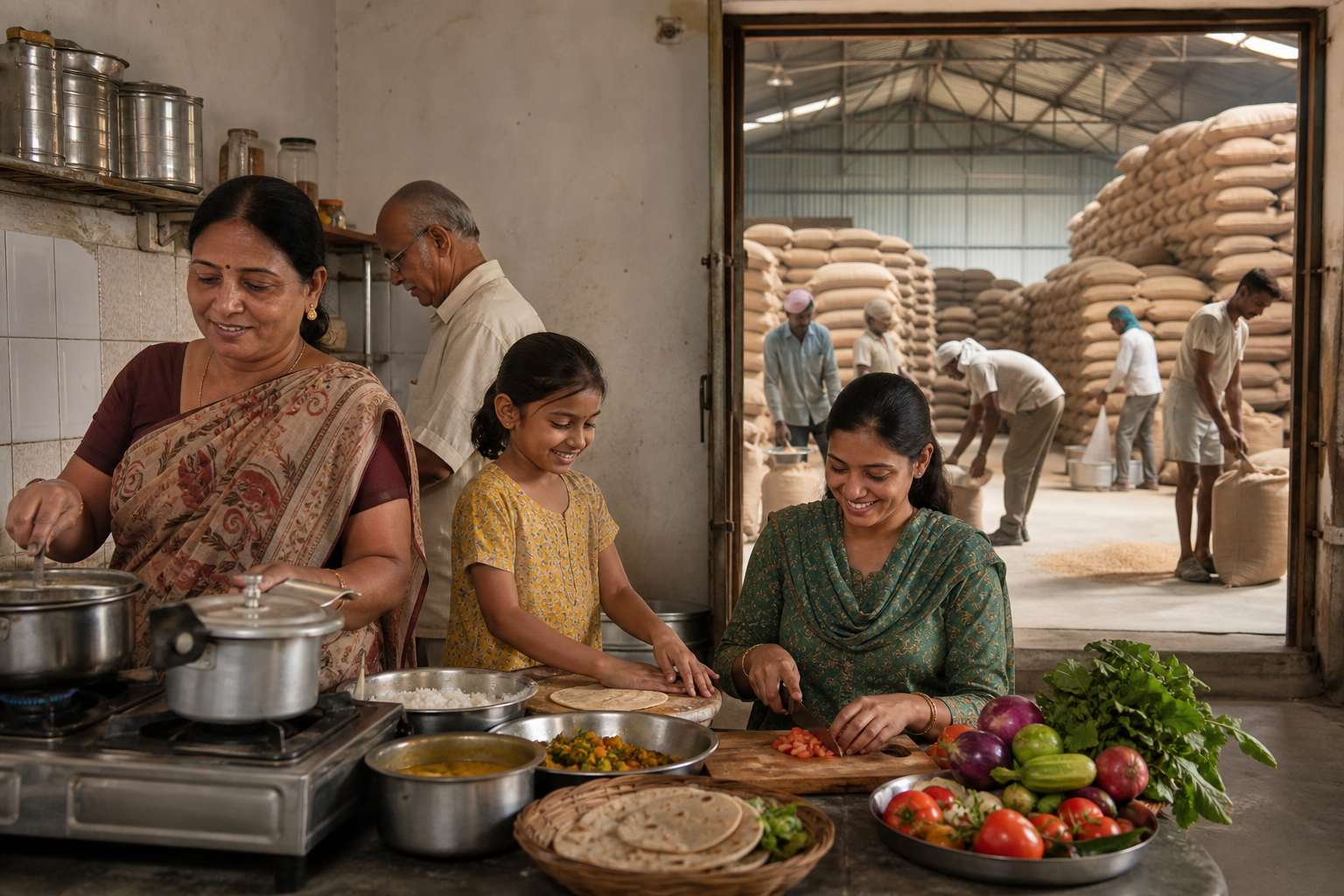
Three ideas are often collapsed into one, and that produces bad policy.
- Food security means that people can reliably obtain enough safe and nutritious food. Imports may improve food security when domestic supply is temporarily inadequate or when they broaden consumer choice.
- Domestic productive capacity means retaining the farms, seed systems, water, skills, storage, transport, and processing needed to produce essential food inside the country.
- Food sovereignty, as we use the term here, means preserving India’s practical freedom to decide how its food system works. A country may import food without surrendering that freedom, but not if an indispensable staple comes from a concentrated external source that can be interrupted or used as leverage.
This distinction matters because neither extreme is defensible. Imports are not inherently dangerous, and domestic production is not automatically resilient. A poorly stored domestic crop can fail consumers. A diverse set of reliable foreign suppliers can help during a shortage. But dependence becomes strategic when three conditions coincide: the food is indispensable, substitutes cannot be mobilized quickly, and continued supply rests on another government’s discretion.
India has already experienced that combination. Dependence on PL-480 food shipments during the 1950s and pressure surrounding supplies in 1965 left a durable lesson: access to grain can become part of a diplomatic bargain. Lal Bahadur Shastri’s appeal for citizens to reduce their own consumption showed how quickly a trade or aid dependency can reach the household dining plate.
Indian public memory also carries reports that some PL-480 consignments were poor in quality and may have carried invasive seeds, including Parthenium. The precise route by which an invasive species spreads is a question for careful historical and biological evidence, so the remembered claim should not be treated as a substitute for proof. Its policy relevance is narrower and sounder: imported food and seed material require inspection, traceability, and biosecurity controls before entry, not after damage appears.
The practical response is not a blanket prohibition. India’s calibrated trade has included select imports such as American apples and almonds and produce from several other regions. That is openness with differentiation. A fruit that adds consumer choice does not require the same treatment as a staple tied to buffer stocks, public distribution, or the livelihood of a large vulnerable producer base.
Before changing a tariff line, classify the product. Is it staple-critical, livelihood-sensitive, or mainly a discretionary or processing input? Then run a supply shock test: identify the available domestic substitute, the number and concentration of external supply routes, the time needed to replace a disrupted shipment, and the public system that would protect low-income consumers. If those answers are missing, the tariff proposal is not ready.
Repair risk at the farm gate before exposing it at the border
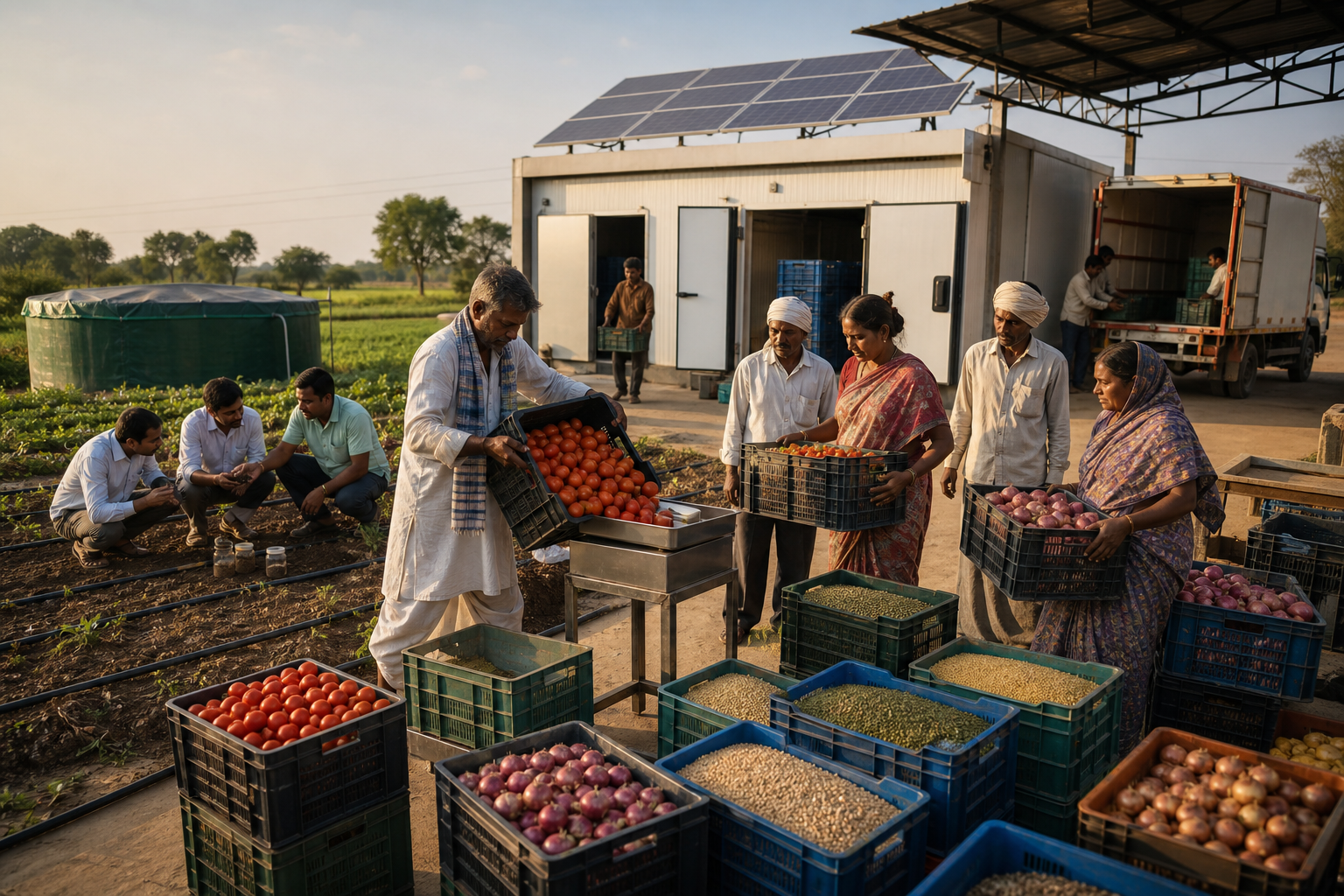
Agricultural trade cannot be judged like trade in a factory product. A small farmer may face weather risk, pest and disease risk, uncertain yields, volatile prices, costly credit, transport failure, buyer rejection, and a sudden policy change in the same season. Input suppliers, lenders, aggregators, processors, and retailers usually have more information and more ways to protect themselves.
This is why a bumper crop can still impoverish its producer. When many farms harvest simultaneously but storage, processing, or buyer capacity is inadequate, the price may collapse just as the farmer’s input bills become due. Greater yield then increases the volume that must be sold under pressure. Adding import competition at that exact point does not create an efficient market; it compounds a risk that the value chain has already pushed onto its least-protected participant.
A workable reform programme must therefore move risk, information, and capital together. Reform should proceed in an operational sequence:
- Make price and demand information usable before sowing. Farmers need crop- and region-specific signals, not a national average published after planting decisions are irreversible. Advice should include likely buyer demand, crop rotation, local water conditions, and realistic routes to market.
- Build bargaining capacity. Producer collectives, cooperatives, and farmer-owned enterprises can aggregate small lots, negotiate quality terms, share equipment, and challenge arbitrary rejection. A digital marketplace without collective bargaining may simply digitize the old power imbalance.
- Standardize enforceable contracts. A contract should state the quality grade, testing method, delivery window, price formula, deductions, rejection procedure, payment date, and dispute route. A promise to purchase is not risk-sharing if the buyer can change the grade or refuse delivery without a timely remedy.
- Put storage and transport behind the contract. Warehouses, cold chains, grading facilities, processing capacity, and dependable transport determine whether a farmer can wait for a fair buyer. Without them, price discovery is largely theoretical because the crop is perishable and the seller’s clock is running.
- Match finance and insurance to verifiable events. Credit repayment should reflect the production and sales cycle. Insurance must cover clearly defined events and settle quickly enough to preserve the next sowing decision. A policy that pays after the household has already sold productive assets has failed its economic purpose.
- Phase import exposure against published readiness indicators. Before a tariff falls, government should identify which contracts, storage facilities, insurance arrangements, processing outlets, and transition support will absorb the shock. Those conditions should be measurable and reviewed by crop, region, and season.
An integrated workflow can connect agronomic advice, input planning, finance, insurance, logistics, quality testing, contracts, and payment records. The proposed Smart Agriculture Management System model captures that useful architecture. The important part is integration, not the label. Farmers should not have to re-enter the same information across disconnected departments or surrender control of their data merely to obtain credit or market access.
Technology must also remain a tool rather than a new gatekeeper. Records should be portable, corrections should be possible, contract changes should be visible to both parties, and farmers should have a non-digital route when connectivity or literacy creates a barrier. Auditability matters because a platform can concentrate power just as easily as an intermediary can.
The withdrawal of India’s 2020 farm laws offers another practical warning. A Supreme Court-appointed committee reported that many respondents supported reform objectives, yet the laws were withdrawn amid sustained opposition and concern over implementation. That does not establish that every proposed provision was right, or that the respondents represented every farmer. It shows that agreement on goals such as better markets and contracts cannot substitute for trust, credible safeguards, state capacity, and consent over the route.
Open trade product by product and in reversible stages
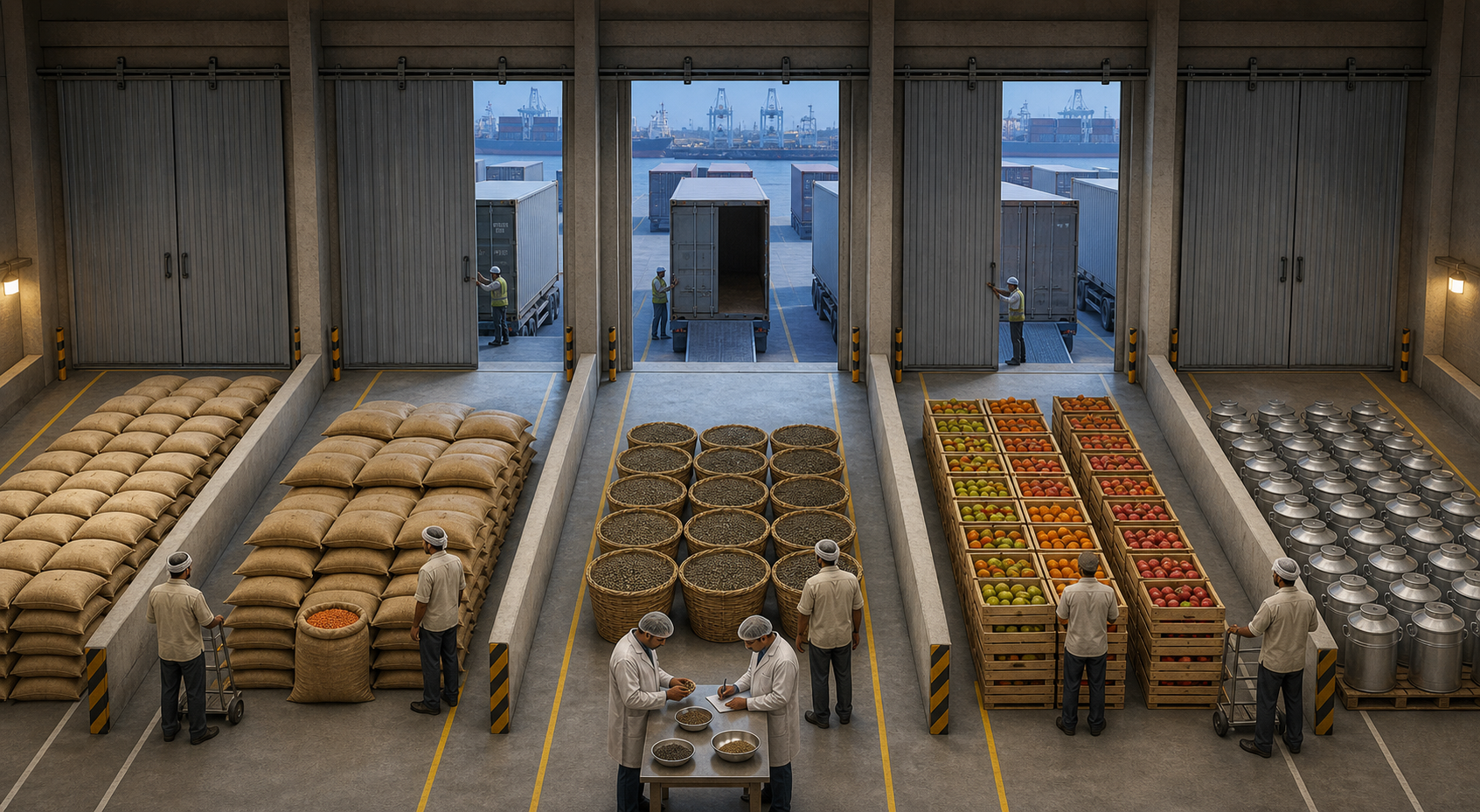
Agriculture is too varied for a single label such as liberalized or protected. A sound agreement works tariff line by tariff line and distinguishes staples from specialty foods, raw commodities from processed products, and products with many small domestic growers from those with little direct livelihood exposure.
| Situation | Trade decision | Required condition |
|---|---|---|
| Non-staple product, limited vulnerable-farmer exposure, verifiable safety, and diverse supply | Green: reduce unnecessary friction and pursue reciprocal recognition of standards | Clear labeling, traceability, inspection capacity, and transparent product coverage |
| Product competes with many small growers or enters a market with weak storage, processing, insurance, or contracts | Amber: phase changes, use review dates, and consider seasonal or volume-based safeguards | A funded adjustment plan and published indicators showing that farmers can store, process, insure, or redirect output |
| Staple-critical product, concentrated external supply, or product whose genetic, chemical, or sanitary characteristics cannot be verified | Red: retain policy space until the vulnerability is repaired | Testing, traceability, contingency supply, and safety-net capacity must exist before access expands |
These categories are not permanent verdicts. An amber product can become green when domestic risk-sharing improves. A green product can move to amber if its supply becomes concentrated or if import volumes suddenly threaten a vulnerable growing region. That is why review dates and disclosed indicators are better than either permanent protection or an irreversible concession made on optimistic assumptions.
What a serious agricultural trade agreement should contain
- Exact product coverage and timing. Broad promises about agricultural access conceal the crops, seasons, and communities that will actually feel the change.
- Published sanitary and phytosanitary rules. Testing methods, tolerances, inspection responsibilities, appeal procedures, and treatment of genetically modified foods must be understandable before shipments arrive.
- Traceability and labeling. The responsible producer, origin, processing path, and relevant ingredients should be verifiable. Rules for additives, emulsifiers, flavour enhancers, and food colouring should apply consistently to domestic and imported goods.
- Reciprocal access. India should seek recognition of its own testing and certification systems so that domestic farmers and processors gain real export opportunities. An import concession without a usable export route is market access, not balanced exchange.
- A safeguard and review mechanism. The agreement should define what happens if imports surge, a supplier is disrupted, a biosecurity problem appears, or a vulnerable producer group suffers material injury. A safeguard is credible only when its trigger, evidence, and duration are stated in advance.
- A domestic transition package. Storage, cold chain, processing, extension, insurance, skills, and affordable finance should be operational before competition intensifies. Announcing future capacity after tariffs fall reverses the safe sequence.
India enters such negotiations with more capacity than it had during earlier openings. Stronger ports, highways, rail links, power reliability, telecom networks, banking health, and digital infrastructure improve its ability to participate in changing supply chains. They also make higher-quality free-trade agreements, standards cooperation, and mutual recognition more feasible.
But national infrastructure does not automatically protect a farmer from a rejected truckload or delayed payment. Digital public infrastructure should lower certification and compliance costs for small enterprises, not merely give large exporters a faster lane. The correct sequence remains: build capability, publish rules, expose the market gradually, measure the result, and retain a lawful route to respond when the assumptions fail.
Judge reform by household outcomes, not the signing ceremony
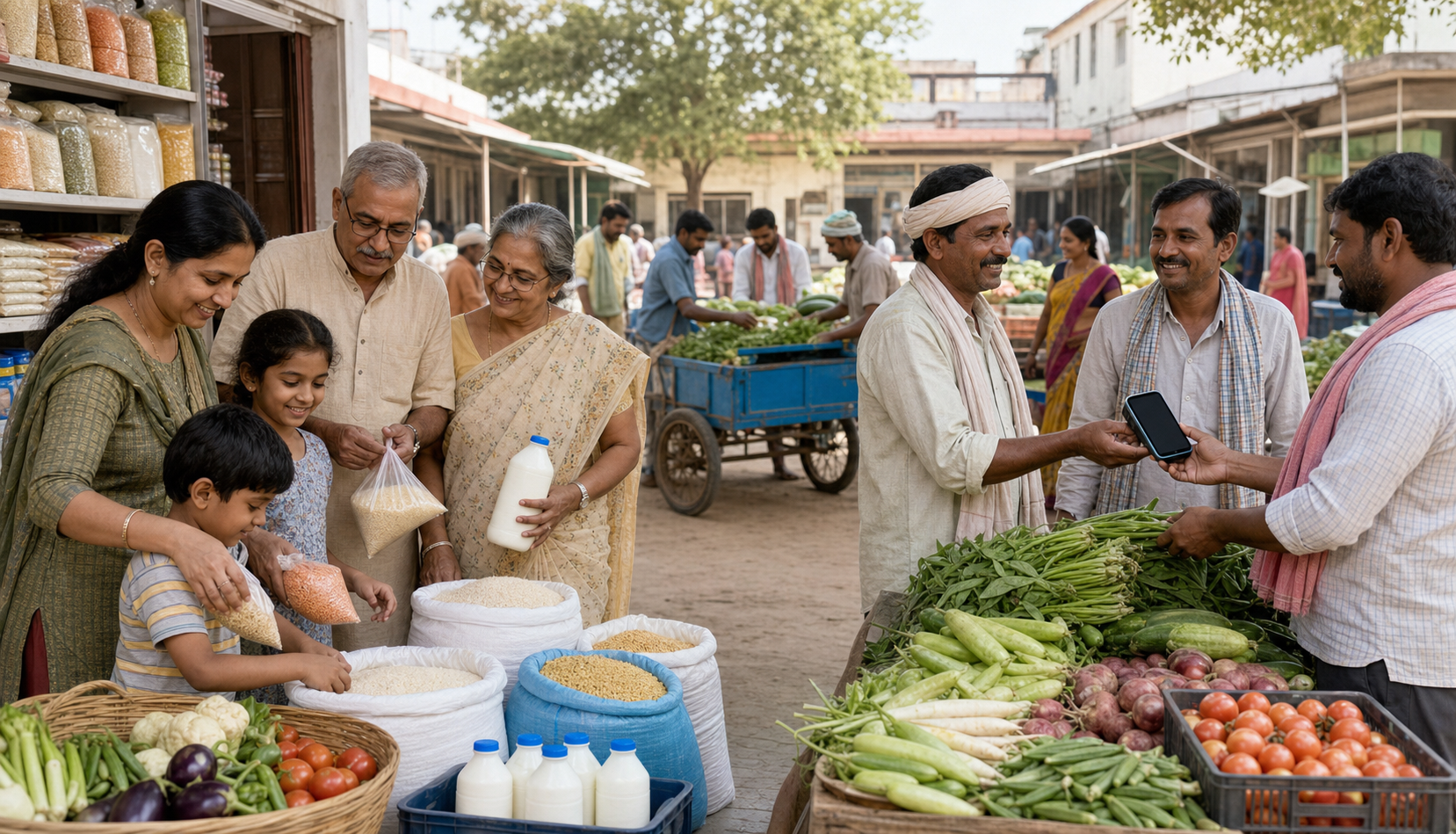
A trade deal may expand total economic activity while leaving particular farm households worse off. The distinction between national economic capacity and the prosperity experienced by each person is especially important in agriculture because gains and losses arrive at different speeds. Consumers may see a lower price quickly, an importer may gain volume immediately, and a displaced grower may need several seasons to change crops, equipment, credit arrangements, and buyers.
Do not declare success when an agreement is signed. Establish a baseline before implementation, then publish results by commodity, district, farm scale, and season. At minimum, track:
- consumer availability and affordability for the affected food, including whether benefits reach low-income households;
- realized farm-gate income after input, finance, grading, transport, storage, and rejection costs;
- price volatility during the harvest window, not merely the annual average;
- contract rejection rates, payment delays, and the time required to resolve disputes;
- access to usable warehousing, cold chain, processing, credit, and insurance;
- the speed and reliability of insurance settlement after a covered event;
- export acceptance and rejection under foreign quality standards;
- concentration among foreign suppliers, domestic buyers, logistics providers, and digital platforms; and
- continuity of buffer stocks and public food distribution during a disruption.
The distribution of risk is not a secondary social question. It determines whether reform survives. If gains are immediate and concentrated while losses are delayed and dispersed among small farmers, political resistance is predictable. If those farmers have contracts, insurance, processing outlets, market information, and a voice in rule-making before the transition, openness becomes more credible.
A dharmic outlook gives this test moral clarity without replacing economics. Annadanam and langar treat nourishment as a duty that crosses social boundaries. Ahimsa asks whether avoidable harm is being shifted onto people with the least capacity to bear it. Seva requires the safety net to function during the transition, not merely after a crisis becomes visible. Aparigraha warns against an arrangement in which one part of the chain accumulates the gains while pushing volatility onto cultivators, consumers, soil, and water.
Use that ethic concretely. For every proposed reform, ask who benefits in the first season, who absorbs a failed harvest or import surge, and which institution remains responsible when a contract, shipment, or insurance claim fails. A policy is not inclusive because it invokes farmers in its preamble. It is inclusive when responsibility, remedy, and funding can be located before harm occurs.
Key takeaways: the six-question test
- Is the product essential? Treat a staple tied to public distribution and buffer capacity differently from a discretionary import.
- Can supply be replaced? Map domestic substitutes, supplier concentration, transport routes, and the time needed to recover from disruption.
- Can India verify what enters? Do not expand access faster than laboratories, inspectors, traceability systems, and labeling enforcement can operate.
- Can farmers adjust before exposure? Contracts, collectives, storage, processing, credit, insurance, and dispute resolution must precede the tariff change.
- Is access reciprocal? Require a practical route for Indian produce to meet standards and reach the other market, not merely a promise of theoretical access.
- Can the policy correct itself? Publish indicators, review dates, safeguard triggers, responsible institutions, and the remedy available when outcomes diverge from the plan.
The next time agricultural opening is proposed, ask for the commodity schedule, supply-shock test, farmer risk map, standards plan, reciprocal export route, and review mechanism. If any one of them is absent, the proposal is incomplete regardless of how attractive its headline tariff looks.
India does not have to choose isolation or dependence. It can trade more while preserving the ability to nourish its people and protect cultivators from risks they cannot control. The credible path is disciplined openness: reform the farm gate first, lower barriers in stages, measure household outcomes, and keep strategic food capacity beyond the reach of external coercion.
References
- DharmaRenaissance Blog – Discover India’s Complete Trade Breakthrough Amid Trump-Era Uncertainty and Supply Shifts
- DharmaRenaissance Blog – Total vs Per Capita GDP: The Essential Guide to Master India’s Growth Breakthrough
- DharmaRenaissance Blog – US-India Food Trade and PL-480’s Ghosts: Proven Lessons to Master Today’s Negotiations
- DharmaRenaissance Blog – Discover Why U.S.-India Agriculture Talks Stall: Proven Insights on Food Security and Fair Trade
- DharmaRenaissance Blog – Essential Breakthrough for Farmers: A Complete Risk-Sharing Blueprint to Transform Agriculture
