
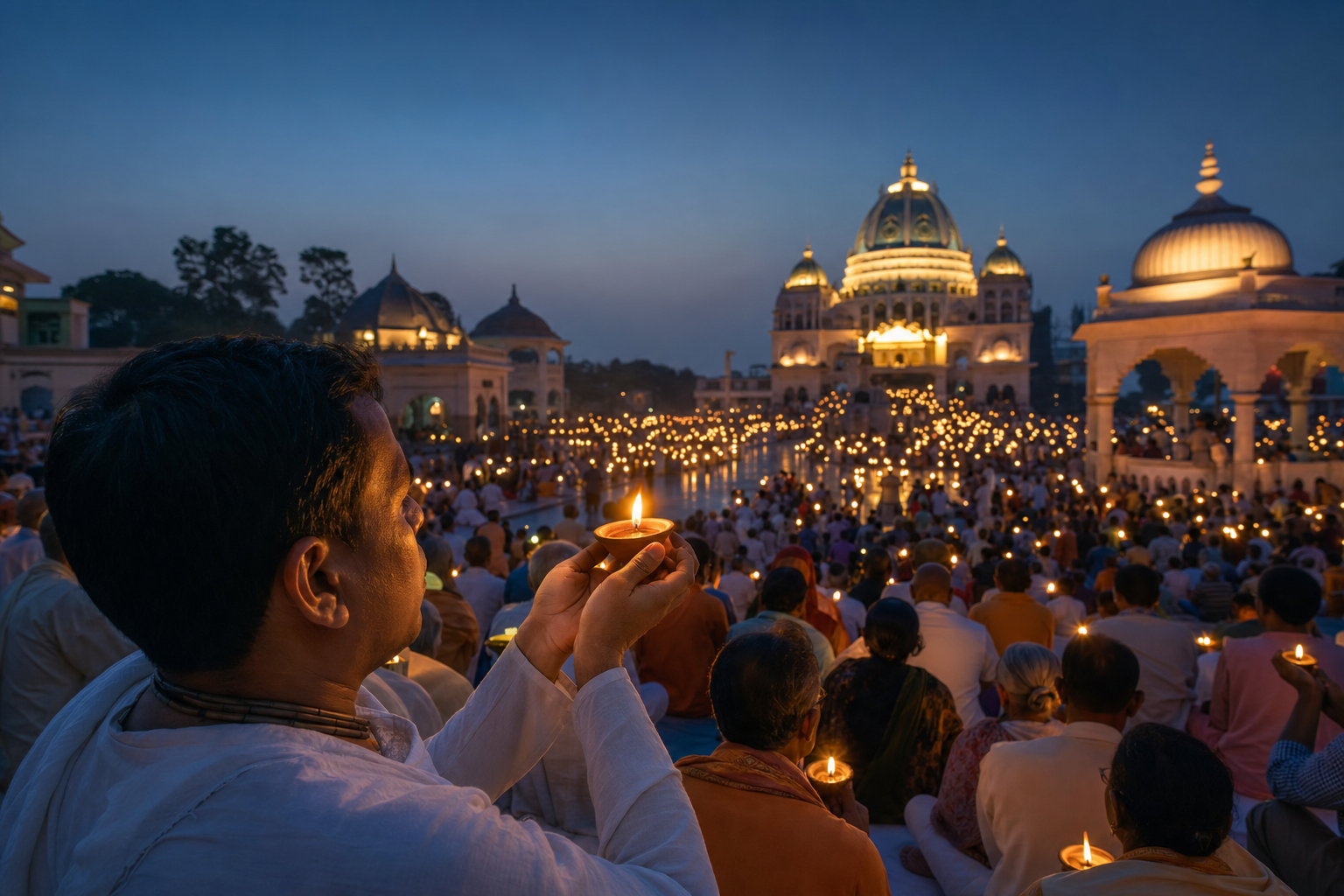
You may reach Mayapur during Kartik knowing that lamps will be offered, yet still feel unsure about what to do when the kirtan begins. The essential point is simple: Deep Daan is not a test of ritual expertise. It is a deliberate offering of light to Sri Krishna in his Damodara form, made with remembrance and gratitude.
Your lamp may be one among many, but it should not become anonymous. A little preparation will help you participate safely, follow the temple’s rhythm, and leave with something more durable than a photograph of illuminated lamps.
Begin with the meaning, not the spectacle
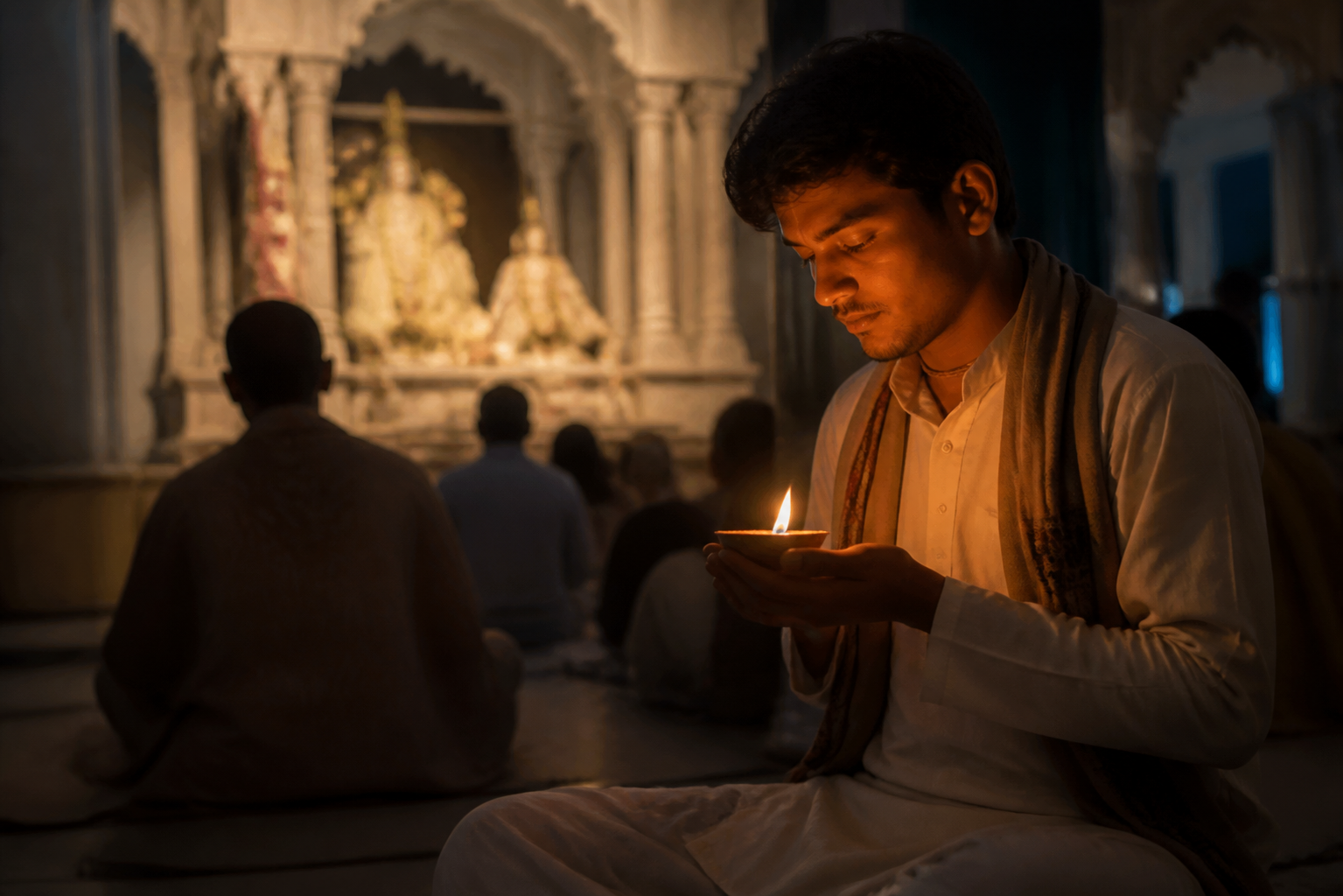
Kartik, also known as Karthika masam, gives devotees a sustained period in which to direct attention toward Sri Krishna. Within Gaudiya Vaishnava practice, the daily offering of a ghee lamp with Damodara prayers functions as a discipline of smarana, or remembrance, joined to gratitude.
That daily character matters. The flame lasts for a short time, but the practice asks you to return, remember, and offer again. Repetition turns a moving experience into steadiness. If you are visiting Mayapur for only one evening, approach your offering as one moment within that continuing devotional rhythm rather than as an isolated attraction.
Before you take the lamp, choose one clear intention. You might remember mercy already received, acknowledge a part of your conduct that needs light, or hold someone in compassionate prayer. Keep the intention simple enough to remain present while the lamp is in your hands. You do not need to manufacture a dramatic feeling. Calm attention is itself a meaningful form of participation.
The symbolism also gives you a practical test. If the lamp represents understanding overcoming ignorance, ask what will become clearer in your conduct after the flame is offered. Gratitude that never reaches speech, patience, restraint, or service remains incomplete. Let the outward light identify one inward responsibility.
Prepare so the flame does not become a distraction
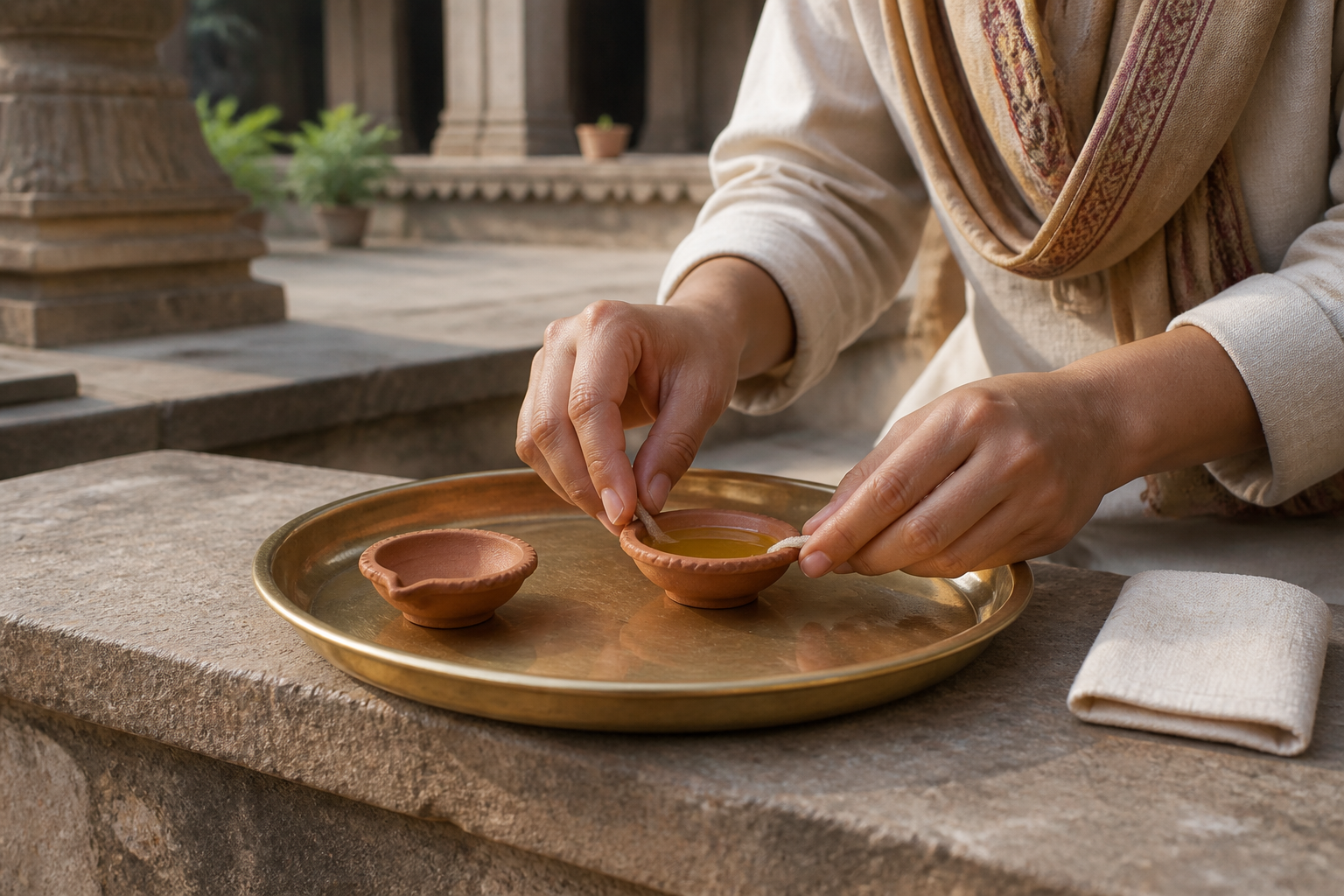
A ghee lamp is both a sacred offering and an open flame. Sensible handling is part of reverence, especially when many people are participating close to one another.
- Use the lamp, wick, and ghee accepted at the venue, and follow the directions given by the temple.
- Secure loose sleeves, scarves, long hair, and anything else that could move near the flame.
- Keep the lamp upright and avoid reaching across another participant, another lamp, or a row of flames.
- Give children direct adult supervision. If a child cannot hold the lamp steadily, let the child participate beside an adult rather than manage the flame alone.
- Put your phone away before receiving the lamp. If you want a photograph, take it after completing the offering without a screen between you and the worship.
If physical limitations make it difficult to hold or move with the lamp safely, do not force the gesture. Ask how you can participate without creating a risk. Prayerful attention is better than trying to reproduce someone else’s movement while worried about balance or fire.
The precise liturgical order and handling arrangements belong to the local practice. Watch the directions being given in Mayapur instead of importing a gesture remembered from another temple or household. Ritual precision grows from attentive participation in the community’s order, not from guessing.
Offer the lamp in five unhurried movements
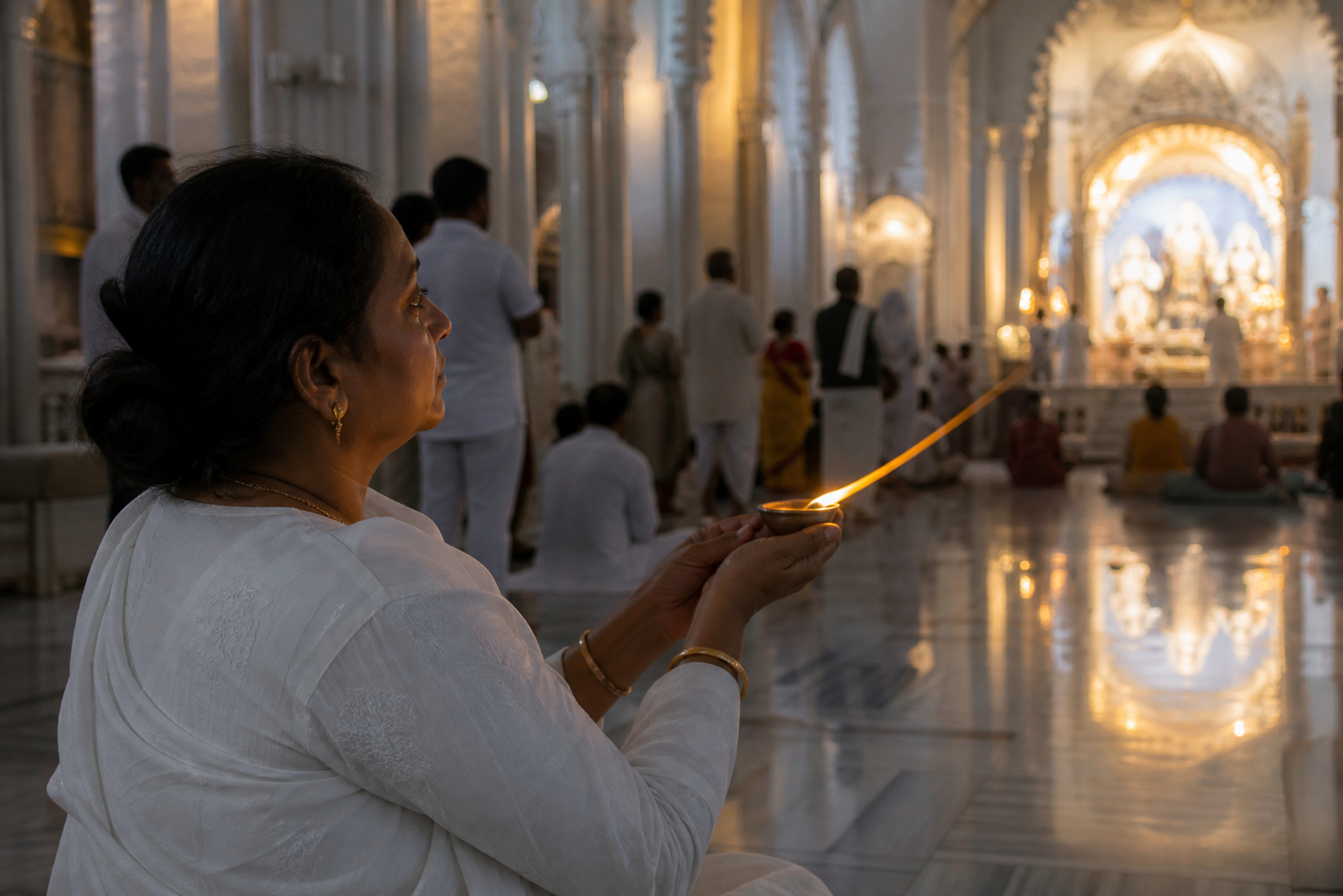
The visible act is simple. What changes it from routine handling into Deep Daan is the quality of attention carried through each part.
- Settle your intention. Recall why you are offering before the lamp is lit. One clear remembrance is more useful than a hurried list of requests.
- Prepare or receive the lamp as directed. Attend to the wick, ghee, and flame without rushing. This practical care is already part of the offering.
- Bring your attention to Sri Krishna as Damodara. Let the form of the Lord, rather than the surrounding crowd or camera, become the center of the act.
- Join the prayerful rhythm. Follow the Damodara prayers and measured kirtan as you are able, and perform the offering according to the sequence being used at the temple.
- Complete the act consciously. Place the lamp or hand it onward as directed, pause before leaving, and choose one compassionate action through which the remembrance will continue.
Nothing in this sequence requires display. You do not need an elaborate personal performance, and you do not need to imitate another devotee’s visible emotion. The useful question is whether your body, prayer, and intention are directed toward the same act.
Let Mayapur’s collective worship train your attention
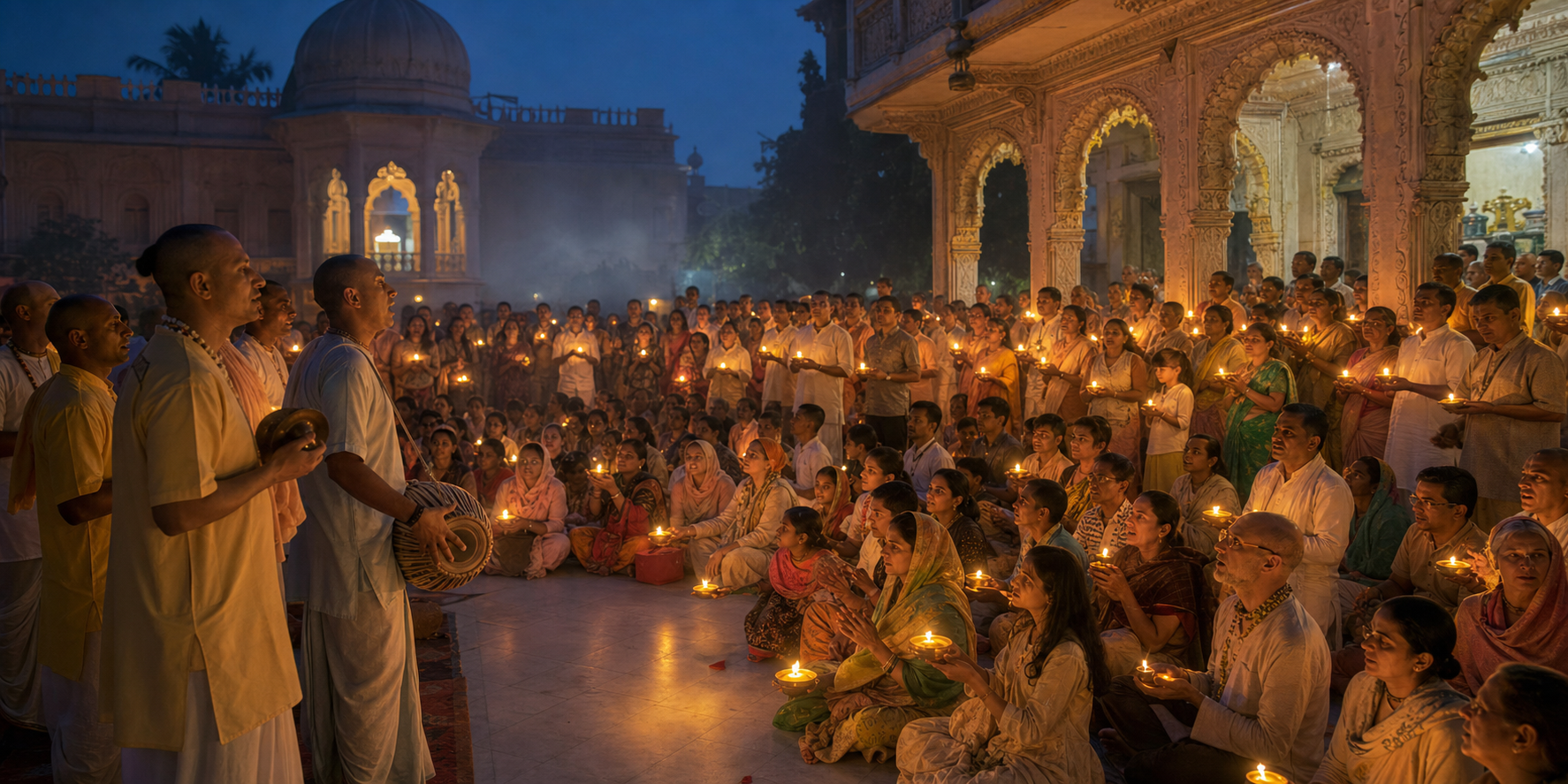
Sri Dham Mayapur changes the scale of Deep Daan without changing its center. Rows of individual lamps gather into bands of golden light. The fragrance of ghee, the cadence of kirtan, and the shared focus of the assembly can make quiet reflection feel more natural. Each lamp remains an intentional offering even as the temple landscape fills with light.
Receive that atmosphere before trying to record it. During the offering, notice three things: the small flame you are responsible for, the rhythm that keeps many participants gathered around one devotional purpose, and the conduct you intend to carry away. This prevents the collective beauty from turning into mere background scenery.
The assembly also reveals why bhakti can be both personal and communal. No single lamp creates the whole field of light, yet the field cannot exist without individual offerings. You do not lose your intention by joining others. You place it within a shared discipline that can strengthen attention, reverence, and compassionate conduct.
If you are joining from somewhere else
Mayapur.TV documents the proceedings for devotees who cannot be physically present. Treating the broadcast as background entertainment, however, misses its devotional usefulness. Choose a quiet place, sit attentively for the prayers, and avoid multitasking. If lighting a ghee lamp is part of your household practice and can be done safely, prepare it before you begin and never leave it unattended.
If an open flame is unsafe where you live, join the remembrance and prayer without one rather than creating a fire risk to reproduce the visible scene. For the precise Kartik calendar, prayer sequence, and ritual details that govern your own practice, follow the guidance of the guru, temple, or Vaishnava community with which you are connected.
Keep the practice modest enough to repeat. A carefully prepared lamp, an undistracted prayer, and one act of compassion are more sustainable than an elaborate arrangement that draws all your attention toward setup. The cumulative value of Kartik lies in returning to remembrance, not in making each evening more decorative than the last.
Recognize shared light without flattening distinct traditions
The wider dharmic season carries several observances in which light, liberation, generosity, or moral clarity become prominent. Deepavali affirms light over ignorance. Jain lamps commemorate Mahavira’s nirvana. Bandi Chhor Divas recalls liberation and moral courage in Sikh tradition. Buddhist Kathina emphasizes generosity and communal harmony.
These are not interchangeable ceremonies, and respectful unity does not require pretending that they are. The better approach is to preserve each tradition’s particular memory while recognizing a shared civilizational concern with knowledge, compassion, freedom, and ethical clarity. When speaking about Deep Daan to someone from another dharmic path, explain its orientation toward Sri Krishna as Damodara first; discuss the wider symbolism only after that distinction is clear.
Key takeaways
- Kartik Deep Daan centers on offering a ghee lamp to Sri Krishna in the Damodara form with remembrance and gratitude.
- Choose one clear intention before taking the lamp; do not wait for the crowd or music to create an intention for you.
- Follow Mayapur’s local directions for materials, movement, prayers, and placement of the lamp.
- Treat fire safety, child supervision, and consideration for nearby devotees as parts of respectful worship.
- Let the offering produce one practical result in your conduct, such as more patient speech, restraint, gratitude, or compassionate service.
- If you participate from afar, give the prayers your full attention and use a flame only where it can be handled safely.
At your next Kartik offering, decide on one remembrance before the lamp is lit and one action before you leave. That small bridge between worship and conduct is how a brief flame becomes a continuing discipline.
References
