
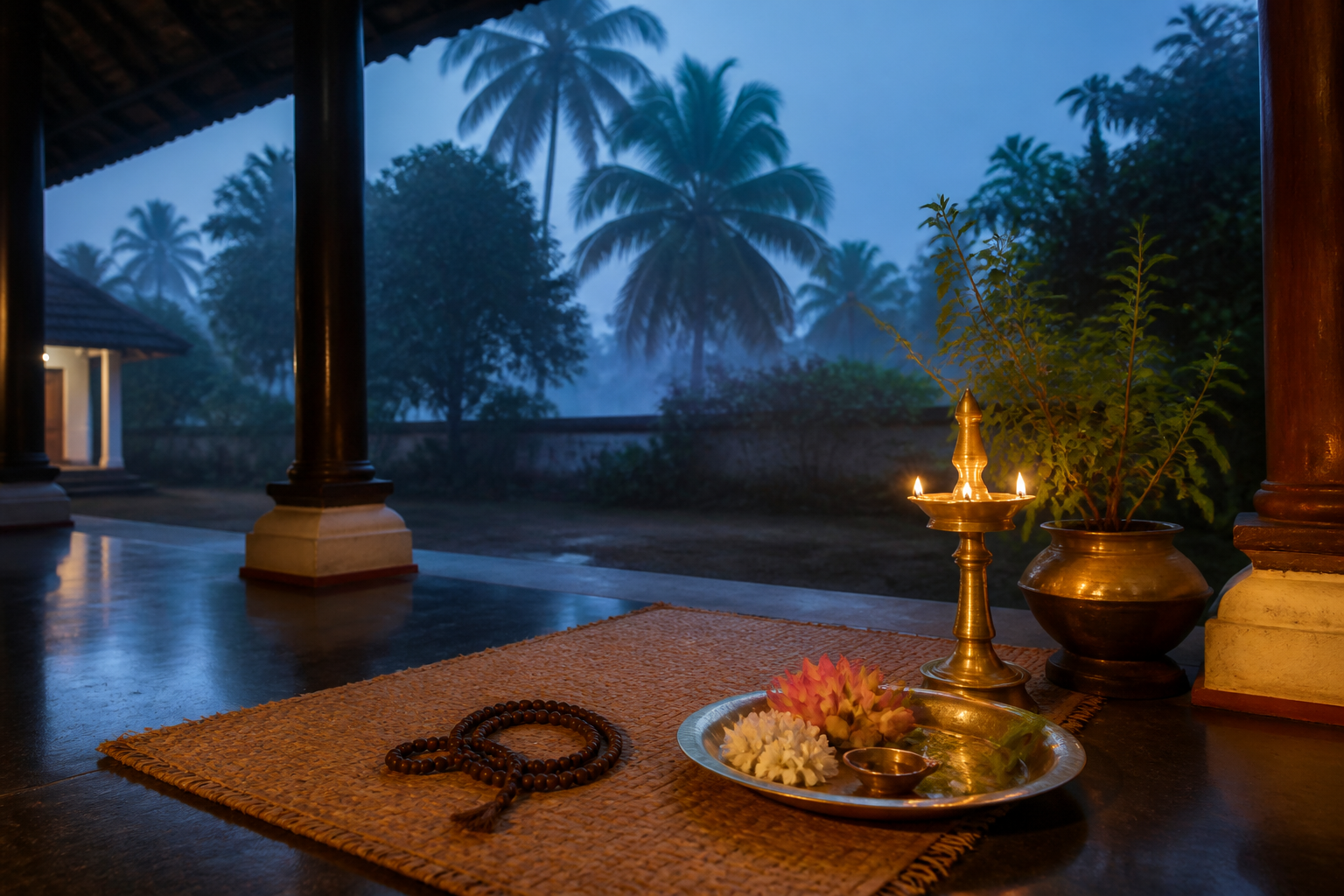
If you are arranging family worship, temple visits, or Sabarimala preparations, mark 17 November through 15 December 2025 first. That is the full span of Vrischika Masam in the Kerala calendar for 2025.
The dates are the easy part. The common mistake is assuming that every festival time, household rule, and pilgrimage observance follows automatically from the month boundary. Vrischikam is a solar month, while particular observances may also depend on local temple practice, tithi, and nakshatra. Use the month dates to establish your framework, then confirm the details that belong to your place and tradition.
The dates to put on your Vrischikam calendar
| Calendar point | Date or value | What it means for you |
|---|---|---|
| Vrischika Masam begins | 17 November 2025 | Use this as the opening date for your household plan and as the calendrical start of the Sabarimala Mandala season. |
| Vrischika Masam ends | 15 December 2025 | Plan month-specific worship and family commitments through this date. |
| Length | 29 days | Build a practice you can sustain across the whole period rather than concentrating everything into the first few days. |
| Malayalam calendar year | Kolla varsham 1201 | This is the year designation to look for when checking a Malayalam panchangam or temple notice. |
| Position in the year | Fourth Malayalam month | Vrischikam follows the Kerala calendar’s solar sequence rather than beginning on a lunar phase. |
The Kerala calendar is sidereal and solar. A month begins when the Sun enters the corresponding rashi; Vrischikam is associated with the Sun’s transit through Vrischika, or Scorpio. That is why the month can have a clear Gregorian beginning and end even though a festival within it may still be determined through tithi, nakshatra, or a temple’s established calendar.
This distinction gives you a simple rule: use 17 November and 15 December for the boundaries of the month, but do not calculate a festival day or ritual time merely by counting forward from 17 November. For those decisions, consult the Malayalam panchangam used in your locality or the schedule of the temple where you intend to worship.
Build a 29-day observance you can sustain
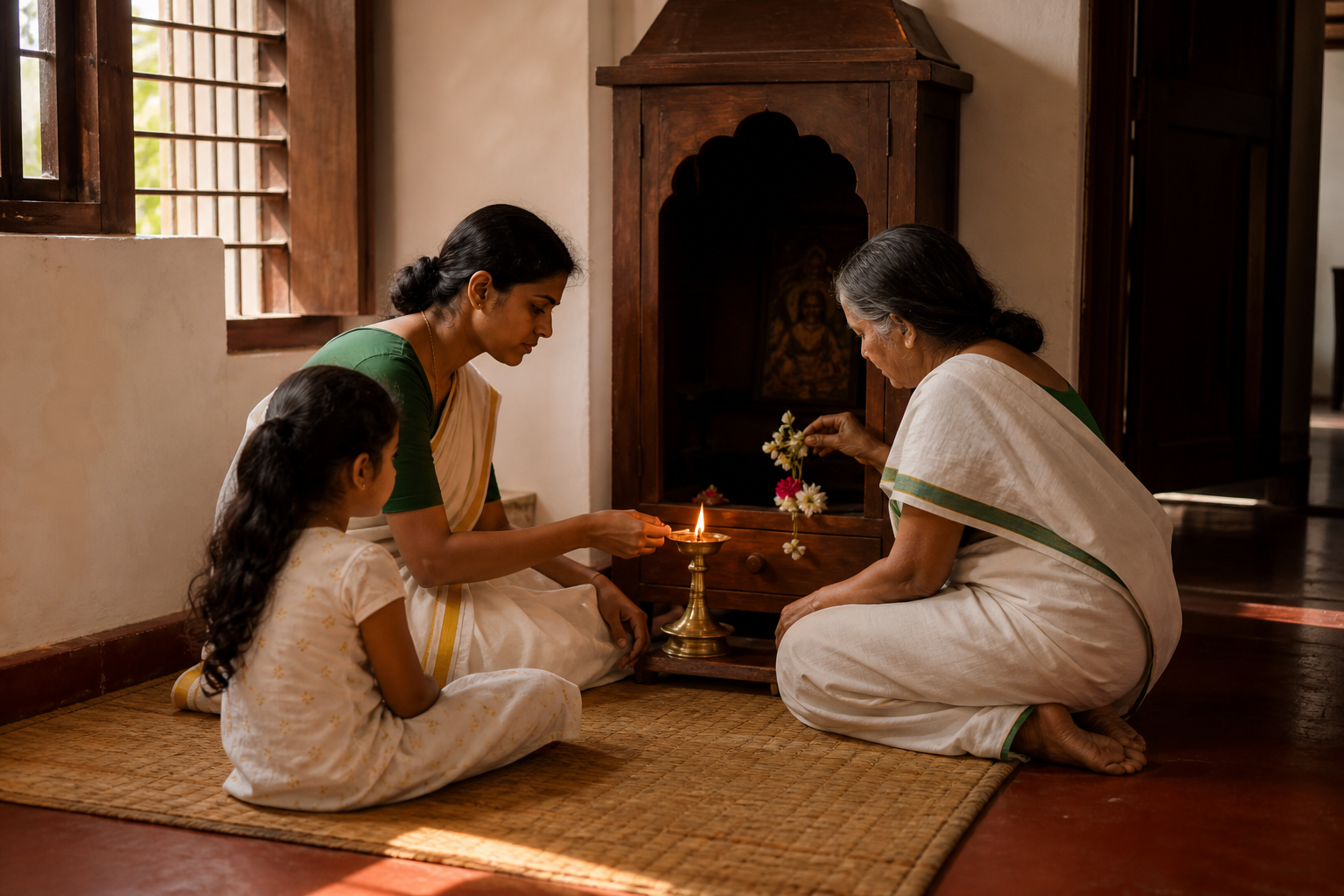
Start by deciding what you are actually undertaking. A household devotional month, a preparatory Sabarimala vrata, and participation in Karthika Deepam can overlap, but they are not interchangeable. Your plan should reflect the observance you have chosen rather than combining every practice you encounter into one demanding list.
- Block the full month. Mark 17 November as the beginning and 15 December as the conclusion. Add work, travel, and family commitments that could disrupt your routine.
- Choose a daily devotional anchor. Set a realistic time for prayer. If early-morning darshan is part of your practice, decide in advance which temple visits are feasible instead of relying on a vague intention to go regularly.
- Define dietary simplicity clearly. Follow the rules received from your family, guru, vrata tradition, or temple. The general call to simplicity is not a universal menu, so do not present one community’s detailed food rules as binding on everyone.
- Schedule service or charity. Choose the act, recipient, or community effort before the month starts. A specific commitment is less likely to disappear behind the busyness of pilgrimage and festival arrangements.
- Confirm event dates separately. Keep Karthika Deepam and other temple events provisional until the relevant temple or local panchangam publishes its timing.
The purpose of this structure is not to reduce vrata to calendar management. It is to protect the devotional rhythm of the month. Regular prayer, restraint, ethical conduct, charity, and temple participation become formative through repetition. A modest rule observed steadily is more coherent than an elaborate rule that changes whenever the household schedule becomes difficult.
Write your commitments in plain language. For example: the time reserved for daily prayer, the form of dietary restraint you have received, the temple days you intend to keep, and the charitable action you will complete. This also makes family expectations visible. Everyone can then distinguish a shared household observance from a personal vow.
If Vrischikam begins your Sabarimala preparation
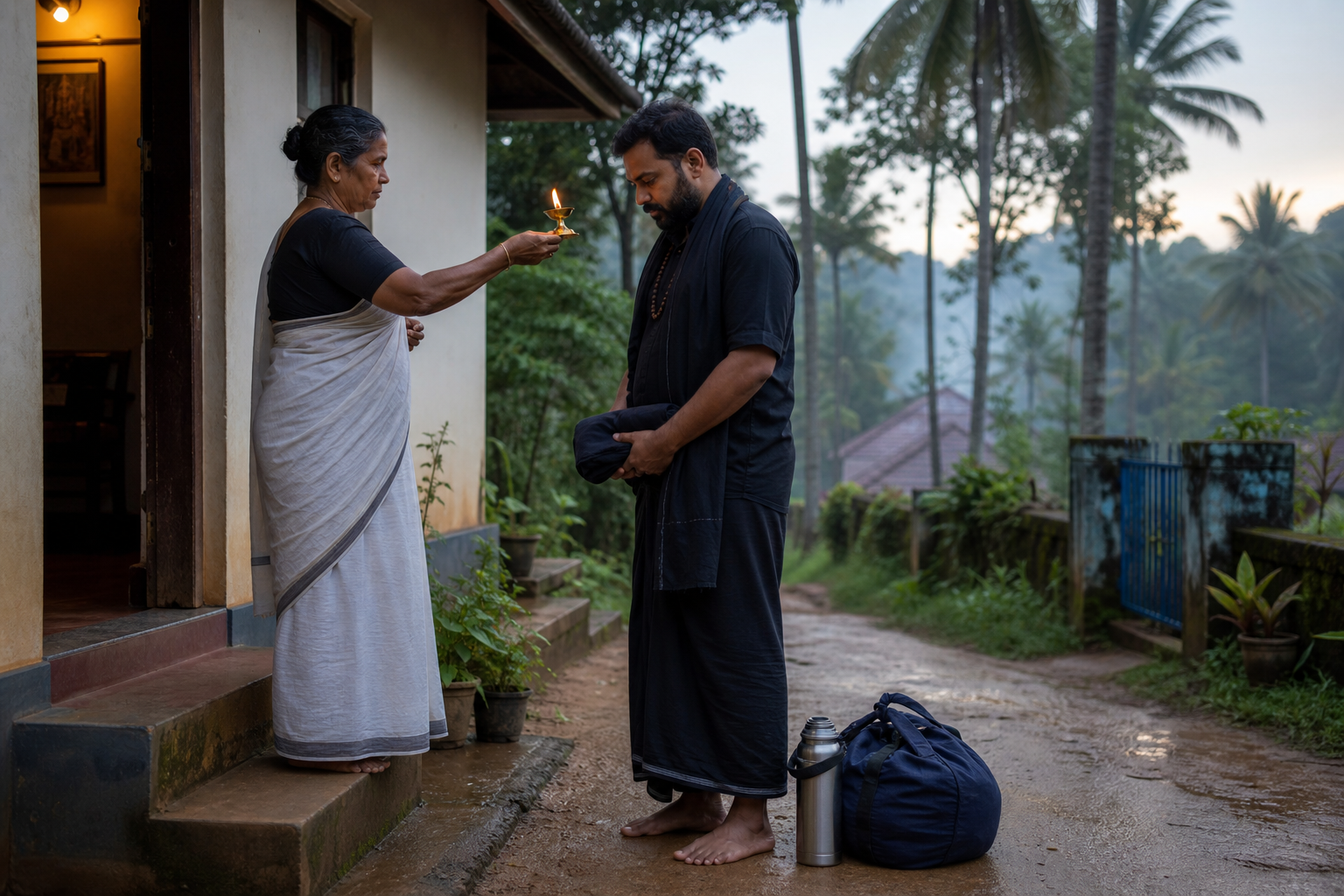
Vrischika Masam marks the opening of the Sabarimala Mandala Kalam, making 17 November an important planning anchor for many devotees. The season is associated with vows, disciplined living, simple food, prayer, and regular temple visits. The calendar date, however, is not a complete set of vrata instructions.
- Confirm how and when you should begin. Ask the temple, guru, or devotional community whose tradition you follow. This prevents a general calendar entry from being mistaken for a personalized ritual instruction.
- Translate the vow into daily commitments. Put prayer, temple visits, and the dietary discipline you follow into your calendar. If a rule affects shared meals or family plans, discuss it before the month opens.
- Separate vrata dates from travel dates. The beginning of Vrischikam does not by itself determine when you should travel or attend darshan. Check the applicable temple schedule and coordinate with your pilgrimage group.
- Review foreseeable conflicts. Work events, journeys, and social obligations within the 29-day window are easier to adjust before the vrata begins than after you have made the commitment.
- Use one trusted local calendar. Mixing dates or timings calculated for different places can manufacture a contradiction that does not exist in either local tradition.
If your household observes Vrischikam but you are not undertaking a Sabarimala pilgrimage, you do not need to imitate a pilgrim’s complete discipline. You can keep the month’s devotional character through consistent prayer, appropriate restraint, temple worship, charity, and family participation according to your own sampradaya.
Plan Karthika Deepam and resolve calendar conflicts
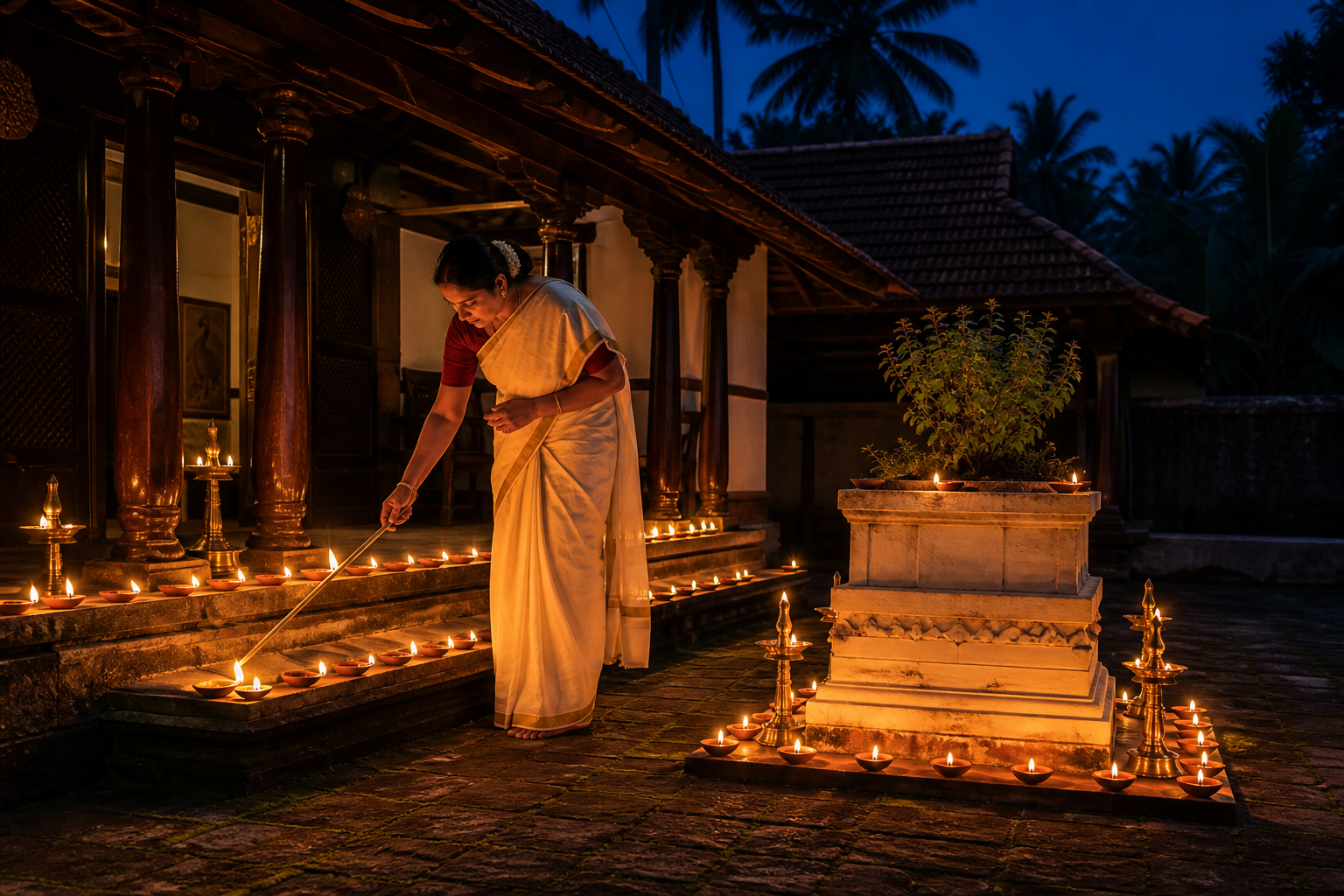
Karthika Deepam typically falls within the Vrischikam period. Families may illuminate their homes and courtyards with rows of lamps, expressing the movement from darkness toward light and knowledge. The exact date and ritual arrangements can differ by locality and temple tradition, so the 29-day month window tells you when to prepare, not which unverified date to declare final.
For your household observance
- Ask the temple you attend which date and timing it will follow before inviting relatives or fixing a family gathering.
- Prepare lamps, offerings, and the worship space according to your household or temple custom. Do not assume that a particular number of lamps, arrangement, direction, or hour is universal.
- Decide who will prepare, light, and supervise the lamps. Keep open flames away from children and combustible materials, and never leave them unattended.
- Make the symbolism visible in the observance. A short family prayer, reflection, or act of charity can keep the focus on knowledge, discipline, and dharmic living rather than illumination as decoration alone.
When two calendars disagree
- If the question is whether a date falls inside Vrischika Masam 2025, use the solar range of 17 November to 15 December.
- If the question concerns a festival day, tithi, nakshatra, or ritual time, use a Malayalam panchangam calculated for your locality.
- If you will participate at a particular temple, follow that temple’s announced schedule. Its timing governs the worship you are attending.
- If the disagreement concerns the rules of a vrata rather than a date, follow the family, guru, temple, or sampradaya from which you received the observance.
This hierarchy avoids two opposite errors: treating every online listing as interchangeable, or becoming anxious because local schedules are not identical. Panchangam calculations and temple customs can vary. What matters is using the authority appropriate to the decision in front of you.
Key takeaways
- Vrischika Masam 2025 runs from 17 November through 15 December in Kolla varsham 1201.
- It is a 29-day sidereal solar month and the fourth month of the Malayalam calendar.
- The opening of Vrischikam marks the beginning of the Sabarimala Mandala season, but detailed vrata rules should come from the tradition you follow.
- Karthika Deepam generally falls within this period, while its exact local date and timing require confirmation.
- Use the month boundaries for planning, a local Malayalam panchangam for calendrical details, and the participating temple for its event schedule.
Put the two boundary dates in your calendar now. Then make one call to the temple or devotional community you will actually follow, confirm its observance dates, and write down the daily rule you can keep for all 29 days. That small amount of preparation lets Vrischikam begin as a period of attention and discipline rather than a scramble for timings.
References
