
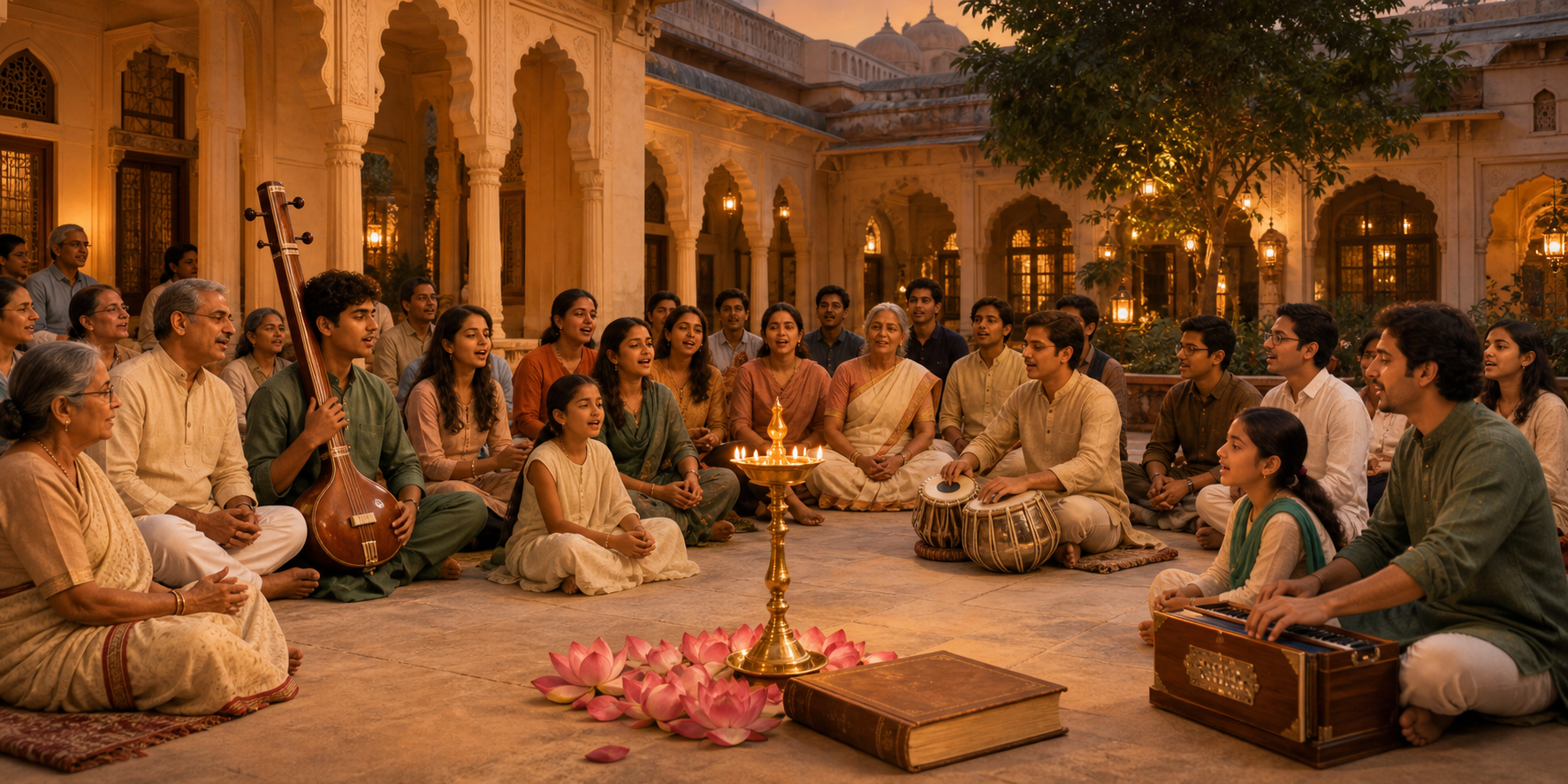
You may have been asked to mark Vande Mataram in a school, temple, university, cultural association or neighbourhood gathering. The difficult part is not putting a patriotic song on the programme. It is creating an occasion that leaves people with a clearer grasp of the song’s history, a stronger sense of shared belonging and something worth carrying forward.
The 150th-anniversary date was 7 November 2025, with a year-long nationwide commemoration envisioned around it. That larger frame gives local organisers room to do more than stage a ceremonial rendition. You can build an event in which history is examined, music is experienced, Dharmic traditions meet without losing their identities and young people become participants rather than spectators.
Start with the question your commemoration must answer
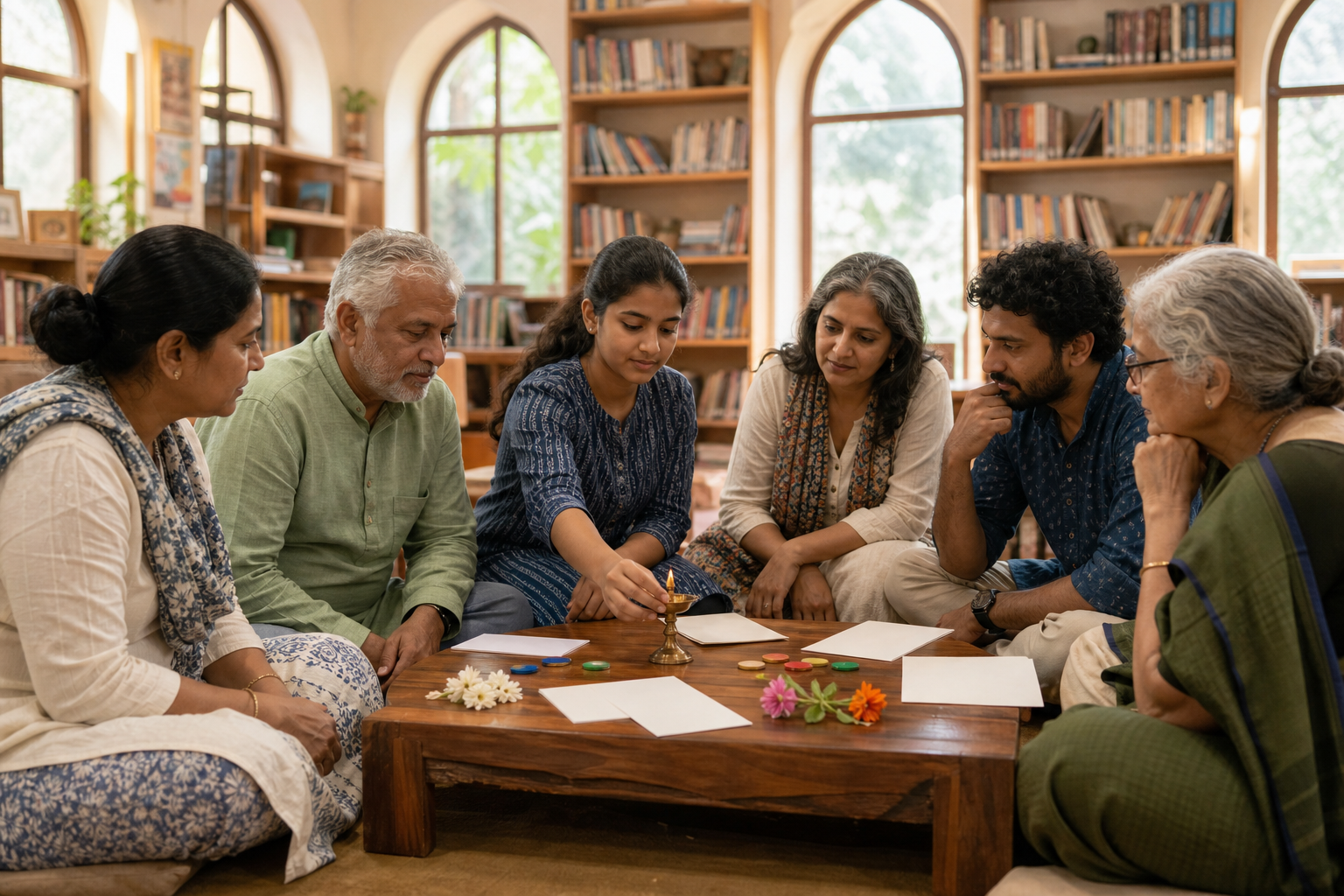
A useful commemoration needs a governing question. Without one, a programme can become a loose sequence of speeches, songs and photographs. Each item may be respectable on its own, yet the audience leaves without understanding how the pieces belong together.
For Vande Mataram, the central question can be simple: how did a composition by Bankim Chandra Chattopadhyay become connected to Bharat’s freedom struggle, and what kind of belonging can India’s National Song cultivate now? The continuum from its nineteenth-century composition to the freedom struggle and its place as the National Song is the historical spine. Every performance, display and discussion should illuminate some part of that journey.
Write a single purpose sentence before inviting speakers or selecting music. A school might decide that students should be able to place the song in its historical setting and explain why collective singing mattered. A community group might focus on how family memories, regional musical forms and public history keep national heritage alive. A Dharmic organisation might examine how people from distinct traditions can share a civilizational space without pretending that their doctrines or practices are identical.
Use that sentence as an editorial filter. A long speech that does not answer the governing question should be shortened or removed. A beautiful performance whose tradition and relevance are never identified needs a short introduction. A historical claim that cannot be traced should not appear merely because it sounds patriotic. Affection for the nation does not require weak history.
Key takeaways
- Organise the programme around one clear question connecting the song’s origin, freedom-struggle legacy and present meaning.
- Separate documented history, personal memory and present-day interpretation so the audience knows what kind of claim it is hearing.
- Give music context: identify the arrangement, language, tradition and reason each rendition was selected.
- Present Hindu, Buddhist, Jain and Sikh contributions in their own names and voices; unity does not require sameness.
- Assign young people work that produces a lasting record, such as researched captions, oral histories, essays, heritage walks or digital stories.
Build the programme around history, performance and participation
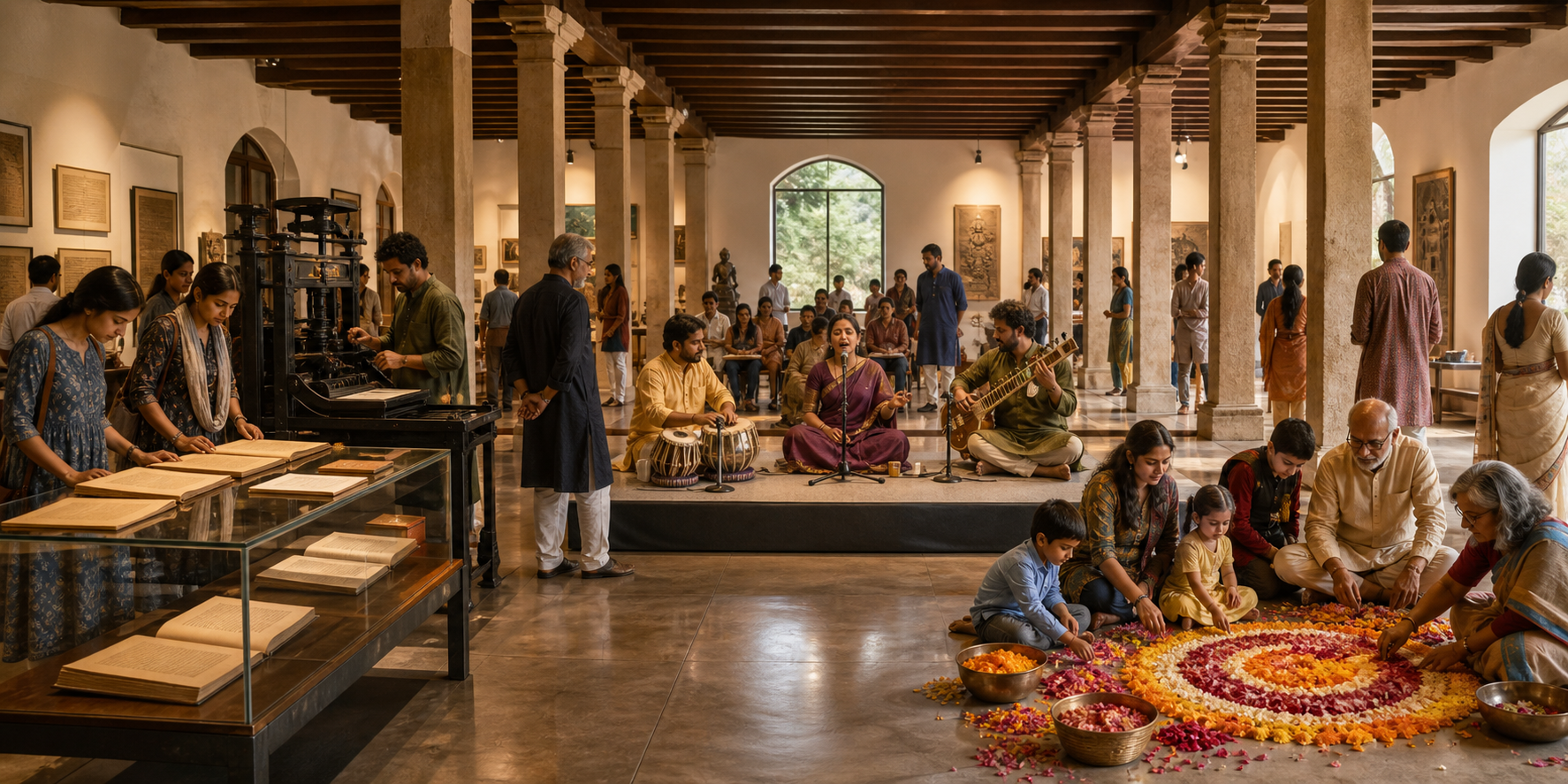
The strongest format has a visible progression. First, give people enough history to understand what they are hearing. Then let them encounter the song through music and cultural expression. Finally, ask them to respond through singing, questioning, reflection or documentation. This turns the commemoration from a display into an act of cultural transmission.
Establish a careful historical spine
Begin with the facts the occasion actually requires: Bankim Chandra Chattopadhyay composed Vande Mataram; the song became interwoven with the Indian freedom struggle; it holds the place of India’s National Song; and its anniversary connects a nineteenth-century inheritance with contemporary Bharat. Resist the temptation to burden the opening with every associated name, episode or disputed detail.
An exhibition panel, projected slide or student narration should distinguish among three kinds of material:
- Documented history: a claim supported by a named text, archival item or clearly identified scholarly reference.
- Remembered experience: a person’s recollection of hearing or singing the song at school, at a national festival or within the family.
- Present interpretation: what the song means to a speaker, performer or participant now.
This distinction is not academic fussiness. A grandmother’s memory can be culturally valuable without being treated as proof of a national pattern. A student’s interpretation can be thoughtful without being presented as the only meaning. When each kind of statement is labelled honestly, personal memory and historical evidence strengthen rather than compete with one another.
If you display the text with a translation, identify the translator or edition. Do not present an unattributed English rendering as though translation were mechanically exact. If your exhibition mentions how the song was received in a particular region, connect that claim to a named record or commentary. If the evidence is not available, narrow the wording or leave the claim out.
Make the musical choices intelligible
A performance becomes educational when listeners know what they are hearing. Classical, folk and choral presentations can reveal different ways a shared song enters public life. Before each rendition, give the audience a concise note identifying the musical form, the language if additional material is included, the arranger or performing group and the reason the version belongs in this programme.
Do not force every rendition into a contest over which one is definitive. A choir can demonstrate disciplined collective voice. A folk setting can show how cultural expression is carried locally. A classical interpretation can draw attention to musical form and artistic inheritance. The programme becomes coherent when these choices answer the same governing question rather than appearing as unrelated entertainment.
For many people, the opening notes are already connected with school assemblies, national occasions and family memories. Use that recognition deliberately. Invite participants to submit a short written memory before the event, select a few clearly labelled recollections for display and preserve the rest in the event record. This gives ordinary experience a place without allowing nostalgia to replace history.
Design participation instead of merely requesting it
Community singing works best when people are prepared to join. Circulate the text in advance, provide a readable version at the venue and let a music leader establish the opening before the full gathering enters. If a choir is involved, its purpose should be to support collective participation where appropriate, not to turn the audience into silent observers throughout.
Participation need not mean singing alone. A moderator can ask the audience what changes when a poem is sung collectively. Students can explain a caption they researched. Families can contribute memories. Visitors can respond to a prompt about what responsible national belonging requires of citizens. The important distinction is between an audience being told that unity matters and people being given a concrete way to practise attention, cooperation and remembrance.
Let Dharmic unity mean relationship, not sameness
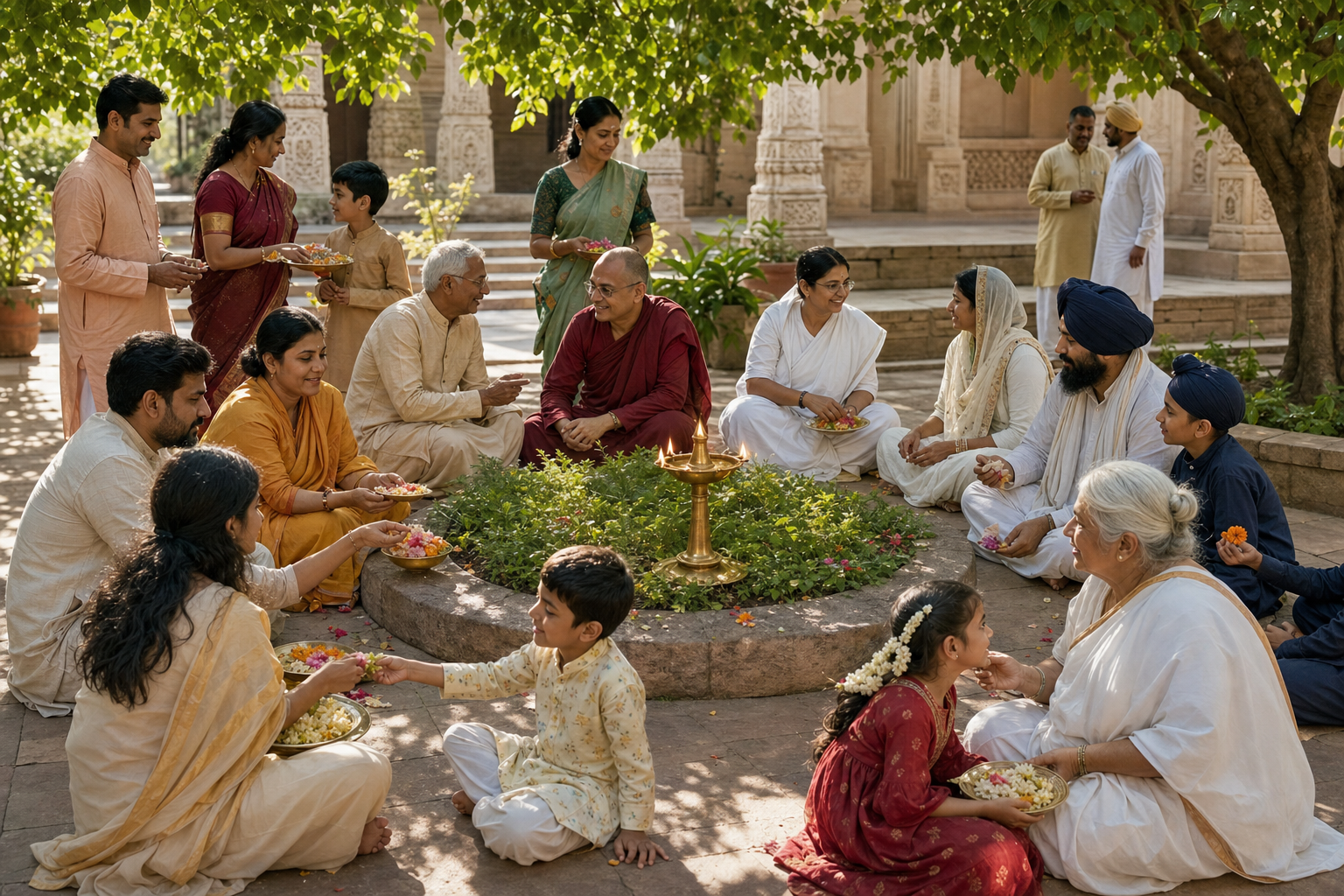
A Vande Mataram commemoration can make the civilizational kinship of Hinduism, Buddhism, Jainism and Sikhism visible. It should not achieve that result by dissolving the traditions into a vague spiritual mixture. Genuine harmony allows each tradition to enter the common space with its name, vocabulary, history and mode of expression intact.
Bhajans, shabads, Jain stavans and Buddhist chants can be placed within a shared cultural programme. The connection, however, must be explained rather than assumed. Ask each contributor to identify the form being presented, the tradition from which it comes and the shared ethical or spiritual concern that made it relevant to the occasion. The audience should be able to see both the relationship and the distinction.
Use the following checks when curating an inter-Dharmic segment:
- Name every form accurately in the printed or projected programme.
- Invite a knowledgeable representative of the relevant tradition to approve its description.
- Do not splice sacred material into a medley if doing so obscures its origin or changes its character.
- Let contributors explain why their selection belongs beside the other offerings.
- Keep Vande Mataram as the common civic and cultural centre of the commemoration.
- Avoid claiming that all Dharmic traditions hold identical doctrines; identify the actual shared value or concern being highlighted.
This approach also improves the event for people who know little about traditions other than their own. They are not asked to accept an abstract claim of unity. They encounter named practices, hear practitioners describe them and notice how distinct voices can contribute to a common national occasion.
Inclusivity here should have substance. It is not achieved by placing several religious labels on a poster while one voice controls the whole programme. Look at who selected the material, who explains it and whether each community is treated as a living participant rather than decorative evidence for a predetermined message.
Give young people work that survives the event
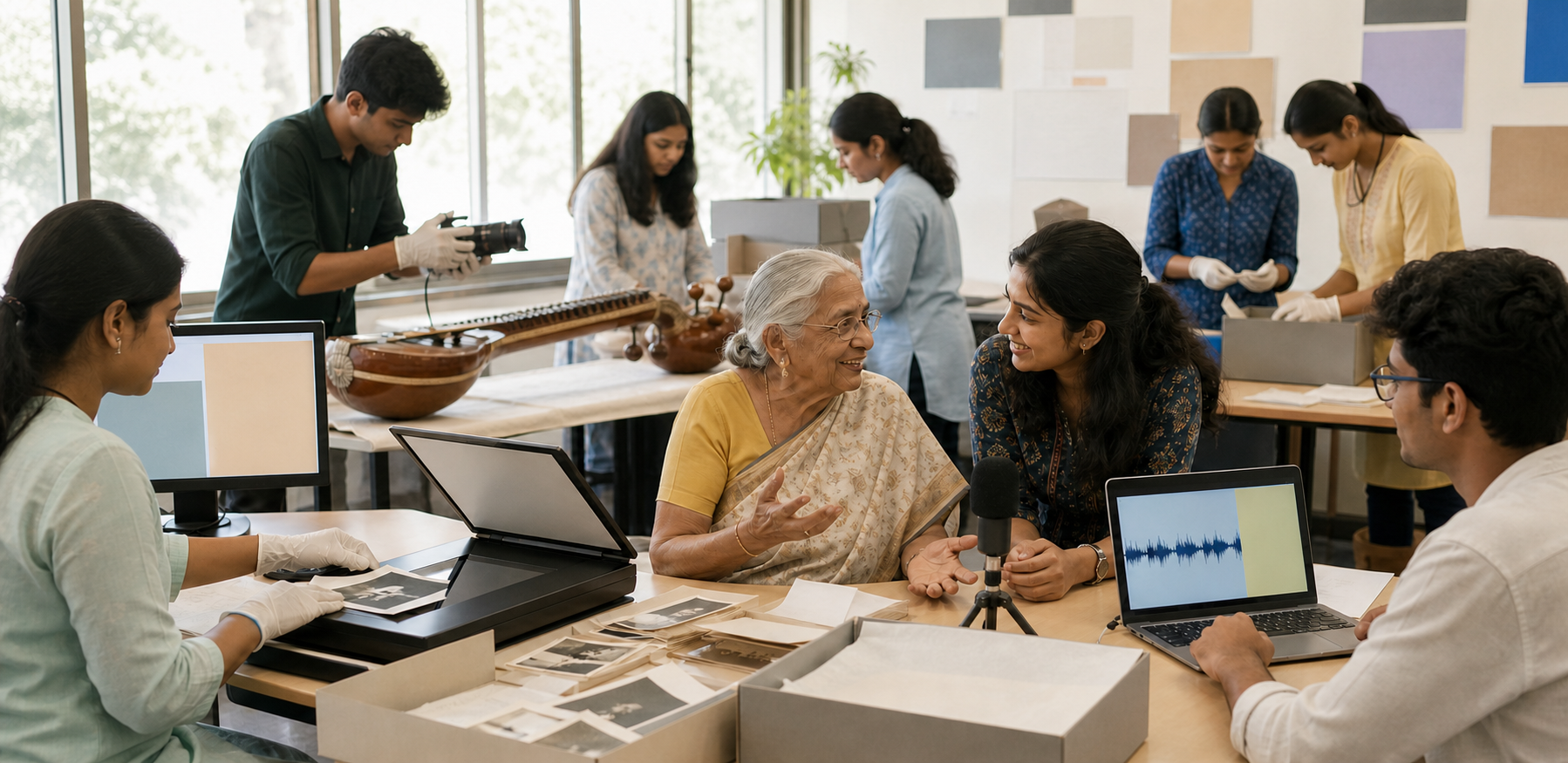
Youth engagement becomes meaningful when young participants have responsibility for knowledge, not just stage presence. A student dressed for a performance may remember the day. A student who verifies a claim, interviews an elder, prepares an exhibition caption or leads a heritage walk learns how cultural memory is made and tested.
Assign projects with a visible output:
- Choir project: perform the song and prepare a short note explaining the chosen arrangement and rehearsal decisions.
- Essay project: examine how poetry, collective singing and civic memory can reinforce one another, while separating evidence from personal interpretation.
- Debate project: consider how a national inheritance can remain shared while finding expression through different regions and cultural forms.
- Exhibition project: build a chronological display in which every precise historical claim carries a citation.
- Oral-history project: record family or community memories of school assemblies and national occasions, with the speaker’s consent and with recollection clearly labelled as recollection.
- Heritage-walk project: identify local places genuinely connected to cultural or freedom-struggle history, and exclude locations whose connection cannot be documented.
- Digital-story project: combine a short narration, properly credited images and a source list into a resource that can be viewed after the gathering.
Give students a checking method before they begin. For every caption, recording or presentation, they should be able to answer: What exactly is the claim? Where did it come from? Is it history, memory or interpretation? Why does it help someone understand Vande Mataram? These questions are simple enough for a school project and strong enough to improve a public exhibition.
Preserve the results. Keep the final programme, historical captions, translations and credits, selected student work, consented recordings, photographs with identifying information and a bibliography. Assign a named person or institution to hold the collection. A digital folder that no one owns is easily forgotten; a local archive with a responsible custodian can support later classes, exhibitions and commemorations.
Before announcing the programme complete, test it from the perspective of a newcomer. Can that person explain who composed the song and why it became nationally significant? Did participants do something more demanding than listen? Were the Dharmic traditions represented without being flattened into one voice? Can another organiser verify the historical claims and reuse the educational material?
Begin with a page, not a stage: write the purpose sentence, choose the historical spine, decide how the audience will participate and appoint the keeper of the final record. Once those decisions are sound, the speeches, performances and displays have a reason to exist. That is how the 150th anniversary can become more than a date on a calendar: it can teach another generation how to receive a national inheritance carefully and carry it with dignity.
References
