
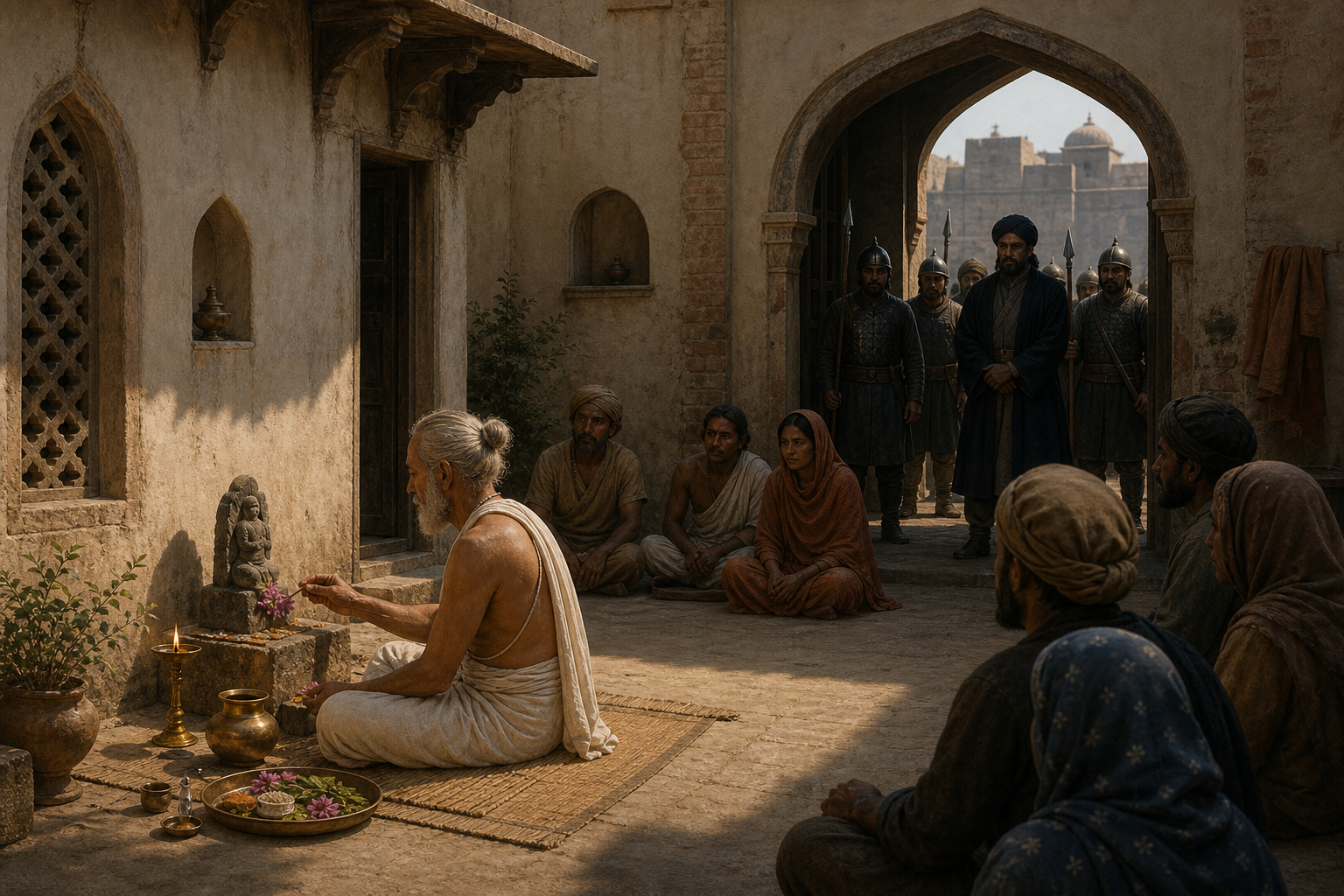
You may have come looking for a rebellion against Firuz Shah Tughlaq: an army, a named commander, or a decisive battle. The Delhi episode that deserves your attention is quieter. An unnamed elderly Brahmana continued his puja, gathered a community, and refused conversion when the state made apostasy from his own tradition the price of survival.
His resistance shows you what civilizational endurance looks like when political power controls taxation, law, and punishment. It begins with ordinary observance. It becomes public through community. At its hardest edge, it is the refusal to let coercion decide what one worships.
Coercion worked through revenue, law, and cultural control
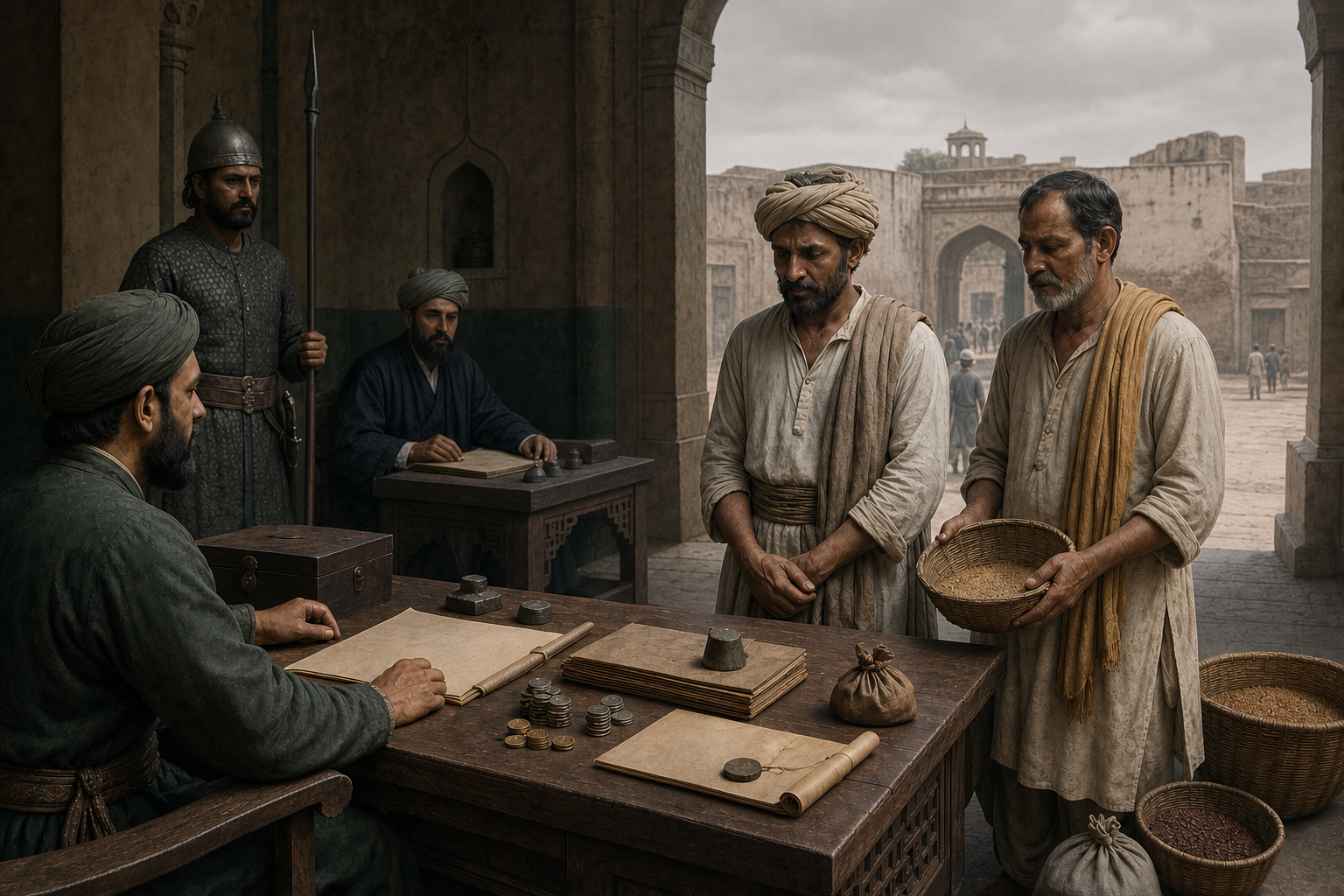
Firuz inherited a politically strained Delhi Sultanate from Muhammad bin Tughlaq. Fragmentation, court intrigue, and inconclusive campaigns formed the setting in which religious conformity became an instrument of rule. Firuz presented himself as a ruler who enforced Sharia throughout his dominions, not merely as a matter of personal devotion but through public administration.
That administration applied several kinds of pressure at once:
- Fiscal pressure: Jizya was expanded, while converts to Sunni Islam could receive exemption from the tax and expensive gifts.
- Legal pressure: Religious accusations could be brought before the Sultan and Islamic jurists, with punishment imposed as a consequence of refusing conversion.
- Cultural control: Edicts restricted music, painting, and transactions classified by the regime as unlawful or incompatible with religious purity.
Not every cultural prohibition fell exclusively on Hindus. The larger pattern nevertheless matters: the regime treated its construction of religious correctness as a standard for governing society. A Hindu deciding whether to continue a visible practice therefore faced more than private disapproval. Tax incentives encouraged movement in one direction, law marked the boundary, and punishment gave that boundary force.
This is the first point to notice when you study Dharmic resistance under Firuz. Resistance did not begin only when someone attacked a garrison. It also began when a family kept an image, a worshipper wore the sacred thread, or a community assembled for puja despite a political order that made such continuity costly.
A Delhi home became a place of resistance
The Brahmana’s name has not been preserved. He was identified instead as Zunaar Daar, the wearer of the sacred thread. That description reduced him to the religious sign by which the authorities recognized him, but it also preserved the central fact of his life: he remained visibly committed to his dharma.
Inside his Delhi home, he kept a wooden tablet painted with Hindu Devis and Devatas. He performed puja on appointed days. His reputation for devotion gradually drew other people, including both Hindus and Muslims, and the domestic observance became a recurring community gathering. It reportedly continued for years before attracting official intervention.
Those details tell you how his resistance developed. He did not begin with a manifesto. He maintained a practice. Consistency gave the practice credibility; credibility attracted people; and the presence of other people turned a household ritual into a social institution. The state could overlook an isolated worshipper more easily than a respected teacher whose influence crossed community lines.
The presence of Muslim visitors is especially important. Social life in Delhi was not identical to the hard boundary imagined by the court. People could encounter a Hindu devotee with interest or reverence even while the regime’s legal structure demanded religious separation. You should keep that distinction in view before turning this history into a simple story about two permanently sealed populations.
Intervention followed an accusation that the Brahmana had led Muslim women away from Islam. The language used against him described this as perversion and unbelief. That was the prosecution’s ideological framing, not a neutral description of what the women thought or chose. Their voices are absent, so the allegation must remain an allegation rather than being repeated as an independently verified fact.
The authorities arrested the Brahmana and seized his painted tablet. At Firozabad, Firuz convened Faqihs, Hakims, and Qazis to consider the case. The resulting choice was brutally narrow:
“The Brahman must either become a Musulman or be burned.”
Shams-i Siraj Afif, Tarikh-i Firoz Shahi
An offer made under threat of execution is coercion, not a free religious exchange. The Brahmana refused it. A pyre was prepared at the entrance to the court, and the painted tablet was placed upon him. The wood was ignited at his head and feet, and he was consumed by the flames.
The chronicler identifies himself as present at the darbar and describes the execution as an eyewitness. He also admired Firuz’s piety and enforcement of Sharia. That proximity strengthens the value of the recorded detail but does not make the moral language neutral. He did not present the killing as an abuse. Our recognition of the Brahmana’s courage comes from reading against the court’s approval of what occurred.
The essential act of resistance was his refusal. He had no realistic prospect of defeating the Sultan’s officers, yet he denied the state the conversion it demanded. Political power ended his life but failed to make him participate in the erasure of his own allegiance. In a Dharmic understanding, that is why the unnamed Brahmana may rightly be remembered as a martyr.
What the martyrdom proves, and what it cannot prove
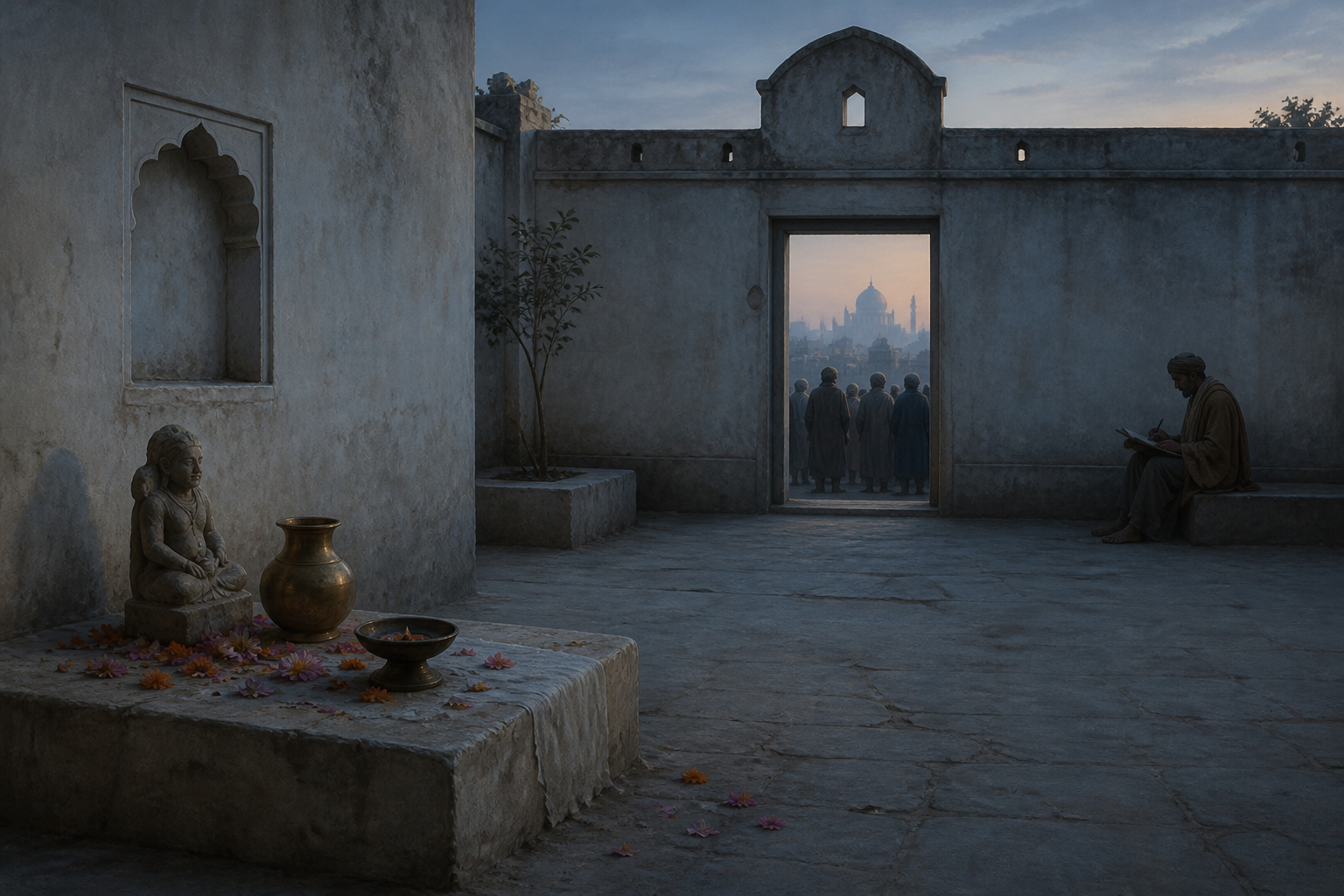
Strong historical memory requires discipline. If you make the episode claim more than the evidence can carry, you weaken the very history you mean to defend. The sound approach is to separate the recorded event, the court’s allegation, and the larger interpretation.
What you can reasonably conclude
- Firuz’s religious policy was not confined to sermons or personal observance. It operated through taxation, official consultation, judicial judgment, and punishment.
- A Hindu’s domestic worship could become a matter for state enforcement once it attracted a following and generated accusations of influence over Muslims.
- The Brahmana was offered conversion as the alternative to death and refused to renounce his faith.
- Dharmic resistance could be nonviolent without being passive. Maintaining puja, forming community, and accepting the consequence of refusal were active choices.
- The execution was conducted openly at the court entrance, making punishment a public demonstration of the regime’s religious authority.
What you should not claim
- Do not present the accusation concerning Muslim women as established fact. Their testimony and understanding of events are unavailable.
- Do not infer the scale or frequency of similar resistance from this case alone. One documented martyrdom establishes that the mechanism existed, not how often it was used.
- Do not treat every Muslim in Delhi as an agent of the Sultan’s policy. Muslims reportedly attended the Brahmana’s puja, which itself complicates any collective accusation.
- Do not invent a name, speech, final prayer, or dialogue for the martyr. His anonymity is part of the historical record and should be preserved honestly.
- Do not detach the killing from its institutional setting. The Sultan, assembled jurists, legal verdict, and execution at court are central to understanding responsibility.
The episode is specifically Hindu: an elderly Brahmana, a sacred thread, images of Devis and Devatas, and regular puja. It also belongs within a wider Dharmic memory because it concerns freedom of conscience, continuity of inherited practice, and fidelity to spiritual duty. We need not blur Hindu, Buddhist, Jain, and Sikh identities to recognize those shared civilizational concerns.
Remember the martyr by strengthening what he defended
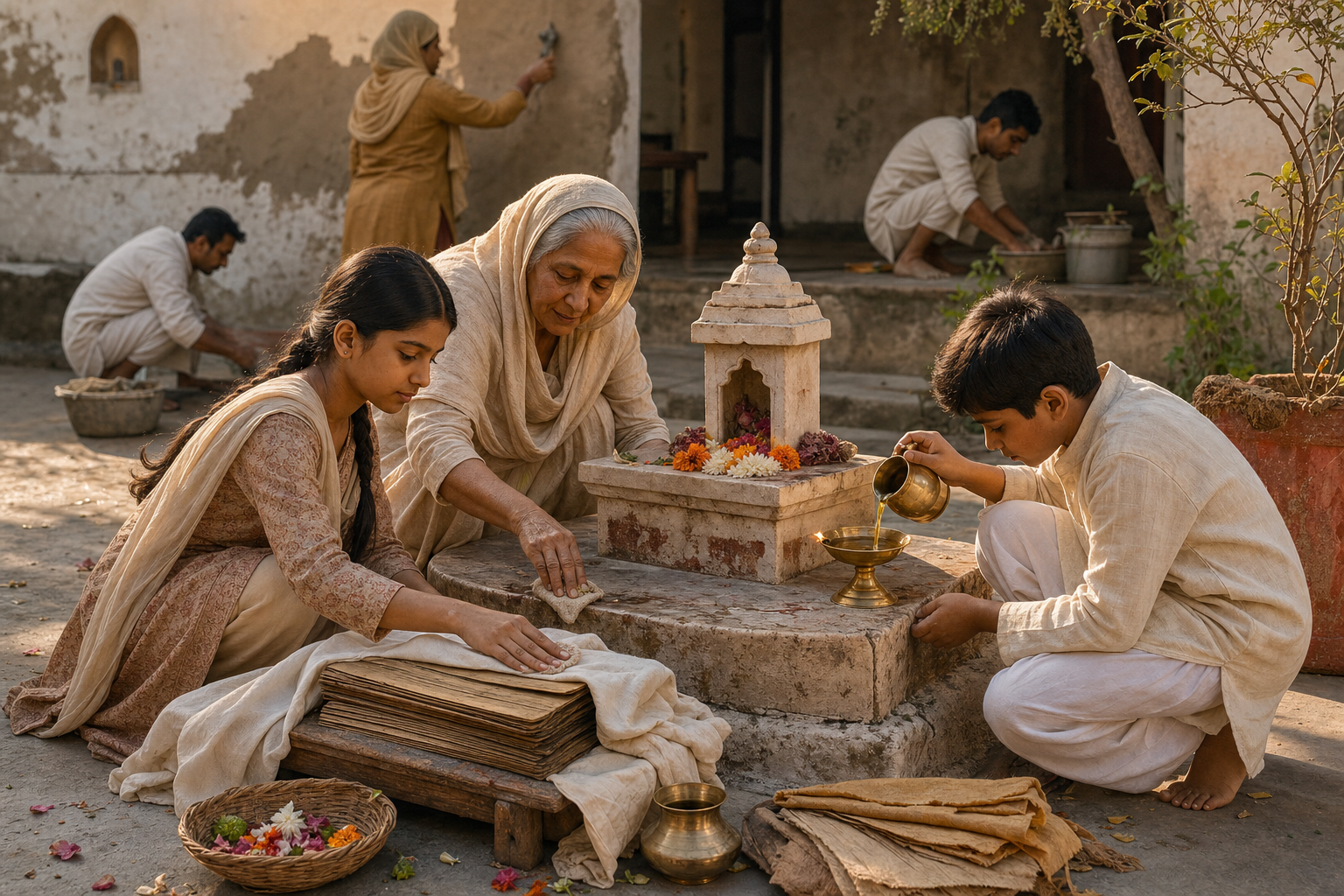
This history becomes useful when it changes how you speak, teach, and practise. Anger may be an understandable first response to coercion, but anger alone does not preserve a civilization. The Brahmana’s own example points toward continuity: he worshipped regularly, kept sacred images, welcomed a community, and would not surrender his religious identity.
If you are explaining the episode in a class, temple discussion, family gathering, or public thread, use this sequence:
- Begin with the practice: identify the sacred thread, painted tablet, scheduled puja, and household gathering. These explain what the Brahmana was protecting.
- Name the machinery of coercion: explain the relationship among Firuz’s Sharia policy, Jizya incentives, the assembled jurists, the conversion demand, and the execution.
- Mark the allegation: say that the court accused him of drawing Muslim women away from Islam. Do not silently convert the accusation into fact.
- Locate responsibility precisely: identify the ruler and institutions involved. Do not replace historical accountability with hostility toward an entire present-day community.
- End with continuity: ask what regular practice, teaching, preservation effort, or defense of religious liberty will carry the memory forward.
Before sharing a retelling, apply three checks. Can you trace each concrete detail to the historical account? Have you clearly distinguished the charge from the demonstrated facts? Have you assigned responsibility to the people and institutions that acted, rather than to every person who shared a broad religious identity? If any answer is no, revise before publishing.
You can also commemorate the Brahmana without inventing a ritual in his name. Keep a recurring family puja. Teach a younger person why the sacred thread, murti, or home shrine mattered under hostile conditions. Support the preservation of temple records and civilizational history. At Firoz Shah Kotla, remember that the surviving monuments belonged to a political world in which an unnamed worshipper was killed for refusing conversion. These acts turn remembrance into transmission.
Responsible remembrance does not require amnesia, euphemism, or moral equivalence. Burning a man because he would not change his religion was an act of persecution. It can be condemned plainly. The same clarity should deepen our commitment to freedom of conscience rather than reproduce the coercive principle against someone else.
Key takeaways
- Dharmic resistance under Firuz Shah Tughlaq included everyday ritual continuity as well as open refusal.
- The regime joined fiscal incentives, religious law, and public punishment to encourage conformity.
- The unnamed Brahmana’s home puja became socially significant because it attracted both Hindu and Muslim participants.
- His execution is documented, while the accusation concerning Muslim women must be treated as an unverified court charge.
- The most faithful response is accurate remembrance, stronger transmission of Dharmic practice, and a principled defense of freedom of conscience.
When you next tell this story, do not begin with the flames. Begin with the puja that the flames failed to erase. Preserve the facts, name the injustice, and choose one living practice through which the continuity he defended will pass to another generation.
References
