
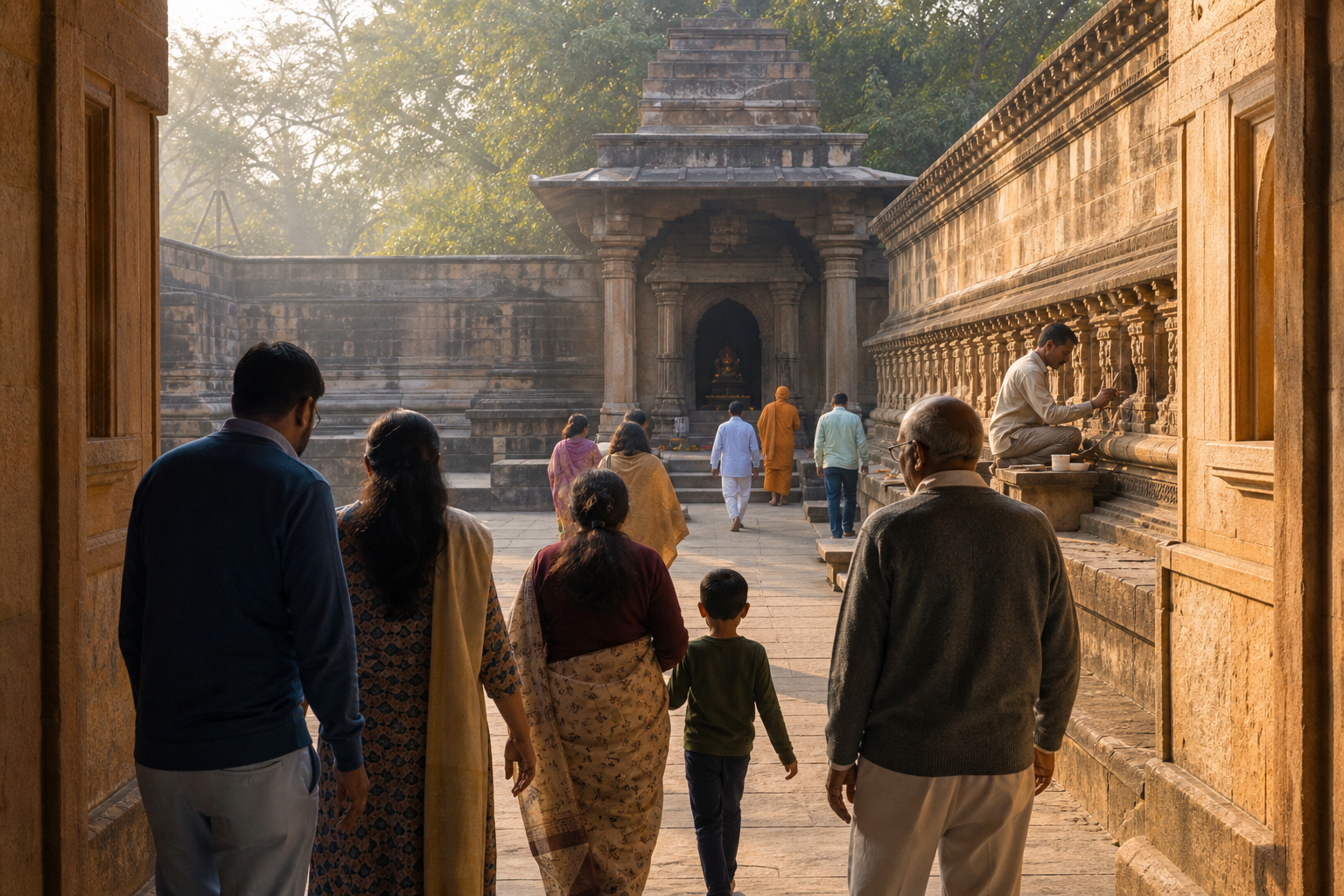
You may be preparing for darshan, taking your family to a historic fort, or wondering what to do after seeing people misuse a protected place. The practical question is the same: how do you honour the site without guessing at its rules, policing strangers, or treating reverence as a matter of appearance alone?
Arrive as a guest, follow the discipline of the place, and leave no burden for the people who worship there or maintain it. If you organise an activity, the standard is higher: permission must be specific, written, and available for inspection.
Check the site’s rules before deciding what is acceptable
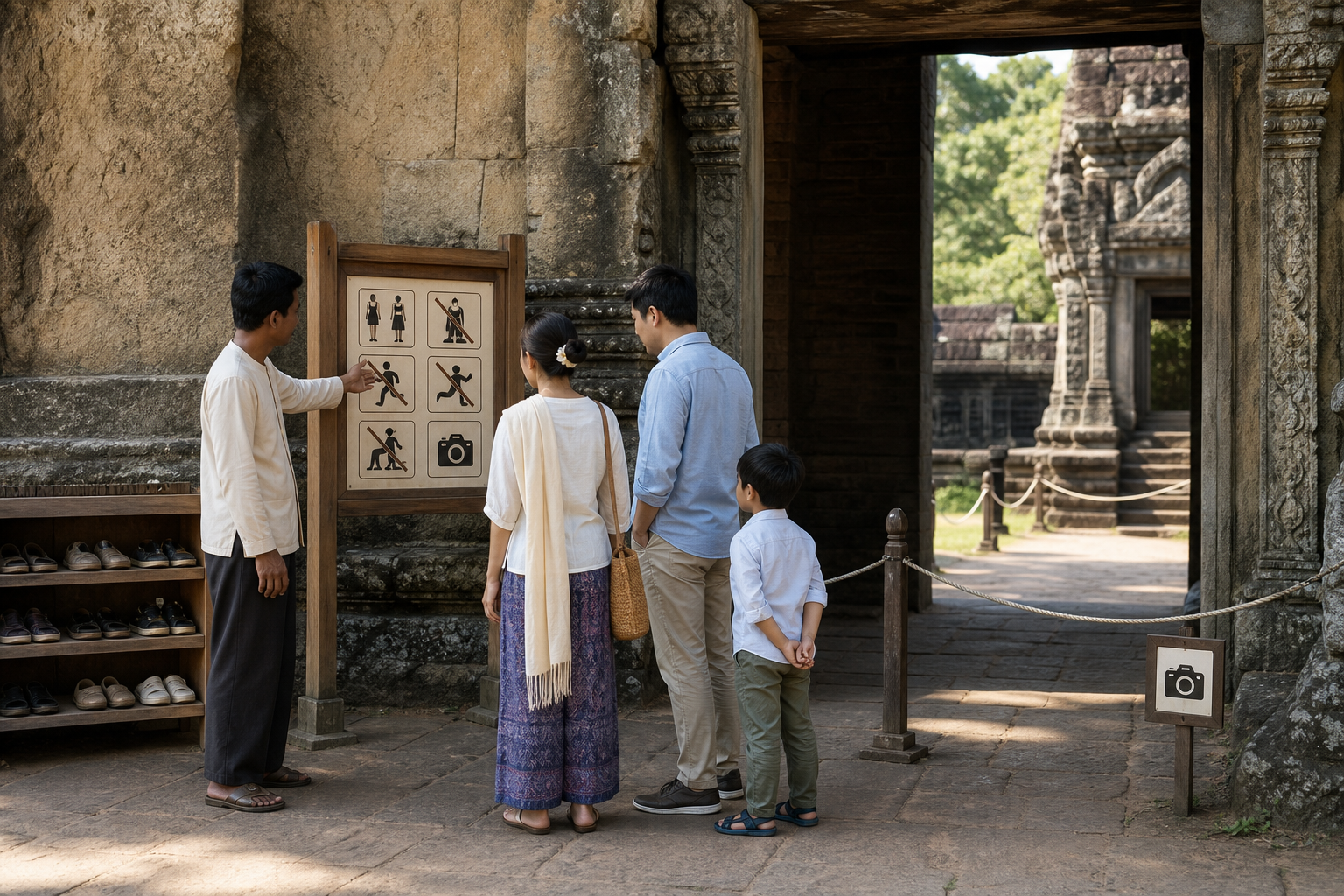
A sacred site is not simply a public attraction with religious architecture. A samadhi, temple, gurdwara, vihara, or Jain place of worship has an internal discipline shaped by its living community. Customs can differ between traditions, between sects, and even between sites in the same tradition. Familiarity with one place does not give you permission to ignore the customs of another.
Before travelling, look for an official notice or contact the site’s administration. Check clothing expectations, footwear arrangements, photography restrictions, opening times, queue procedures, and any rules governing offerings or personal belongings. At Shrikshetra Sajjangad, for example, formal dress requirements apply to devotees visiting the samadhi of Samarth Ramdas Swami and the Shri Ram temple. A visitor who learns this only at the entrance risks inconvenience and may also disrupt the atmosphere for others.
If the instructions are brief or unclear, choose plain, modest clothing and carry a shawl or light outer layer. Ask a sevak, attendant, or authorised staff member when you are uncertain. Quietly asking is more respectful than copying another visitor, debating a notice at the gate, or assuming that an outdoor setting has no standards.
A protected heritage site requires a related but distinct check. Public access does not automatically authorise a private event. If your plans involve reserved space, decorations, equipment, amplified sound, catering, alcohol, a commercial shoot, or a large organised group, obtain confirmation from the competent authority before bringing anything onto the premises. Do not rely on an intermediary’s verbal assurance.
Let your conduct protect both worship and the physical place
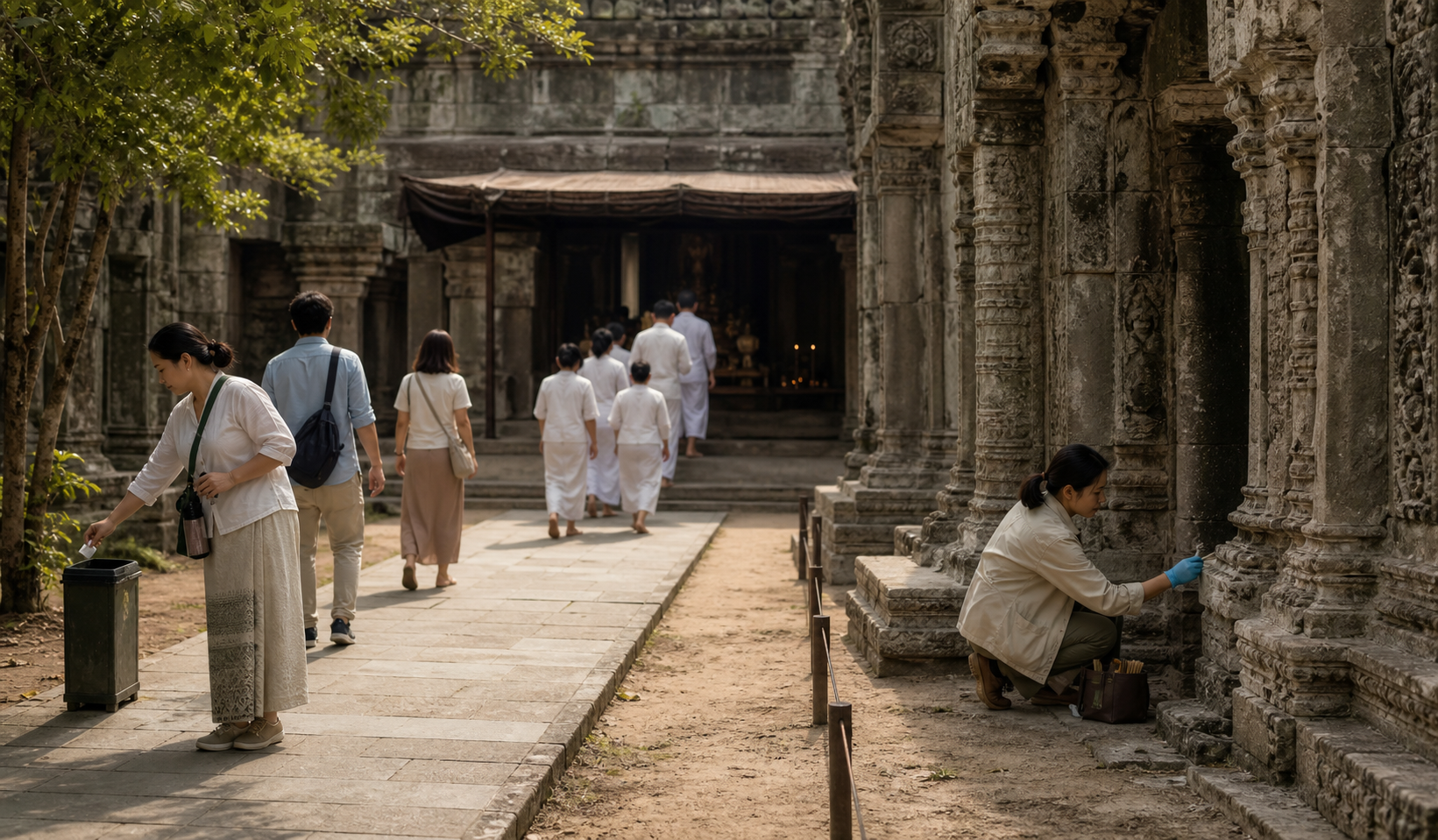
Appropriate clothing matters, but it is only the first visible part of respectful conduct. A person can satisfy a dress code while speaking over prayers, blocking darshan, photographing worshippers without consent, or leaving rubbish behind. Reverence has to appear in movement, voice, attention, and restraint.
- Pause at the entrance. Read the displayed instructions, silence your phone, and remove footwear or cover your head when the site directs you to do so.
- Follow the local flow. Use the designated queue, keep passages clear, and do not hold up other devotees while arranging photographs or gathering a group.
- Keep your voice low. If you are explaining the site to children or companions, move away from prayer, meditation, recitation, or ritual activity before speaking at length.
- Ask before taking photographs. A building being open to visitors does not make every shrine, ceremony, monk, granthi, sadhu, volunteer, or devotee available as photographic material.
- Do not touch, climb, lean on, scratch, move, or decorate historic fabric and sacred objects. A wall, railing, platform, sculpture, lamp, or samadhi is not a prop for a photograph.
- Carry out what you carry in. Do not leave food, packaging, flowers, bottles, or improvised offerings where the custodian has not provided for them.
Alcohol deserves particular care. Do not assume it is acceptable because a monument is outdoors or because another event used it. Where site rules prohibit alcohol, the answer is final. Where an authorised event is possible, the written permission must explicitly cover the proposed activity. Sacred character, visitor safety, preservation needs, and the dignity of a shared cultural place do not disappear when a gathering is described as private.
The useful test is not merely, “Can we get away with this?” Ask whether your conduct allows the next devotee to pray undisturbed, the next family to learn without encountering your waste, and the next generation to receive the place without avoidable damage.
For an event, permission must be specific and inspectable
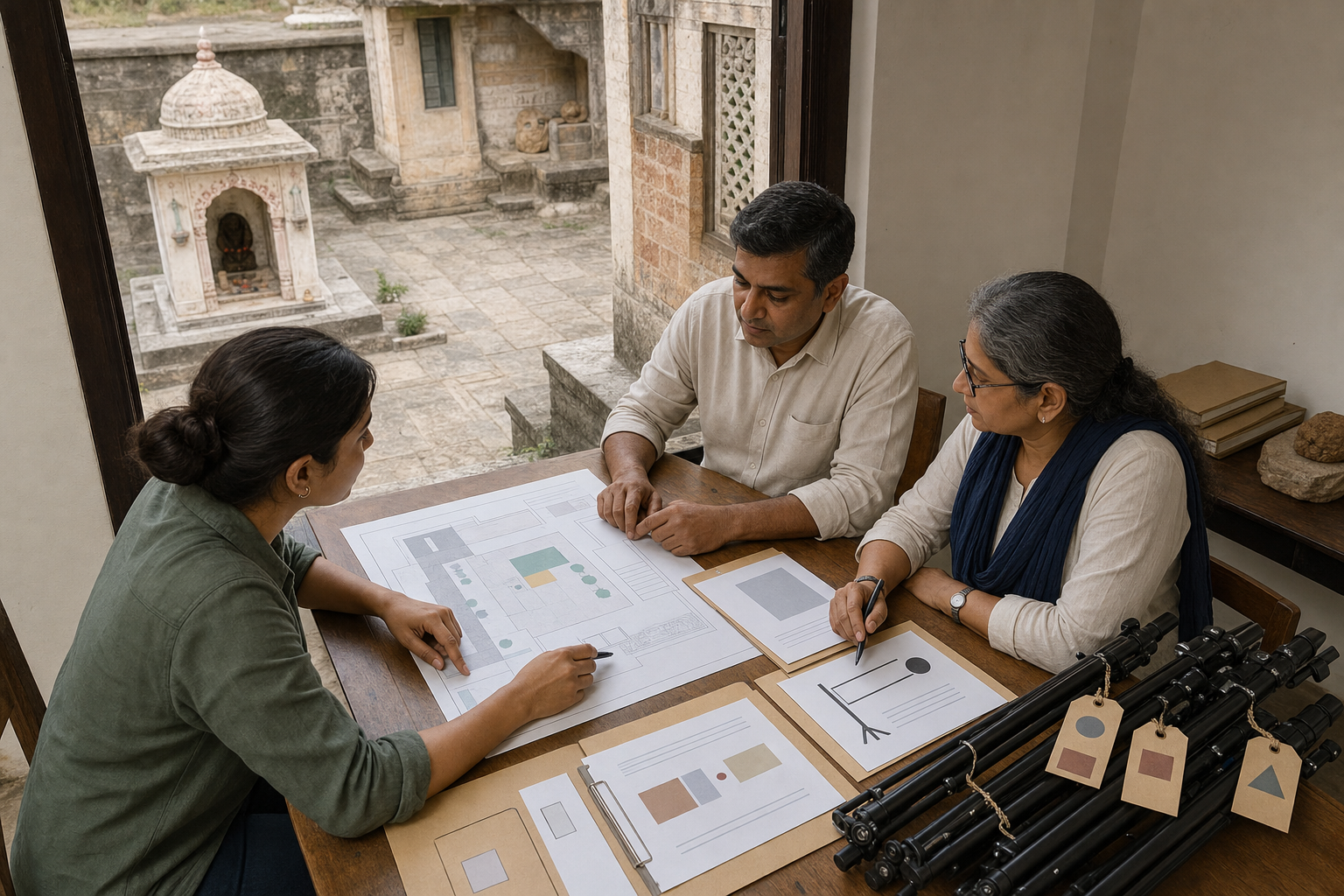
If you are responsible for a tour, celebration, performance, shoot, community programme, or private gathering, treat permission as an operational document rather than a reassuring message from a contact. Before announcing the event or paying suppliers, make sure the authorisation identifies:
- The authority or site custodian granting permission.
- The approved date, time, and precise area of the site.
- The activity being authorised rather than a vague reference to a gathering.
- Any attendance limit and rules for public access.
- Conditions covering equipment, sound, food, alcohol, decorations, photography, fire, waste, security, and cleanup where those matters are relevant.
- The organiser responsible for compliance on site.
- A contact through whom staff or police can verify the document.
Keep the complete permission with the responsible organiser, in a form that can be produced immediately. Every vendor and group leader should receive the conditions that apply to their work. A permit held in one person’s inbox is useless if that person is absent and the team on site does not know the restrictions.
The reported incident at state-protected Bandra Fort shows why this distinction matters: organisers of a liquor party claimed to have permission but did not produce documents when police requested them. A claim of approval is not equivalent to verifiable approval. Nor does permission for access necessarily authorise alcohol, catering, amplified sound, or any other separate activity.
If the document is ambiguous, stop and ask the issuing authority to clarify it in writing. Do not interpret silence as consent or ask frontline staff to overlook a condition. The possible cost of postponing an event is smaller than the damage caused by a confrontation, removal from the site, loss of public trust, or harm to the monument.
Respond to misuse calmly, safely, and with usable evidence
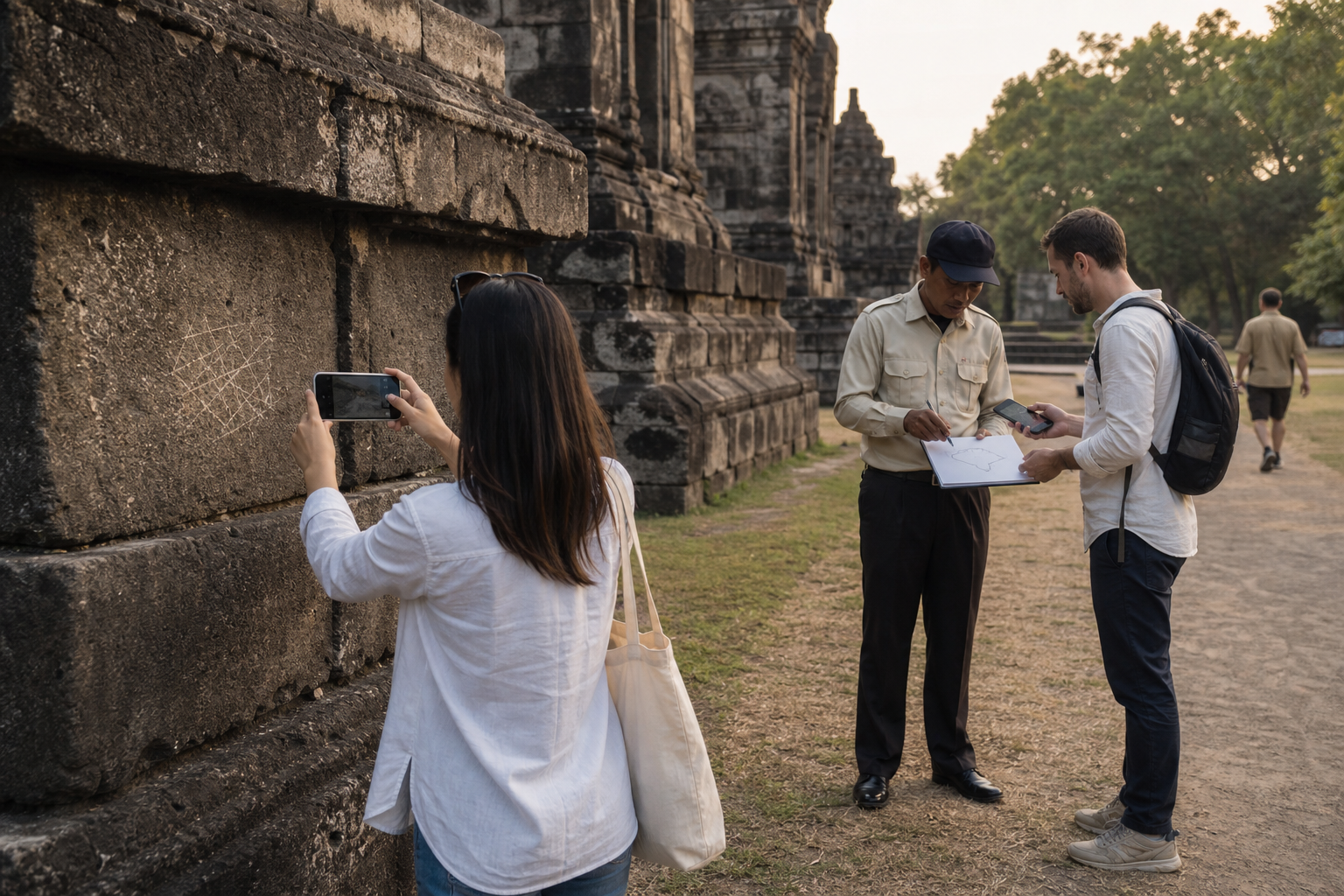
If you witness a breach
You do not need to ignore obvious misuse, but you also do not need to turn a concern into a personal confrontation. If people appear intoxicated, aggressive, or numerous, keep your family at a safe distance and contact authorised personnel. Protection of a site is not helped by creating a second disturbance.
- Separate observation from assumption. Record what you personally saw, the exact location, the approximate time, and which displayed rule appears relevant.
- Notify the nearest authorised person: a caretaker, temple office, monument staff member, security officer, or police officer, depending on the seriousness and immediacy of the conduct.
- If it is safe and lawful to do so, preserve an unedited photograph or video of the activity and nearby signage. Do not trespass, obstruct officials, or provoke people to obtain more dramatic footage.
- For active damage, fire, threats, harassment, or violence, prioritise immediate safety and police assistance over social-media documentation.
- If organisers claim permission, ask the competent authority to verify it. Do not attempt to seize a document or decide its validity yourself.
- If you later raise the matter publicly, distinguish confirmed facts from allegations. Avoid identifying uninvolved people or adding motives that you cannot establish.
A clear report is more useful than an angry one. “People are damaging our heritage” gives an official little to act on. A location, time, description of the conduct, relevant rule, and preserved original file create a usable record.
If you help manage or protect the site
Visitors cannot follow rules they cannot find, and police cannot efficiently verify permissions that exist only through informal conversations. A workable protection system should make four things visible: permitted and prohibited conduct, the authority that issues event approvals, a method for checking those approvals, and a reporting channel for visitors.
- Place concise signs at decision points such as entrances, parking areas, gathering spaces, and routes to sensitive precincts.
- Explain the reason for important restrictions. People comply more readily when they understand that a rule protects worship, historic fabric, safety, or shared access.
- Use regular patrols and trained volunteers, especially where secluded areas can be misused.
- Give approved events a consistent permit format and require the organiser to keep it available on site.
- Offer one clearly displayed phone number or office for reporting urgent problems and verifying permissions.
- Invite local Hindu, Buddhist, Jain, Sikh, resident, student, and heritage groups into education and stewardship without transferring enforcement powers to an informal crowd.
Community vigilance is valuable when it supports due process. Its purpose is to bring neglect to the attention of a responsible authority, not to replace that authority with public intimidation. Consistent signage, verification, and enforcement also prevent a genuine concern about sanctity or preservation from being dismissed as selective outrage.
Key takeaways
- Check the site’s official rules before travelling; customs cannot be inferred from appearance or from your experience elsewhere.
- Treat dress as one part of reverence alongside quiet conduct, consent before photography, orderly movement, and care for the physical place.
- Public access to a monument does not amount to permission for a private event or restricted activity.
- Event organisers should carry written, activity-specific authorisation that staff or police can verify immediately.
- If you witness misuse, protect your safety, report precise facts, preserve original evidence, and avoid escalating the encounter.
- Good stewardship combines clear rules, visible reporting channels, regular oversight, community education, and accountable enforcement.
Before your next visit, spend a few minutes finding the site’s instructions and share them with everyone travelling with you. That small act changes the visit from casual access into responsible pilgrimage or heritage stewardship.
References
- Hindu Jagruti Samiti — Strict Dress Code at Shrikshetra Sajjangad to Protect Sanctity of Samarth Ramdas Swami’s Samadhi
- Hindu Jagruti Samiti — Community Outrage at Liquor Party in State-Protected Bandra Fort Sparks Heritage Action
