

You may feel drawn to the Naga around Shiva’s neck, the sheltering hood above a liberated being, or a family observance such as Sarpa Vratam, yet still wonder what the serpent asks of you. Is it a deity, a yogic symbol, a guardian, a warning, or an emblem of nature?
The answer depends on where the serpent appears and what it is doing. You do not need to force every image into one explanation. Nor must you handle a snake, feed one, or accept a frightening prediction before your reverence becomes authentic. Read the image carefully, choose a practice appropriate to your health and tradition, and let the devotion change how you treat living beings.
Key takeaways
- A serpent has no single universal meaning; its position, companion deity, and ritual setting determine how it should be read.
- On Shiva, the Naga can represent alert awareness, mastery of life energy, fearlessness, protection, and freedom amid the cycles of time.
- A simple home devotion needs only a clear sankalpa, a clean altar, safe offerings, prayer, and a concrete commitment to ahimsa.
- Sunday Sarpa Vratam is a regional devotional discipline, not a reason to fast beyond your medical limits.
- Never offer milk to a living snake, disturb a habitat, or approach wildlife in the name of worship.
Read the role of the serpent before choosing its meaning
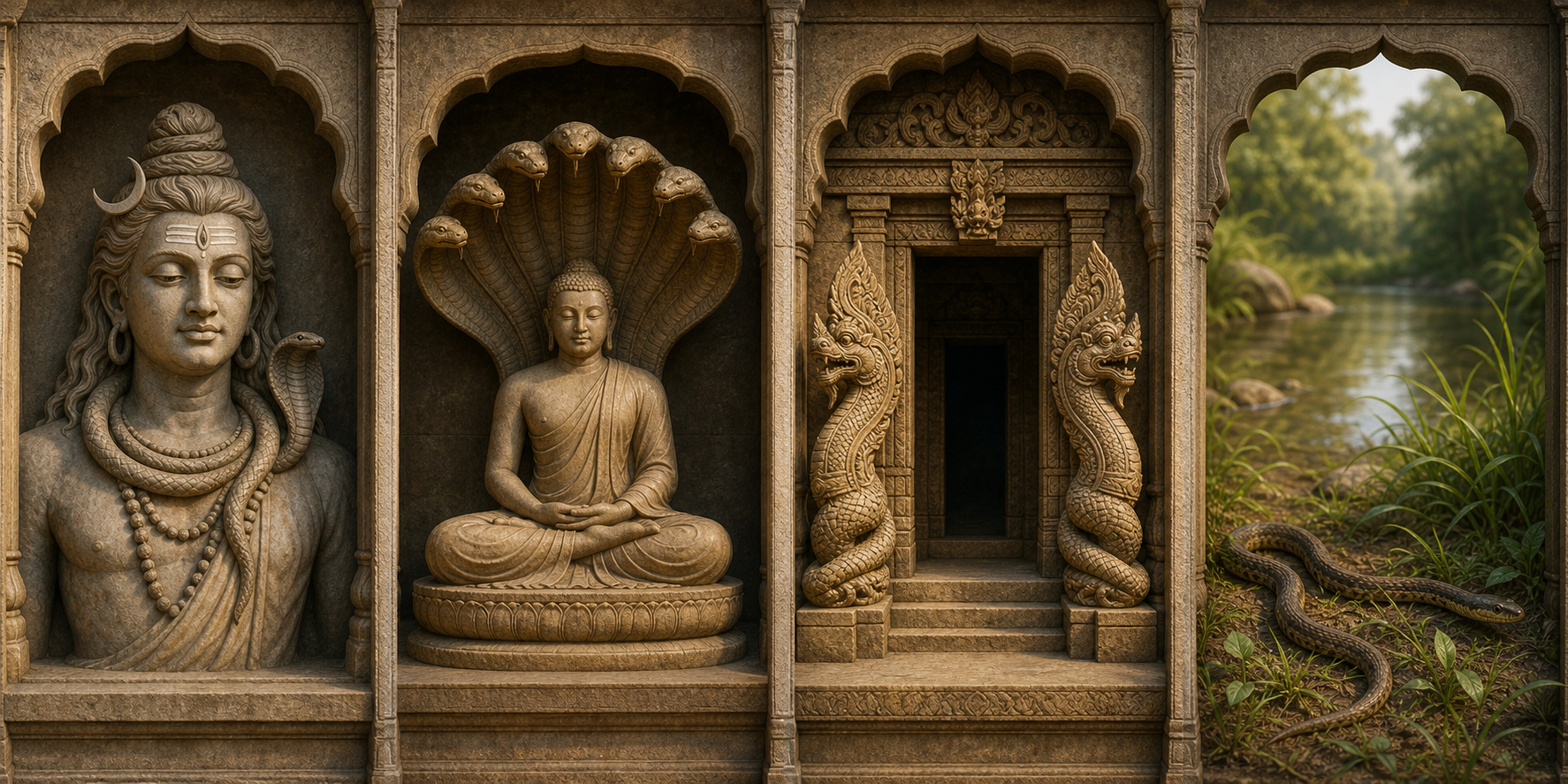
The common mistake is to see a coiled serpent and immediately say “Kundalini.” That can be a legitimate yogic interpretation, but it is not the complete vocabulary of Naga imagery. Serpents also signify guardianship, continuity, fertility, cosmic order, disciplined power, refuge, and the capacity to remain present before what ordinarily produces fear.
Begin with the figure beside the serpent and the relationship between them:
- A serpent worn by Shiva: When the Naga crosses the torso like a yajnopavita or rests around Shiva’s neck, it turns the sacred thread into an image of living, wakeful knowledge. The serpent is close to the body but does not control it. This makes mastery, steadiness, and fear transformed into protection more relevant than fear defeated through violence.
- A cosmic serpent: Ananta or Adi Sesha points toward immeasurable continuity and the ground that supports existence. Here the Naga is not mainly a personal danger. It places birth, decline, renewal, and duration within a larger cosmic order.
- A sheltering hood: A serpent canopy over a meditating or liberated figure expresses vigilant guardianship. The hood protects stillness rather than interrupting it.
- A serpent at a shrine or within a vrata: The emphasis shifts toward fertility, household welfare, protection, ecological balance, and prayascitta for harm done knowingly or unknowingly to reptiles and the natural world.
Three questions will usually keep your interpretation grounded. Where is the serpent placed? What is it doing: resting, encircling, supporting, sheltering, or threatening? What quality does that relationship ask you to cultivate?
If it rests peacefully on Shiva, notice composure in the presence of danger. If it forms a canopy, notice refuge and watchfulness. If it supports a divine form, notice continuity. If it appears in a vow, ask what restraint or repair the vow demands. This is more useful than treating the serpent as a decorative code with one fixed translation.
Recognize shared Dharmic patterns without erasing differences
Serpent imagery crosses several Dharmic traditions, but that does not make every tradition’s theology interchangeable. The family resemblance lies in guardianship, disciplined awareness, non-violence, refuge, and respect for life. The devotional forms remain distinct.
- In Hindu traditions, Nagas may be divine beings, guardians, cosmic supports, companions of deities, or symbols within yoga and ritual. Shiva’s serpent, Ananta Sesha, Naga shrines, and vows directed toward serpent deities therefore need not carry exactly the same emphasis.
- In Buddhist memory, Mucalinda shelters the Buddha. The image joins serpentine power to refuge and protection of awakened stillness rather than to the domination of a dangerous creature.
- In Jain iconography, the hoods above Parshvanatha convey guardianship and vigilant presence. Naga-associated forms such as Padmavati belong within a specifically Jain devotional setting shaped by non-violence and spiritual discipline.
- In Sikh teaching, serpent worship is not a shared devotional requirement. The meaningful parallel is ethical and interior: the external thread is set aside while Naam, truthful conduct, self-restraint, and service become the enduring bond. That parallel should not be used to turn Sikh practice into a form of Naga worship.
Mucalinda’s protection, Parshvanatha’s serpent canopy, Shiva’s living sacred thread, and the Sikh priority given to inner integrity can be placed in a respectful conversation because each directs attention from outward status toward disciplined consciousness and conduct. They should not be collapsed into a claim that all Dharmic paths teach the same doctrine.
Build a simple home devotion around one clear intention

You do not need an elaborate ritual to contemplate serpent symbolism. A modest practice can be complete when its form is coherent and its intention reaches into daily conduct. Follow your family, temple, or lineage procedure where one exists. If you do not have such a procedure, the following structure keeps the observance focused and safe.
- Choose the devotional focus. Use an image already meaningful in your tradition: Shiva with the Naga, Ananta Sesha, Subrahmanya, or a recognized Naga symbol. Do not assemble unrelated forms merely to make the altar appear more powerful.
- Prepare the space. Clean the worship area and place the image or symbol securely. A lamp, flowers, water, and fragrant paste are sufficient traditional elements for a simple puja.
- State the sankalpa. Name the inner and ethical purpose of the observance. You might resolve to meet fear without hatred, avoid harm to reptiles, repair a careless relationship with nature, or bring steadier discipline into your household.
- Make safe offerings. Offer water, flowers, light, fragrance, and naivedya at the altar or at an established Naga shrine. Offerings belong in a ritual setting, not on or near a wild snake.
- Recite within your tradition. A familiar Naga stotra, a prayer to Ananta Sesha, or a customary invocation of Subrahmanya may be used. If no recitation has been transmitted to you, sincere prayer is preferable to borrowing a formula you do not understand.
- Contemplate without forcing the body. Let the breath remain natural while you bring attention to the heart and spine. Notice fear, agitation, or pride without feeding them. Serpent imagery can support reflection on Kundalini and the sushumna nadi, but a home contemplation is not a reason to attempt forceful breath retention or to manufacture an extraordinary experience.
- Close with one act of seva. Connect the ritual to something observable: support habitat care, teach children not to injure reptiles, reduce a harmful household practice, or contribute to a credible biodiversity effort.
A useful sankalpa is specific enough to test. “May all beings be protected” is worthy, but “I will not disturb the reptiles in this garden, and I will ask for trained help when removal is necessary” gives the prayer a visible consequence. The serpent then becomes a teacher of restraint rather than an object used to obtain a favor.
After repeating the observance, examine what has actually changed. Are you less likely to react to fear with aggression? Has your speech become more measured? Are you more attentive to the unnoticed forms of life around your home? Devotion has begun to mature when the answer becomes visible in conduct.
Observe Sunday Sarpa Vratam without confusing severity with sincerity
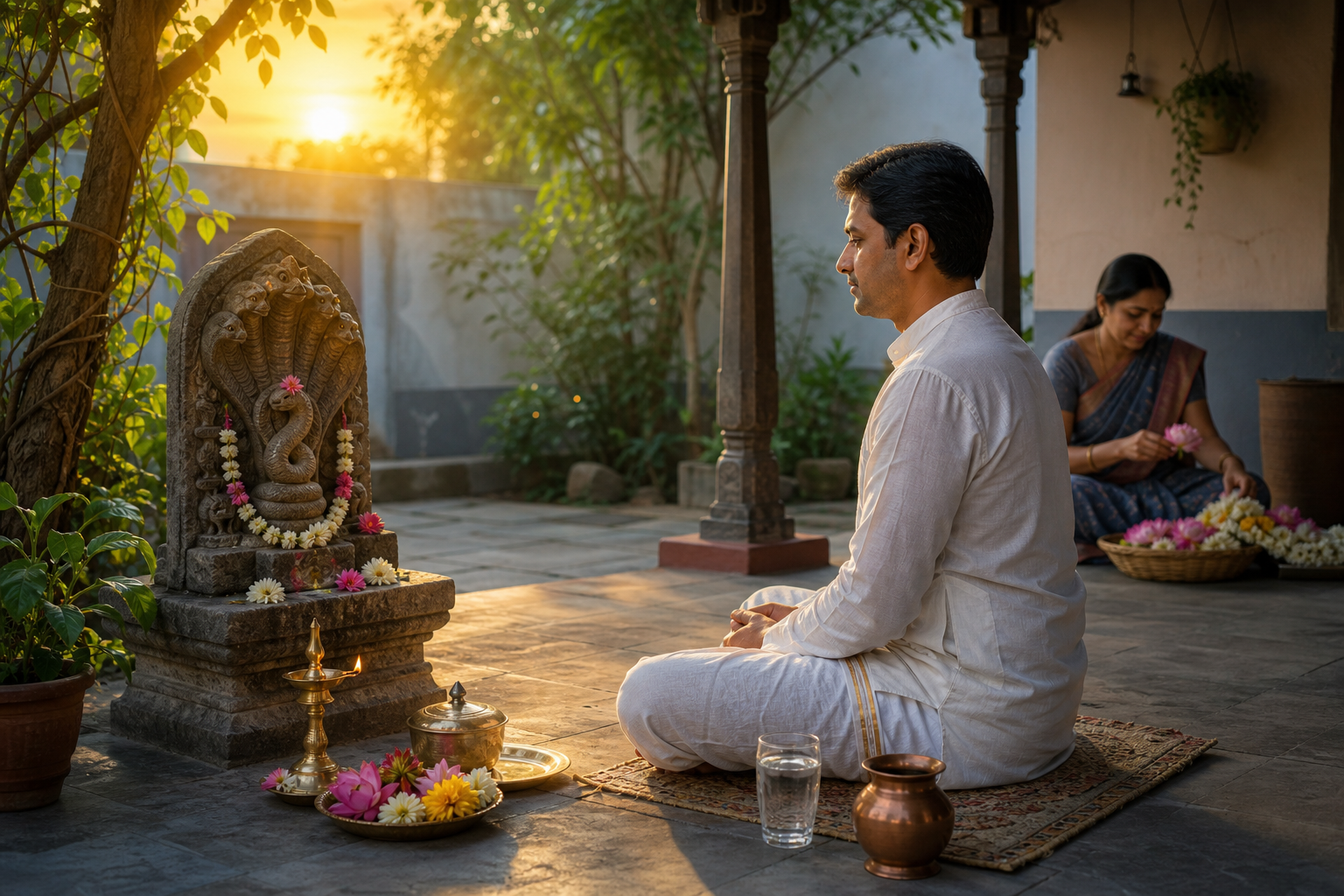
Some communities observe Sarpa Vratam or Naga Vratam on Sundays, joining reverence for the Nagas with the day associated with Surya. A sequence of Sundays can create continuity, but the custom is regional rather than a universal requirement for everyone devoted to serpent-associated forms.
Decide the form of your vow before beginning. Traditional possibilities include one sattvic meal, abstention from grains or salt, or a complete fast with adequate hydration. The point is disciplined remembrance, not competitive deprivation. If a food fast conflicts with medical advice, threatens your health, or prevents essential functioning, do not undertake it. Keep the vrata through suitable sattvic food, prayer, restraint, charity, and ecological service instead. A devotional fast is not a substitute for medical care.
A practical Sunday observance can follow a stable rhythm:
- At the beginning, bathe or wash, prepare the worship space, light the lamp, and state the sankalpa.
- During the puja, offer water, flowers, fragrance, and naivedya, then recite the prayer customary to your household or chosen form.
- Through the day, keep the dietary restraint you selected and avoid conduct that contradicts it, especially anger, waste, cruelty, and needless disturbance of living creatures.
- At the close, offer gratitude and identify one action through which the vow will continue after the ritual ends.
If you intend to observe successive Sundays, decide in advance how illness, travel, and family duties will be handled. A modest rule that you can keep honestly is better than a severe rule repeatedly abandoned or silently altered. The ethical center of Sarpa Vratam is continuity, ahimsa, purification, and responsibility, not the harshness of the menu.
Make protection a discipline rather than a bargain
People sometimes approach Naga devotion because they have been told that a sarpa dosha explains delay, conflict, infertility, anxiety, or repeated misfortune. The observance can be held within an ethical framework of prayascitta and renewal, but it should not become fatalism. A frightening label does not relieve you of ordinary responsibility, and a ritual does not guarantee a particular worldly result.
Use three tests when evaluating advice about serpent devotion:
- Does it preserve ahimsa? Any instruction that requires tormenting, capturing, displaying, or feeding an unsuitable substance to a living snake contradicts the reverence it claims to express.
- Does it strengthen responsibility? Sound practice should encourage repair, restraint, ecological care, truthful conduct, and service rather than blame an unseen force for every difficulty.
- Does it respect proportion? Prayer and vrata may support steadiness and reflection, but they should not replace appropriate medical, practical, or professional help for a concrete problem.
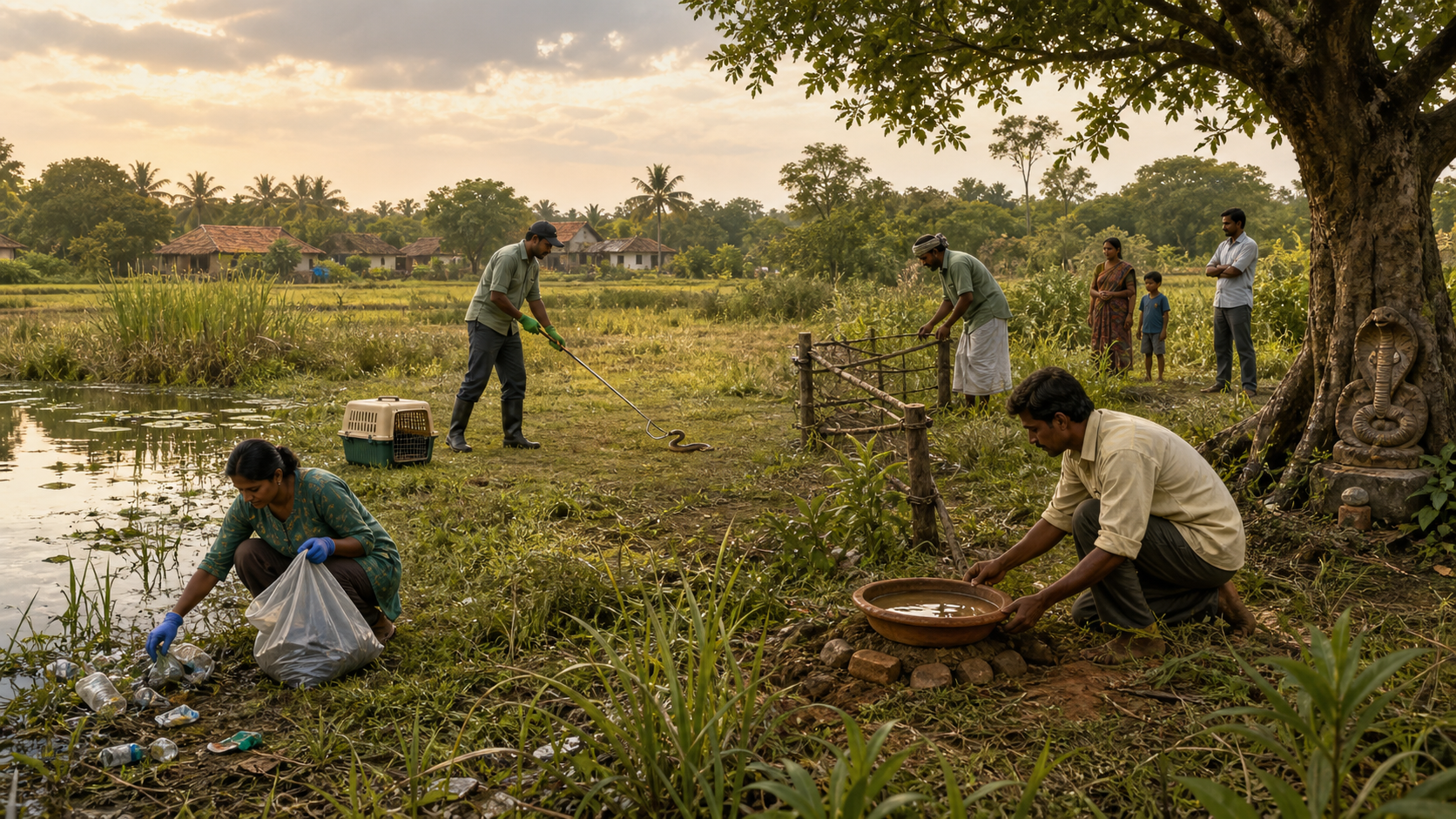
Never pour milk into a snake’s mouth, leave it where wildlife will be drawn into danger, or approach a snake for a photograph or blessing. Use an image, a sculpted Naga, or an established shrine. If a snake enters your home, keep your distance and contact a qualified local wildlife or snake-removal service. Ritual interaction is not a safe response to a wild animal.
The most convincing offering is coexistence made practical. Protect habitat where you can. Do not destroy a reptile simply because its presence frightens you. Support trained, humane intervention when human safety requires removal. Let the lamp on the altar illuminate the patch of earth outside it.
For your next observance, choose one serpent image, write one honest sankalpa, and attach it to one act of non-harm. Keep that promise before adding another ritual. The Naga’s deepest protection begins when alertness, restraint, and reverence remain with you after the flowers have been cleared away.
References
- DharmaRenaissance Blog — Shiva’s Serpent Sacred Thread: Timeless Symbolic Power, Protection, and Unity in Hinduism
- DharmaRenaissance Blog — Sarpa Vratam on Sundays: A Powerful Path to Grace, Protection, and Inner Renewal
