
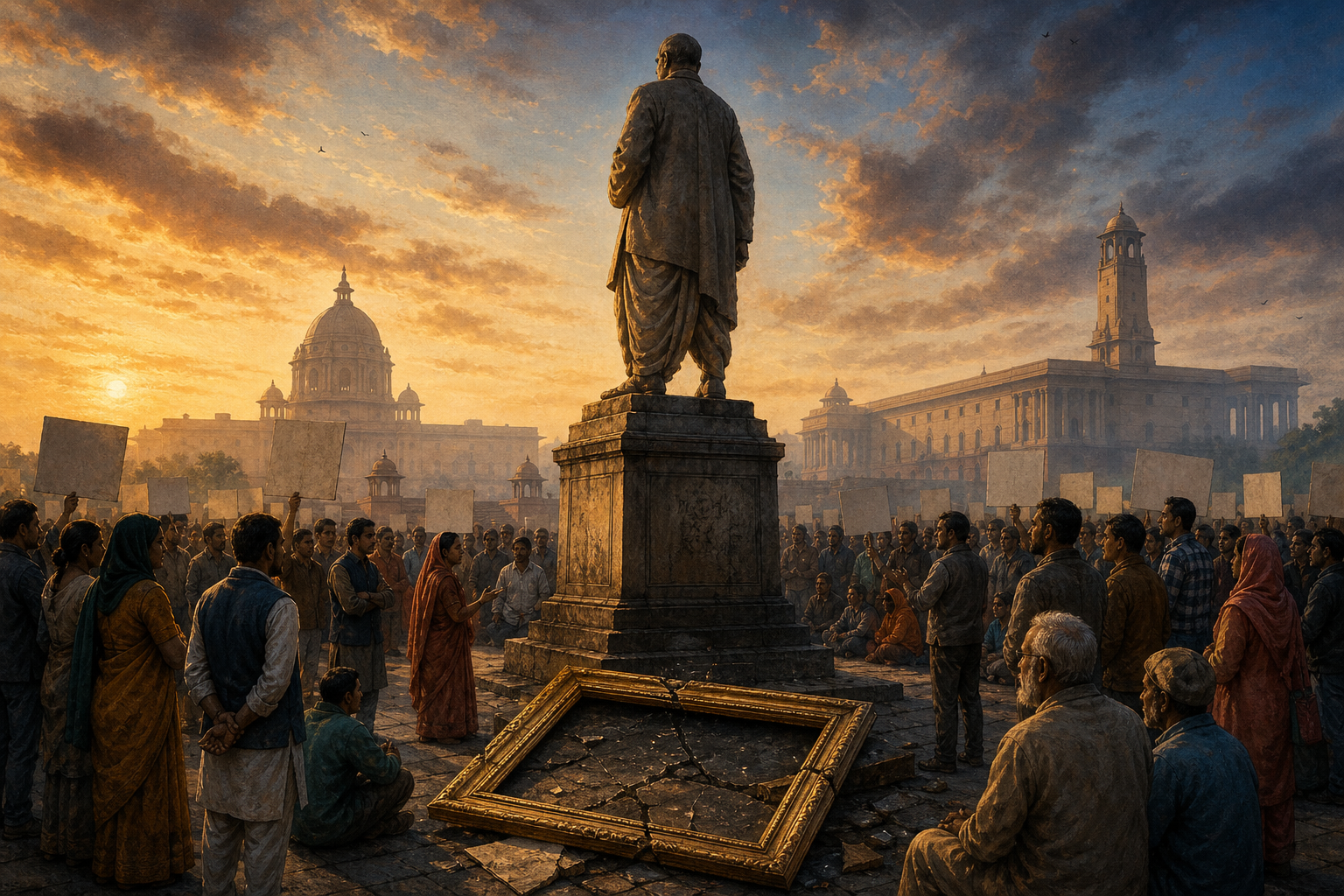
If you support Narendra Modi and a protest suddenly dominates the political conversation, you may feel pushed toward one of two bad choices: dismiss the mobilisation as manufactured, or accept its loudest account as the whole truth. You don’t have to do either.
A more disciplined response separates three questions: What grievance deserves an answer? Who is trying to control its political meaning? And has the government responded with truth, competence, and restraint? That separation lets you defend a civilizational project without turning a leader into an object of unquestioning loyalty.
The camera frame is not the whole protest
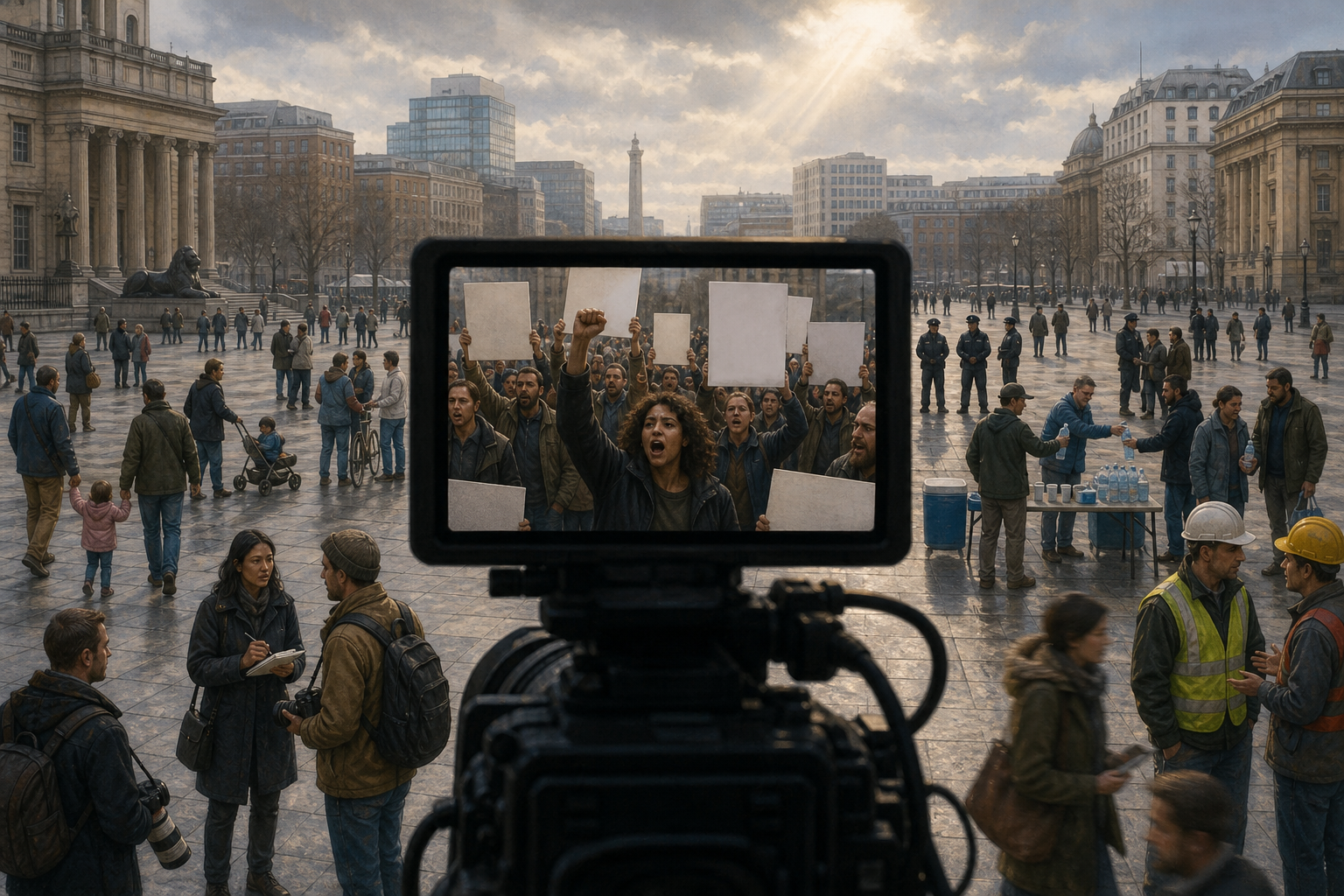
A protest is simultaneously an expression of grievance, an organised political event, and a media spectacle. These dimensions overlap, but they are not interchangeable. Confusing them is how supporters and opponents reach opposite certainties from the same few images.
At Jantar Mantar, generational disaffection was treated as genuine even as political piggybacking and affluent protest spectacle were said to command much of the visual attention. The first claim concerns the reason people were there. The second concerns who benefited from their presence. One does not automatically disprove the other.
This distinction matters because political opportunism is common wherever public anger creates an audience. An opposition group can exploit a legitimate grievance. A sincere participant can appear beside an opportunist. A camera can focus on the most theatrical faction while overlooking the people whose problem produced the gathering. None of those possibilities tells you, by itself, whether the underlying demand is just.
When you encounter the next viral protest clip, pause before deciding what the crowd represents. Look for five separate pieces of information:
- The specific grievance, stated without slogans.
- The people directly affected and the evidence they offer.
- The institution that has the power to provide a remedy.
- The organisations supplying speakers, money, legal help, transport, or publicity.
- The difference between what participants are demanding and what political amplifiers are claiming on their behalf.
If you can identify the politicians but not the demand, the spectacle has displaced the grievance. If you know the demand but refuse to examine the organisers, sympathy has displaced scrutiny. You need both kinds of information before drawing a political conclusion.
Modi’s adversity narrative is both an asset and a constraint

Political iconography turns a complicated public life into a small set of recognisable images and stories. Modi’s most durable image is the leader who meets hostility, survives it, and returns with a larger mandate or a larger idea. Adversity does not merely interrupt this story; adversity supplies its momentum.
The pattern reaches back to his tenure as Gujarat chief minister. After the communal violence of 2002 and the intense effort by opponents to make Modi personally bear its political consequences, he developed a nationalist project whose reach exceeded Gujarat. That history does not settle every argument about responsibility for 2002. It does explain why resistance, accusation, and attempted isolation became central elements of his political identity.
This iconography has real political power. Supporters can interpret a new attack as another chapter in a familiar struggle. A hostile campaign can reinforce the very image it seeks to destroy. The leader appears tested, while endurance becomes evidence of fitness to lead.
The same pattern can become a trap. If every criticism is absorbed into the story of persecution and triumph, the government loses a language for recognising criticism that is accurate. A leader known for overcoming opponents may find it harder to acknowledge that a dissatisfied citizen is not necessarily an opponent. Reinvention then becomes repetition: another confrontation, another rallying cry, another victory claimed before the practical problem has been addressed.
Cultural motifs deepen this risk. They can place current politics within Bharat’s longer civilizational memory and help people recover a public identity that was neglected or disparaged. But a sacred symbol cannot substitute for an administrative answer. A cultural narrative explains why a political project matters; it does not prove that every policy, official, or response within that project is correct.
You should therefore ask whether civilizational language is clarifying the duty at stake or insulating the government from scrutiny. If a reference to Dharma leads to a more truthful, just, and competent response, it is doing political work worthy of the tradition. If it merely changes the subject, it has become decoration.
Use three tests before accepting anyone’s narrative
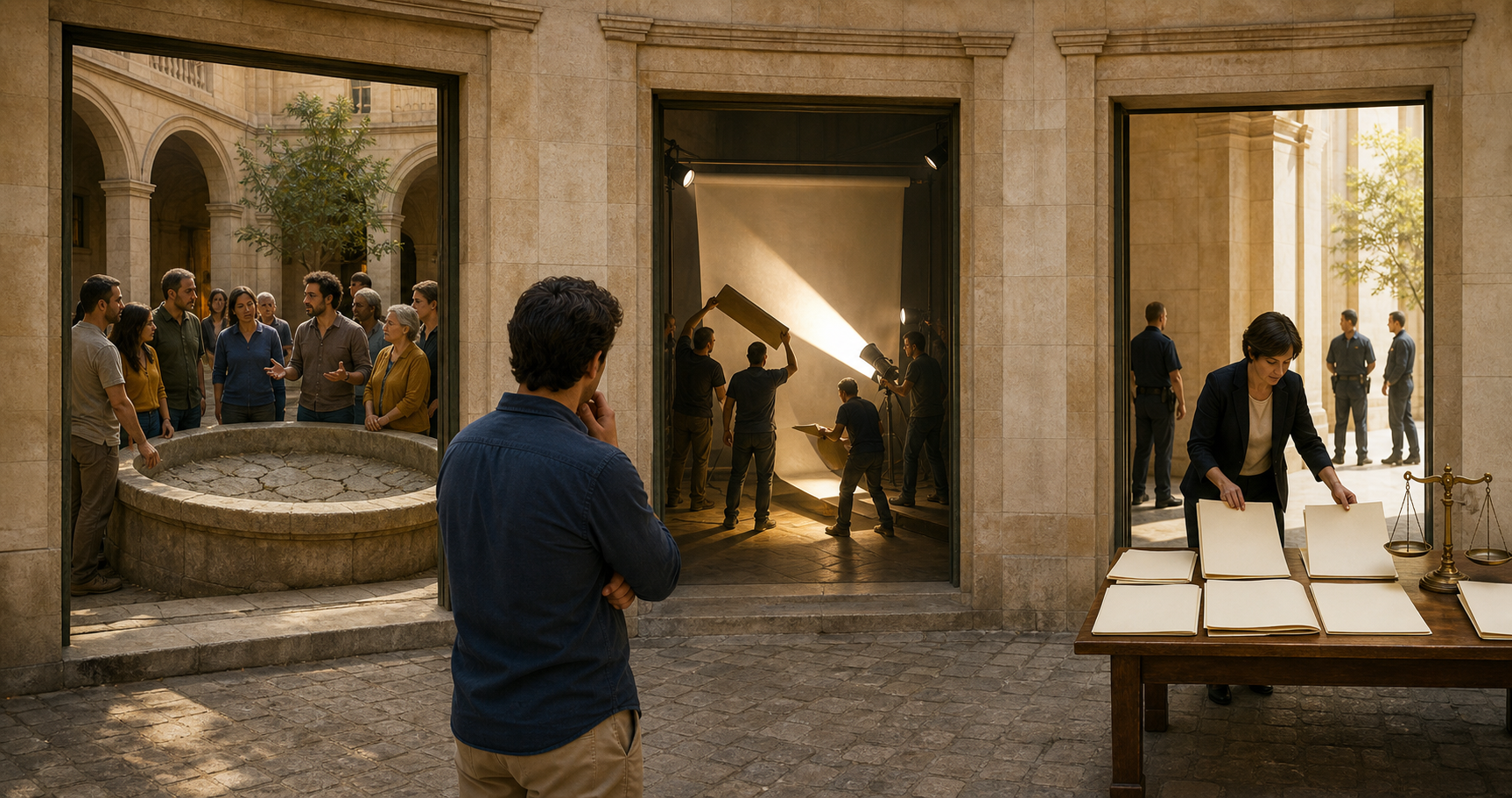
You can examine protest politics without pretending to possess information you do not have. Run the grievance, coalition, and iconography tests separately. Do not allow a strong answer in one category to stand in for a missing answer in another.
1. Test the grievance
Reduce the complaint to a sentence that could be answered by an institution. “Young people are angry” is not yet a usable claim. “These people allege that this decision, delay, or failure harmed them in this way” is closer. Then ask what evidence would confirm or weaken the allegation and what remedy is actually within the government’s power.
- Is the demand specific enough for an official to accept, reject, or modify?
- Are directly affected people speaking, or are representatives speaking over them?
- Would the proposed remedy address the harm, or merely reward the loudest faction?
- Has the responsible authority answered the strongest version of the complaint?
A protest can identify a genuine failure while proposing an unworkable remedy. Supporting the people affected does not require endorsing every slogan. Your task is to preserve the valid claim after the political packaging has been removed.
2. Test the coalition
Most consequential protests attract people with different motives. Some want a remedy. Some want visibility. Some want to weaken the government. Others arrive because the event has become a cultural or social occasion. Treating this mixed coalition as perfectly pure is naive. Treating every participant as an agent of its least credible faction is equally careless.
Map the coalition rather than assigning it a single essence. Identify who initiated the mobilisation, who joined later, who controls the microphone, and whose interpretation is repeated after the event. Then ask whether political involvement changes the evidence behind the grievance. Sometimes it will expose manipulation. Sometimes it will merely reveal that politicians noticed an existing problem.
Use a simple rule: a compromised ally does not automatically invalidate a claim, and a valid claim does not cleanse every ally. This keeps you from being manipulated by either guilt through association or innocence through association.
3. Test the iconography
Notice the roles assigned to Modi before you evaluate the event itself. Supporters may cast him as the besieged reformer who must remain firm. Opponents may cast him as the personal cause of every institutional failure. Both frames concentrate a complex system into one face. That makes the conflict emotionally legible, but it can conceal where decisions were actually made and where a remedy must begin.
Ask what would remain of the issue if Modi’s name and photograph disappeared from every placard and television panel. The remainder is usually the part that administration can address. Then reverse the test: ask what the protest would mean if the same grievance arose under a leader you liked less. If your standard changes with the face, you are judging iconography rather than conduct.
A Dharmic standard demands more than loyalty
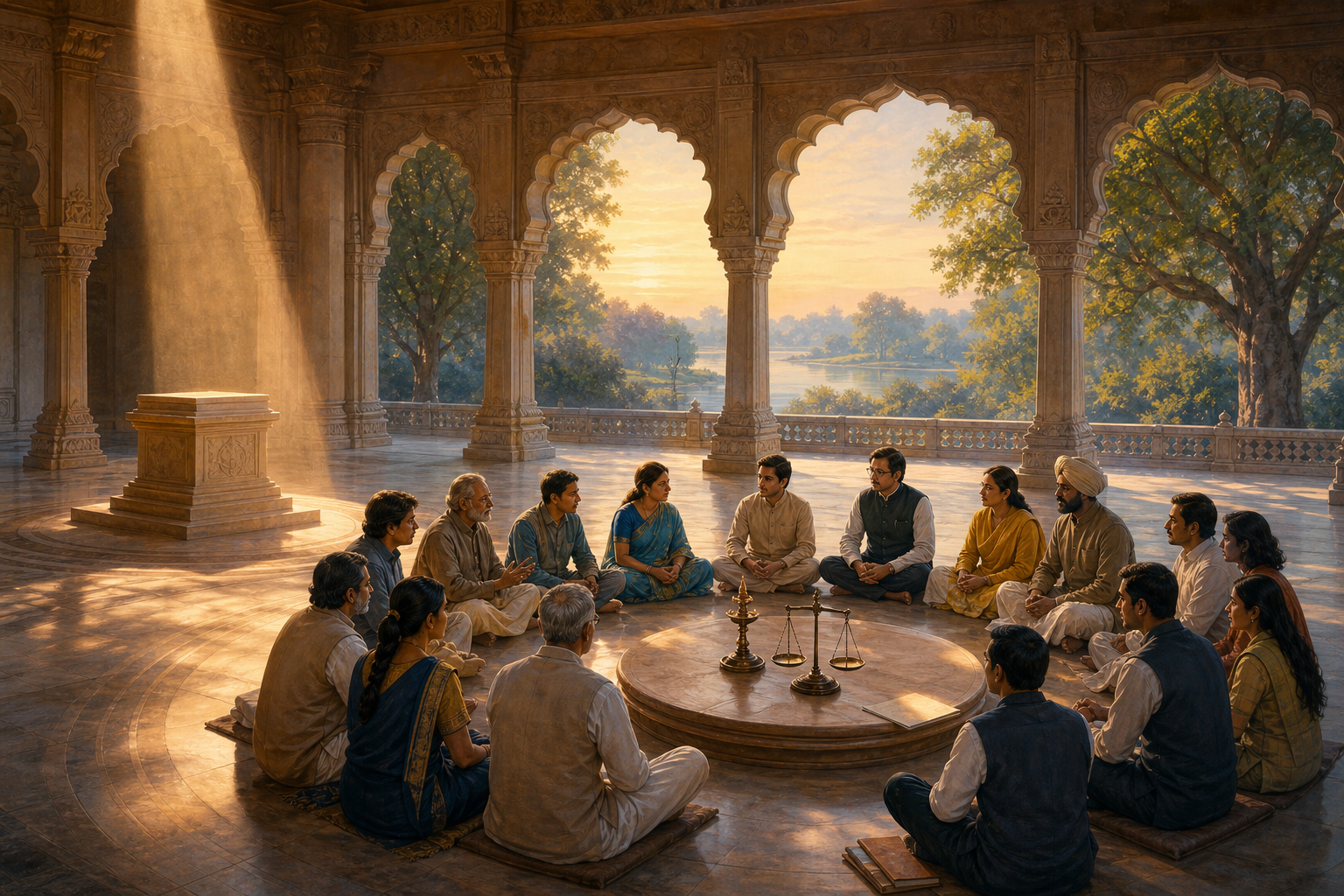
A pro-Hindu political outlook should make your standard of judgment firmer, not softer. Dharma is not the personal property of an officeholder. Rajadharma concerns the duties attached to rule: hearing those affected, distinguishing truth from performance, restraining arbitrary power, and acting for the order and welfare of the polity.
This does not require political neutrality or indifference to Bharat’s civilizational recovery. You can believe that Modi has carried an important national story and still insist that the story remain answerable to duty. Indeed, a civilizational project becomes more credible when it can correct itself without treating correction as surrender.
Judge the response to a protest through six observable questions:
<!– wp:list {