
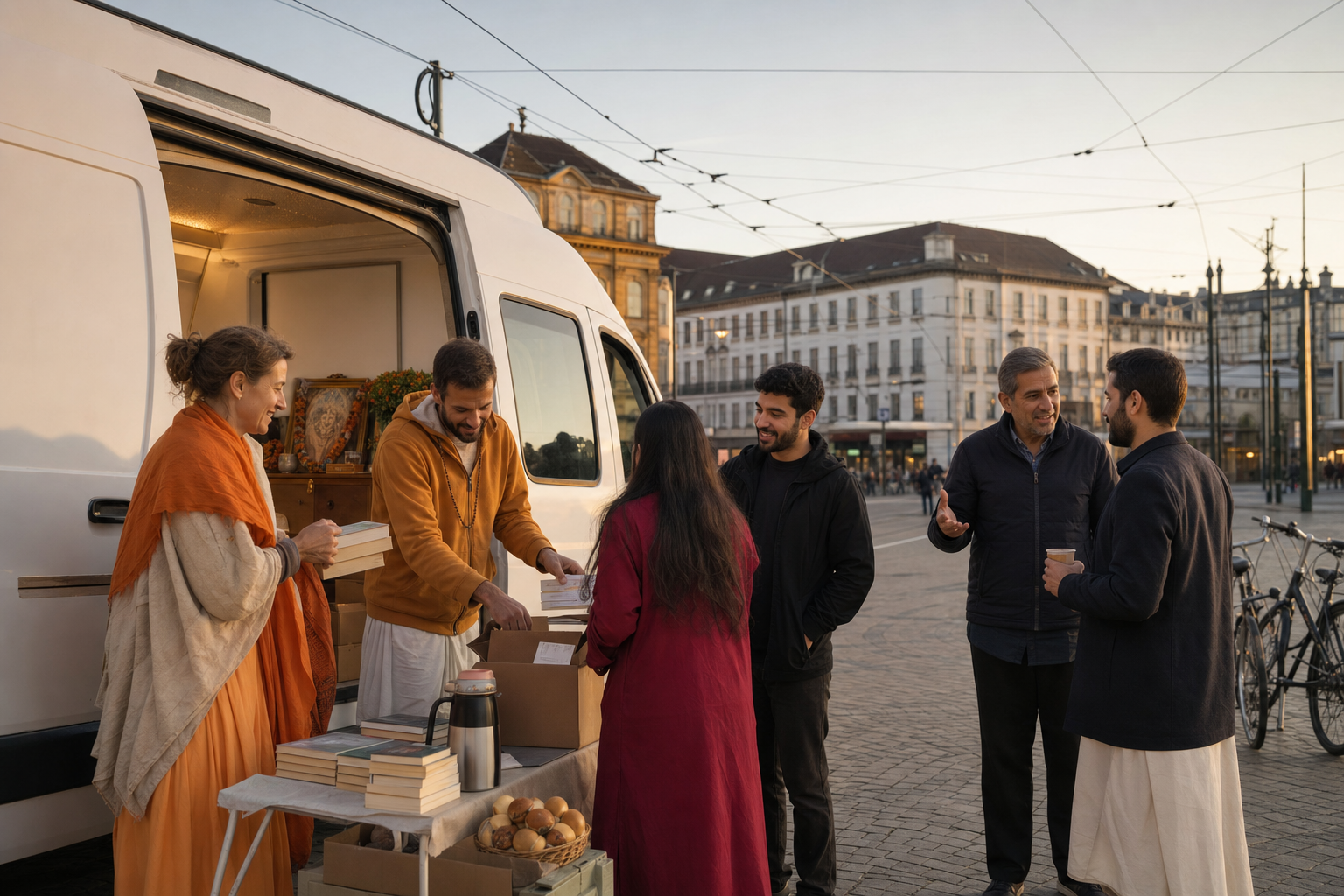
You want Krishna’s teachings to reach Arabic- and Farsi-speaking people in Europe, but the request in front of you is not simply for books. It is for €30,000 to put a travelling outreach team on the road. Before you donate, share the campaign, or offer practical help, you need to know what problem the van would solve and what questions remain unanswered.
The sound decision is neither automatic enthusiasm nor reflexive suspicion. Judge the spiritual purpose, the operating plan, and the accountability structure separately. Then support the part you can responsibly strengthen.
The missing link is access, not another English explanation

Arabic and Farsi editions already change what is possible. The Bhaktivedanta Book Trust has produced Bhagavad-gita As It Is and introductory books in both languages. A seeker therefore does not have to begin by navigating an English text or waiting for a new translation project.
Translation, however, does not place a book in someone’s hands. It does not answer the first question, introduce the reader to a local devotee, or create a way to continue the conversation. Those are distribution and relationship problems. They require people who will travel, listen, explain unfamiliar terms without condescension, and return messages after the first meeting.
The proposed mobile mission is meant to close that gap by visiting European cities with Arabic- and Farsi-speaking communities. Its intended activities include distributing books, holding personal discussions, offering kirtana and prasadam when practical, and developing continuing relationships with interested readers. That combination matters. A book can open the door, but a respectful human encounter gives the reader somewhere to take the questions it raises.
You should therefore look beyond a headline count of books distributed. Useful reporting would also show whether the team found local contacts, arranged follow-up discussions, connected seekers with nearby devotees, and learned which titles or questions attracted sustained interest. Those signs tell you whether a travelling distribution effort is becoming a durable spiritual network.
What the €30,000 would actually establish
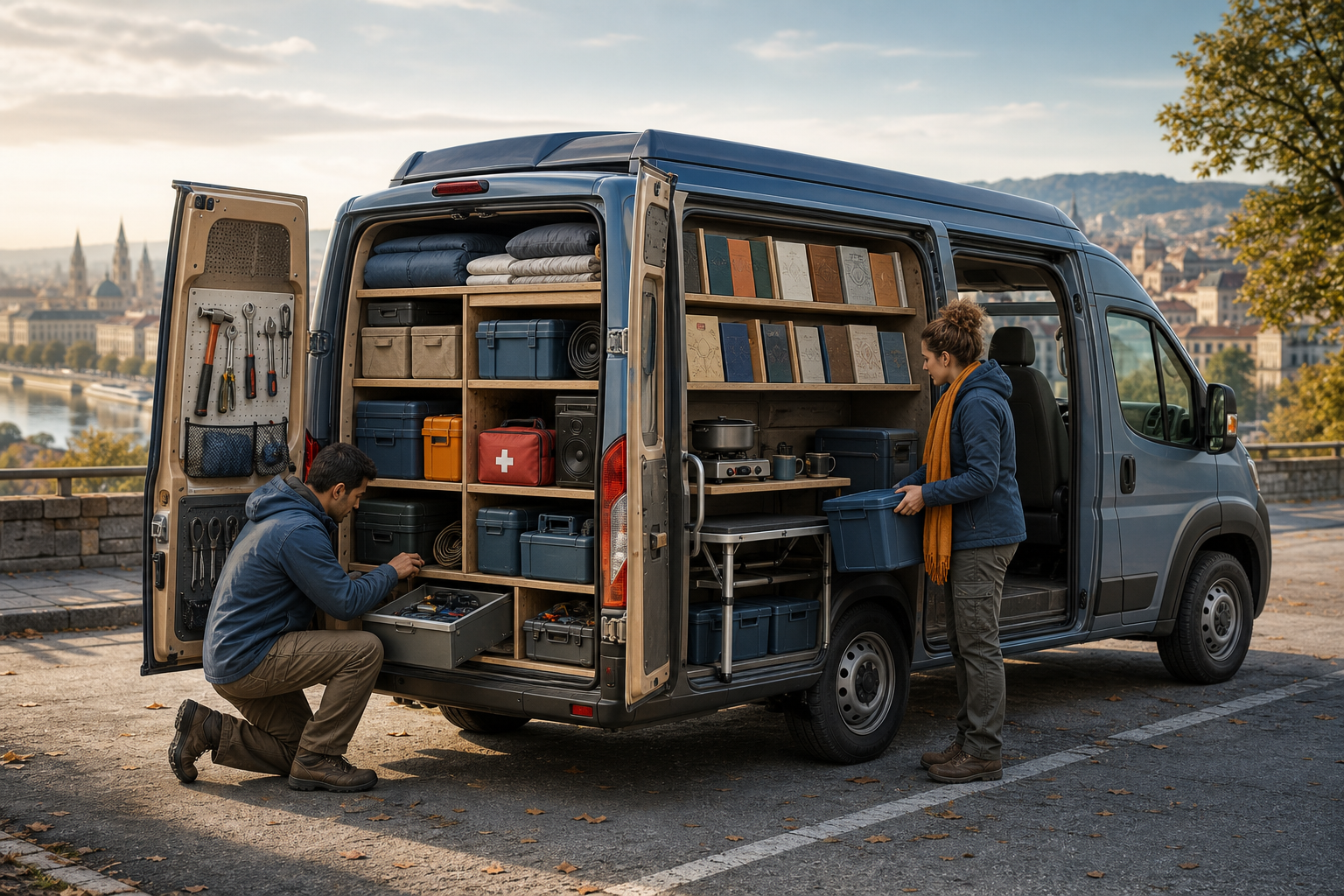
The camper van is intended to serve as transport, accommodation, and a basic mobile base. That could make extended journeys more practical than a series of isolated trips, but the vehicle is infrastructure. It is not itself the outreach.
| Planned setup item | Amount | What you should notice |
|---|---|---|
| Camper van purchase | €24,000 | This is 80 percent of the entire target and creates the project’s principal asset. |
| Registration, insurance, and taxes | €1,500 | These are initial vehicle costs, not a complete long-term operating budget. |
| Mechanical inspection and servicing | €2,000 | This allowance is meant to make the purchased vehicle road-ready. |
| Solar and electrical system | €2,000 | This supports the plan to use the van as a simple off-grid base. |
| Initial contingency and setup | €500 | The contingency is limited in relation to the vehicle purchase. |
| Total | €30,000 | The target is a capital-and-setup budget rather than a full multiyear operating plan. |
The published allocation contains no separate line for fuel, tolls, parking, book stock, or later repairs. If setup costs come in below the estimates, the organiser says the balance would support travel, maintenance, and book distribution. That is a reasonable use for a surplus, but a surplus is not a recurring-income plan.
If you are considering a substantial contribution, ask how the first year of travel will be financed after the van is acquired. Request a simple projection covering expected time on the road, fuel, routine maintenance, book supply, communications, and emergency repairs. The answer does not need corporate polish. It does need to show that the mission can continue after the most visible purchase has been made.
Ask for accountability that matches the size of the asset

Dvijamani Gaura dasa is pursuing this as a personal initiative while living as an ISKCON brahmachari in Lithuania. His temple president is described as aware and supportive, but the fundraising is personal rather than an institutional ISKCON campaign. That distinction is important: spiritual endorsement does not by itself settle ownership, financial control, or what happens to the van if the work pauses.
Before making a larger donation, send a short, courteous set of questions:
- Who will legally own and register the vehicle, and who will hold the purchase and service records?
- What happens to the van if the organiser becomes unable to travel or the outreach ends?
- Has the proposed preaching partner been confirmed, and what language ability will the travelling team have?
- Which cities or regions form the first route, and which local devotees or community contacts are ready to help?
- How will fuel, books, maintenance, and other recurring expenses be covered after the setup money is spent?
- How often will financial and activity reports appear, and where will supporters be able to find them?
The campaign promises photographs, updates, and reports. You can help turn that promise into a useful reporting practice by asking for three stages of disclosure. Before purchase, supporters should see the amount raised, the proposed vehicle, the inspection arrangement, and the ownership structure. After purchase, they should see the final cost and an itemised comparison between estimates and actual spending. During operation, reports should separate Arabic and Farsi activity and record cities visited, outreach days, books distributed by title and language, follow-up opportunities, major expenses, and vehicle problems.
Numbers are necessary, but they should not come at the expense of people’s dignity. Photographs and personal stories should be shared only with appropriate consent. A seeker is not evidence to be displayed for a donor. An accountable Dharmic mission can demonstrate real work without exposing a participant’s identity or private spiritual journey.
Key takeaways before you support the mission
- The translation barrier has been partly addressed: BBT books, including Bhagavad-gita As It Is, are available in Arabic and Farsi.
- The proposed van addresses mobility, accommodation, and continuity of travel; it does not replace capable speakers, local relationships, or follow-up.
- Of the €30,000 target, €24,000 is allocated to the vehicle itself, so ownership and contingency arrangements deserve clear answers.
- The disclosed budget establishes the mobile base but does not provide a separate recurring-cost plan for fuel, books, parking, or later maintenance.
- The work is a personal initiative connected to an ISKCON brahmachari and supported by his temple president, not an institutional ISKCON fundraiser.
- Non-financial help can be decisive when it supplies language ability, trustworthy introductions, local meeting space, route knowledge, or continuing contact after the van leaves.
Choose the kind of help the project needs from you
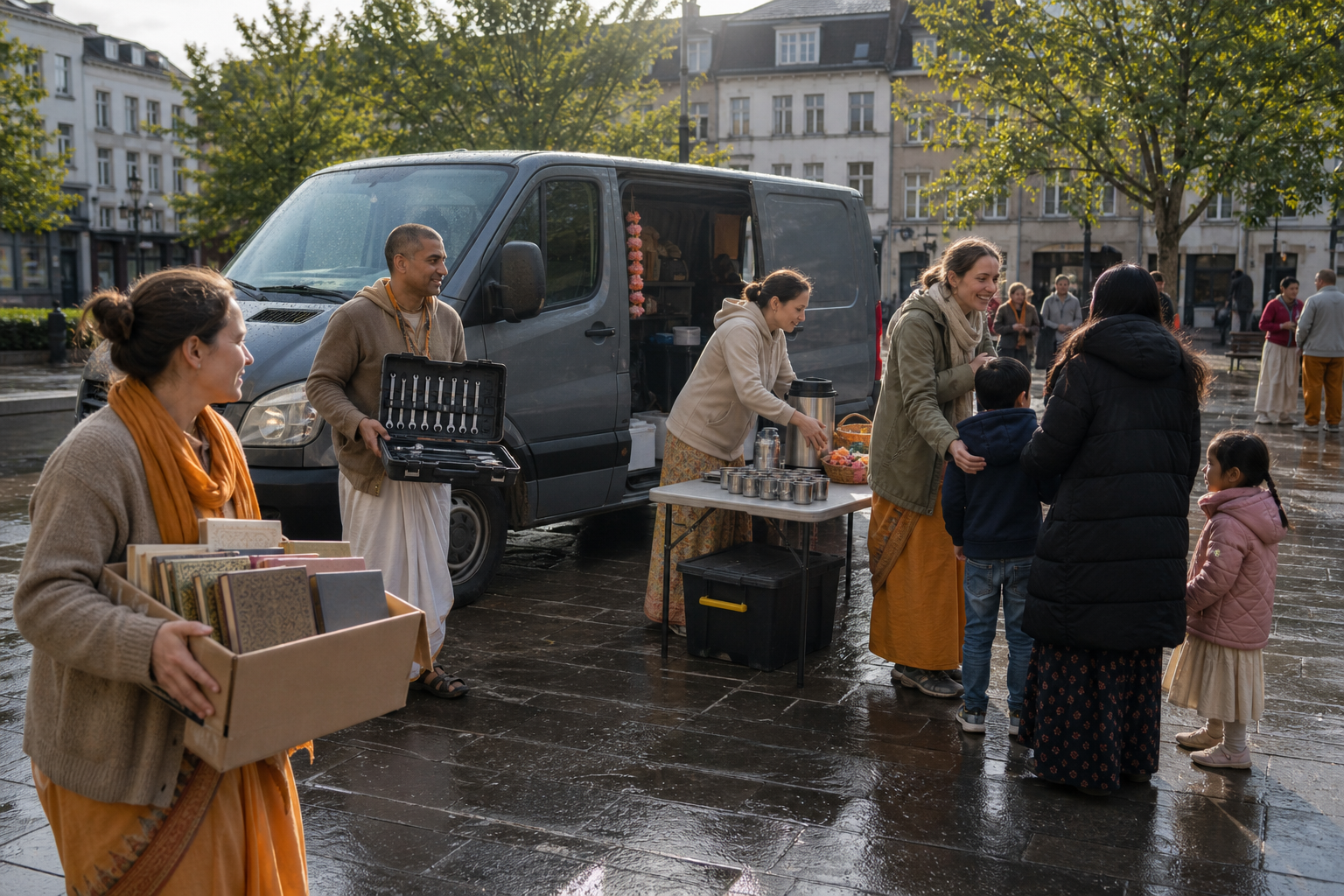
If the answers satisfy you, treat your contribution as a donation to an attempt, not as a guaranteed number of conversions, meetings, or distributed books. The meaningful outcome is whether sincere people receive an accessible encounter with Krishna bhakti and a reliable path for learning more.
If you are not ready to fund the vehicle, you still have useful options:
- If you speak Arabic or Farsi, offer conversation support, translation help, or remote follow-up. Keep the two languages distinct in planning and reporting rather than treating them as one audience.
- If you belong to a European temple or nama-hatta community, help identify a suitable local meeting point and a devotee who can remain in contact after the travelling team departs.
- If you know trusted community connectors, make an introduction instead of sending an unsolicited promotional message to a broad list.
- If you can assist with vehicles, ask whether your knowledge of inspection, servicing, insurance, or electrical systems would reduce setup risk.
- If you share the fundraiser, include the purpose, the €30,000 breakdown, and the fact that it is personally organised. Let prospective donors make an informed choice.
- If you prefer milestone-based support, ask whether you can contribute after a vehicle inspection, purchase report, first route plan, or initial outreach report is available.
Start with the contribution only you can make. Ask the unanswered questions, offer one concrete connection, or help one Arabic- or Farsi-speaking seeker gain access to a text and a trustworthy person. A van can carry the mission between cities; disciplined service is what will allow it to remain after the vehicle has moved on.
References
