
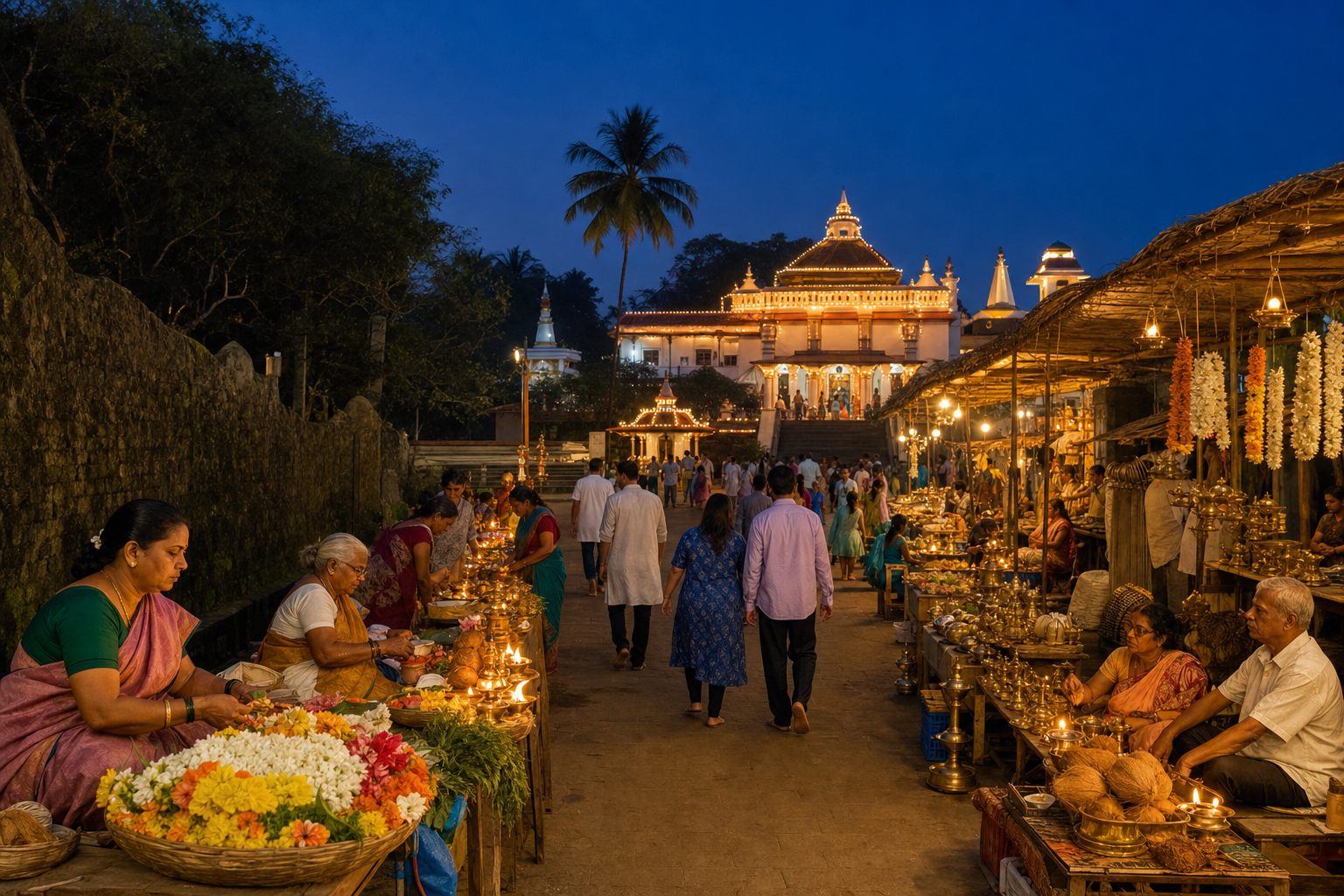
If you are being asked whether Shri Bodgeshwar Jatrotsav should favour local vendors or welcome a wider range of participants, you do not have to choose one principle and abandon the other. The workable question is narrower: who should receive priority, under what published rules, and how can every approved participant serve the festival’s sacred purpose?
A sound answer is local-first, transparent, safety-conscious, and open to respectful participation from the wider Dharmic family. That combination protects Mapusa’s economic stake in the jatrotsav without turning tradition into an excuse for arbitrary decisions.
Define exactly what local preference is meant to protect
Local preference should protect something identifiable. At Shri Bodgeshwar Jatrotsav, it protects continuity between the temple festival and the families who have helped sustain its temporary bazaars, food service, offerings, and neighbourhood commerce. It also protects seasonal income: for some small, family-run vendors, earnings from the festival help balance the rest of the year.
That purpose should appear at the top of the stall-allotment notice. A written purpose prevents the meaning of “local” from changing after applications arrive. It also gives applicants a fair way to understand why one class receives priority over another.
The organising committee should define the evidence it will accept before registration begins. Depending on the records available, that evidence could include prior allotment records, proof of a Mapusa residence or business, or records showing that a family has operated at earlier jatrotsavs. Applicants should not have to guess which documents will count, and committee members should not be free to demand different proof from different people.
Festival legacy should create priority, not permanent ownership. A family connection does not justify an unreviewable claim to the same location forever, nor should a priority allotment become a stall that can be transferred quietly to an unrelated operator. Where equally qualified applicants compete for limited space, the committee should publish a neutral tie-breaker such as rotation or a documented draw.
This distinction matters. Protecting local livelihoods is legitimate; protecting opaque privilege is not. You can tell which one a system serves by asking whether its definition, evidence, and tie-breaker were visible before anyone knew who would benefit.
Use a published allotment ladder instead of informal discretion
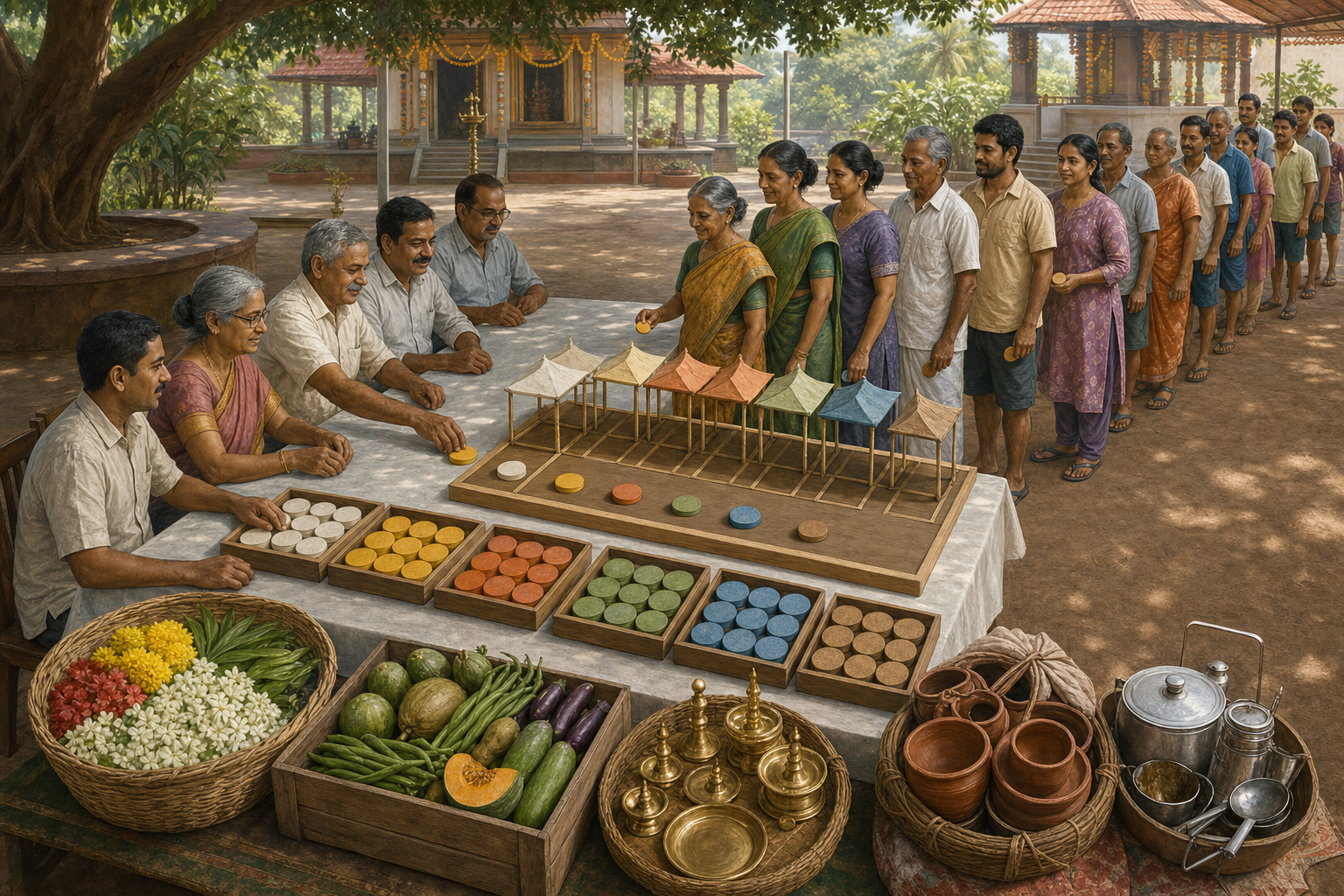
A local-first policy becomes credible when every stall follows the same sequence. The committee does not need to promise identical treatment to applicants whose relationship to the festival is different. It does need to promise consistent treatment within each published priority class.
A practical allotment ladder would proceed in this order:
- Local families with a demonstrated jatrotsav legacy. Their history of participation gives them the first claim because continuity is one of the policy’s stated purposes.
- Other local artisans, food vendors, and small operators. This widens the local economic benefit beyond established participants while keeping Mapusa’s residents central.
- Curated participants from the broader Dharmic family. Hindu, Buddhist, Jain, and Sikh applicants can be considered for the remaining opportunities when their goods, services, or programming fit the ethos of Shri Bodgeshwar Jatrotsav.
The committee must still decide how much space belongs to each class. It should publish that decision as actual stall counts or clearly defined reserved categories, not as a vague assurance that locals will receive “preference.” Without visible numbers, a priority can be honoured symbolically while most economic opportunity goes elsewhere.
Before applications open, one public notice should state:
- The available stall categories and the number of spaces in each category.
- The eligibility conditions and evidence accepted for every priority class.
- The order in which applications will be considered.
- The fee schedule and any separately charged services.
- The method used when qualified applications exceed available spaces.
- The rules governing cancellation, replacement, and non-transfer of an allotment.
- The code of conduct and merchandise requirements.
- The method for challenging an error before the allotment becomes final.
A provisional allotment list is more useful than announcing only the final result. It creates a defined point at which an applicant can report a wrong classification, a missing record, or an apparent duplicate allotment. The people reviewing that grievance should include members who did not make the disputed decision. Otherwise, the appeal merely returns the complaint to the same discretion that caused it.
Make inclusion serve the jatrotsav rather than redefine it

Shri Bodgeshwar Jatrotsav is centred on Shri Bodgeshwar. It is not a neutral commercial fair, and inclusive participation should not require the festival to conceal its Hindu identity. A temple festival can welcome others while remaining clear about the tradition, deity, devotional schedule, and local customs that give the occasion its meaning.
Participation from Buddhist, Jain, and Sikh communities can express Dharmic kinship when it takes place within that host framework. Inclusion here means a fair opportunity to contribute respectfully. It does not mean that every proposed product, display, performance, or message automatically belongs in a sacred festival setting.
A common code of conduct should therefore govern local legacy vendors, newer local applicants, and invited participants alike. At minimum, it should require:
- Respect for the shrine, rituals, devotional programme, and directions governing sacred spaces.
- Goods, signs, and displays that are compatible with the setting and do not trivialise the festival.
- Operation only by the people registered for the stall, subject to any declared replacement process.
- Compliance with assigned locations, crowd-flow instructions, and safety requirements.
- A clear prohibition on using a stall to obstruct worship, provoke conflict, or disrupt the jatrotsav’s stated purpose.
Merchandise decisions should be based on what is being sold or displayed, not on a shortcut judgment about the applicant’s identity. If an item is unsuitable, the committee should be able to identify the relevant written rule. If the same item would be accepted from one participant but rejected from another, the rule is not being applied fairly.
The same principle applies to devotional programming. Contributions from different Dharmic strands can deepen a sense of civilisational fellowship, but they should be reviewed for relevance, placement, and tone. The purpose is to add a harmonious contribution around a clearly Hindu centre, not to turn the jatrotsav into a collection of unrelated presentations.
Turn security concerns into universal checks
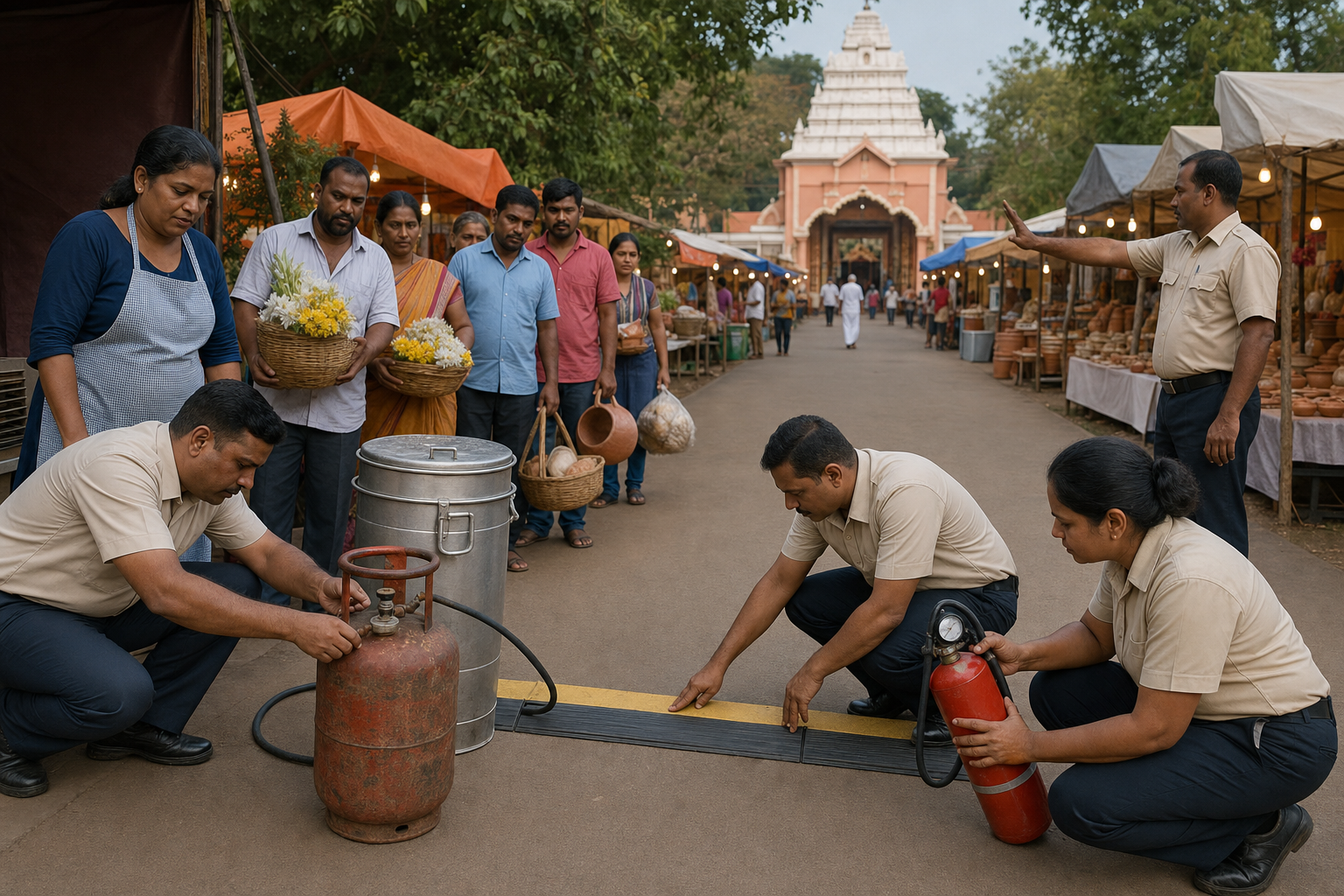
Security concerns deserve a real operational answer. They become divisive when they remain undefined and are used as a general suspicion about a class of people. The better approach is to name the risk and build the check around it.
Pre-registration should record who will operate each stall, what activity will take place there, where the stall will be located, and whom organisers should contact if a problem arises. Verification should confirm the operator’s identity and the application’s accuracy. It should not become an improvised ideological examination.
The registration form should collect only information the committee will actually use. A practical record includes the named operator and approved assistants, the stall category, the space required, the relevant equipment or services, an emergency contact, and acknowledgement of the common code. The verified list should be available to the authorised festival and security teams, while personal information should not be displayed more widely than necessary.
Crowd safety also depends on layout. Stall placement should follow a crowd-flow plan that keeps emergency access clear, gives queues somewhere to form, and prevents a popular stall from blocking movement near a devotional area. This work must happen before vendors begin setting up; correcting the map after congestion appears moves the cost and confusion onto devotees and stallholders.
A community security committee should coordinate with the relevant local authorities on the operating plan. Before opening, the responsible teams should walk the site, confirm emergency routes, check that stall locations match the approved map, and rehearse how an incident will be reported and escalated. During the jatrotsav, routine safety checks should record problems and the corrective action taken rather than relying on memory after the event.
Every safety requirement must apply across priority classes. A family’s long association with the jatrotsav can justify earlier consideration for a stall, but it cannot exempt that stall from verification, layout rules, or emergency directions. Equally, an applicant from another Dharmic community should not face additional demands unrelated to an identified risk. Local preference and non-discriminatory security are compatible because they answer different questions: one decides the order of economic opportunity, while the other sets the minimum conditions for safe participation.
Protect the vendor’s livelihood after the allotment
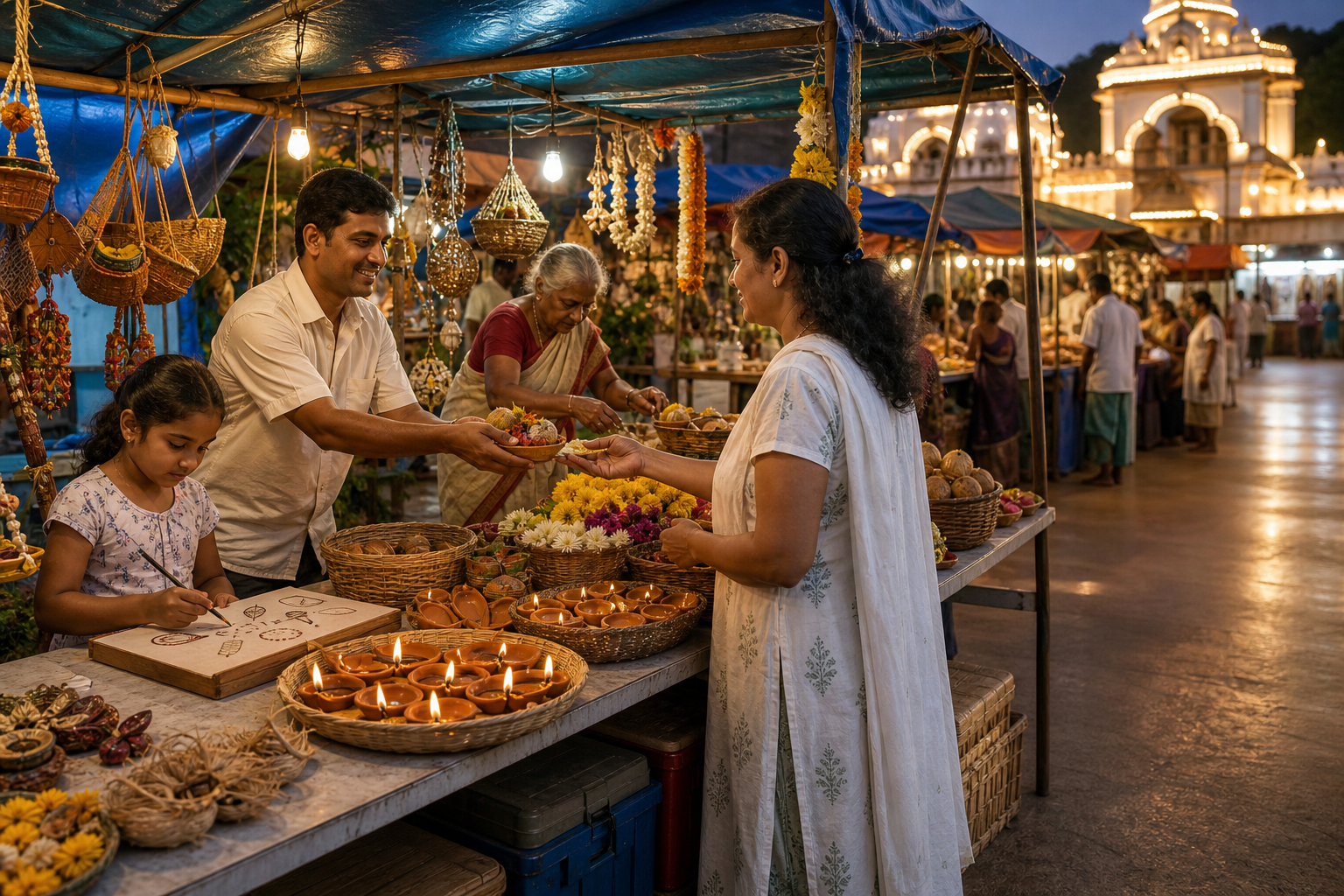
Winning a stall does not protect a livelihood if the operator later encounters undisclosed charges, an unsuitable location, or an unexplained last-minute change. Economic fairness therefore extends beyond selecting names.
Fees should be published in one schedule, including any charges for services the organiser controls. Stall categories should be settled before allocation so applicants can judge whether the available space suits their goods or food service. If locations differ materially in size, access, or permitted use, the allotment framework should say how those locations will be assigned rather than treating every stall as interchangeable.
The committee should also keep an operator register during the jatrotsav. This makes it possible to notice whether a priority allotment is being used by its approved recipient, whether reserved local space has remained vacant, and whether cancellations were reassigned according to the published ladder. A rule against undeclared subletting has little value if nobody checks who is actually trading.
After the festival, a short public account can improve the next allotment cycle without exposing vendors’ private details. It should report the number of stalls assigned in each priority class, vacancies and cancellations, grievances received and resolved, and recurring safety or crowd-flow problems. This is also the right time to ask whether local artisans and family-run food vendors received meaningful commercial locations rather than nominal spaces with little visitor access.
Transparent review turns custom into an institution that can survive changes in committee membership. It also gives devotees and vendors a way to distinguish a genuine protection of heritage from a decision defended only by personal influence.
Key takeaways
- Define “local” and the evidence of festival legacy before applications begin.
- Use a visible priority ladder: established local families, other local vendors, and then curated participation from Hindu, Buddhist, Jain, and Sikh communities.
- Publish stall counts, fees, tie-breakers, cancellation rules, and a real grievance process.
- Apply one heritage-sensitive code of conduct to every approved participant.
- Base security on pre-registration, operator verification, crowd-flow planning, drills, and documented audits, not on identity-based suspicion.
- Check actual stall use and publish a brief post-festival account so that local preference produces real livelihood value.
If you serve on the organising committee, the next useful step is a one-page allotment framework issued before registrations are collected. If you are a vendor or devotee, ask to see its six essentials: eligibility, priority order, available spaces, fees, safety rules, and the grievance route. Protecting Shri Bodgeshwar Jatrotsav begins when those rules become clear enough for everyone to follow and strong enough to outlast any one committee.
References
