
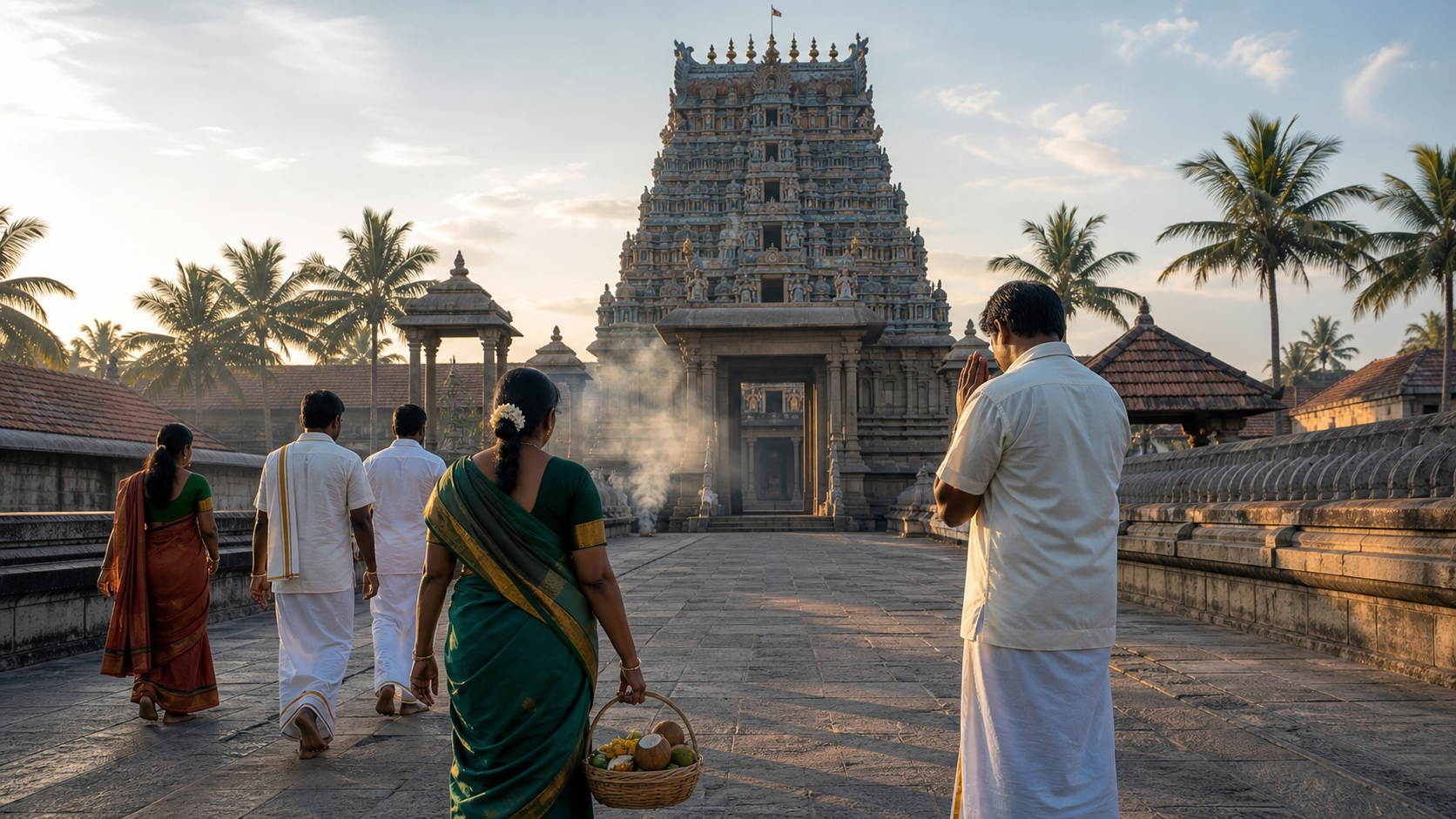
You may already know which temple you want to visit and still be unsure how to make the journey a pilgrimage rather than a hurried round of sightseeing. The real decisions are not only where to go, but what you are going for, how sacred timing should shape the trip, and how to enter an unfamiliar temple without imposing habits learned elsewhere.
A workable pilgrimage plan joins devotion and preparation. You choose a clear intention, learn the deity and sacred place by name, verify the customs that can change from temple to temple, and leave enough inner space for darshan to affect what happens after you return.
Build the pilgrimage around a clear devotional intention
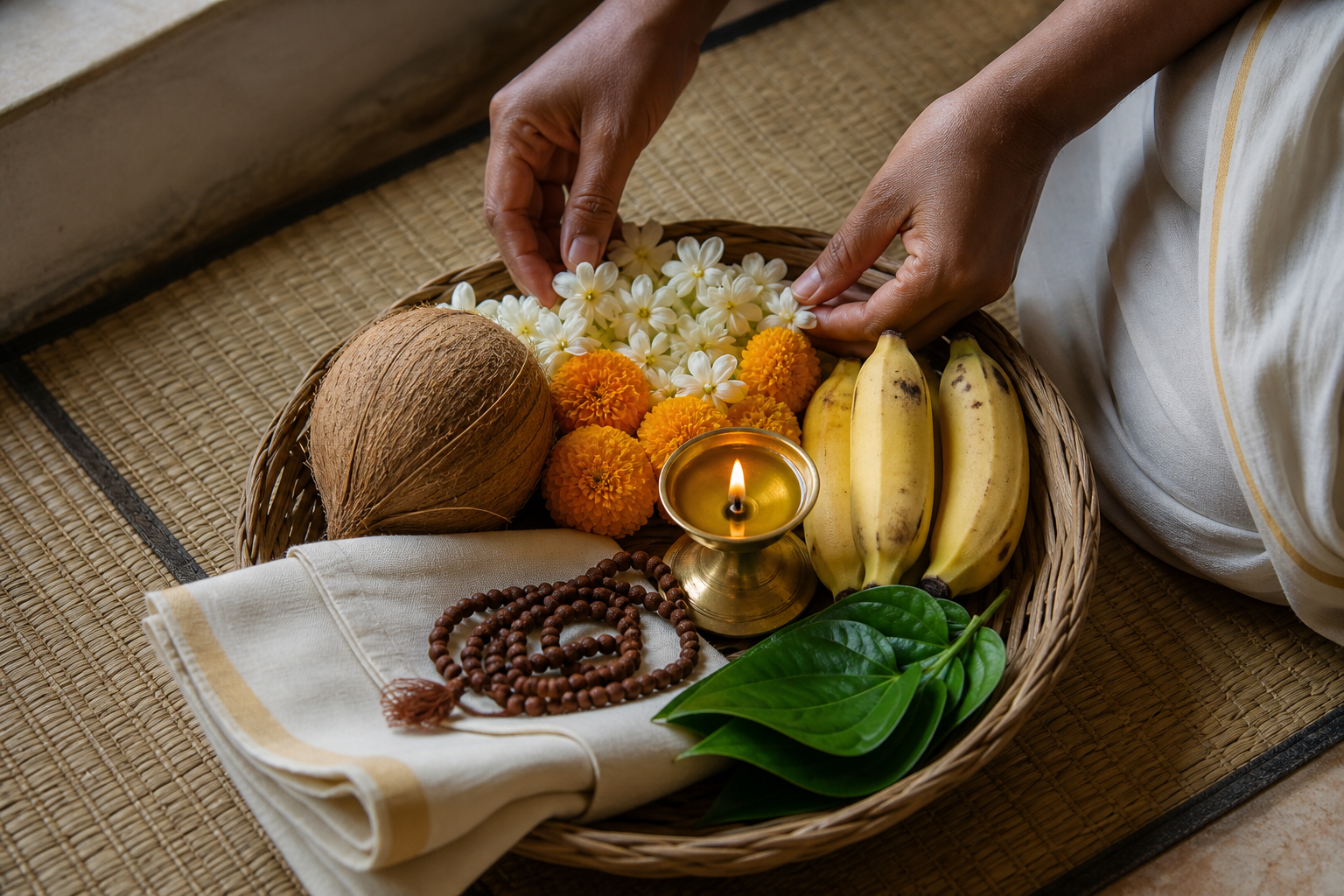
Before booking transport or adding temples to a route, complete this sentence: I am making this pilgrimage in order to…
- seek darshan of a particular deity;
- offer gratitude after an important passage in life;
- pray for clarity before a decision;
- fulfil a vrata or family commitment;
- reconnect with a tradition inherited from parents, elders, or a guru; or
- learn how a particular sacred place expresses Dharma.
Your answer determines the shape of the journey. A person fulfilling a vrata may need to confirm ritual obligations before leaving home. A family introducing children to a hereditary deity may need more time for explanation and less time for additional stops. A devotee seeking quiet prayer should not build an itinerary that forces everyone to watch the clock inside the temple.
Do not take on a formal vow merely because it sounds suitable for pilgrimage. If the vrata carries rules about food, worship, offerings, or conduct, ask a trusted elder, priest, or teacher what it actually requires before you commit to it. Sincerity is strengthened by clarity; it is not strengthened by making an obligation you do not understand.
South Indian temple traditions are not one interchangeable system. Shaiva, Vaishnava, Shakta, local, family, and lineage practices may share a Dharmic grammar while differing in deity, ritual sequence, vocabulary, and emphasis. Even temples associated with the same deity can have distinct customs. Treat the temple’s own tradition as something to encounter, not as a variation that must fit your usual routine.
If you tend to rush, choose an anchor temple and make every additional stop secondary. Write down the presiding deity, your intention, the prayer or offering you hope to make, and the custom you still need to verify. That short note will do more for the quality of your yatra than a long list of places copied into a map.
Use sacred timing without becoming trapped by it
Questions about the best month often contain two different concerns. You may want a time with special religious meaning, but you may also want a journey that your family can undertake without exhaustion or disorder. Keep those concerns distinct before bringing them together.
The devotional frame for Srisailam is generous: darshan in any month is regarded as auspicious, while different months are associated with different merits. That framing changes the question. Instead of asking whether a visit in an available month will somehow fail to count, ask whether a particular month deepens the intention you already carry.
An auspicious association is a devotional teaching, not a mechanical guarantee of worldly results. Sacred timing can focus the mind, connect you with a festival or observance, and place your journey within a religious calendar. It should not become a reason to postpone sincere darshan indefinitely when family duties, health, or travel conditions make another period more workable.
Before settling on a date, answer these questions separately:
- Sacred meaning: Does your family, guru, vrata, or temple tradition associate a particular month or observance with the pilgrimage?
- Temple operation: Have you checked current opening windows, darshan arrangements, ritual availability, and restrictions through a current temple channel?
- Human capacity: Can every pilgrim in your group manage the journey, queues, walking, and seasonal conditions without turning worship into distress?
- Inner readiness: Can you keep the discipline connected with the pilgrimage before, during, and after the visit?
Do not assume that a religiously important day will function like an ordinary temple day. Crowds, access, and ritual arrangements can differ. Conversely, do not assume that a quieter visit is spiritually inferior. A calm darshan in a workable month may serve your purpose better than a prestigious date experienced entirely through anxiety and haste.
The best time, then, is not a universal winning month. It is the point at which sacred meaning, reliable temple information, and your actual capacity to undertake the yatra meet.
Read the temple as sacred geography
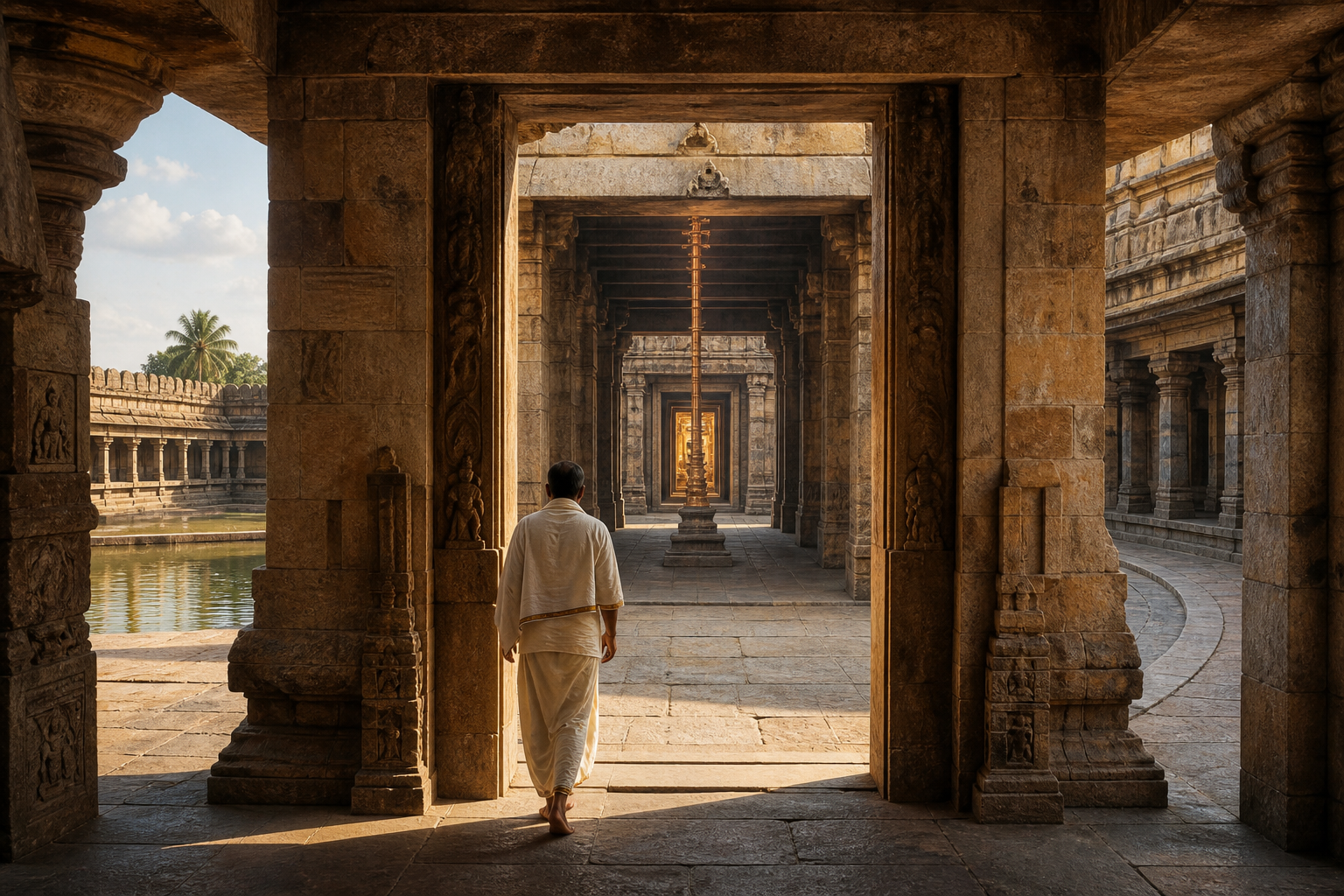
Darshan is not simply visual inspection of an image. It is a sacred encounter in which attention, presence, and the relationship between devotee and deity matter. The temple’s names, thresholds, shrine relationships, and movement through space help prepare that encounter.
Begin by learning the exact name of the temple and presiding deity. At Thanjavur’s Bangaru Kamakshi Amman Temple, for example, Bangaru Kamakshi Amman is the chief deity, and a shrine of Kamakodi Amman stands to the left of the sanctum. Knowing those names and relationships prevents the visit from collapsing into the vague memory of having seen another temple in Thanjavur.
The arrangement of one temple should not be turned into a universal rule. Instead, use it as a reminder to notice how each sacred place presents its own theological world. A subsidiary shrine is not merely an architectural extra, and the presiding deity is not merely the most photogenic object in the complex.
When you arrive, follow a simple discipline:
- Pause before entering and let the journey’s noise settle.
- Read the available signs and identify the line or entrance appropriate to your intended darshan.
- Ask an attendant about the local order of worship if it is not clear.
- Follow the temple’s own flow rather than copying a circuit remembered from another shrine.
- Notice how the principal deity, subsidiary shrines, ritual activity, and movement of devotees relate to one another.
- After darshan, resist reaching immediately for your phone. Give the encounter enough silence to become more than an image collected during travel.
Pradakshina, entry to inner spaces, and the order in which shrines are approached can vary. Some areas may also be restricted. Local signs and temple personnel take precedence over a generic pilgrimage checklist or something another traveller remembers from a different temple.
If architecture and history are part of your interest, give them proper attention without letting them displace worship. You can observe the structure, inscriptions, icons, and artistic form while remembering that the temple remains a living sacred institution. The people standing beside you may be fulfilling vows, grieving, giving thanks, or seeking grace. Your conduct should leave room for their pilgrimage as well as your own.
Let practical discipline protect devotion
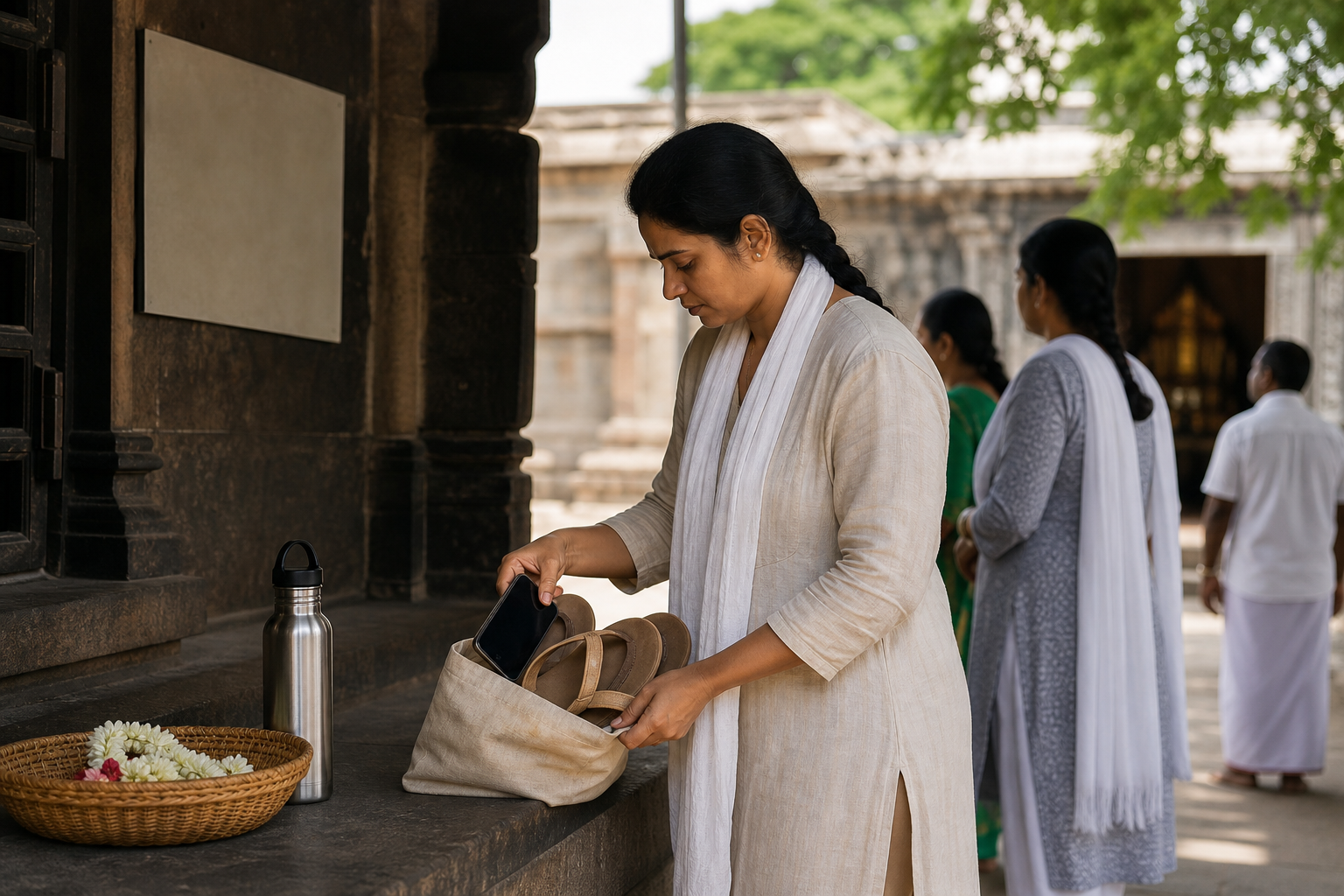
Temple etiquette is easiest to understand when you stop treating it as a decorative list of customs. Its practical purpose is to protect sanctity, support orderly worship, and keep one visitor from obstructing another. Preparation outside the temple therefore belongs to the pilgrimage itself.
Verify rules for dress, footwear, bags, phones, photography, offerings, and booked rituals through a current local or temple channel. Do this again near the date of travel, because operating arrangements can change. If you cannot confirm a detail, dress conservatively, carry as little as possible, and ask before acting.
- Keep the temple and deity names available in a form you can show locally, especially when pronunciation or script may cause confusion.
- Set a meeting point outside the worship area so a separated group does not have to call, shout, or block movement.
- Remove footwear where directed and keep your phone silent before joining the darshan line.
- Photograph only where permission is explicit. The absence of a visible objection is not the same as permission.
- Do not touch icons, sanctum structures, lamps, ritual vessels, or offerings unless the local practice clearly invites you to do so.
- Receive prasada respectfully, move aside before arranging belongings, and keep entrances and queues clear.
Basic ritual vocabulary can help you ask an intelligible question. Abhishekam refers to a ritual bathing of the deity; archana commonly involves worship through the recitation of divine names; and aarti is an offering of light. Their exact form, availability, participation rules, and terminology can differ. Knowing a word does not give you the right to demand that a temple perform the rite according to your expectations.
Do not carry self-selected substances for an abhishekam or place an offering wherever you think it belongs. Ask what the temple accepts and use its established arrangement. This respects both ritual discipline and the people responsible for maintaining the shrine.
If you are travelling with an older person, a disabled pilgrim, a young child, or anyone who cannot stand for long periods, ask directly about access, steps, waiting areas, and available queue arrangements. Do not rely on photographs or on the assumption that devotion requires someone to ignore a bodily limit. Build the route around the person with the least mobility, not the person most eager to add another stop.
Money also needs discipline. Decide before entering what you intend to offer, and use recognised counters or procedures where provided. That keeps the devotional act deliberate and reduces the chance that pressure in a crowded setting will make the decision for you.
Key takeaways
- State the purpose of the pilgrimage before building the route.
- Treat an auspicious month as a devotional aid, not as a test that invalidates sincere darshan at another workable time.
- Verify current schedules, access rules, ritual arrangements, and local customs close to the journey.
- Learn the presiding deity’s exact name and pay attention to the relationship between the main sanctum and subsidiary shrines.
- Let the temple’s signs and personnel guide your conduct instead of importing one fixed procedure into every sacred place.
- Carry little, keep the phone secondary, and protect the worship of people around you.
- After returning, continue the pilgrimage through a prayer, discipline, act of seva, or family duty connected to your original intention.
Before you make the next booking, open a note and fill in these lines: temple, deity, intention, timing question, custom to confirm, and practice to continue after returning. Once those answers are clear, you no longer have only a temple wish list. You have the beginning of a yatra.
References
- Hindu Pad – Best Month for Srisailam Darshanam | Auspicious Time for Visiting Srisailam Temple
- Hindu Pad – Bangaru Kamakshi Amman Temple, Thanjavur
