
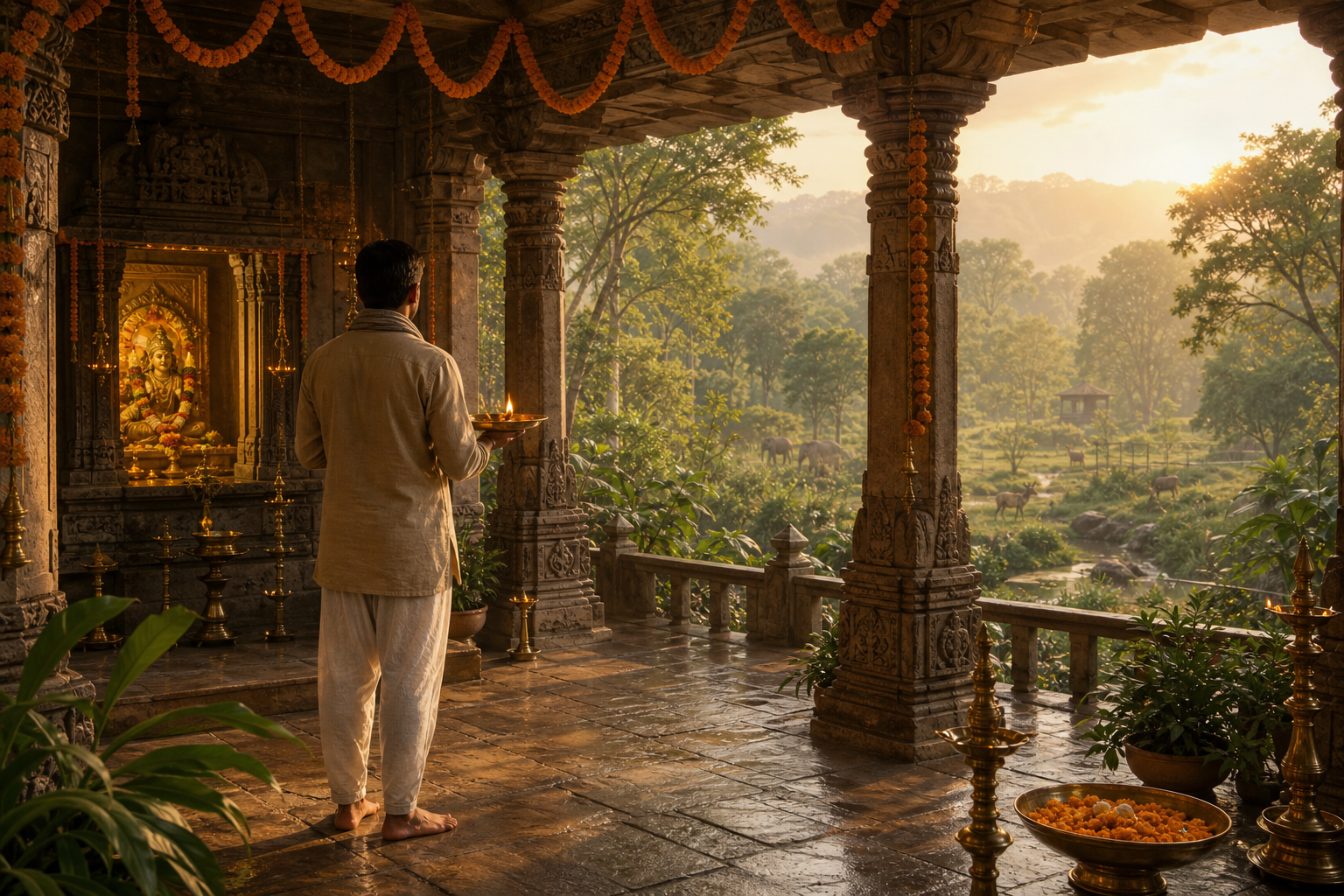
If you saw Lionel Messi standing barefoot with an aarti thali at Vantara, your question was probably simple: what exactly did he participate in, and how much meaning should Hindu readers attach to it?
The sound answer lies between dismissal and exaggeration. This was more than a celebrity passing through a picturesque temple, but it was not evidence that Messi had adopted a new faith. He entered a Hindu sacred setting as a guest, followed its forms respectfully, and encountered a vision in which worship, hospitality, and care for living beings belong together.
What Messi actually did at Vantara
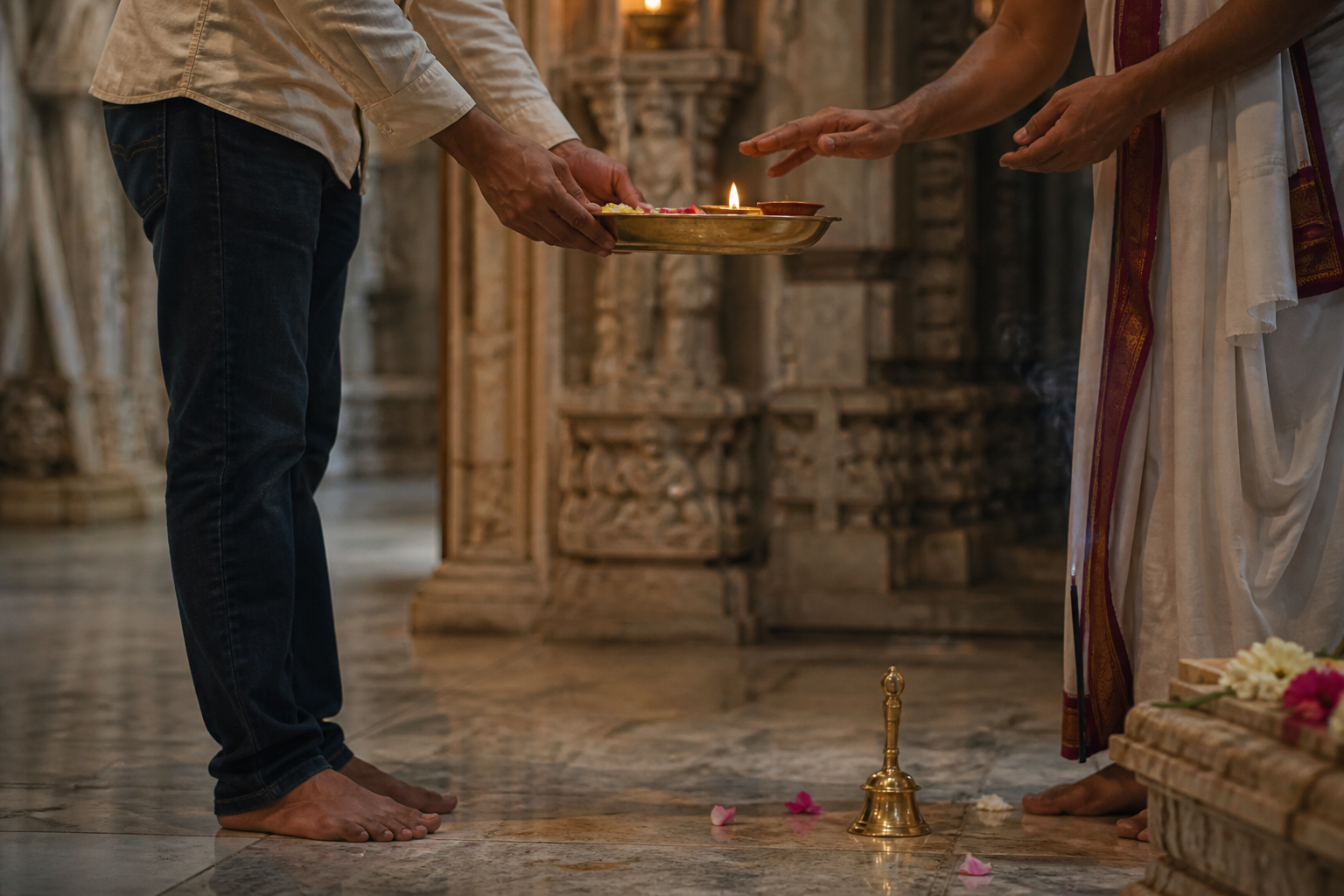
Messi stood barefoot inside the temple precinct, held a thali during aarti, and bowed his head before the shrine. Anant Ambani and Radhika Merchant accompanied him. Luis Suarez and Rodrigo De Paul also appeared with him in a group photograph amid temple bells and marigold decorations.
Those details matter because they establish conduct rather than speculation. Bare feet showed observance of temple etiquette. Holding the thali meant joining the ritual action rather than merely watching it from a distance. Bowing at the shrine was a recognisable gesture of reverence. You can accurately describe Messi as a respectful participant in the ceremony without making claims about his private convictions.
Vantara said the programme also included Nariyal Utsarg and Matka Phod, presented as rites of goodwill and auspicious beginning. The Maha Aarti incorporated Ambe Mata Puja, Ganesh Puja, Hanuman Puja, and Shiv Abhishek, with prayers directed towards peace and unity.
The invocation ‘Jai Mata Di’ belongs naturally to this Mata-centred devotional setting. It should be understood first as praise of the Divine Mother, not repackaged as a celebrity catchphrase. A famous guest can amplify a sacred expression, but fame does not supply its meaning. The meaning comes from the tradition in which it is uttered.
Participation is not the same as conversion
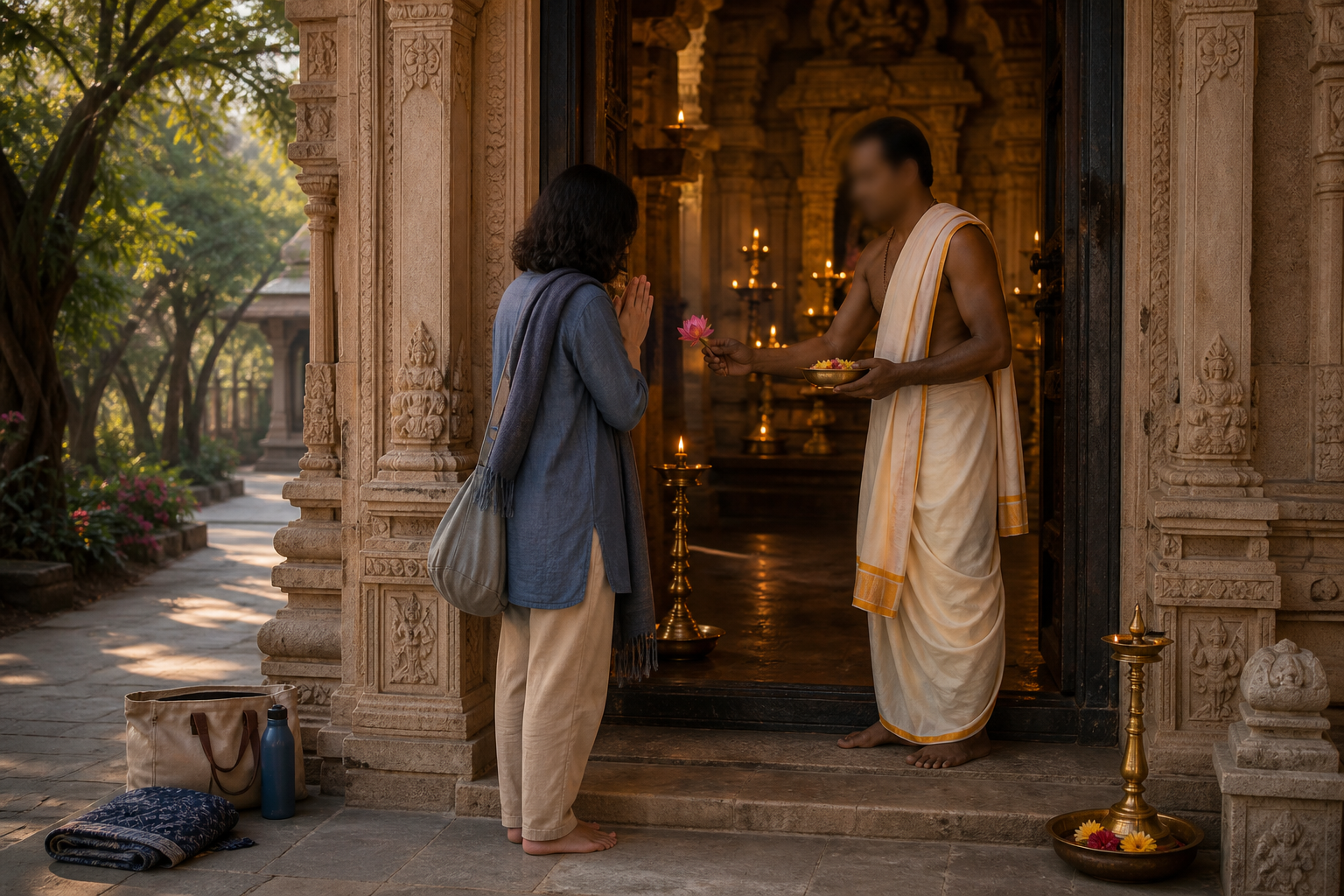
Aarti is an act of worship in which light is offered before the deity. A visitor who receives the thali and follows the host’s direction is therefore doing something more substantial than posing beside temple architecture. The action communicates humility and willingness to honour the sacred conventions of the place.
That still does not justify turning the visit into a declaration of religious allegiance. A useful way to read any public figure’s temple appearance is to distinguish three levels:
- Presence: the guest enters the sacred space or observes a ceremony.
- Participation: the guest follows ritual actions such as removing footwear, folding the hands, bowing, or joining aarti.
- Profession: the guest explicitly identifies with the beliefs or religious community represented by the ritual.
Messi’s conduct clearly reached the second level. Nothing supplied about the visit establishes the third. Keeping that boundary intact does not diminish the occasion. It protects the credibility of Hindu commentary and respects Messi by not assigning him convictions he did not publicly state.
This distinction also answers a common concern about whether an outsider may take part in Hindu worship. Respectful participation need not require pretending that every guest already shares every theological commitment. Sanatana Dharma has long made room for different temperaments, paths, and degrees of understanding. Hospitality can invite a person into a sacred action without demanding that the encounter be inflated into a conversion narrative.
The conservation setting was central, not incidental
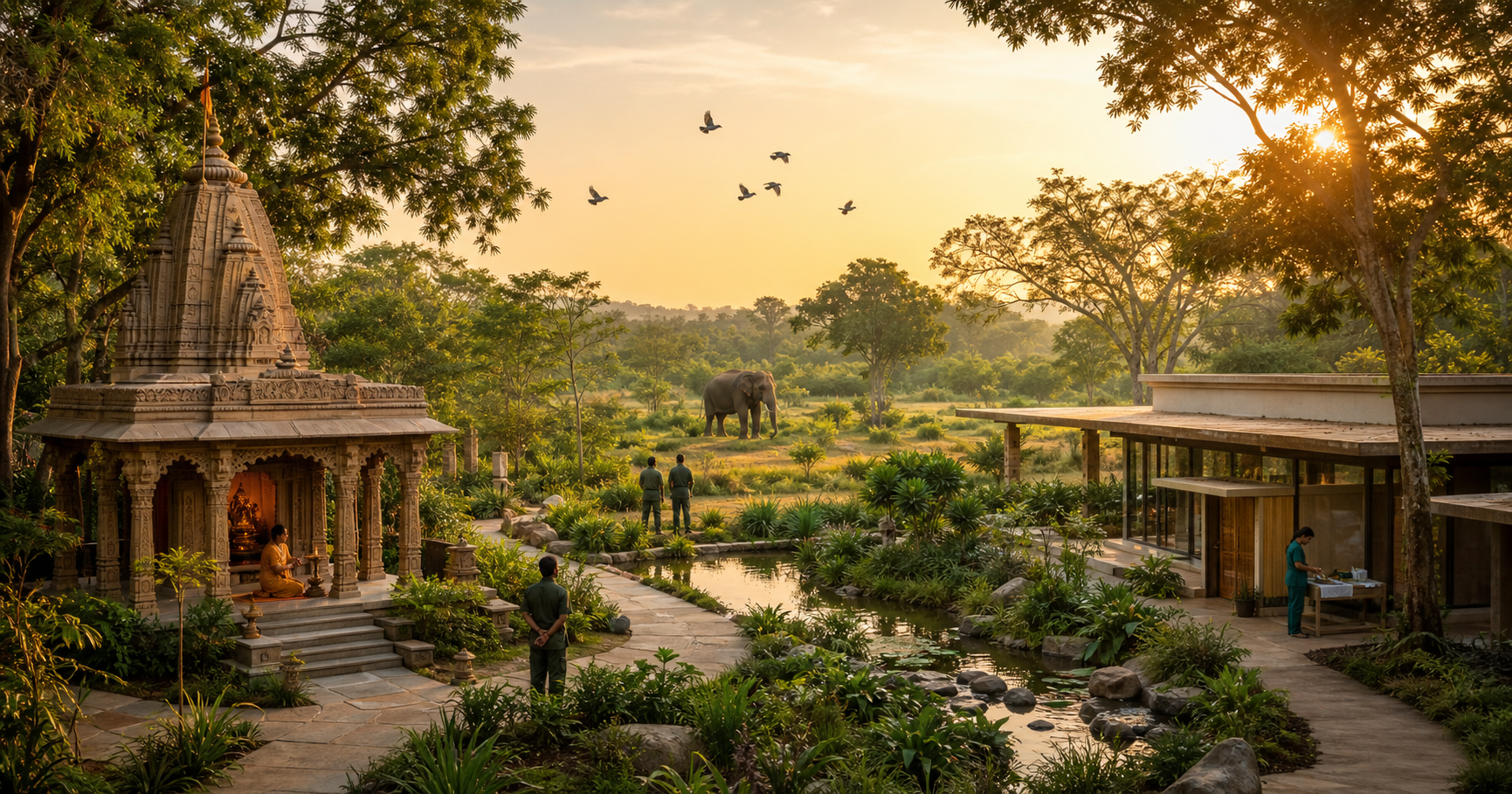
The ceremony took place at Vantara, a wildlife rescue, rehabilitation, and conservation centre in Jamnagar, Gujarat. Messi did not encounter the temple as an isolated heritage display. He also observed wildlife and interacted with caregivers and conservation teams.
Vantara said Messi expressed alignment with its vision of compassionate, science-driven animal care. That is the organiser’s description of the encounter, not an independent assessment of the centre’s performance. The defensible conclusion is narrower and more useful: the visit placed Hindu ritual beside an institutional commitment to animal welfare, making compassion for living beings part of the public meaning of the day.
This pairing challenges two shallow assumptions at once. The first treats temple practice as detached from the condition of the world outside the shrine. The second assumes that science-led conservation and Sanatana Dharma must inhabit separate moral worlds. At Vantara, ritual blessing marked the beginning of work involving animals, caregivers, and technical conservation teams. Worship supplied an ethical orientation; professional care supplied the practical response.
For a Dharmic reader, that is where the encounter becomes more than celebrity news. Ahimsa is not fulfilled by admiring the word while ignoring suffering. Seva is not complete as sentiment. Compassion becomes credible when it shapes how vulnerable beings are treated, how caregivers are supported, and how institutions organise their work.
Hinduism, Buddhism, Jainism, and Sikhism are not interchangeable traditions, and their teachings on life, duty, liberation, and non-violence should not be flattened into one theology. They nevertheless offer a recognisable ethical vocabulary of restraint, service, and regard for living beings. The Vantara setting made that vocabulary visible through both puja and animal care.
What the visit reveals about Bharat’s cultural confidence
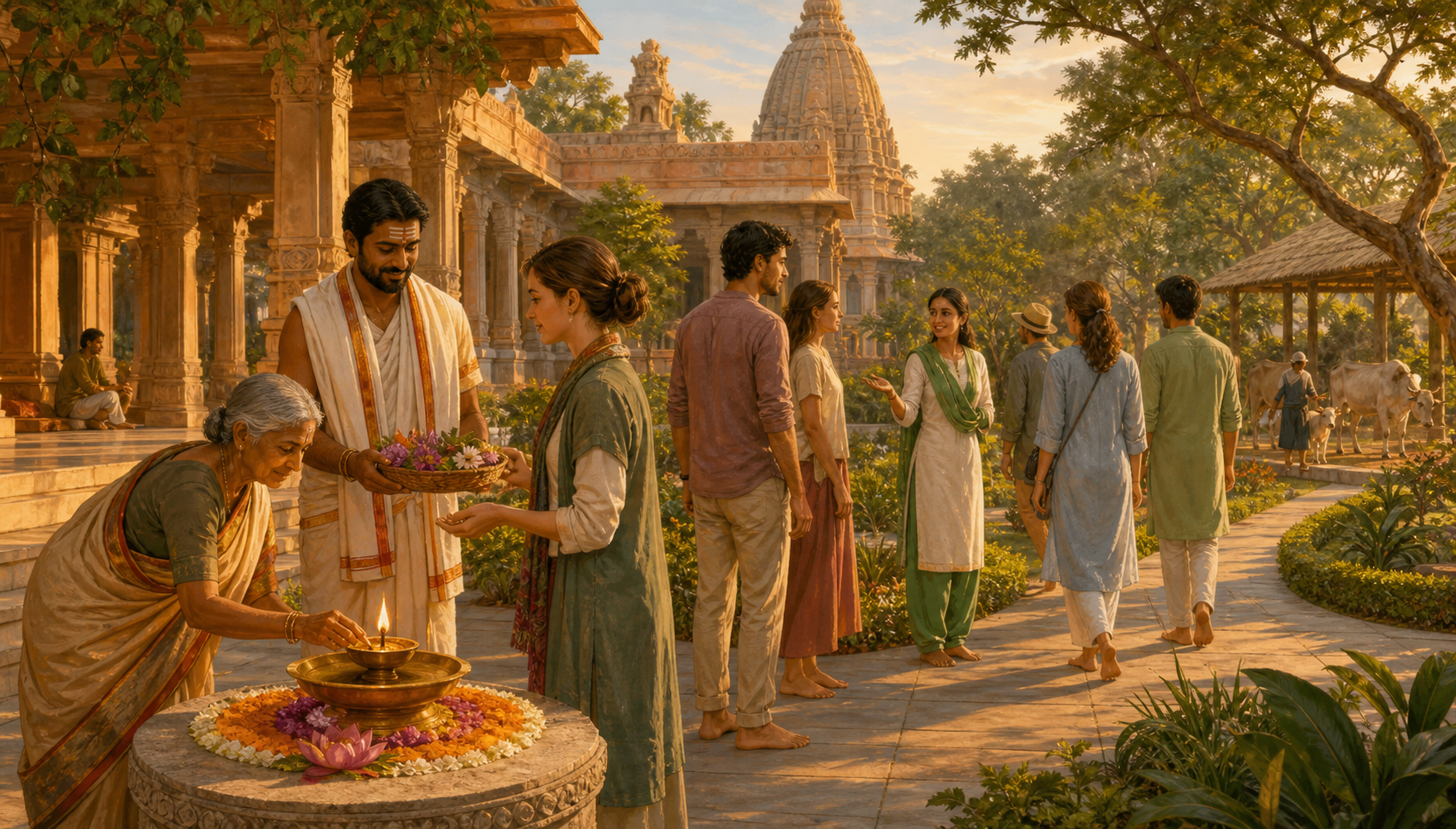
Messi’s global fame gave the occasion unusual reach, but Bharat does not need a football icon to certify the worth of aarti, Ambe Mata Puja, or Shiv Abhishek. The healthier reading runs in the other direction: a living tradition was confident enough to receive a famous foreign guest on its own terms. The temple did not have to conceal its deities, dilute its rites, or translate devotion into a generic wellness performance.
That is cultural soft power at its most credible. It works through attraction, hospitality, and memorable experience rather than coercion. A barefoot guest, a flame-bearing thali, temple bells, marigolds, and attention to rescued wildlife can communicate aspects of Bharat more effectively than an abstract slogan because the visitor encounters a practice still embedded in life.
You can evaluate similar celebrity visits with four questions:
- Was the guest welcomed into the practice? An invited participant is different from someone using a sacred space without permission or context.
- Did the guest follow the setting’s norms? Footwear, posture, handling of ritual objects, and attention to the hosts reveal more than a publicity caption does.
- Was the tradition presented as a living practice? Worship should not be reduced to costume, decoration, or an exotic background.
- Are public claims proportionate to what happened? Participation can demonstrate respect; it cannot by itself prove belief, endorsement, or conversion.
Messi’s visit meets the first three tests strongly. He was hosted by Anant Ambani and Radhika Merchant, observed temple etiquette, and joined recognisably Hindu rites within an active Dharmic setting. The fourth test is now for commentators and social-media users. The event deserves attention without acquiring invented theological or political claims.
That discipline matters for Hindu cultural advocacy. Exaggerated praise may produce a few triumphant headlines, but it weakens trust when the claim outruns the facts. Accurate language is more durable: a globally recognised athlete respectfully participated in Hindu ritual and encountered a conservation mission framed through compassion, service, and prayer for collective well-being.
Key takeaways
- Messi did not merely tour the temple. He stood barefoot, held an aarti thali, bowed at the shrine, and joined ceremonies hosted by Anant Ambani and Radhika Merchant.
- His conduct supports describing the visit as sincere ritual participation, but it does not establish conversion or a public profession of Hindu belief.
- The Maha Aarti included worship associated with Ambe Mata, Ganesh, Hanuman, and Shiva, and was offered with an emphasis on peace and unity.
- Vantara’s wildlife work gave the ceremony an ethical setting in which devotion, ahimsa, seva, and professional animal care could be seen together.
- The strongest expression of Bharat’s soft power is not foreign approval. It is the confident, undiluted practice of its traditions combined with gracious hospitality.
- When sharing the visit, describe observable actions precisely and resist assigning private beliefs to the guest.
The next time a famous visitor enters a temple, look past both the celebrity excitement and the reflexive cynicism. Notice whether the sacred space retains its integrity, whether the guest behaves with humility, and whether the encounter directs attention towards a Dharmic responsibility beyond the photograph. At Vantara, that responsibility was care for life. That is the part worth carrying forward.
References
