
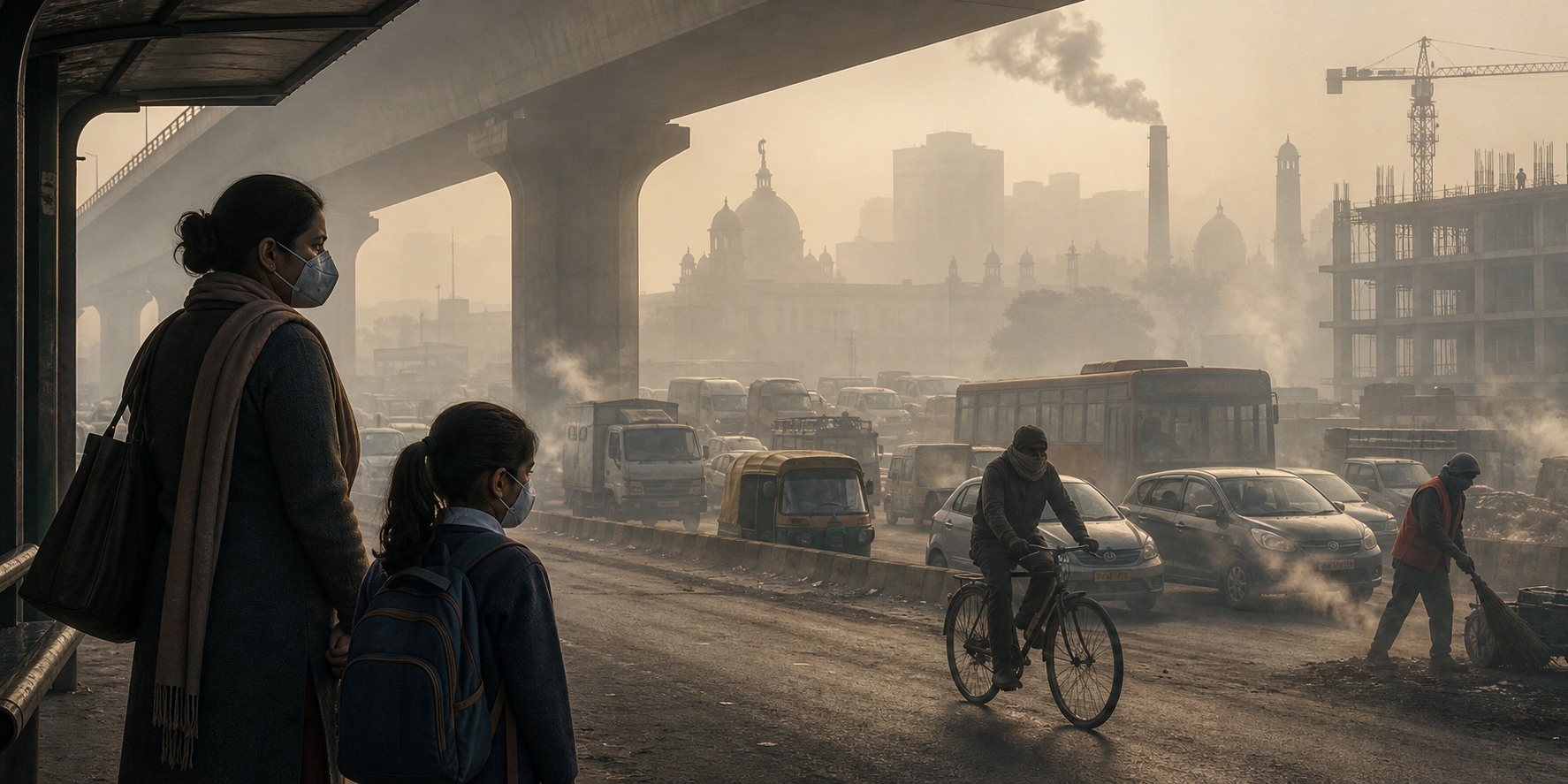
You check Delhi’s air quality before sending a child to school, commuting across the city, or asking an outdoor worker to finish a shift. The immediate question is personal: what should you change today? The harder question is civic: why does the same emergency return after so many restrictions, warnings, and official plans?
You need an answer to both. Use the AQI to reduce exposure when the air is dangerous, but judge the government by what happens between smog episodes. Delhi will not breathe safely through household precautions alone.
Key takeaways
- AQI is a health decision tool, not a diagnosis and not an explanation of where pollution came from. Use it to adjust outdoor activity and follow the accompanying risk guidance.
- Children, older people, pregnant women, outdoor workers, and people with respiratory or cardiovascular conditions need particular protection during severe pollution.
- Winter weather traps pollution, but it does not create the emissions. Lasting improvement requires action on transport, dust, power, industry, waste burning, biomass burning, and crop residue.
- Emergency restrictions can reduce an immediate spike. They cannot replace year-round enforcement, public transport investment, clean energy, waste services, and farmer-supported residue management.
- Public accountability should identify the responsible agency, deadline, funding, compliance result, and measured air-quality outcome for every major intervention.
- Ahimsa, Karuna, and Seva call for personal restraint and public duty. Citizens should reduce avoidable pollution, while governments and major polluters carry responsibilities proportionate to their power and impact.
Read the air correctly: emissions cause the crisis, weather concentrates it
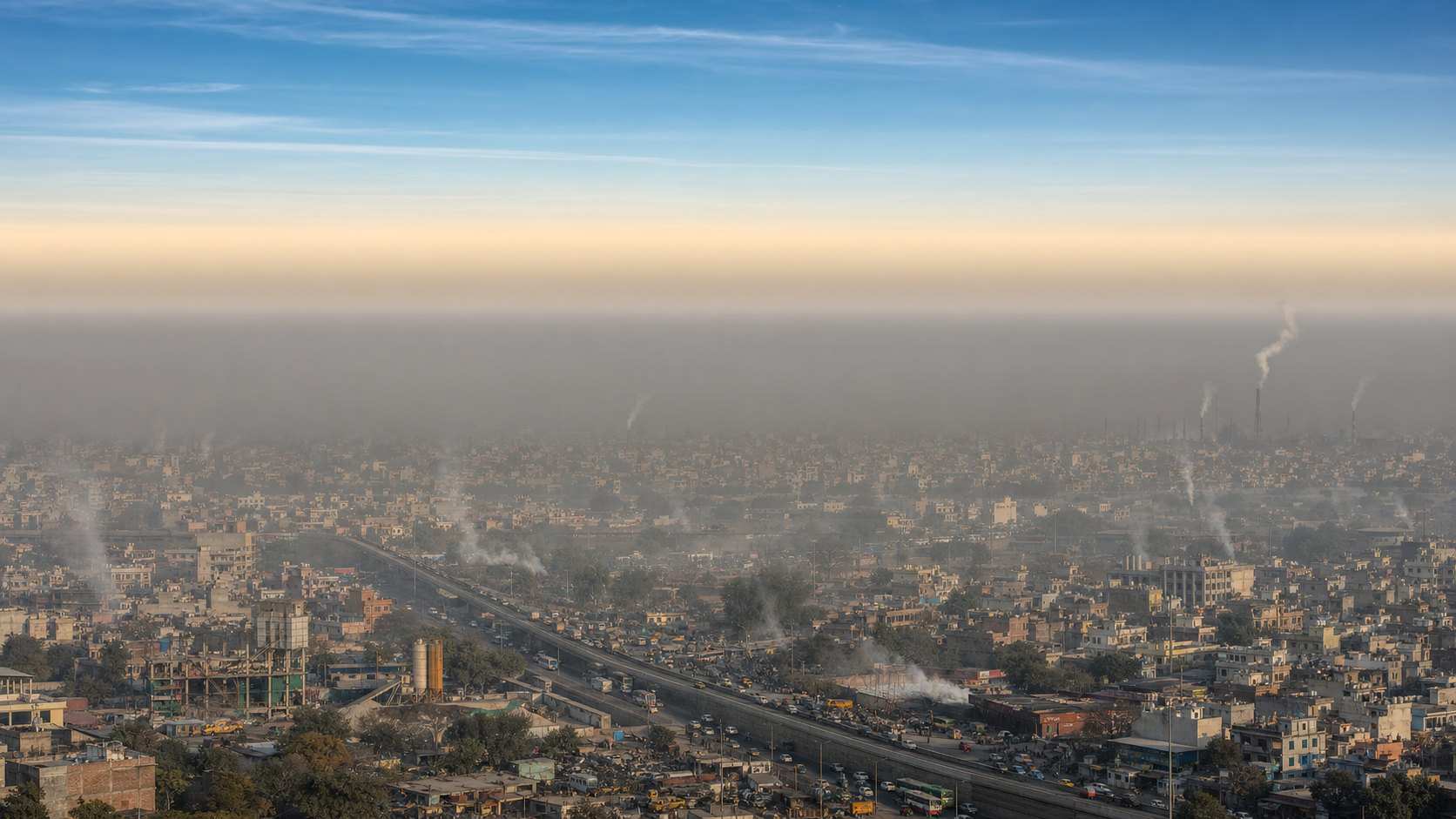
Delhi’s winter smog is often reduced to a contest over which source deserves the blame. That framing is politically convenient and practically useless. The air contains pollution from vehicles, construction dust, coal-based power, waste and biomass burning, and seasonal crop-residue smoke. Their relative contribution can vary by location, time, and weather, so a slogan about one culprit cannot substitute for current source-apportionment data.
Temperature inversions and weak winds explain why the danger becomes especially visible in winter. Normally, warmer air near the ground can rise and help disperse pollutants. During an inversion, a layer of warmer air above cooler surface air suppresses that movement. Weak winds provide little horizontal dispersion. Emissions that might have spread through a larger volume of air remain concentrated near the people breathing them.
This distinction matters whenever an official blames the weather. Weather can amplify the concentration and prolong exposure, but changing wind is not an emissions policy. A spell of clearer air after winds strengthen does not prove that vehicles, furnaces, construction sites, power facilities, or burning practices became cleaner. It may only mean the same pollution dispersed more quickly.
Geography matters too. Air moves across Delhi, Haryana, Punjab, Uttar Pradesh, and the wider Indo-Gangetic region without stopping at an administrative border. Delhi can enforce local construction rules and improve its own transport system, but it cannot independently manage every upwind source. Conversely, regional pollution cannot excuse failures within the capital. The correct unit of planning is the airshed; the correct unit of accountability remains each agency and jurisdiction responsible for a controllable source.
When you hear a confident claim that one source explains the entire crisis, ask three questions: Which season and geography does the claim cover? Is it based on an updated source-apportionment assessment? What happens to the remaining sources if that one source is controlled? If those answers are missing, you are hearing a blame strategy rather than a clean-air strategy.
Use AQI to make safer daily decisions without mistaking it for a cure
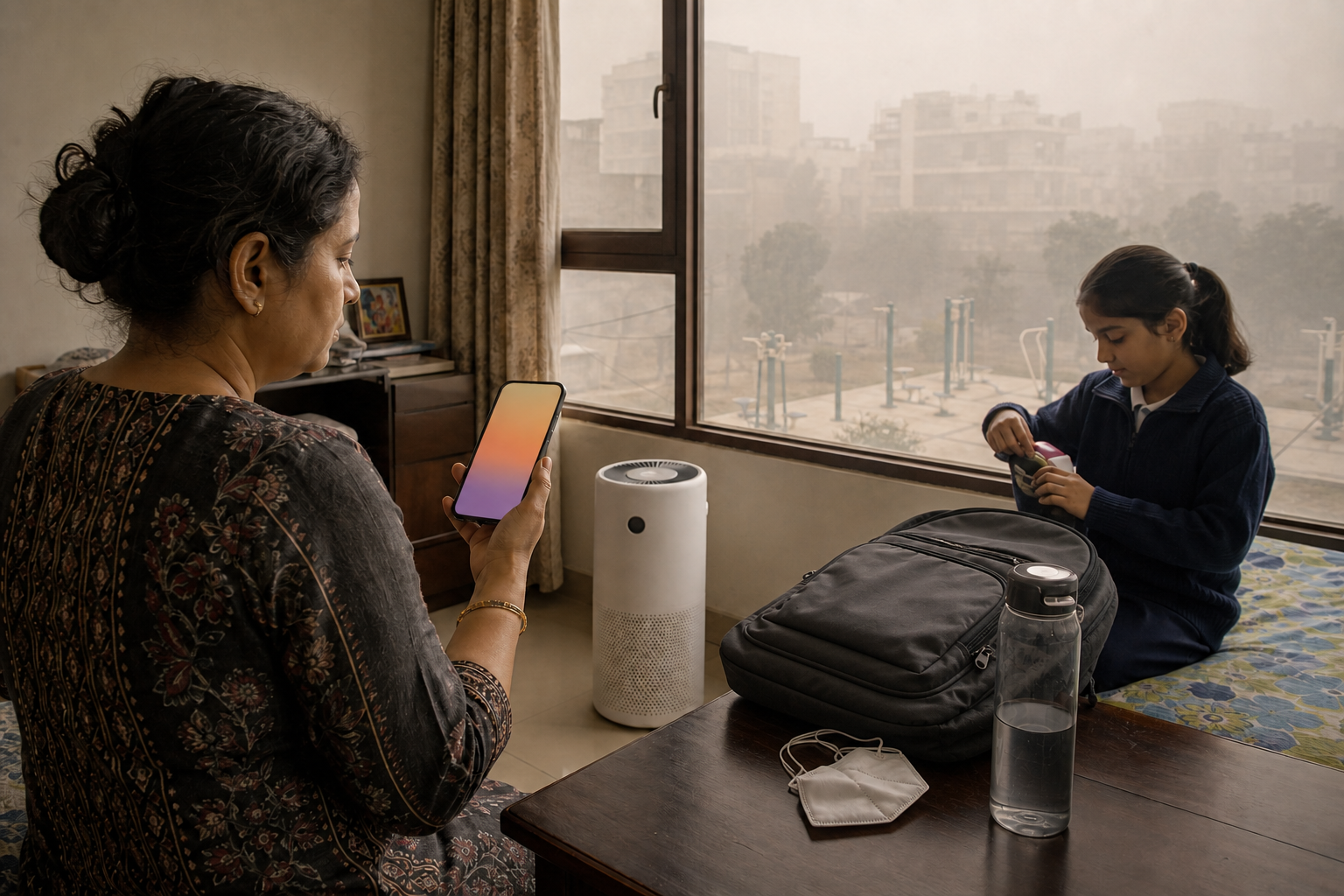
AQI converts monitored pollution into a risk signal that is easier to use than several separate pollutant readings. It can help you decide whether to move strenuous activity indoors, alter a commute, or activate a school or workplace health protocol. It cannot identify the source of that day’s pollution, measure every person’s individual dose, or explain a symptom.
Exposure depends on more than the number displayed on a phone. Concentration matters, but so do time outdoors and breathing intensity. A long run, construction shift, traffic-duty assignment, or sports session can produce more exposure than a brief essential trip under the same ambient conditions. That is why the practical response is not simply “indoors” or “outdoors.” Reduce the longest and most strenuous avoidable exposure first.
PM2.5 and nitrogen dioxide exposure is associated with respiratory distress, aggravated asthma, cardiovascular strain, and eye and throat irritation. Children, older people, pregnant women, outdoor workers, and people whose health is already vulnerable do not carry equal risk. A uniform rule for every student, employee, or family member can therefore fail the people who need the most protection.
Build a simple routine before the next severe episode:
- Check a real-time AQI dashboard and its health guidance before the school run, commute, exercise session, or outdoor shift. Do not rely on visibility or smell; neither is a dependable exposure measure.
- Identify activities that can be moved, shortened, or shifted indoors. Start with strenuous exercise and long, discretionary outdoor periods rather than essential brief travel.
- Ask a school, sports programme, or workplace what condition triggers modified outdoor activity and who makes the decision. A protocol written before the emergency is less likely to be improvised after exposure has already occurred.
- Pay special attention to anyone with asthma, cardiovascular disease, pregnancy, advanced age, or recurring pollution-related symptoms. Follow their clinician’s existing care plan rather than substituting general internet advice.
- Seek medical guidance when symptoms are new, persistent, or worsening. Severe breathing difficulty or chest pain can be urgent and should not be explained away as “just pollution.”
These steps reduce avoidable exposure; they do not make hazardous ambient air safe. Nor should families be made responsible for solving a structural environmental failure through private purchases. Clean air in a schoolyard, on a footpath, or at a worksite is a public-health obligation.
Judge clean-air policy by the system it builds between winters
Emergency measures such as vehicle restrictions, temporary bans, and graded response alerts have a legitimate but limited role. When pollution is already severe, authorities need powers that can slow additional emissions. The accountability failure begins when an emergency instrument is presented as the whole policy.
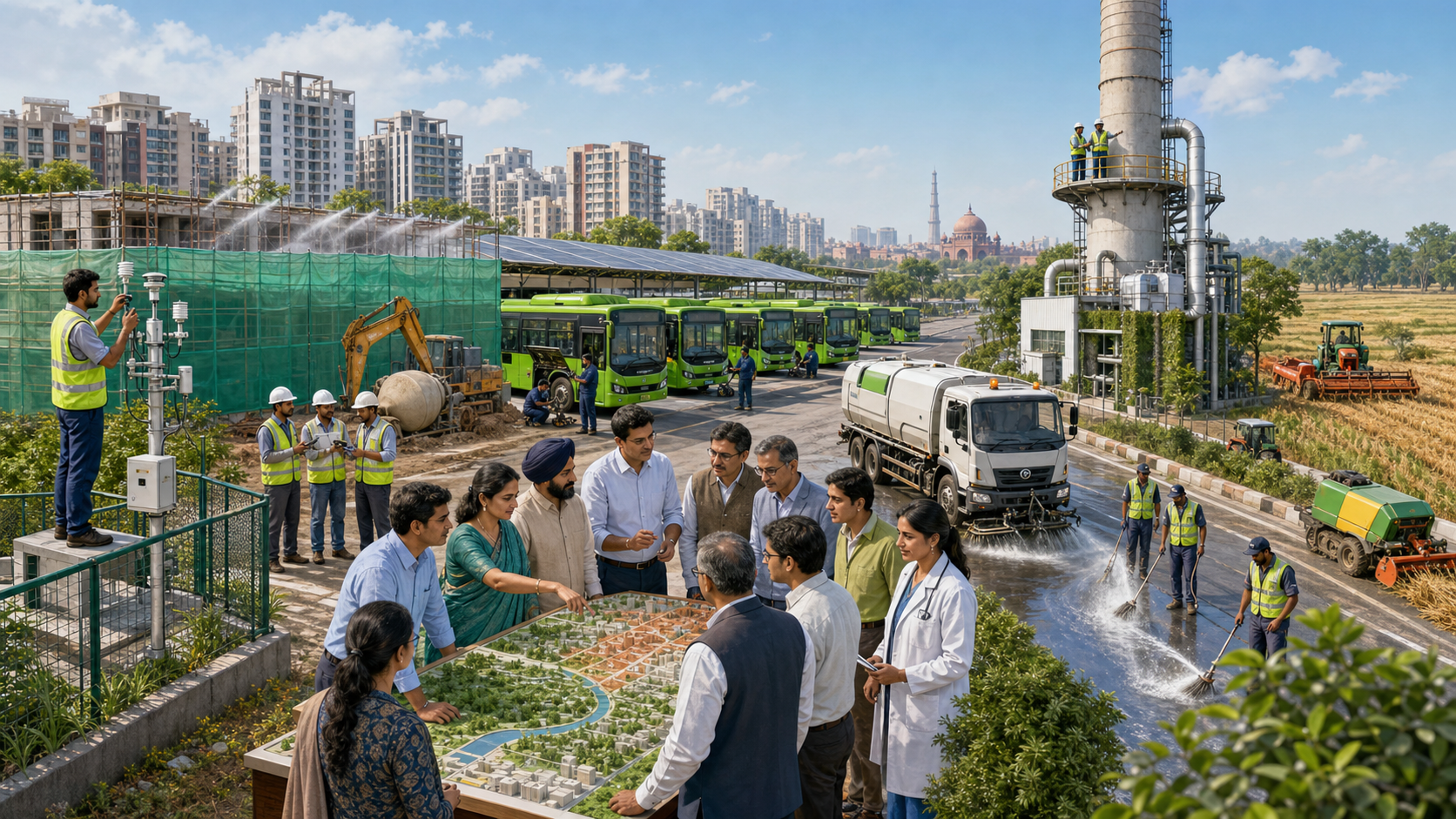
A durable programme must operate throughout the year across four connected portfolios.
Transport that makes the cleaner choice workable
Vehicle controls will remain fragile if commuters have no dependable alternative. Bus-fleet electrification, adequate service, and last-mile connections need to move together. Parking reform and congestion pricing can discourage unnecessary private vehicle use, but they should be paired with public transport that people can realistically use for work, caregiving, and education. Otherwise, a restriction shifts inconvenience without creating a stable mobility transition.
Dust, waste, and burning controls that function every day
Construction rules matter only when sites control dust consistently and inspectors verify compliance. Road-dust suppression works better when paved shoulders and sound maintenance prevent dust from being regenerated. Open waste burning cannot be ended by warnings alone if collection and disposal services are unreliable. Enforcement and basic municipal capacity are two halves of the same intervention.
Industry, power, and buildings with verifiable compliance
Large point sources require continuous emissions monitoring and consequences when standards are breached. Clean energy transitions reduce the pollution burden at its origin, while building-efficiency standards reduce the energy demand that must be supplied. The central question is not whether a target was announced. It is whether monitoring remained operational, violations were acted upon, and emissions fell.
Crop-residue policy that works for farmers
Crop-residue burning is an economic and logistical problem as well as an enforcement problem. A farmer facing a narrow turnaround between crops needs an affordable alternative at the right time. In-situ decomposition, ex-situ procurement, transport logistics, farmer incentives, and dependable biomass-to-energy markets are complementary tools. Threatening penalties without making those systems function transfers the burden to people who may lack a viable route to compliance.
This is where airshed governance becomes concrete. Delhi, neighbouring states, and central regulators need common objectives, compatible data, and named responsibilities. Coordination must not mean blurred accountability. Each task still needs an owner, a deadline, stable funding, and a public result.
Demand a public scoreboard that separates activity from results

Governments often report actions because actions are easier to count than outcomes: meetings held, notices issued, bans announced, equipment purchased. None of those facts alone tells you whether exposure fell. A credible clean-air dashboard should connect what an agency did to what changed.
For every major measure, ask for five layers of information:
- Responsibility: Name the lead agency, cooperating jurisdictions, and official accountable for delivery.
- Commitment: Publish the deadline, geographic scope, intended pollution source, and expected mechanism of reduction.
- Resources: Show the approved budget, money released, money spent, and operational capacity created.
- Compliance: Report inspections, monitored facilities or sites, violations found, corrective action, and enforcement outcomes. Raw notice counts are insufficient if the public cannot see whether compliance followed.
- Outcome: Publish comparable trends for relevant pollutants, regular source-apportionment updates, and aggregate public-health indicators that can show whether the intervention is working.
The sequence prevents a common accountability trick. If pollution falls because winds strengthen, an agency should not automatically claim policy success. If pollution remains high, officials should not automatically claim that every intervention failed; conditions may have worsened while a measure prevented an even larger increase. Independent oversight is needed to test those claims against emissions data, meteorology, implementation records, and source patterns.
Public data should also be usable. Residents need clear AQI risk guidance, not merely coloured charts. Parents need school protocols that specify who acts and when. Researchers and citizen-monitoring groups need accessible data that can expose gaps or faulty monitors. Communities near construction, traffic corridors, waste burning, or industrial sources need a visible route for reporting a violation and tracking its resolution.
The Polluter Pays principle supplies the moral and administrative baseline: the cost of preventing and remedying pollution should not be shifted entirely to families breathing it. Stable clean-air funding is still necessary, especially for public transport, municipal services, monitoring, and farmer support. But public money should not become a substitute for enforcing obligations on major emitters.
Make shared dharma a standard for action, not a substitute for policy
Delhi’s air crisis touches a moral vocabulary shared across Dharmic traditions. Ahimsa in Hindu and Jain thought directs us away from preventable harm. Karuna in Buddhism asks us to notice suffering and respond to it. Seva in Sikh tradition turns concern into service. Breathing is universal, so protecting the conditions of life cannot be confined to one community.
That shared ethic does not mean equal blame. An individual commuter, a farmer under time and cost pressure, a large industrial emitter, and a government regulator do not possess equal power. Duty should follow capacity, authority, and contribution to harm. Citizens can choose public transport or carpooling where workable, avoid open burning, conserve energy, support farmer-friendly residue systems, and care for community trees. Governments must provide infrastructure and enforce rules. Large polluters must monitor, disclose, prevent, and pay for the harm they are responsible for.
Urban greening has worthwhile air-quality and heat benefits when it is designed and maintained well, but planting ceremonies cannot replace emissions control. In the same way, personal sacrifice cannot compensate for weak waste services, inadequate public transport, unchecked construction dust, or non-compliant industry. Dharma becomes evasive when it asks only the less powerful to adjust.
Before the next smog episode, save a reliable AQI dashboard, obtain the health protocol from your school or workplace, and send your elected representatives a short demand for the public scoreboard described above. During the episode, follow the risk guidance and reduce avoidable exposure. When the sky clears, keep asking for implementation records. Clear weather is not the end of the emergency; it is the time when prevention work should be easiest to see.
References
