
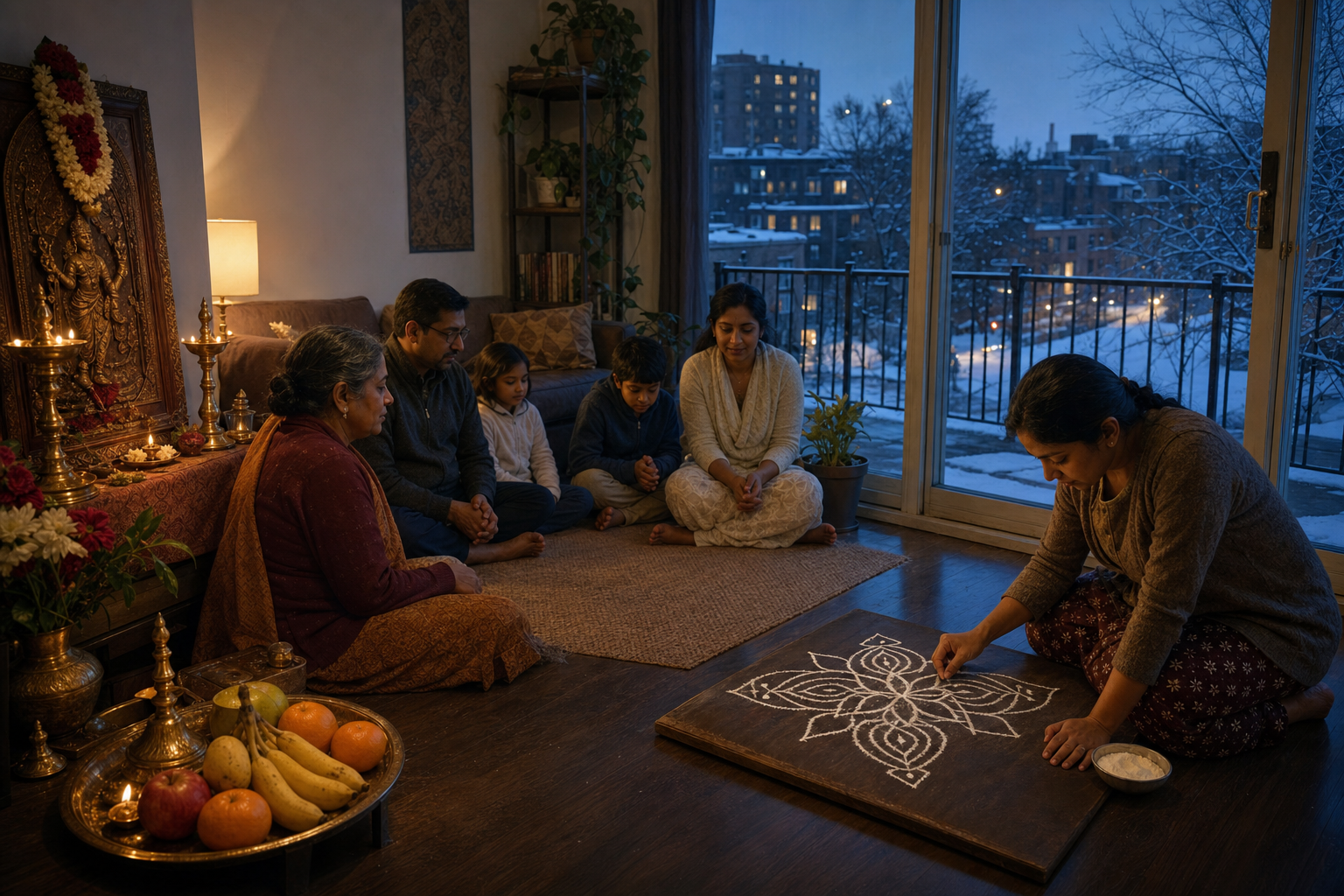
If you are trying to observe Margazhi outside Tamil Nadu, the hardest question is rarely what the month means. It is how to make that meaning visible in a life shaped by school mornings, shift work, apartment rules, unfamiliar weather, and a cultural calendar already crowded with Christmas and New Year.
You do not need to reproduce Chennai abroad. You need a practice that preserves Margazhi’s devotional centre while responding honestly to the place where you live. Dawn prayer, kolam, music, restraint, hospitality, and attention to nature can travel. Their local expression should be allowed to change.
The sacred calendar travels, but the season changes
Margazhi arrives during December and January, when the global civic calendar is dominated by year-end celebrations. The Bhagavad Gita, Chapter 10, Verse 35, places Margaśīrṣa among Krishna’s divine manifestations. Tamil traditions give that sanctity a distinctive daily form through pre-dawn devotion, Andal’s Tiruppavai, kolam, temple observances, music, and dance.
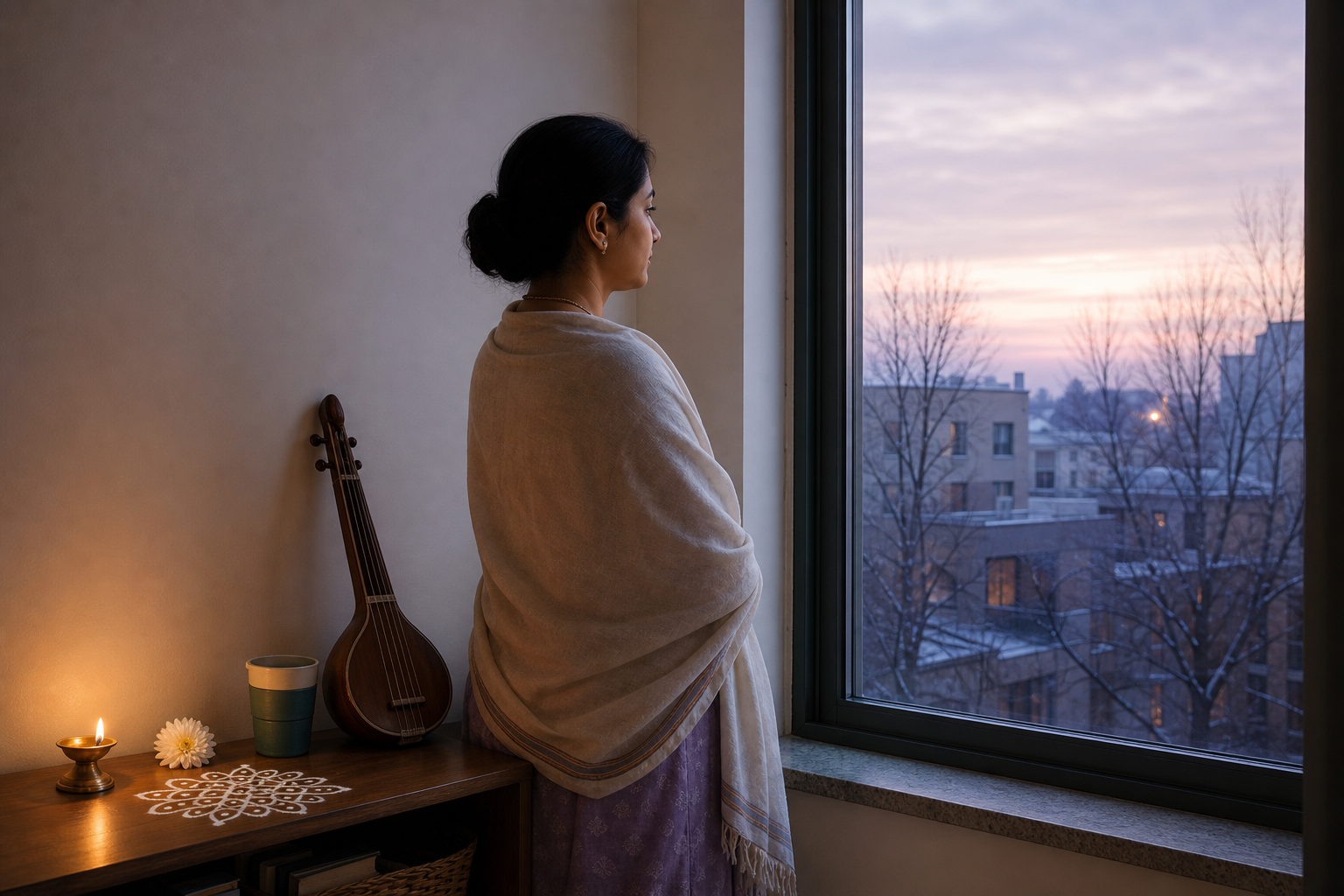
The Tamil calendar remains the anchor wherever you live, but local ecology determines what you actually encounter. A family in a northern winter may experience darkness, cold, and a natural movement indoors. A family in the southern hemisphere meets Margazhi during summer. Pretending that both households inhabit the same physical season weakens the practice rather than protecting it.
Keep the calendar, but observe the world in front of you. If dawn is dark and severe, let the stillness support prayer. If dawn is bright and warm, notice that brightness instead of importing images of winter austerity. The spiritual task is attention, not climatic imitation.
It helps to separate what should remain stable from what may adapt:
- Keep the devotional orientation. Margazhi gives greater weight to sadhana, restraint, and recollection than to spectacle.
- Keep a recurring sacred time. Dawn has a special place, but a household that cannot gather before sunrise should protect the quietest workable part of its morning rather than abandon the month altogether.
- Keep a recognisable text or practice. Tiruppavai may be central in a Vaishnava home. A Shaiva household may organise its observance around its own prayer, meditation, and Arudra Darshanam.
- Adapt materials and settings. Your kolam medium, flowers, food, clothing, and venue can respond to local availability, weather, building rules, and household capacity.
- Adapt the language of explanation. Preserve Tamil where it carries prayer, poetry, or memory, but explain the meaning in the language your children and guests understand best.
Vaikuntha Ekadasi, Arudra Darshanam, and Pongal can serve as major anchors within the season. You do not need to turn every observance into a large event. Mark the days relevant to your sampradaya and family history, then give each one a clear purpose. A calendar full of obligations can conceal the very inwardness Margazhi is meant to cultivate.
Build a household rhythm small enough to repeat
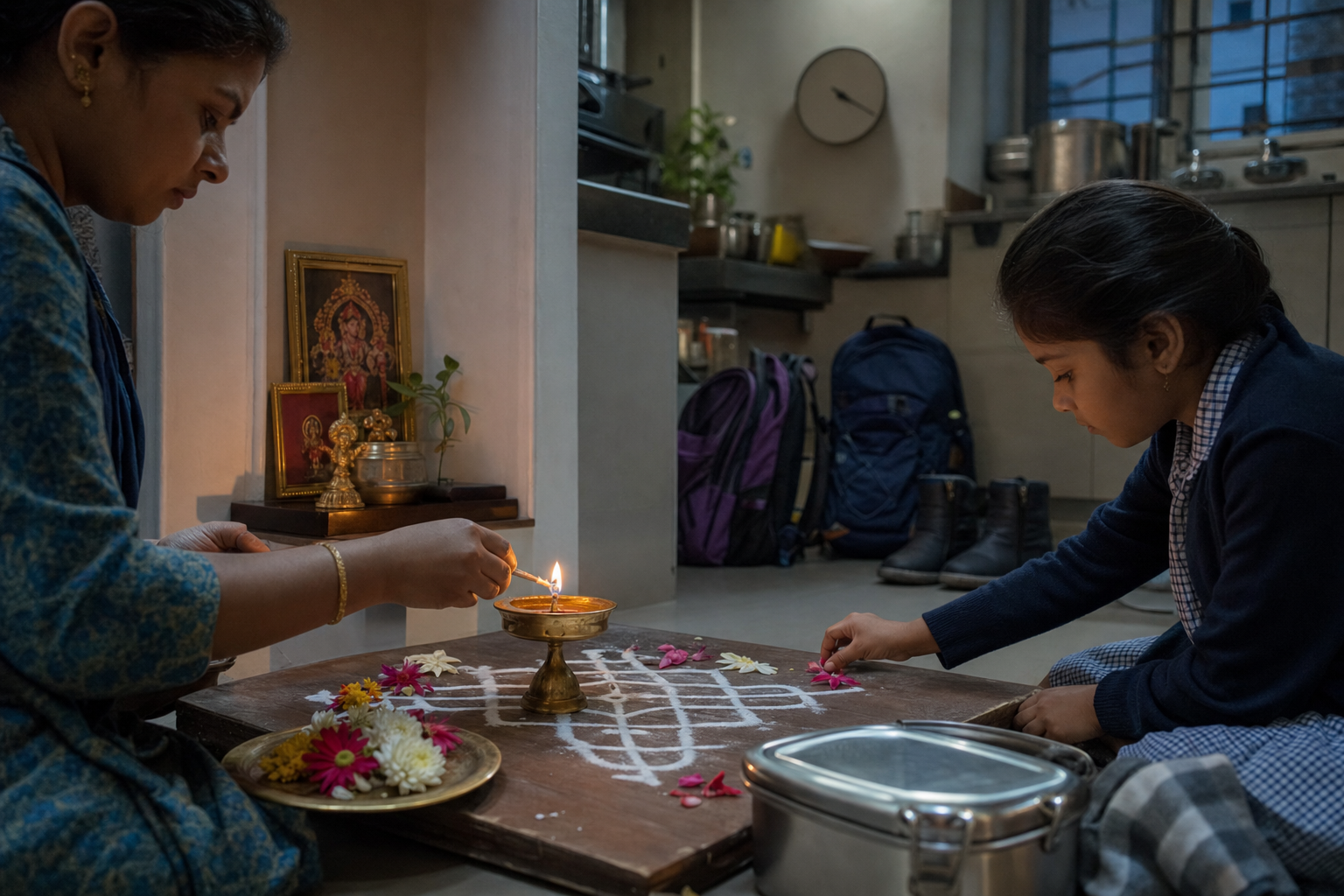
A sustainable Margazhi practice is made from recurring gestures, not a burst of enthusiasm followed by exhaustion. Choose a rhythm that can survive an ordinary weekday. The aim is to let the month alter how your household begins, crosses its threshold, receives beauty, and closes the day.
- Begin before the day’s noise takes over. Recite from Tiruppavai, chant a prayer belonging to your tradition, meditate, or sit in deliberate silence. If possible, keep phones and incoming messages outside this period.
- Mark the threshold. Make a kolam that suits your space. A doorway, balcony, or small board inside an apartment can carry the practice when a shared corridor cannot.
- Offer light at dusk. A diya at a home shrine creates a visible return point at the end of the day. Use it safely; the value lies in attentive offering, not in leaving a flame unattended.
- Give art a devotional place. Sing, play, dance, listen closely, or study the meaning of a composition. Art does not have to reach concert standard before it can become an offering.
- Notice the living world. Look at the sky, walk beneath trees, follow the movement of water, or sit outdoors without turning the encounter into another task to complete.
If pre-dawn practice is impossible because of work, caregiving, or household conflict, choose an honest alternative. Protect a quiet interval before normal activity begins. Do not call an elaborate weekend programme a substitute for daily attention if the weekdays remain untouched. A brief practice that returns is more formative than a grand observance that cannot be sustained.
Give every member of the household a real responsibility. One person may prepare the lamp, another choose the verse, another make the kolam, and another explain the day’s observance. Children should not encounter Margazhi only as an adult demand to wake early or perform correctly. Let them see what each act is for: the lamp gathers attention, the kolam welcomes the day, the hymn gives emotion a sacred language, and restraint makes room for awareness.
This is also where sectarian clarity helps. Margazhi can hold Shaiva and Vaishnava observances without forcing them into a featureless mixture. A family may honour Andal’s devotion while recognising that another household centres a different deity, text, or festival. Unity does not require the erasure of lineage.
Make ecological restraint part of the offering
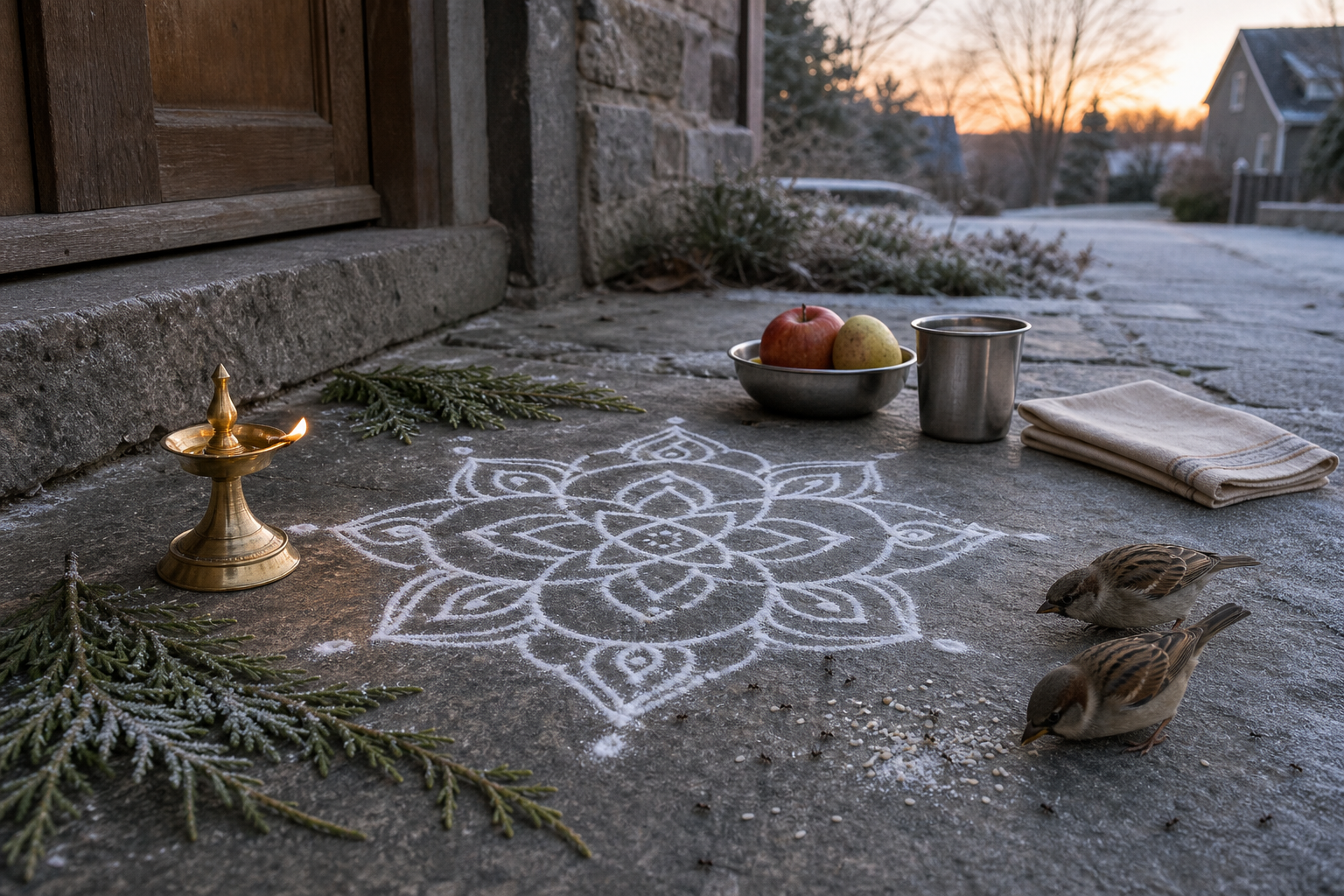
Ecology should not appear as decorative language about rivers, mountains, and flowers while the celebration itself produces avoidable waste. Margazhi’s austerity gives you a more demanding standard: use less, choose carefully, and treat the surrounding world as more than a backdrop for religious feeling.
Start with the materials already moving through your observance:
- Kolam: choose a simple, biodegradable, non-glittering medium appropriate to the surface. Follow building rules, keep material out of drains, and avoid leaving a corridor unsafe for neighbours.
- Lamps and shrine objects: reuse what you own. A small lamp and a modest altar can carry more devotional coherence than a new collection of seasonal decorations.
- Flowers, grains, and produce: offer manageable quantities. Prefer items you can later cook, eat, compost appropriately, or share instead of treating disposal as the inevitable end of worship.
- Community meals: a vegetarian menu can express hospitality, but it does not excuse trays of discarded food and single-use serving ware. Plan portions, provide a way to take leftovers home, and use reusable or borrowed vessels where the venue permits.
- Travel to programmes: coordinate journeys when practical. If every recital requires separate long-distance travel, the ecological intention of the season should include that choice rather than stopping at the shrine.
- Outdoor practice: carry everything back with you. Do not leave flowers, grain, incense, cloth, or ritual objects in a park, river, canyon, or forest merely because they were offered with sacred intent.
These choices are not a competition in ritual purity. An apartment household, a temple committee, and a travelling student face different constraints. The useful question is not whether your observance looks perfectly natural. Ask whether devotion has made you more attentive to consequence.
Nature can deepen that attention. A snow-covered peak may evoke Shiva, while a forceful river may bring Ma Ganga to mind. The recognition matters only if it changes your conduct. Approach the landscape without extracting souvenirs, leaving offerings, or treating risk as proof of faith. You do not need a dramatic journey. The sky above your street and the tree beside your building are sufficient places to practise reverent notice.
Do not force the local landscape to impersonate Bharat. Learn its seasons, weather, plants, and limits as they are. Diaspora dharma becomes rooted when remembrance of sacred geography in Bharat teaches care for the land presently supporting your life.
Let Tamil art transmit devotion, not only achievement
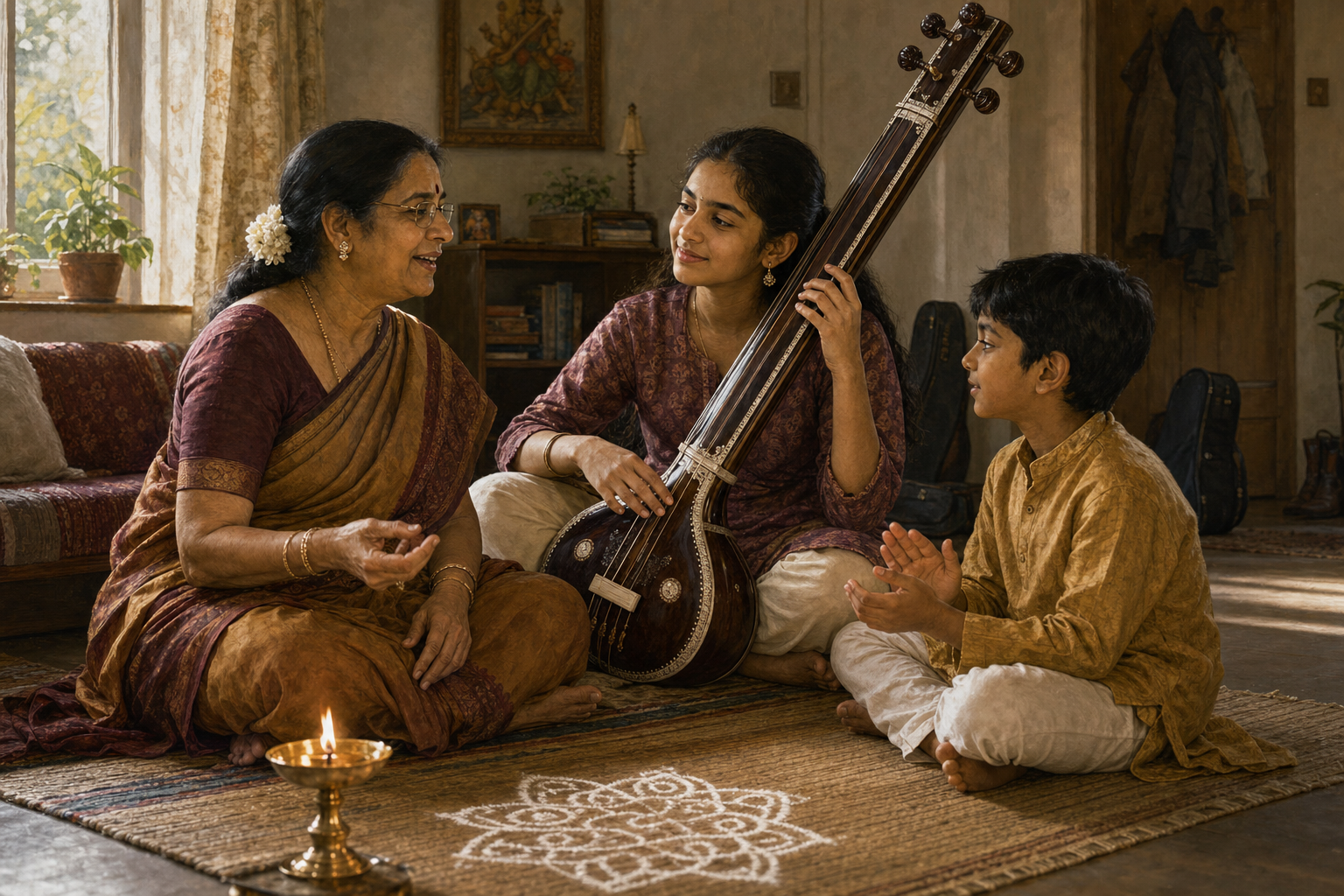
The Chennai Music Season and Margazhi festivals of music and dance have made artistic discipline inseparable from the public experience of the month. Diaspora communities have carried that energy into American cities, including Sacramento, where Carnatic music and Bharatanatyam programmes have become points of cultural gathering.
That achievement brings a practical danger. When every Margazhi activity becomes a recital, audition, costume deadline, or display of family accomplishment, art can crowd out the devotion that gave it purpose. Performance is not the problem. A programme becomes thin when the audience can admire technique without understanding what is being offered, to whom, or why this season matters.
Before planning a community event, ask three questions: Will a newcomer understand the devotional setting? Can someone who is not a trained performer participate meaningfully? Will the gathering include an act of shared attention rather than applause alone?
- Introduce the composition. Briefly identify its deity, emotional movement, or place in the observance. Do not bury the audience beneath technical vocabulary.
- Make language permeable. Present a Tamil verse or refrain, a readable transliteration, and a plain explanation. Translation does not diminish Tamil; it gives the next generation a doorway back into it.
- Include developing artists without turning them into symbols. Give learners an appropriate place to offer their work while preserving standards through teaching and rehearsal.
- Create roles beyond the stage. Kolam makers, cooks, readers, hosts, accompanists, elders, and those who prepare the shrine are participating in culture, not merely supporting the performers.
- Connect listening to practice. Follow a concert or dance presentation with a shared hymn, silence, lamp offering, or conversation about the devotional theme.
- Reduce event waste at the planning stage. Decide how food, flowers, programmes, decorations, transport, and cleanup will be handled before invitations go out.
The same clarity helps when welcoming Buddhist, Jain, Sikh, Christian, or non-religious relatives and friends. Dharmic traditions can resonate through silence, self-discipline, service, and ethical living without being declared identical. Explain what is distinctly Hindu and Tamil, name the lineage being practised, and let shared values create hospitality without flattening difference.
A meal can often do this work more naturally than a formal lecture. Vegetarian food, conversation, yoga, and meditation have created bridges across Hindu and Christian settings without requiring either side to abandon its identity. Invite guests to witness and participate where appropriate. Do not ask them to validate the tradition before you are willing to practise it confidently.
Choose the form of Margazhi your life can sustain
Your observance should answer the constraint actually in front of you. Start from your household’s capacity, then choose the practice that will make a real difference.
- If you are exhausted: protect a quiet morning recitation and a dusk lamp. Decline extra programming that would turn the month into another source of depletion.
- If you are raising children: give them rotating responsibilities and explain one idea at a time. Let repetition build familiarity before expecting fluency in every verse or ritual.
- If you are a musician or dancer: dedicate part of your practice as an offering, study the devotional meaning of what you perform, and resist measuring the season only through invitations or applause.
- If you organise community events: design for participation, explanation, accessibility, and cleanup from the beginning. A packed programme is not automatically a successful Margazhi gathering.
- If you are travelling: carry only what the journey safely permits. A small lamp where flames are allowed, a prayer, appropriate clothing, and a modest offering can establish continuity. Where fire or incense is prohibited, prayer and attention remain complete practices.
- If you feel culturally disconnected: begin with the same text, song, kolam pattern, or food across the month. Repetition creates a path into tradition more reliably than trying a different activity every day.
Before the month begins, complete this sentence with your household or community: During Margazhi, we will protect this time for devotion, practise this form of beauty, reduce this avoidable excess, and share this act with others. If the answer is too complicated to remember, simplify it.
Key takeaways
- Preserve Margazhi’s devotional rhythm while adapting its material form to your climate, schedule, and home.
- Choose recurring dawn, threshold, artistic, and dusk practices that can survive ordinary weekdays.
- Make ecological responsibility visible in materials, meals, transport, cleanup, and conduct outdoors.
- Use Tamil music, dance, poetry, and kolam to transmit meaning, not merely to display accomplishment.
- Welcome other communities through hospitality and shared ethical values while naming religious differences honestly.
- Measure success by steadier attention and more responsible conduct, not by the number or scale of events attended.
Mark the opening of Margazhi now. Choose the prayer, clear the place for the lamp, decide how you will make the threshold beautiful, and remove one form of excess from the plan. Your goal is not to stage Tamil Nadu somewhere else. It is to let a Tamil devotional season shape the life you are actually living.
References
