
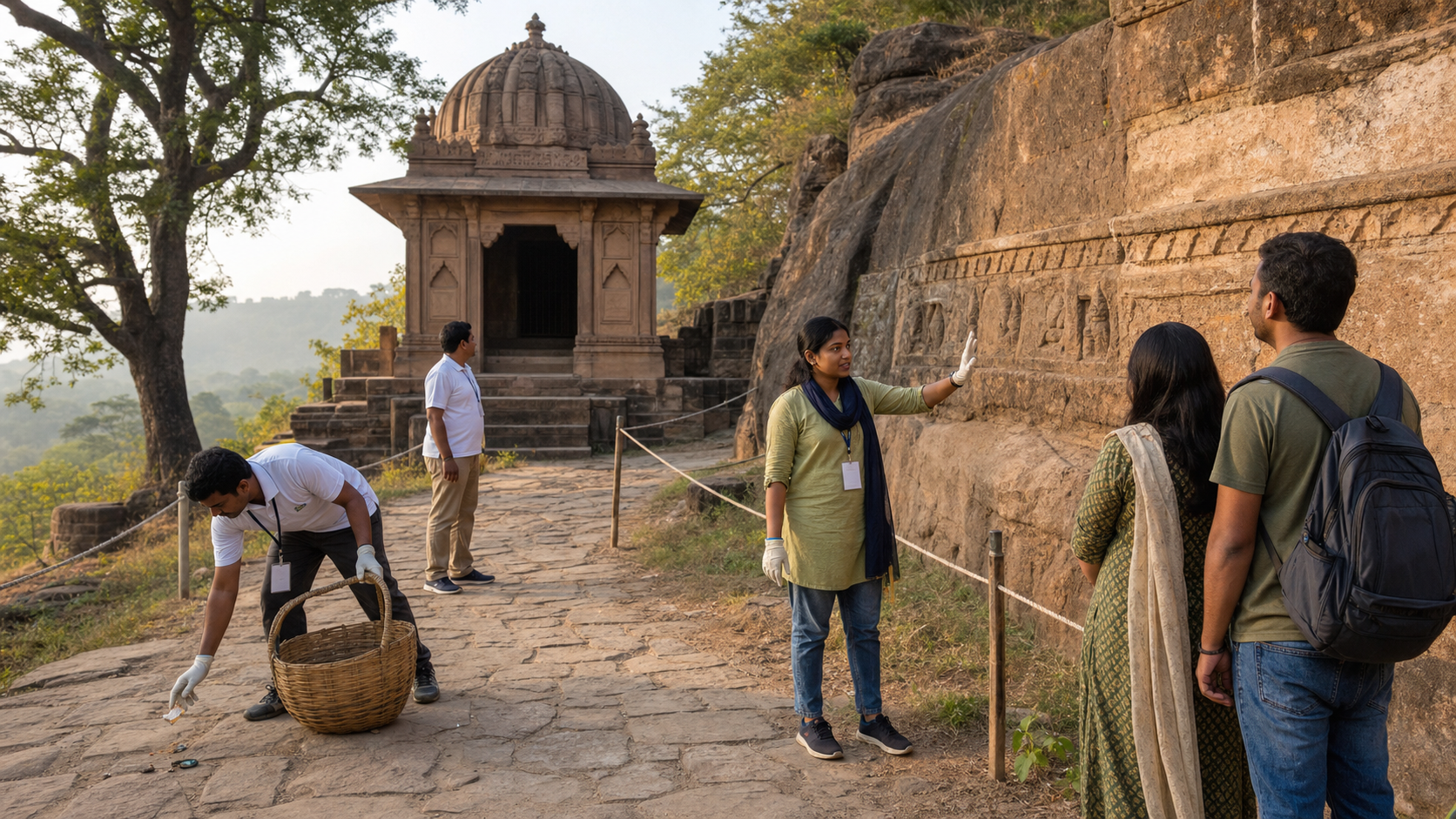
You arrive at a fort, temple precinct or memorial and find litter on the path, loud music near a sacred space, visitors climbing a fragile structure or someone preparing to leave graffiti. Walking away feels irresponsible. Starting an argument may put people and the place at greater risk.
You need a method between passivity and confrontation. Civic stewardship gives you that method: prevent avoidable harm, guide visitors clearly, escalate serious incidents through lawful channels and help people understand why the place matters. Dharma gives that work its inner discipline through seva, ahimsa, truthfulness and restraint.
Create a duty card before anyone stands guard
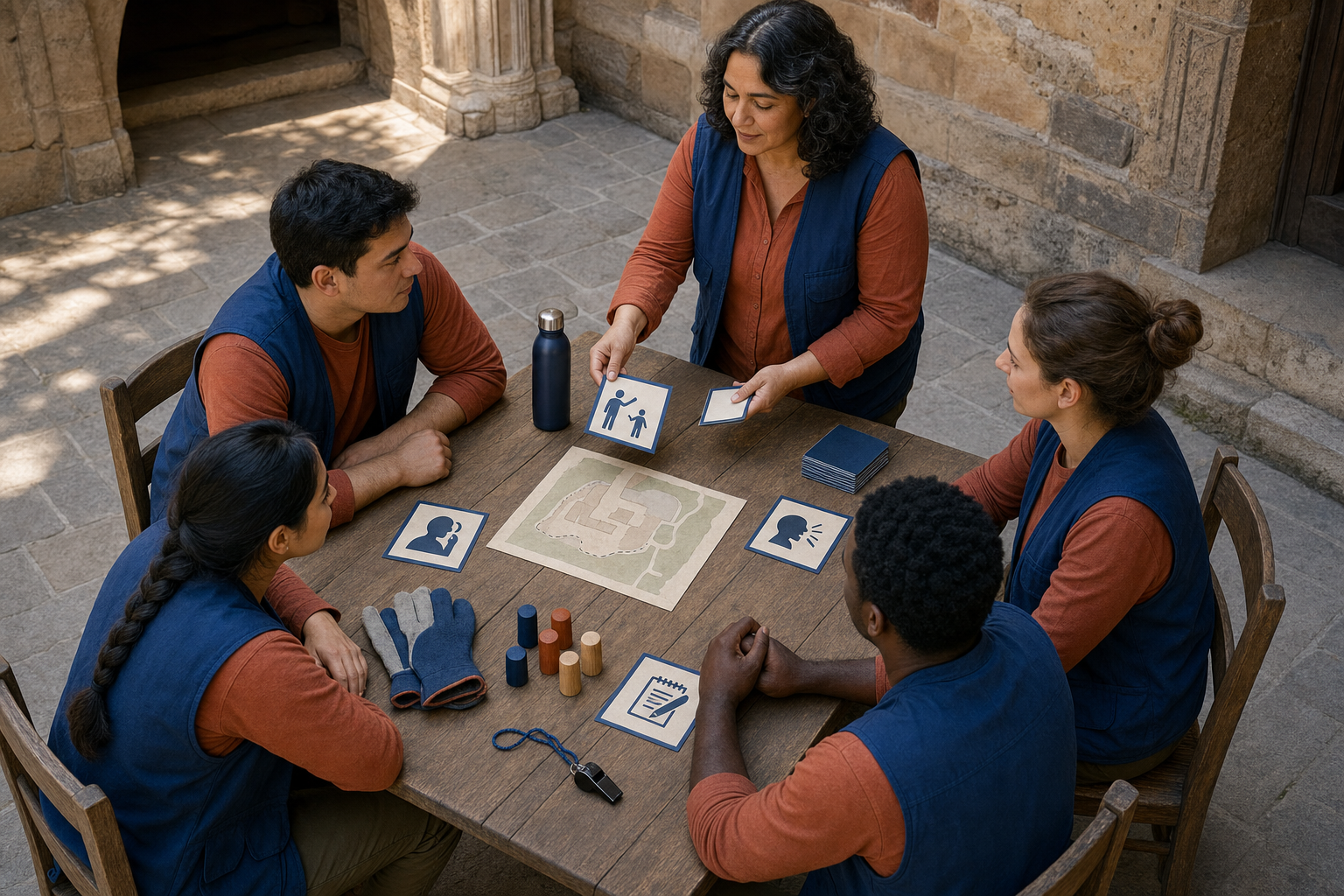
Concern for heritage is not yet an operating plan. A volunteer team needs a narrow purpose, defined authority and clear limits. Before going to the site, prepare a duty card and align it with the recognised custodian, site administration or relevant local authority.
- Scope: Name the entrance, trail, rampart, sacred area, memorial or other zone the team will cover.
- Priority conduct: Identify the behaviours volunteers will address, such as littering, defacement, substance misuse, unsafe trekking, loud music or entry into protected areas.
- Roles: Assign visitor guidance, observation, cleanliness, team leadership and liaison with authorised personnel.
- Boundaries: State what volunteers must not do, including physical enforcement, unauthorised repair work or entry into restricted structures.
- Escalation: Keep current contact details for the custodian, local administration and the appropriate emergency response.
- Handover: Decide where incidents, hazards and unresolved concerns will be recorded for the next team.
This preparation prevents a common failure: volunteers improvising different rules in front of visitors. It also protects the monument from well-meant interference. Do not repaint inscriptions, repair masonry, install fixtures, move historic objects or remove material from a structure without explicit permission. Good intentions do not convert an unauthorised alteration into conservation. If you notice damage, warn nearby visitors without touching the feature, record its location and report it.
Volunteer protection can operate at meaningful scale when its purpose is disciplined. Maharashtra’s Khada Pahara campaign coordinated vigilance across 243 forts while addressing defacement, waste, substance misuse and unsafe visitor conduct. The transferable lesson is not that every community needs a large campaign. It is that each team needs an agreed task before it needs more volunteers.
Put volunteers where misconduct can still be prevented
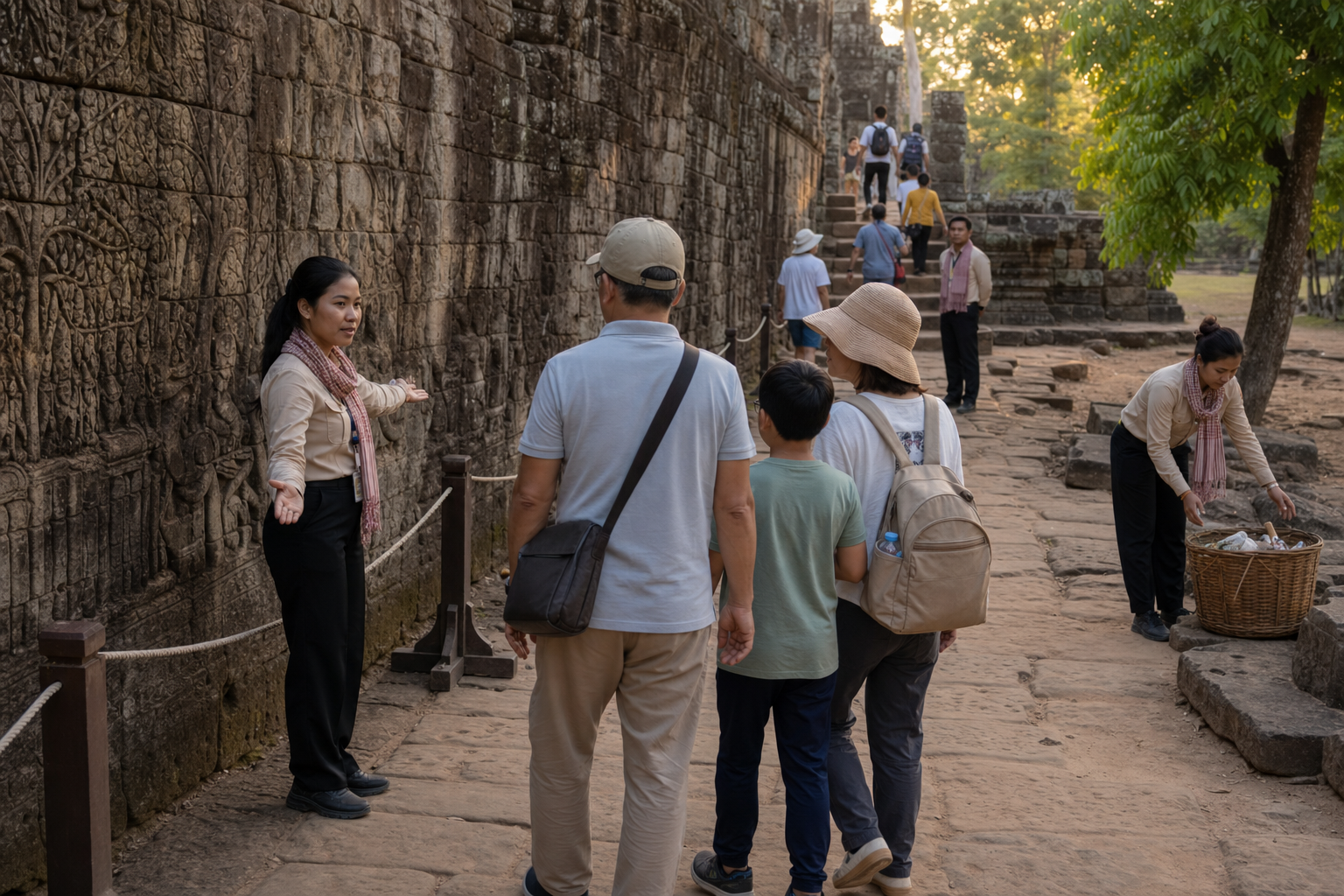
A reminder at the entrance is usually safer and more useful than an argument beside a steep rampart. Position people according to function: a welcoming presence at the approach, observers near vulnerable trails or structures, and a mobile team lead who can speak with authorised personnel. Volunteers near hazardous ground should remain within sight of a colleague and should never pursue a visitor into an unsafe area.
Your entrance message should be brief enough to remember and specific enough to follow. A usable version is: ‘Namaste. Please stay on the marked path, carry your waste out, do not write on or climb the structures, and keep audio off near sacred places and memorials. Ask us if you are unsure about the route.’
That wording does several jobs. It states the expected behaviour without assuming bad intent. It gives a reason for approaching the volunteer. It also treats the site as both a physical structure and a place of memory. A vague sign saying ‘Respect heritage’ cannot do the same work. Effective signs name the action: stay on the trail, leave the wall untouched, keep the protected zone clear, segregate waste where facilities exist, and observe silence where required.
The Khada Pahara model links entry guidance, trail discipline, cleanliness, first-aid readiness and coordination with authorities. Keep those functions connected. A volunteer who sees a dangerous route should be able to warn visitors and relay the hazard. A cleanliness team should be able to identify where waste repeatedly accumulates so that guidance can be moved upstream.
First-aid readiness must remain within the competence of the people present. A kit is not a substitute for training, and a volunteer should not attempt treatment beyond their ability. For a serious injury, unstable structure or immediate danger, protect yourself from the hazard, alert authorised responders and follow the site’s emergency protocol.
Use a calm escalation ladder instead of public confrontation
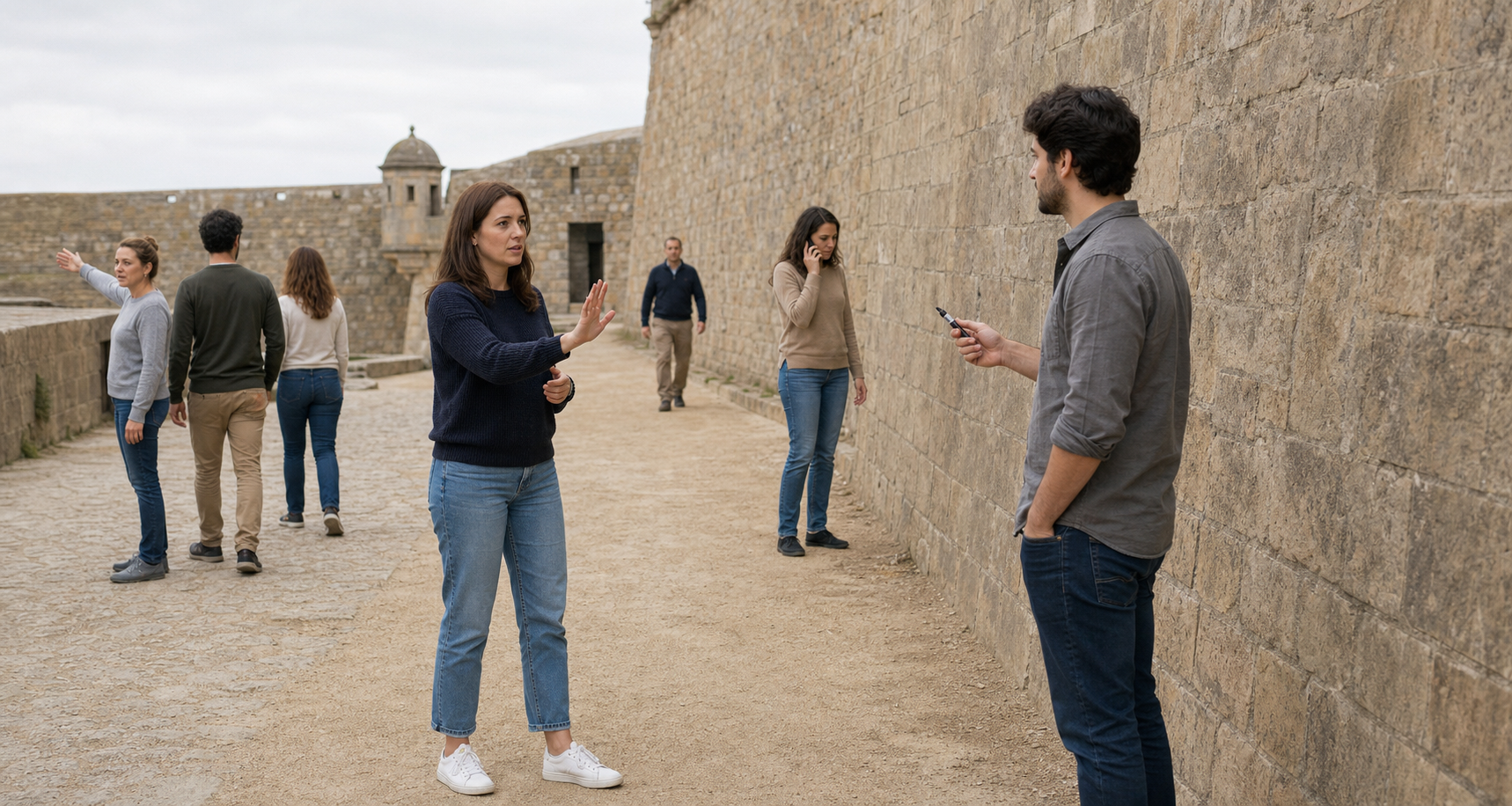
Most visitor problems do not need a dramatic response. They need consistency. Agree on an escalation ladder so that volunteers neither ignore misconduct nor turn a reminder into an unofficial punishment.
- Assess the setting. Notice the conduct, the condition of the surrounding structure, the terrain and whether anyone faces immediate danger.
- Give a courteous, specific reminder. Name the behaviour and the rule: ‘Please step back behind the marked boundary; this rampart is fragile.’
- Bring in the team lead. A second calm voice can prevent a disagreement from becoming personal.
- Refer persistent or serious conduct. Defacement, active damage, threats, substance misuse or refusal to leave a protected zone should go to the recognised authority for the site.
- Preserve a factual record. Note the location, observed conduct, action taken, person or office contacted and outcome.
Skip the intermediate steps when there is immediate danger to life or active structural damage. Do not chase, grab or physically block someone near an edge, on a steep path or on unstable masonry. Creating a fall risk in order to enforce a rule defeats the purpose of protection.
Good incident notes separate observation from motive. ‘A visitor crossed the marked barrier at the east rampart’ describes something observable. ‘A visitor came to insult our heritage’ assigns an intention that the volunteer cannot establish. If an authority requests photographs and local rules permit them, retain the original privately and send it through the agreed channel. Avoid accusatory social-media posts, edited clips and unverified claims.
Heritage protection becomes more credible when volunteers understand legal and digital literacy, administrative coordination and fact-based communication. These are not secondary skills. They prevent a manageable site incident from becoming misinformation, hostility or unnecessary legal exposure.
Let dharmic values govern the volunteers first
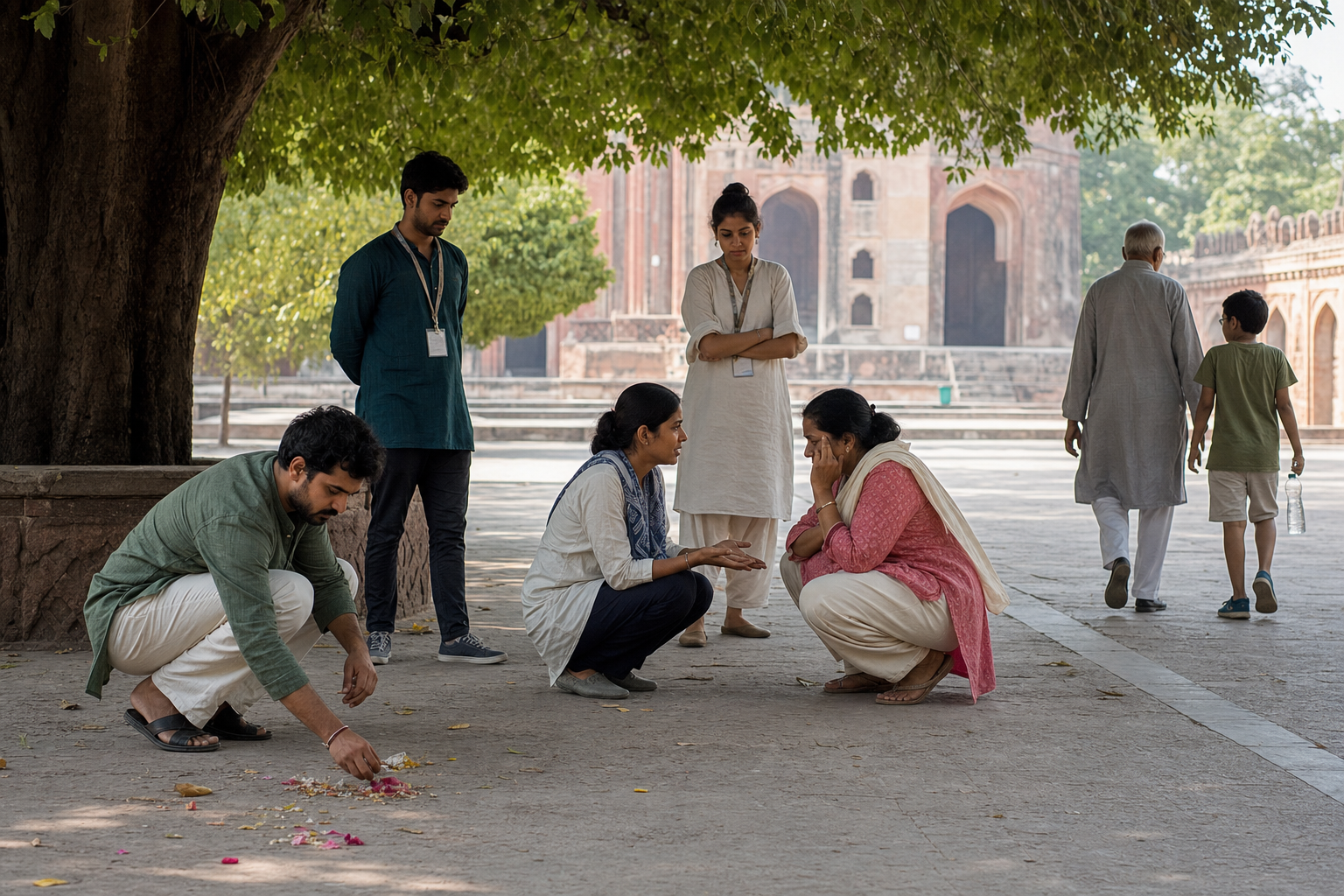
Dharmic language becomes empty if it is used only to correct other people. The volunteer must embody the discipline being requested from the visitor. That means no litter left by the team, no loud performance in a sacred zone, no careless climbing for photographs and no exaggeration when reporting an incident.
- Ahimsa: Prevent injury and damage while de-escalating conflict. A restrained intervention protects people as well as stone, soil and sacred space.
- Seva: Accept the unglamorous work – answering repeated questions, separating waste, checking a route, helping families understand the rules and completing the incident handover.
- Self-discipline: Follow the same boundaries you ask visitors to observe. Cultural authority weakens when volunteers claim exemptions for themselves.
- Truthfulness: Use verified site history and observable facts. Do not turn uncertain claims, forwarded images or rumours into heritage education.
- Pluralism: Welcome sincere participation without erasing the identity or history of the place. Shared service does not require forced sameness.
Hinduism, Buddhism, Jainism and Sikhism have distinct teachings, histories and institutions, yet ahimsa, seva, pluralism and civic responsibility can support cooperation across dharmic communities. That cooperation should have a visible purpose: a cleaner path, a protected memorial, safer visitor movement, accurate educational material or a calmer response to misunderstanding.
Respect for Hindu civilisational memory does not have to be diluted in order to welcome others. At Maharashtra’s forts, for example, the Maratha legacy associated with Chhatrapati Shivaji belongs in an accurate account of the place. Present that history with confidence and evidence. Do not turn the visitor desk into a test of political conformity or a debate with every passer-by.
If disagreement arises between communities, move it away from the vulnerable site and into a planned discussion with informed participants. The fort wall, temple approach or memorial platform is not an appropriate stage for an improvised ideological confrontation. On site, the immediate dharma is protection, safety and truthful guidance.
Key takeaways for a dependable heritage team
- Secure permission, current contacts and a clearly bounded role before deploying volunteers.
- Name the vulnerable zones and visitor behaviours your team is prepared to address.
- Place guidance before the hazard, especially at entrances, trail junctions and approaches to protected areas.
- Use courteous reminders, a team lead and authorised escalation rather than physical enforcement.
- Make ahimsa, seva, truthfulness and self-discipline standards for volunteers, not slogans aimed at visitors.
- Record observed facts, protect unverified material from public circulation and teach only history you can support.
A cleanup can improve the site for the moment. Continuity requires memory. After each outing, keep a simple log containing the site zone, observed problem, action taken, authority contacted and outcome. Review it before the next outing. Repeated confusion at the same junction may call for clearer directions. Repeated litter beyond the entrance may mean the waste reminder is arriving too late. Repeated unauthorised entry may require the custodian, rather than volunteers, to improve a barrier.
Education should also continue beyond crowded visiting periods. Families can connect prayer and ethics with care for a real place. Study circles can examine verified local history. Youth volunteers can maintain route information, prepare factual visitor notes, organise service activity and learn how to distinguish evidence from viral claims. These family practices, study circles, heritage education efforts and youth leadership roles turn cultural confidence into an everyday capacity.
Choose a site you can return to. Ask its custodian which recurring behaviour causes the most harm, agree on what volunteers may lawfully do and build your next outing around that defined task. Heritage is protected when devotion becomes dependable public conduct.
References
- Hindu Jagruti Samiti – Khada Pahara Vigil: Safeguarding 243 Maharashtra Forts and India’s Shared Heritage
- Hindu Jagruti Samiti – Rabgaon Sabha Calls for Powerful Dharmic Unity to Safeguard Heritage and Social Harmony
