
If you are planning Magh observances for 2026, the first difficulty is not deciding what to do. It is deciding which calendar to follow. A North Indian calendar begins Magh more than a fortnight before the Marathi, Gujarati, Telugu, and Kannada calendars do, yet both reckonings are valid.
Choose your household or temple tradition first. Then you can place the vrata dates, daily sadhana, Saraswati worship, charity, and concluding observances without mixing two different month systems.
Choose the Magh calendar your family actually follows
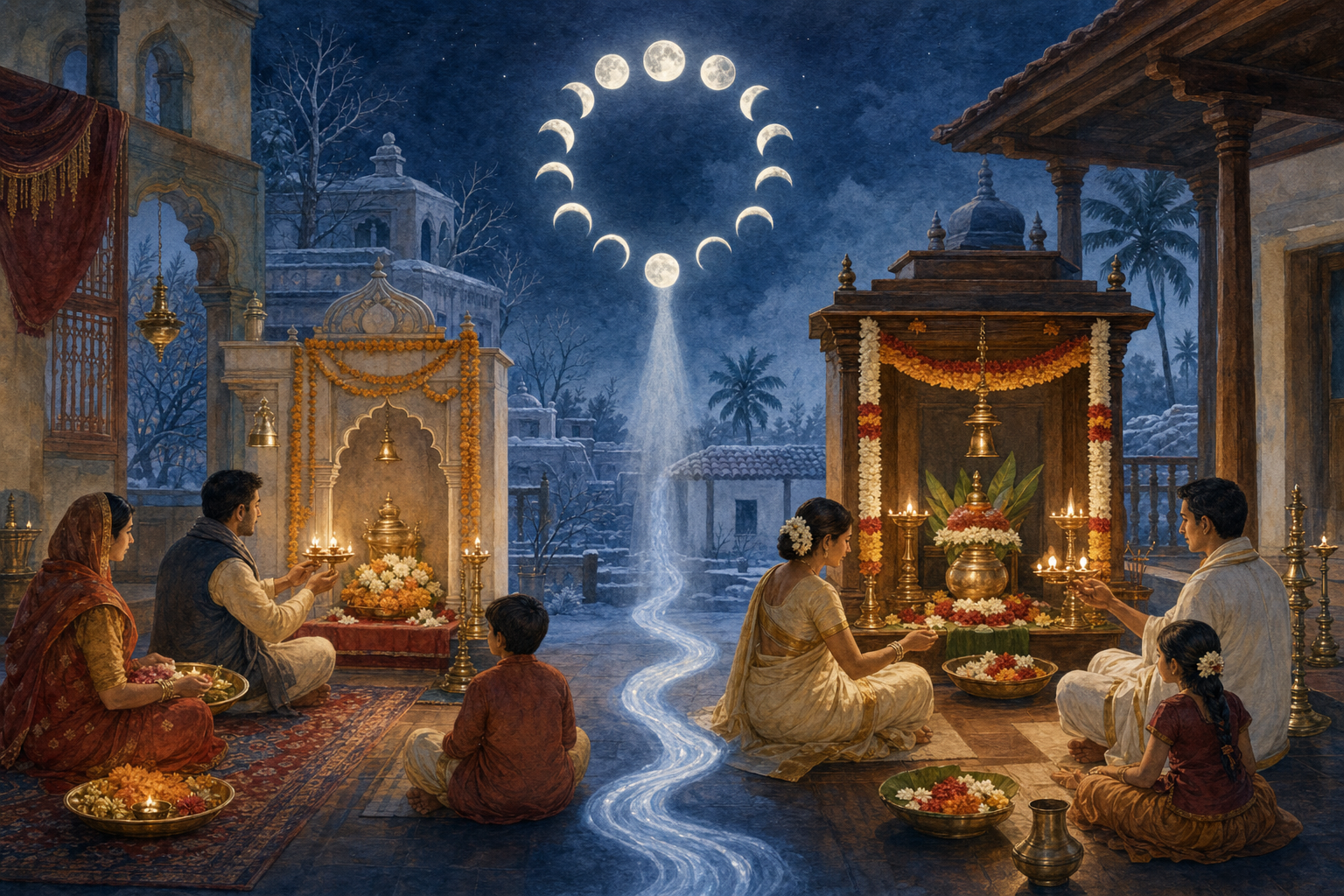
Magh is the eleventh month of the Hindu calendar, but its civil-date boundaries depend on how a region names lunar months. The Purnimanta system counts the month from one full moon cycle to the next. The Amanta system counts it from one new moon cycle to the next.
| Calendar tradition | Magh 2026 window | How to use it |
|---|---|---|
| North Indian Purnimanta | 3 January to 1 February 2026 | Use this window if your Hindi panchang and family custom name the waning fortnight before the new moon as part of Magh. |
| Marathi, Gujarati, Telugu, and Kannada Amanta | 19 January to 17 February 2026 | Use this window if your regional panchang begins the named month after the new moon. |
The overlap from 19 January through 1 February does not make one calendar more correct than the other. It simply means the two systems are applying the name Magh to different portions of the lunar sequence. The combined span from 3 January to 17 February is therefore not one extra-long Magh month.
A quick way to resolve the question is to ask which calendar your family uses for Ekadashi, Amavasya, and Purnima. If your home does not have an inherited practice, follow the panchang used by the temple or dharmic community where you will participate. Do not switch systems halfway through the month merely because another calendar labels a familiar vrata differently.
This distinction explains the most common 2026 naming puzzle. Shattila Ekadashi falls on Wednesday, 14 January 2026. A Purnimanta calendar calls it Magh Krishna Paksha Ekadashi, while an Amanta calendar calls the same observance Paush or Pushya Krishna Paksha Ekadashi. If two relatives use different month names for it, they are not necessarily discussing different vratas.
Key takeaways for your 2026 calendar
- Use 3 January to 1 February for North Indian Purnimanta Magh.
- Use 19 January to 17 February for Marathi, Gujarati, Telugu, and Kannada Amanta Magh.
- Mark Shattila Ekadashi on Wednesday, 14 January; expect it to be called Magh Ekadashi in Purnimanta calendars and Paush or Pushya Ekadashi in Amanta calendars.
- Confirm Mauni Amavasya, Vasant Panchami, Maghi Purnima, sunrise observances, and tithi transitions in the panchang for your location.
- Build the month around a modest daily practice, then add fuller worship and dana on the principal sacred days.
Turn the month into a sustainable daily sadhana
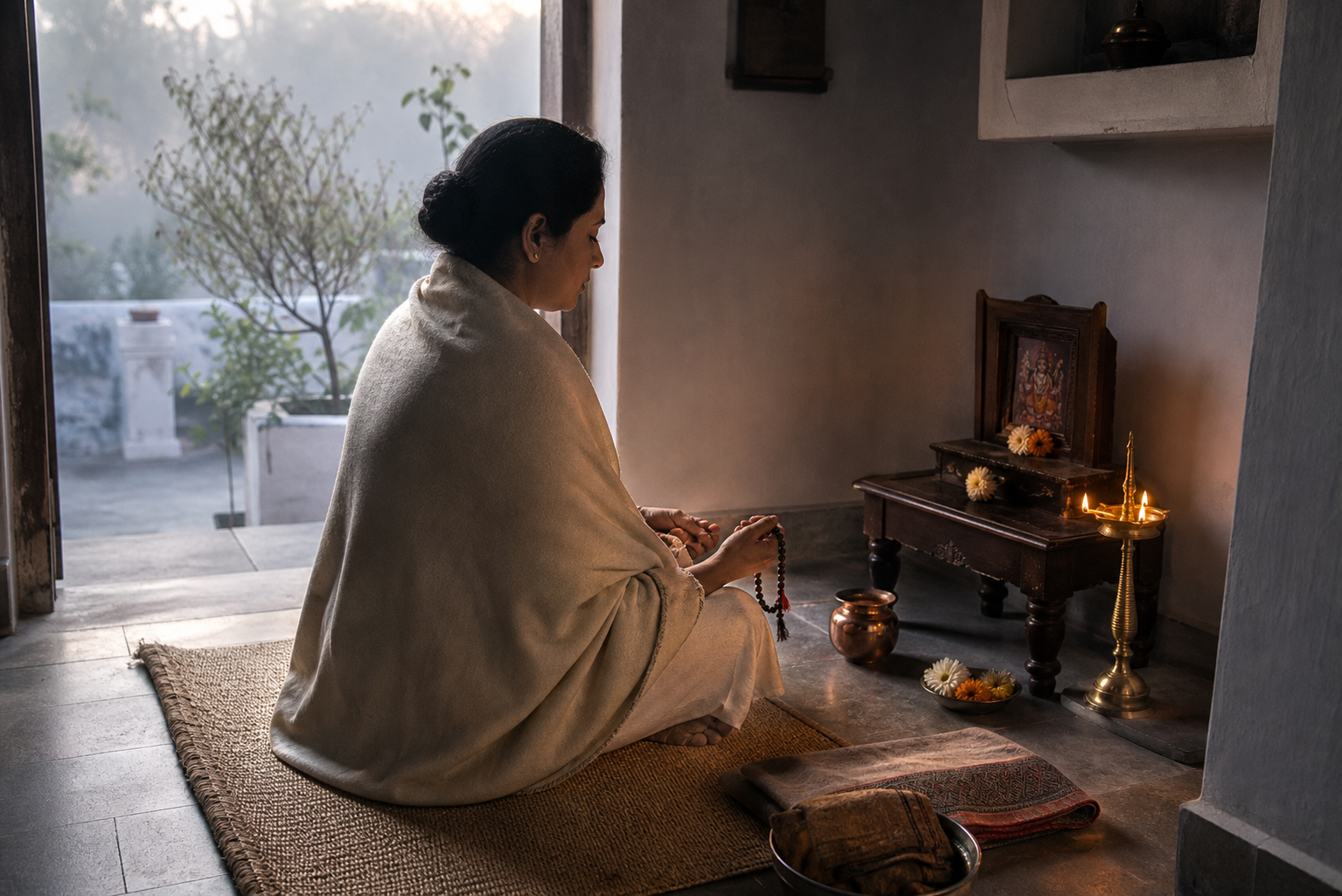
Magh is most useful when it changes the rhythm of an ordinary morning. Its traditional disciplines include early bathing, Surya worship, Shiva upasana, sacred study, restraint, and dana. You do not need to perform every practice at maximum intensity. Choose a baseline you can keep on workdays, school days, and weekends alike.
- Begin with snana. Bathe or complete your morning ablutions before the day’s distractions begin. If you cannot visit a sacred river, a careful bath at home can still carry a sankalpa of purification. Use conditions appropriate to your health; austerity is not a reason to make cold exposure unsafe.
- Offer arghya to Surya. If this belongs to your family practice, offer clean water to the rising sun with a short prayer. Keep the act attentive rather than hurried. The purpose is regularity, gratitude, and alignment with the light of Uttarayana.
- Keep one Shiva practice. Recite the mantra used in your tradition, sit for dhyana, perform simple puja, or read a short passage connected with Shiva. Select one form and repeat it instead of changing the routine every morning.
- Give Saraswati a place in the day. Read a sacred text, study a language, practise music, teach a child, or return to a neglected discipline. Saraswati worship becomes concrete when reverence for knowledge produces actual study.
- Plan dana before the festival arrives. Set aside food, sesame, grains, warm clothing, or support for learning. A predetermined recipient and delivery day make generosity more reliable than a vague intention.
If a full routine is unrealistic, keep snana and one devotional act as your daily minimum. Add longer japa, study, temple darshan, or seva when time permits. This preserves the vrata’s continuity without allowing one missed morning to end the whole commitment.
Mark the sacred observances without guessing their dates
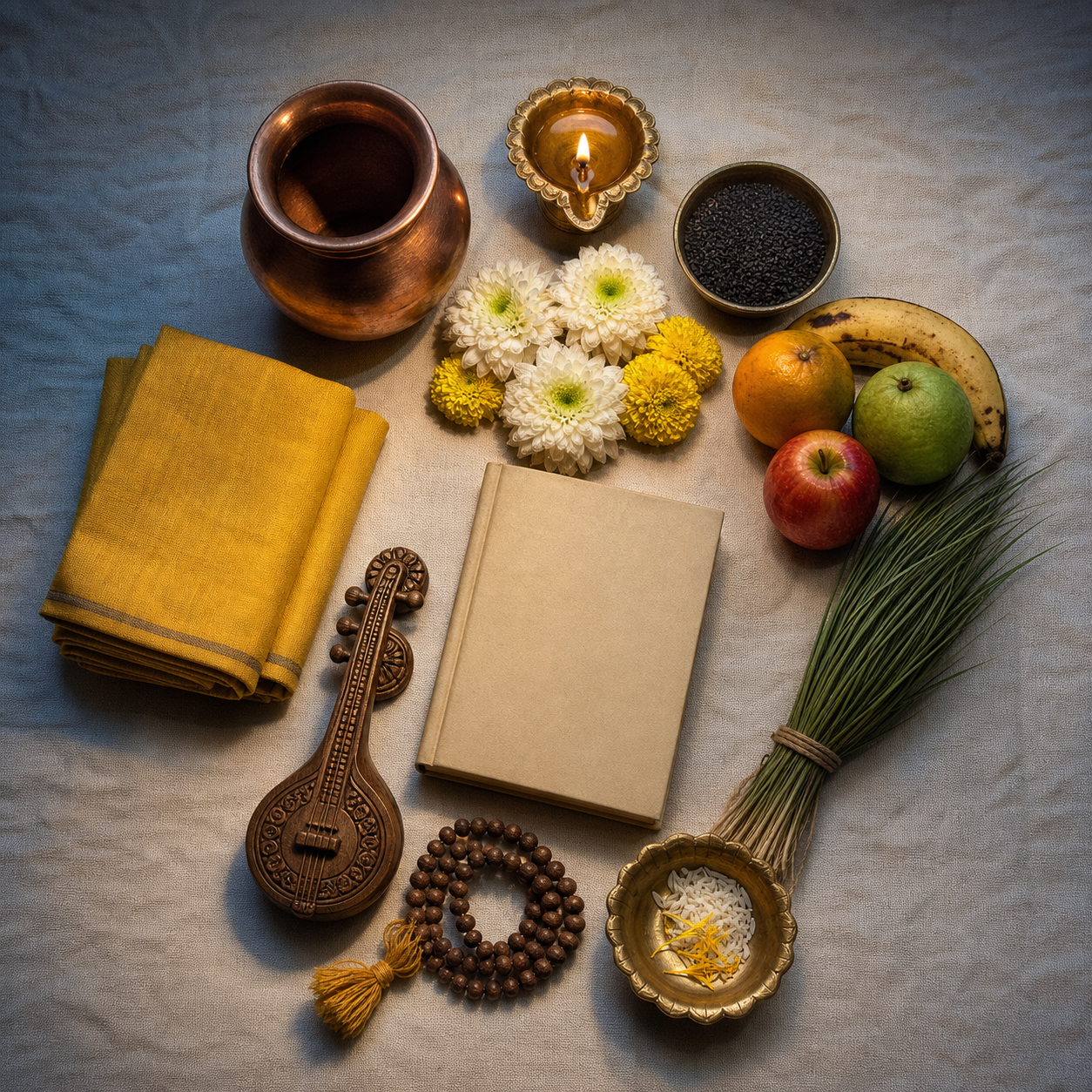
A civil-date month window is not a substitute for tithi timing. Amavasya, Panchami, Ekadashi, and Purnima are lunar observances, and temple programmes may also depend on local sunrise and regional custom. Record the established month window now, but obtain the exact local timings before arranging a fast, puja, journey, or community event.
Shattila Ekadashi: Wednesday, 14 January
Shattila Ekadashi is the firm date anchor in the 2026 Magh calendar. The vrata centres on Vishnu worship, self-restraint, charity, and tila, or sesame. Its name refers to six traditional uses of sesame: bathing, anointing, offering in homa, giving in dana, preparing food, and making tarpana.
You need not improvise all six rites. Follow the forms recognised by your sampradaya and household. An accessible observance can combine morning snana, Vishnu puja or nama-japa, a suitable Ekadashi fast, and a deliberate gift of sesame, jaggery, grain, food, or warm clothing.
If fasting is unsuitable because of health, age, pregnancy, medication, or demanding work, do not treat physical distress as the measure of devotion. Follow appropriate medical guidance and your family’s permitted form of a partial vrata. Simple satvic food, japa, dana, and restraint can preserve the observance without an unsafe fast.
Mauni Amavasya: protect a real period of silence
Mauni Amavasya directs attention inward through mauna, sacred bathing, and reflection. Confirm its local tithi in your panchang rather than deriving it by counting forward from the first day of the civil-date window.
Decide in advance what silence will mean in your circumstances. You might keep mauna from waking until breakfast or until midday, put the phone away, suspend entertainment, and reserve the period for japa or contemplation. If family care or employment requires speech, use necessary words truthfully and briefly. Silence should discipline needless expression, not make you neglect a responsibility.
When the period ends, write down the agitation, recurring thought, or unresolved duty that became noticeable. That turns mauna from an absence of speech into a practical examination of mind and conduct.
Vasant Panchami: make Saraswati Puja lead to learning
Vasant Panchami gives students, teachers, artists, musicians, and scholars a focused occasion to honour Saraswati Devi. Place the locally confirmed Panchami date in your calendar, then prepare both the puja and the work that will follow it.
Clean the place where you study, arrange the books or instruments connected with your discipline, and choose a specific course of learning to resume. A child can begin or renew a reading practice; an adult can return to scripture, Sanskrit, music, writing, or another serious field of knowledge. The useful question is not only what you will place before Saraswati, but what you will study after the altar is cleared.
Maghi Purnima: close one cycle without ending the wrong month
Maghi Purnima brings the Purnimanta month to its culmination through snana, worship, dana, and reflection on the completed discipline. A North Indian Purnimanta household should prepare to close its Magh observance by 1 February. An Amanta household remains within Magh until 17 February, so it should not treat that Purnima as the end of the named month.
Use the full-moon observance to complete promised charity, visit a temple or sacred place if practical, and review the sankalpa you actually kept. Continue one practice beyond Magh rather than abandoning the entire routine at once. Daily study, morning prayer, or regular dana can carry the month’s discipline into the rest of the year.
Before finalising the household calendar, record these items in one place: the calendar system, the correct Magh window, the local panchang or temple you trust for tithi timing, your daily minimum practice, the sacred days you will observe, and the dana you intend to complete. This small record prevents month-name confusion from becoming a missed vrata.
Honour the wider dharmic season without erasing differences
Magh also reveals related civilizational values across Dharmic traditions, but their observances should not be collapsed into one festival. Sikh Maghi remembers the courage of the Chali Mukte and calls the community toward remembrance and seva. In Buddhist communities that observe Magha Puja or Makha Bucha, the full moon honours the Buddha’s teachings and the Sangha. Jain emphases on ahimsa, dana, vrata, and tapas resonate with the season’s discipline and generosity.
The shared ground is ethical practice: restraint, learning, compassion, courage, service, and care for others. The meanings, narratives, calendars, and ritual forms remain distinct. If you are preparing an inter-community calendar or gathering, list each observance under its own tradition, use the date supplied by that community, and explain its particular significance before noting the values held in common.
Start your 2026 record by writing either Purnimanta or Amanta at the top. Add the correct date window, enter Shattila Ekadashi on 14 January, and ask your temple for the remaining local tithi timings. Once the calendar is settled, choose the daily practice and act of dana you can genuinely complete.
References
- DharmaRenaissance Blog — Magh Month (Magha Masam): Auspicious Power, Shiva Worship, Surya and Saraswati Puja
- DharmaRenaissance Blog — Shattila Ekadashi 2026: Definitive Guide to Date, Tila Rituals, and Dharmic Unity (Shadtila/Tilda)
- DharmaRenaissance Blog — Magh Month 2026 Guide: Exact Magha Masam Dates, Key Rituals, and Shared Dharmic Traditions
