
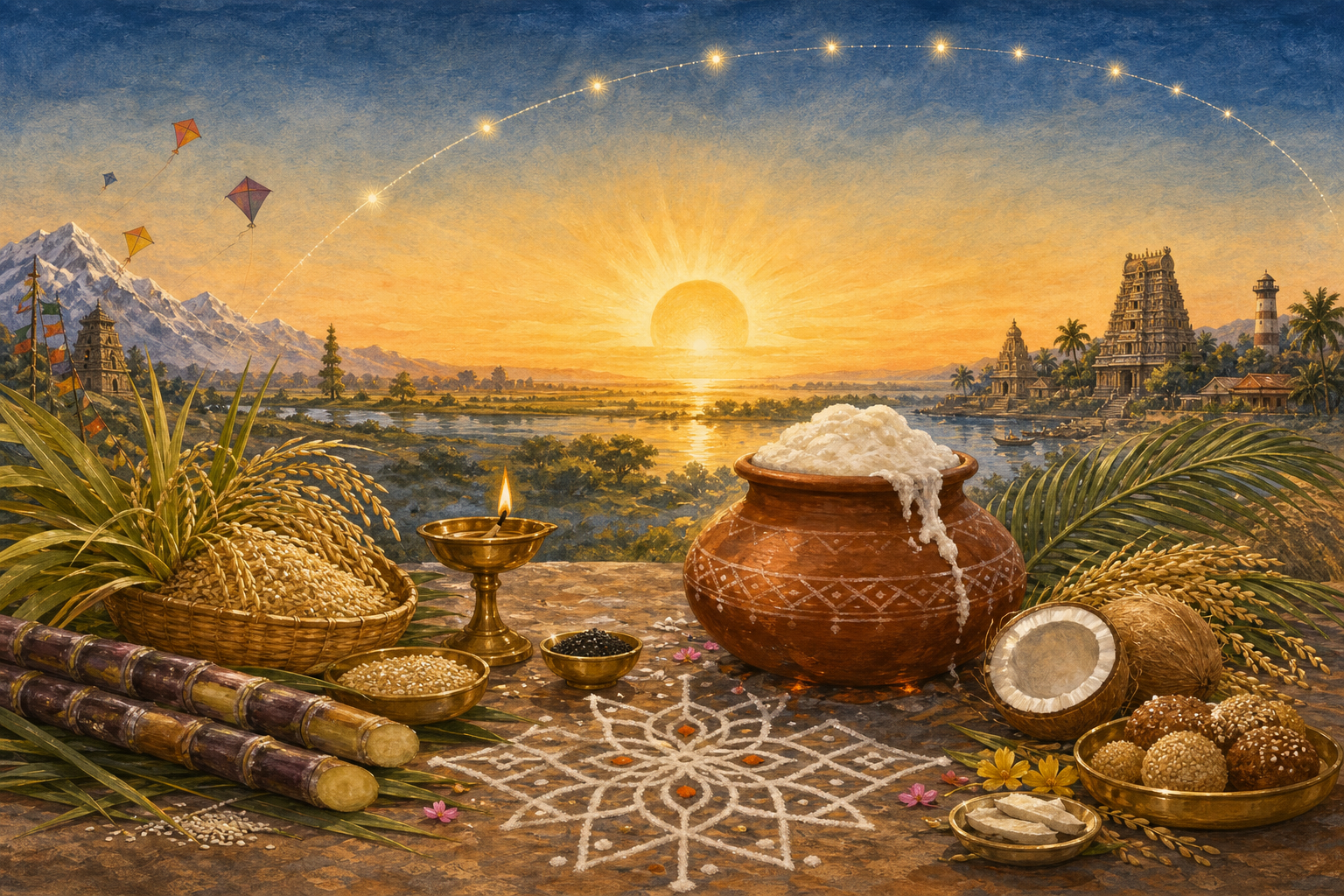
You check two calendars for the same family celebration. One places Makara Sankranti and the start of Kerala’s Makaram on January 14, 2026; another begins the Tamil month of Thai and celebrates Pongal on January 15. Before deciding that one of them must be wrong, ask what each date is measuring.
Makara Sankranti, Uttarayana, Makaram, and Thai are connected, but they are not four names for one identical thing. Once you separate the solar transition, the half-year, the regional month, and the festival day, the calendar becomes much easier to use.
One solar boundary, four kinds of time
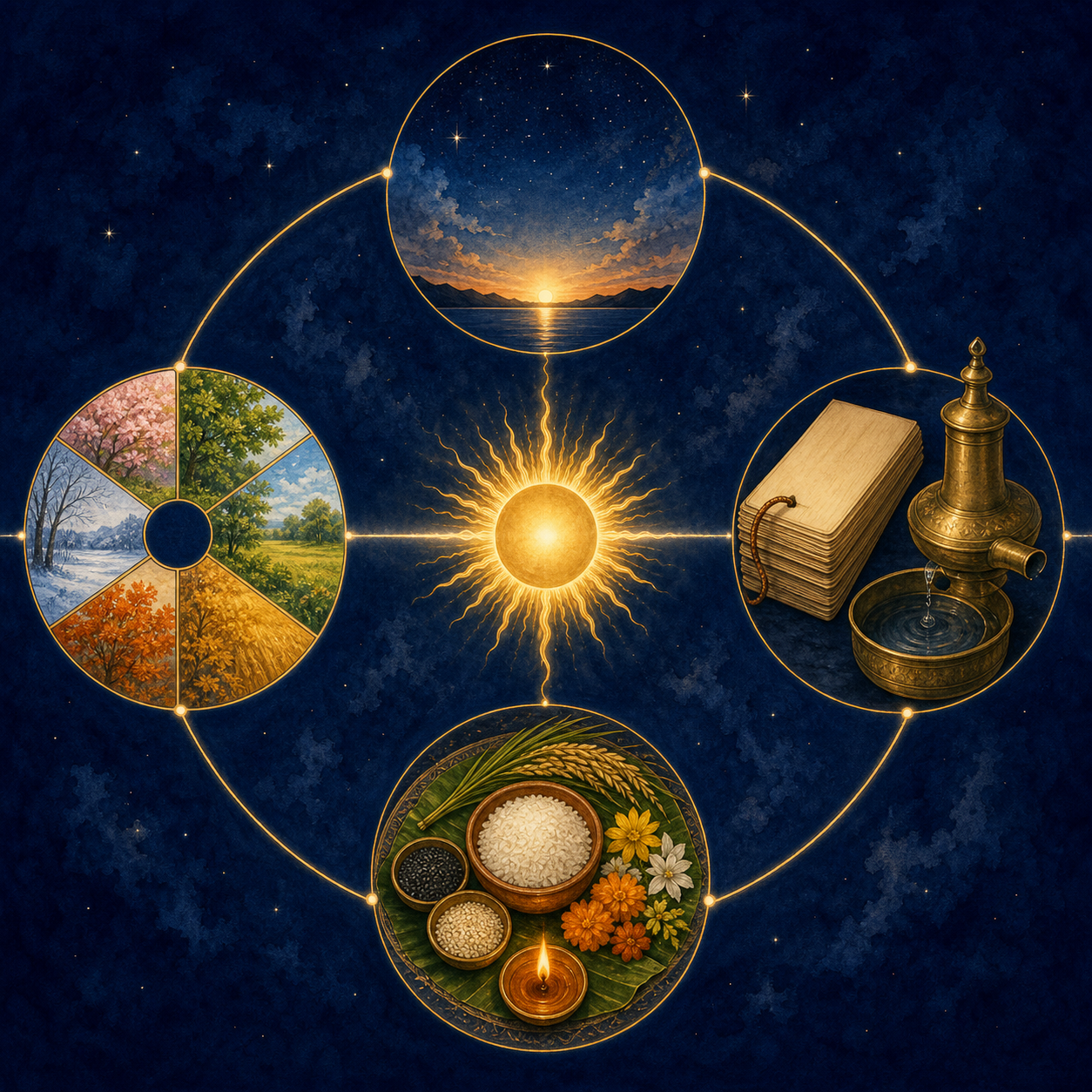
The confusion usually begins when one word is made to do the work of four. Keep these distinctions in view:
- Makara Sankranti is a solar transition. It marks the Sun’s entry into Makara rashi, or Capricorn, in the sidereal zodiac used by traditional panchangs. It is a boundary event, not the name of an entire month.
- Makaram and Thai are regional solar months. The Malayalam and Tamil calendars organize the period following the Makara transition within their own inherited systems. The months are closely related by solar reckoning, but their local dates and ritual cultures remain distinct.
- Uttarayana is a half-year. In traditional calendrical usage, it begins at Makara Sankranti and continues until Karka Sankranti. For 2026, that means a beginning on January 14 and an end around the Karka transition in mid-July, subject to the regional panchang.
- Pongal, Makaravilakku, Maghi, and other observances are lived traditions. They gather around the seasonal and solar boundary, but each has its own community, sequence, devotional emphasis, and convention for assigning the civil date.
A useful rule follows: never ask only, “What is the date of Sankranti?” Ask whether you need the time of the solar ingress, the locally observed festival day, the first day of a regional month, or the beginning of the traditional Uttarayana period. Those questions can produce different-looking answers without producing a genuine contradiction.
The 2026 dates side by side
| Calendar or observance | What it identifies | 2026 date or range | What you should use it for |
|---|---|---|---|
| Makara Sankranti | Sun’s transition into Makara rashi | January 14 | Confirming Sankranti rites and the traditional opening of Uttarayana |
| Uttarayana | Traditional six-month solar half-year | January 14 to Karka Sankranti in mid-July | Understanding the larger sacred season rather than choosing one festival date |
| Makaram in the Malayalam calendar | Sixth Malayalam month | January 14 to February 12 | Planning Kerala temple observances, vratas, and household practices |
| Thai in the Tamil calendar | Tenth Tamil month | January 15 to February 12 | Planning Thai Pongal and other Tamil observances during the month |
The one-day difference at the beginning is exactly why a regional calendar should not be treated as a decorative translation of a single national date. In 2026, both Makaram and Thai end on February 12, yet the cited Kerala and Tamil conventions do not assign their opening day identically. Local sunrise, the timing of the transition, and regional rules can affect which civil day carries an observance.
If your family is Tamil, do not automatically replace its January 15 Thai Pongal observance with January 14 merely because a general calendar labels the earlier date Makara Sankranti. If you are arranging a Kerala temple visit, do not transfer the Tamil month boundary to the Malayalam calendar. Follow the calendar that belongs to the rite you are actually performing.
Why Uttarayana and the winter solstice are not the same date
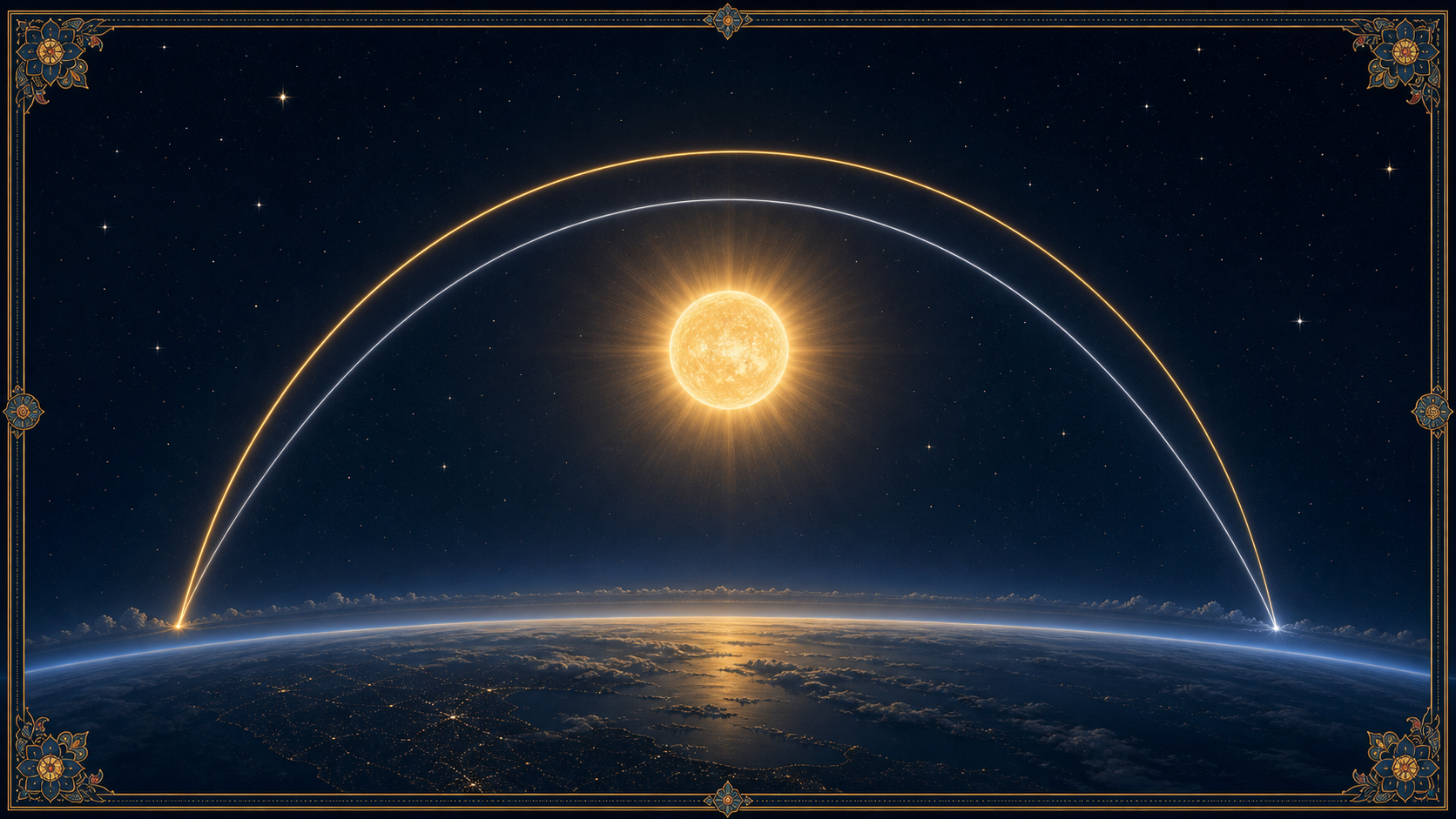
There are also two legitimate meanings behind the language of the Sun moving northward. Astronomically, the apparent northward movement is connected with the winter solstice. In the traditional panchang framework, however, Uttarayana begins with the sidereal Makara transition, which now occurs in mid-January.
The separation arose because the two systems answer different questions. The solstice concerns the Sun’s apparent seasonal turning as measured against Earth’s equatorial framework. Makara Sankranti concerns entry into a sign of the sidereal zodiac used for traditional calendrical reckoning. Precession means the sidereal Makara boundary no longer falls on the solstice with which it was historically aligned.
This does not make Uttarayana spiritually mistaken, nor does it move the astronomical solstice into January. It means you must preserve the definition appropriate to the conversation:
- For a vrata, temple program, Sankranti observance, or traditional panchang, use the Makara-based beginning of Uttarayana.
- For a discussion of the astronomical turning of the seasons, distinguish the winter solstice from the later Makara ingress.
- When explaining the tradition to children, say that the sacred calendar and observational astronomy organize the solar year through related but no longer identical boundaries.
This distinction resolves a great deal of needless argument. A relative who says Uttarayana begins at Makara Sankranti is using the traditional ritual definition. A person discussing the Sun’s declination at the solstice is answering an astronomical question. Neither statement should be forced into the other’s frame.
Regional practice makes the calendar visible
Kerala: Makaram and Sabarimala
In the Malayalam calendar, Makaram is the sixth month. In 2026 it runs from January 14 through February 12. Its opening is closely associated with Makara Sankranti and with the devotional importance of Makaravilakku and Makarajyothi at Sabarimala.
If Sabarimala is central to your observance, the temple calendar is the practical authority for pilgrimage arrangements and public ceremonies. At home, the month can be marked through a dawn bath, Surya arghya, disciplined recitation, charitable giving, and simple preparations using sesame and jaggery. The point is not to reproduce every public ritual in the household. It is to let the solar transition renew a manageable practice of devotion and service.
Tamil communities: Thai begins with Pongal
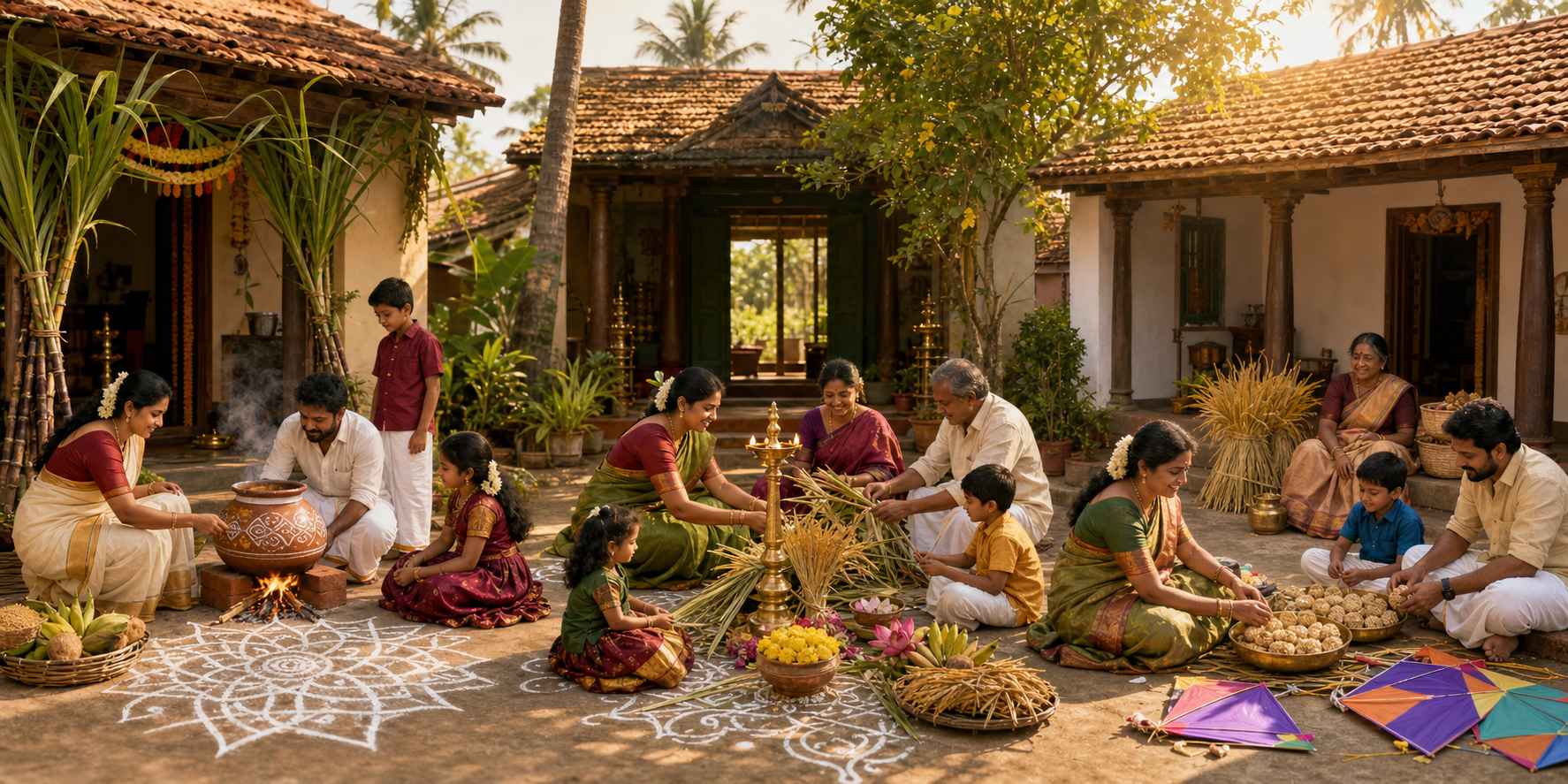
Thai is the tenth month of the Tamil calendar and follows Margazhi. In 2026 it begins on January 15, when Thai Pongal gives the solar boundary a distinctly Tamil expression of gratitude to Surya and thanksgiving for the harvest. Mattu Pongal and Kaanum Pongal follow, extending the observance into care for cattle, family connection, hospitality, and community memory.
The saying “Thai pirandhaal vazhi pirakkum” expresses the hope that new pathways open with Thai. That hope has practical consequences: many families regard the month as favorable for weddings, housewarmings, education, and professional beginnings. It should not, however, be used as a substitute for the precise muhurta required by a family’s sampradaya. For a ceremony tied to a particular tithi, nakshatra, or local sunrise, check the regional panchang rather than treating the entire month as one undifferentiated auspicious period.
A shared solar season without forced uniformity
Elsewhere, the same seasonal neighbourhood is expressed through Magh Bihu in Assam, kite-flying during Uttarayan in Gujarat, and Maghi in Sikh communities. Jain households may emphasize merit, restraint, generosity, or a fresh ethical beginning around the transition. These resonances matter, but they do not turn every celebration into the same festival under a different label.
Dharmic unity is strongest when it does not erase regional or religious particularity. Gratitude, dāna, discipline, service, and reverence for life-giving light can form a shared civilizational grammar. The rite through which a community expresses those values still deserves to be named accurately.
How to plan your observance without calendar confusion
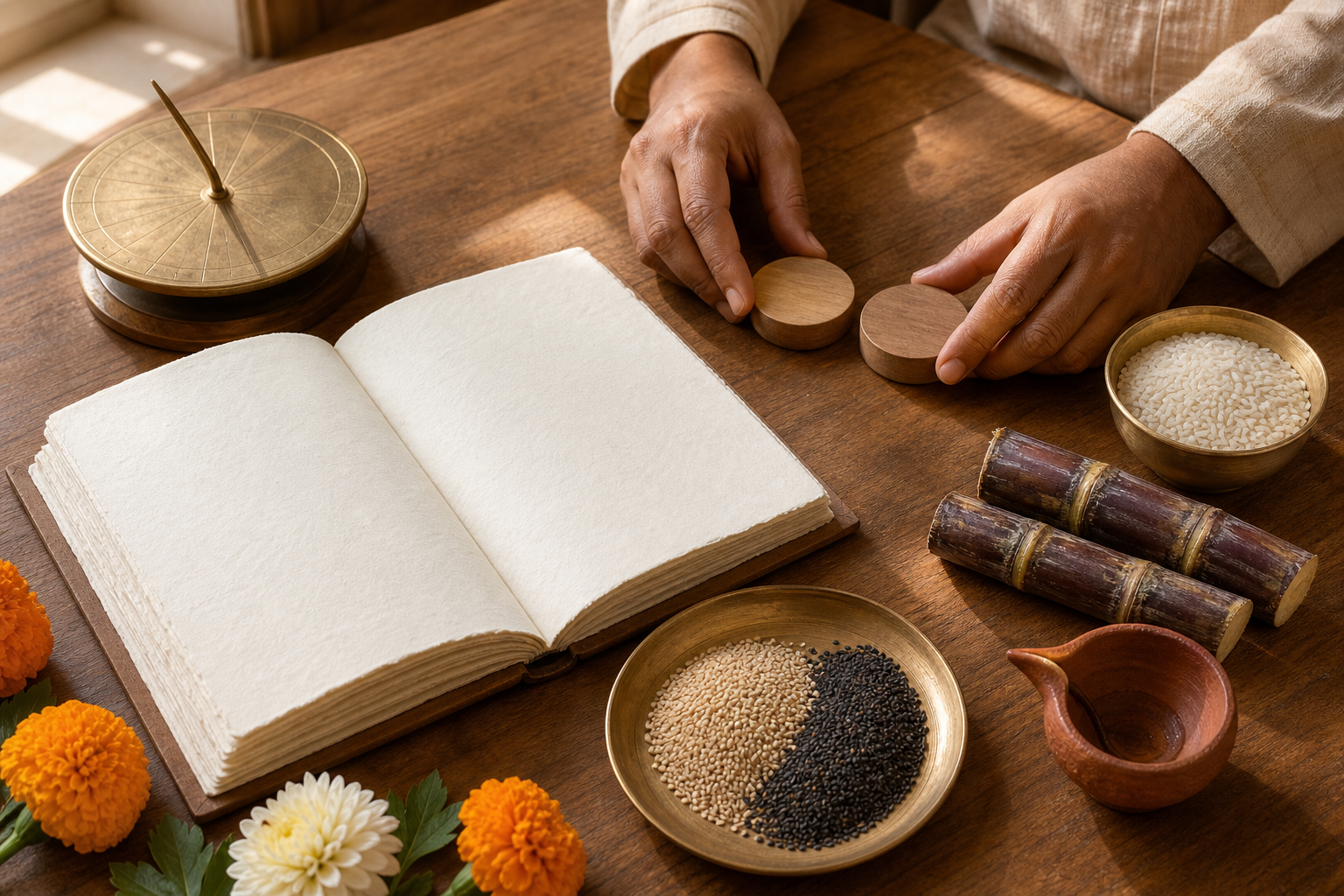
Use this sequence when you are coordinating a household, temple group, school, or diaspora association:
- Name the observance precisely. Write “Thai Pongal,” “Makara Sankranti snāna,” “start of Makaram,” or “Sabarimala Makaravilakku” rather than the vague label “Uttarayan festival.” Precision tells you which calendar governs the event.
- Choose the regional tradition before choosing the date. A Tamil, Malayalam, Gujarati, Assamese, or North Indian calendar may place emphasis on a different civil day or sequence. Do not average two dates or select whichever is more convenient without acknowledging the tradition you are changing.
- Check your location. If the rite depends on the Sankranti moment, sunrise, or a punya-kala window, consult a trusted panchang calculated for the place where the rite will occur. A calendar prepared for Bharat may not settle a sunrise-based observance in Toronto, London, or Singapore.
- Confirm institutional events separately. Temple ceremonies, processions, pilgrimages, and community meals follow announced schedules. Use the responsible temple or organization for logistics even when your household practice follows a more exact personal panchang.
- Build the practice around its purpose. For a simple Sankranti observance, choose a coherent set of actions such as dawn snāna, Surya arghya, dāna, sacred reading, and sharing food. For Pongal, retain gratitude to Surya, the harvest, animals, family, and community rather than reducing the day to a generic seasonal gathering.
A family can also acknowledge more than one inherited calendar. If one branch is Tamil and another is Malayali, mark January 14 as the Makara transition and beginning of Makaram, then observe Thai Pongal on January 15. Explaining the distinction preserves both traditions more faithfully than insisting that a shared solar origin requires a single household label.
Quick answers to the most common questions
Are Makara Sankranti and Uttarayana the same thing?
No. Makara Sankranti is the transition into Makara rashi. In traditional reckoning, that transition opens Uttarayana, the half-year extending to Karka Sankranti. Think of Sankranti as the boundary and Uttarayana as the period that follows.
Why do calendars show January 14 and January 15 in 2026?
They may be identifying different things or applying different regional rules to the same solar transition. General Makara Sankranti and the Malayalam month of Makaram begin on January 14 in the calendars used here, while Tamil Thai and Thai Pongal begin on January 15. The timing of the ingress, local sunrise, and inherited convention determine how the civil day is assigned.
Are Makaram and Thai simply two names for the same month?
They are corresponding regional solar months anchored around the Sun’s entry into Makara, but they are not interchangeable labels. Makaram belongs to the Malayalam calendar and Thai to the Tamil calendar. Their 2026 start dates, month numbers, festivals, and cultural uses must be stated in their own regional terms.
Which date should a family outside Bharat follow?
Begin with the family’s regional tradition, then use a panchang appropriate to the city where the observance will occur. If a temple or cultural association is hosting the event, confirm its published schedule as well. Do not assume that an India-based civil date automatically settles a sunrise- or ingress-dependent rite in another time zone.
For 2026, write three lines in your calendar now: the observance you mean, the regional tradition you are following, and the local panchang or temple schedule you will use. That small act turns a dispute over January 14 or 15 into a clear, faithful plan.
References
- DharmaRenaissance Blog — Makara Masam 2026 in Kerala: Auspicious Dates, Sacred Traditions, and Sabarimala Glory
- DharmaRenaissance Blog — Thai Masam 2026: Auspicious Tamil Month, Pongal Celebrations, and Shared Dharmic Harmony
- DharmaRenaissance Blog — Uttarayan (Uttarayanam) 2026: Sacred Northward Sun, Auspicious Dates, Rituals, and Unity
