
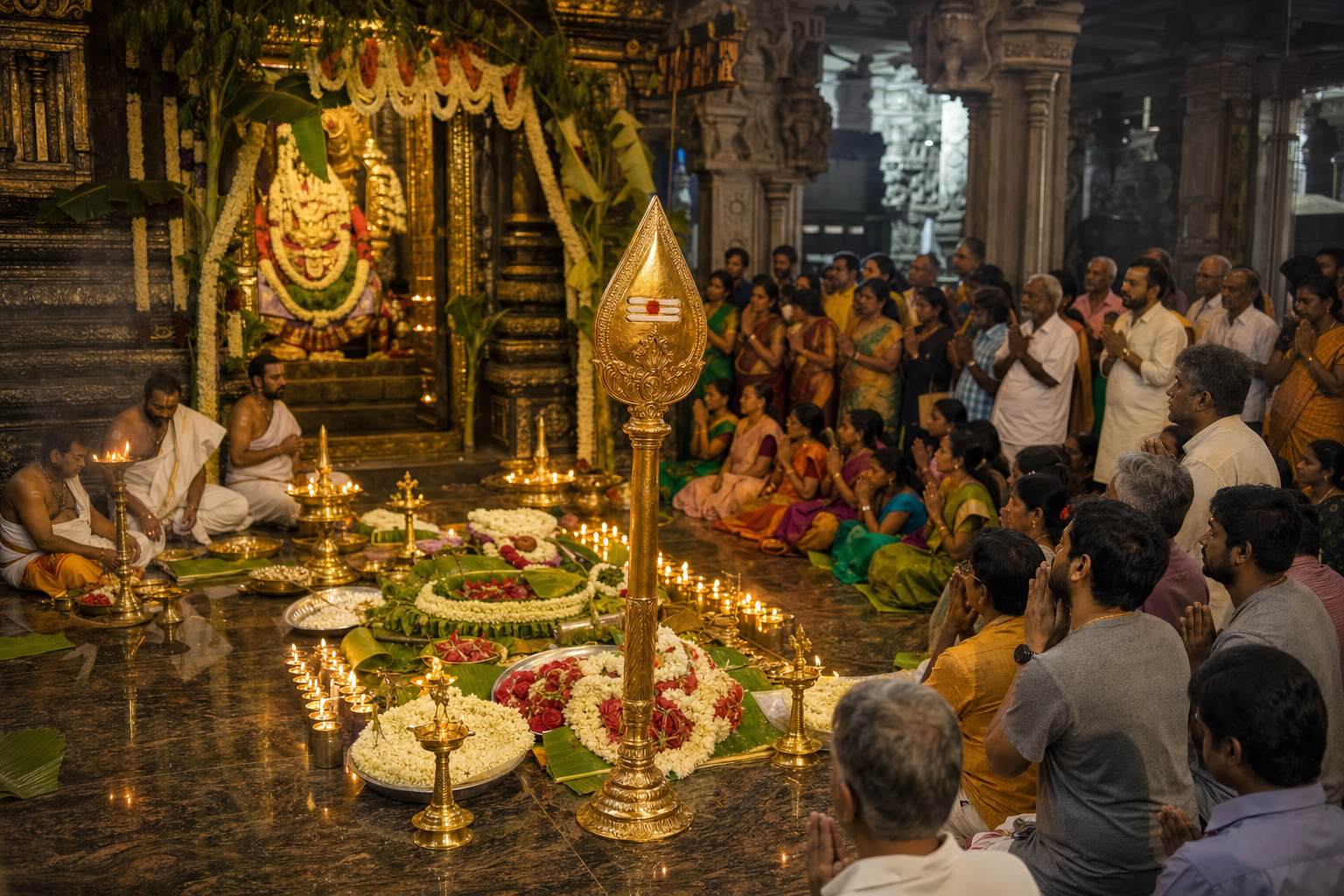
If you are looking up Skandagiri’s 2026 Thaipusam observance, do not reduce it to a single date. Thaipusam itself fell on 1 February 2026, but the temple’s Laksharchana program was scheduled across three days, from 30 January to 1 February.
That distinction tells you how the observance was structured. The first day opened the ritual sequence, the second sustained the collective archana, and the third brought the program into the main Thaipusam and Thai Pournami congregation. Which day mattered most depended on whether your sankalpa centred on the opening rites, prolonged nama recitation, festival-day darshan, or seva.
The date most easily misread: one festival day, three days of worship
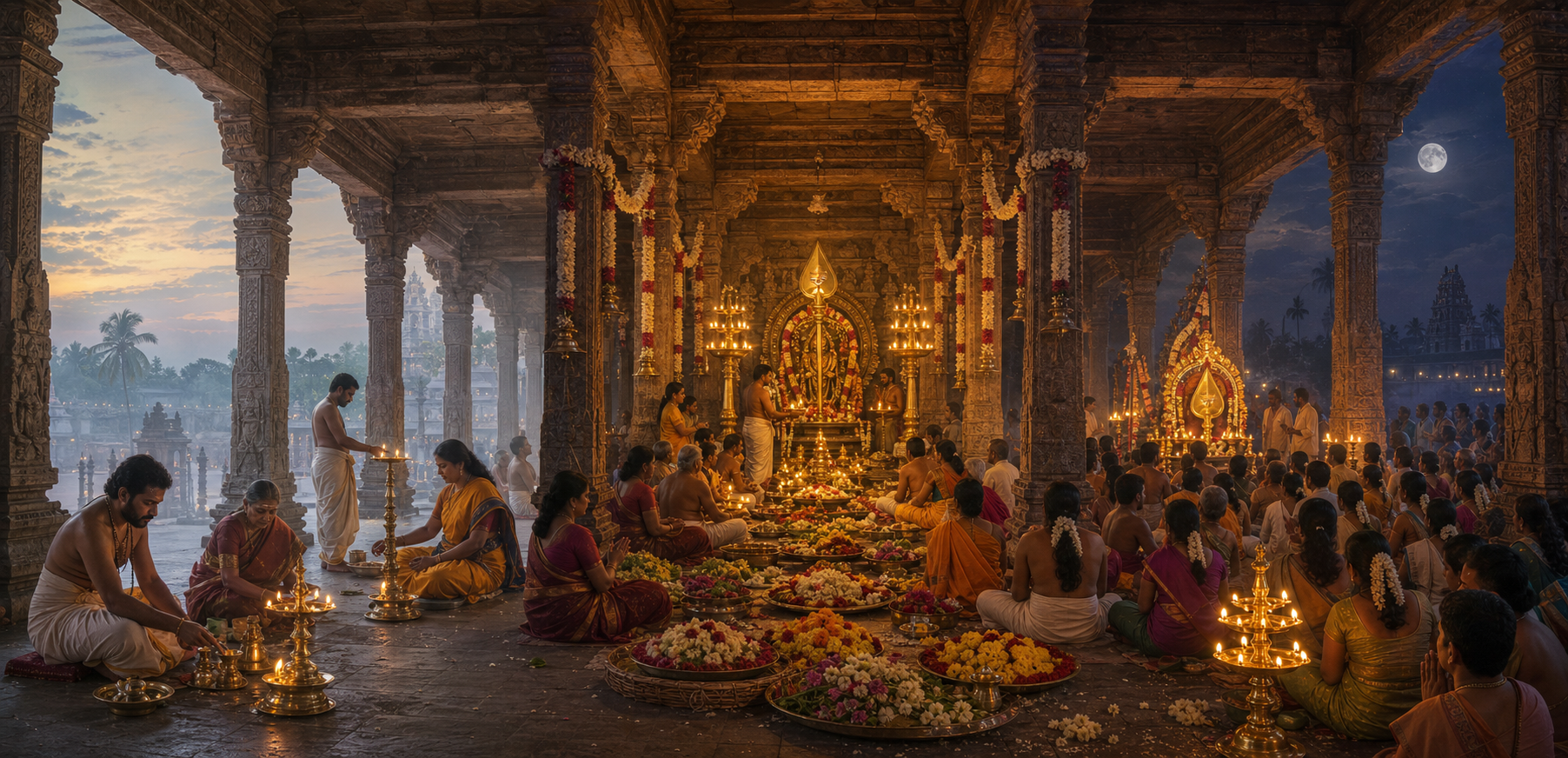
Seeing 1 February on a festival calendar could make a devotee assume that every important observance happened that day. At Skandagiri, however, the three-day sequence began on 30 January. Anyone interested in the formal commencement of the worship needed to distinguish that opening from the main Thaipusam date.
| Date | Scheduled or customary focus | Best fit for the devotee | What required local confirmation |
|---|---|---|---|
| 30 January 2026 | Sri Ganapathi Homam; Sri Subrahmanyaswamy Mahanyasa Poorvaka Ekadasa Rudrabhishekam; formal commencement of Laksharchana | Opening sankalpa, homam, abhishekam, and the beginning of collective name-recitation | Reporting time, participation arrangements, and the session’s duration |
| 31 January 2026 | Laksharchana continuing in structured sessions; bhajans, alankaram, deepa aradhana, or special darshan could accompany the program | Devotees whose priority was sustained chanting rather than only the main-day congregation | Exact session times and which accompanying observances were included |
| 1 February 2026 | Thaipusam on Thai Pournami and the final scheduled day of the three-day program | Main festival-day darshan, family participation, and the larger communal observance | Festival-specific abhishekam, offerings, entry arrangements, and crowd routing |
The opening-day rites were the clearest date-specific commitments in the advance program. The next two days were expected to continue Laksharchana, but session-by-session timings could vary. Bhajans, alankaram, deepa aradhana, and special darshan were customary possibilities, not details to assume without a temple notice.
This also matters for families. A devotee who wanted the full ceremonial opening would have chosen 30 January. Someone seeking time within the rhythm of repeated archana might have preferred 31 January, though that date was not guaranteed to be quiet. A family intent on Thai Pournami darshan would have chosen 1 February while preparing for the larger congregation associated with the main festival day.
Choose the observance that matches your sankalpa
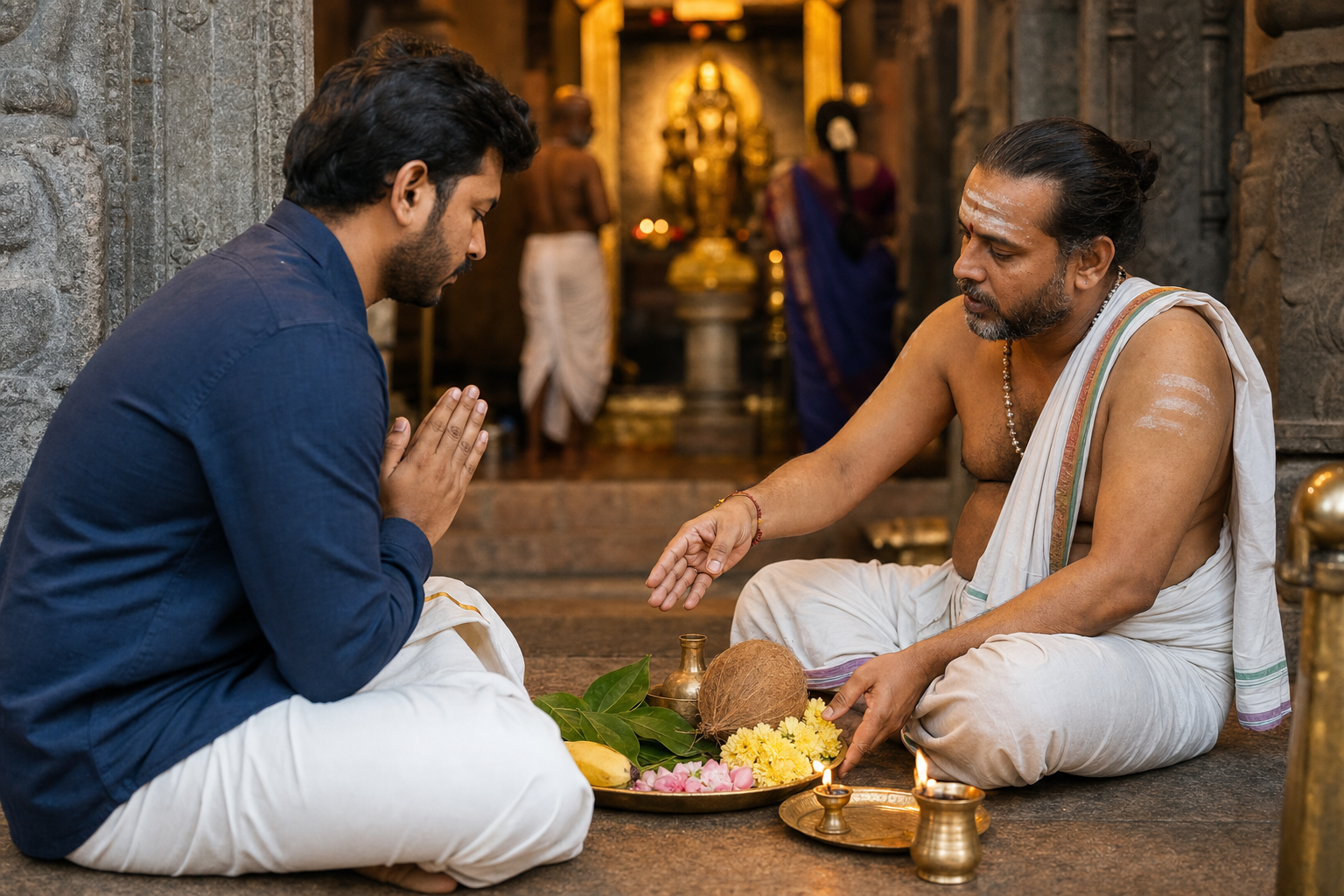
Thaipusam, also written Thaipoosam, joins the Tamil month of Thai with Poosam, or Pushya. The observance is associated with Lord Subrahmanya, the divine Vel, discipline, courage, and clarity. At Skandagiri, that meaning was expressed through a progression of homam, abhishekam, Laksharchana, darshan, and community service rather than through one isolated ritual.
- If your sankalpa concerned an auspicious beginning, the 30 January Ganapathi Homam provided the ceremonial threshold for the program.
- If your focus was purification, steadiness, or surrender through abhishekam, the Sri Subrahmanyaswamy Mahanyasa Poorvaka Ekadasa Rudrabhishekam was the central opening-day rite.
- If your practice centred on sacred names, the Laksharchana was the defining thread across the three days. It involved the collective recitation of one hundred thousand sacred names, so the number belonged to the organised communal rite rather than to an improvised personal target.
- If your priority was festival-day darshan and shared Murugan bhakti, 1 February was the relevant date because it aligned with Thaipusam and Thai Pournami.
- If you wanted your vrata to issue in service, annadanam or another temple-approved seva offered a practical direction, subject to the temple’s participation arrangements.
You did not need to choose the most visible expression of devotion to participate meaningfully. The Skandagiri sequence itself placed quiet disciplines at its centre: arriving for worship, listening to the priestly cadence, remaining attentive during archana, accepting the order of the queue, and serving without turning seva into a display. A vrata becomes useful when it governs your conduct, not merely when it gives you an outward festival identity.
For a simple personal vrata, choose a discipline you can state precisely: keep a fixed time for Subrahmanya prayer, restrain angry or harmful speech, complete a promised act of seva, or bring the family together for stotra recitation. The purpose is not to assemble the largest number of practices. It is to give your resolve a form that survives beyond the darshan queue.
Separate confirmed temple rites from wider Thaipusam customs
Thaipusam practice more broadly includes pal kudam, or milk-pot offerings, Kavadi, abhishekam, and alankaram. Skandagiri also customarily observes special abhishekam for the moola murti and utsava murti, recitation of Subrahmanya stotras with references to the Skanda Purana, and community-led annadanam.
A widespread festival custom is not automatically an open, walk-in temple service. A Kavadi may require a designated gathering point or route. A pal kudam offering may depend on registration, vessel requirements, reporting time, or priestly instructions. Annadanam may need volunteers at a particular stage rather than whenever a visitor arrives. None of those operational details should be guessed from the general festival date.
Before bringing an offering or organising a group, ask the temple office direct questions:
- Is advance registration required for Laksharchana, sankalpa names, pal kudam, or Kavadi?
- What offerings and vessels will the temple accept, and where must they be presented?
- Is there a designated assembly point, reporting time, or route for a procession?
- Which abhishekam or alankaram is open to general participation, and which is for darshan only?
- How can a devotee join annadanam or another seva without disrupting the temple’s existing volunteer system?
- What dress and conduct requirements apply to the relevant ritual area?
This distinction protects both devotion and order. It prevents a sincere offering from becoming a logistical problem at a crowded entrance. It also keeps Kavadi, the milk pot, the Vel, and the peacock symbolism within a devotional frame rather than treating them as festival spectacle. Visible practices should express restraint and resolve, not compete with the worship occurring in the sanctum.
Plan the temple visit around verification, not assumptions
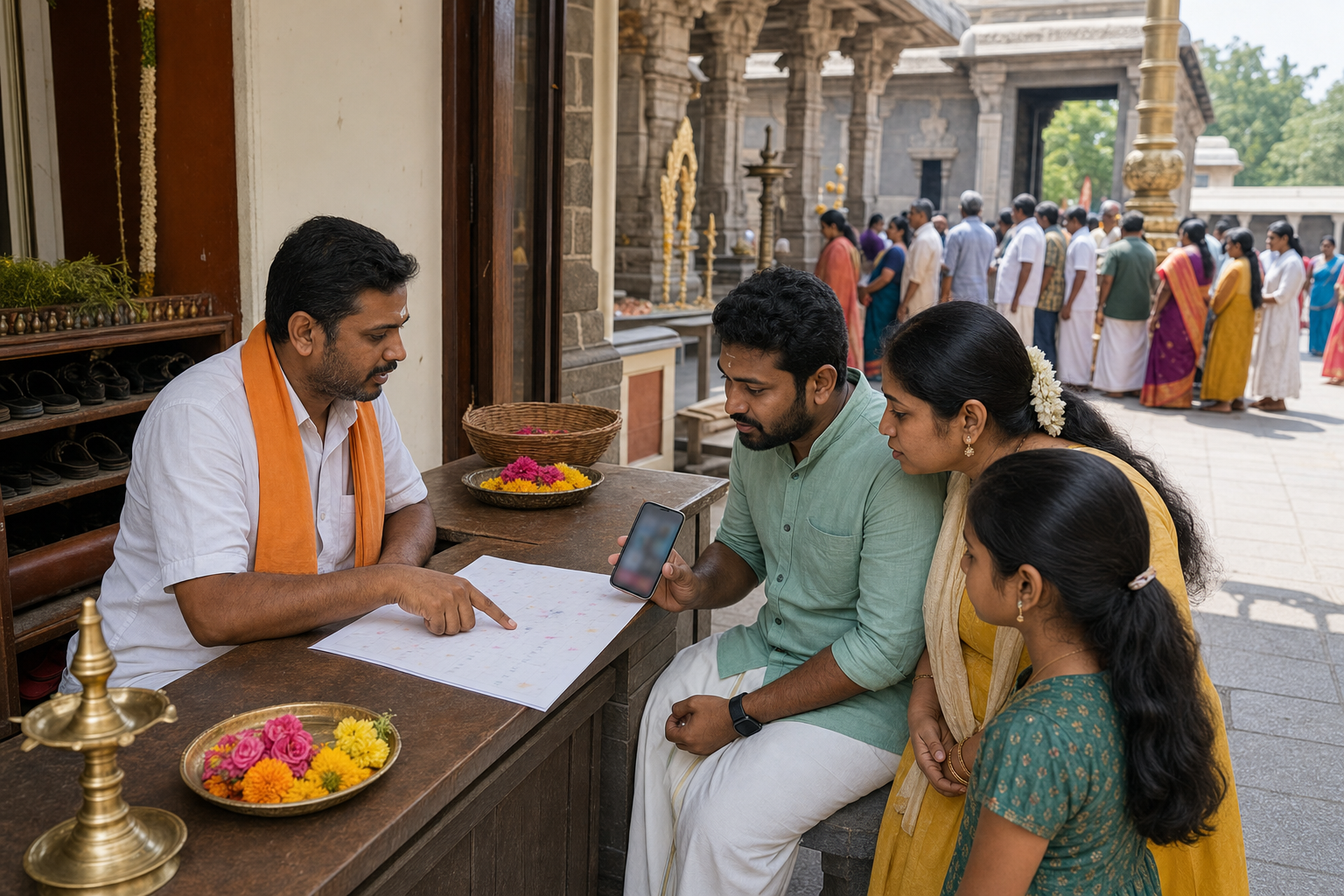
Skandagiri Subramanyaswamy Temple is in Padmarao Nagar, Secunderabad, within the Hyderabad-Secunderabad twin-city area. For the 2026 observance, detailed timings were expected closer to the festival through the temple office and on-site noticeboards. The dates established the overall frame; they did not replace a current session schedule.
- Confirm the exact start and reporting times for the rite you intend to attend. Asking only when the temple opens is not enough if your purpose is a particular homam, abhishekam, or Laksharchana session.
- Confirm whether participation and darshan use the same queue or different arrangements. Do not infer access from the name of a ritual.
- Check entry protocols, permitted offerings, dress requirements, and route advisories directly. A date-level announcement cannot answer these operational questions.
- Use public transport to Padmarao Nagar where practical, especially for the main Thai Pournami congregation. This reduces the risk that parking or traffic makes you miss the ritual for which you travelled.
- Arrive early, but base that decision on the confirmed reporting time rather than an invented universal buffer. Carry water, remain hydrated, and account for the needs of elders and children when choosing how long to stay.
- Once inside, follow the queue and volunteer instructions. The most helpful response to a crowd is not to negotiate an exception but to preserve the order that allows everyone to receive darshan.
Festival notices may reflect the local panchang, Telugu and Tamil calendar considerations, and Hyderabad sunrise timings. That is why the 2026 dates must now be treated as an archival record, not as an annual template. For a later Thaipusam, retain the planning method but obtain that year’s dates and sequence afresh.
If you are reading after the 2026 observance, the three-day structure still clarifies what was planned and how Skandagiri framed Murugan bhakti. It can also help you prepare a future sankalpa: decide whether you seek the opening rite, collective archana, main-day darshan, or seva, and then ask the temple for the matching session rather than merely asking for the festival date.
Key takeaways
- Thaipusam fell on 1 February 2026, but Skandagiri’s program was scheduled from 30 January through 1 February.
- The opening day included Sri Ganapathi Homam, Sri Subrahmanyaswamy Mahanyasa Poorvaka Ekadasa Rudrabhishekam, and the commencement of Laksharchana.
- Laksharchana continued across the following two days, while exact session times and accompanying observances required local confirmation.
- Pal kudam, Kavadi, special abhishekam, alankaram, and annadanam were customary elements of Thaipusam or Skandagiri practice, but their participation rules should never be assumed.
- Your best day depended on your sankalpa: opening rites on 30 January, continued archana on 31 January, or the main Thai Pournami observance on 1 February.
- For any future visit, verify the current panchang-based schedule, registration rules, offerings, dress requirements, transport conditions, and crowd advisories with the temple.
Carry forward the structure, not the old calendar. Name the rite or seva you want to join, shape a manageable vrata around it, and confirm the relevant year’s session directly with Skandagiri before you travel. That small act of clarity is already part of disciplined worship.
References
- DharmaRenaissance Blog — Thaipusam Laksharchana 2026 at Skandagiri, Hyderabad: Essential Dates, Sacred Rituals, and Visitor Guide
- DharmaRenaissance Blog — Thaipoosam 2026 at Skandagiri Temple, Hyderabad: Powerful Murugan Bhakti and Community Light
- DharmaRenaissance Blog — Skandagiri Temple Pujas in January 2026: Unmissable Festive Highlights and Sacred Rituals
