
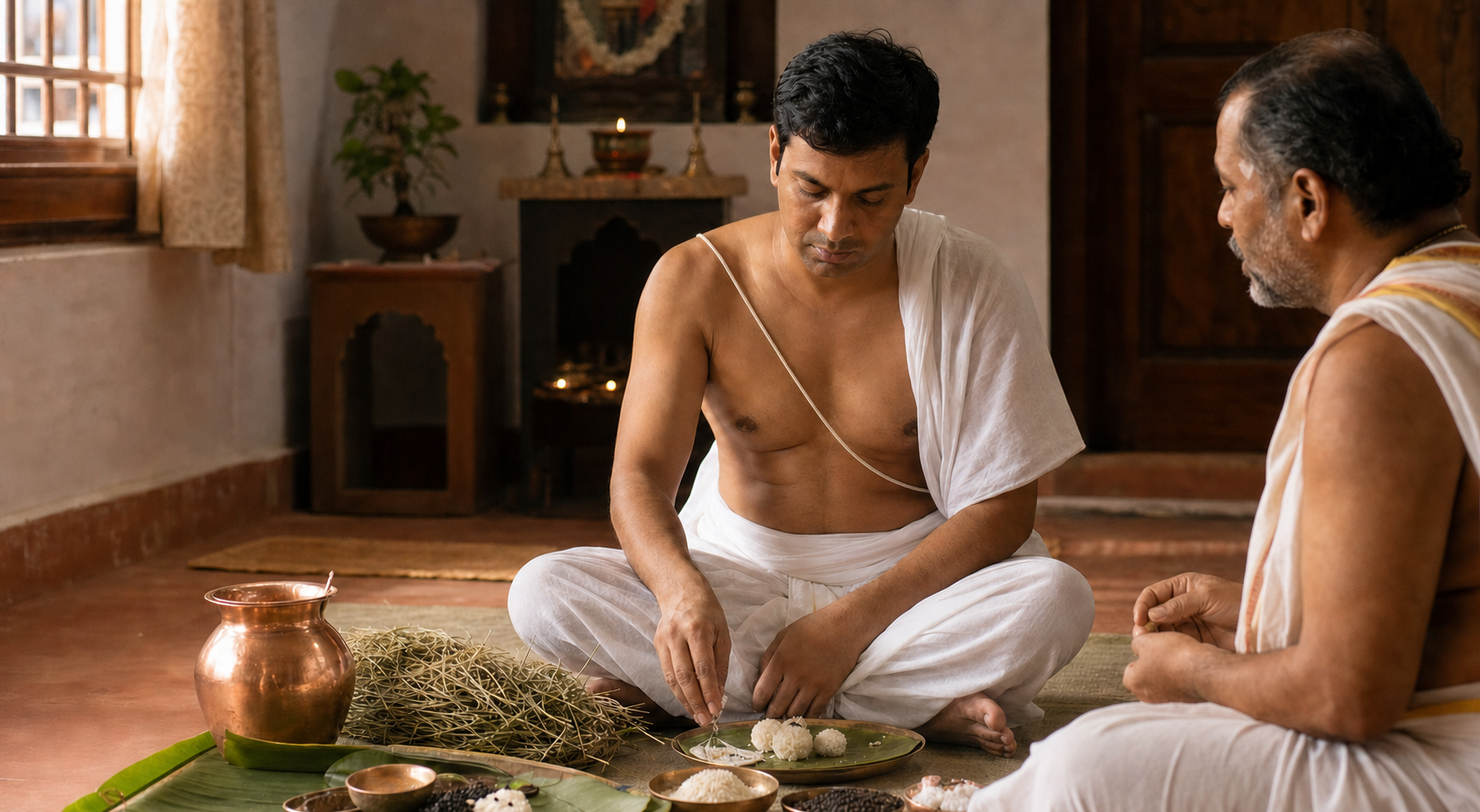
You are midway through a Shraddha rite, the offerings are about to begin, and someone tells you to reverse the sacred thread. Which shoulder should it rest on, when should you move it, and when should you move it back?
The dependable rule is simple: during the ancestor-focused portion of the rite, wear the yajnopavita in pracinavita – over your right shoulder and beneath your left arm. When the ceremony returns to an auspicious portion, the thread ordinarily returns to upavita, over your left shoulder and beneath your right arm. The important detail is not merely knowing the two positions. It is recognizing the ritual boundary at which the change belongs.
The rule you need in the moment
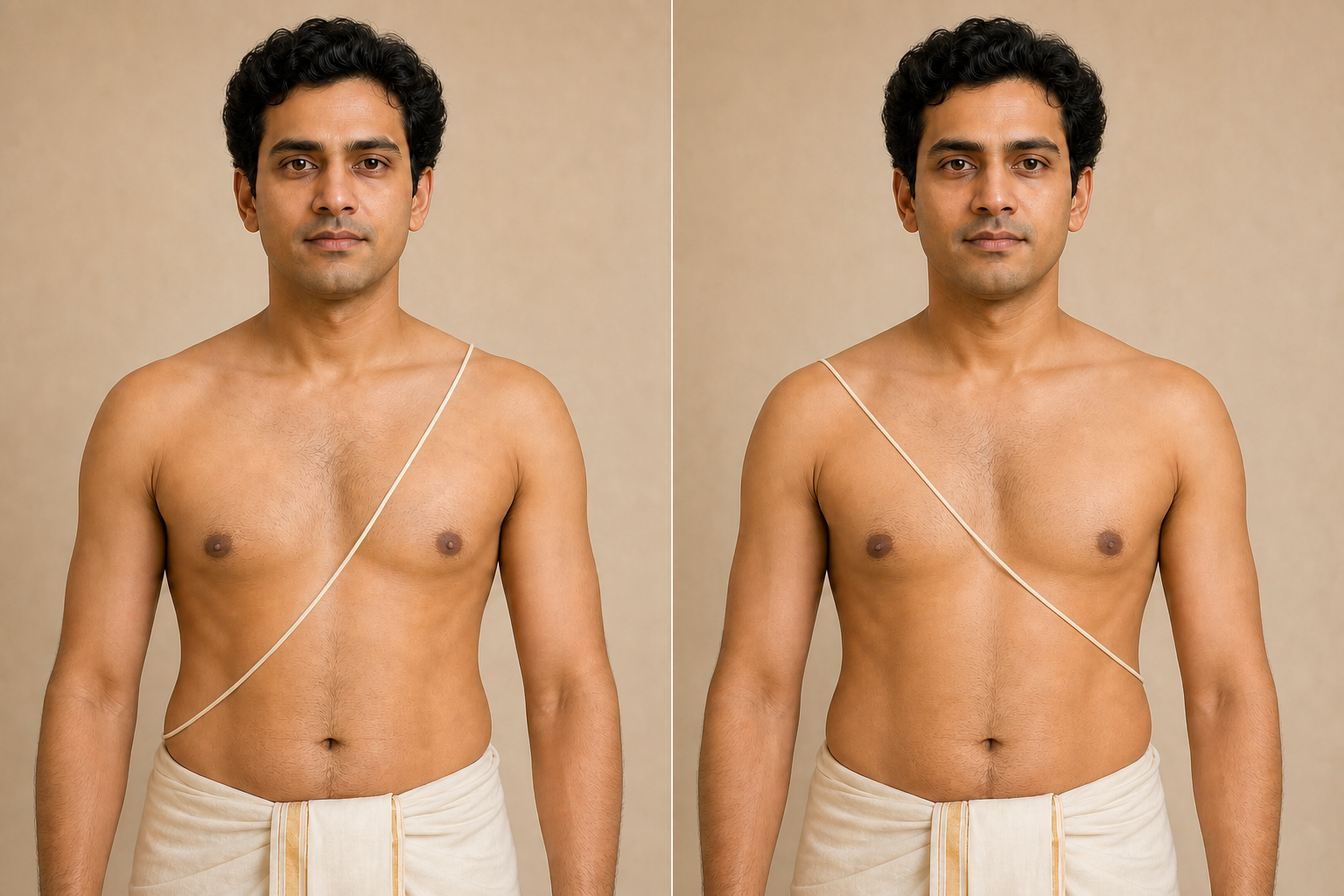
Use your own shoulders as the reference point. Pracinavita means that the thread rests on your right shoulder and passes under your left arm. Upavita means that it rests on your left shoulder and passes under your right arm. If you are watching a priest or elder facing you, remember that the image is reversed from your perspective.
| Orientation | How the thread is worn | Ritual context |
|---|---|---|
| Upavita | Over the left shoulder, under the right arm | Daily worship, study, Sandhya, yajna, temple worship, and auspicious rites |
| Pracinavita | Over the right shoulder, under the left arm | Shraddha, pitru tarpana, pindadana, antyeshti, and other ancestor-focused observances |
| Nivita | Around the neck | Specific, lineage-dependent contexts; it is not another name for pracinavita |
When someone says to “reverse” the sacred thread, the instruction concerns its position on the body. It does not mean twisting, turning inside out, or otherwise altering the cord. Check the shoulder on which it rests; that is the clearest way to verify the orientation.
This distinction applies to a practitioner who has received the yajnopavita through upanayana and is carrying out the relevant ritual duties. The sacred thread belongs to a Vedic samskara and should be handled according to the practice in which it was conferred, not adopted casually as an isolated accessory.
Change at the ritual boundary, not by the clock
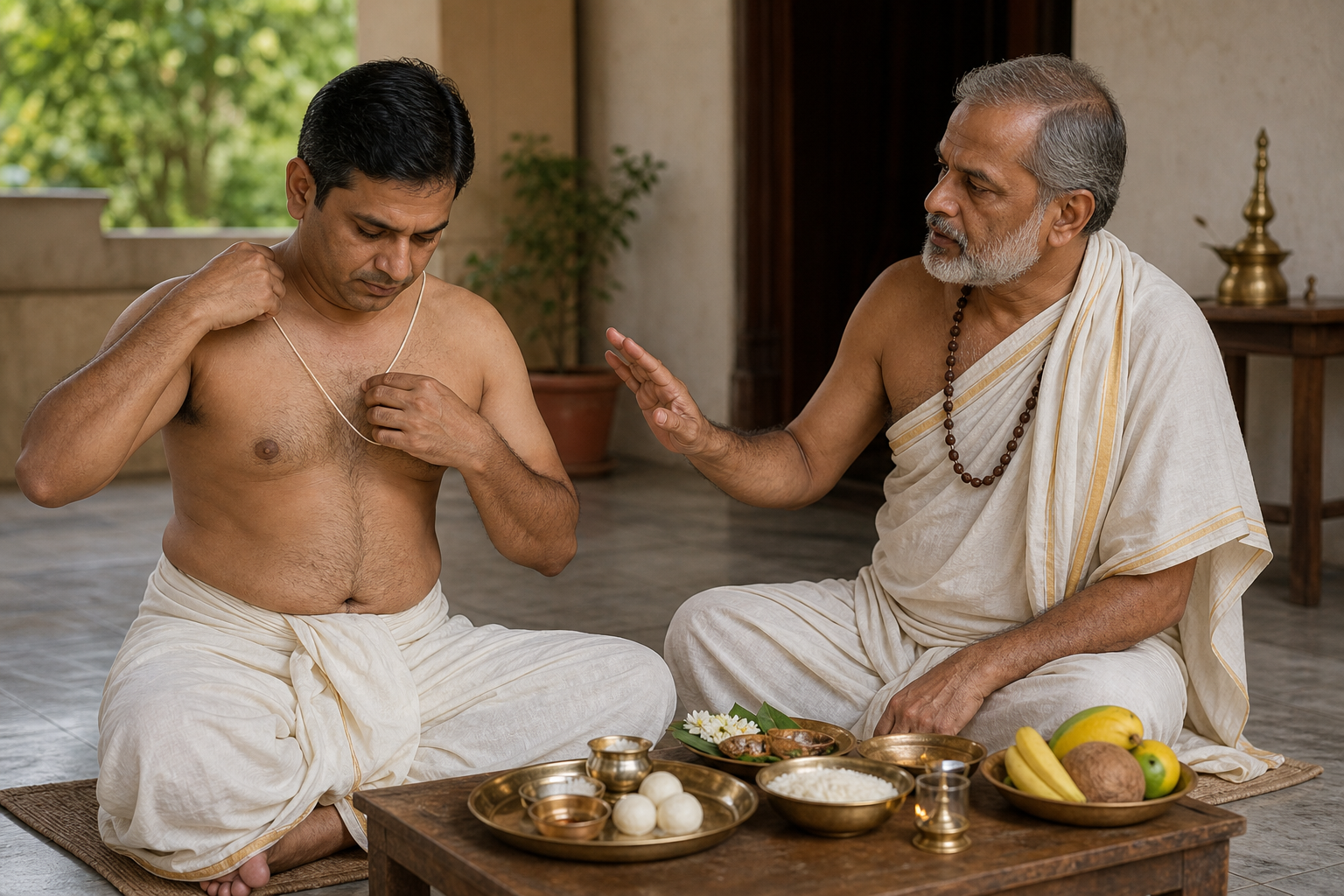
A Shraddha ceremony can contain more than one kind of ritual action. The thread therefore need not remain in one orientation simply because the entire occasion is called Shraddha. The practical boundary is the beginning and end of the pitru-focused segment.
- Confirm the transition before the rite begins. Ask the officiating priest or a knowledgeable family elder which action marks the start of the pitru-karya in your sequence.
- Retain upavita for preliminary auspicious actions when your procedure requires it. Do not reverse the thread merely upon entering the ritual space or hearing the word “Shraddha.”
- Adopt pracinavita as the ancestor-focused segment begins. Tarpana and pindadana are clear examples of actions for which the right-shoulder position is used.
- Keep pracinavita throughout that segment. Avoid shifting it back and forth because of momentary pauses, the distribution of materials, or a change of mantra unless your ritual guide directs a genuine transition.
- Return to upavita after the pitru-focused work is complete if the ceremony now proceeds to an auspicious portion for which the ordinary left-shoulder orientation is prescribed.
This is a map of the transition, not a universal liturgy. A family tradition may arrange its actions differently, and some lineages include additional thread positions in particular contexts. Follow the sequence taught in your parampara. If the instruction you receive differs from a generic checklist, ask what ritual transition the instruction marks rather than assuming that one of them must be mistaken.
Why the thread moves to the right shoulder
The shift is a compact form of ritual language. Upavita accompanies the forward-facing disciplines of study, worship, and auspicious action. Pracinavita signals that the practitioner’s attention has turned toward the Pitrs – the ancestors to whom remembrance, gratitude, and offerings are being directed.
Traditional Grihya-sutra and Dharmashastra practice associates ancestor rites with the southern direction. The reversed thread expresses that change of ritual orientation through the body itself. It does not, by itself, settle every question about which way you should sit, where each vessel should be placed, or how a particular offering should be made. Those accompanying details must still come from the procedure of your lineage.
Pracinavita also gives physical expression to the ancestral debt remembered within rna-traya, the three debts. The thread becomes a tactile reminder that the life you received did not begin with you. Lineage is honored not only through an offering on a prescribed day, but through responsible conduct and the preservation of what is worthy in the family’s inherited wisdom.
The contrast between an auspicious orientation and an ancestral orientation should not be mistaken for a judgment that Shraddha is inferior or spiritually negative. The distinction identifies the rite’s addressee and mood. Solemn remembrance has its own dignity. Moving the thread deliberately helps you enter that mode instead of treating tarpana or pindadana as one more mechanical item in a ceremony.
How to avoid preventable orientation errors
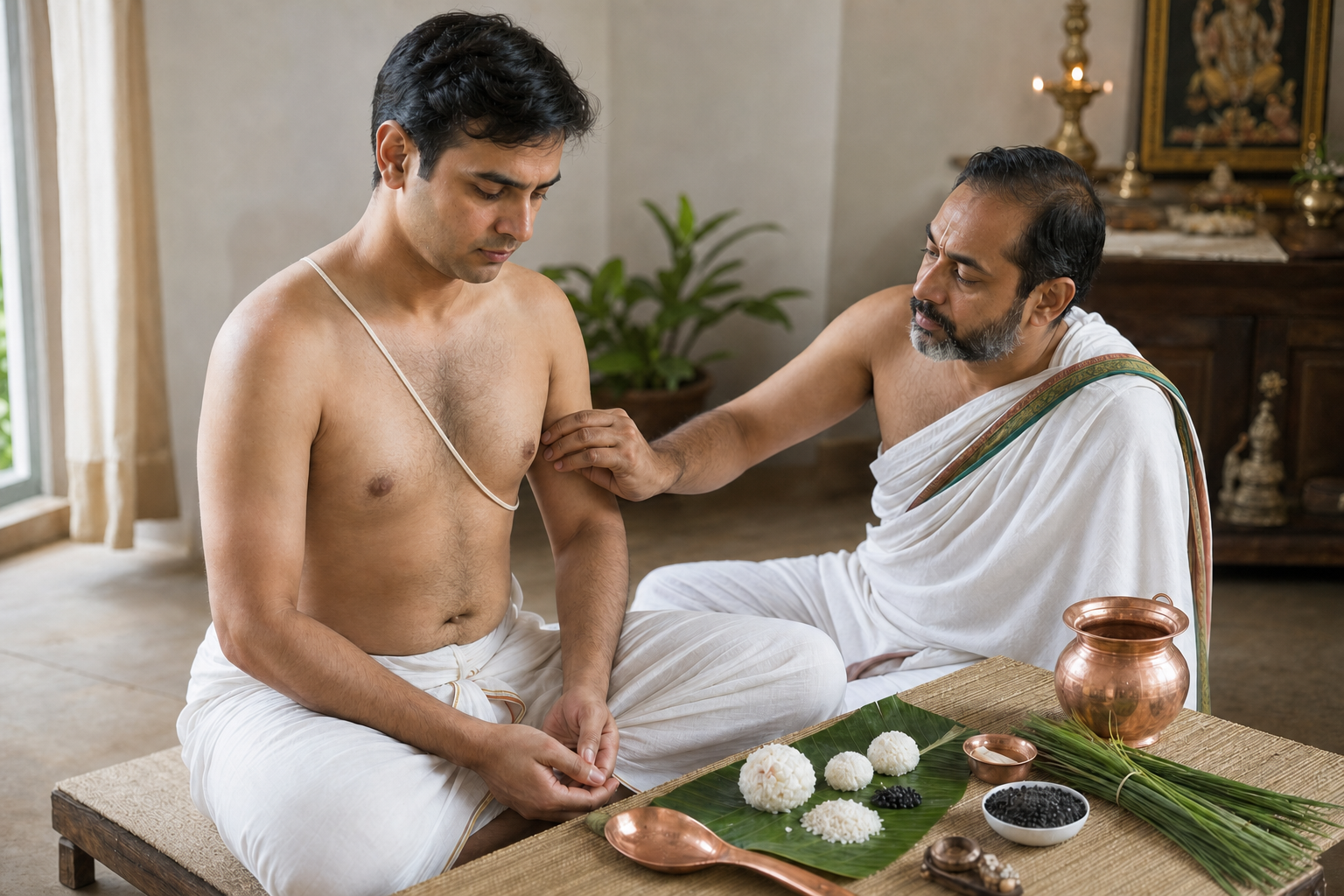
A small physical gesture can become confusing when you are reciting, handling offerings, and following several instructions at once. These checks keep the thread’s position connected to its purpose:
- Check the resting shoulder. For pracinavita, it is your right shoulder. For upavita, it is your left. Do not rely on the side of the chest where part of the thread happens to be visible.
- Identify the current ritual intention. Ask whether you are performing a pitru-focused action or an auspicious action. The name of the larger ceremony is less precise than the function of the segment in front of you.
- Do not confuse pracinavita with nivita. Pracinavita crosses the torso from the right shoulder. Nivita is worn around the neck and belongs only where a specific tradition calls for it.
- Do not copy a person facing you without translating left and right. Their right shoulder appears on your left. Verify against your own body before continuing.
- Do not let the thread replace the rest of the discipline. Cleanliness, attentive mantra recitation, correctly performed offerings, and the instructions of the lineage remain part of the rite.
If uncertainty arises during the ceremony, the safest response is a brief, respectful pause. Ask, “Pracinavita now, or upavita?” That question is more useful than making a hurried change and then spending the next portion wondering whether it was correct. When possible, settle the transitions with the officiant before the first offering so your attention can remain on the ancestors during the rite itself.
Correct form and sincere reverence are not rivals. The form makes the intention visible and repeatable; Shraddha gives the form its inner substance. Precision without remembrance becomes mechanical, while feeling without attention can allow a living tradition to lose its grammar. The rite asks you to hold both together.
Key takeaways
- For Shraddha’s ancestor-focused actions, wear the yajnopavita in pracinavita: over your right shoulder and under your left arm.
- For ordinary auspicious worship, upavita places the thread over your left shoulder and under your right arm.
- Make the change when pitru-karya begins, keep it through that segment, and change back when it ends if an auspicious portion follows.
- Use the shoulder, not the visible path across the chest, to verify which orientation you are wearing.
- Let your parampara determine the exact transition points, mantras, and any lineage-specific use of nivita.
Before your next Shraddha, add one clear note to the ritual sequence: “Pitru-karya begins – right shoulder; pitru-karya ends – return to left if an auspicious segment follows.” Confirm that note with the priest or elder guiding your family practice. Then, when the moment comes, the movement can do what it is meant to do: turn your full attention toward the ancestors.
References
