
You open two 2026 Panchangs and find different clock times for what appears to be the same tithi or Moon transit. Before deciding that one must be wrong, check the city, time zone, daylight-saving setting, and calculation standard. A Panchang time belongs to a place; it is not a universal timestamp that can be copied unchanged from Bharat to Toronto, London, Singapore, or another location.
Once you separate the civil date from the tithi active at a particular moment, and then separate both from the Moon’s Nakshatra and Rashi, the calendar becomes much easier to use. You can plan a vrata, temple visit, journey, sankalpa, or personal Chandrashtama period without turning every transition into a cause for worry.
Make your 2026 Panchang local before trusting its clock

The date printed at the top of a page is only the civil container for several moving factors. A tithi may end during the morning, afternoon, or night. The Moon may also change Nakshatra or Rashi within that same date. Your question therefore cannot stop at, “What is the Panchang for this day?” It must become, “What is in force at the place and moment when I intend to act?”
This distinction matters because tithi transitions arise from changing lunar positions and may vary by location and ephemeris. Muhurta calculations can also depend on local sunrise and solar noon. A time copied from an Indian calendar may already have been expressed in Indian Standard Time; simply reading that clock time in another country changes the intended moment.
Key takeaways
- Set the correct city and time zone before reading any 2026 timing.
- Check the tithi, Nakshatra, and Moon Rashi at the intended moment, not merely at midnight or somewhere within the date.
- Use a regional Panchang or temple notice when an observance follows a specific local or sampradaya convention.
- For Chandrashtama, begin with your natal Moon sign and calculate the complete local-time interval from lunar ingress to exit.
- Treat a difficult transit as a cue for prudence and inward discipline, not as proof that something bad must happen.
When two calendars disagree, compare their settings before comparing their answers. Confirm the selected place, time zone, daylight-saving adjustment, Nirayana or other calculation basis, and the way the calendar applies local sunrise. If the settings do not match, the displayed clock times are not directly comparable.
Read the day’s three lunar layers in the right order
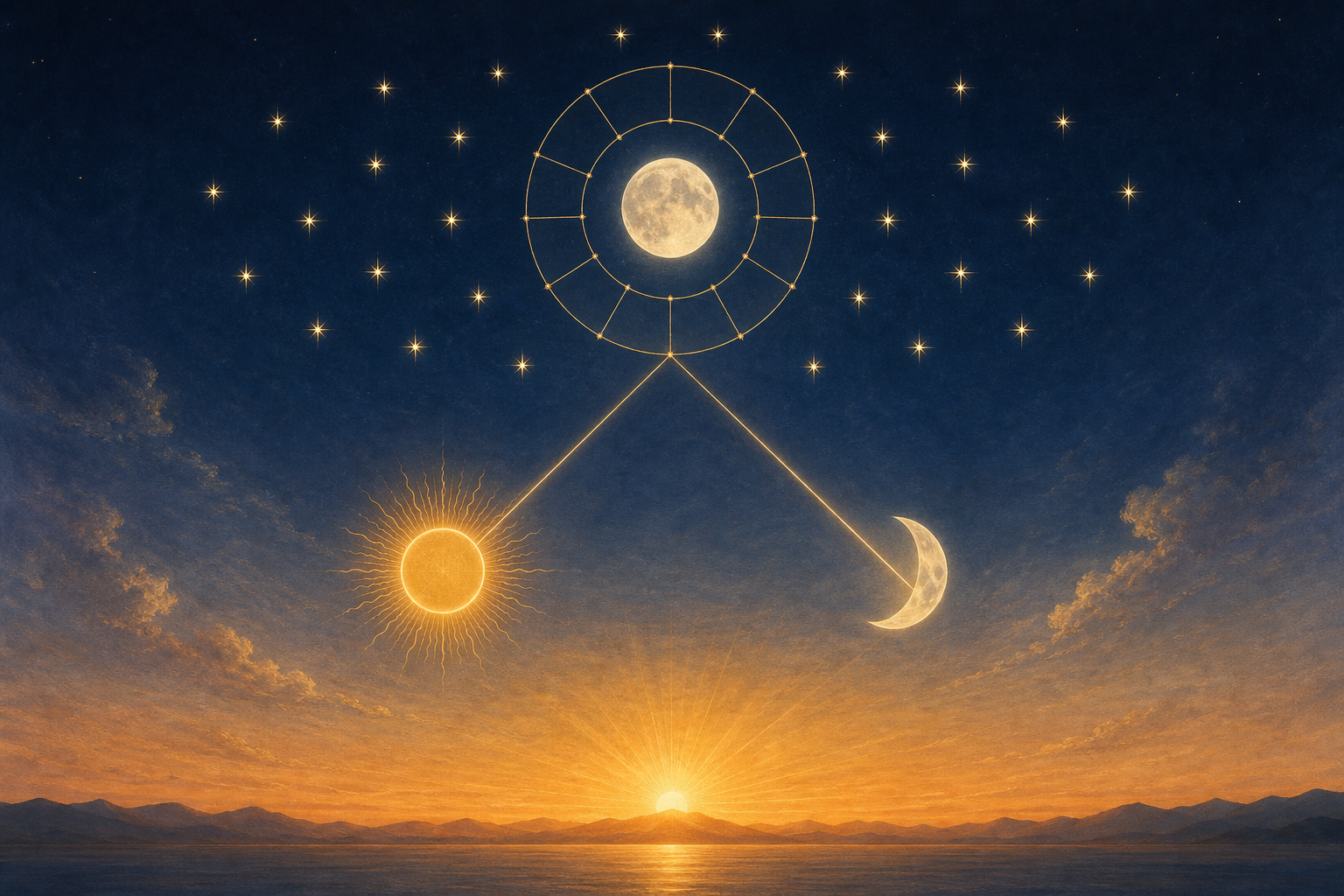
Tithi, Nakshatra, and Rashi answer different questions. Treating them as interchangeable is one of the quickest ways to misread a daily Panchang.
- Tithi: Which lunar day is active at the time of the observance? This is often the first question for a vrata, puja, or festival-related practice.
- Nakshatra: Which lunar mansion contains the Moon at that moment? This can refine a sankalpa, personal observance, or muhurta assessment.
- Moon Rashi: Which zodiac sign is the Moon transiting? This is the layer used when relating the current Moon to your Janma Rashi, including Chandrashtama.
For the January 9, 2026 planning example, Krishna Paksha Sashti lasts until 10:21 AM and Saptami follows. That boundary is more useful than a label applied to the whole date. An activity before the transition falls under Sashti in that calculation; one after it falls under Saptami. Because the clock reading is location-sensitive, however, 10:21 AM should not be transplanted into every city.
The devotional meaning also changes with the active tithi. Sashti is commonly associated in many Hindu households with discipline, protection, and worship of Subrahmanya or Murugan. Saptami carries associations with vitality, clarity, and Surya. Krishna Paksha Saptami should not be confused with the particular festival of Ratha Saptami, which belongs to Shukla Paksha. Your family tradition, temple practice, or guru’s instruction remains more specific than a generic association.
Auspicious timing requires the same precision. There is no single universally favorable clock interval for every purpose. First name the activity: a vrata, journey, study session, temple visit, charitable act, financial commitment, or ceremony. Then examine the tithi, Nakshatra, Moon Rashi, local solar conditions used by your Panchang, and any personal considerations your tradition applies. A time that suits quiet japa need not be the time selected for a major public beginning.
Calculate Chandrashtama 2026 without borrowing another person’s dates
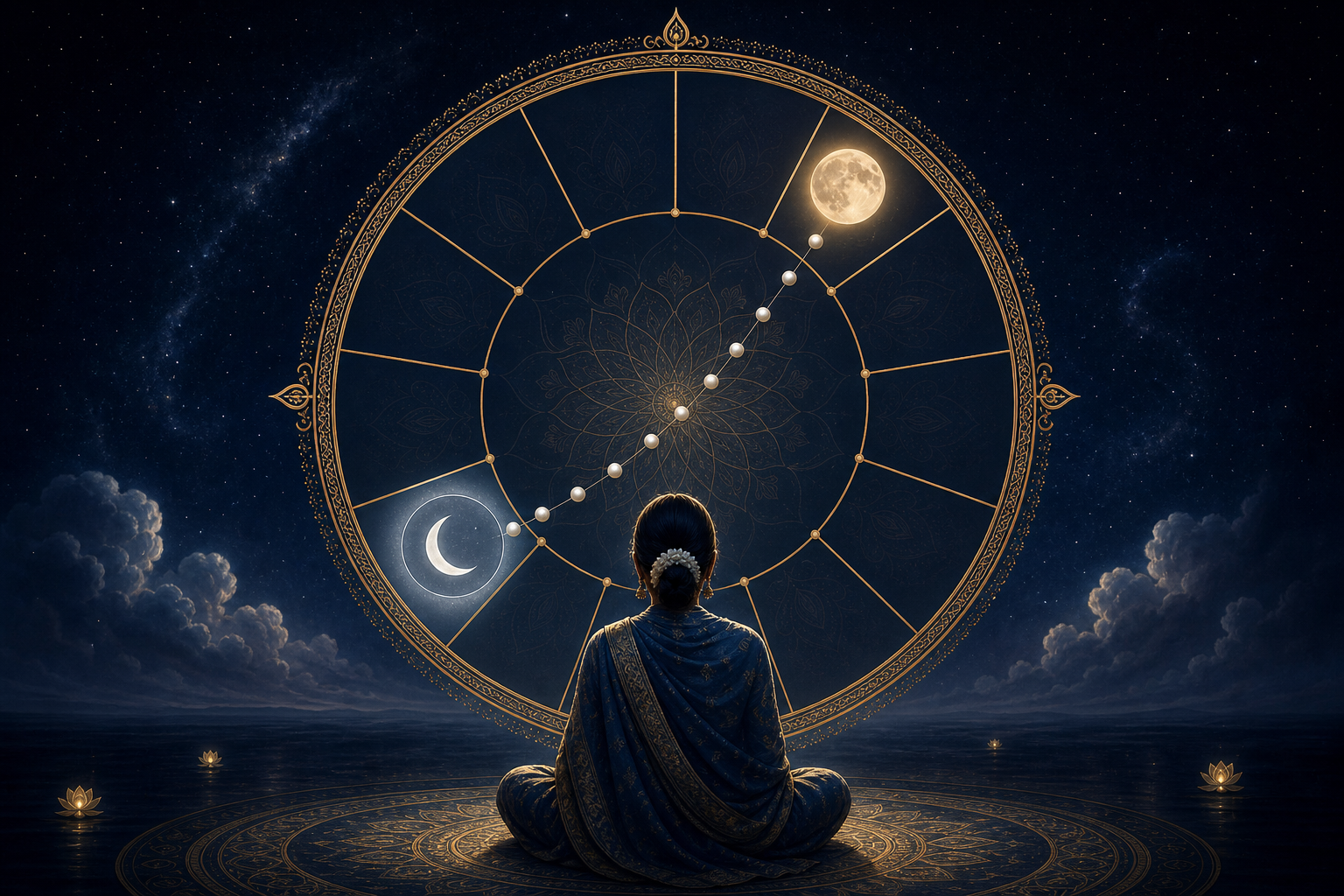
Chandrashtama occurs when the transiting Moon occupies the eighth sign from your natal Moon sign. Your Janma Rashi is counted as the first sign, the next sign as the second, and so on until the eighth. The calculation is personal to the natal Moon sign, so a Chandrashtama calendar prepared for one Rashi cannot be reused for another.
For Meena Rashi, the relevant birth placements include Purvabhadra Nakshatra fourth pada, Uttarabhadra Nakshatra, and Revati Nakshatra. The eighth sign from Meena is Tula. The Meena Chandrashtama window therefore starts when the Moon enters Tula and ends when it enters Vrischika.
- Confirm your natal Moon sign from a properly calculated birth chart. Do not substitute a Sun-sign label or guess from a calendar description.
- Identify the eighth Rashi from that natal Moon sign. For Meena, use Tula.
- Open a trustworthy local Panchang or a sidereal, Nirayana lunar ephemeris for 2026.
- Record the exact moment when the Moon enters the eighth Rashi and the exact moment when it leaves for the following Rashi.
- Convert both boundaries into your actual local time zone. Include daylight-saving changes where they apply.
- Enter the result as one start-to-end interval in your calendar. Do not reduce it to a list of whole dates if the transit begins or ends partway through a day.
The Moon returns to the same part of the zodiac on a rhythm of approximately 27.3 days, so Chandrashtama recurs roughly once each lunar month. For Meena, each Tula transit commonly lasts about 2.25 to 2.5 days. That gives you a useful expectation for planning, but not permission to estimate the boundaries: use the calculated Tula ingress and Vrischika ingress for each actual window.
Traditional practice often treats Chandrashtama as a period of greater emotional sensitivity, restraint, and introspection. It is not a guarantee that you will feel distressed or that an undertaking will fail. Dasha, Ashtakavarga strength, other transits, and the wider horoscope can alter how strongly the period is experienced. Use the window as a planning signal, not as an isolated verdict on your life.
Turn lunar timings into a calm decision plan
A list of dates is not yet guidance. For every transition that matters to you, record what it controls and what you intend to do about it. This small worksheet prevents vague unease from spreading across an entire day.
| Field | What to record | Why it matters |
|---|---|---|
| Location | City, time zone, and daylight-saving status | Establishes which local clock the timing uses |
| Calendar factor | Tithi, Nakshatra, Moon Rashi, or Chandrashtama | Stops different lunar layers from being confused |
| Boundary | Exact local start and end | Captures transitions within a civil date |
| Purpose | Vrata, puja, journey, study, ceremony, or review | Connects the calculation to a real decision |
| Response | Proceed, simplify, add checks, or defer if convenient | Turns timing into proportionate action |
| Authority | Regional Panchang, temple notice, or named ephemeris | Lets you verify the result when calendars differ |
For an optional beginning, purchase, journey, or ceremony, you may choose a different time when your tradition advises restraint and the cost of moving it is small. For a necessary commitment, keep the commitment and reduce avoidable strain: verify documents, leave enough travel margin, postpone an unnecessary confrontation, and avoid making a rushed decision simply to escape discomfort.
Do not postpone urgent medical care, a safety response, a legal deadline, or another necessary duty solely because of a lunar transit. A Panchang can guide religious observance and personal attentiveness; it cannot determine a diagnosis, interpret a contract, or establish the financial merits of a transaction. Use the appropriate professional evidence for those decisions, while using the transit to encourage patience and careful checking.
If a ritual spans a transition, ask the officiating priest or temple which moment governs the observance under that tradition. The relevant point may depend on the rite and local custom. Guessing from a generic daily label is less reliable than confirming the convention before you make arrangements.
Let the lunar rhythm deepen practice rather than fear
Krishna Paksha naturally lends itself to simplification and inward attention. A Chandrashtama interval can be approached in the same spirit. You do not need an elaborate remedy for every monthly transit. A modest discipline that you can actually keep is more useful than anxious ritual accumulation.
- Keep japa steady and unhurried rather than multiplying counts out of fear.
- Use gentle pranayama or quiet sitting to notice agitation before acting on it.
- Read a short passage from a sacred text and carry one instruction into the day.
- Choose seva or a simple charitable act when excessive self-concern begins to dominate.
- Review unfinished work, correct errors, and consolidate existing efforts before adding a new burden.
Hinduism, Buddhism, Jainism, and Sikhism do not use identical calendars or astrological frameworks, and their distinctions should be respected. Yet restraint, awareness, compassion, study, and seva provide recognisable Dharmic ground across these traditions. The calendar serves best when it brings those qualities into conduct, not when it becomes a mechanism for fatalism.
Before your next important 2026 date, set the correct location, identify the lunar factor that genuinely matters, write down its exact local boundary, and decide in advance whether you will proceed, adapt, or defer. That four-part habit gives you a Panchang practice rooted in accuracy, shraddha, and calm agency.
References
- DharmaRenaissance Blog – Meena Rashi Chandrashtama 2026: How to Find Accurate Dates, Timings, and Plan Calmly
- DharmaRenaissance Blog – January 9, 2026 Panchang: Sashti to Saptami Tithi Timing, Auspicious Cues, Spiritual Insights
