

You may be facing a familiar but false choice: either say that every Dharmic tradition teaches the same thing, or prove loyalty to your own path by treating other paths as errors. The first choice dissolves meaningful differences. The second turns differences into estrangement.
There is a more disciplined way to stand. You can be rooted in a sampradaya, Ishta, scripture, or vow while refusing to let that identity harden into contempt. Dharmic unity becomes real when you can preserve distinction, recognize shared ethical ground, and notice when your own mind is manufacturing an enemy.
The unity you need is not uniformity
Unity does not mean that Hindu, Buddhist, Jain, and Sikh teachings are interchangeable. Nor does it require Shaivas, Vaishnavas, Shaktas, Smarthas, or other Hindu communities to abandon their particular understandings. A unity that survives only by concealing disagreement is too fragile to guide anyone.
Begin by separating three levels that are often confused:
- Form: the visible expression of a path: its names, symbols, objects of devotion, scriptures, vows, ceremonies, and disciplines.
- Function: what a practice cultivates in the practitioner, such as discernment, devotion, restraint, compassion, humility, concentration, or selfless service.
- Truth claim: what a tradition teaches about the self, ultimate reality, bondage, right conduct, and liberation.
Two paths can perform a similar function without making identical truth claims. Contemplative practices may steady the mind in more than one tradition, for example, while those traditions interpret the mind and its liberation differently. You do not need to hide that difference. You need to discuss it without turning a doctrinal boundary into a verdict on another person’s worth.
This distinction also protects pluralism from becoming vague permissiveness. A path is not sound merely because someone finds it appealing. Within a Dharmic frame, sincerity must be joined to discipline, ethical conduct, and transformation. The question is not simply, “Does this suit me?” It is also, “What is this practice making of my character?”
When a disagreement appears, identify its level before responding. If the difference concerns ritual form, do not inflate it into a total conflict over truth. If it concerns a genuine philosophical claim, state the claim precisely. If it concerns conduct, judge the conduct rather than condemning everyone who carries the same religious label.
Catch separateness before it becomes conduct

Separateness usually feels like a fact by the time you notice it, but it often begins as a rapid mental sequence. You see a form, attach a name, add a story, and then react to the story as though it were the whole person.
A Dharmic reading of nama and rupa treats names and forms as useful designations without granting them ultimate authority. You need names to speak, worship, organize a community, protect a tradition, and fulfill duties. The trouble begins when a designation becomes an exhaustive identity: this job is my worth, this body is my whole being, this sect determines everything about its members, or this disagreement makes the other person alien to me.
Use the following pause when a label produces immediate anger, superiority, fear, or defensiveness:
- State the observation. Describe only what was said or done. “This person rejected that teaching” is an observation. “People like them hate us” is an added story.
- Name the label. Notice the noun now carrying the emotional weight: caste, sect, religion, party, profession, region, or family role.
- Expose the conclusion. Complete the sentence, “Because this label applies, I am assuming…” The hidden generalization usually becomes visible here.
- Choose the Dharmic action. Decide whether the moment calls for inquiry, a truthful correction, a firm boundary, restraint, forgiveness, or no response at all.
This is not an instruction to ignore harmful conduct or surrender discernment. It is a way to keep discernment clean. You can oppose an action forcefully without treating a name as proof of a person’s entire nature.
The Upanishadic practice of neti, neti can support the same freedom inwardly. When a role or injury seems to define you, examine it: this experience is present, but is it the whole of what I am? This body, title, success, failure, or affiliation matters within life, but does it exhaust being? The inquiry does not erase your duties or history. It prevents one changing condition from occupying the throne of identity.
Go deep in one path without turning it into a weapon

Pluralism becomes shallow when it asks you to sample everything but commit to nothing. A chosen path gives your practice continuity. In Hindu traditions, an Ishta-devata allows devotion to take a definite form; the form focuses love, remembrance, and discipline. Honoring another person’s Ishta does not diminish your own.
The Bhagavad Gita accommodates different spiritual temperaments through discernment, devotion, disciplined action, and inward mastery. That plurality is structured. Each path asks something concrete of you:
- Jnana: study, inquire, and discriminate between the transient and the enduring. Test the practice by whether it makes you more lucid and less captive to intellectual pride.
- Bhakti: orient emotion toward Ishvara through an Ishta, mantra, aarti, or remembrance. Test it by whether love becomes less possessive and reverence extends beyond your preferred form.
- Karma yoga: perform the action required by dharma while loosening your claim over its result. Test it when another person receives the credit or events refuse to follow your plan.
- Raja yoga: cultivate steadiness through disciplined inward practice. Test it in the interval between provocation and response, not only during a quiet period of meditation.
Choose a principal discipline instead of changing paths whenever practice becomes uncomfortable. Complement it where necessary: devotion can soften dry analysis, inquiry can clarify devotion, meditation can steady service, and seva can prevent inward practice from becoming self-absorption. A trusted guru or mentor, svadhyaya, and regular abhyasa can help you distinguish genuine development from spiritual preference-shopping.
You can remain rooted while recognizing that different temperaments may approach realization differently. The measure is not whether everyone adopts your method. Look for greater clarity, compassion, steadiness, humility, and integrity in conduct.
Extend that respect across traditions without appropriating them. Buddhist anatta and dependent origination should not be renamed as Advaita merely because both can loosen attachment to a separate self. Jain anekantavada disciplines one-sided certainty; it is not a claim that every assertion is equally valid. Sikh affirmation of Ik Onkar and Akal Purakh, together with the critique of haumai, cannot be reduced to a generic slogan about oneness. Real respect allows each tradition to speak in its own vocabulary.
Disagree without recreating the separation you oppose
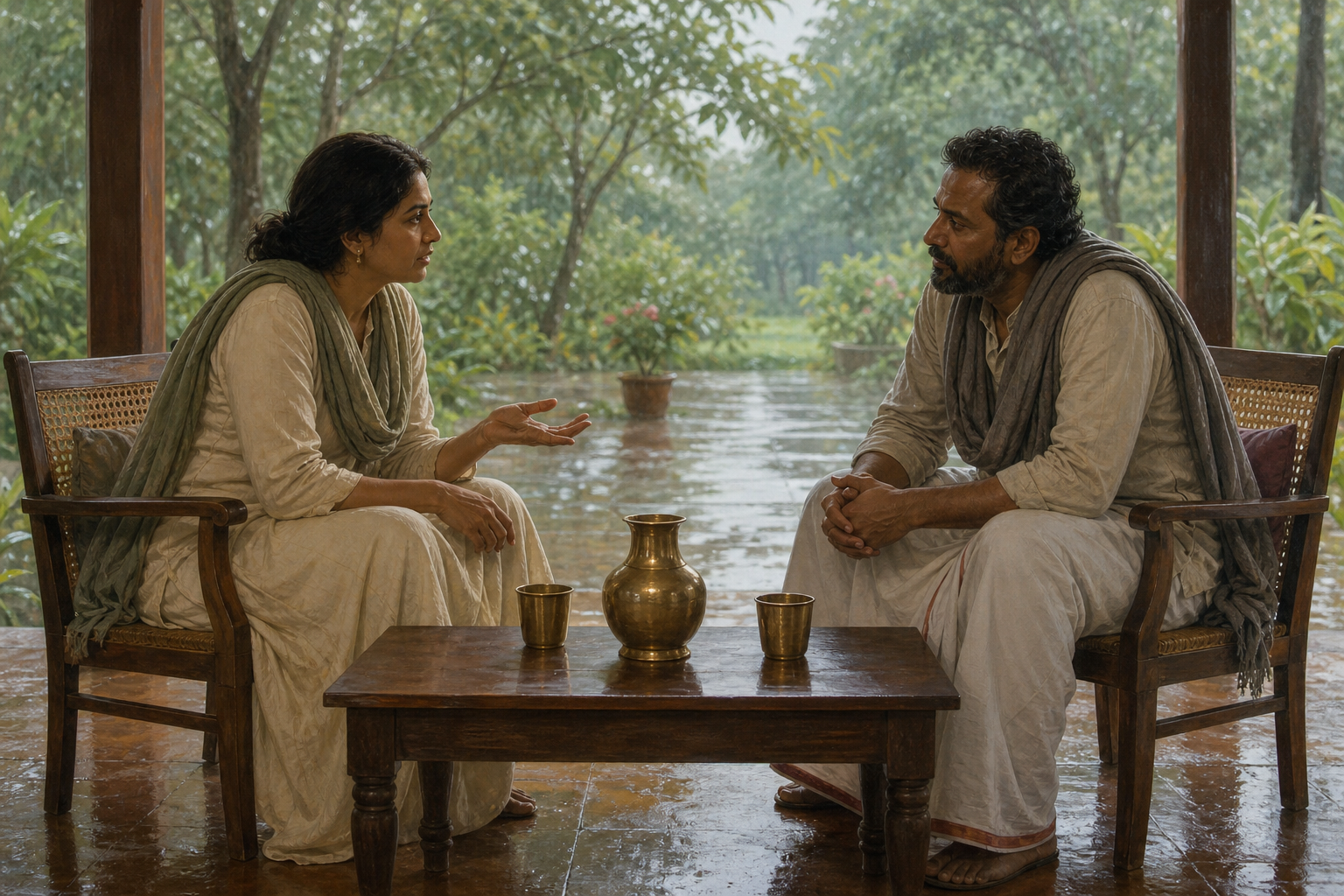
Dharmic unity does not require silence when teachings conflict or when adharma must be challenged. It does require accuracy. Much sectarian heat comes from answering a population instead of answering a proposition.
Use this sequence in a family discussion, study circle, community meeting, or online exchange:
- Name the exact claim. Replace “They reject dharma” with a sentence that identifies the teaching, interpretation, or action under dispute.
- Locate your standpoint. Say, “From the standpoint of my sampradaya…” when your conclusion depends on that sampradaya’s premises. Do not present a school-specific interpretation as the only Dharmic vocabulary available.
- Distinguish doctrine from dignity. You may consider a proposition mistaken without treating its speaker as beneath respect.
- Restate before refuting. Summarize the other position in language its practitioner could recognize. If they reject your summary, correct it before arguing further.
- State the boundary plainly. “We can cooperate without pretending that we agree” is more honest than either hostility or artificial consensus.
- Look for the next shared duty. Seva, protection of sacred spaces, care for vulnerable people, truthful education, and disciplined nonviolence can unite people who retain real philosophical differences.
Anekantavada offers a useful check at the fourth step: ask what aspect of the matter your standpoint reveals and what it may leave outside its frame. That question does not force you to abandon a conclusion. It prevents a partial view from masquerading as an exhaustive one.
Buddhist upaya, or skillful means, supplies another caution. A method should be assessed in relation to the person and the liberating purpose it serves. Different medicine for different dispositions does not imply the absence of standards; it means that mechanical uniformity is not the same as wisdom.
Apply the same discipline when defending Hindu interests. Cultural advocacy becomes stronger when it identifies the disputed statement, action, institution, or policy with precision. A totalizing label may generate quick solidarity, but it also clouds responsibility and reproduces the very separateness that Dharmic insight asks you to overcome.
Build unity into the ordinary rhythm of your day

Freedom from separateness is not secured by agreeing with an elevated idea. It has to enter worship, speech, study, and service. Use a simple daily rhythm:
- Before practice: name your chosen orientation clearly. Then set an ethical intention: may this worship, meditation, study, or recitation reduce arrogance and strengthen right action.
- At the first reactive label: pause at the sequence of name, form, story, and response. Keep the accurate name; question the story attached to it.
- During study: learn your own tradition deeply enough to state its boundaries without caricature. When studying a neighboring tradition, begin with its own central terms rather than translating everything immediately into yours.
- In speech: replace claims about what an entire group “is” with a precise description of the teaching or conduct you mean. Precision is both intellectually cleaner and less likely to turn correction into hostility.
- Through seva: do useful work with people whose metaphysics differ from yours. Shared service tests whether your unity can survive outside ceremonial language.
- Before rest: review one charged reaction. Ask which label took control, what status or attachment you were protecting, and what a more truthful response would have been.
Key takeaways
- Dharmic unity preserves distinct traditions; it does not manufacture agreement by erasing their teachings.
- Names and forms are necessary for practice and community, but they become sources of suffering when treated as total identities.
- A principal path gives plurality depth. Judge your practice by its effect on clarity, compassion, steadiness, humility, and conduct.
- Critique exact claims and actions rather than converting a religious or sectarian name into a complete moral verdict.
- You do not have to choose between conviction and respect. You need enough discipline to hold both.
At your next disagreement, keep every distinction that is truthful and release the conclusion that difference must mean estrangement. Then make one Dharmic action possible: listen carefully, correct precisely, restrain an egoic reaction, defend a legitimate boundary, or serve together. Freedom begins before differences disappear. It begins when they no longer own your mind.
References
- DharmaRenaissance Blog – Why ‘Name and Form’ Create Suffering: A Powerful Dharmic Lens on Oneness and Freedom
- DharmaRenaissance Blog – Infinite Paths, One Truth: How Hinduism Empowers Personal Realization and Sacred Unity
