
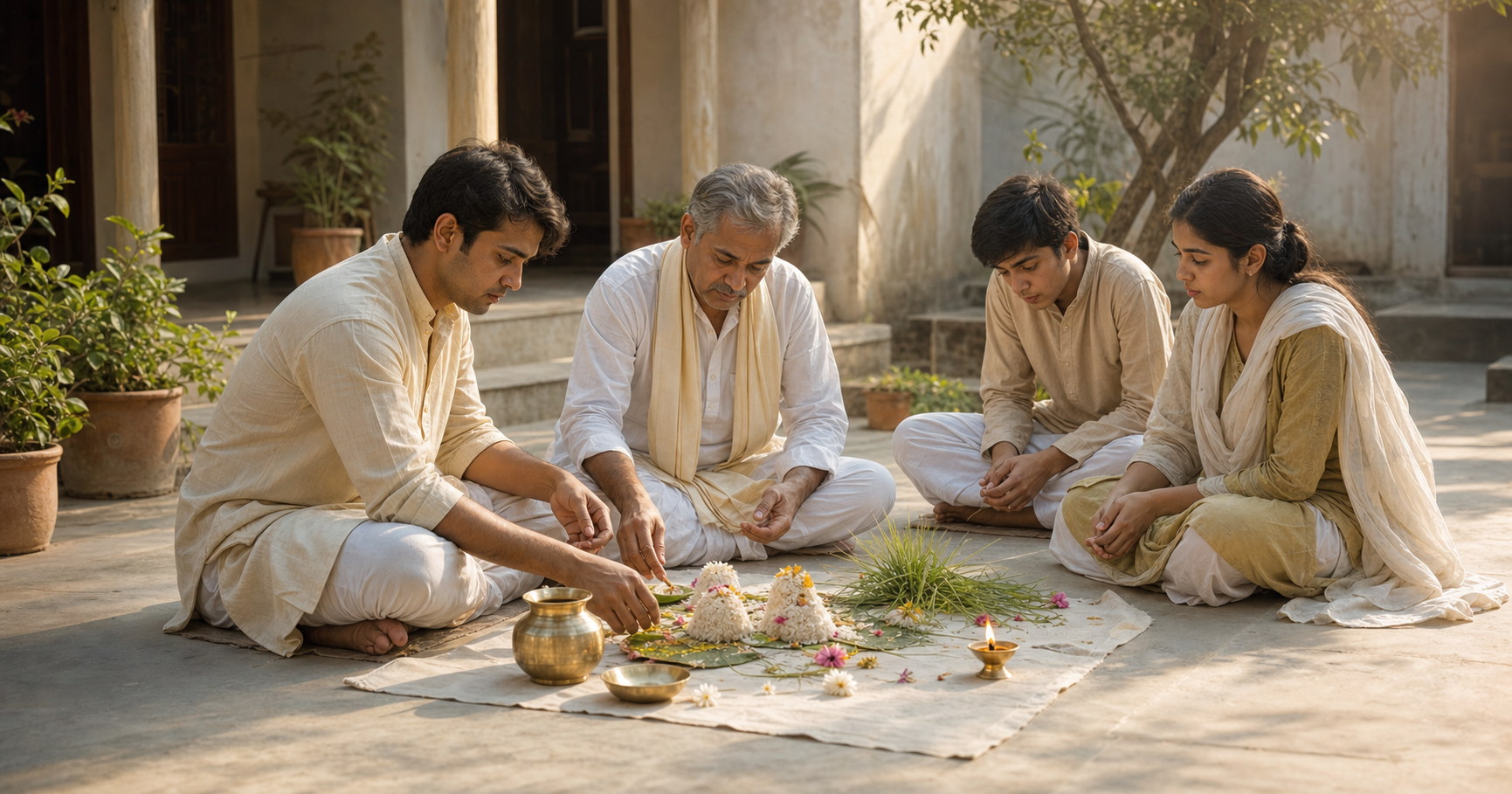
You want to perform Shradh faithfully, but one question can unsettle the whole preparation: if three generations receive the offerings, what happens to the fourth ancestor and everyone before them? The answer is not that they have been forgotten. Chaturtha Visarga gives this particular rite a deliberate boundary.
Once you understand that boundary, the ceremony becomes easier to prepare and harder to distort. You can identify the intended ancestors, consult the right family authority, keep the offerings focused, and use the occasion to strengthen kinship among the living as well as reverence for the departed.
The fourth omission sets a boundary; it does not erase an ancestor

Chaturtha Visarga, also written Caturtha Visarga, literally signifies the fourth omission. Offerings are directed to three proximate generations, while the fourth generation and those beyond it are not invoked within the defined scope of this observance.
The familiar example is father, grandfather, and great-grandfather on the lineage being honored. That example explains the three-generation count. It should not be treated as permission to improvise rules for every branch of a family. If your household’s lineage formula, names, or customary procedure are unclear, take the question to a knowledgeable elder or priest before the sankalpa rather than resolving it by guesswork during the ceremony.
The underlying distinction is between sapinda and samanodaka ancestors. For the purpose of this rite, the sapinda circle comprises the proximate generations receiving concentrated ritual attention; samanodaka refers to more remote ancestral kin. The distinction organizes remembrance. It does not rank the human worth, affection, or spiritual importance of one ancestor above another.
This is the practical meaning of the omission: a sacred duty becomes performable because it has a prescribed object. If every remembered forebear were added to the same invocation, the defining focus of Chaturtha Visarga would disappear. Restraint here is part of fidelity, not a failure of devotion.
You can still remember remote forebears in family history, prayerful reflection, ethical conduct, and other forms permitted by your tradition. What you should not do is quietly enlarge this particular ritual while continuing to call it Chaturtha Visarga. The rite honors the larger ancestral stream precisely by attending carefully to the portion assigned to it.
Identify the three-generation circle before arranging the ceremony
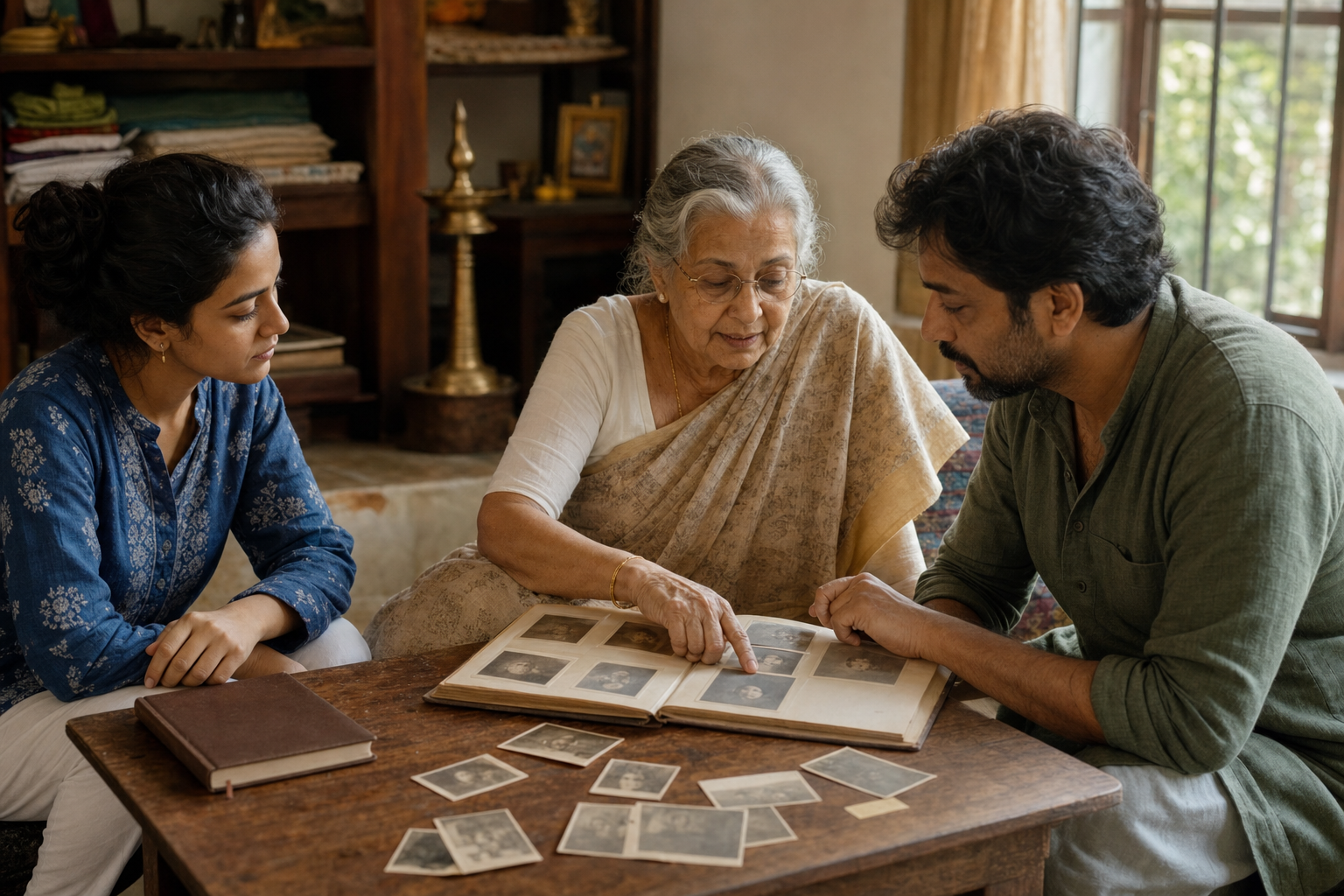
The most useful preparation is not an elaborate purchase list. It is a clear lineage map. Confusion about whom the rite addresses cannot be repaired by adding more food, more recitations, or more ceremonial detail.
- Identify the occasion. Chaturtha Visarga Shradh may be observed during Pitru Paksha, on an individual death anniversary reckoned by tithi, or when your family tradition directs it.
- Write down the three generations you believe are included. Place each person beside the relationship through which that person belongs to the lineage being honored.
- Mark every uncertainty instead of filling it with an assumption. A forgotten name, an unclear generation, or a disputed household convention should become a question for an elder or priest.
- Confirm the counting rule and the relevant lineage with someone who knows your parampara. Regional and sampradaya practices can differ even when the core three-generation focus remains recognizable.
- Tell participating relatives what the boundary means. Explain that omission from this rite is not rejection from the family memory.
This preparation also prevents a common emotional mistake: treating the ritual list as a complete register of everyone the family loves. It is not. It is a ritually defined circle. A person’s absence from that circle may reflect generational scope rather than diminished belonging.
If different relatives have learned different versions of the procedure, do not turn the Shradh into a contest over who remembers correctly. Record the disagreement, identify the family or regional traditions behind it, and seek guidance before the observance. Ritual precision and family harmony should support one another.
Use a simple ritual framework without overriding your parampara
A general framework can help you prepare, but it cannot replace the mantras, sequencing, eligibility rules, or local conventions transmitted in your family. The safest approach is to understand the function of each part and let a trusted elder or priest supply the tradition-specific form.
- Begin with sankalpa. State the intention clearly so the observance has a defined purpose and ancestral focus.
- Follow the purification and prayer practices taught in your tradition. Do not add complexity merely to make the ceremony appear more substantial.
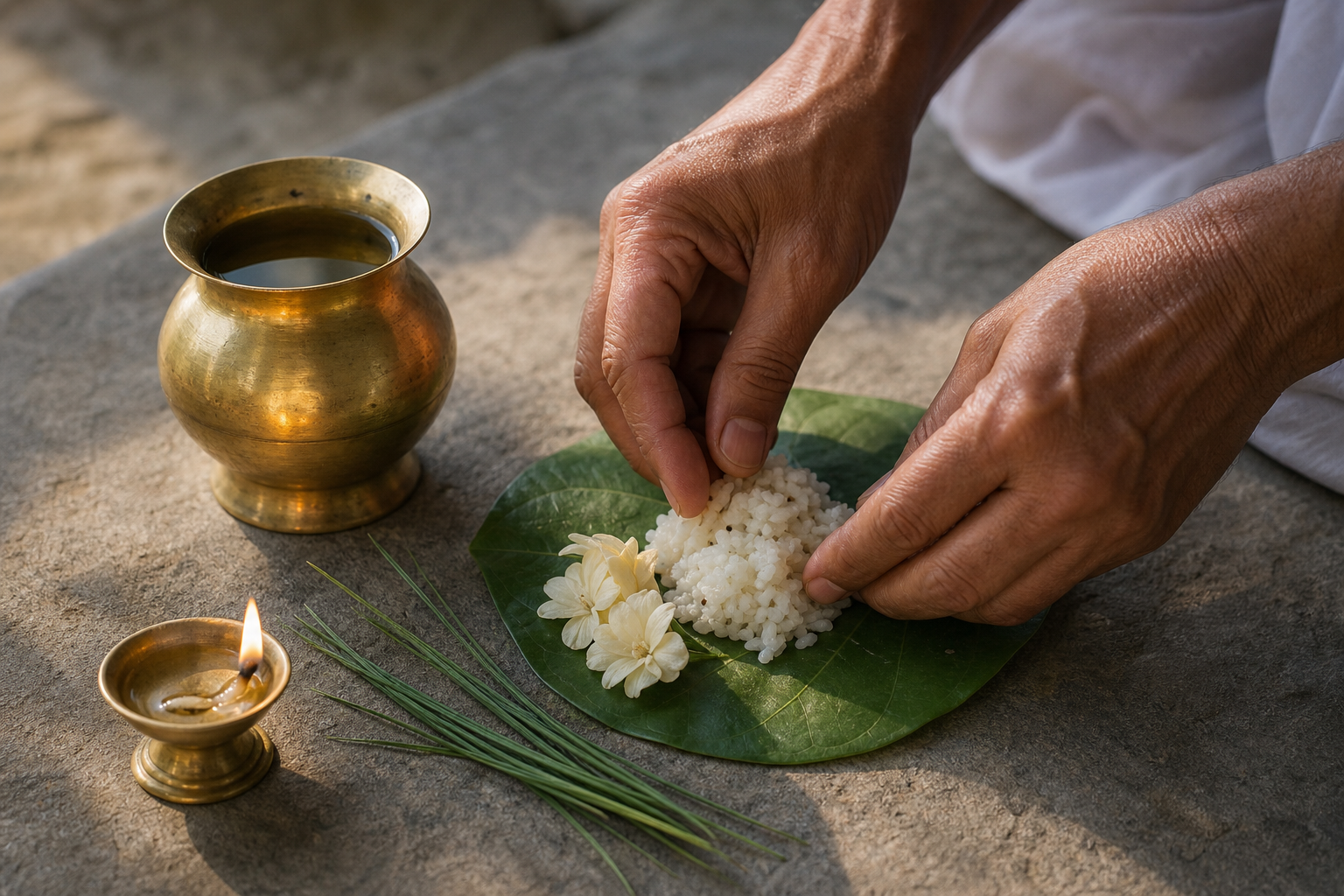
- Offer tarpan with water and til as directed. Keep your attention on the ancestors identified for the rite.
- Dedicate pind daan to the prescribed three generations. The fourth is purposefully not invoked within this offering.
- Prepare and share sattvic food in the customary manner. Feeding guests or making sanctioned food offerings can extend the act into seva.
- Close according to family practice, then record what was done while the details are still clear.
The operative principle is disciplined simplicity. Sankalpa, tarpan with water and til, pind daan for the three generations, and sattvic food offered through customary forms of seva give the observance a coherent shape. More elements do not automatically create more reverence. Unexamined additions can blur the very distinction the rite is meant to preserve.
If you are observing away from your ancestral region, begin by separating essentials from inherited local expression. Ask which elements define Chaturtha Visarga itself, which belong to your sampradaya, and which are household customs. That three-part question helps a diaspora family adapt to circumstance without pretending that every convenient substitution has traditional authority.
When ideal conditions are unavailable, do not invent certainty. Tell the person guiding you what is missing, what you know, and what you do not know. Sincerity matters, but sincerity is strengthened by honest limits and respect for transmitted knowledge.
Make the rite a practice of living ancestral kinship

Ancestral kinship is more than the biological fact that one generation follows another. It is a relationship of reception and responsibility. You received life, language, memory, obligations, and cultural forms from people you did not choose. Shradh gives gratitude toward that inheritance a disciplined expression.
The ceremony can also reveal where transmission is weakening. If no one knows the ancestral names, the relevant tithis, the lineage being invoked, or the reason for omitting the fourth generation, the problem is not solved by performing the outer sequence once. The family needs a durable record and a person willing to teach the next generation.
- Create a concise family record containing the names used in the observance, their relationships, the relevant tithis, and the regional or sampradaya practice followed.
- Record who supplied the guidance. Future relatives should be able to distinguish inherited instruction from a later guess.
- Invite younger family members to learn why the count stops at three. A rule remembered without its purpose is easily discarded or expanded beyond recognition.
- Connect remembrance with conduct. Let gratitude appear in care for living elders, family responsibility, service, and ethical choices.
- Review the record before the next observance. Corrections made in advance preserve calm during the rite.
This is especially important in the diaspora, where ancestral observance can bridge places, generations, and identities. The bridge becomes real when the next generation receives more than instructions. It needs the relationships, meanings, and reasons that make those instructions intelligible.
Hinduism, Buddhism, Jainism, and Sikhism do not perform one interchangeable ancestral ceremony. Chaturtha Visarga Shradh belongs to a specific Hindu ritual framework. Yet these Dharmic communities can recognize a shared ethical concern: elders are remembered through reflection, service, gratitude, and responsible living. Respecting that common ground does not require flattening their distinct doctrines or practices.
That distinction matters in a family or community where several Dharmic paths are present. Preserve the Hindu rite in the form appropriate to its parampara. Let the broader gathering express shared reverence through respectful presence, remembrance, service, or ethical resolve rather than merging different traditions into a ceremony none of them actually teaches.
Key takeaways
- Chaturtha Visarga directs offerings to three proximate ancestral generations and intentionally leaves the fourth and more remote generations outside this rite’s invocation.
- The omission establishes ritual scope. It should not be interpreted as forgetting, rejecting, or devaluing remote ancestors.
- The familiar three-generation example is father, grandfather, and great-grandfather on a given lineage, but your own lineage formula and procedure should be confirmed through family or priestly guidance.
- A workable framework includes sankalpa, purification and prayer, tarpan with water and til, pind daan for the three generations, and sattvic food shared or offered through customary seva.
- Keep a written record of names, relationships, tithis, and inherited instructions so the rite remains intelligible to the next generation.
- Honor shared Dharmic respect for elders without claiming that Hindu, Buddhist, Jain, and Sikh ancestral practices are identical.
Before the next Pitru Paksha or family tithi, draw the three-generation lineage you intend to honor and circle every uncertainty. Take that single page to a knowledgeable elder or priest. Clarity established before the sankalpa will let the ceremony remain what it is meant to be: focused gratitude, faithfully transmitted.
References
