
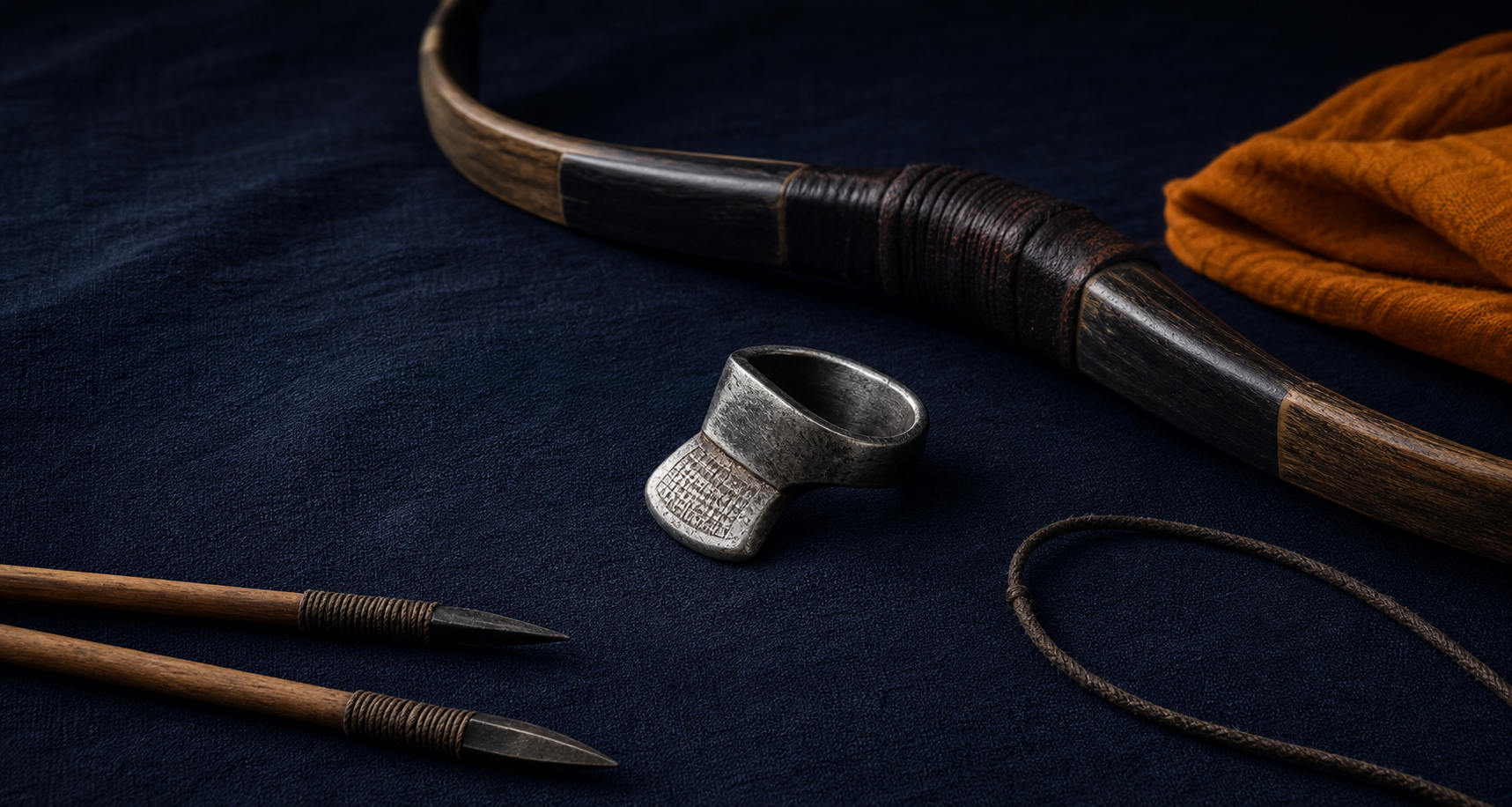
If you have encountered a gulsatran in a martial collection, a museum display, or a discussion of Shastar Vidya, you may have wondered what this small ring actually did. The short answer is practical: it protected the drawing thumb and helped an archer release the bowstring cleanly. But that answer is only the beginning.
To understand the gulsatran properly, you have to keep three things together: the mechanics of the thumb draw, the craft of fitting a working object to the human hand, and the Sikh discipline of governing force through duty and restraint. Separate those layers and the ring becomes either a curiosity or a costume accessory. Hold them together and it becomes a compact lesson in Shastar Vidya.
The gulsatran solves a precise problem in the thumb draw
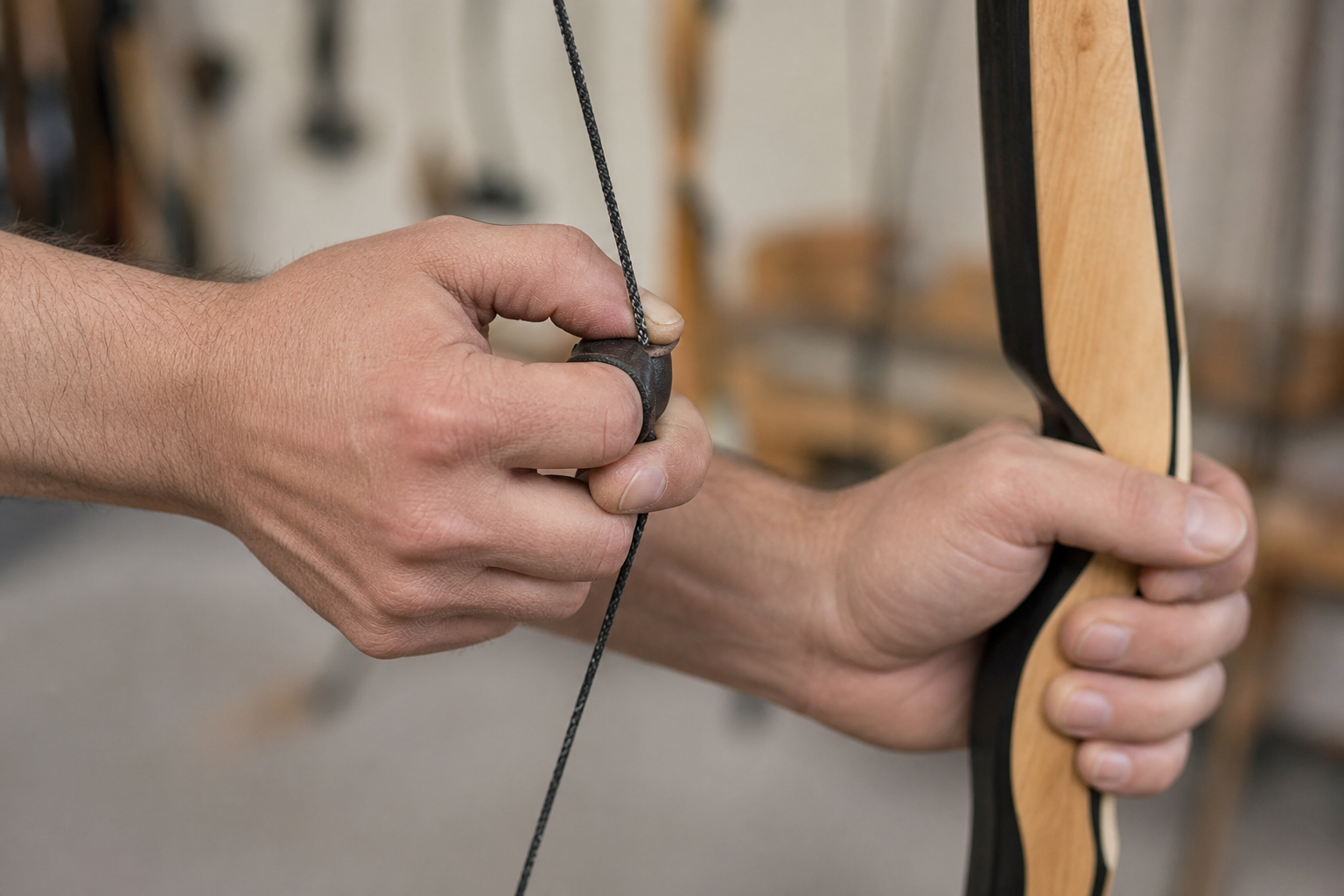
A bowstring places concentrated pressure on the fingers that draw it. In a thumb-draw system, much of that pressure falls on the thumb. The gulsatran protects the thumb, stabilizes the hold, and helps the string leave the hand with less interference.
The ring does not create strength by itself. It helps the archer use trained strength more consistently. That distinction matters. A powerful draw followed by an uneven release can disturb the bow and send the arrow away from the intended line. A cleaner release transfers energy more efficiently and makes repeated shots easier to reproduce, supporting accuracy, range, and penetration.
- Protection: The ring places a barrier between the bowstring and the thumb, reducing direct strain on the skin and joint.
- Stability: A properly fitted ring helps the archer maintain a secure string hold during the draw.
- Consistency: A smooth release reduces one source of variation between shots.
- Feedback: Because poor alignment becomes difficult to hide, the ring can expose weaknesses in hand position, anchor, and timing.
This is why fit cannot be treated as a decorative concern. A loose ring may move when pressure is applied. An excessively tight ring may compress the thumb and interfere with comfortable movement. The useful fit is secure under the intended load without causing numbness, persistent pain, discoloration, or loss of sensation. If any of those signs appear, stop. Do not try to toughen the thumb through nerve compression.
A beginner often notices the gulsatran first as protection. With sound instruction, its more demanding purpose becomes clearer: it removes some friction from the shot while making faults in technique easier to feel. The object becomes less noticeable as the archer becomes more attentive.
Its Sikh meaning sits within a wider Asian archery history
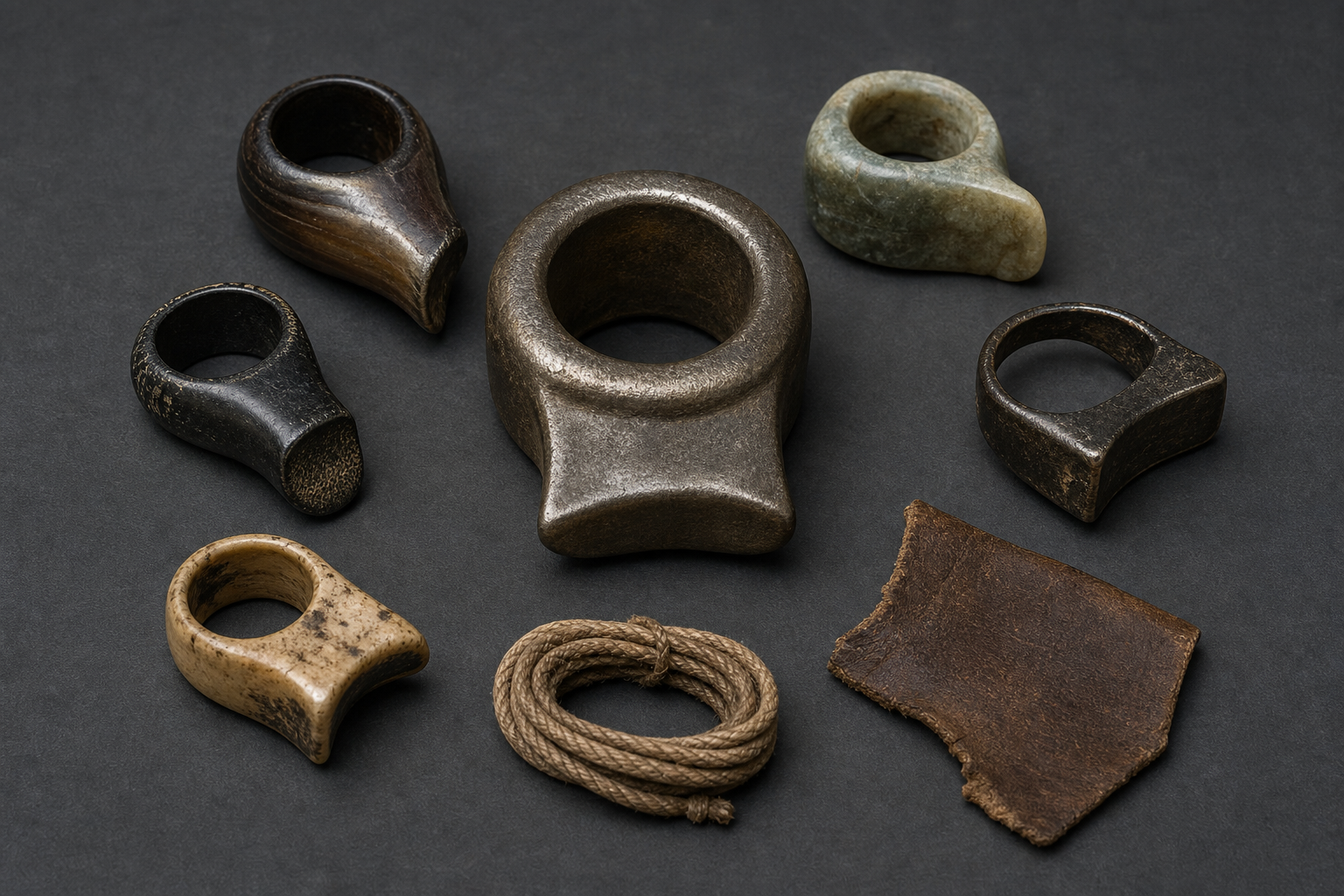
Thumb rings were used across Central and South Asia, not within one community alone. Persianate vocabulary includes the related term zihgir, while Mughal-era examples survive in materials such as jade, horn, and metal. In the Panjab, bows and thumb-draw methods remained part of the martial environment into the early modern period. Sikh warriors inherited, adapted, and disciplined techniques available within that environment.
This shared history prevents two common mistakes. The first is claiming that the basic object must have originated exclusively within Sikh tradition. The second is assuming that a shared Asian form therefore has no specifically Sikh significance. Neither conclusion follows. A martial technology can travel across regions while acquiring a distinct place within the discipline, ethics, and memory of a particular community.
The gulsatran is Sikh in this meaningful sense: it became part of a martial repertoire shaped by Sikh commitments to readiness, justice, collective defence, and restraint. Its wider Asian relatives explain the technology. Shastar Vidya explains how that technology could be trained and morally situated in a Sikh setting.
Surviving rings also reveal a meeting between utility and craftsmanship. Horn, bone, metal, and stone require different methods of carving or shaping, yet every functional example has to answer the same bodily problem: how to receive the bowstring’s pressure without concentrating harmful stress on the thumb. Floral, geometric, or calligraphic ornament may add beauty and identity, but decoration does not cancel function.
If you are examining a gulsatran in a collection, record what is actually present before assigning a story to it:
- Identify the material cautiously. Horn, bone, metal, jade, and other stone can resemble one another in photographs. Do not make a firm identification from colour alone.
- Study the working profile. Ask how the form would sit on a thumb and where the string’s pressure would be distributed. Function is more informative than ornament by itself.
- Record the motifs without overinterpreting them. Floral, geometric, and calligraphic designs can help comparison, but a decorative pattern alone does not establish the owner’s identity or the ring’s exact place of manufacture.
- Look for provenance. Collection history, regional context, associated objects, and textual references are stronger than an attractive label unsupported by context.
- Separate age from appearance. Material and ornament may help classification, but they do not independently prove a precise date.
Do not shoot with an antique or museum-quality ring. Age, internal weakness, previous damage, and an unknown fit can make an old object unsafe for both the wearer and the artifact. Use a modern training ring selected for your hand and equipment, and preserve the historical object as material evidence.
The eventual military shift from bows toward firearms changed the practical setting in which such rings were used. It did not make them culturally empty. The gulsatran continued to embody a disciplined relationship among the hand, weapon, maker, and moral purpose of training.
Train the ring as equipment, not as martial jewellery
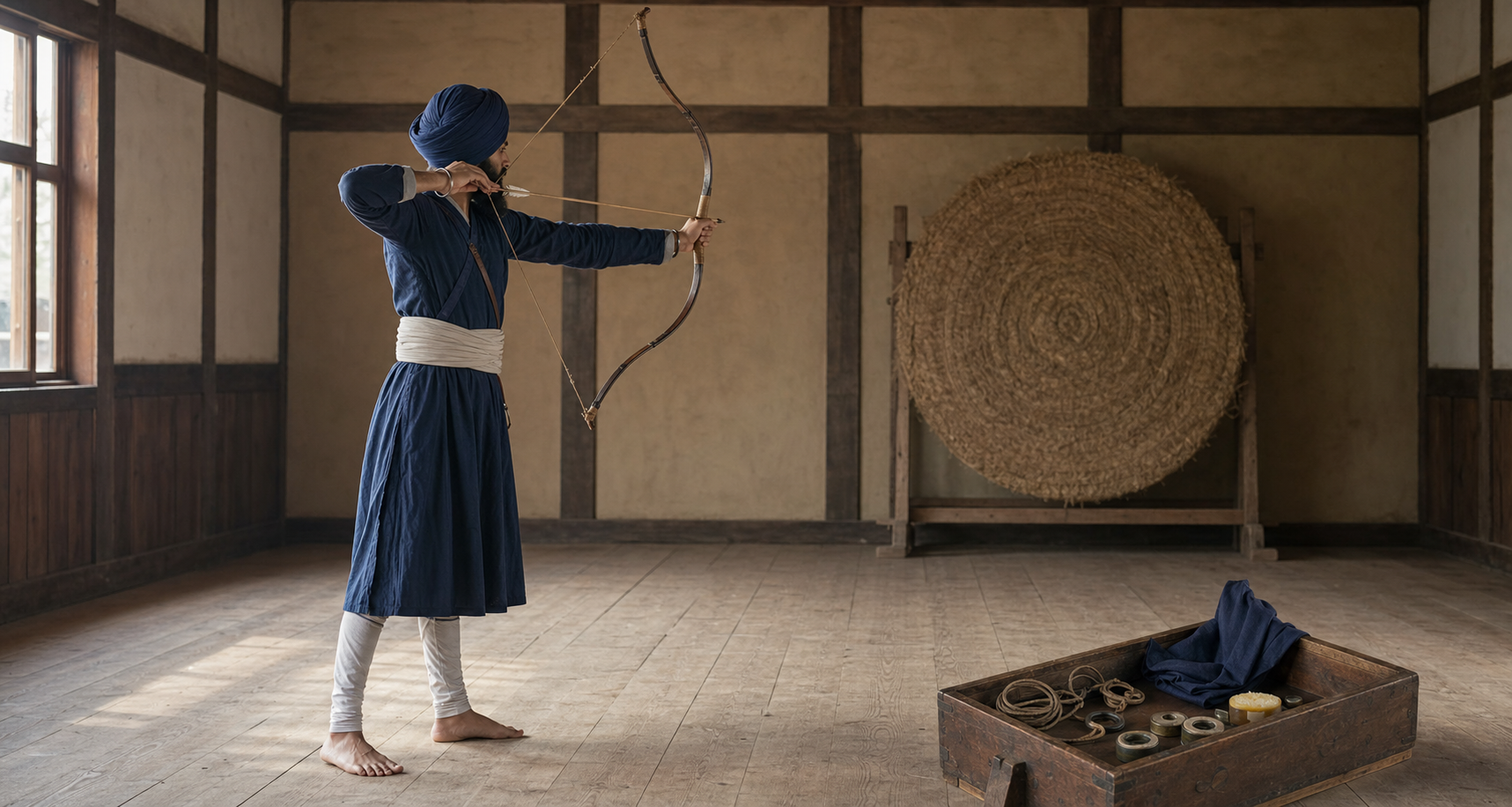
Contemporary interest in Shastar Vidya and gatka has renewed attention to traditional weapons. That renewal is valuable when reconstruction remains honest about what is known and when practice is conducted safely. Wearing a ring for appearance is not the same as learning the thumb draw, and copying the profile of a historical artifact does not guarantee a working fit.
If you want to explore the gulsatran in practice, use this order:
- Find qualified, in-person instruction. Work with someone who understands thumb-draw archery, ring fit, range discipline, and the equipment being used. A bow is a weapon, and small mistakes in direction or release can injure people nearby.
- Fit the ring before increasing load. The thumb should not be crushed, numbed, or forced into an unnatural position. Fit must be evaluated under the conditions in which the ring will actually be used, not merely while it rests on the hand.
- Use sound, matched equipment. A suitable training ring, bow, string, arrows, backstop, and controlled range belong to one safety system. Do not improvise around damaged equipment.
- Build a repeatable anchor. The hand should return to the same controlled reference point from shot to shot. If the anchor wanders, the ring cannot manufacture consistency.
- Coordinate breath and release. Breath control should steady the sequence rather than become a dramatic ritual. The goal is an unhurried, repeatable action in which attention remains on alignment and safety.
- Increase demand only when form remains stable. More force is not progress if it destroys the release, produces pain, or weakens control.
The most useful correction is often the least glamorous one. If the shot feels harsh at the thumb, first examine fit, alignment, and instruction. If the ring shifts, do not compensate by gripping more desperately. If accuracy changes from one attempt to the next, inspect the anchor and release before blaming the craftsmanship of the ring.
Historical reconstruction also requires intellectual restraint. Shastar Vidya, gatka, museum study, and modern target archery can overlap, but they are not interchangeable labels. Be precise about what you are practising: a preserved lineage method, a modern reconstruction, a sporting adaptation, or a demonstration. Precision in naming is part of respecting the tradition.
The dharmic lesson is not force, but force under command
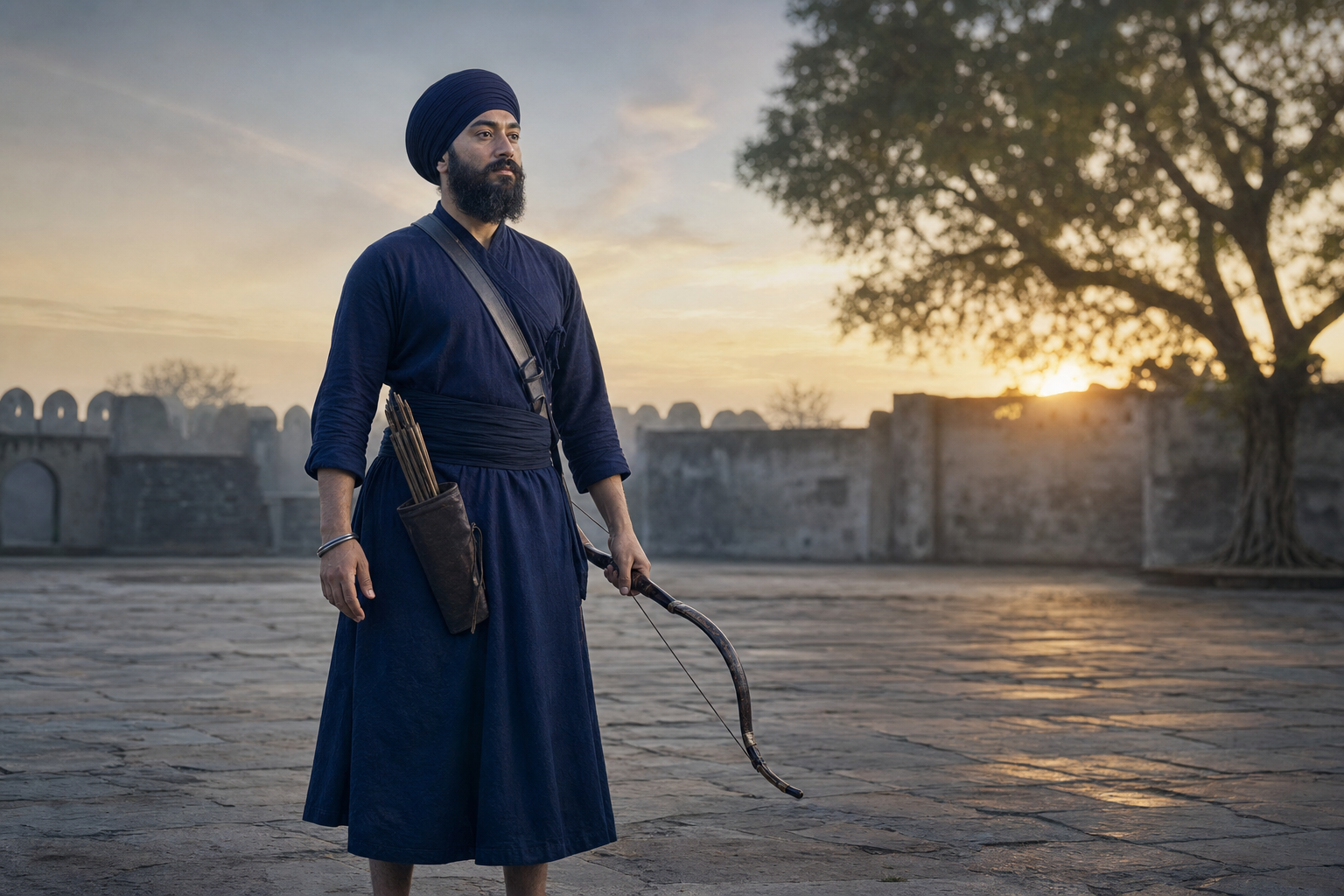
The gulsatran’s deeper significance appears when you ask why a martial skill is cultivated. Within Sikh Shastar Vidya, readiness is not a licence for aggression. Skill is ordered toward the defence of dharma, community, justice, and people who cannot defend themselves. Courage is necessary, but courage without judgment can become recklessness.
Kshatra Dharma offers a wider dharmic lens for this relationship between strength and duty. The Sikh expression remains distinctive, yet it shares a fundamental concern found across Indic thought: power must answer to a moral purpose. The trained person must know not only how to act, but when action is warranted and when restraint is the stronger choice.
Archery makes that principle physical. Posture, breath, attention, intention, and release have to agree. A distracted mind appears in the body. An unstable intention produces hurried movement. The discipline therefore resembles aspects of Yoga and meditation without becoming identical to either: attention is trained through embodied repetition, and self-command becomes visible in action.
Jain and Buddhist teachings on ahimsa add another useful perspective, provided differences among traditions are not erased. Their emphasis on non-harm, clarity, proportion, and mastery of the self does not turn every martial practice into a shared doctrine. It does, however, sharpen the ethical question that must accompany weapons training: has the practitioner learned to govern the impulse to use force?
Unity among dharmic traditions does not require pretending that they say the same thing about violence or duty. A more honest unity begins with shared questions and carefully preserved distinctions. Sikh martial ethics places special weight on courageous protection. Jain and Buddhist perspectives press the practitioner to confront harm and attachment. Hindu discussions of Kshatra Dharma examine duty, rightful action, and disciplined strength. The gulsatran can bring these concerns into conversation without flattening them.
For your own study, use three tests whenever martial heritage is presented as dharmic:
- Purpose: Is the skill directed toward protection and justice, or merely toward spectacle, intimidation, and status?
- Control: Does the training increase composure, accuracy, and restraint, or does it reward uncontrolled displays of force?
- Responsibility: Are safety, proportion, and consequences treated as part of the discipline, or as obstacles to excitement?
A practice that fails these tests may reproduce the outward form of martial heritage while abandoning its governing ethic. The gulsatran is meaningful because it represents both capability and limitation: it enables force, yet its proper use depends on control.
Key takeaways
- The gulsatran is a functional thumb ring used to protect the drawing thumb, stabilize the string hold, and support a clean, repeatable release.
- It belongs to a wider Central and South Asian family of archery equipment, while holding a distinct place within Sikh Shastar Vidya.
- Material and decoration can reveal craftsmanship, but they do not prove an artifact’s date, owner, or community without provenance and context.
- Correct fit is essential. Numbness, persistent pain, discoloration, or loss of sensation are reasons to stop, not signs that training is working.
- Safe practice requires qualified instruction, suitable modern equipment, a controlled range, a consistent anchor, and disciplined breath.
- Its dharmic meaning lies in strength governed by justice, protection, responsibility, and restraint.
If you want to carry this heritage forward, begin with the hand-sized disciplines: verify the object’s history, seek competent instruction, fit the equipment properly, and refuse to separate technique from responsibility. That is how the gulsatran remains a living part of Sikh Shastar Vidya rather than an empty martial symbol.
References
