The episode of Narakasura’s final boon occupies a pivotal place in the understanding of Diwali (Deepavali), particularly the observance of Naraka Chaturdashi. Situated within the Dwapara Yuga, the narrative aligns the triumph of dharma over adharma with enduring practices of light, purification, and communal well-being. The story’s appeal endures because it weaves moral clarity with compassion, and it links the cosmic struggle against tyranny to household rituals that nurture unity and hope.
According to Purāṇic accounts, Narakasuraalso known as Bhaumawas born of Bhumi Devi (Mother Earth) and Lord Varaha. Despite a divine lineage, he veered into adharma and ruled with unprecedented cruelty. The tradition places him in Pragjyotisha, where his power consolidated into oppression, unlawful imprisonment, and the seizure of sacred emblems, casting a shadow over realms meant to be sustained by righteousness and order.
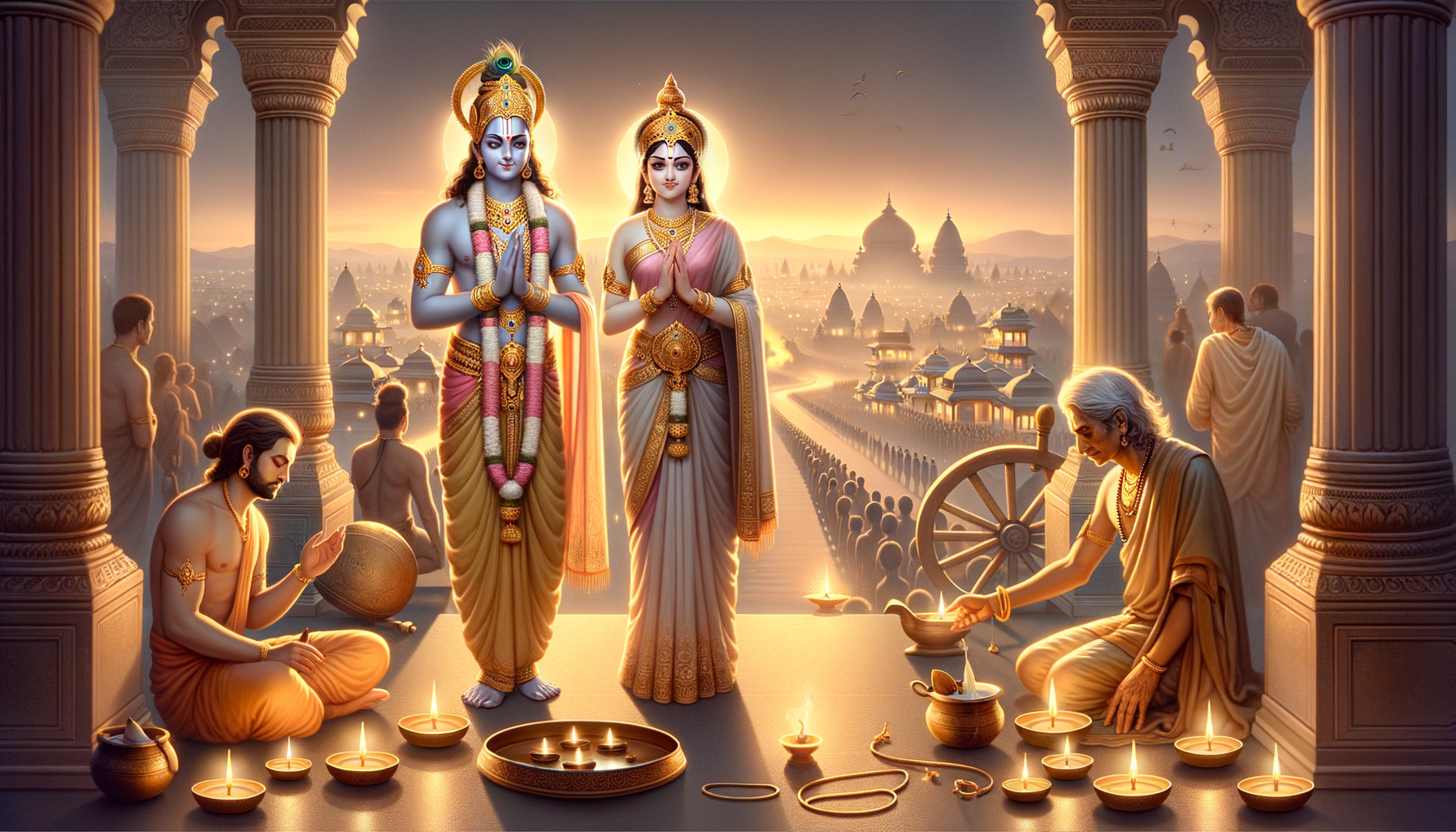
Sri Krishna’s intervention is framed as a restoration of dharma. With Satyabhama’s active presencehighlighted in several regional retellingsKrishna vanquished Narakasura, liberated captives, and returned stolen treasures, including the earrings of Aditi and other sacred regalia. The victory is not merely martial; it carries a moral dimension that couples justice with the protection of the vulnerable, culminating in the re-establishment of lawful governance through a rightful successor to restore stability.
In popular tradition, Narakasura is said to have sought a final boon before his death: that the day of his fall be commemorated as a festival of lights, free from fear, and marked by acts that purify and uplift. Regional narratives add that homes should be illuminated and the community should observe ablutions before dawnpractices that today are associated with the abhyanga snana (oil bath) of Naraka Chaturdashi. While specific textual formulations vary across sources and regions, the thematic intent of the booncollective relief, moral renewal, and joyful remembranceremains consistent.
The observances of Naraka Chaturdashi reflect these motifs. Many households rise before sunrise for abhyanga snana, symbolically cleansing the residue of fear and negativity. Lamps are lit to proclaim the triumph of light over darkness, and families share stories that emphasize ethical action, courage, and compassion. In communities where children hear this narrative annually, the ritual becomes a formative lesson: dharma is not abstract but lived, and collective well-being depends on inner discipline as much as outer celebration.
Across dharmic traditions, the deeper message fosters shared values and unity. Within Hindu practice, the tale aligns with Deepavali’s broader ethos of illumination and renewal. In Jain remembrance, Diwali resonates with the nirvana of Mahavira, affirming liberation through right conduct and knowledge. Sikh communities mark Bandi Chhor Divas, celebrating just leadership and the freeing of the oppressed. Certain Buddhist communities observe the season as a time for reflection, compassion, and wisdom. Together, these observances spotlight a common civilizational commitment: to overcome inner darkness and nurture harmony in society.
For contemporary readers, the narrative offers practical insight. The transformation associated with Naraka Chaturdashi is not limited to festivity; it invites self-examination and service (seva). Lighting a lamp becomes a vow to uphold truth; the pre-dawn bath becomes an emblem of renewed intention; and communal gatherings cultivate bonds that outlast the season. In this sense, the “final boon” is not merely a mythic artifact but a living cultural memory that calls for ethical resilience and collective care.
From an historical-literary perspective, core elements of the episode are attested in texts such as the Vishnu Purana and Harivamsa, which narrate the defeat of Naraka, the liberation of captives, and the recovery of sacred items. The specific articulation of the “boon” is more pronounced in later and regional traditions, a pattern common to many living narratives that evolve through local pedagogy and ritual practice. This layered transmission strengthens cultural continuity while allowing communities to emphasize themesredemption, responsibility, and fearlessnessmost relevant to their lived experience.
Ultimately, the account of Narakasura’s final boon harmonizes scholarship with practice: it preserves memory, guides conduct, and celebrates unity. As households light lamps and share the story, the festival becomes a shared dharmic vocabularyembracing Hindu, Buddhist, Jain, and Sikh communities in a common aspiration to replace darkness with light, despair with hope, and chaos with compassionate order. That aspiration, renewed annually, is the enduring legacy of the tale.
Inspired by this post on Hindu Blog.