
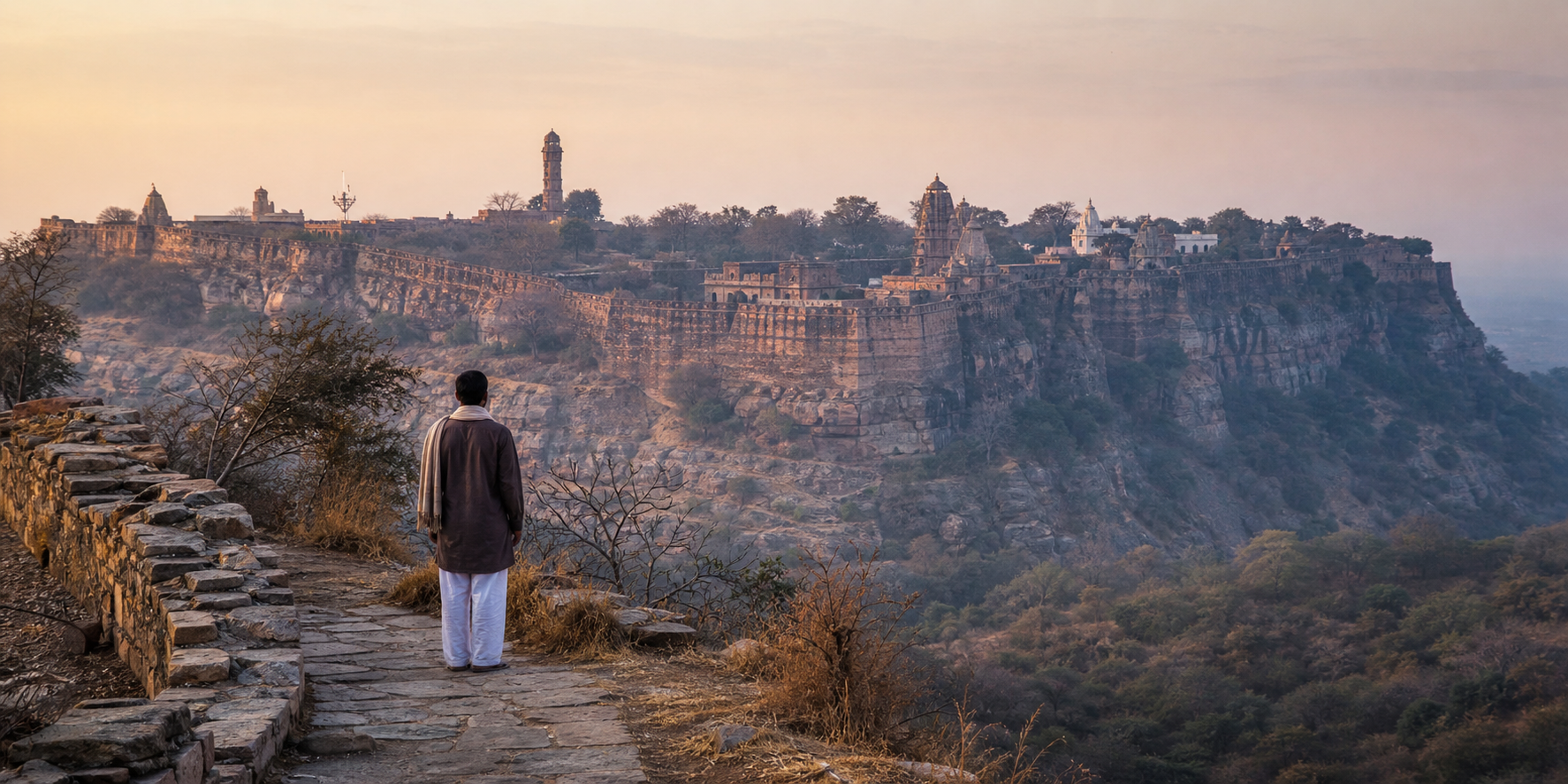
You may be planning a visit to Chittorgarh and wondering how to see it as more than a famous fort. A monument checklist will show you gates, towers, palaces, and ruins. It will not necessarily help you understand why generations have approached this ground with the gravity of a pilgrimage.
Chittorgarh becomes a Tirtha-Kshetra when you allow its memory to examine your own use of strength. Its central question is not whether you can admire courage. It is whether you can protect what is entrusted to you without becoming cruel, remember injury without inheriting hatred, and exercise authority without being mastered by pride.
Sacred memory places the living under an obligation
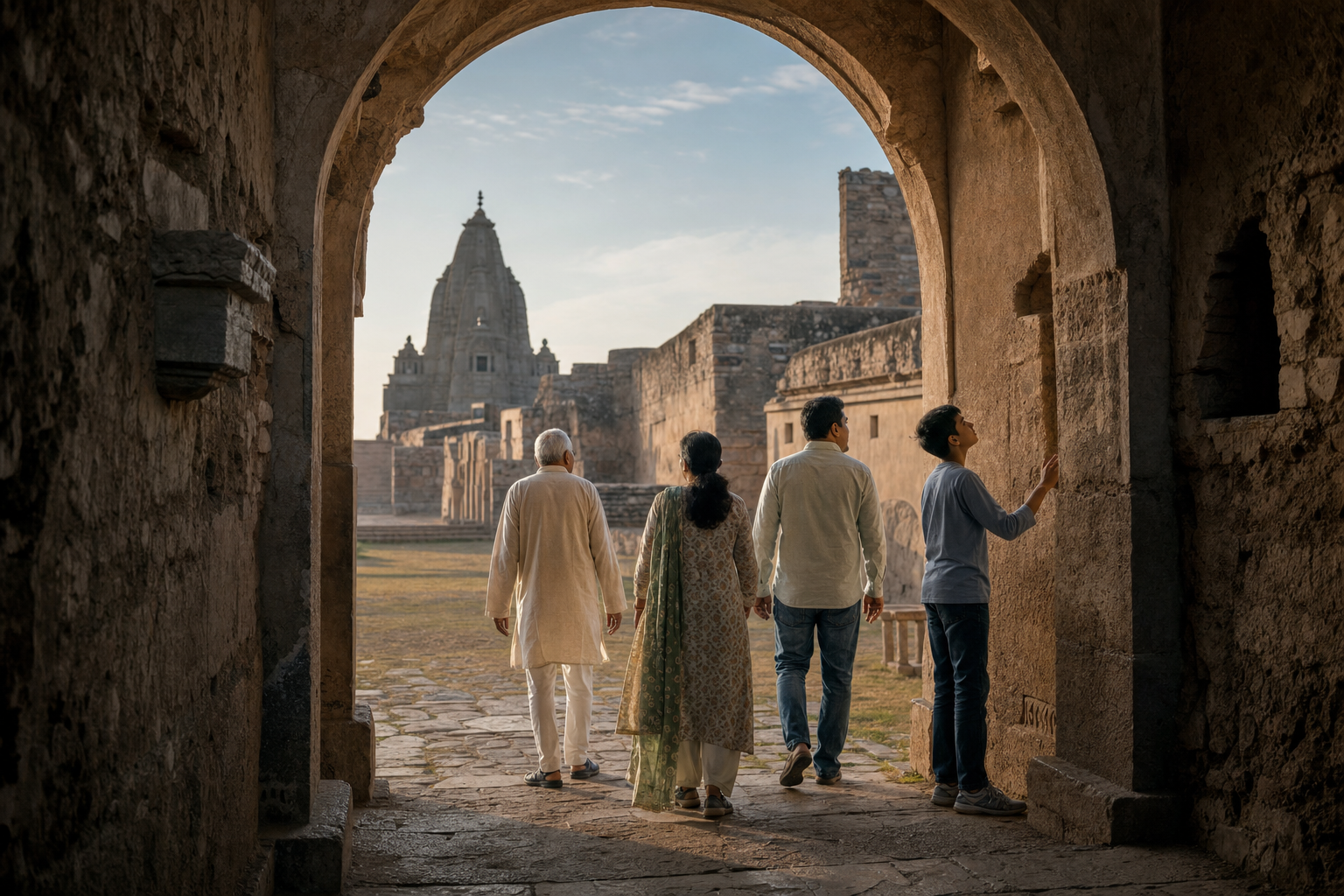
A tourist asks, “What should I see?” A pilgrim also asks, “What must I become responsible for after seeing it?” That second question is what changes a historic site into sacred geography.
Chittorgarh was a centre of royal power, cultural wealth, and piety before the siege of 1567-68 under Akbar left homes, sanctuaries, gates, and palaces devastated. Its ruins therefore preserve more than an account of military defeat. They retain the contrast between a flourishing civilizational centre and the silence that followed its destruction.
That contrast can be mishandled in two directions. Sanitised remembrance turns suffering into picturesque heritage. Inflamed remembrance turns the dead into instruments for present anger. Sacred memory refuses both. It gives the past its full moral weight while asking the living for steadiness, accuracy, and service.
Keep three layers distinct whenever you speak about Chittorgarh:
- Established history: names, dates, structures, political actors, and events that can be supported by historical or material evidence.
- Received tradition: memories carried through local narration, ritual, inherited accounts, and community attachment. State these as traditions when their historical status is uncertain.
- Dharmic meaning: the obligation you draw from the place – protection, self-command, truthful remembrance, cultural stewardship, or service.
Do not collapse these layers. A tradition need not be disguised as proven history to matter, and historical criticism need not be used to sneer at inherited memory. Precision protects a sacred place from both exaggeration and dismissal.
Kshatra Dharma begins with mastery of the protector
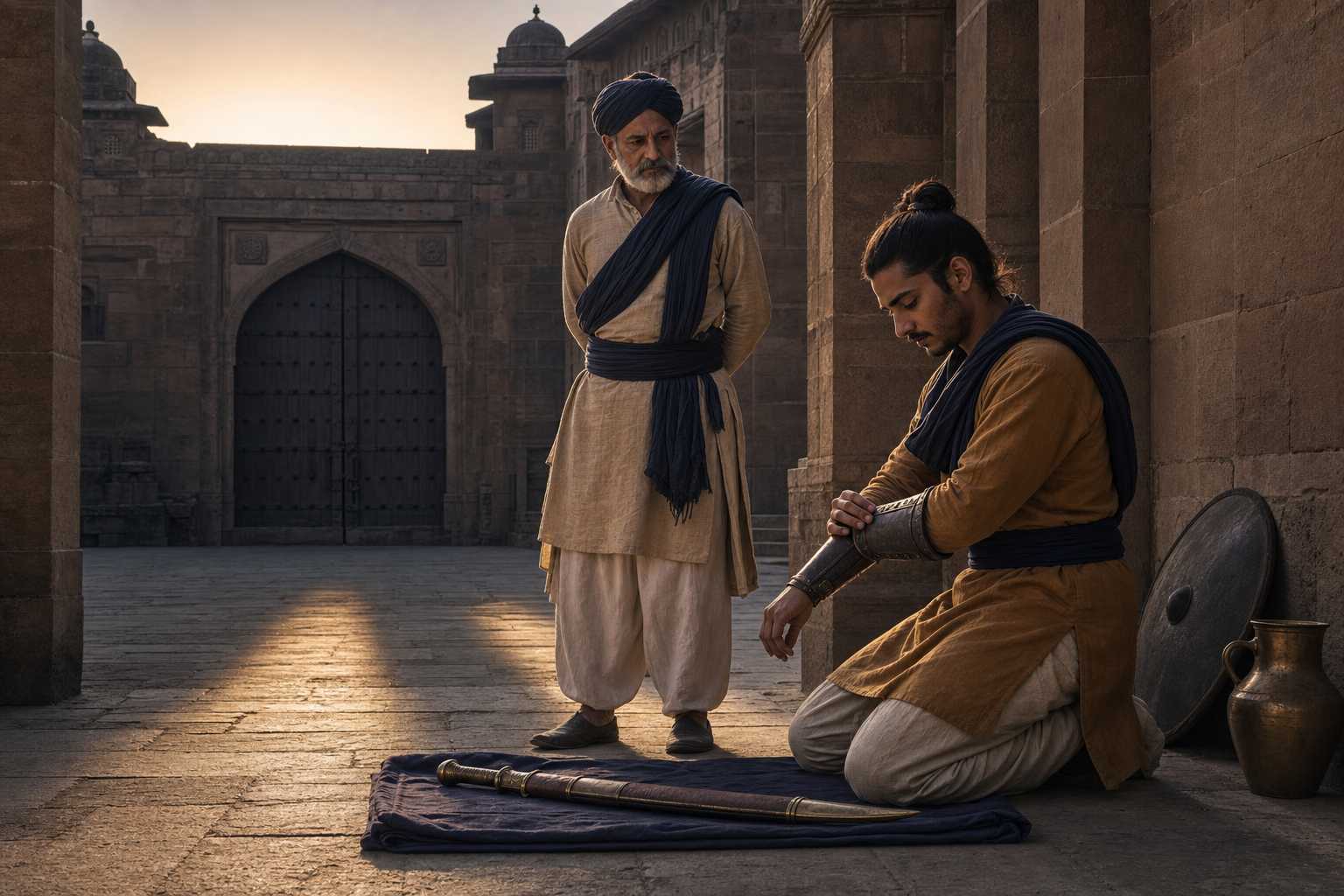
Kshatra Dharma is often reduced to battlefield bravery. Chittorgarh presents a harder standard. Protective power must be governed before it can govern others. Courage without restraint becomes aggression; restraint without the will to protect becomes evasion.
Padmasimha embodies this wider discipline. Though the eldest son, he declined coronation, placed his younger brother Vikramasimha on the throne, undertook lifelong Brahmacharya, and served as Maha-dandanayaka, or commander-in-chief. About a month before Vikramasimha’s coronation, Padmasimha brought him to Chittorgarh as a pilgrim rather than as a prince seeking spectacle. The future ruler had to stand before civilizational loss before taking his seat of power.
Padmasimha’s preparation for responsibility had also taken him among the Aatavikas. He lived in their manner, shared their food and festivals, trained in the forest, and earned trust as kin. The Kshatra lesson is exact: you cannot protect people whom you know only as an abstraction. Authority exercised from a distance easily mistakes command for service.
His Brahmacharya was a literal, lifelong vow. You do not have to reproduce that personal discipline to receive its ethical instruction. You do have to identify the indriya – anger, vanity, fear, appetite, or attachment to status – most likely to corrupt your judgement. If you cannot name the impulse governing you, you are not yet ready to call your reaction righteous.
Before using authority in a family, institution, community, or public office, test your decision against four questions:
<!– wp:list {