
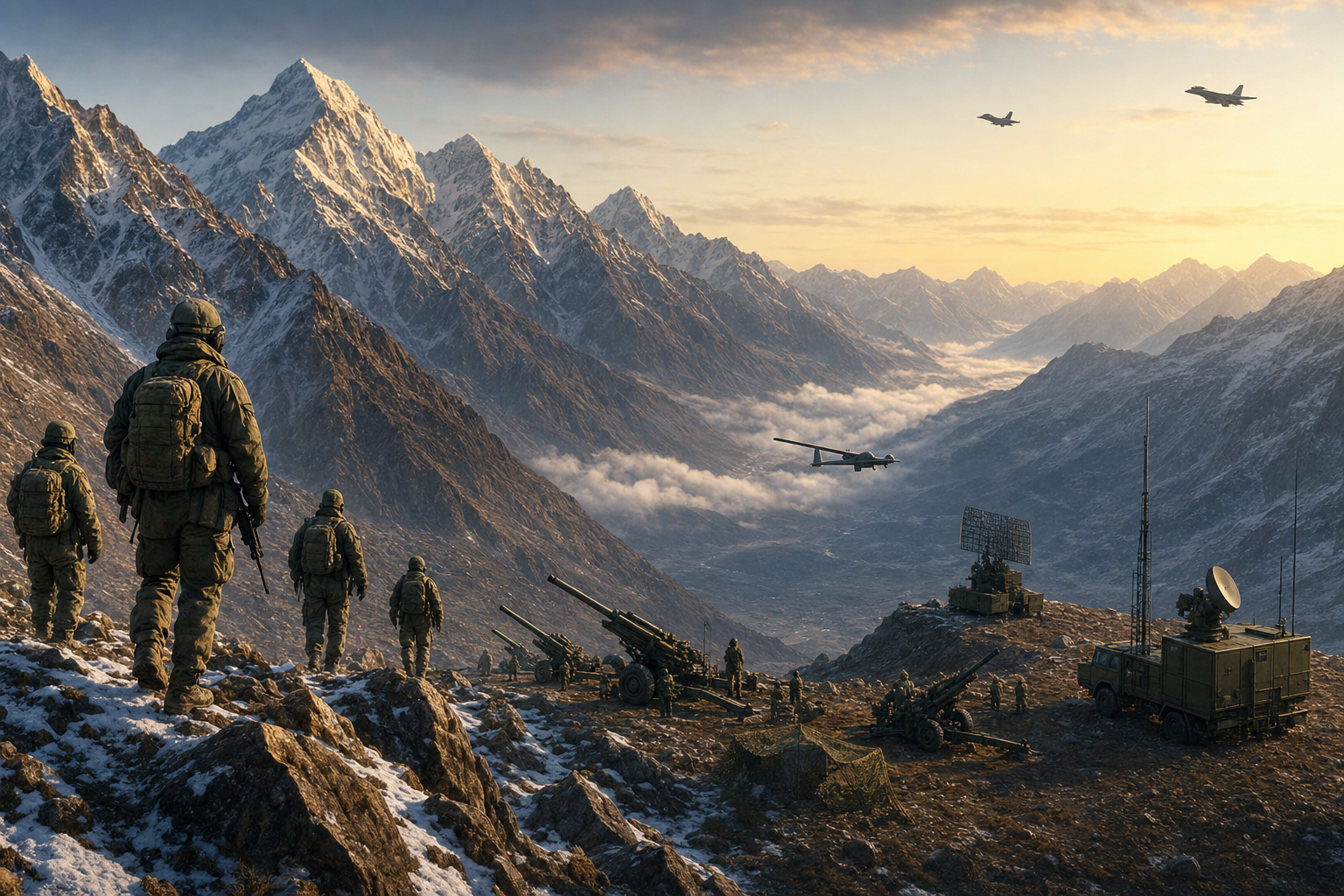
If Kargil sits in your mind only as a story of impossible climbs and battlefield courage, you have remembered its heart but missed its warning. Bharat recovered the occupied heights in 1999 because Indian infantry, gunners and supporting arms fought uphill against an entrenched enemy. The campaign also revealed the danger of making soldiers compensate for failures that should have been caught before the first assault.
That distinction is the best way to understand Bharat’s military transformation after Kargil. Do not begin by counting platforms or repeating procurement announcements. Ask whether the national-security system has become better at turning information into warning, warning into a decision, a decision into coordinated force, and battlefield action into a sustainable result.
Why the heights shaped every part of the battle
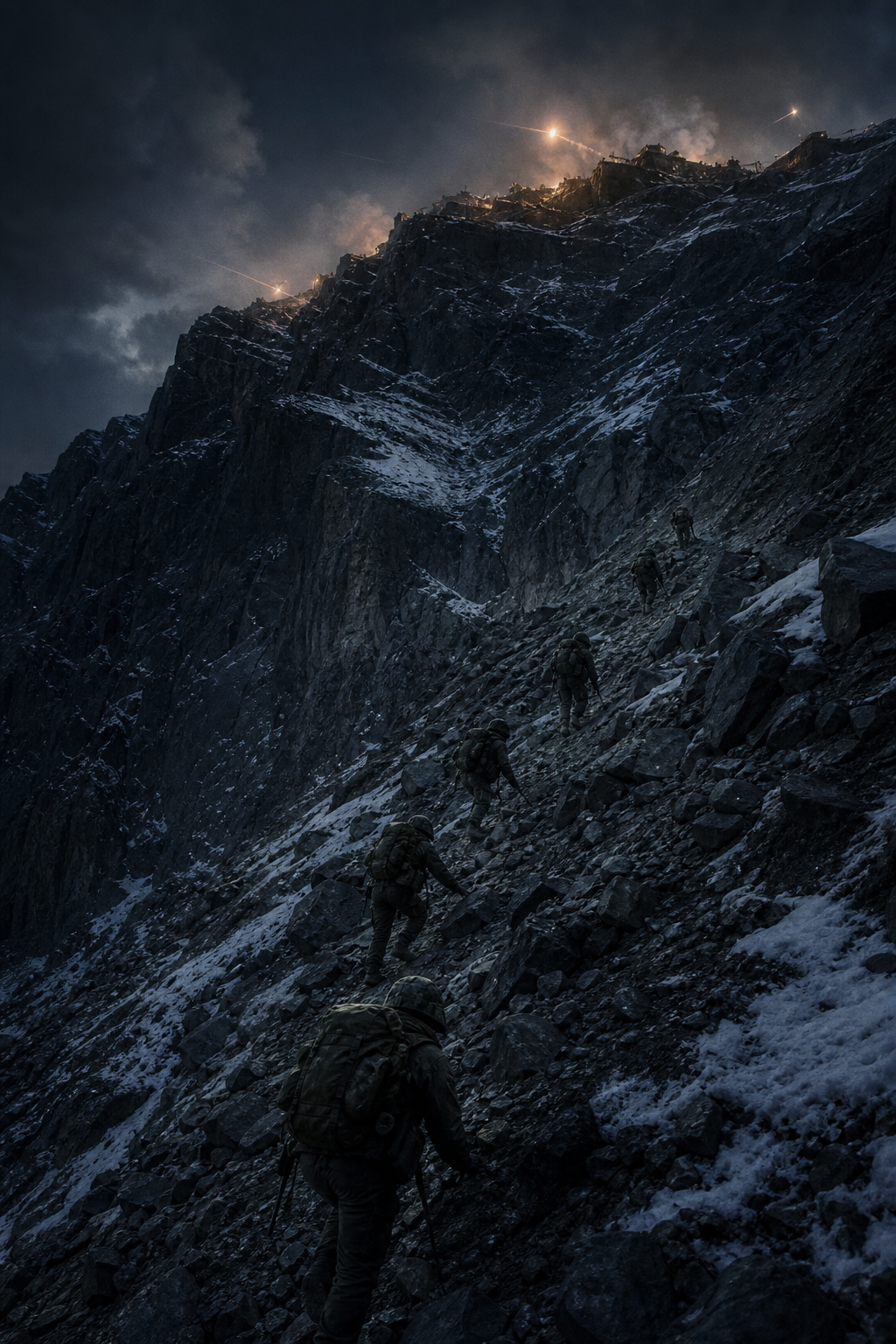
Pakistani troops had used the winter to fortify positions above Kargil, Dras and Batalik. That gave them more than possession of remote rock. A defender on a height can observe movement from far away, fire down on exposed approaches and force an attacker to climb while carrying weapons, ammunition and other equipment through thin air.
The cold compounds the defender’s advantage. Metal can seize, weapons can jam and physical exertion becomes harder at altitude. Evacuating a wounded soldier takes longer across steep, exposed ground, so an injury that might be survivable elsewhere can become fatal before treatment is reached. These conditions explain both the magnitude of Operation Vijay and the seriousness of the failures that preceded it.
You should therefore reject two convenient readings of Kargil. Victory does not prove that every part of the pre-war system was sound. Surprise does not erase the battlefield achievement. Tactical excellence recovered the heights, while earlier failures forced the troops to begin from an avoidable disadvantage. A mature national memory must be capable of holding both truths at once.
When Kargil enters a public debate, separate three questions. Was the battlefield objective achieved? Were the troops made to bear costs that better warning, equipment or preparation could have reduced? Did later reforms repair the causes rather than merely answer the last war’s visible symptoms? The first question honours the victory; the other two protect the next soldier.
Valour won the heights, but systems determined the price
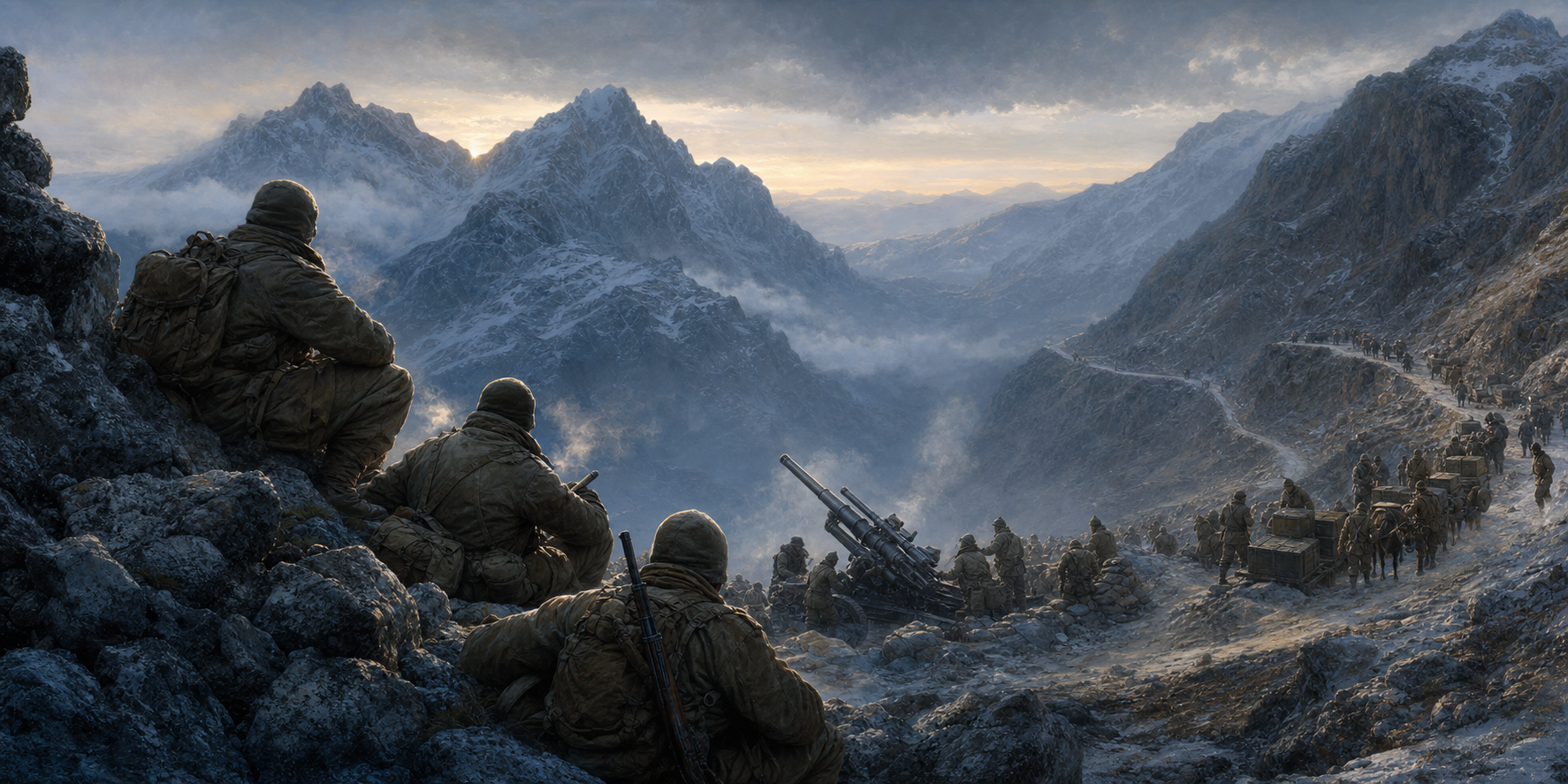
The gaps exposed in 1999 lay behind the fighting formations. The intrusion had escaped intelligence, equipment proved inadequate and institutional systems had not kept pace with the soldiers expected to use them. Kargil made it impossible to treat those shortcomings as secondary administrative matters.
An intelligence failure is rarely explained by the absence of one fact. Information may be collected without being interpreted correctly. A local anomaly may not be connected to a wider pattern. A warning may be produced but shared too slowly, sent to the wrong level or deprived of the authority needed to trigger action. The practical issue is not simply whether somebody knew something. It is whether the whole system converted scattered indications into a timely operational response.
Equipment failure must also be examined with more precision than a list of missing items. A weapon or communication system can exist in inventory yet be unavailable to the unit that needs it. It can work in ordinary conditions but become unreliable in severe cold. It can be technically capable but poorly integrated with surveillance, command or logistics. Readiness exists only when a capability works at the required place, in the required conditions and at the required time.
This gives you a useful test for every claim of military reform: identify the operational problem it solves. Does it improve detection, interpretation, decision-making, coordinated action, endurance or institutional learning? If nobody can identify the repaired link, the announcement may describe an acquisition without proving a capability.
Kargil changed what military readiness had to mean
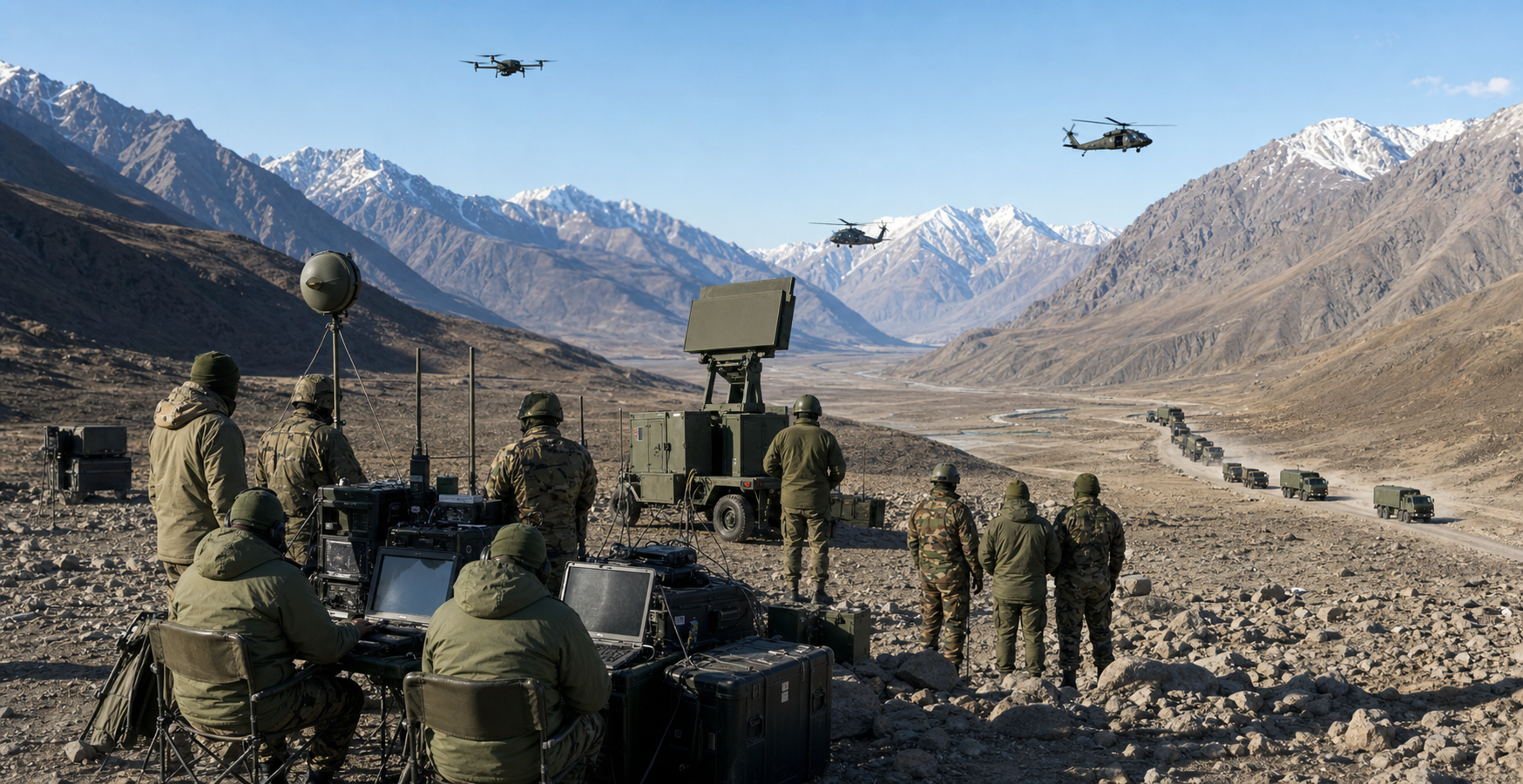
From 1999 to 2026, closing the exposed gaps became a twenty-seven-year task of military adaptation. The enduring transformation is best understood as a set of operational transitions, not as a single reform that could be announced and declared complete.
- From seasonal assumptions to persistent vigilance. Difficult weather can reduce activity, but it cannot be allowed to suspend attention. The defender must keep watching the terrain, revisiting assumptions and treating unexplained changes as questions requiring resolution.
- From collecting information to producing warning. Reports, observations and surveillance matter only when they are compared, interpreted and moved to people who can act. More inputs do not automatically create greater awareness.
- From separate arms to coordinated combat. Infantry ultimately has to seize and hold ground, but gunners and supporting arms can change the conditions under which it does so. Shared timing, communications and objectives determine whether those capabilities reinforce one another.
- From generic inventories to mission-suitable equipment. High-altitude warfare tests clothing, weapons, communications and medical arrangements under exceptional cold, terrain and physical strain. Suitability in those conditions matters more than impressive specifications viewed in isolation.
- From reaching the battlefield to sustaining the force. Ammunition, supplies, reliable communications and casualty evacuation are part of combat power. A formation that cannot remain supplied and medically supported cannot exploit its tactical skill for long.
- From commemorating experience to institutionalising it. A lesson becomes valuable only when it changes training, doctrine, procurement, deployment or command practice. Memory without an owner, a deadline and a changed procedure eventually becomes ceremony.
None of these transitions should be treated as proof that every deficiency has disappeared. A reform agenda is not the same thing as verified readiness. Threats adapt, technology changes and organisations can allow old habits to return. Transformation is therefore a discipline of repeated testing: find the weak link, correct it, exercise the correction and test it again under realistic conditions.
Key takeaways: six tests for the next crisis
You do not need access to classified plans to ask better questions about Bharat’s preparedness. Use these six tests when you encounter a new weapon, surveillance system, command reform or claim of operational readiness:
- Warning: Can unusual activity be recognised before an adversary converts it into an established battlefield position?
- Continuity: Can observation and communication continue through winter, severe weather and difficult terrain rather than only under favourable conditions?
- Handoff: Can information reach the relevant commander and decision-maker without being delayed, diluted or trapped between organisations?
- Coordination: Can infantry, artillery and supporting arms operate from a common plan with dependable timing and communications?
- Endurance: Will weapons, supplies, protective equipment, communications and casualty evacuation continue working at altitude and under sustained pressure?
- Learning: Does field experience produce an identifiable change in training, doctrine, equipment or command responsibility?
The sequence matters. A sensor improves detection only when coverage, trained operators, communications and a response mechanism accompany it. A weapon improves combat power only when the unit can receive, maintain, supply and coordinate it. A command reform improves outcomes only when information moves faster and responsibility becomes clearer in an actual exercise or crisis.
This is also why comparisons based solely on platform numbers can mislead you. A military fights as a connected organisation. One broken handoff can waste the advantage created by several expensive systems, while disciplined integration can make existing capabilities far more useful.
The patriotic lesson is institutional, not merely ceremonial
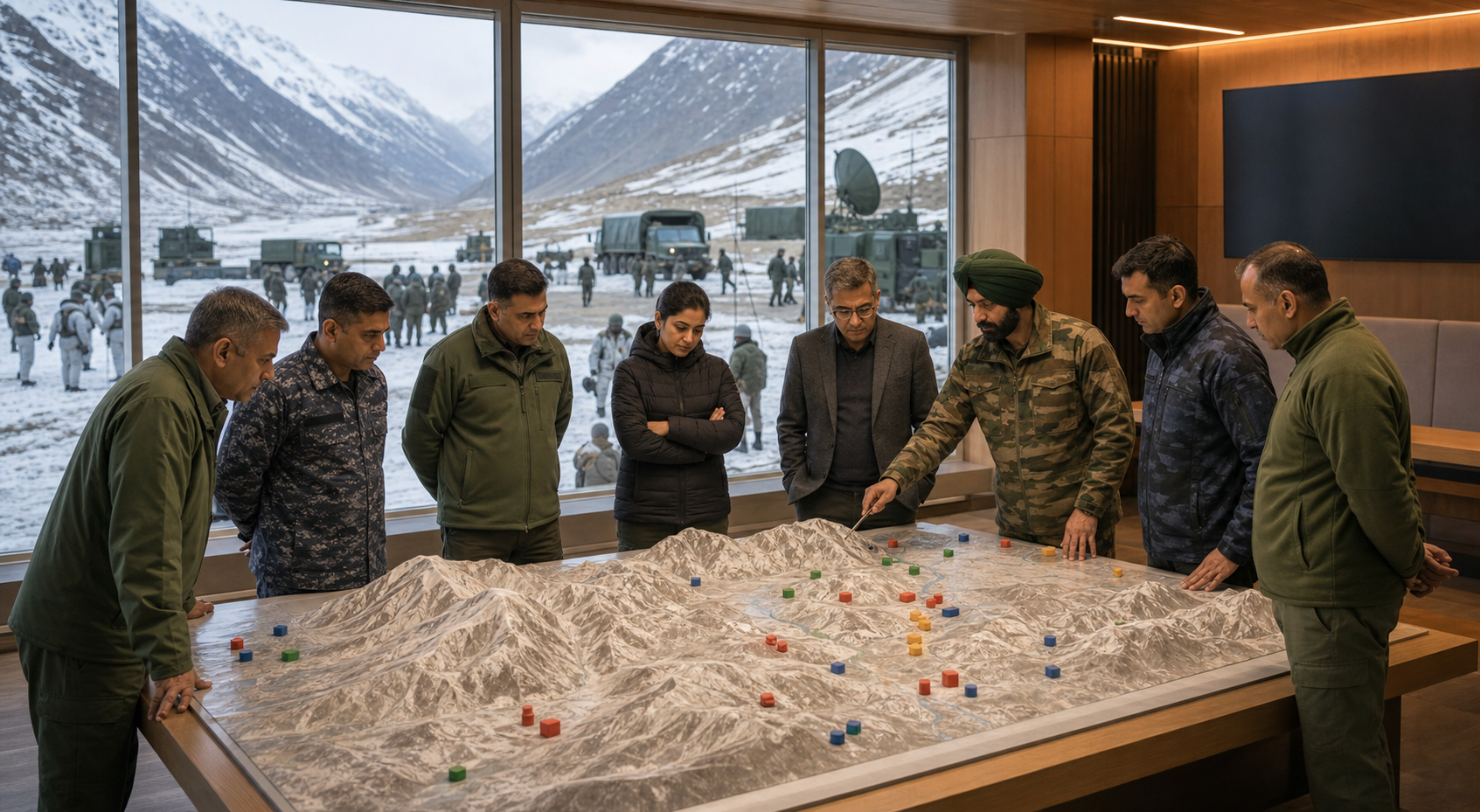
Kargil offers no excuse for cynicism about Bharat’s Armed Forces. Men climbed into observed fire, endured altitude and cold, and recovered the heights from an enemy that possessed the defender’s advantage. Nor does it justify complacency. Admiration becomes shallow when it romanticises disadvantages that sound institutions should have prevented.
A dharmic understanding of public duty does not force us to choose between reverence for courage and insistence on competence. The state owes its protectors more than praise after sacrifice. It owes them alert institutions, suitable equipment, coherent command, dependable support and the humility to learn from failure.
You can apply that standard the next time Kargil Vijay Diwas is observed or a new military capability is announced. Ask which broken link it repairs, whether it has been tested in the conditions for which it is intended, whether frontline units can use it as part of a connected system and who is responsible for carrying the lesson forward. That is how remembrance becomes vigilance, and how gratitude to the soldiers of 1999 becomes protection for those who will guard Bharat’s frontiers next.
References
