
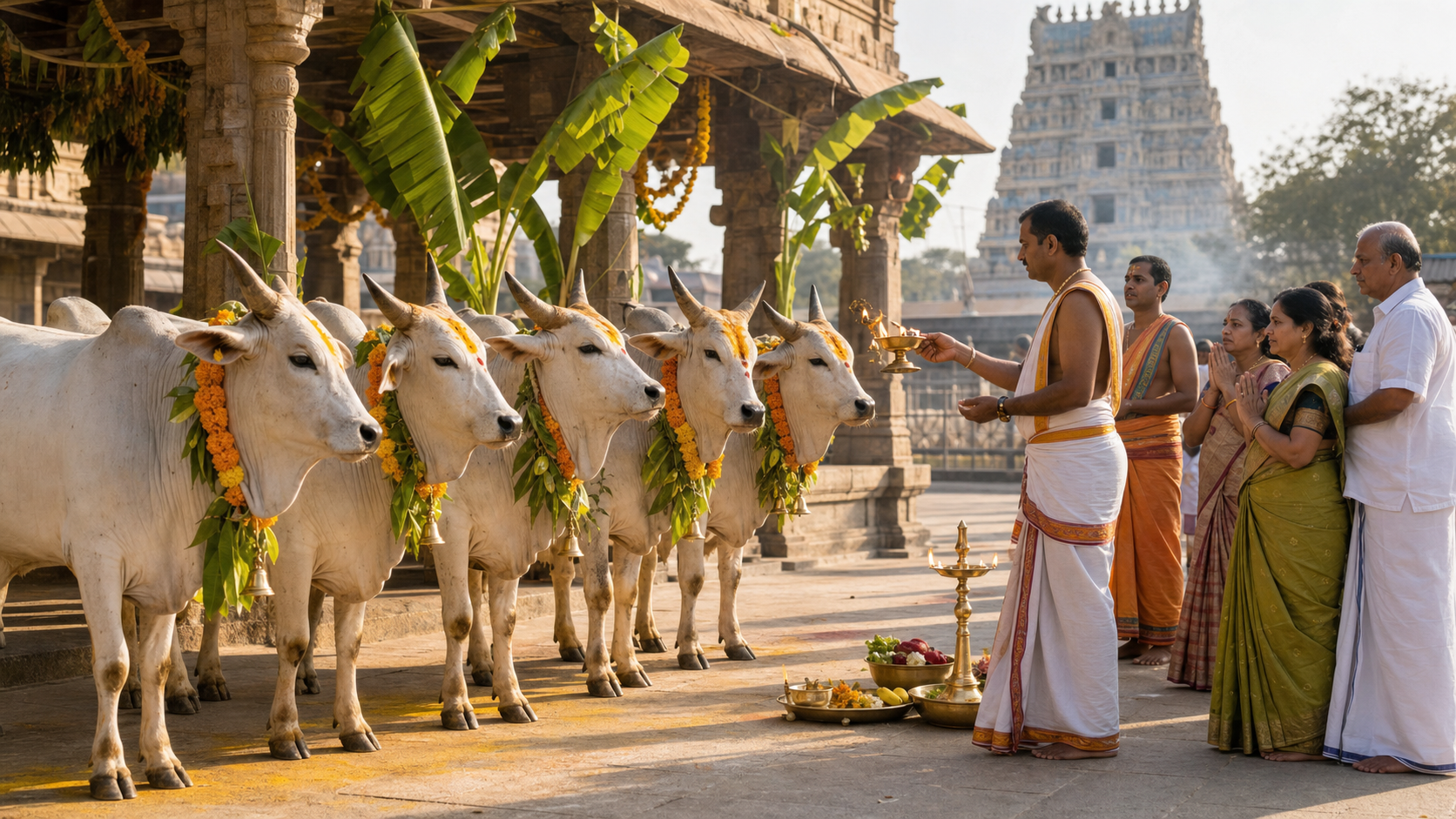
If you are looking back at Kanuma Gopuja 2026, or using it to plan a future observance, the most useful place to begin is the distinction between ritual attendance and genuine cattle care. At Tirupati, a defined morning worship sequence led into a short Gopuja window; across South India, the names and customs varied, but gratitude toward cattle remained central.
You can use the Tirupati timings below as a record of the announced 2026 program and the practical guidance as a template for your next Kanuma, Mattu Pongal, or local Gopuja. For any temple visit, confirm the current notice directly with the administration before travelling, because entry arrangements and crowd management can change.
Key takeaways for Kanuma Gopuja 2026
- The Tirupati Sri Venkateswara Gosamrakshanasala observance was scheduled for 16 January 2026.
- Abhishekam, puja, and harati to Sri Venugopala Swamy were scheduled from 5:00 a.m. to 10:30 a.m. IST, followed by Gopuja from 10:30 a.m. to 11:15 a.m.
- Kanuma in Andhra Pradesh and Telangana and Mattu Pongal in Tamil Nadu express closely related gratitude toward cattle, harvest, land, and livelihood, but local ritual forms should not be treated as interchangeable.
- The most meaningful offering is one that benefits the animal: approved fodder, calm handling, a clean enclosure, and continued support for responsible cattle care.
The Tirupati schedule: plan around the fixed Gopuja window
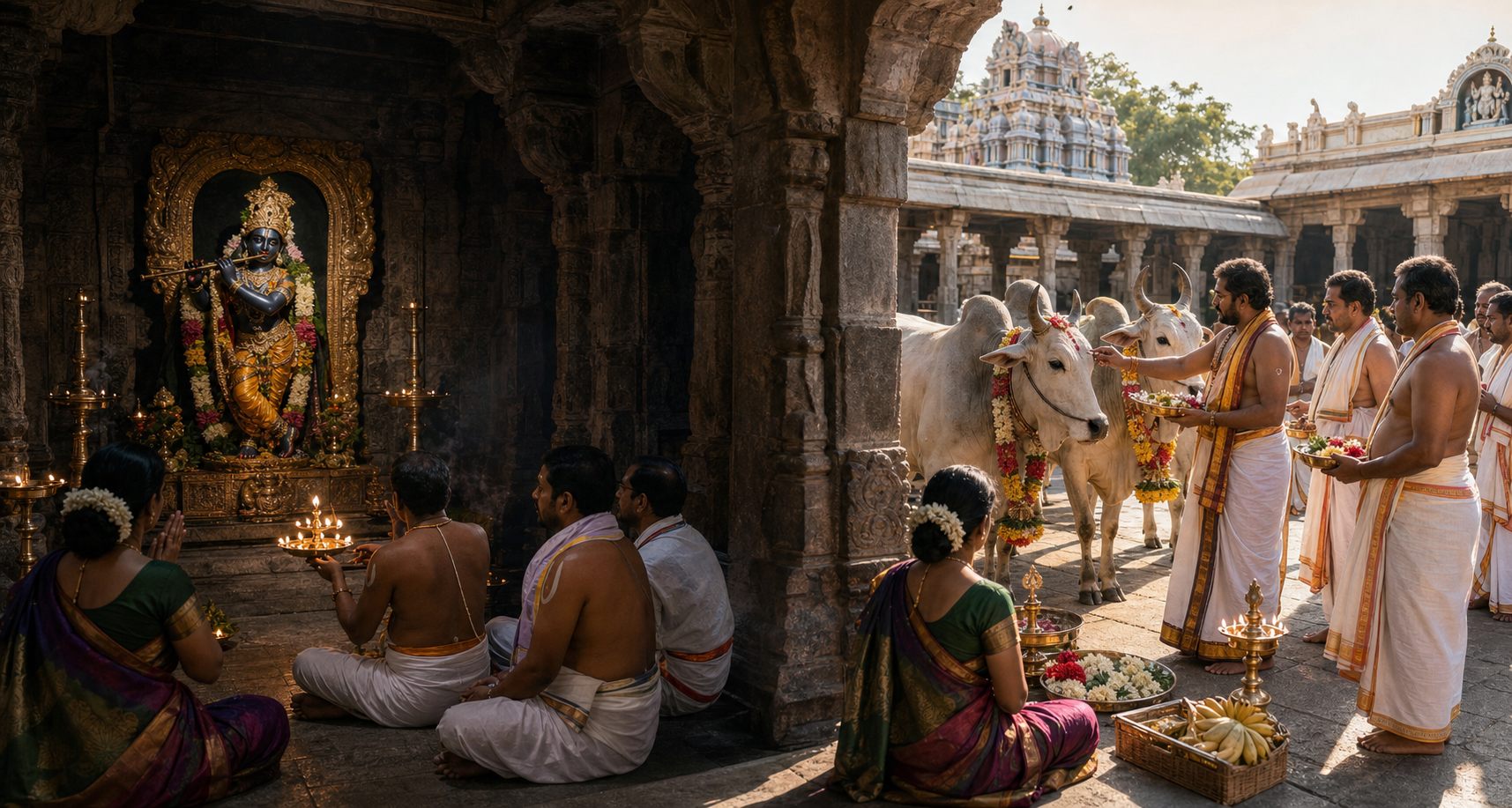
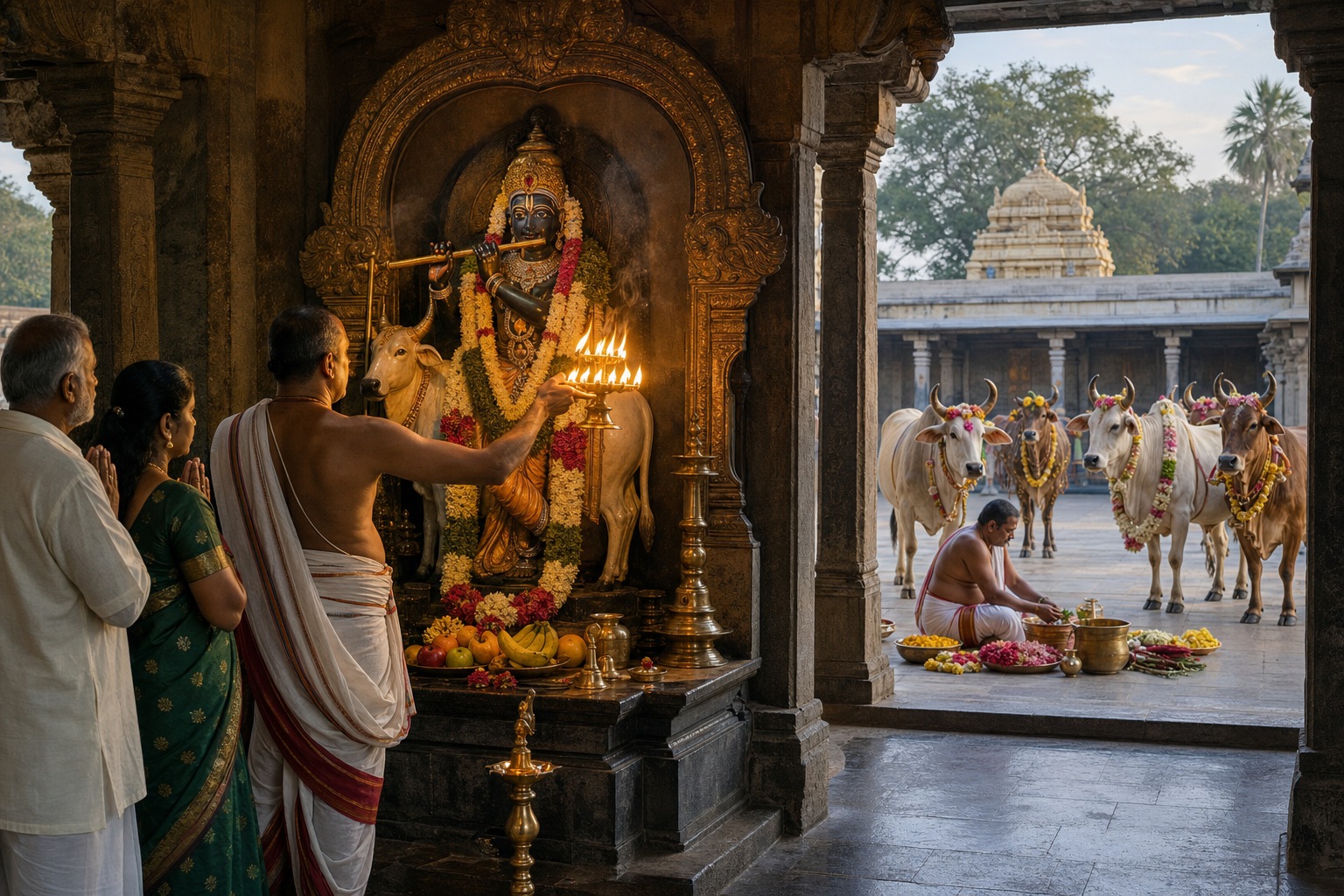
The 2026 focal observance at the Tirupati Sri Venkateswara Gosamrakshanasala joined worship of Sri Venugopala Swamy with reverence for Gomata. The announced sequence placed the Gopuja after several hours of temple worship, not at the beginning of the morning.
| Announced time in IST | Observance | What it means for your visit |
|---|---|---|
| 5:00 a.m.–10:30 a.m. | Abhishekam, puja, and harati to Sri Venugopala Swamy | Attend from early morning if the Venugopala worship is an important part of your sankalpa. |
| 10:30 a.m.–11:15 a.m. | Gopuja | Do not treat this as an open-ended, all-day window; arrange your arrival around the announced start. |
| After 11:15 a.m. | Further proceedings according to temple protocol | Ask the temple administration what is open to devotees rather than assuming that public access continues unchanged. |
If your main purpose is to witness the Abhishekam, arriving only for the Gopuja misses the devotional sequence that gives the Tirupati observance its particular character. If you are coming specifically to offer fodder or receive blessings during Gopuja, the 10:30 a.m. start is the critical time. Either way, local confirmation remains necessary; a published ritual time does not guarantee a particular entry gate, viewing position, or offering procedure.
Carry only what the temple or gosamrakshanasala permits. Fruits and fodder are customary offerings, but the caretaker should decide what the cattle can safely eat and how it should be given. An offering that creates waste, crowding, or distress defeats the purpose of the worship.
How South India expresses the same gratitude differently
Do not assume that every South Indian family uses the word Kanuma or follows one standard sequence. The shared moral centre is gratitude, while the language and visible customs reflect regional life.
In Andhra Pradesh and Telangana, Kanuma places cattle within the cycle of harvest thanksgiving. The animal is honoured not as a festival accessory but as a living participant in agriculture, household livelihood, and rural continuity. If you are observing in these regions, look for instructions from the local temple, village, or gosamrakshanasala rather than importing a Tirupati timetable into every venue.
In Tamil Nadu, Mattu Pongal gives this gratitude a recognisable regional expression. Cattle may be adorned with turmeric, kumkum, and garlands. These decorations make sense only when they are applied without frightening or burdening the animal. Let an experienced owner or handler guide the process, especially if you are an urban visitor unfamiliar with cattle.
Karnataka and Kerala also sustain observances that emphasise gratitude, animal welfare, and the dependence of human communities upon land and livestock. The practical lesson is simple: preserve the local name, sequence, and custom where you are. Dharmic unity does not require regional sameness.
How to participate without turning worship into stress
A crowded Gopuja can tempt devotees to focus on getting close, completing an offering, or taking a photograph. The animal experiences the same moment through sound, touch, movement, and the behaviour of the crowd. Your conduct should therefore be part of the puja.
- Confirm the venue and public timing. Ask whether devotees may attend the full worship sequence, whether an entry protocol applies, and whether offerings are accepted.
- Choose your purpose before arriving. At Tirupati in 2026, the Venugopala worship began at 5:00 a.m., while Gopuja began at 10:30 a.m. Decide whether you intend to attend one part or the complete sequence.
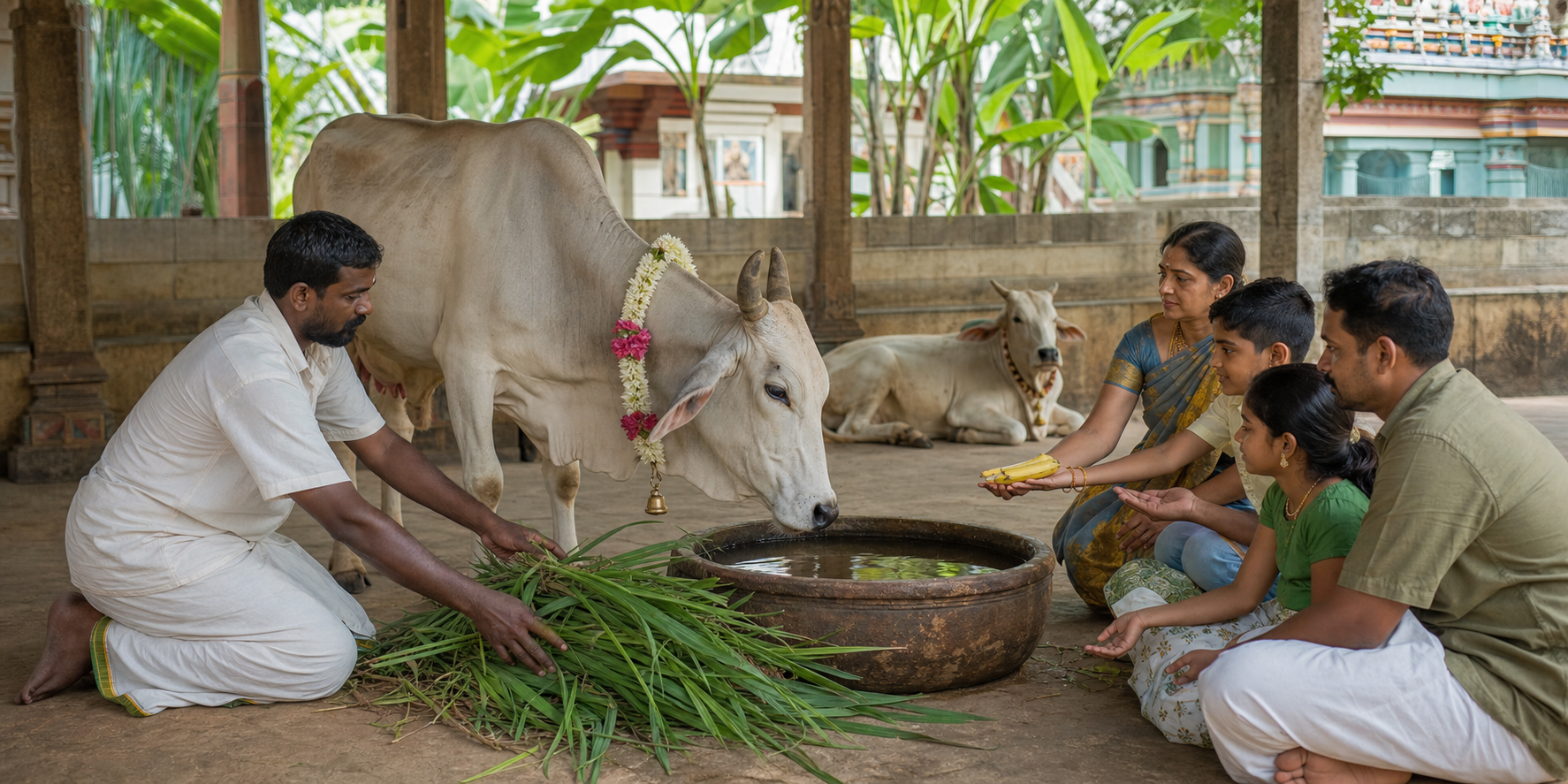
- Ask before feeding a cow. Bring fruit or fodder only when the caretakers approve it. They know the animal’s diet, health, and feeding routine.
- Give the animal space. Avoid surrounding it, reaching suddenly toward its face, or insisting on physical contact. Follow the handler’s directions and supervise children closely.
- Keep harati calm and controlled. A sacred flame should remain under the control of the person conducting the ritual and at a safe distance from the animal, decorations, fodder, and other devotees.
- Leave the enclosure cleaner than you found it. Remove packaging and place rejected offerings where the staff directs. Cleanliness is part of care, not a task separate from worship.
If you cannot attend a temple or goshala, a restrained home observance can still carry the right intention. Offer a prayer of gratitude, provide approved fodder through a responsible local caretaker, or ask a nearby cattle shelter what practical help is needed. You do not need to improvise an elaborate ceremony around an unfamiliar animal.
Families can also use the day to explain where food and agricultural labour come from. Children should learn that Gopuja is not merely the act of applying kumkum, placing a garland, or circling a lamp. Those gestures become meaningful when joined to gentle treatment, regular feeding, cleanliness, and protection from neglect.
The deeper dharmic meaning: let gratitude become care
The Tirupati sequence makes the Hindu theological setting explicit. Worship of Sri Venugopala Swamy precedes the Gopuja, connecting cattle care with Krishna’s pastoral form and guardianship. This is more than a convenient pairing of two ceremonies: it places protection, tenderness, and responsibility inside the devotee’s relationship with the divine.
The ethical reach is wider without making different traditions identical. Hinduism, Buddhism, Jainism, and Sikhism have distinct scriptures, disciplines, and theological commitments, yet compassion, non-violence, and seva provide genuine points of moral resonance. Kanuma can therefore remind you that reverence for life is proved through conduct, not through claims that every dharmic path performs the same ritual.
Gosamrakshana also exposes a useful test of sincerity. If a cow is honoured for one morning but faces poor food, an unclean enclosure, rough handling, or abandonment afterward, the outward ritual has not fulfilled its ethical promise. The festival should sharpen attention to the animal’s continuing welfare and to the relationship among cattle, cultivators, soil, food, and community.
For your next observance, begin with one concrete commitment. Confirm a humane venue, ask what fodder is actually needed, give without disrupting the animals, and continue that care after the festival crowd disperses. That is how Kanuma moves from an annual gesture to living dharma.
References
