
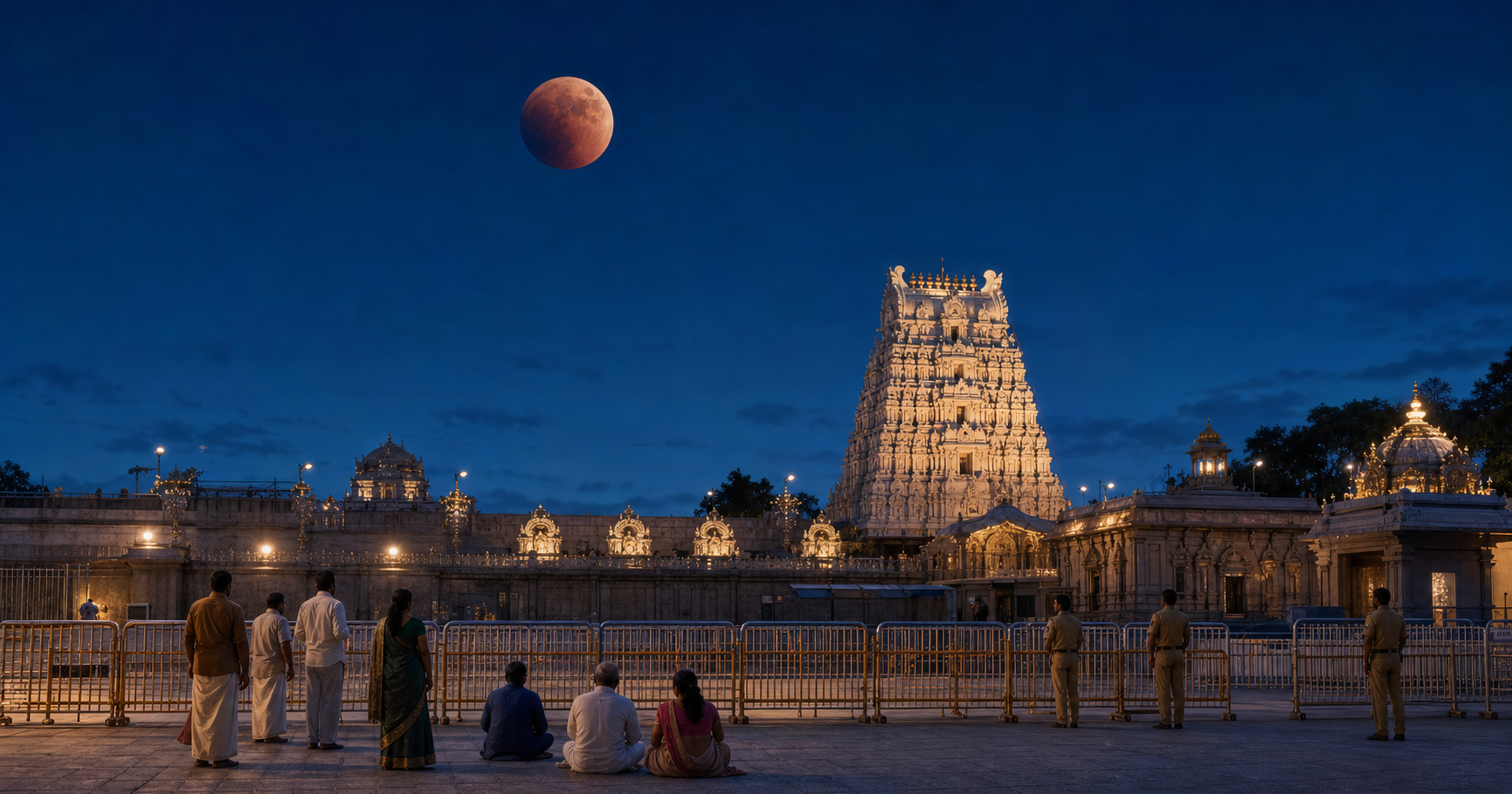
If you are trying to understand why Tirumala listed two evening times for 3 March 2026, keep one distinction in view: the end of the closure window was not the start of darshan. The Sri Venkateswara Swamy Temple remained closed from 9:00 am to 7:30 pm, while Suddhi and the associated purificatory rites were scheduled to conclude by 8:30 pm. Darshan was to resume only after those rites were complete.
That distinction matters beyond one calendar date. Whenever you read an eclipse-day temple notice, separate three stages: closure, ritual preparation for reopening, and public darshan. Treating them as one event is how a pilgrim reaches the entrance at the wrong time and builds an evening around a darshan hour that was never promised.
Key takeaways
- On 3 March 2026, the Tirumala temple’s eclipse closure ran from 9:00 am until 7:30 pm.
- 7:30 pm marked the end of the stated closure period, not a promise that darshan would begin immediately.
- Suddhi and the other purificatory rites were scheduled to finish by 8:30 pm; darshan was to resume after their completion.
- A late-evening arrival still required time for queues and security checks, especially when travelling with elders or children.
- The temple’s Agamic protocol and your household’s personal eclipse observance are related, but they are not the same set of instructions.
What 9:00 am, 7:30 pm and 8:30 pm actually meant
The safest way to read the 3 March Tirumala schedule is as a sequence, not as a single reopening time.
| Time or stage | What it meant | What you should do |
|---|---|---|
| 9:00 am | The closure began. The sanctum and public areas were to remain closed during the stated interval. | Do not plan temple access during the closure window. |
| 7:30 pm | The stated closure period ended, but the post-eclipse ritual sequence was not yet scheduled to be complete. | Do not treat 7:30 pm as a confirmed darshan time. |
| By 8:30 pm | Suddhi and the other purificatory rites were scheduled to conclude. | Use 8:30 pm as a ritual-completion reference, not as an appointment guaranteeing immediate entry. |
| After completion | Darshan was to resume once the rites had been performed. | Allow additional time for the queue, security checks and the gradual return to normal operations. |
The word by deserves attention. A rite scheduled to conclude by 8:30 pm does not place every pilgrim before Sri Venkateswara at 8:30 pm. It identifies the expected end of the temple’s ritual work. Your own entry comes later and depends on the movement of the waiting devotees and the normal access process.
This is the common planning error to avoid: using the earliest evening time as your expected darshan time. For this observance, 7:30 pm belonged to the transition out of closure, 8:30 pm belonged to the scheduled completion of purification, and darshan belonged to the period after that.
Why Suddhi is part of worship, not an operational delay
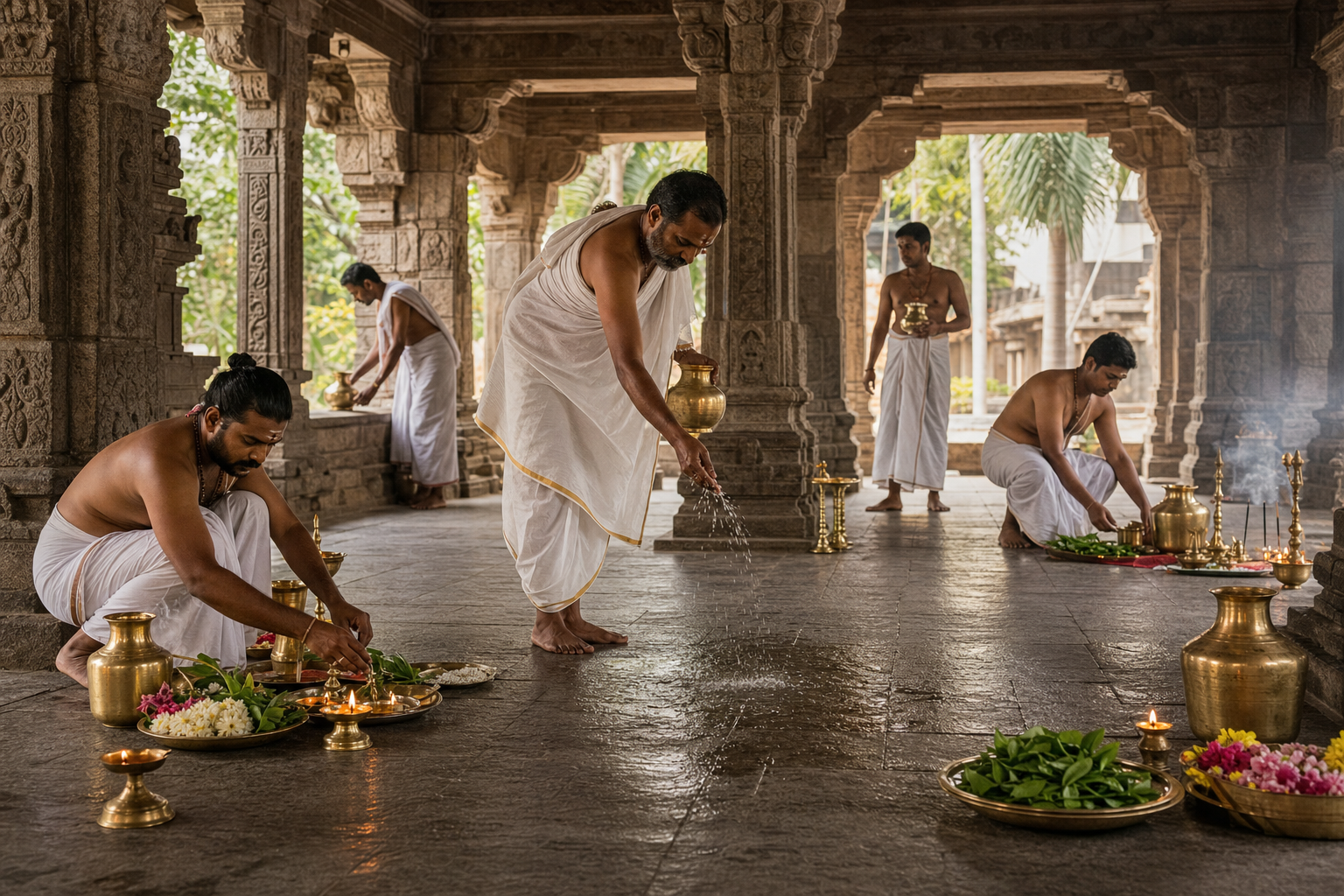
Suddhi means purification. At Tirumala, the post-eclipse Suddhi belongs to the temple’s Agamic discipline: the ordered ritual framework through which sacred space, worship and access are maintained. The eclipse closure and the rites that follow it therefore form one religious observance. The interval is not merely downtime between two public opening hours.
Ritual purity here is a precise religious category. It should not be reduced to ordinary cleaning, nor mistaken for a moral judgment about the people waiting outside. The temple pauses its usual public rhythm, carries out the prescribed transition, and only then resumes darshan. If you see the purification period as part of the worship rather than an obstacle before worship, the schedule becomes much easier to respect.
Your role as a pilgrim is consequently simple but meaningful: do not press the first reopening time into service as a shortcut. Let the temple complete its responsibility before expecting the public-facing part of the pilgrimage to restart. Waiting with that understanding is itself different from waiting in irritation for an unexplained delay.
How to plan an eclipse-affected Tirumala visit
The 3 March date has passed, but its schedule gives you a practical method for reading any future eclipse arrangement. Build your plan from the temple’s ritual sequence outward.
- Mark the entire no-access interval first. For 3 March 2026, that interval was 9:00 am to 7:30 pm. Do not build a temple visit inside it on the assumption that an early arrival will create an exception.
- Find the purification-completion time. The relevant time was 8:30 pm. This was later than the end of the closure window because Suddhi and the other rites had to be completed before darshan resumed.
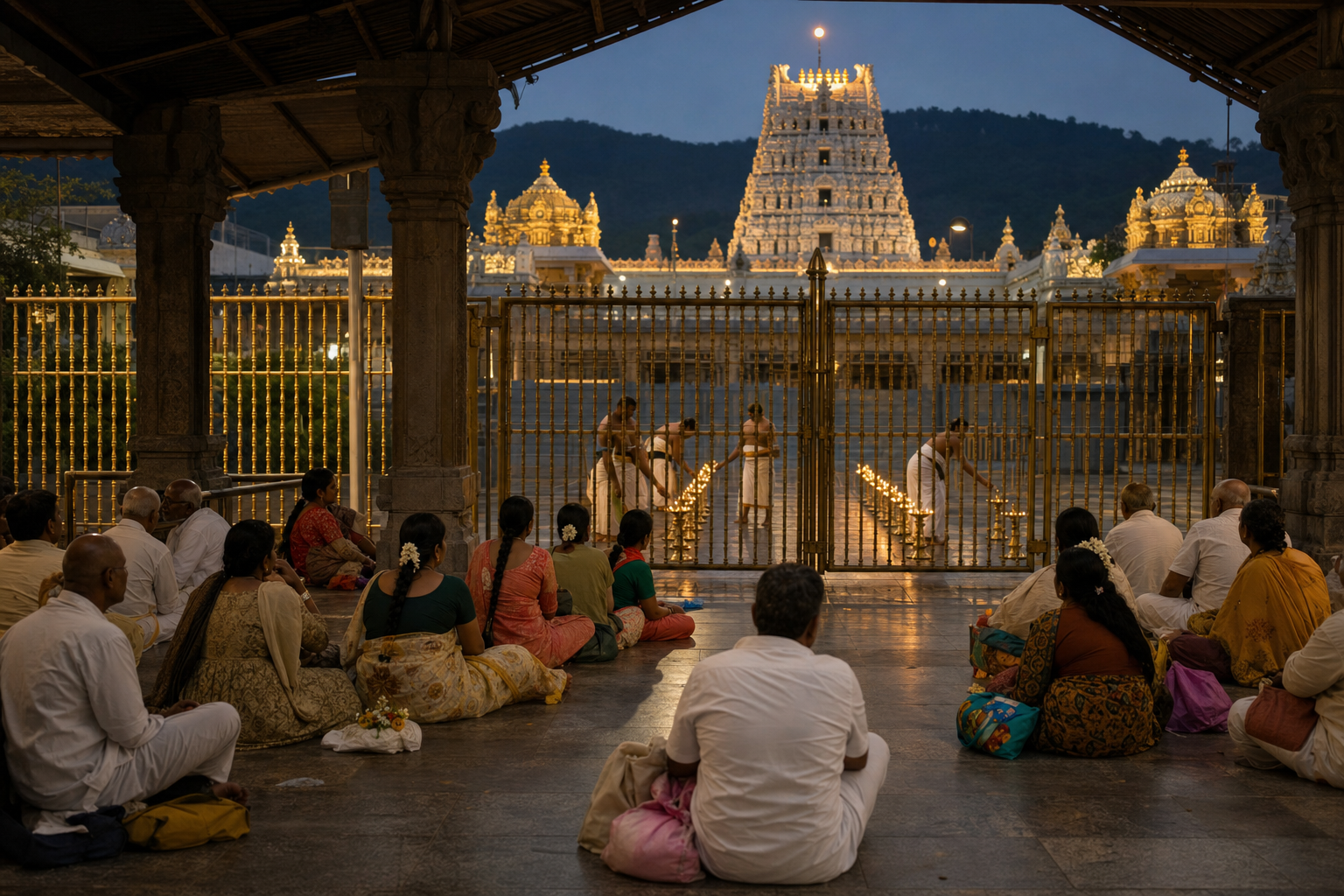
- Separate arrival from darshan. A late-evening arrival was the practical choice, but the queue and security process still stood between arrival and entry. Keep your onward plans flexible rather than assigning yourself an exact darshan minute.
- Plan food, rest and transport around the full interruption. This matters particularly when elders and children are with you. A plan that accounts only for the hours of formal closure can still fail if it ignores the additional waiting after the rites.
- Expect a gradual return to normal operations. The resumption of darshan does not mean every part of the pilgrim experience instantly returns to an ordinary-day rhythm. Give the evening room to unfold.
If you are responsible for a family group, tell everyone the same three facts before leaving: when access is closed, when the rites are expected to finish, and that darshan follows rather than coincides with that finishing time. That small briefing prevents the most avoidable confusion, especially when one person has seen 7:30 pm and another has seen 8:30 pm.
Do not make a personal fast or another household discipline the hidden foundation of everyone else’s travel plan. Decide such observances within your own tradition and capacity, then separately arrange the practical needs of elders and children. The temple notice governs temple operations; it does not, by itself, establish one domestic rule for every pilgrim.
A personal observance that respects the temple’s discipline
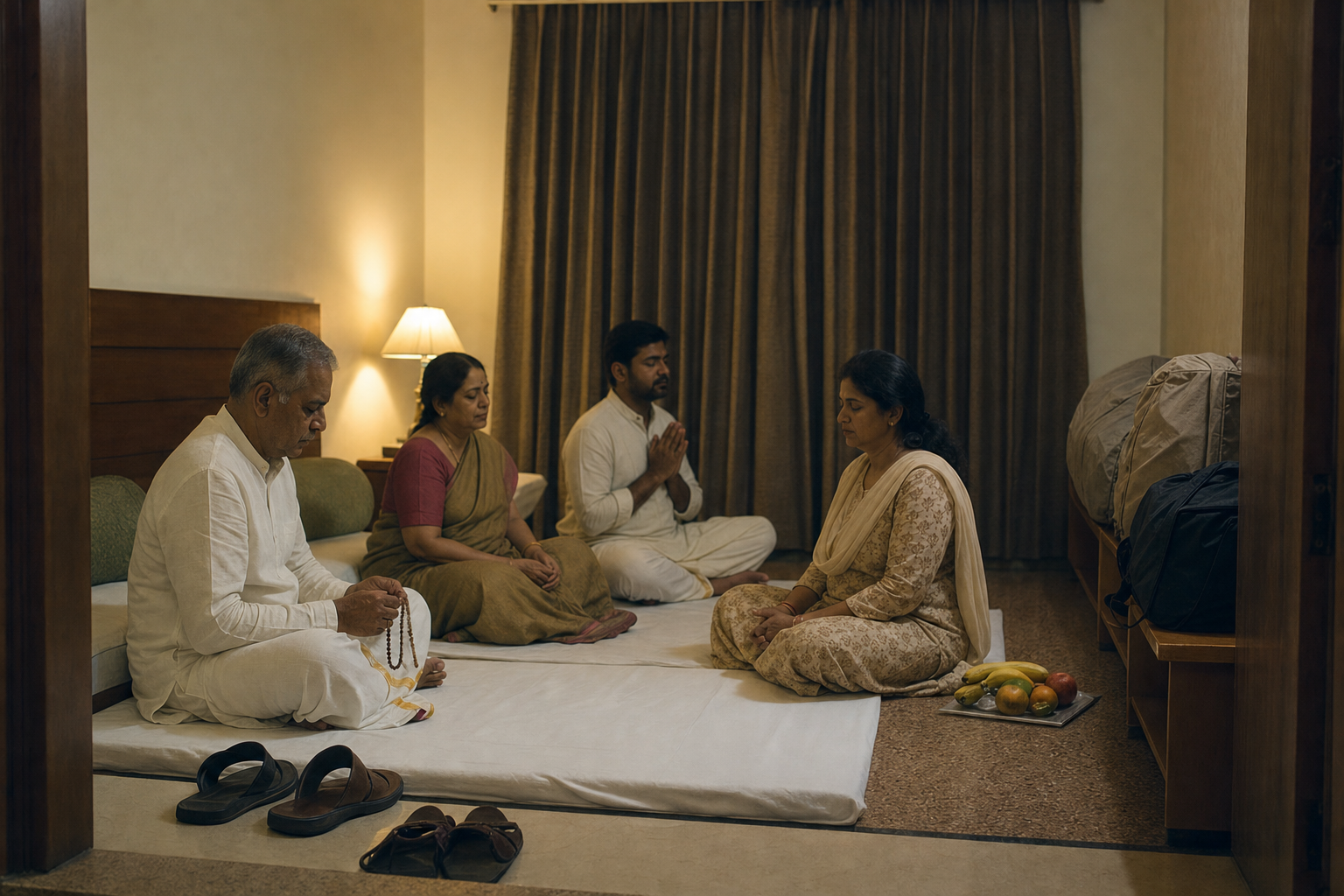
You do not need to reproduce the temple’s institutional rites outside its walls. During the closure, devotees may turn to prayer, mantra recitation or quiet reflection. Choose a practice you already understand and can sustain with attention. The point is recollection and discipline, not the hurried accumulation of unfamiliar actions.
A simple approach is enough: reserve part of the closure period for your regular mantra or prayer, keep the evening free from unnecessary rushing, and approach post-Suddhi darshan without demanding that sacred time obey your itinerary. This joins the inner and outer sides of the observance. The temple maintains its ritual order; you maintain the quality of your own attention.
The wider Dharmic family offers resonances here, but it should not be flattened into a claim that every Hindu, Buddhist, Jain or Sikh community follows Tirumala’s eclipse protocol. These traditions have their own teachings and disciplines. Their shared regard for self-restraint, purification of conduct or mind, and collective well-being can deepen mutual understanding without erasing real differences in practice.
For a future eclipse visit, write down three separate entries before arranging the rest of your day: closure begins, purification is expected to end, and darshan resumes. If a notice does not clearly supply all three, do not invent the missing time. For the Tirumala observance on 3 March 2026, the practical rule was unambiguous: stay clear of the 9:00 am to 7:30 pm closure, allow the Suddhi sequence to run through 8:30 pm, and treat darshan as the sacred event that followed.
References
