
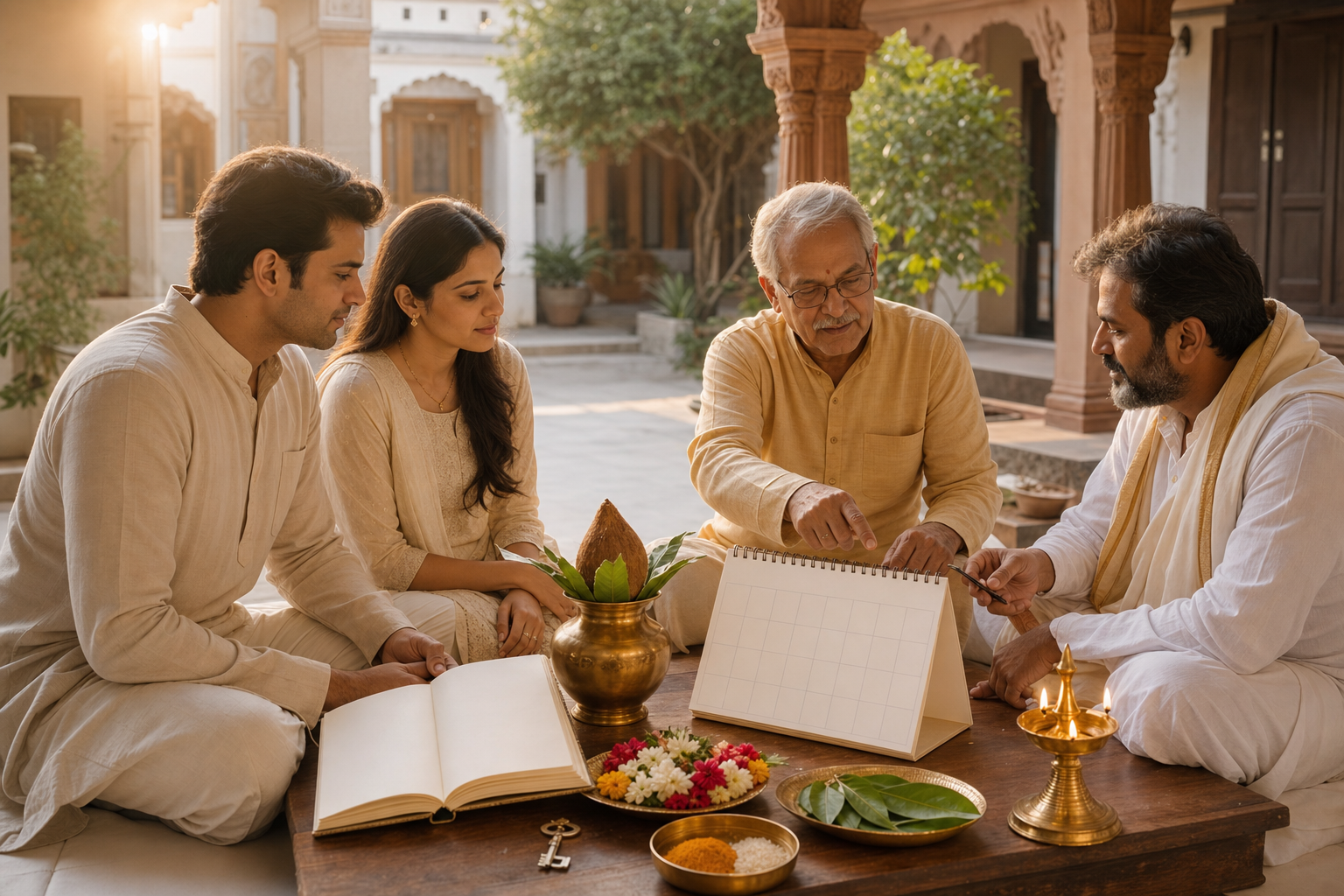
You are ready to fix a wedding, housewarming, business opening, or samskara in 2026, but the family has reached the familiar impasse: which date will satisfy the Panchang, the elders, the officiant, and the practical realities of the event?
Abuj Muhurat can resolve much of that friction. It gives you a traditionally auspicious anchor without requiring the full set of ordinary date checks. What it does not give you is one universal date list that can be copied without regard to region, sampradaya, or local practice. The reliable approach is to verify the observance first and make commitments second.
What an Abuj Muhurat settles for you
Abuj Muhurat, also called Swayam Siddhi Muhurat, is understood as an intrinsically auspicious time for beginning important work. Its practical distinction is that it is accepted without the usual Shuddhi process.
When your tradition recognizes a date as Abuj Muhurat, you do not separately have to clear the ordinary combination of Tithi, Vaar, Nakshatra, Yog, Shukra Astha, or Guru Astha. The convention also removes the need to evaluate the individual’s Surya, Chandrama, Guru, or Shani Gochar merely to validate that muhurat.
This is a simplification within Hindu calendrical practice, not permission to ignore the practice. It means that the auspicious character of the chosen time is already accepted. It does not automatically decide your ritual sequence, family customs, venue, consent, budget, legal obligations, or physical readiness.
- It can settle: whether you have a traditionally auspicious calendrical anchor for the beginning.
- It cannot settle: whether every region or lineage observes that date in the same way.
- It can reduce: repeated negotiations over multiple Panchang factors and personal transits.
- It cannot replace: the guidance needed for the actual samskara or ceremony.
- It can support confidence: when relatives need one date around which to coordinate.
- It cannot guarantee an outcome: right timing does not substitute for right conduct, sound preparation, or sustained effort.
Akshaya Tritiya and Vijayadashami are often treated as Swayam Siddhi occasions, but the operative word is often. Recognition and protocol can differ by region and sampradaya. That is why an exact 2026 date should come from the regional Panchang and community authority you will actually follow, rather than from an undifferentiated online calendar.
Use this verification sequence before booking anything

The best planning sequence separates religious confirmation from event logistics. Complete the following steps in order so that a venue deadline does not end up dictating your interpretation of the calendar.
- Define the beginning precisely. Write down whether you are planning a vivaha, Griha Pravesh, business inauguration, or another samskara. A general question about a good day is less useful than a question tied to a specific rite.
- Name the tradition and place. Record the family’s region, sampradaya, present location, and the custom normally followed by the officiant. These details help prevent two relatives from quoting different Panchangs as though they were interchangeable.
- Select one primary calendrical authority. Ask the pandit, acharya, elder, or community guide who will oversee the observance which regional Panchang should govern the decision. If the families use different calendars, resolve that choice before comparing dates.
- Request locally recognized 2026 dates. Ask which dates are accepted specifically as Abuj or Swayam Siddhi Muhurat for your intended event. Do not assume that a day commonly associated with auspicious beginnings is observed identically in every lineage.
- Ask about exceptions and time-of-day practice. The date carries the primary auspicious significance, so participant availability can often shape the schedule. Still, confirm whether your custom has a regional prohibition, a prescribed protocol, or a preferred interval within the day.
- Clarify what must begin at the chosen time. Ask the officiant which ritual act marks commencement for your ceremony. This prevents a disagreement between the time printed on the invitation and the time that matters within the rite.
- Build the practical shortlist. Compare only the confirmed dates against priest availability, travel, venue access, household readiness, and the needs of elders or other essential participants.
- Commit funds after confirmation. If a venue or vendor requires an early decision, use a refundable hold until the family and officiant have agreed on the date. A non-refundable booking made first can turn a calm religious decision into a financial dispute.
If you live outside Bharat, make the calendrical basis explicit. Ask whether your family intends to use a trusted Panchang for the present location or a resource aligned with the home tradition, and have the community guide confirm how it should be applied. The mistake is not choosing one approach or the other; it is silently combining dates and rules from different systems.
Plan the day according to the beginning you are making
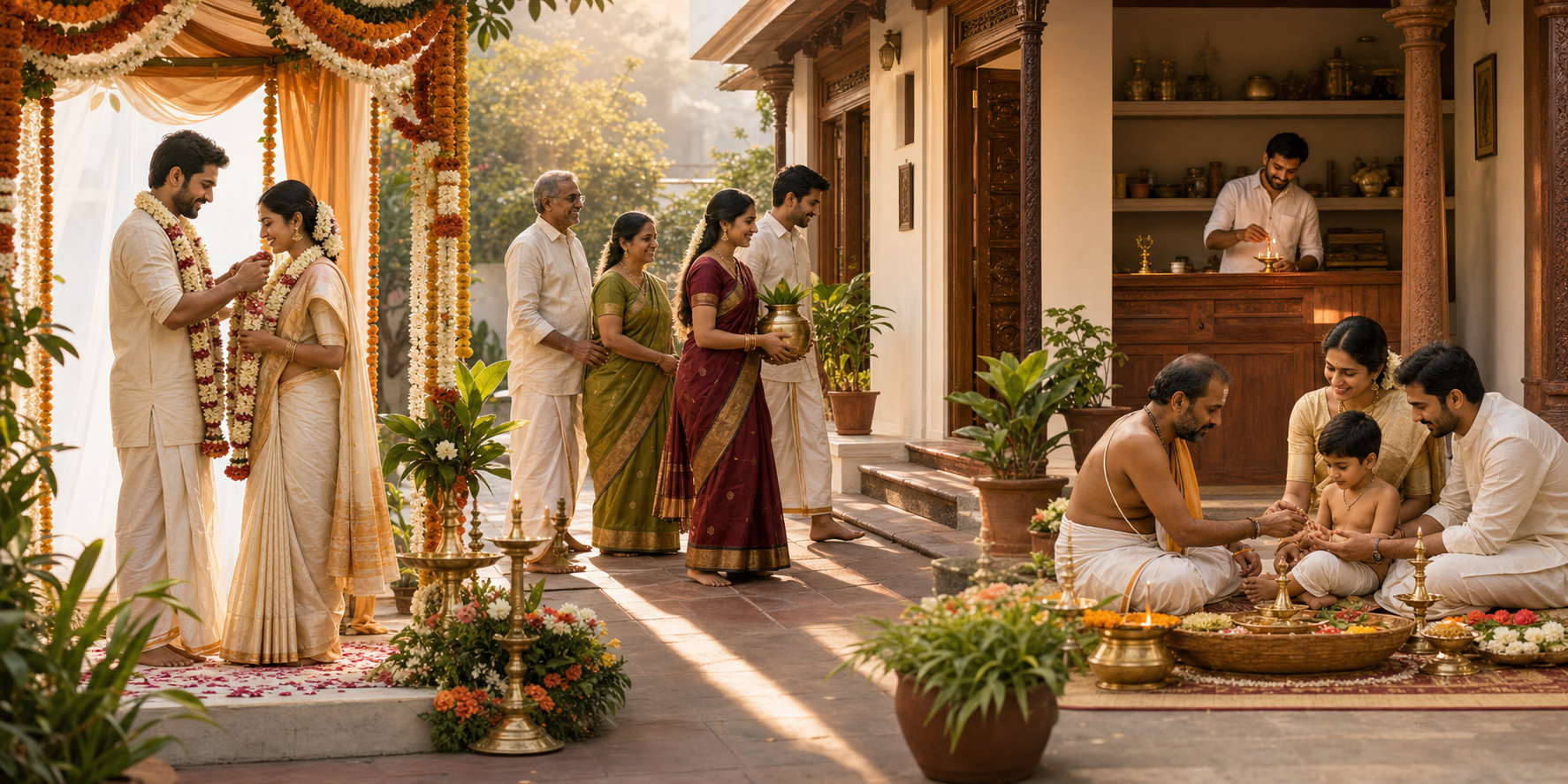
For a vivaha
Get both families to agree on the primary Panchang and officiant before the venue contract is final. If Abuj Muhurat is accepted for the marriage, its exemption from ordinary date Shuddhi should reduce the need to keep reopening the calendrical question. It does not require either family to abandon separate lineage customs connected with the wedding.
Once the date is confirmed, give the officiant, venue, and close family the same written schedule. Identify which portion of the ceremony must begin at the agreed time, then place photography, meals, processions, and guest arrivals around that requirement. Do not let a decorative invitation time become the only time anyone remembers.
For Griha Pravesh
Confirm that the home will actually be ready for safe entry and worship. Working utilities, clean access, adequate ventilation, and an uncluttered ritual area matter more than presenting an unfinished property as complete. Coordinate the puja materials, priest’s arrival, household members, and any customary sequence before inviting a larger gathering.
If construction or possession is uncertain, keep the invitation plan flexible. An auspicious date should support an orderly entry into the home, not pressure you to conduct a ceremony in a space that cannot yet receive the family safely and respectfully.
For a business inauguration
Decide what your business will treat as its formal beginning: opening the premises, performing the puja, admitting customers, or commencing operations. Confirm the ritual marker with your guide, then make the commercial schedule consistent with it.
Check access, staffing, stock, equipment, required permissions, payment arrangements, and customer communication before announcing the opening. Muhurat can dignify the start; it cannot repair an operation that is unprepared to serve people once the doors open.
For another samskara or personal undertaking
Begin with the family authority responsible for that observance. Ask whether Abuj Muhurat is customarily used for it, what simple preparation is appropriate, and whether any person-specific or ritual requirement remains even though ordinary Muhurat Shuddhi is unnecessary. This keeps you from applying a broad calendrical principle beyond the boundaries recognized by your own tradition.
Keep auspicious timing in its proper dharmic proportion
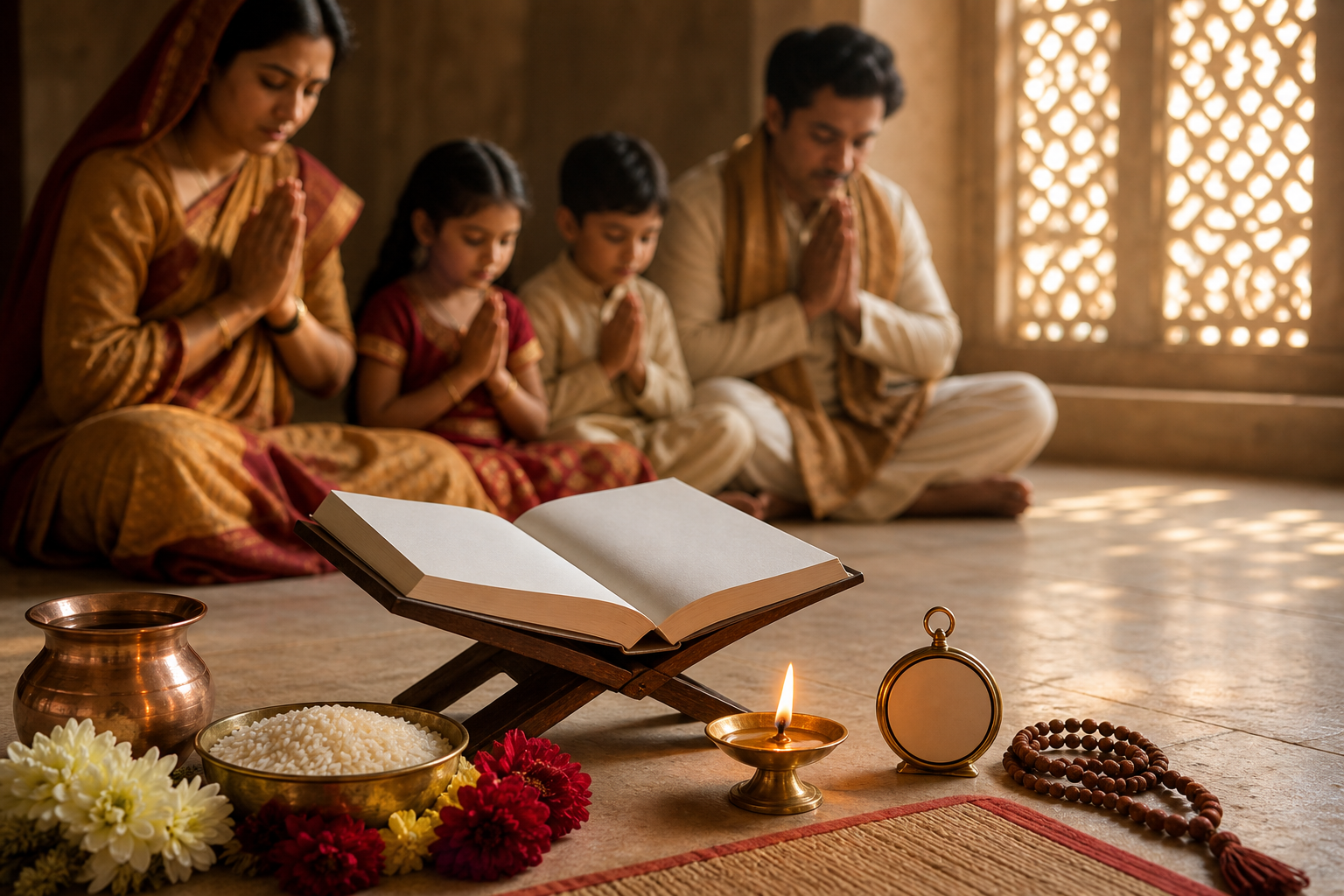
The purpose of an auspicious beginning is not to outsource responsibility to the calendar. Prepare a clear sankalpa, observe satvik conduct, arrange the puja or prayer followed by your family, seek the blessings of elders where appropriate, and include daan in a manner consistent with your means and custom. These actions give moral and spiritual form to the beginning.
Avoid five common misreadings:
- Copying a date without checking its locality: verify the 2026 observance through the regional Panchang and community guide you will follow.
- Treating the whole day as automatically interchangeable: ask whether local practice uses the date broadly or observes a customary interval or protocol.
- Adding filters until the simplification disappears: if the family accepts the occasion as Abuj Muhurat, do not keep reintroducing every ordinary Shuddhi factor merely because another calendar lists it.
- Using convenience to overrule a genuine exception: participant availability matters, but it should be considered after regional prohibitions and lineage requirements are known.
- Treating timing as a guarantee: no muhurat replaces consent in marriage, safety in a home, honesty in business, financial prudence, or compassion toward the people affected by the event.
The wider dharmic family offers a helpful ethical context without erasing distinctions. Hindu, Buddhist, Jain, and Sikh communities all value intentionality, disciplined conduct, and collective well-being in their own ways. Abuj Muhurat remains a Hindu calendrical convention; members of other traditions should follow the authorities and rites proper to their own path rather than having Hindu terminology imposed on them.
Key takeaways for your 2026 decision
- Abuj Muhurat and Swayam Siddhi Muhurat refer to a time accepted as auspicious without the usual Shuddhi calculations.
- The exemption covers ordinary checks involving Tithi, Vaar, Nakshatra, Yog, Shukra Astha, Guru Astha, and specified personal Gochar considerations.
- Akshaya Tritiya and Vijayadashami are often recognized as such occasions, but regional and sampradaya practice must determine their use in 2026.
- Choose one primary regional Panchang and settle differences between family calendars before booking the event.
- Confirm whether any local prohibition, ceremony-specific requirement, or preferred time-of-day practice still applies.
- Use the confirmed date as an anchor for sankalpa, proper ritual preparation, ethical conduct, and realistic logistics – not as a substitute for them.
Your next move is concrete: take the event, location, sampradaya, and preferred part of 2026 to the pandit, acharya, elder, or community guide whose Panchang you will follow. Ask for the locally recognized Abuj dates and any applicable protocol, record the answer, and only then place deposits and issue invitations.
References
