

If Nehru’s account shaped how you first understood medieval India, the difficult question isn’t whether to accept or reject him wholesale. It is which parts of his interpretation explain real cultural change, and which parts quietly turn a preference into a theory of civilization.
The useful answer is precise. Nehru recognized important interaction, adaptation, and artistic synthesis. But he too readily treated aesthetic change as proof of social renewal, measured Indian political development against a European class sequence, and understated the agency of the powers that succeeded Mughal authority. Once you separate those moves, you can read him critically without denying either Indo-Islamic creativity or India’s deeper civilizational continuity.
Nehru’s thesis contains three claims, not one
Nehru’s interpretation gains much of its force by joining several propositions into a single narrative. Pull them apart, and each demands a different kind of evidence.
- A claim about cultural causation: Indian society had become stagnant, while Islam introduced a new vital force that disturbed established patterns and generated renewal.
- A claim about artistic value: Hindu architecture had become excessively ornate, while Indo-Islamic forms brought simplicity, dignity, and structural clarity.
- A claim about political economy: economic changes weakened the Mughal order, but no sufficiently powerful bourgeois class arose to capture authority and consolidate a new system.
Nehru compressed the first claim into the memorable assertion that “Islam shook India to its very foundations.” The sentence is rhetorically effective because it makes a vast and complicated encounter sound like a single historical event with one direction. Yet “Islam,” “India,” and “foundations” each encompass many different actors, regions, institutions, and times.
This distinction matters whenever you encounter Nehru’s argument in a textbook or public debate. Evidence that a new architectural vocabulary emerged does not automatically prove that society had previously been stagnant. Evidence that Mughal authority declined does not by itself prove that India failed because it lacked a European-style middle class. And admiration for a monument cannot settle either question.
A simple reading discipline helps: label every large statement as description, causation, or judgement. “A form changed” is description. “Religious contact caused the change” is causation. “The new form was superior” is judgement. Nehru often moves between these levels faster than the evidence permits.
Keep the insight about synthesis, but reject the aesthetic shortcut
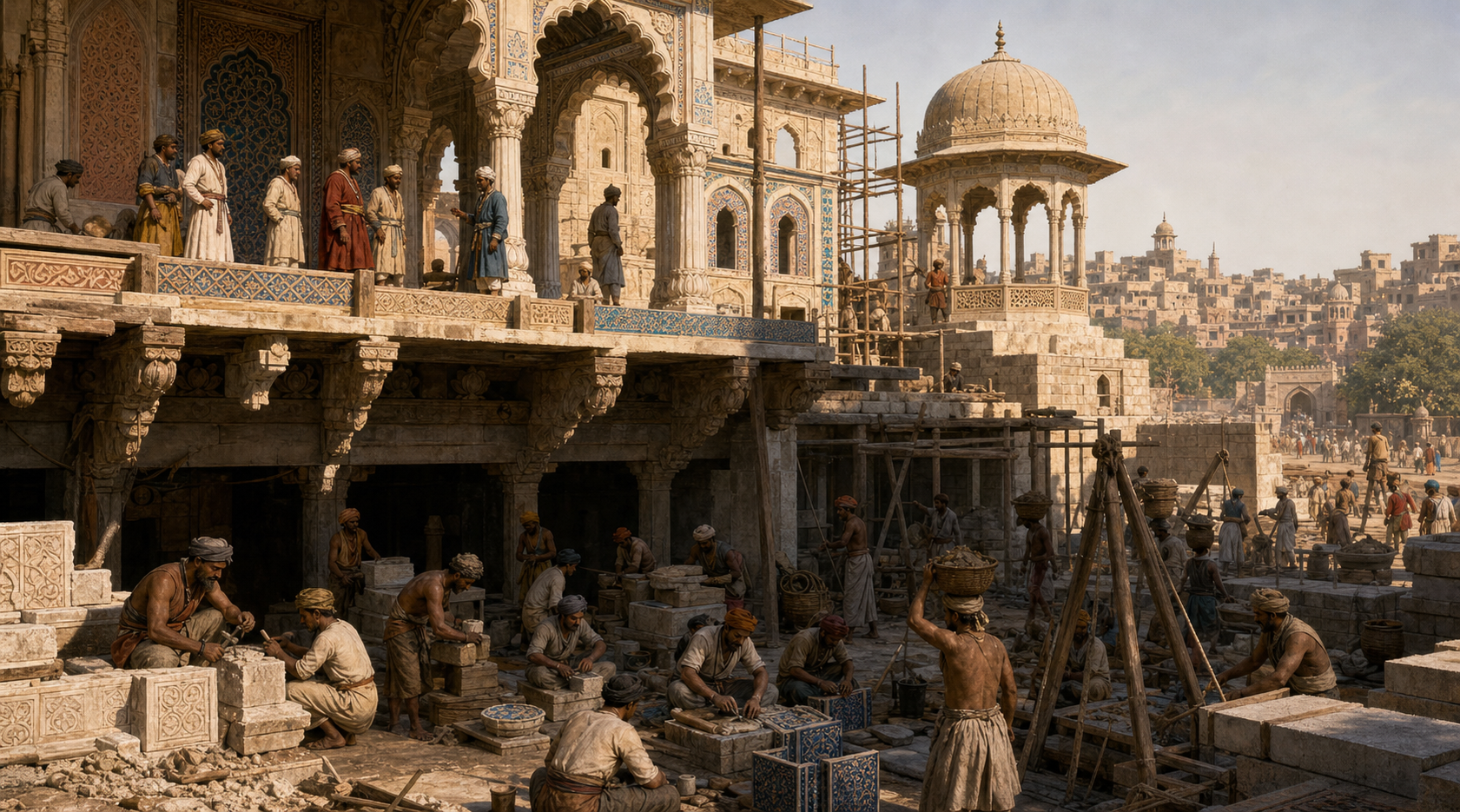
Nehru was right to direct attention toward cultural synthesis. Courts, patrons, sthapatis, craftspeople, materials, building techniques, and inherited design languages met under changing political conditions. Mosques, forts, palaces, and the Taj Mahal can therefore be studied as products of adaptation as well as power. Acknowledging that creative interaction does not diminish the antiquity or sophistication of India’s pre-Islamic traditions.
The problem begins when a real artistic development becomes an index of total civilizational health. Architecture can reveal patronage, technology, taste, political symbolism, and the organization of skilled labour. It cannot, by its beauty alone, establish that ordinary people became freer, that institutions grew more just, that learning became more vigorous, or that the economy became more productive.
The contrast between “over-ornamented” Hindu work and dignified Indo-Islamic simplicity is especially weak as historical proof. Ornament and restraint are aesthetic characteristics, not stages on a universal ladder of progress. Calling one excessive already embeds the conclusion in the description. You are being asked to share a taste before you are shown a social argument.
Whenever visual splendour is offered as evidence of civilizational renewal, ask four questions:
- Who commissioned the structure, and what political message did the patron want it to convey?
- Which design principles, construction practices, or materials actually changed?
- Did the change extend beyond royal and urban settings into wider social institutions?
- Do revenue records, inscriptions, coinage, trade patterns, or vernacular accounts support the same story?
This method allows you to admire Indo-Islamic architecture without converting admiration into a verdict against the civilization that preceded it. It also prevents the opposite mistake: denying synthesis because you object to the political circumstances in which some of it occurred. Cultural interaction can be real even when claims of linear progress remain unproven.
The missing bourgeoisie reveals the limits of Nehru’s model
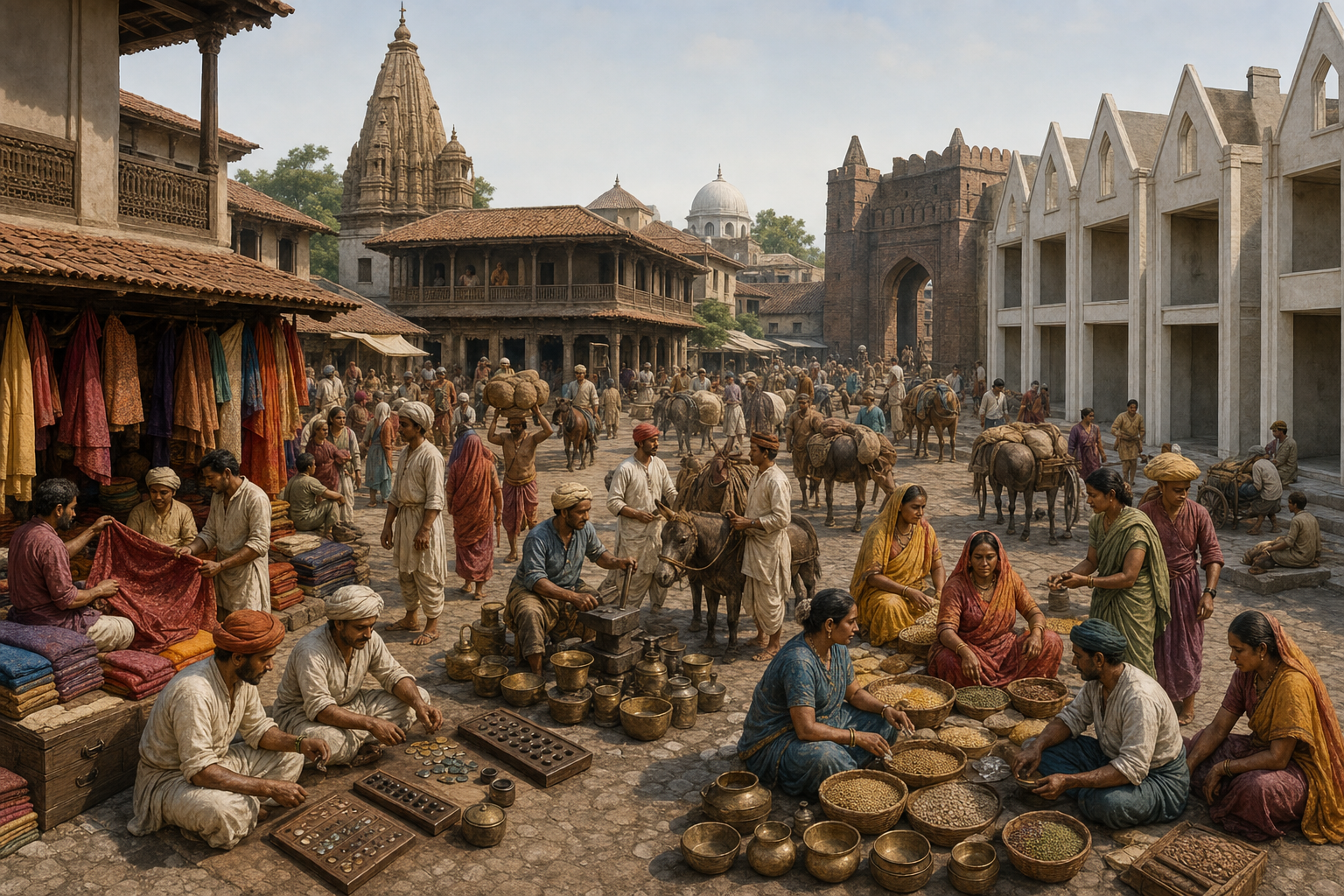
Nehru’s explanation of Mughal decline is recognizably historical-materialist. In his account, economic change weakened an old, partly feudal order. Excessive despotism had left society politically enfeebled, while no bourgeois class emerged strongly enough to replace the declining centre. Feudal interests, middling groups, and peasants attempted to seize authority but failed to establish a durable successor.
That framework usefully directs attention away from court personalities alone. Empires do depend on revenue, military logistics, social coalitions, and the capacity to translate resources into authority. A ruler’s character cannot explain every regional divergence or institutional failure.
But the model becomes restrictive when Europe’s transition from feudalism to bourgeois power is treated as the expected route of development. India then appears deficient because it did not reproduce the class sequence used to explain Europe. The central question becomes, “Why did India fail to become something else?” That framing can conceal the political forms Indians were actually constructing.
The Marathas, Sikhs, Rajputs, and Jats were not merely debris from a collapsing Mughal system. They sustained challenges to imperial authority, organized military and fiscal power, built institutions, produced political cultures, and advanced regional claims to sovereignty. You need not romanticize every formation to recognize that the language of incomplete rebellion understates their state-building capacity.
Test the decline narrative region by region. For each power, ask who collected revenue, how armed forces were organized, how authority was negotiated with local groups, what institutions survived a change of ruler, and how legitimacy was expressed. A formation that performs these functions is doing more than reacting to decay, even if it never creates a centralized empire on the Mughal model.
The same scrutiny should apply to causal claims. Economic change may explain part of the crisis, but trade routes, coinage, environmental pressures, revenue arrangements, military mobility, court politics, and regional ambitions may not move in unison. A sound explanation must show how several mechanisms interacted. Replacing Nehru’s class explanation with any other single cause would repeat his narrowing move.
Use this five-part test on any sweeping history of the period
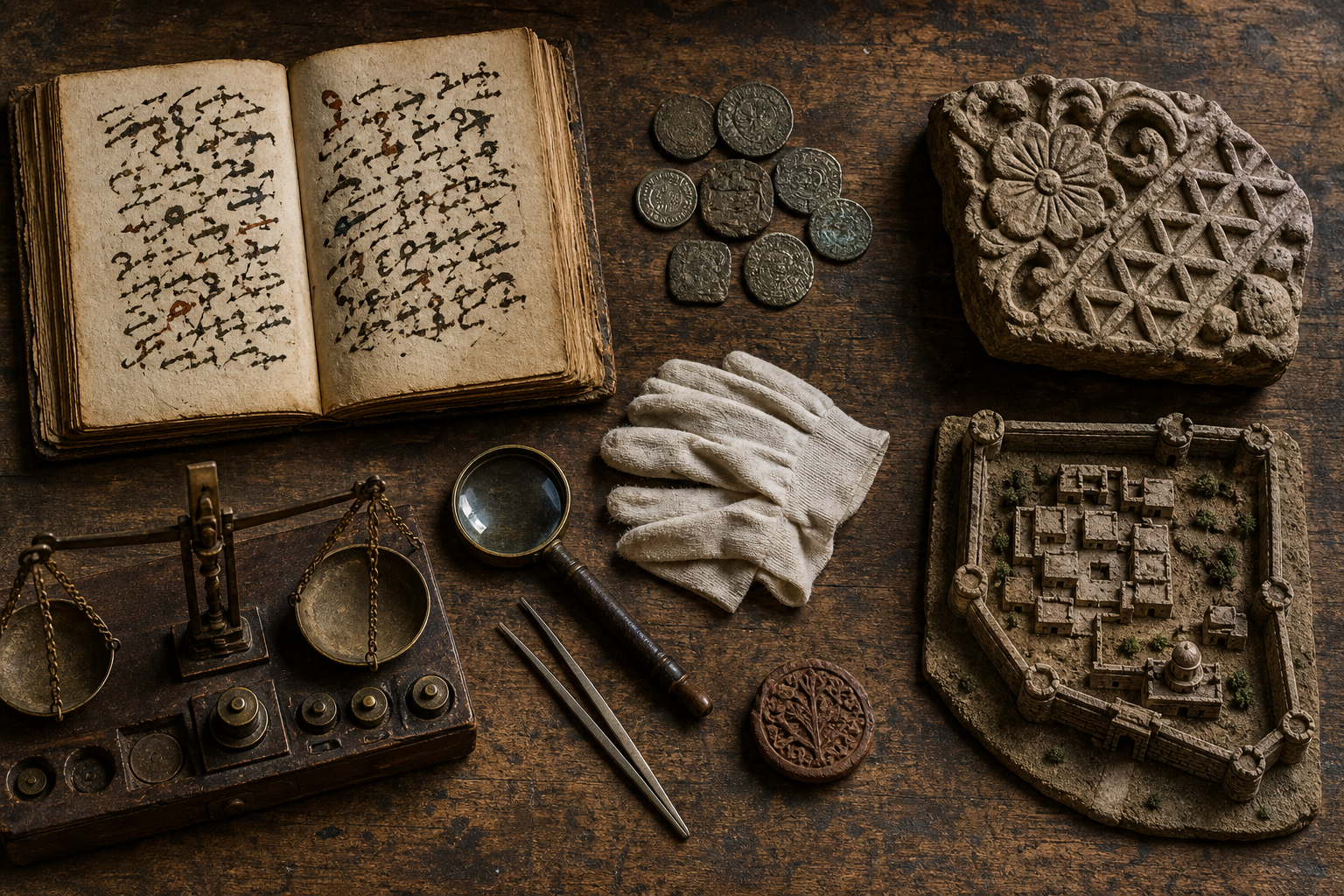
You do not need to become a specialist before assessing a broad civilizational argument. You do need to slow the argument down and demand evidence proportionate to its scale.
- Break collective nouns into identifiable actors. When you read that “Islam” revitalized “India,” ask whether the claim concerns rulers, religious scholars, merchants, artisans, soldiers, migrants, converts, or mixed local communities. Then ask which region and institution are actually under discussion.
- Separate change from improvement. A new design vocabulary proves change. It proves improvement only after the standard of improvement has been stated and defended. Do not let novelty do the work of evidence.
- Match the record to the claim. Buildings can support conclusions about design and patronage. Revenue manuals, coins, and trade routes are better suited to economic questions. Inscriptions, chronicles, and administrative practices can illuminate authority. No single class of material should carry the whole civilizational thesis.
- Look for continuities that political history overlooks. Temple and monastic economies, pilgrimage networks, ethical traditions, learning lineages, local institutions, and vernacular literary cultures may persist even when capitals, dynasties, and court languages change.
- Check for a borrowed destination. If India is judged mainly by its failure to produce Europe’s bourgeois transformation, reframe the question. Ask what order emerged under Indian conditions, which functions it performed, and why its participants considered it legitimate.
Key takeaways
- Nehru’s strongest insight is that medieval Indian culture was dynamic and interactive, not sealed into isolated communities.
- His weakest move is treating architectural preference as evidence of total social progress.
- Cultural synthesis does not require you to accept a hierarchy in which pre-Islamic India represents stagnation and Indo-Islamic culture represents advancement.
- The absence of a European-style bourgeois transition does not prove the absence of Indian political innovation.
- Maratha, Sikh, Rajput, and Jat agency must be studied as state-building, not merely as unsuccessful resistance to a declining centre.
A Dharmic reading restores continuity without denying exchange
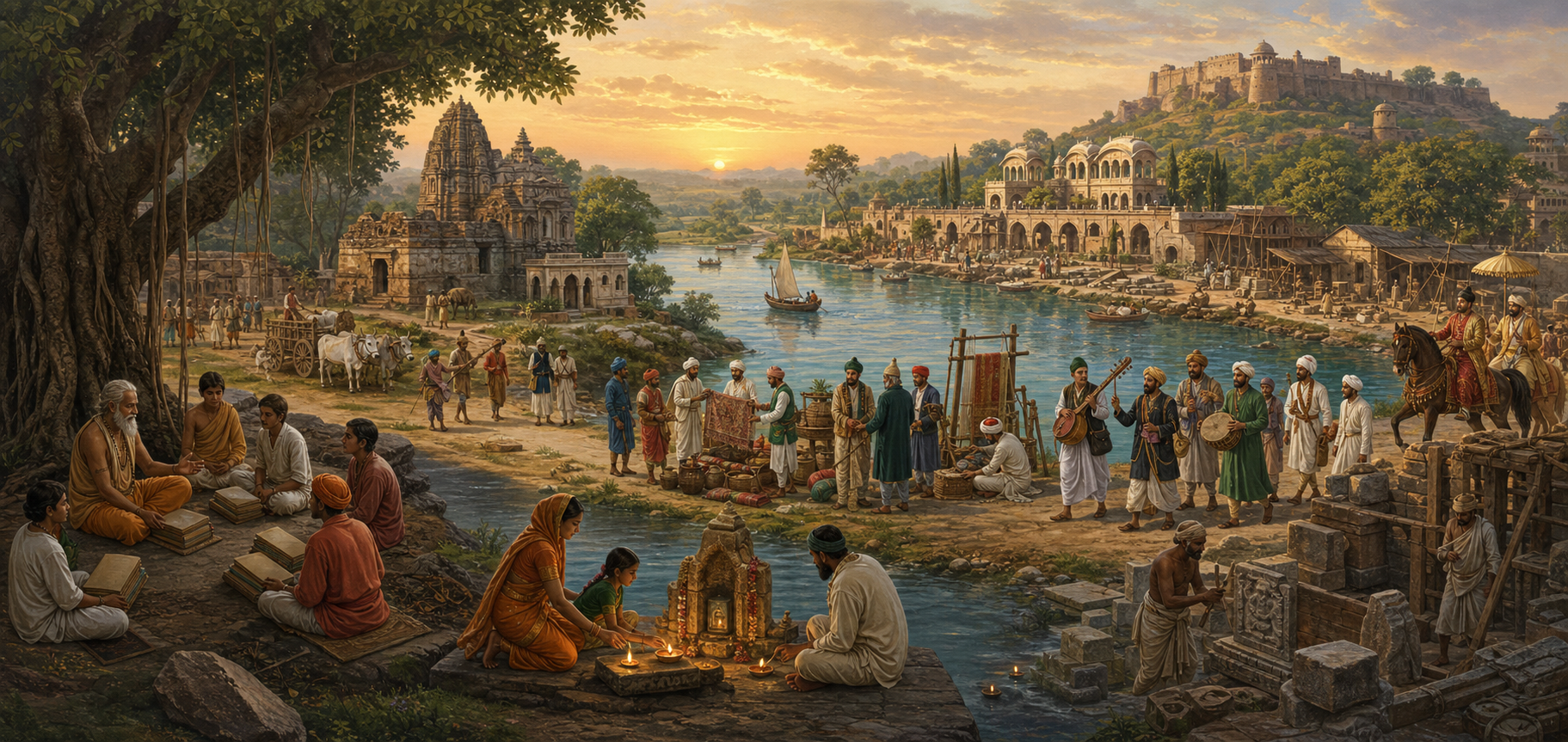
A Dharmic interpretation changes the field of vision. It asks what happened not only to thrones and monumental styles, but also to ethical life, sacred geography, learning, community institutions, and the networks through which Hindu, Buddhist, Jain, and Sikh traditions endured. Political conquest and courtly fashion matter, but neither exhausts the history of civilization.
This approach should not become a licence for romanticism. Civilizational continuity does not mean that nothing changed, that every indigenous institution was healthy, or that contributions made under Muslim patronage should be minimized. It means that India’s vitality cannot be granted or withdrawn according to the fortunes of one dynasty, the arrival of one religious community, or a modern observer’s preference for one architectural idiom.
It also gives you a better way to discuss a polarized subject. You can affirm Indo-Islamic creativity while challenging Nehru’s hierarchy. You can take economic explanations seriously while refusing to treat Europe as India’s missing future. You can recognize regional state-building without pretending that every successor regime embodied the same ideals. Historical balance does not require moral vagueness; it requires keeping each conclusion within the limits of its evidence.
The next time you meet a sweeping claim about medieval India, mark it D, C, or J: description, causation, or judgement. Then ask what evidence supports that exact level of claim. Keep the synthesis that the record can carry. Set aside the hierarchy it cannot.
References
