
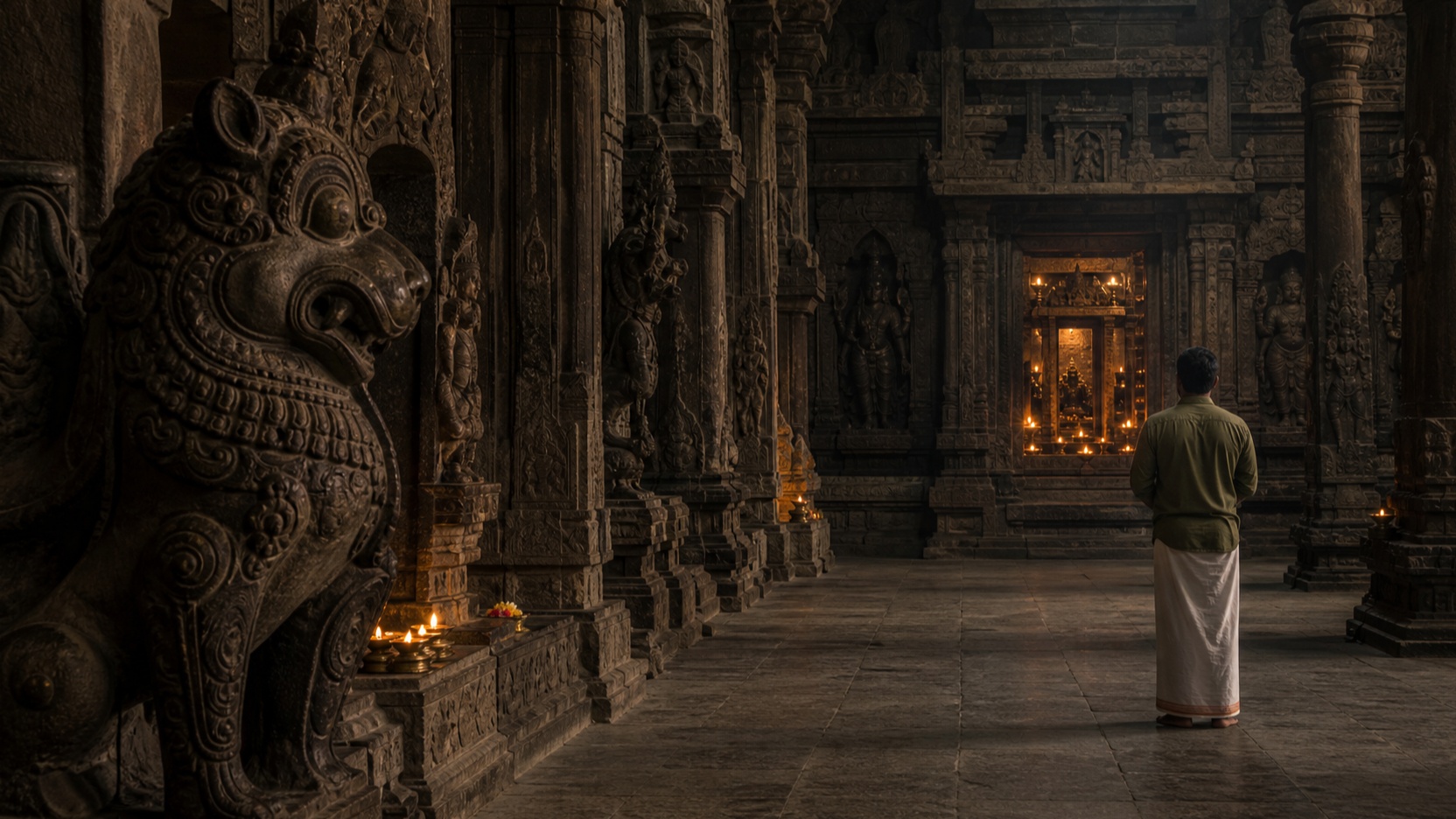
You enter a South Indian temple, recognize Ganesha or Lakshmi, and then get stuck. Why is one deity near the entrance? Why does Lakshmi have elephants but no owl? Is a raised hand holding something, or making a gesture?
You do not need to memorize every sculptural detail before your visit. Read each image in a dependable order: placement, bodily form, hands, posture, companions, and ritual setting. That sequence will tell you far more than guessing at one isolated symbol.
Begin with where the deity stands
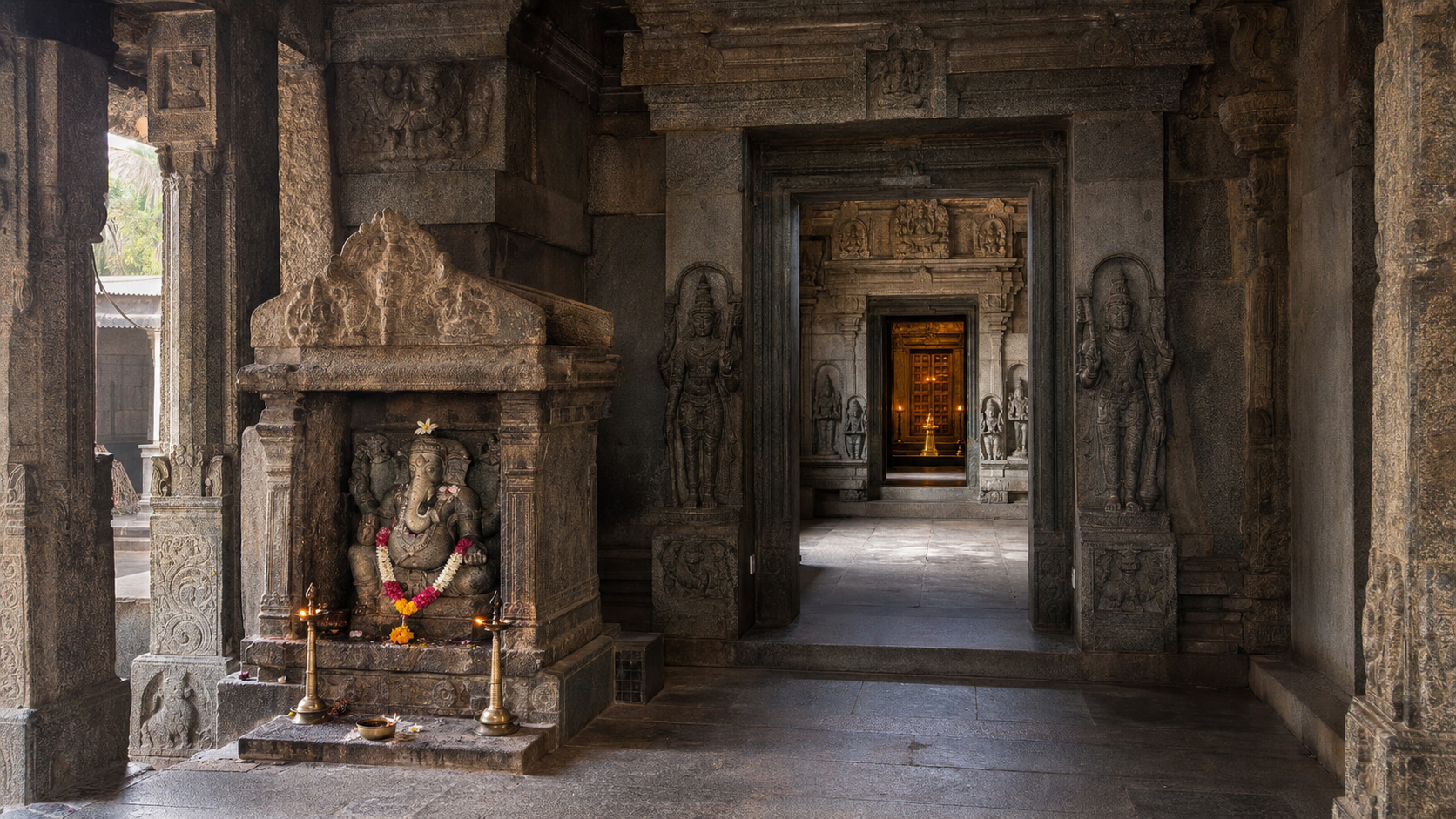
Before examining what a deity holds, notice where the shrine appears in your route. South Indian temple space has a devotional grammar. The gopuram marks an entrance, the prakaras form successive enclosures or circuits, and the sanctum establishes the principal focus. A deity placed at a passage or threshold is often helping to define how you should enter the sacred order.
Ganesha makes this principle especially clear. In Tamil temple practice, forms of Pillaiyar commonly occupy a shrine or niche near a gopuram, along a prakara, or at another significant point of passage. Shiva and Vishnu temples may both give him this spatial priority. Devotees seek his darshan before proceeding because auspicious commencement is part of his theological role, not merely a matter of convenience.
If you encounter Adhi Gajanathar near the beginning of the circuit, read the placement together with the name. Adhi expresses primacy or foundational presence, while Gajanathar identifies the elephant-faced lord. The image therefore announces more than the removal of an occasional obstacle. It asks you to begin the entire act of worship with clarity, humility, and ordered intention.
This gives you a useful first rule: do not judge importance only by the size of an image or the grandeur of its chamber. A modest threshold shrine may govern the sequence of your visit. Ask, “Why am I meeting this deity here?” before asking, “What does this object mean?”
Move from the whole form to the smallest attribute
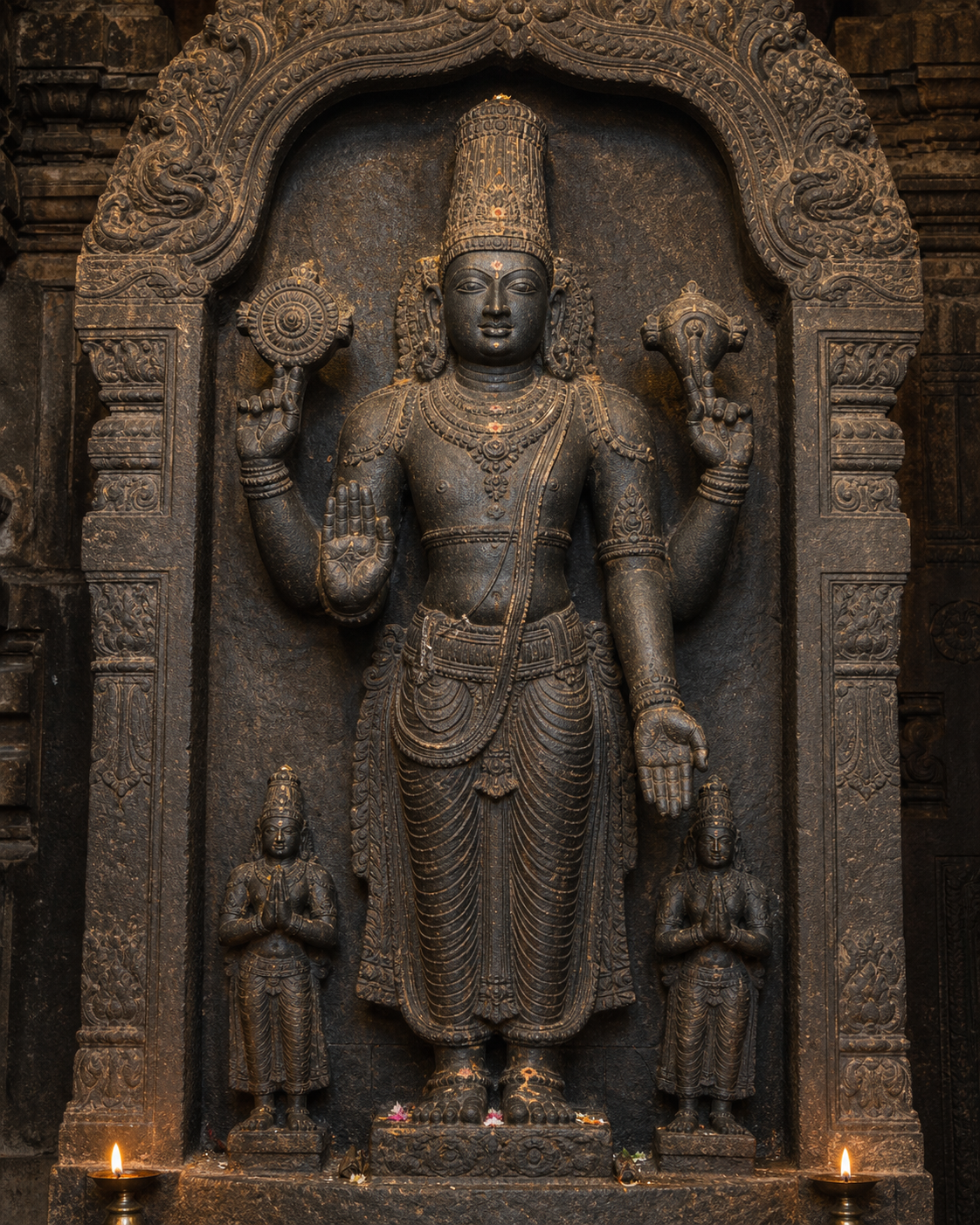
A temple icon is an ensemble. Face, body, number of arms, posture, objects, gestures, seat, and attendant figures work together. One feature may suggest an identity, but several agreeing features make the reading reliable.
- Take in the silhouette. Notice whether the figure is standing, seated, reclining, human-faced, animal-faced, solitary, or part of a group.
- Count the visible arms. Do this before trying to name their contents. Flowers, textiles, and ornaments can make separate hands look like one mass.
- Separate objects from gestures. A hand holding a sweet or implement supplies a different kind of information from an open palm directed toward the devotee.
- Check the posture and seat. The same deity can communicate repose, royal ease, disciplined meditation, protection, or readiness through bodily position.
- Look beyond the central figure. A lotus, elephant, vehicle, consort, or attendant may settle an identification that the central image alone leaves uncertain.
Adhi Gajanathar offers a compact exercise in this method. The elephant face and rounded belly establish the broad identity, while the broken tusk recalls sacrifice in the pursuit of knowledge. A common four-armed form carries the pāśa and aṅkuśa, presents a modaka associated with inner sweetness, and extends abhaya, the gesture of assurance. The trunk may curve toward the sweet. Seated forms can appear in padmāsana or in the more relaxed mahārājalīlāsana. These features belong to one coordinated image of wisdom, plenitude, disciplined power, and welcome.
Do not force every carving to display the complete set. Damage, scale, local convention, and the particular form being worshipped can affect what you see. Start with the most legible evidence and allow the full combination to guide you. If you can identify only the elephant head, four arms, and an open palm, describe those three things first instead of inventing a meaning for an indistinct object.
The distinction between an object and a mudra is particularly useful. An object helps identify the deity or aspect; a mudra shows how divine power is being directed or offered. With abhaya, the open hand faces outward as an assurance to the devotee. Read that relational meaning along with the deity’s identity: the figure is not simply present but addressing you.
Why Lakshmi may have elephants but no owl
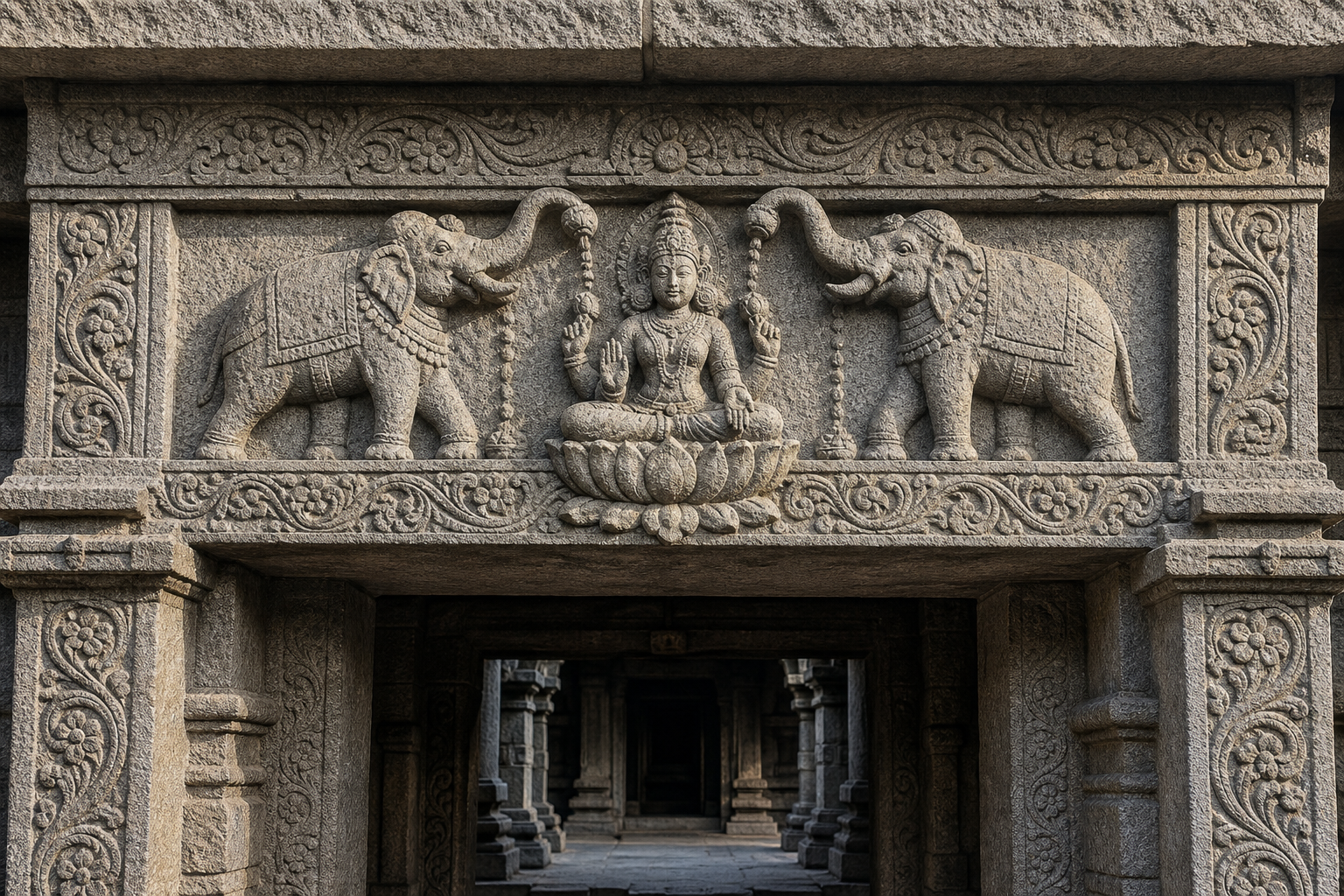
Many visitors arrive with a familiar image of Lakshmi accompanied by an owl and assume something is missing when a South Indian shrine does not include it. Nothing is missing. You have crossed into a different regional and ritual grammar.
In northern and eastern traditions, especially in Bengal and Odisha, the owl or Uluka can accompany Lakshmi. Its ability to see at night supports a reading of vigilance amid spiritual darkness. It can also carry a moral warning: wealth without wisdom may leave its possessor blind to dharma. These meanings are especially visible in regional household and festival traditions.
South Indian Vaishnava temples have been shaped strongly by Pancharatra and Vaikhanasa Agamic frameworks. Within this setting, Lakshmi is more commonly envisioned as Shri upon a lotus or as Gaja Lakshmi, with auspicious elephants beside her. The lotus-elephant ensemble emphasizes purity, spiritual unfoldment, life-giving waters, fertility, royal grace, timely rain, and plenitude. Its purpose is not to deny the owl’s meanings but to place another coherent set of meanings in the foreground.
When identifying Gaja Lakshmi, use the entire composition. Look for a central goddess, her relation to the lotus, the balanced elephants, and the shrine’s own name or ritual context. Do not conclude that every female figure flanked by elephants must be Lakshmi on the strength of that single feature. Iconography works by convergence, not by one-symbol shortcuts.
The motif also preserves a visual inheritance wider than one Hindu sect. Gaja Lakshmi appears in early Buddhist and Jain art, with related relief traditions at Sanchi and Bharhut, as well as in ancient coinage and sculpture across regions. Elephants, water, the lotus, and abundance formed a shared Dharmic vocabulary capable of expressing ethical prosperity and collective well-being.
This changes how you should handle regional variation. Do not ask which image is the only authentic Lakshmi. Ask which aspect of prosperity the local tradition is teaching. The owl calls for vigilance and discernment. The lotus and elephants stress purity of means, resilience, generosity, and abundance aligned with order. Regional difference can disclose complementary responsibilities rather than competing deities.
Let worship complete what the sculpture begins
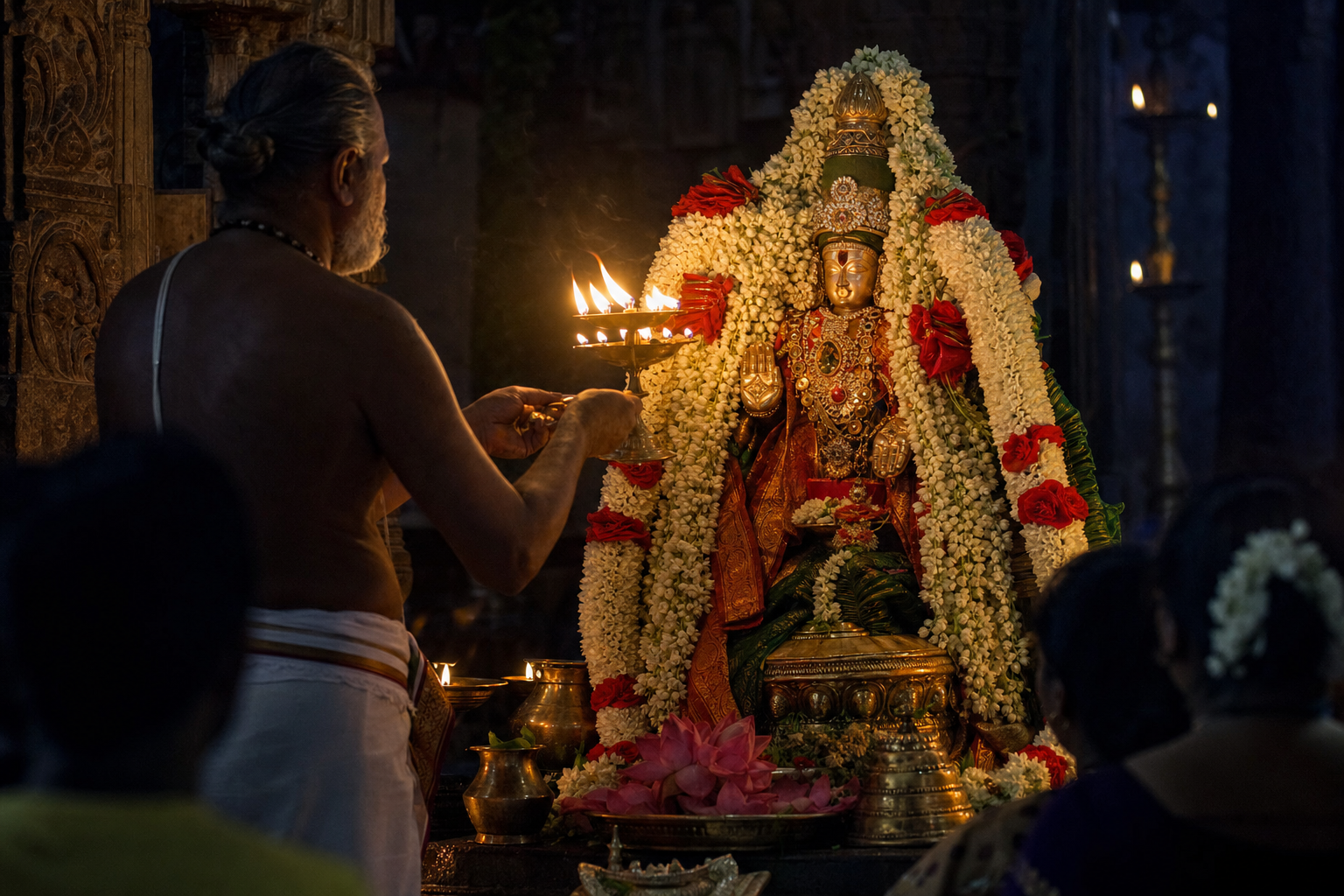
A carved or consecrated form cannot be read apart from the worship moving around it. Watch which shrine devotees approach first, which deity receives particular offerings, how processions pair divine figures, and which name the priest uses. Ritual tells you which iconographic relationship is active in that temple.
At a Ganesha shrine, coconut, durvā grass, and modaka reinforce the theology visible in the image. The mantra “Om Gam Ganapataye Namah” and the practice of beginning with his darshan make the threshold role audible and performative. The icon does not merely represent a good beginning; worship turns the beginning into an action.
Processions prevent another common misreading. In major South Indian kshetras, Lakshmi may accompany Vishnu during Garuda Sevai. The prominence of Garuda in that procession belongs to Vishnu’s ritual identity, while Lakshmi appears through the shared presence and grace of the Divine Couple. Her lotus seat remains more central than an independent owl mount, including in the broader visual habits of Ashtalakshmi shrines.
Decoration can temporarily conceal a hand, seat, or small companion. If an attribute is hidden, do not treat absence from your line of sight as absence from the icon. Complete your darshan without obstructing other worshippers, then ask a priest or knowledgeable temple guide for the local name of the form. Local lore is most useful after you have made careful observations, because you can ask a precise question instead of requesting a generic explanation of the entire shrine.
The lamps, festivals, and daily services surrounding these images are themselves part of historical continuity. Chola- and Pandya-period inscriptions record community endowments for such forms of worship. Temple iconography endured through a living economy of offerings, maintenance, ritual specialists, and communal support, not as sculpture isolated from religious life.
Key takeaways for your next darshan
- Read placement first: a threshold shrine may express theological priority even when it is physically small.
- Identify an image through several agreeing clues: overall form, arms, objects, mudras, posture, seat, and companions.
- Treat a missing familiar symbol as a possible regional convention, not immediate evidence of error or incompleteness.
- Recognize Gaja Lakshmi through the whole lotus-elephant composition rather than through an elephant alone.
- Use offerings, shrine order, processions, and the local name of the deity to test your visual reading.
On your next temple visit, choose one shrine rather than trying to decode everything. After darshan, note five things: location, posture, number of arms, objects or gestures, and companions. Then ask why that form stands in that place. One carefully read shrine will teach you more than a hurried collection of names, and it will let iconography deepen worship instead of turning the temple into a scavenger hunt.
References
- DharmaRenaissance Blog — Decoding Lakshmi’s Sacred Iconography: Why the Owl Vanishes in South Indian Temples
- DharmaRenaissance Blog — Adhi Gajanathar in Tamil Nadu: Discover the Primordial Power and Timeless Grace of Ganesha
