
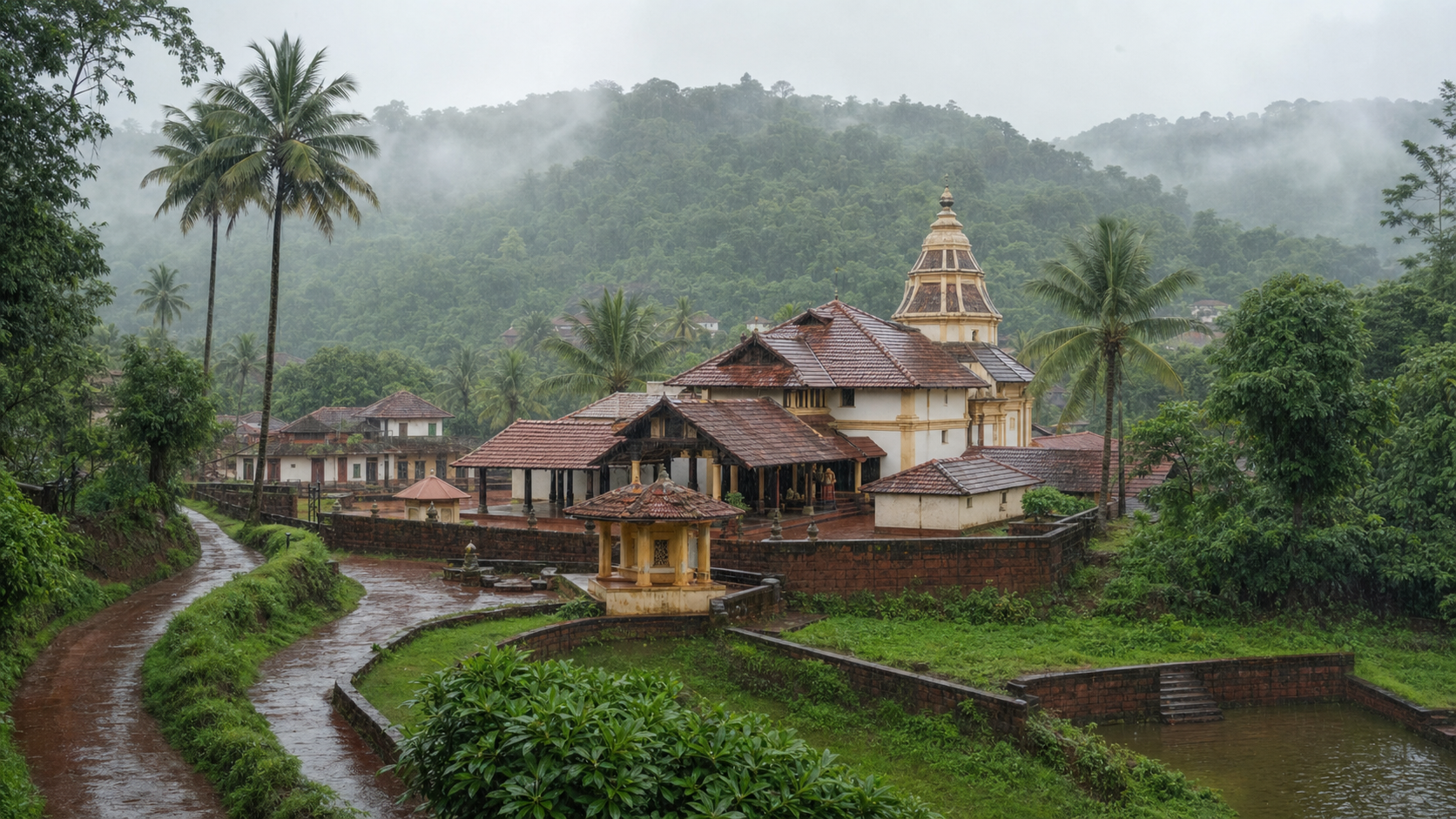
If you are deciding whether Gopal Ganapati Temple belongs on your Goa itinerary, do not approach it with only one question: “How old is the building?” The more revealing question is how Maratha power, Ganapati devotion, and local memory came to occupy the same inland landscape.
The temple stands at Bandivade, also written Bandiwade, in Ponda taluka. It is commonly understood within Farmagudi’s sacred setting. Keeping all three place-names in view will help you recognize that this is not merely an isolated shrine but part of a larger cultural landscape.
Start with the landscape, not an unsupported date
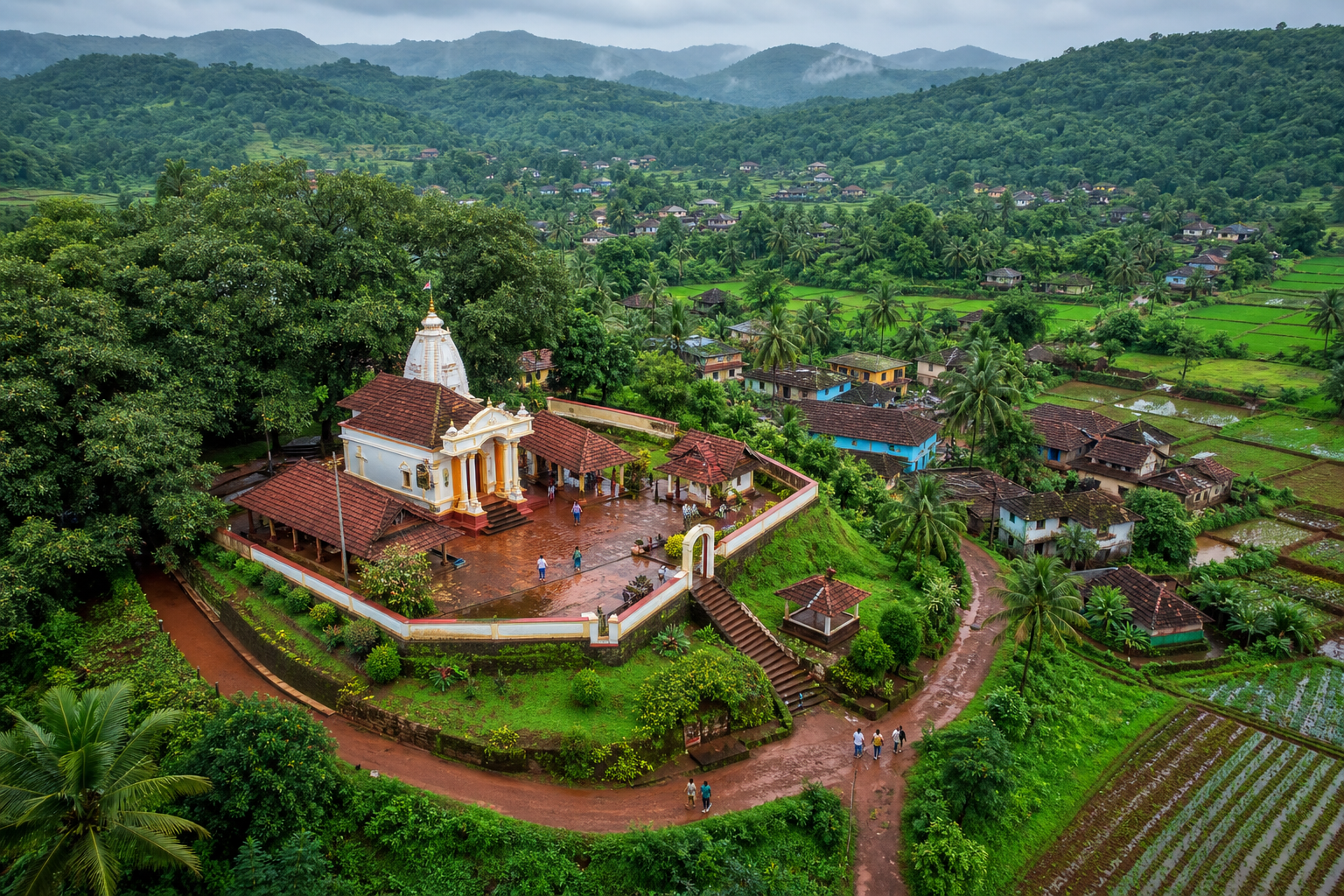
The easiest historical mistake is to see a living temple associated with a seventeenth-century ruler and assume that every visible wall, hall, or ornament must date to that ruler’s lifetime. The Maratha connection here is important, but it is also more precise than that sweeping claim.
Gopal Ganapati belongs to a place associated with Maratha activity in Ponda, the Ponda palace, Fort Mardangad, an army encampment, and the establishment of a Gudi on a nearby hill. That sequence establishes a Maratha-era sacred geography. It does not, by itself, establish the construction date of every part of the present temple complex.
This distinction matters whenever you describe the site to someone else. Say that the temple preserves a Maratha-era association and continues the sacred life of that landscape. Do not label every present feature “seventeenth-century” unless a temple inscription, local authority, or reliable site record identifies it as such. Historical respect includes refusing to make a claim larger than the evidence.
Read the Maratha connection as a four-part sequence
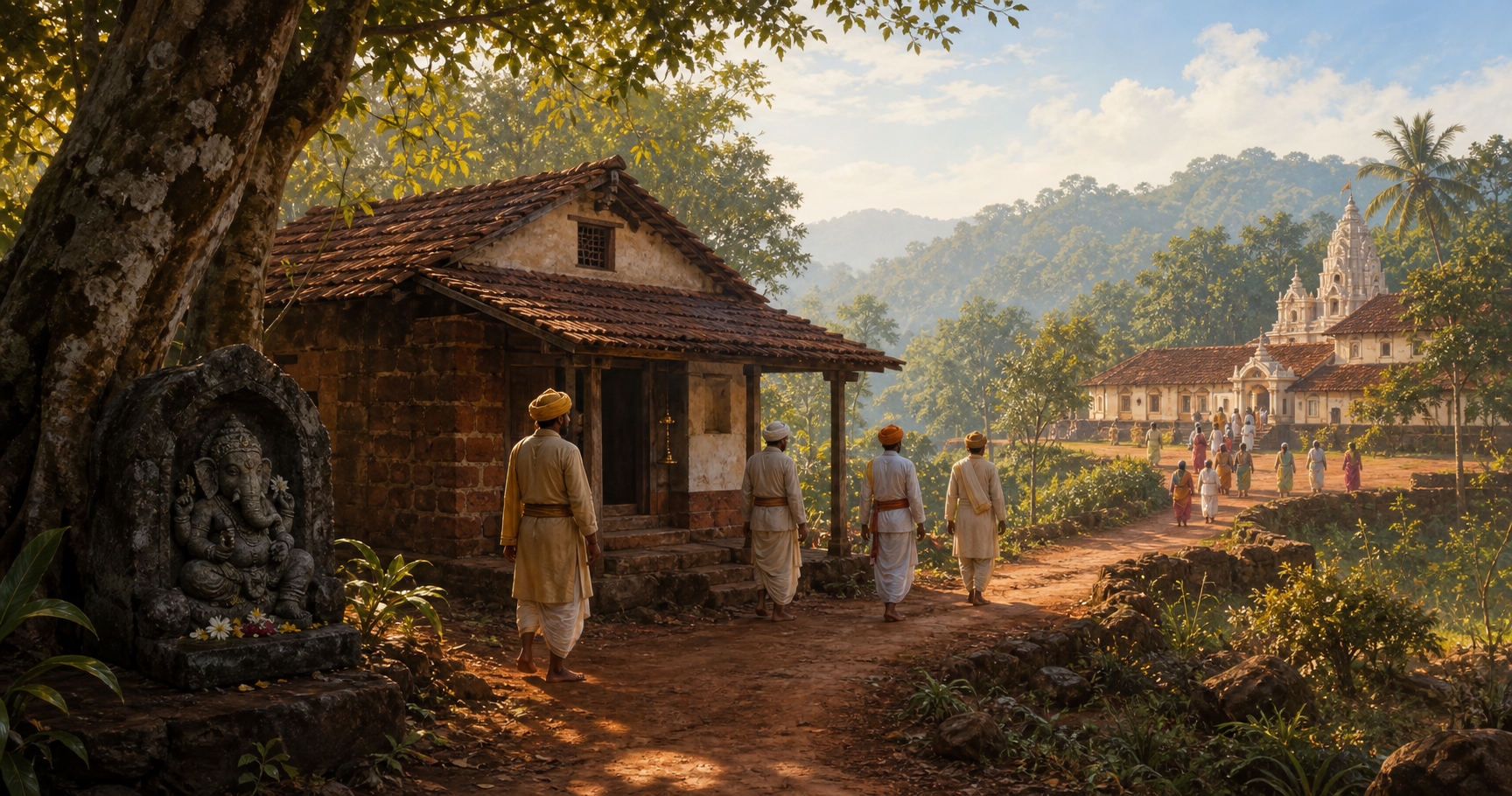
The site becomes easier to understand when you separate the elements instead of compressing them into a single origin story:
- The Marathas held the Ponda palace, placing the area within their political presence.
- Fort Mardangad was erected under the leadership of Chhatrapati Sambhaji, adding a fortified element to the landscape.
- Sambhaji is associated with camping with his army near the location. The connection is therefore not merely a distant royal attribution.
- He directed the erection of a Gudi on a nearby hill, giving the political and military setting a sacred expression.
Each element answers a different question. The palace marks political presence. The fort marks protection and military strategy. The encampment places the ruler and army near the site. The Gudi marks a deliberate sacred act. Their relationship, rather than any one structure viewed alone, is what makes Farmagudi valuable for understanding Maratha-era Ponda.
When you are there, use those four elements as a mental map. Notice which local names, signs, or explanations refer to the palace, the fort, the encampment, the hill, and the temple. If their exact spatial relationship is not marked, leave it unresolved rather than guessing a route or distance. A careful question is more useful than a confident invention.
Why continuing worship matters as much as royal memory
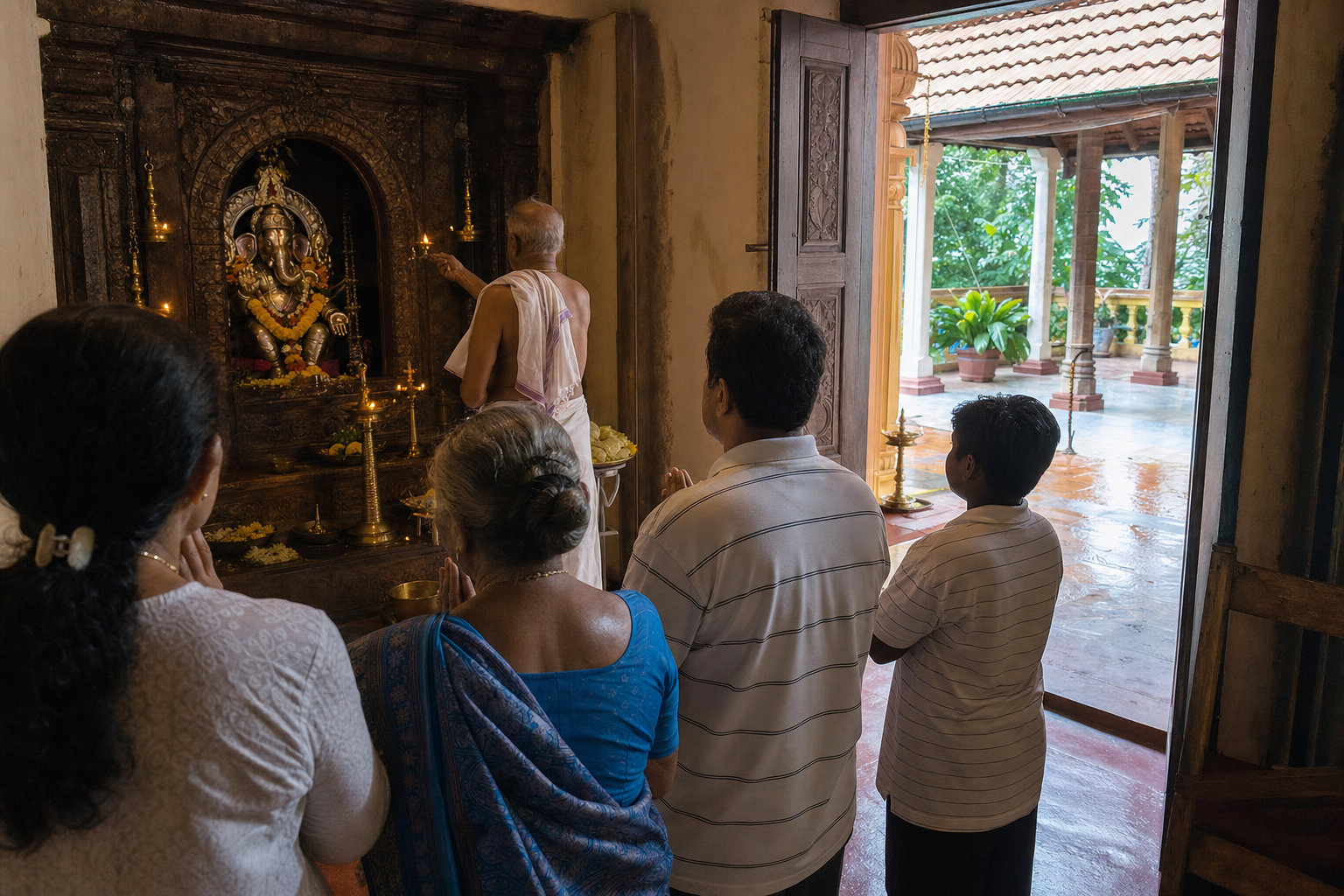
Gopal Ganapati Temple is not significant only because Sambhaji passed through this landscape. Its deeper value lies in the movement from a royal directive to continuing worship and community stewardship. The place did not remain a closed military episode; it acquired a devotional life that outlasted the immediate political moment.
Ganapati’s associations with learning, discernment, and auspicious beginnings give that continuity a particular character. A Gudi raised amid political and military activity can be read as an affirmation that power was not the landscape’s only organizing principle. Sacred obligation also had a place in how the land was remembered.
This is where a living temple differs from a ruin. Worshippers are not background scenery for a heritage visit, and present devotion is not an obstacle to seeing the history. It is part of the history. Begin with darshan or quiet observation, follow instructions given at the temple, and ask before photographing worship or restricted areas. That simple order keeps the visit centered on the site’s actual purpose.
You can test your understanding with two questions. What Maratha-era episode explains why this location entered historical memory? What continuing devotional practice explains why the memory remains socially meaningful? If you can answer both, you have seen more than a monument.
Use a disciplined method when you visit Farmagudi
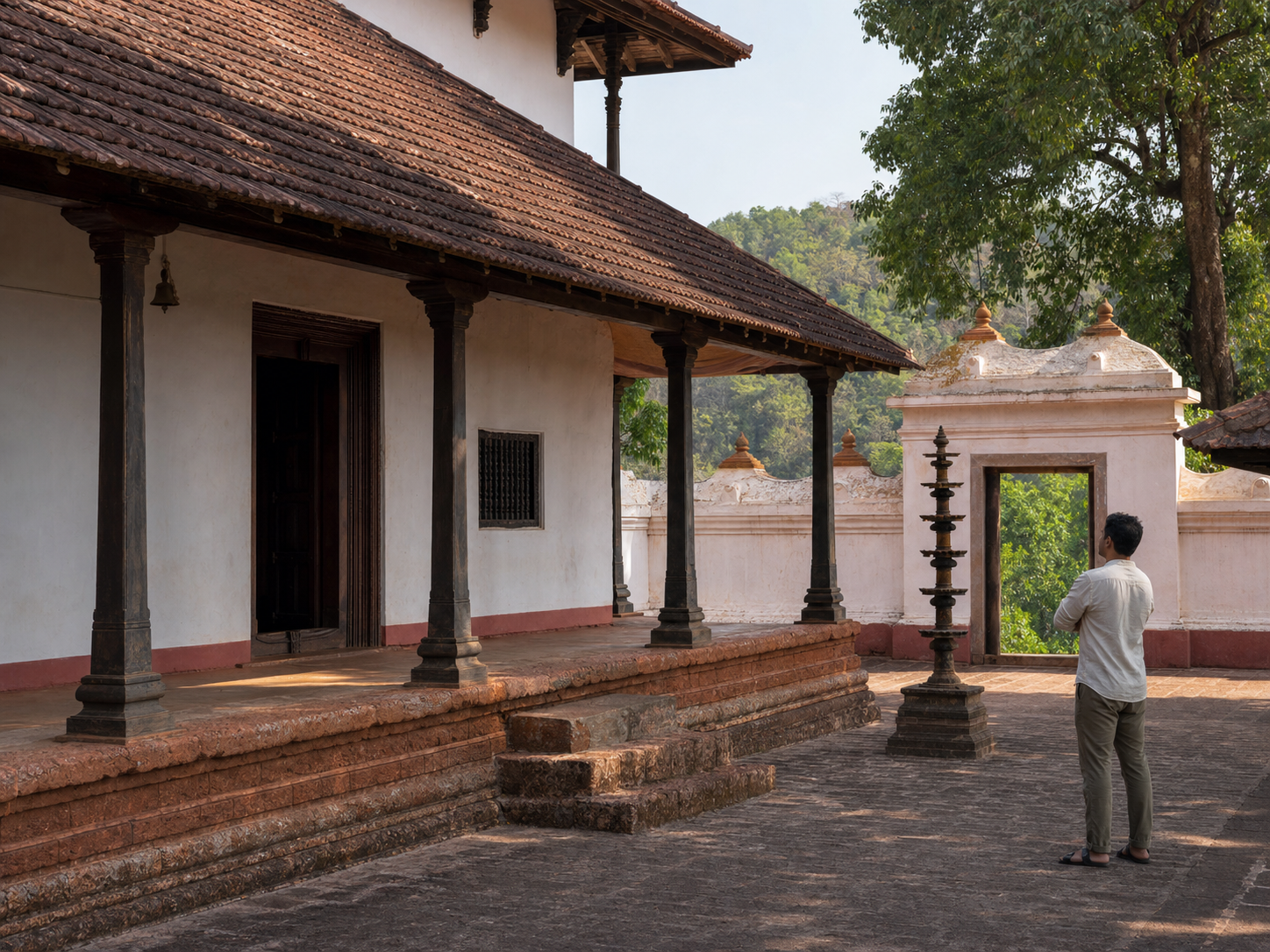
A meaningful visit does not require an elaborate historical survey. It requires a method that keeps place, evidence, and devotion from being mixed carelessly.
- Record the location accurately as Bandivade or Bandiwade in Ponda taluka, while noting its Farmagudi setting. The different names provide context; they should not automatically be treated as different temple sites.
- Enter as a guest of a functioning sacred space. Observe the rhythm of worship before turning the courtyard into a history exercise.
- Organize the Maratha association around four terms: Ponda palace, Fort Mardangad, Sambhaji’s encampment, and the hilltop Gudi. This prevents a vague claim about “Maratha Goa” from replacing the specific local sequence.
- Keep two columns in your notes: “historical association” and “visible today.” Put the Sambhaji-era events in the first. Put only features you can actually identify at the temple in the second. Join the columns only when local evidence warrants it.
- Place the temple within a wider Ponda cultural circuit rather than treating it as a hurried roadside stop. Its value comes from the relationship between sacred sites, inland geography, and historical memory, not from collecting another photograph.
This method is especially useful if you plan to publish photographs or captions afterward. A restrained caption such as “Gopal Ganapati Temple in the Maratha-associated sacred landscape of Farmagudi” is more accurate than assigning an unsupported century to every structure in the frame.
Key takeaways
- Gopal Ganapati Temple stands in Bandivade or Bandiwade, within Ponda taluka, and forms part of Farmagudi’s sacred landscape.
- The Maratha connection rests on a specific sequence involving the Ponda palace, Fort Mardangad, Sambhaji’s nearby encampment, and his direction to establish a Gudi on a hill.
- That sequence supports a Maratha-era association with the place; it does not automatically date every visible temple feature.
- Continuing Ganapati worship is part of the site’s heritage, not an incidental layer added after the historical episode.
- The most responsible visit combines darshan, close attention to place-names, and restraint about claims that the available evidence does not establish.
If you add Gopal Ganapati to an inland Goa journey, carry one disciplined sentence with you: this is a living Ganapati temple within a landscape shaped by Maratha activity and sustained by community remembrance. Let inscriptions, local guidance, and identifiable features add detail when they can. Where they cannot, allow the unanswered question to remain. That restraint is not a weakness in cultural memory; it is how cultural memory remains trustworthy.
References
