
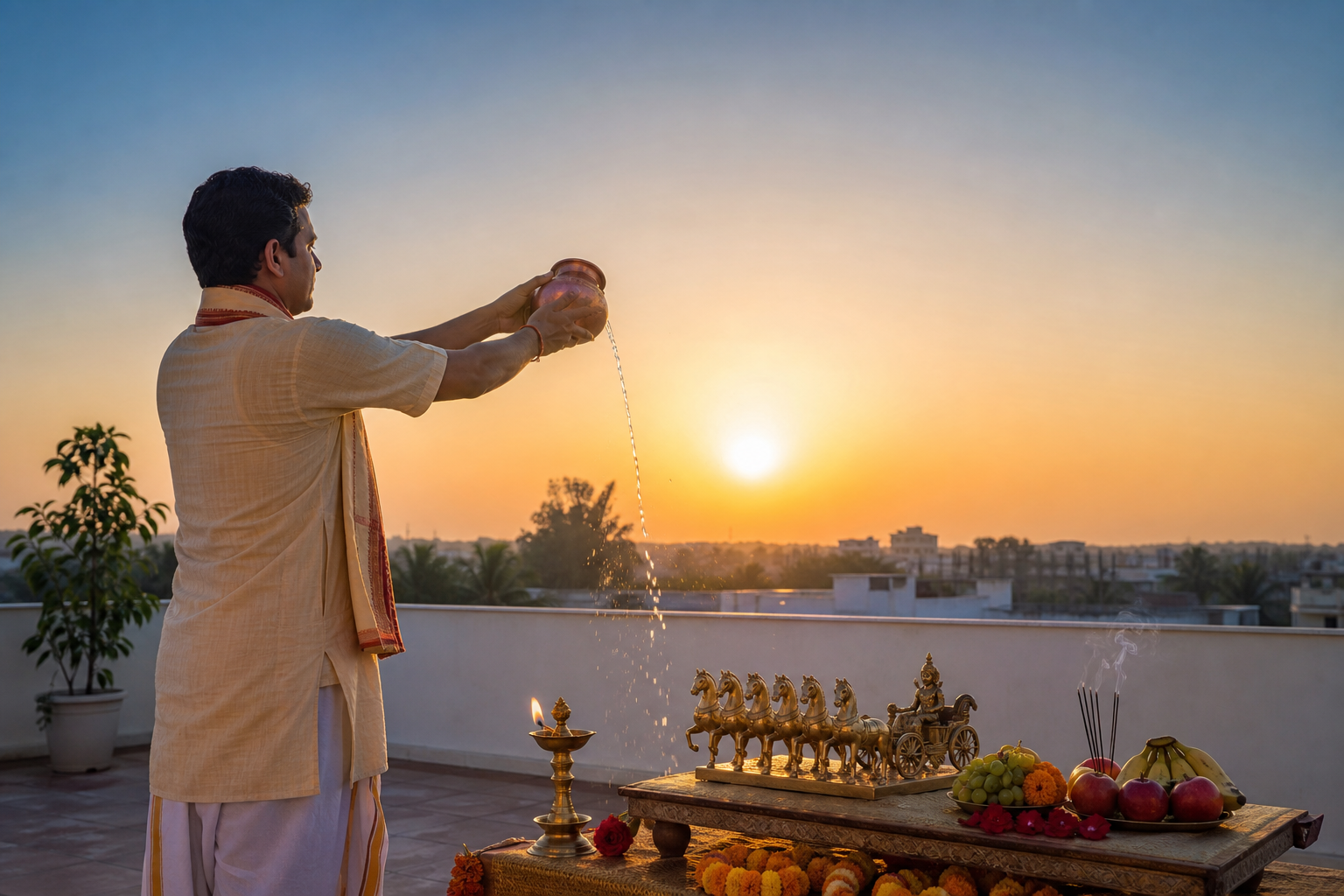
You may be trying to settle two practical questions: when should you wake up, and what must you actually do before the household day begins? Ratha Saptami 2026 is observed on January 25, 2026, with a reference Brahmi Muhurtham of 5:02 a.m. to 5:49 a.m. for Snana and the opening acts of worship.
You do not need to make the morning elaborate. You need to establish the correct local time, prepare before the muhurat begins, and preserve a clear sequence: Snana, Sankalpa, Arghya, prayer, and gratitude.
Confirm the date and local Panchang time first
Ratha Saptami falls on Magha Shukla Saptami and is also revered as Surya Jayanti. The observance honors Surya as the life-giving source of light and as a focus for gratitude, vitality, and discernment.
The stated 5:02 a.m. to 5:49 a.m. Brahmi Muhurtham is useful for planning, but do not assume that one set of clock times applies unchanged in every city. Sunrise and Panchang calculations have location-specific nuances. Check the local Panchang used by your household, temple, or sampradaya before setting your alarm.
Use a simple decision rule. If your local Panchang gives the same window, plan around 5:02 a.m. If it gives different times for your location, follow the local calculation. If you will attend a temple observance, use the temple’s schedule rather than trying to maintain a competing household timetable.
The beginning of the muhurat is not your wake-up time. It is the time by which ordinary preparation should already be complete. Wake early enough to become alert, arrange the worship space, and enter the period without rushing.
Prepare a minimum complete observance the night before
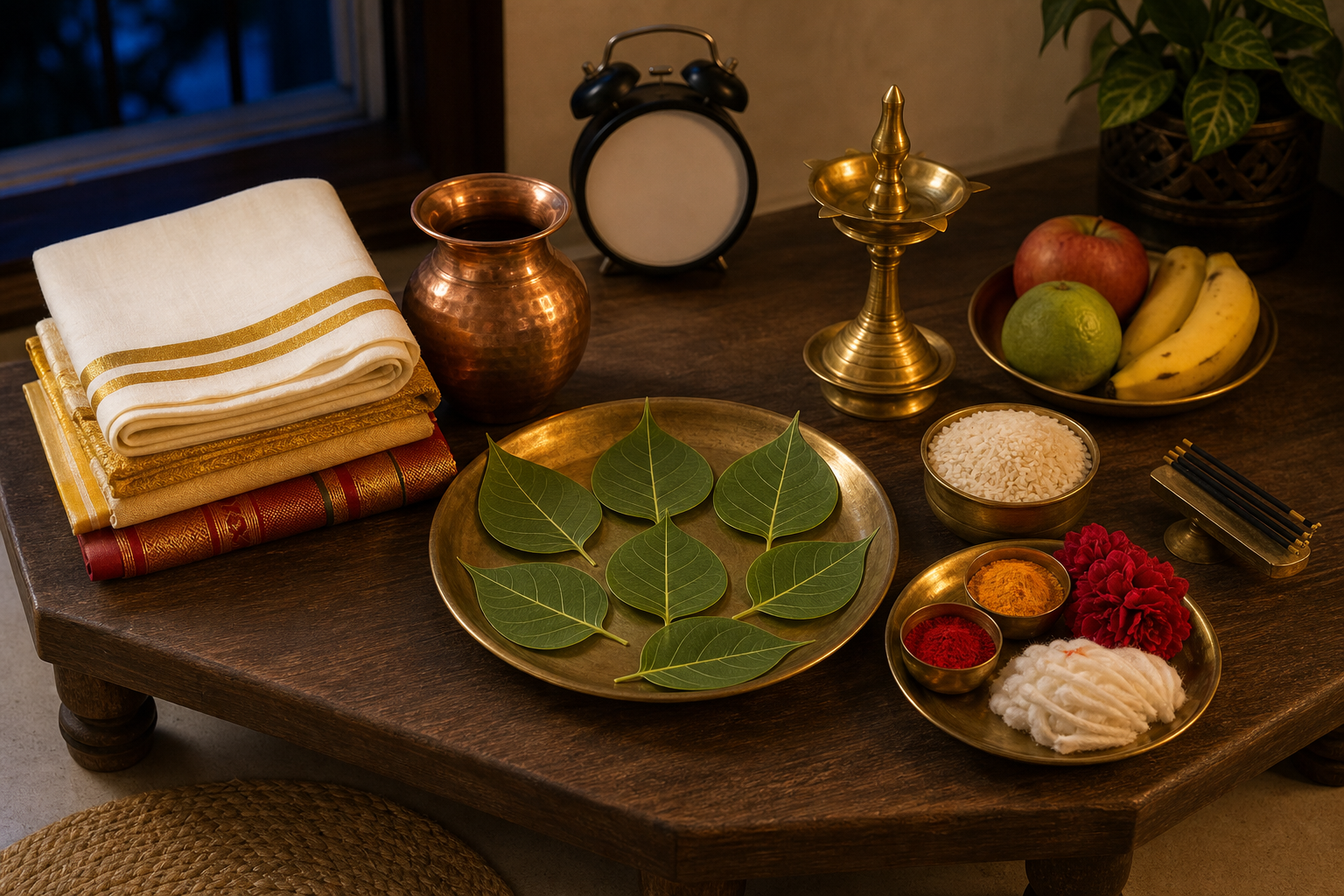
Morning confusion usually begins with small unresolved choices: which prayer to use, where to place the diya, or whether the necessary items are ready. Settle those choices the previous evening so that the sacred window is spent in observance rather than searching.
- Check the Ratha Saptami timing in your local Panchang and write it down.
- Lay out clean clothes and everything needed for the pre-dawn Snana.
- Prepare a suitable vessel and water for Arghya.
- Place the diya securely where it can be lit and supervised safely.
- Choose either the Aditya Hridayam or the Surya Gayatri in advance, and keep an accurate text ready if you need one.
- Decide how you will extend the observance later through a light sattvic meal and an act of charity.
This preparation also helps when several family members are participating. Decide who needs the bathing space first, who will supervise children, and whether the prayer will be recited together. The purpose is not military precision. It is to prevent household logistics from consuming the quietest part of the morning.
If your time is limited, shorten the number of optional elements instead of rushing through every possible chant. One prayer recited attentively is more coherent than several begun without time to finish.
Follow this pre-dawn Snana and puja sequence
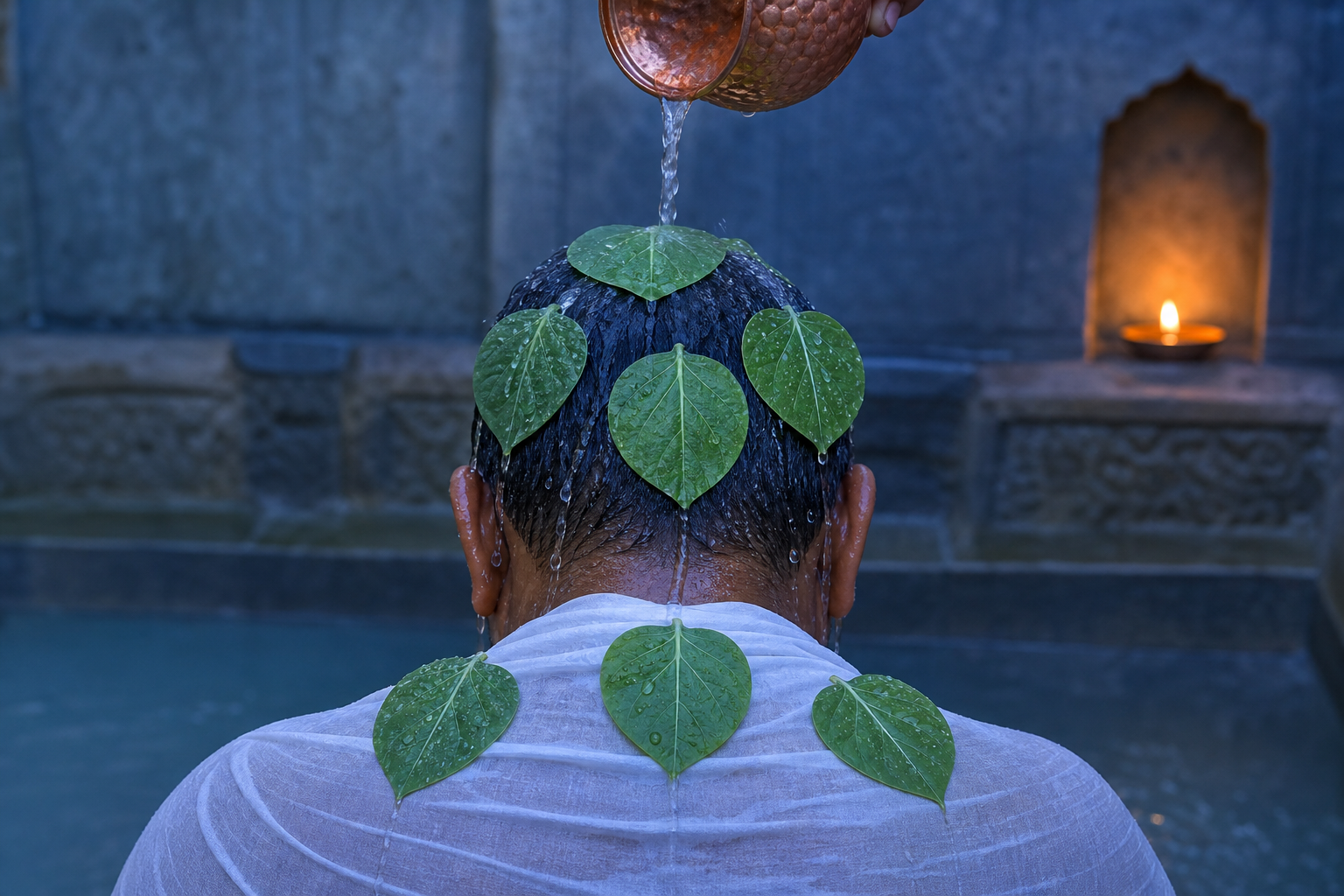
The precise liturgical details may vary by family and tradition. Preserve the form you have received rather than replacing it with a generic internet ritual. For a simple home observance, the following sequence keeps the central acts in their proper relationship.
- Enter the morning quietly. Put routine messages, news, and other distractions aside. The stillness before dawn is part of what makes the observance focused.
- Perform the Ratha Saptami Snana. Place the ritual bath within the local muhurat whenever possible. Treat it as the threshold into worship, not merely as another task to complete.
- Make your Sankalpa. Use the wording preserved in your family or given by your priest. If you do not have a received formula, state your intention plainly and reverently: you are observing Ratha Saptami in honor of Surya.
- Light the diya and begin the puja. Keep the lamp on a stable surface and do not leave it unattended. The flame supports the movement from pre-dawn darkness toward the light invoked in the worship.
- Offer Arghya to Surya. Coordinate this act with the actual dawn and local sunrise guidance. Brahmi Muhurtham and sunrise are related parts of the morning, but their clock times must be established for your location.
- Recite one chosen prayer with attention. The Aditya Hridayam or Surya Gayatri can provide the central recitation. If one is already part of your practice, use the familiar text instead of adding novelty for its own sake.
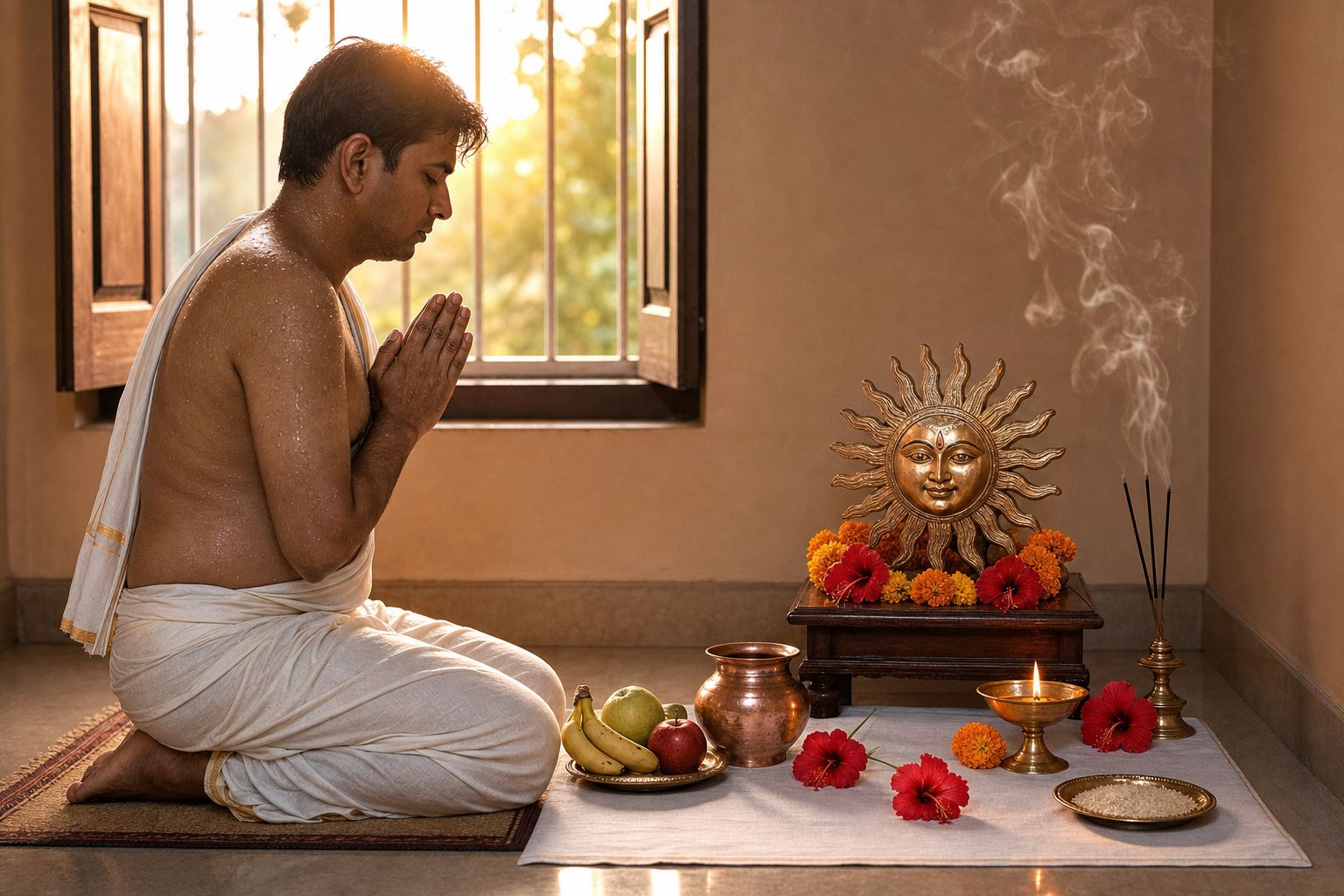
- Conclude with gratitude. Let the final moment name what the observance has placed before you: dependence on light, responsibility for health, clarity in action, and gratitude for the order that sustains life.
Arghya does not require prolonged direct sun-gazing. Keep your attention on the offering and prayer rather than turning the rite into a test of physical endurance. Ratha Saptami honors wellbeing, but the observance should not be presented as a guaranteed medical remedy or a replacement for care.
Avoid the mistakes that disturb the purpose of the morning
The first mistake is copying 5:02 a.m. to 5:49 a.m. without checking where the timing applies. A muhurat belongs to a calendrical and geographical setting. Preserve the stated reference window, but let your local Panchang determine how it should be applied where you live.
The second mistake is beginning all preparation at the start of the muhurat. If you are still locating the prayer, arranging the lamp, or negotiating the bathroom schedule at 5:02 a.m., the practical work has displaced the observance. Prepare first; use the sacred window for Snana, Sankalpa, and worship.
The third mistake is treating length as a measure of devotion. The central sequence is already substantial. Do not add unfamiliar recitations merely to make the puja appear more complete. Correct, attentive practice is a better guide than the number of items attempted.
The fourth mistake is abandoning the entire day when the preferred window is missed. Do not mislabel a later hour as the same muhurat. Offer a simple prayer when you are able, and consult the tradition followed by your family or temple about any formal adjustment. Honesty about the timing is more respectful than pretending the clock did not matter.
The fifth mistake is reducing the festival to a promise of personal benefit. Renewal, vitality, and wellbeing belong to its spiritual symbolism, but gratitude must lead outward. A sattvic meal, restraint, and charity later in the day keep the morning from becoming a private transaction for blessings.
Key takeaways for Ratha Saptami 2026
- Ratha Saptami 2026 is observed on January 25 during Magha Shukla Saptami.
- The reference Brahmi Muhurtham for Snana and the opening worship is 5:02 a.m. to 5:49 a.m.
- Verify the clock time against a local Panchang because sunrise-related timings vary by location.
- Finish ordinary preparation before the muhurat begins.
- Keep the core sequence clear: Snana, Sankalpa, diya, Arghya, and either the Aditya Hridayam or Surya Gayatri.
- Continue the observance through a light sattvic meal, mindful conduct, and charity.
The pre-dawn setting matters because it gathers attention before the demands of the day scatter it. Hindu worship gives that dawn a particular form through reverence for Surya. Jain and Buddhist traditions also use dawn as an image of awakening, clarity, and right effort, while Sikh early-morning devotion emphasizes remembrance and alignment with divine wisdom. These resonances reveal a Dharmic regard for disciplined awakening without making the distinct practices interchangeable.
Your next step is concrete: confirm the local Panchang window, choose the prayer you can recite attentively, and arrange the necessary items the evening before. Then let the rest of January 25 carry the same qualities as the morning worship: clarity, gratitude, restraint, and useful generosity.
References
