
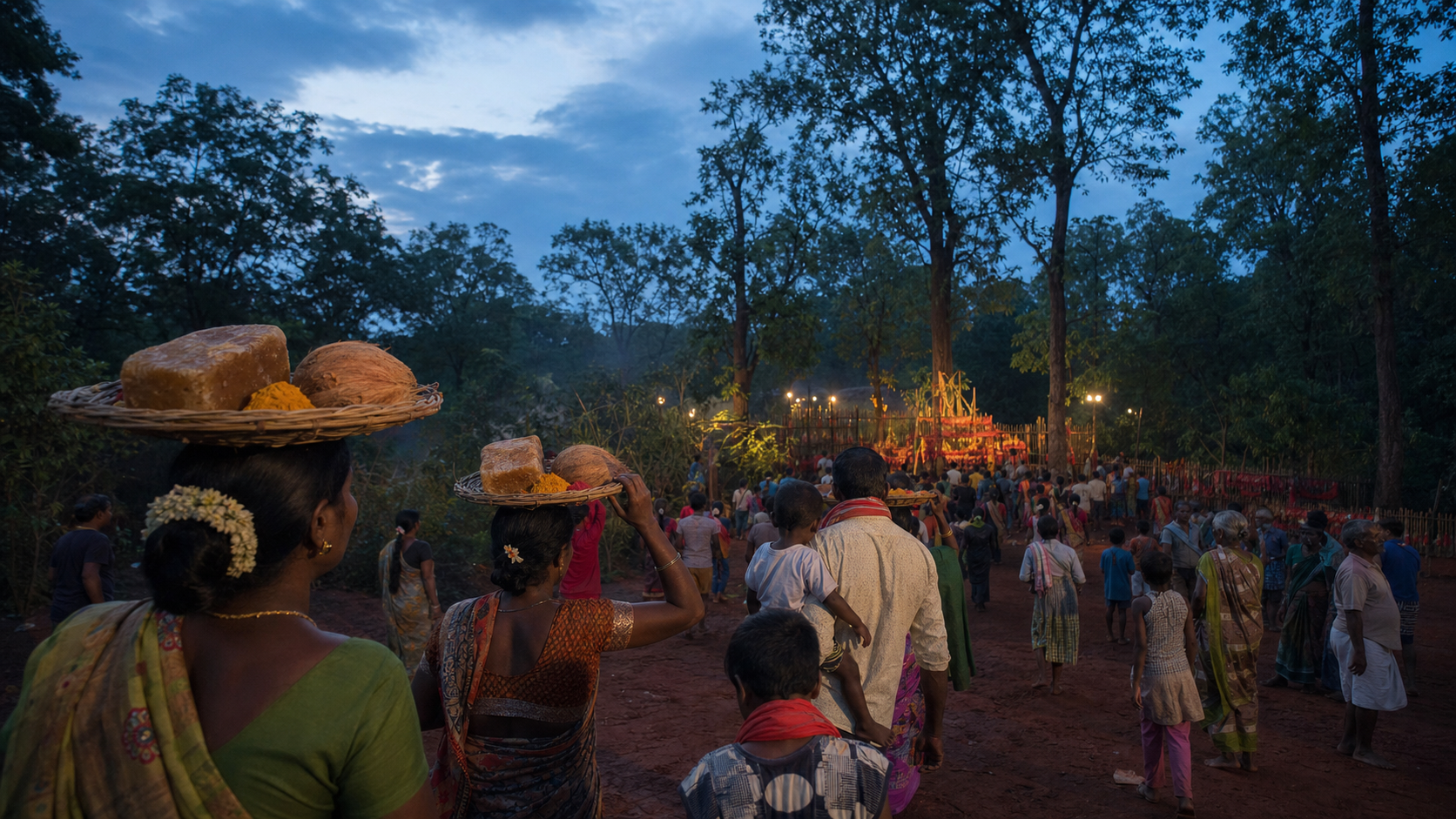
If you came here to find the correct Medaram Jathara 2026 date, the answer is January 28 to January 31. The more useful question is what happened on each day, because the four dates were not interchangeable.
The 2026 gathering has already concluded. What follows is a day-by-day record of its ritual sequence, the meaning of its principal offerings, and a practical framework for approaching this Koya-rooted tradition without reducing it to a generic fair. If you are planning for a later Jathara, use this sequence to understand the observance, but verify that edition’s dates separately.
The Medaram Jathara 2026 dates at a glance
The four-day observance ran from January 28 through January 31, 2026, during the sacred period associated with Magha Purnima. January 29 and 30 formed the principal period for the arrival rites, darshan and large-scale offerings.
| Date | Ritual focus | What the day meant |
|---|---|---|
| January 28, 2026 | Sarakka’s arrival | The Jathara commenced with the arrival of Sarakka, also called Saralamma. |
| January 29, 2026 | Sammakka’s arrival at the Gadde | Sammakka was ceremonially brought to the sacred platform, completing the mother-daughter presence at Medaram. |
| January 30, 2026 | Punya Snanam and Sammakka-Saralamma darshan | Devotees traditionally bathed in Jampanna Vaagu before proceeding for the principal combined darshan and offerings. |
| January 31, 2026 | Concluding and return rites | The deities’ ceremonial return brought the gathering to its close and expressed a cycle of departure and renewal. |
The simplest way to remember the sequence is: Sarakka on Day 1, Sammakka on Day 2, combined darshan on Day 3, and ceremonial return on Day 4. That distinction matters when you label photographs, prepare an educational account, or try to understand why one day’s procession looks different from another.
How to read the arrival rites and the sacred Gadde
Sammakka and Saralamma are revered as mother and daughter. The Jathara is rooted in the collective memory of the Koya and allied communities, where their story carries themes of courage, resistance to injustice, protection and communal responsibility. A visitor should therefore begin with the community’s own ritual language rather than forcing the event into familiar temple expectations.
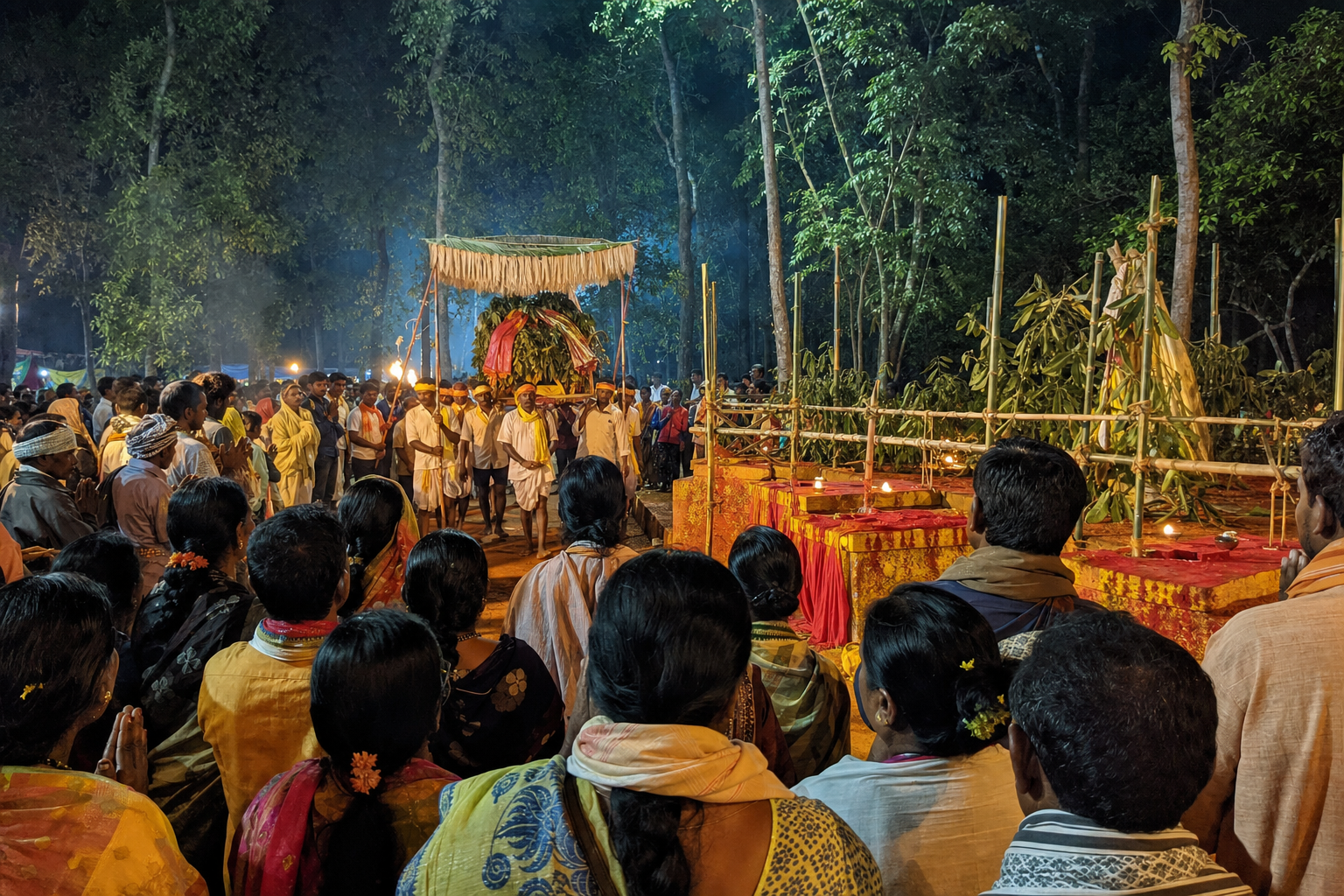
The Gadde is the sacred platform on which the deities are ceremonially established. During the arrival of Sammakka on January 29, pujaris bring sacred insignia, including bamboo sticks understood to signify the deity’s living presence. Turmeric, vermilion, chants and offerings sanctify the space. Police and government representatives also render official honours, adding civic recognition to a rite whose authority comes from indigenous tradition.
This is an important point of attention: sacred presence at Medaram is communicated through the community’s inherited objects, actions and custodians. If you look only for a conventional image or temple installation, you can miss what the ritual is actually doing. Watch how the pujaris carry, receive and place the insignia, and let that sequence define the meaning of the Gadde.
Edurukolla Ghattam, particularly associated with Sarakka’s arrival sequence, is understood as a ritualized confrontation with injustice. Its moral force lies in the duty to stand against adharma and protect the community. Drums, conch calls, turmeric and kumkum create the visible and audible setting, but the rite is not merely a performance for spectators. It carries historical memory forward through participation.
Day 3: Punya Snanam, darshan and the meaning of offerings
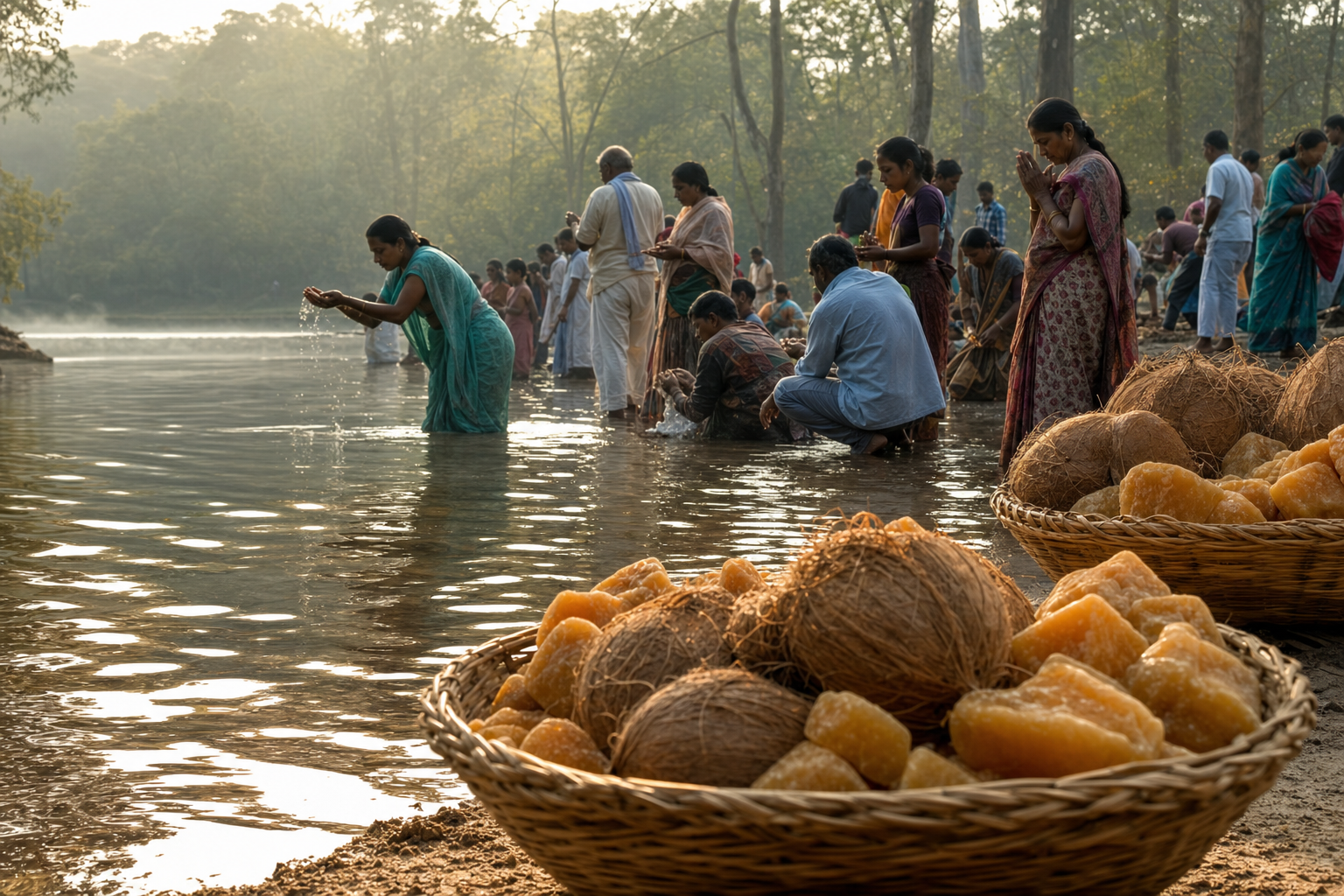
January 30 was the central Sammakka-Saralamma darshan date. The traditional order was Punya Snanam in Jampanna Vaagu followed by darshan. The order matters because the bath is a preparation for approaching the goddesses, not an unrelated stop on a sightseeing route.
At the same time, sacred bathing does not grant permission to disregard the river’s physical well-being. Follow local movement and bathing instructions, avoid leaving packaging or discarded offerings at the water, and do not treat Jampanna Vaagu as a backdrop. Ecological care is part of respectful participation in a tradition whose sacred geography includes river, forest and grove.
The vocabulary of the offerings can confuse a first-time visitor. Bangaram literally evokes gold, but at Medaram the name commonly refers to jaggery offered in gratitude or fulfilment of a vow. Other customary offerings include turmeric, vermilion, neem leaves and coconuts. Their significance comes from devotion, local memory and the relationship between the family and the deity, not from monetary display.
Women traditionally offer Odi Biyyam, or sacred rice, and saare, a collection of useful items associated with everyday household life. These offerings express nourishment, care and continuity of family well-being. Saare should not be treated as a single universal shopping list when no locally applicable list has been given. Ask what is customary for your family or community rather than copying another pilgrim’s bundle without understanding it.
Nor should every descriptive list of offerings be mistaken for a compulsory checklist. A vow, family custom or instruction from a community custodian gives an offering its proper context. Bringing more does not automatically mean showing more devotion. Sincerity, orderly conduct and respect for the sacred site remain more important than spectacle.
How to participate without turning Medaram into a spectacle
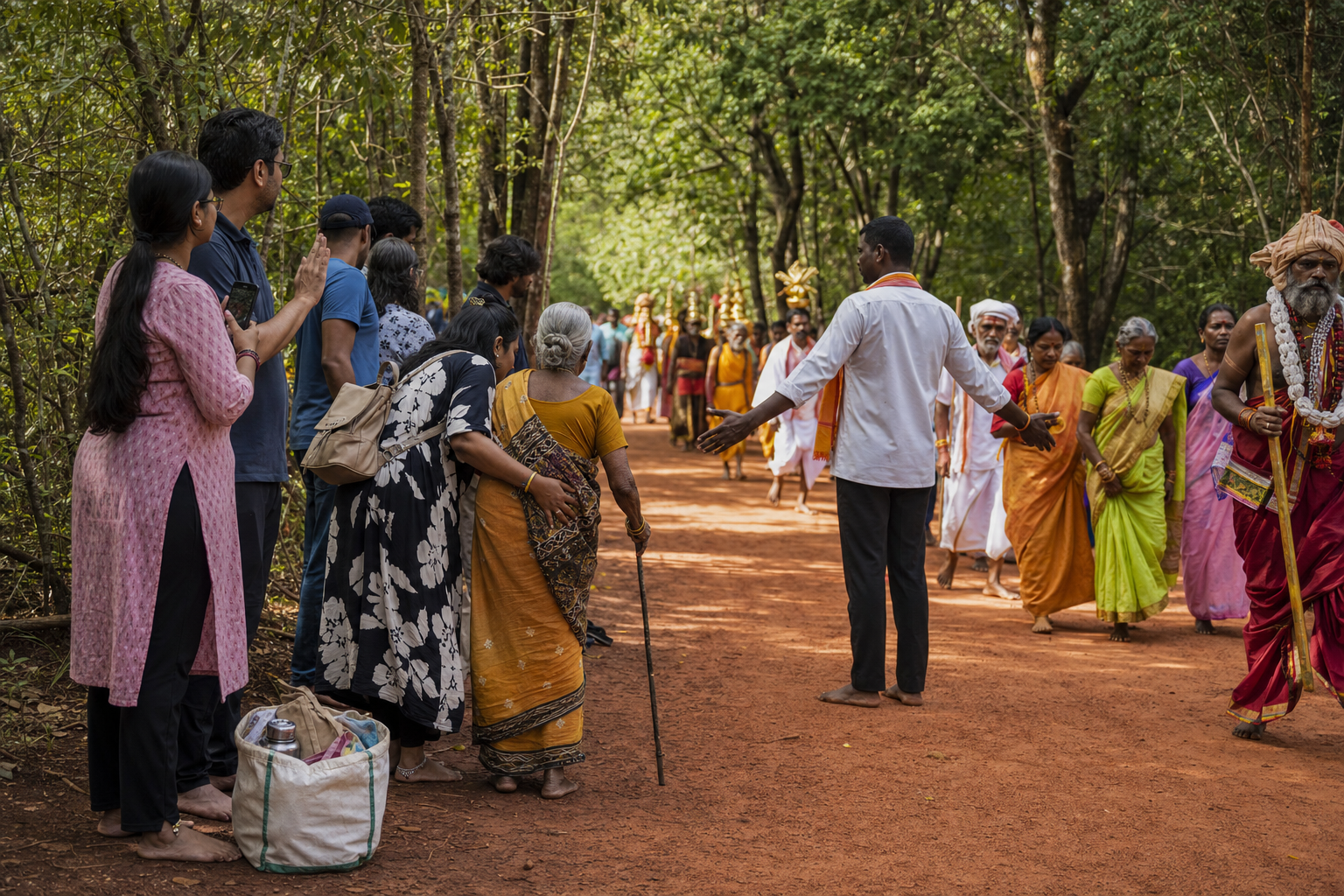
Medaram is often described as one of Asia’s largest tribal congregations. Its scale changes how you should prepare, but scale is not its meaning. The Jathara is first a living act of Koya-rooted remembrance and worship. Whether you arrive as a devotee, researcher or heritage visitor, these choices will help you approach it on those terms.
- Choose the ritual stage before choosing the day. Sarakka’s arrival, Sammakka’s arrival, combined darshan and the return rites serve different purposes. Do not assume that attending any one date gives you the same experience.
- Learn the local names. Sarakka and Saralamma refer to the same daughter deity, while Sammakka is the mother. Gadde means the sacred platform, and Jampanna Vaagu is the waterway associated with the preparatory bath.
- Do not invent an hour-by-hour schedule. The dependable 2026 record is organized by day, not by exact procession times. For a future gathering, check that edition’s local instructions before making a tight transport connection or promising a fixed darshan hour.
- Arrange travel and accommodation well ahead for a future edition. Large pilgrim movement makes last-minute assumptions costly in time and energy. Keep enough flexibility for queues, processions and community-directed movement.
- Let ritual custodians set the terms. Follow the pujaris’ and organizers’ directions around the Gadde, the bathing area and offerings. Observation should never obstruct worship.
- Carry out what you carry in. Minimize disposable material, keep waste away from Jampanna Vaagu and sacred groves, and use the collection arrangements provided at the site.
If you are recording the Jathara for research or family history, attach four details to every note or image: the date, the deity involved, the ritual stage and the local name used for it. That small discipline prevents Sarakka’s arrival from being misidentified as Sammakka’s, or the Day 3 darshan from being detached from its Punya Snanam context.
The Jathara also speaks to the wider Dharmic family through dana, seva, reverence for life, household responsibility and resistance to injustice. Those resonances can build kinship across Hindu, Buddhist, Jain and Sikh audiences, but they should be read outward from Medaram’s place-based tradition. Broad unity becomes meaningful when it preserves the Koya community’s names, authority and ritual distinctions rather than dissolving them.
Key takeaways
- Medaram Sammakka Saralamma Jathara 2026 took place from January 28 to January 31.
- January 28 marked Sarakka’s arrival; January 29 marked Sammakka’s arrival at the Gadde.
- January 30 was the principal combined darshan day, traditionally approached after Punya Snanam in Jampanna Vaagu.
- Bangaram at Medaram commonly means jaggery, while Odi Biyyam and saare express nourishment and household continuity.
- January 31 concluded the Jathara with ceremonial return rites.
- The 2026 dates are an historical calendar, not dates to reuse for a later edition without fresh verification.
If you are preserving a record of 2026, label it with this four-day sequence. If you are preparing for a later Medaram Jathara, verify its separate calendar before booking and carry forward the priorities that do not change: listen to community custodians, allow time for dignified darshan, and leave the sacred landscape clean.
References
- DharmaRenaissance Blog – Sammakka Saralamma Jathara 2026: Medaram Dates, Sacred Highlights, and an Essential Visitor Guide
- DharmaRenaissance Blog – Medaram Jatara 2026 Day 2: Awe-Inspiring Arrival of Sammakka and Sacred Tribal Rituals
- DharmaRenaissance Blog – Medaram Jathara 2026 Day 3: Sacred Sammakka Saralamma Darshan on 30 January
