
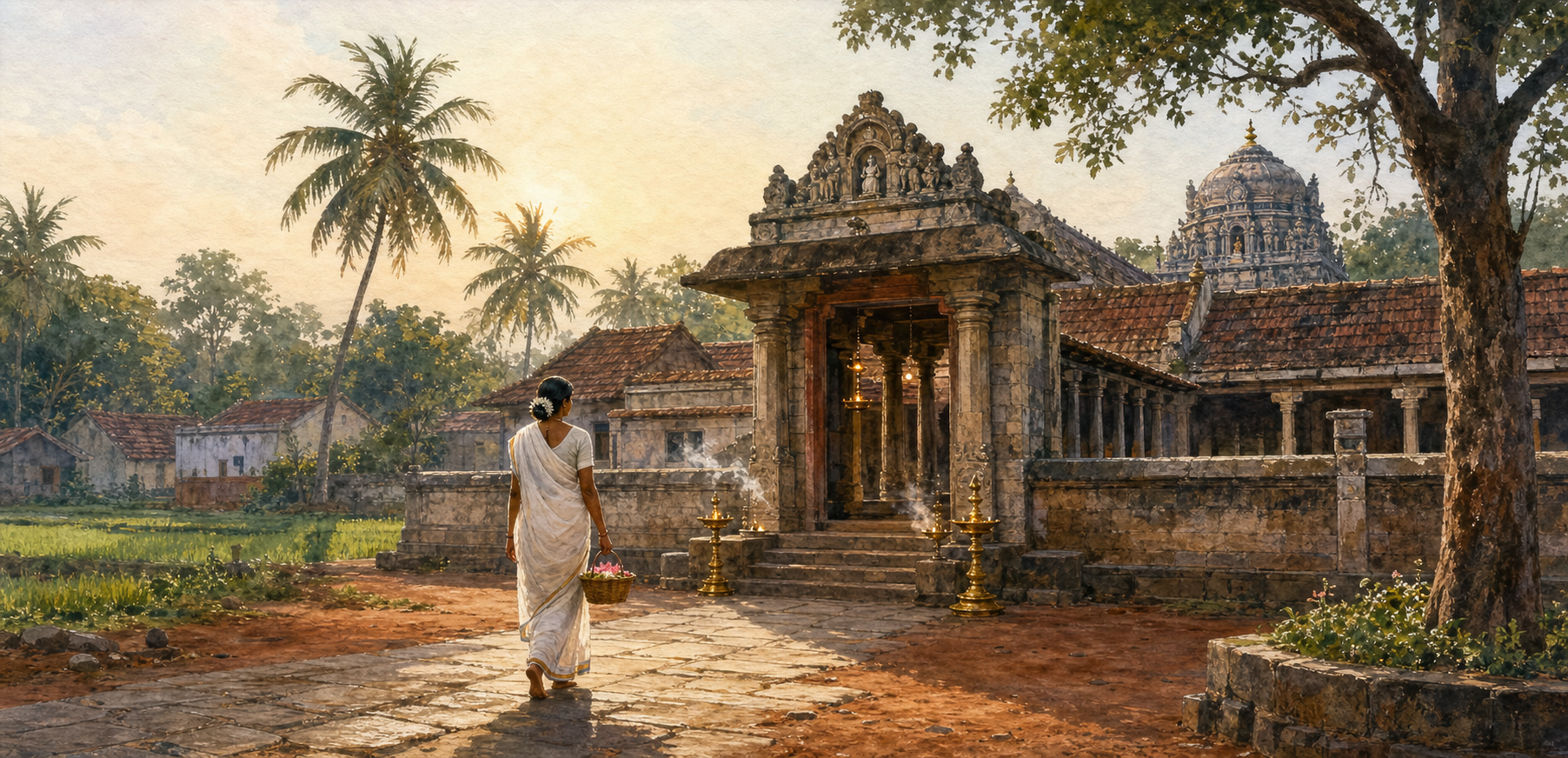
If the name Vatapi Ganapati is what draws you to Tiruchenkattankudi, make one adjustment before you arrive: do not treat the temple as a quick stop for one celebrated image. You are entering Ganapatishvaram, a Tevara Shiva temple near Nannilam, and the Ganapati shrine belongs within that larger sacred setting.
That distinction gives you a better way to approach the place. See its three layers together: Shiva as the presiding deity, the Tevaram tradition that places the temple in Tamil Saiva sacred geography, and the memory of Sirutondar bringing Ganapati from Vatapi. Once those layers are clear, you will know what to notice, how to speak about the shrine accurately, and why the visit should not end with a photograph and a hurried darshan.
Key takeaways before you visit
- Vatapi Ganapati is worshipped within Ganapatishvaram, where Shiva is the presiding deity.
- Tiruchenkattankudi is identified as a Tevara Shivastalam, giving the temple a place in the early sacred geography of Tamil Saivism.
- Local tradition remembers Sirutondar, both a Nayanmar and a distinguished general, as the person who brought the Ganapati image from Vatapi and installed it here.
- The Vatapi narrative should be repeated as sacred tradition, not presented as an independently established chain of archaeological provenance.
- A meaningful visit attends to the entire temple: worship, hymns, bells, weathered stonework and the continuing life of the sacred place.
Begin with Ganapatishvaram, not only the famous epithet
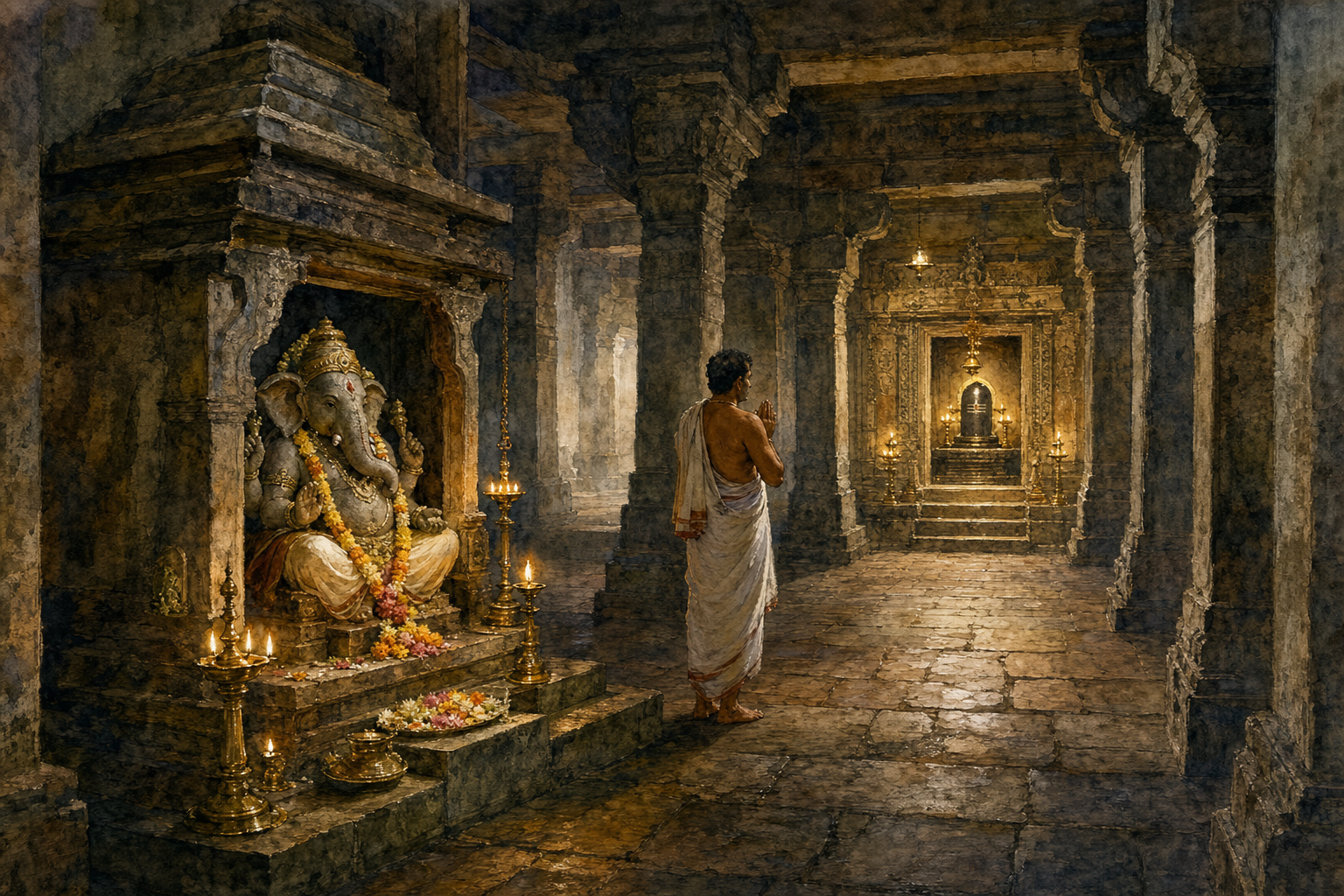
The most common misunderstanding is built into the shrine’s fame. A visitor hears “Vatapi Ganapati” and imagines an independent Ganapati temple. Tiruchenkattankudi is instead a Shiva kshetra known as Ganapatishvaram, with Vatapi Ganapati occupying a revered place within its temple life.
This is more than a matter of correct labelling. If you arrive focused exclusively on the Ganapati image, you may overlook the theological shape of the temple. Ganapati is not competing with Shiva for attention. The shrine presents an integrated field of worship in which the relationship between Shiva and Ganesha is expressed through the temple’s very identity.
Approach the temple accordingly. First orient yourself to the presiding deity and the larger precinct. Follow the temple’s present ritual order and any instructions given locally. Then encounter Vatapi Ganapati within that order. This lets the shrine disclose its meaning instead of forcing it into the modern habit of collecting isolated “must-see” objects.
Keep three names together in your travel notes: Tiruchenkattankudi, Ganapatishvaram and Vatapi Ganapati. Add “near Nannilam” as the geographical reference. Each name answers a different question: where you are, which temple you are entering, and which shrine has drawn particular renown.
Tell the Sirutondar tradition with both reverence and care
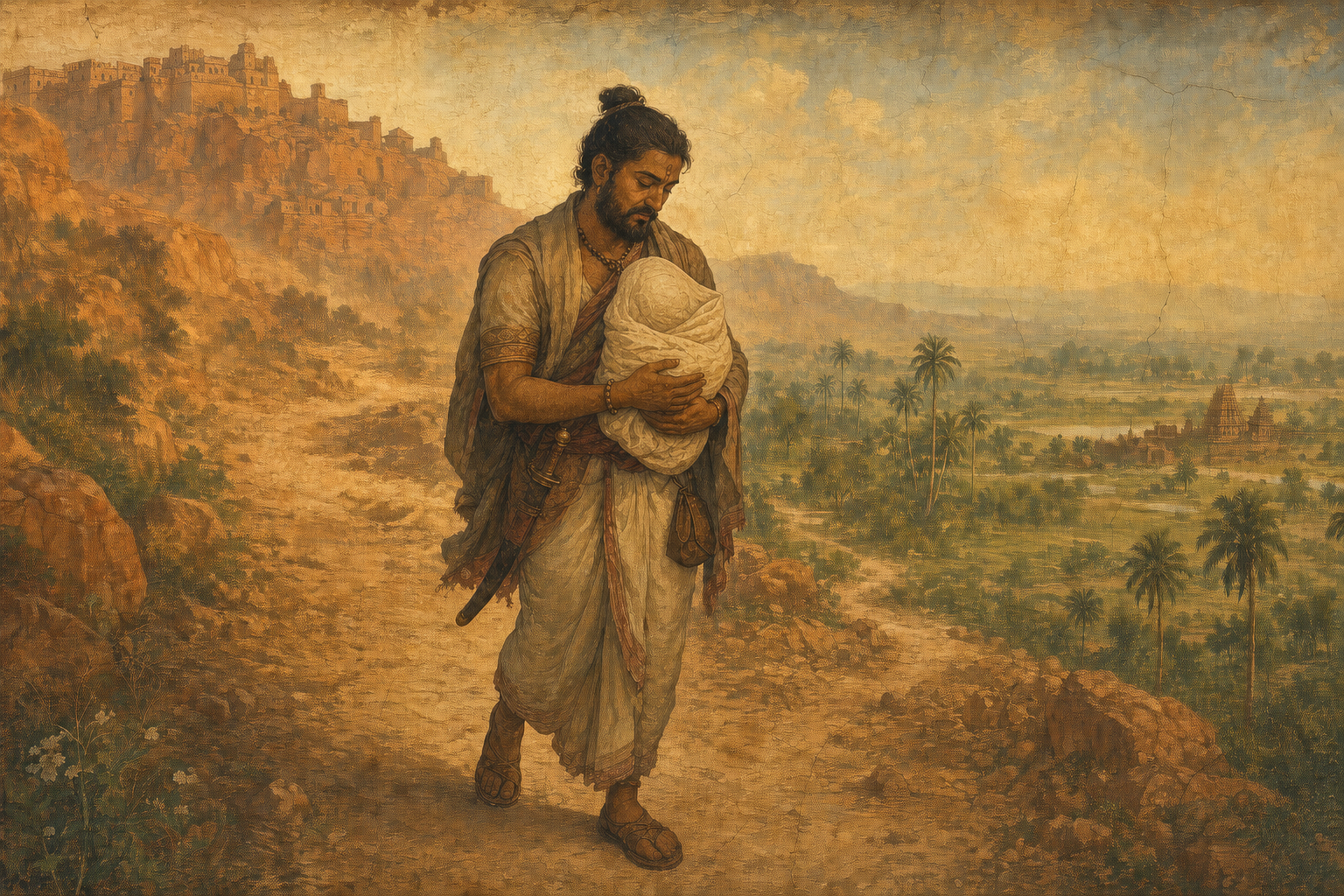
The name “Vatapi Ganapati” carries a story of movement. Local tradition associates the image with Sirutondar, remembered as a distinguished general and one of the Nayanmar, who brought Ganapati from Vatapi and installed the deity at Tiruchenkattankudi.
Sirutondar’s double identity matters. The memory joins the public life of a general to the devotional life of a Saiva saint. It therefore asks you to see the installation as more than the relocation of an object. In the tradition, an image connected with one place enters another sacred landscape, receives worship there, and becomes inseparable from the identity of its new home.
Historical discipline still matters. The details belong at the meeting point of history and hagiography. That does not make the narrative disposable, but it does determine how you should state it. Say, “Local tradition remembers Sirutondar as bringing the image from Vatapi.” Do not change that into, “Archaeology has proved the complete journey of this image,” because the available account does not establish such a claim.
This distinction protects both faith and history. Dismissing every sacred memory because it contains hagiographic elements misunderstands how communities preserve meaning. Presenting every detail as documented material history weakens credibility. The responsible middle path is to preserve the tradition in its own voice while keeping its evidentiary limits visible.
The story also gives you something concrete to notice. Sacred heritage is not made only by the original creation of an image. It is also made through movement, installation, worship, naming and inherited remembrance. Vatapi Ganapati became part of Tiruchenkattankudi because generations continued to approach the deity there. The living relationship is as important to the shrine’s identity as the remembered journey.
Let the Tevaram identity change how you see the temple
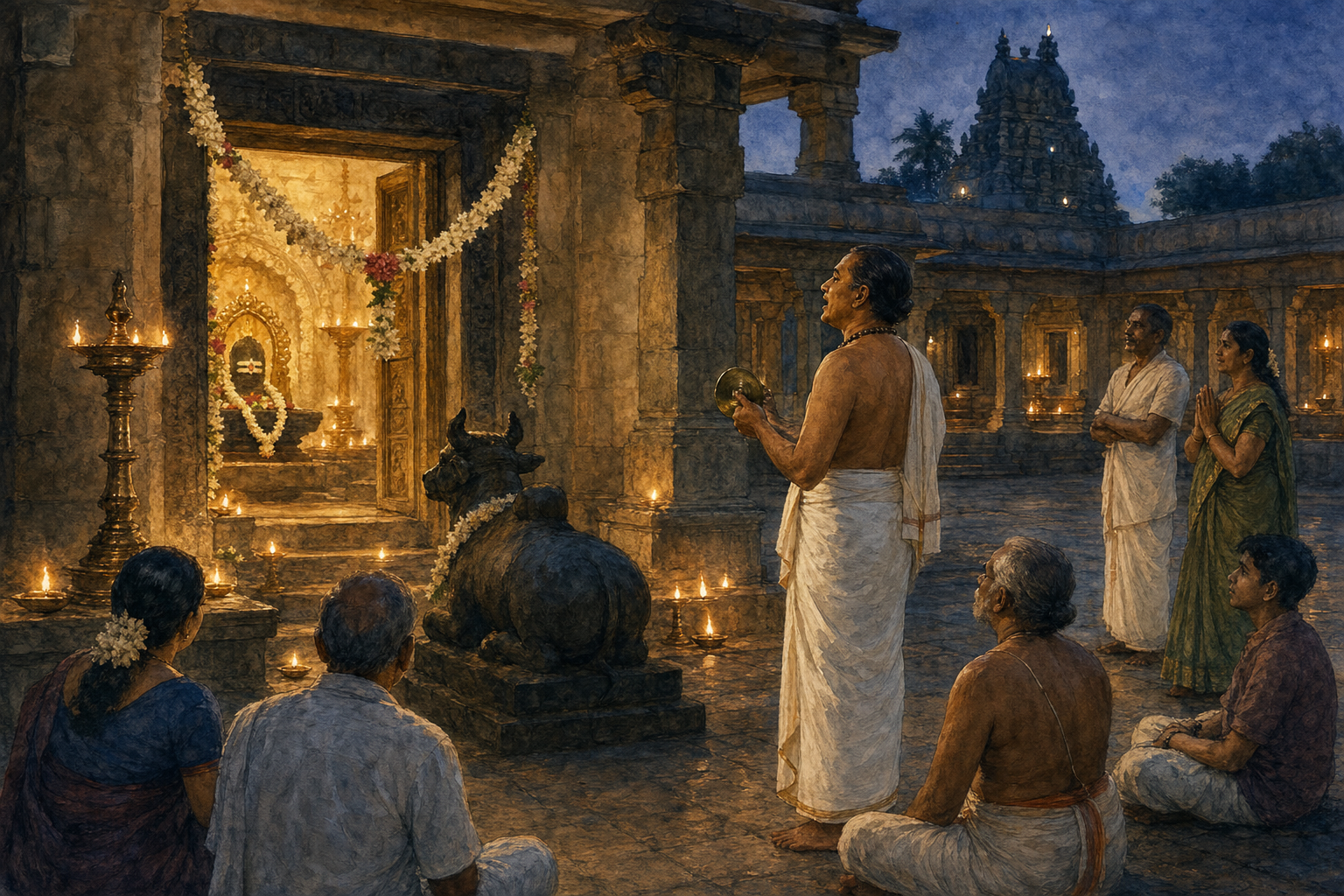
The Vatapi association may be the easiest story to remember, but it is not the temple’s only claim to sacred importance. Ganapatishvaram is a Tevara Shivastalam revered in the hymnic tradition of Tamil Saiva saints during the first millennium CE. That status places Tiruchenkattankudi within a landscape shaped by sung devotion.
A Tevara temple should not be approached merely as an old structure that happens to have literary references. Hymn, deity, devotee and place reinforce one another. The sacred text remembers the landscape, while worship at the site keeps the textual memory from becoming a museum exhibit. The temple is therefore both a physical place and a continuing act of remembrance.
If hymns are being recited during your visit, pause rather than treating the sound as background. You do not need to understand every word before you can recognize what is happening: an old relationship between liturgy and place is being renewed in the present. Let the cadence of recitation, the bell and the movement of worshippers establish the pace of your visit.
The stonework deserves attention for the same reason. Weathering is not simply evidence of age; within a functioning temple it stands beside continued ritual use. Notice the difference between a ruin and a sacred place that has carried memory through worship. Ganapatishvaram belongs to the second category. Its importance rests not only on survival but on continuity.
This also prevents a vague, flattened reading of Dharma. Tiruchenkattankudi is specifically rooted in Tamil Saiva tradition. Its values of reverence, discipline, ethical life and the pursuit of wisdom can resonate across Hindu, Buddhist, Jain and Sikh communities without erasing that particular identity. Dharmic kinship becomes stronger when we understand each tradition carefully, not when we blur their differences.
Use a simple sequence for a more attentive pilgrimage
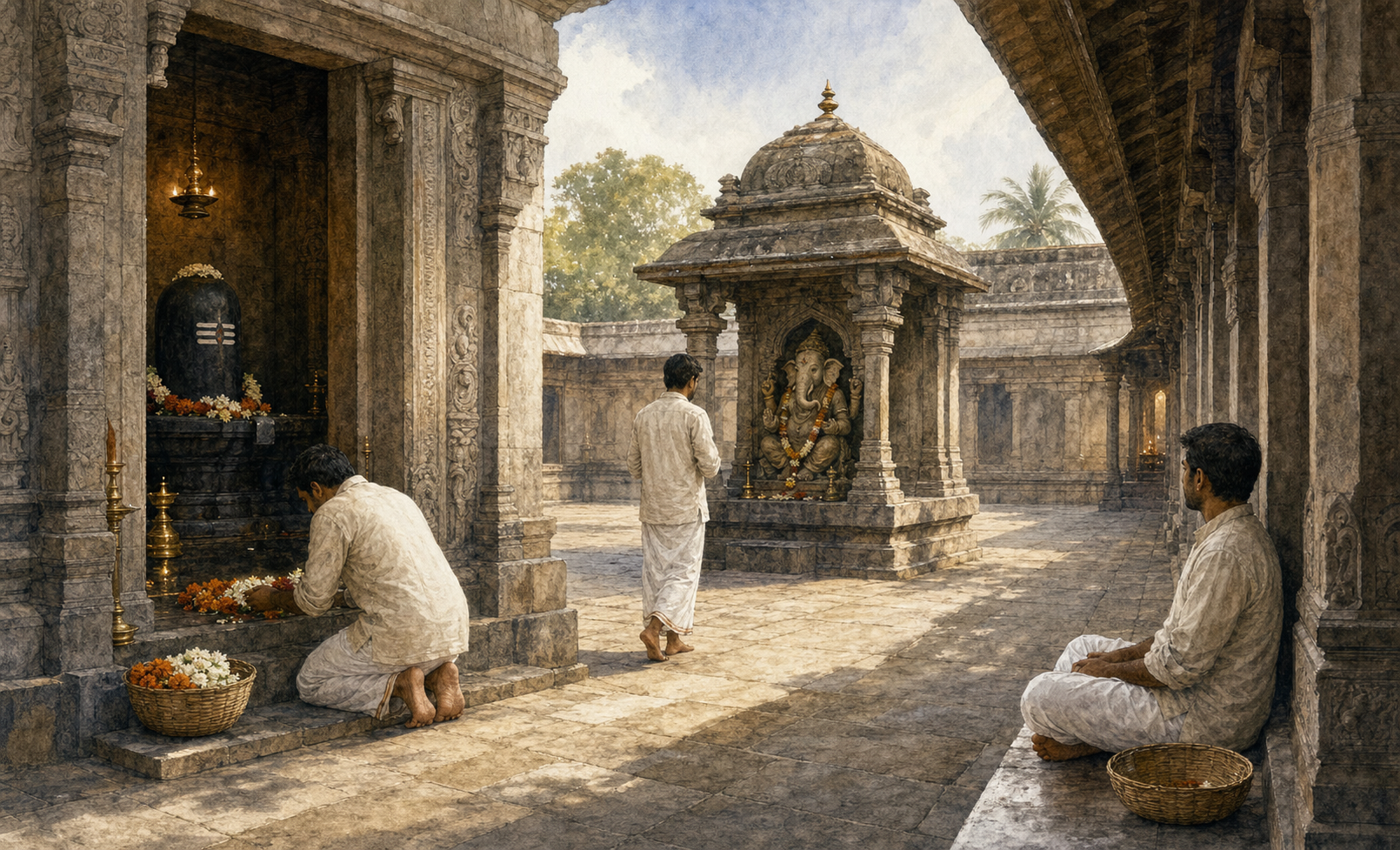
No elaborate itinerary is required. What matters is the order of your attention. The following sequence keeps devotion, historical care and heritage responsibility together.
- Confirm current arrangements locally. Opening times, access conditions and photography rules can change. Verify them before travelling rather than relying on an undated timetable.
- Arrive using the full identity of the place. Ask for Tiruchenkattankudi or Ganapatishvaram near Nannilam, while retaining Vatapi Ganapati as the name of the revered shrine.
- Enter as a worshipper or respectful guest, not an icon collector. Recognize Shiva as the presiding deity and follow the temple’s own ritual flow.
- Give the Ganapati shrine unhurried attention. Hold the Sirutondar narrative as local sacred memory. Its value lies not only in a claim about origin but in the worship that has sustained it.
- Listen before documenting. If recitation, bells or worship are underway, allow them to take precedence. Ask before taking photographs, and never let documentation interfere with another person’s darshan.
- Look for continuity. Notice how old stone, inherited names, canonical memory and present ritual occupy the same precinct. That relationship is the temple’s living heritage.
- Describe the place accurately afterward. Avoid calling it only a “Ganapati temple” or presenting the Vatapi journey as settled archaeological fact.
If you share an image or travel note, a careful caption would be: “Vatapi Ganapati at Ganapatishvaram, Tiruchenkattankudi, near Nannilam—a Tevara Shiva temple associated in local tradition with Sirutondar.” That single sentence preserves the place, the temple, the canonical identity and the traditional attribution without exaggerating any of them.
Families can turn the visit into a simple exercise in attentive learning. Ask children three questions after darshan: Who is the presiding deity? Why is this Ganapati called Vatapi Ganapati? Why does the Tevaram connection matter? If they can answer Shiva, the Sirutondar tradition, and the temple’s place in Tamil Saiva sacred memory, they have understood more than a list of architectural features would teach them.
Heritage care begins with equally ordinary choices. Do not handle old surfaces merely to obtain a dramatic photograph. Do not block ritual movement. Do not turn worshippers into scenery. Follow custodial instructions, and preserve the correct names when you write or speak about the site. Accuracy is itself a form of respect because it helps the next visitor arrive with the right expectations.
Leave with a relationship, not merely a sighting
Vatapi Ganapati is memorable because several forms of continuity meet at Tiruchenkattankudi: the worship of Shiva and Ganesha, the hymnic memory of Tamil Saivism, the traditional account of Sirutondar, and the daily custodianship that keeps an old temple alive. None of these layers needs to displace the others.
When you go, give the temple enough time to become more than the setting of a famous name. Learn the three names before leaving home, verify present access locally, follow the living rhythm of worship, and repeat the Vatapi tradition with precision. You will leave not only knowing where the Ganapati shrine stands, but understanding why Tiruchenkattankudi has carried its memory for generations.
References
