
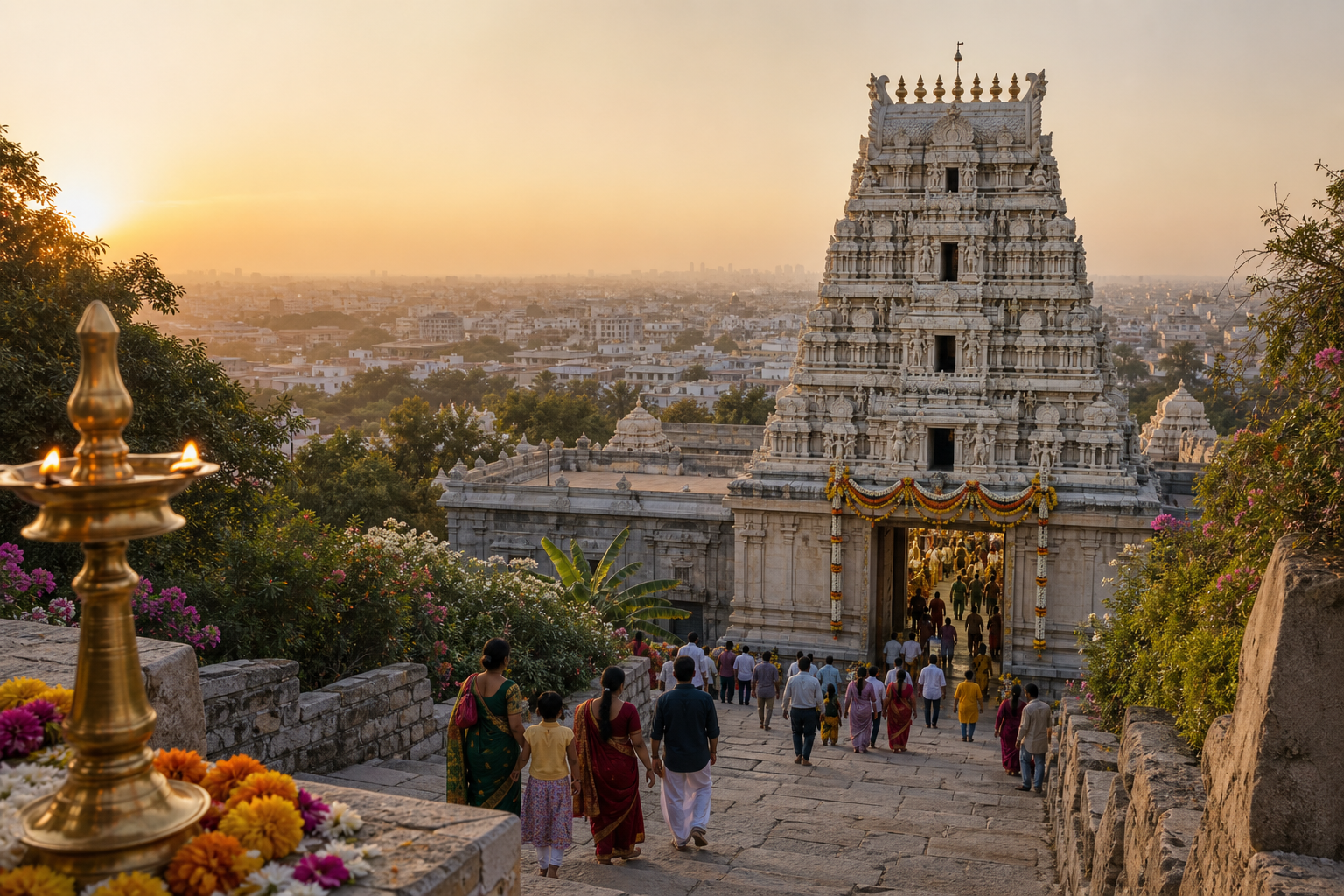
If you have only one or two days for temple visits in Hyderabad this February, do not build your plan around a generic “special puja” label. Jubilee Hills offers a fixed Brahmotsavam window, while Skandagiri’s important observances depend on lunar tithis and temple-confirmed timings.
Your first decision is whether you want the atmosphere of a nine-day festival, a particular preparatory rite, or worship aligned with Ekadashi, Pournami, Amavasya, or Ashtami. That distinction tells you which dates can go on the calendar now and which must remain flexible.
Key takeaways
- The Sri Venkateswara Swamy Temple near Jubilee Hills will observe its annual Brahmotsavams from February 17 to February 25, 2026.
- Ankurarpana begins on the evening of February 16. Koil Alwar Thirumanjanam, the preparatory purification of the temple, takes place on February 10.
- Daily alankarams, special pujas, recitations, and processions may form part of the Brahmotsavam rhythm, but exact seva times and procession arrangements should be confirmed closer to your visit.
- At Skandagiri Subramanya Swamy Temple, Ekadashi, Pournami, Amavasya, and Ashtami during Thai Masam and Masi Masam are the principal observance days identified for February. Their precise temple schedule depends on the Panchang.
- Thaipoosam should remain a conditional entry in your plan until its February observance and puja programme are confirmed by the temple.
Choose the observance before choosing your travel date
The two temples offer different ways of entering the month’s devotional rhythm. Jubilee Hills is the easier anchor for advance planning because its principal festival dates are fixed. Skandagiri is better approached through the tithi you wish to observe, followed by a check of the temple’s current Panchang-based programme.
| Your devotional priority | Working date or window | What to confirm |
|---|---|---|
| Attend the main Brahmotsavam period | February 17-25 | The day’s seva times, alankaram, and any procession arrangements |
| Attend the ritual threshold of the festival | Evening of February 16 | Ankurarpana time and arrangements for devotees |
| Understand or witness the temple’s preparation | February 10 | Koil Alwar Thirumanjanam time and whether public participation or viewing is available |
| Visit Skandagiri on an important lunar observance | Temple-confirmed Ekadashi, Pournami, Amavasya, or Ashtami | Gregorian date, puja time, and whether abhishekam, archana, or collective chanting is scheduled |
| Attend a possible Thaipoosam observance | Keep the date flexible | Whether Thaipoosam falls within the temple’s February calendar and what special pujas will be conducted |
If you are travelling into Hyderabad, the fixed Jubilee Hills window is the safer foundation for bookings. If you live locally and want to align worship with a particular tithi, keep more than one Skandagiri date open until the temple issues its exact programme. A calendar entry marked “to be confirmed” is more useful than a confident but unverified date.
Read the Jubilee Hills festival as a ritual sequence
The Jubilee Hills observance is not merely nine interchangeable days of increased temple activity. Its sequence begins before the formal Brahmotsavam period and gives each stage a distinct purpose.
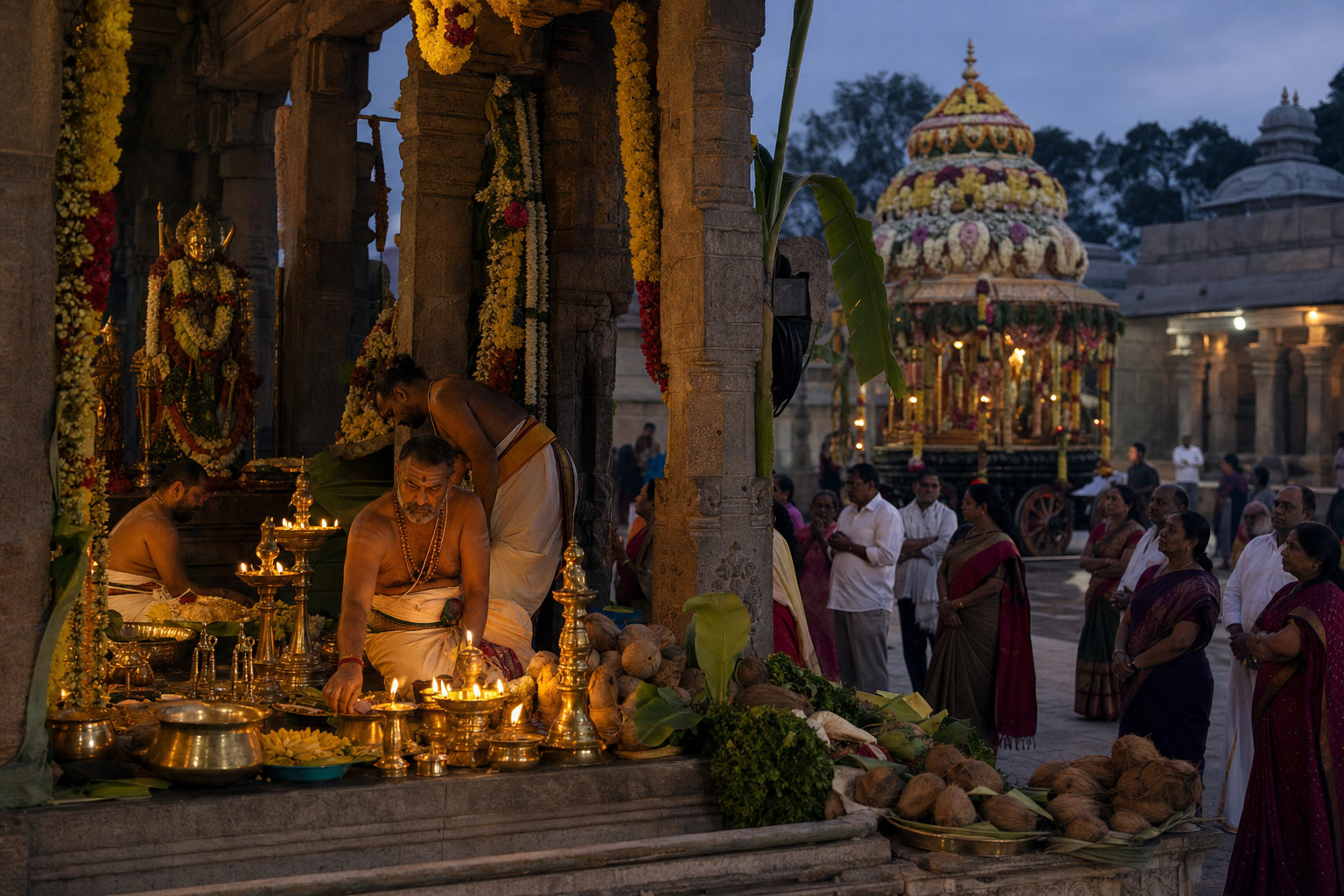
On February 10, Koil Alwar Thirumanjanam purifies and sanctifies the sanctum and temple surroundings. Treat this as preparation for the festival, not as a substitute name for one of the main Brahmotsavam days. If this rite is your reason for visiting, ask the temple whether devotees can attend or observe and at what time; do not infer public access from the date alone.
Ankurarpana follows on the evening of February 16. Its ceremonial sowing of auspicious seeds invokes prosperity and divine grace, marking the threshold of the festival cycle. This is the most clearly identified choice for a devotee who wants to experience the movement from preparation into celebration.
The annual Brahmotsavams then run from February 17 through February 25. The expected rhythm includes daily alankarams, special pujas, scriptural recitations, and processions. These are typical features rather than a promise that every element will occur at the same time or in the same form each day. If a decorated vahana, a particular seva, or a procession is your priority, being inside the nine-day window is not enough; you still need the detailed daily schedule.
- Place February 16-25 on your calendar now, adding February 10 only if the preparatory purification is important to you.
- Choose one primary purpose: Ankurarpana, ordinary darshan during Brahmotsavams, a particular seva, or a procession. Do not leave this decision until you reach the temple.
- Check the latest temple announcement for the exact start time, seva arrangements, and procession route. Recheck close to the visit rather than relying on an older saved schedule.
- Arrive ahead of the ritual you have chosen and use public transport where feasible. Festival-period traffic and peak-hour queues can otherwise consume the time you intended to spend in worship.
- If you are visiting with elders, children, or a large family group, make one ritual the shared priority and treat everything else as optional. This keeps a delayed arrival or long queue from turning the whole visit into a failed itinerary.
Let the Panchang lead your Skandagiri visit
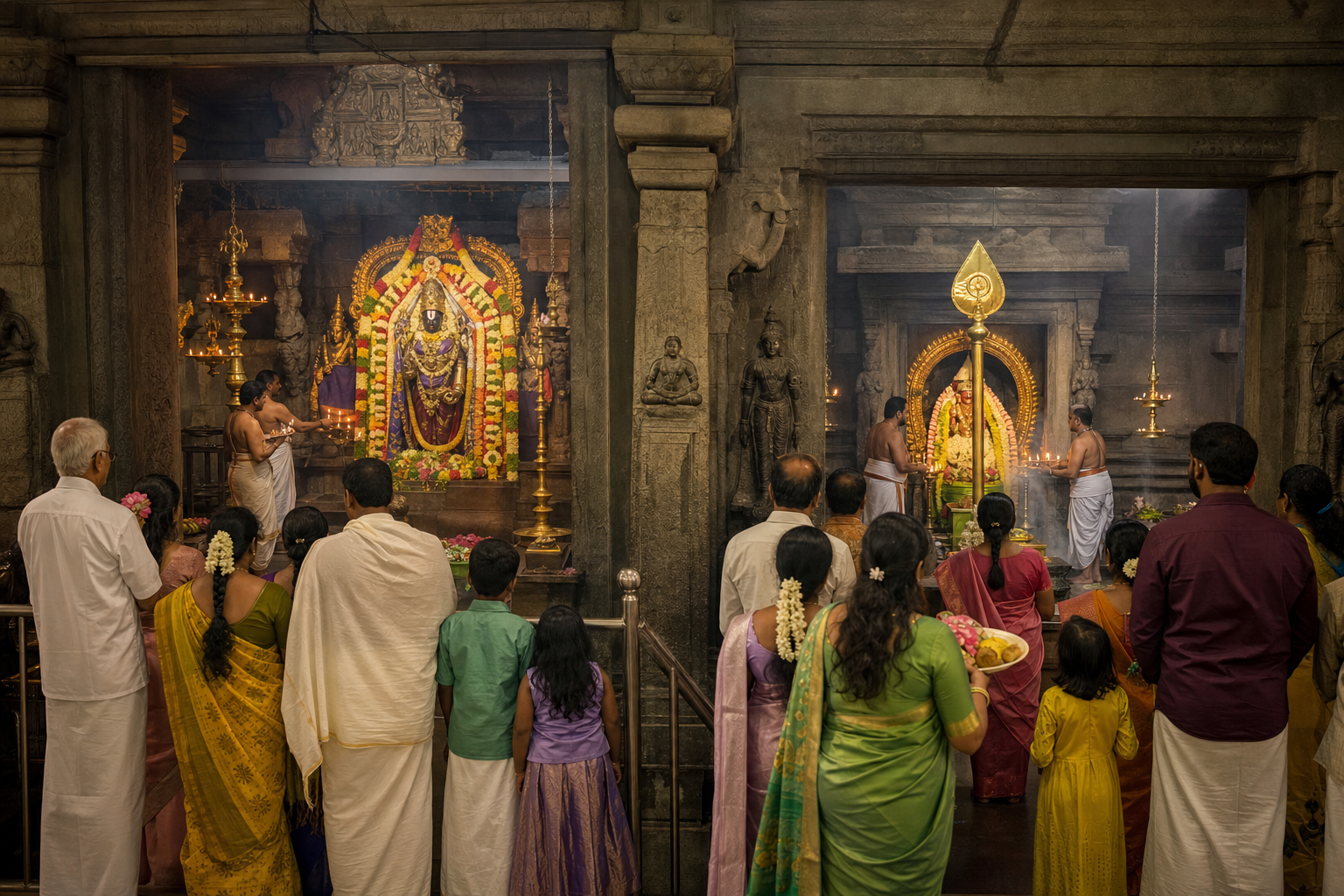
Skandagiri Subramanya Swamy Temple follows the devotional cadence of Thai Masam and Masi Masam during February 2026. Its principal tithi-based occasions are Ekadashi, Pournami, Amavasya, and Ashtami. Enhanced worship on these days may include abhishekam, alankaram, archana, and collective chanting, but “may include” matters: do not assume that every ritual will be offered on every observance day.
Select the tithi according to the practice you can meaningfully sustain. Ekadashi carries an association with fasting and restraint. Pournami lends itself to collective worship and contemplative stillness. Amavasya has a more introspective tone, while Ashtami emphasizes disciplined devotional focus. These distinctions can guide your choice, but they do not establish the temple’s clock time or Gregorian date.
If fasting belongs to your Ekadashi practice, follow the discipline already established by your family, sampradaya, or guru. A temple calendar label by itself is not a personal instruction to improvise a fast, especially when health considerations already apply to you.
Thaipoosam requires even more care in planning. If it falls in February 2026 according to the applicable lunar calendar, Skandagiri customarily holds special worship of Murugan’s valour and compassion. Until the temple confirms both the observance and its programme, treat Thaipoosam as a possibility rather than a fixed appointment.
Before committing to a Skandagiri visit, confirm four things: the civil-calendar date, the start time, the priest-led ritual sequence, and whether any seva requires advance arrangements. Also ask about the customary dress code rather than relying on assumptions carried over from another temple.
Make the day about darshan rather than logistics
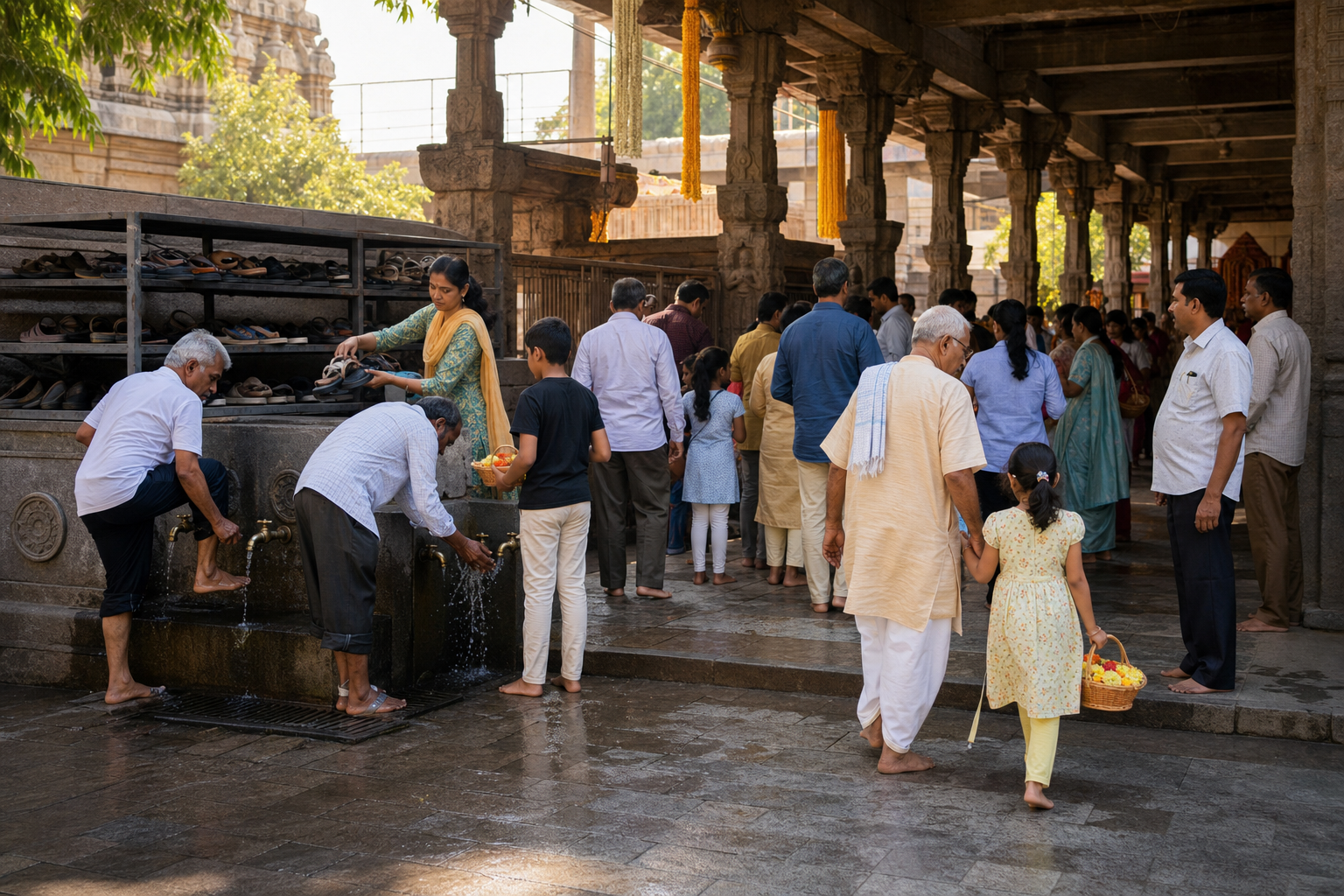
A well-planned temple day does not need a crowded checklist. Write down one sankalpa before leaving home and identify one ritual you do not want to miss. That gives the visit a centre even if a queue, changed time, or family need alters everything around it.
- Verify the programme through the temple’s current communication before departure. Confirm whether the event is a regular darshan, a special puja, or a procession with different access arrangements.
- Reach the premises early enough to follow volunteer and priestly instructions without rushing. Peak observance periods call for patience, not attempts to force a tightly packed schedule.
- Wear clothing consistent with the temple’s stated customs. Where the temple has not published details, ask rather than assuming that every Hyderabad shrine follows identical protocol.
- During chanting, recitation, or a procession, keep conversation and phone use from disturbing other devotees. Follow the designated movement of the queue even if it changes your preferred viewing position.
- Receive prasadam respectfully, support temple cleanliness, and leave room for a few quiet minutes after darshan. The transition back into ordinary activity is part of carrying the observance into conduct.
The shared dharmic values visible here are practical ones. Ahimsa appears as patience in a crowded queue. Seva appears as cooperation with volunteers and care for the premises. Discipline appears in arriving at the right time, following temple protocol, and refusing to turn worship into a race for the most advantageous place.
Put February 16-25 on your calendar now if Jubilee Hills is your anchor, with February 10 marked separately for the preparatory rite. For Skandagiri, set a reminder to verify the Panchang-based schedule before fixing travel. Go with one clear sankalpa and one priority ritual; let the rest of the day remain open to darshan.
References
- DharmaRenaissance Blog – Jubilee Hills Sri Venkateswara Brahmotsavams 2026: Dates, Ritual Highlights, and Devotional Joy
- DharmaRenaissance Blog – Skandagiri Temple Pujas in February 2026: Auspicious Days, Ritual Highlights, Devotee Guide
