
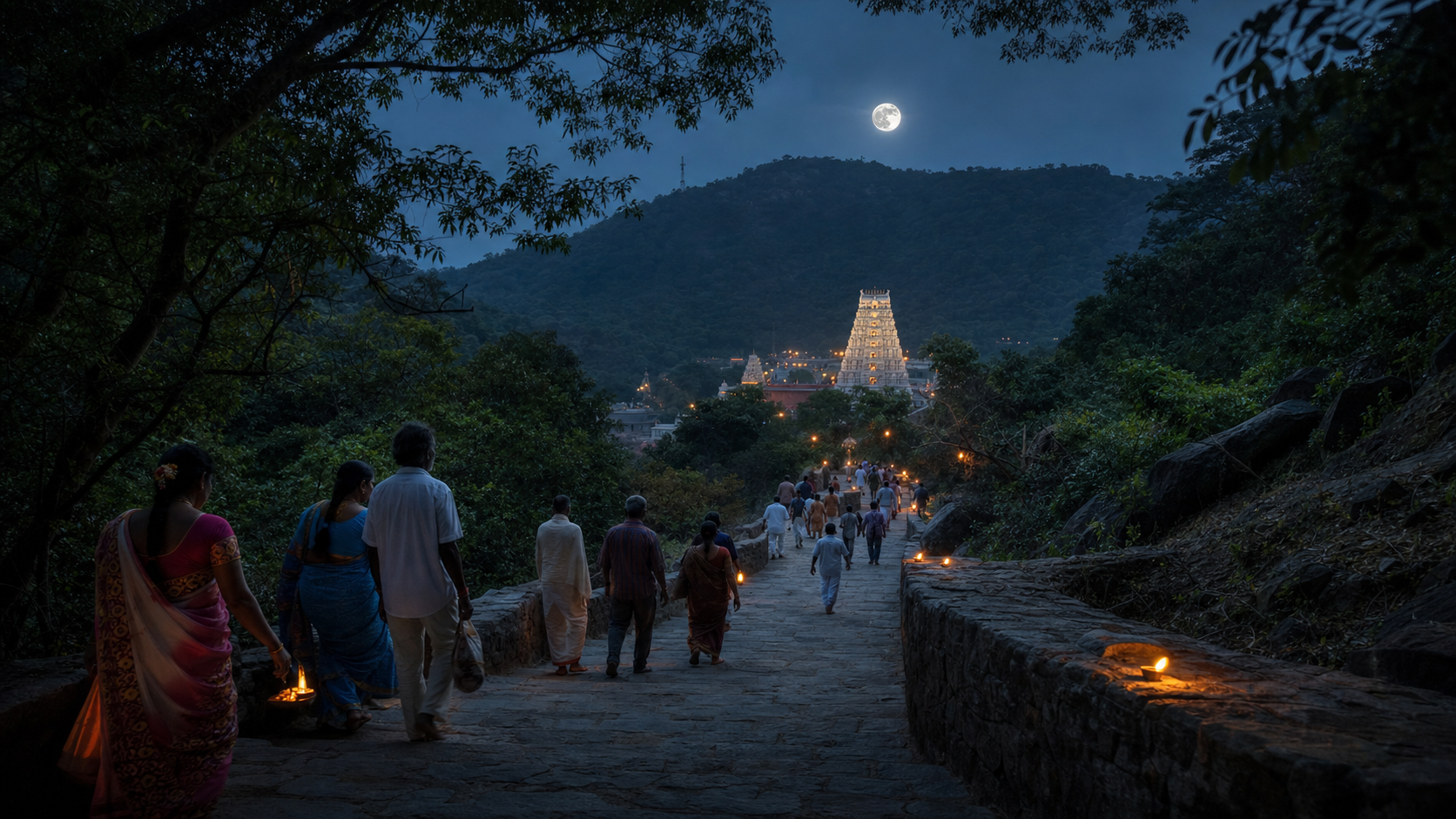
If you are going to Tirumala for Magha Purnima, the central question is not how many rituals you can fit into one crowded day. It is how to preserve the day’s purpose while managing timings, access rules, sacred-water observance and the practical demands of pilgrimage.
In Tirumala, the lunar observance of Magha Purnima meets the local tradition of Ramakrishna Teertha Mukkoti. In 2026, both were observed on 1 February. The date has passed, but the distinction between the tithi and the local pilgrimage remains important whenever you plan a future visit: verify the calendar, verify access separately, and build your observance around a few practices you can complete with attention.
Understand the two observances before planning your day
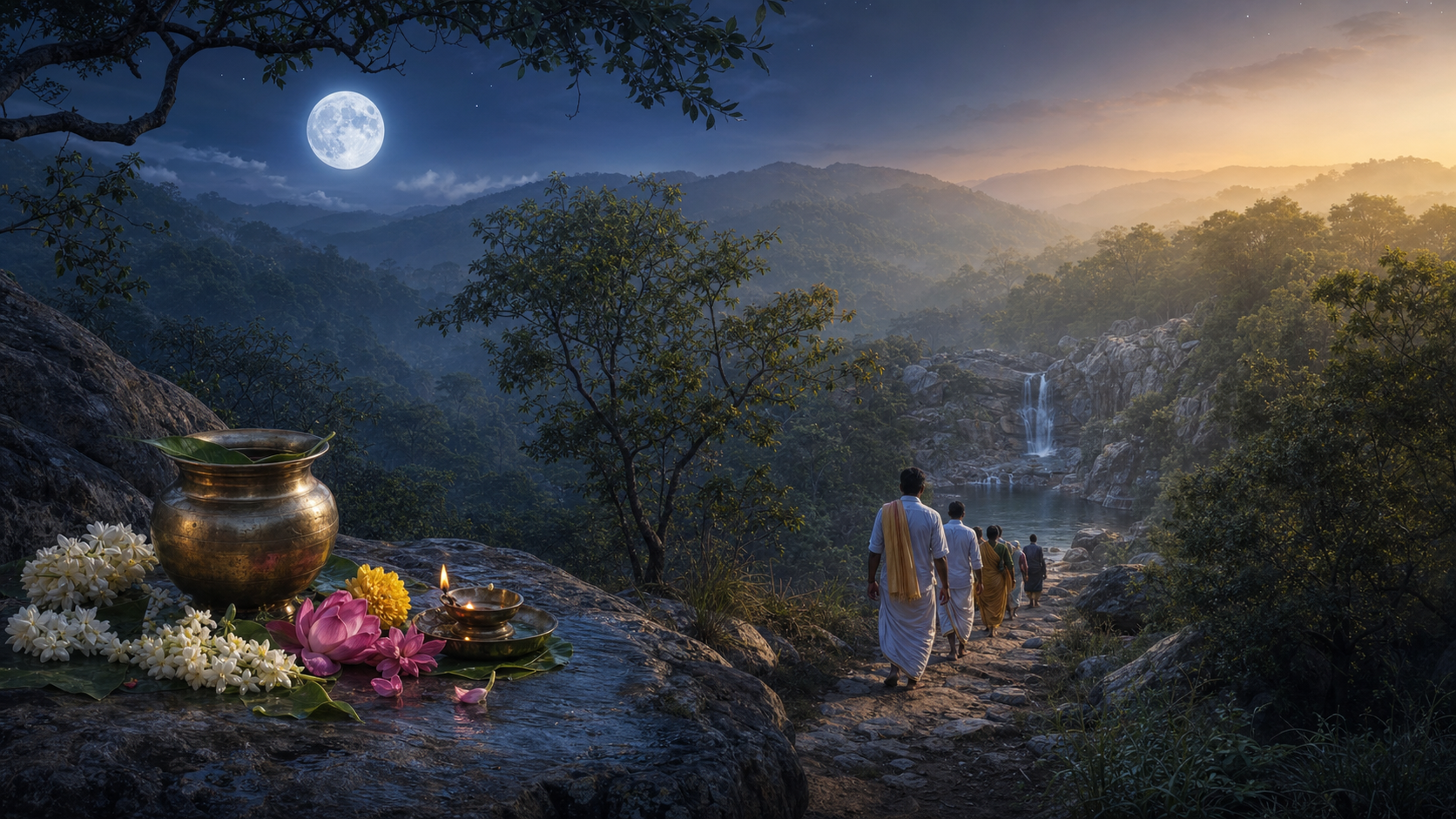
Magha Purnima, also called Maha Maghi, is the full-moon culmination of the sacred Magha month. Its characteristic disciplines are snan, or ritual bathing; daan, or charitable giving; vrata, or a chosen vow; prayer; and contemplation. These practices give the day its structure whether you are at a major pilgrimage centre or observing at home.
Ramakrishna Teertha Mukkoti is the Tirumala observance associated with that same Purnima. It places special emphasis on Ramakrishna Teertha and the sanctity of Tirumala’s natural waters. The two names therefore do not describe competing festivals. Magha Purnima supplies the sacred time and disciplines; the Mukkoti observance roots them in a particular teertha and sacred landscape.
This distinction matters when access is limited. Reaching the teertha may be an important part of your Tirumala pilgrimage, but it is not permission to disregard entry controls or place yourself and others at risk. If a route or water area is closed, continue the permitted parts of your observance and consult your family’s tradition, guru or temple guidance about an appropriate alternative. A vrata loses its moral centre when the pursuit of one ritual act overrides safety, order or consideration for fellow pilgrims.
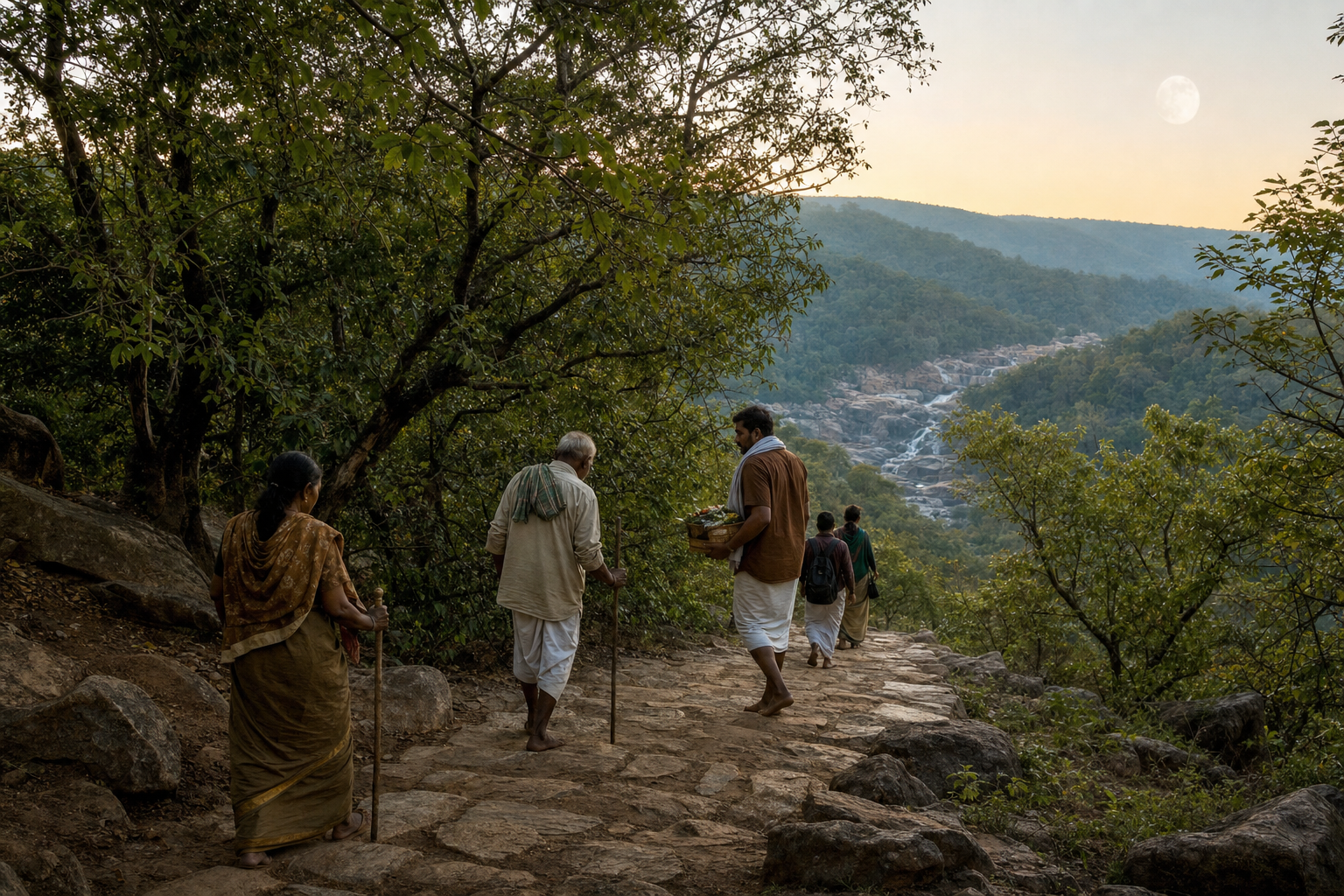
Local tradition associates Sri Ramakrishna Maharshi with the teertha, although tellings of the legend vary. You do not need to force those variations into a single historical account. Their common devotional direction is clearer: approach sacred water with humility, cultivate discipline and compassion, and recognise that Tirumala’s springs and streams belong to a living sacred geography rather than serving as scenery for a day trip.
Keep the tithi and the access schedule separate
For the 2026 observance, the Purnima tithi began at 5:52 AM on 1 February and ended at 3:38 AM on 2 February, in India Standard Time. Because the tithi prevailed at sunrise on 1 February, many traditions treated that date as Magha Purnima. Some lineages give additional importance to a particular period within the full-moon tithi.
Those 2026 hours must not be copied into another year. For a future pilgrimage, use a trusted local panchang and the schedule followed by your sampradaya. Then check the current Tirumala or TTD advisory for route, reporting time, entry protocol and any restrictions at the teertha. A panchang answers when the religious tithi occurs; a temple advisory answers what access is actually available. You need both answers before fixing transport or promising family members an early-morning visit.
You may also encounter the Tamil term Pournami. That wording does not indicate a different full moon. Regional calendars can use different month names or methods of month reckoning, so resolve any apparent mismatch through the relevant temple calendar rather than assuming that one notice is wrong.
- Confirm the year’s Purnima tithi in a reliable regional panchang.
- Check which date and ritual window your own tradition follows.
- Read the current TTD or local temple instructions instead of relying on an earlier year’s arrangements.
- Ask whether teertha access, ritual bathing and general darshan have distinct reporting or entry requirements.
- Build enough travel margin that a delay does not tempt you to push through a queue or ignore staff directions.
Shape the pilgrimage around five deliberate practices
A long ritual list can make the day feel productive while leaving little room for devotion. A simpler sequence is easier to complete without haste. Decide the sequence before entering the busiest part of Tirumala so that crowd movement does not make every decision for you.
- Make a clear sankalpa. State why you are observing the day: purification, gratitude, restraint, service or renewal. Keep it specific enough to guide your conduct after the pilgrimage.
- Undertake snan within the permitted conditions. An early-morning snan is a characteristic Magha Purnima practice, but do not assume that every natural water area is open for entry. Follow signs and local staff, and do not enter a stream or restricted route merely to reproduce an idealised ritual sequence.
- Choose one form of prayer or contemplation. Recite a mantra or prayer received through your tradition, or sit in meditative silence. One practice completed attentively is more coherent than repeatedly changing practices because other pilgrims are doing something different.
- Make daan concrete. Offering food, supporting a community kitchen or addressing a genuine local need all fit the day’s emphasis on charity. Choose the recipient or method before travelling; otherwise daan is easily postponed when the return journey becomes tiring.
- Close with gratitude. Moonrise contemplation and a simple lamp, where lighting one is permitted, can mark the completion of the observance. If a lamp is unsuitable at your location, quiet gratitude preserves the intention without creating a safety or cleanliness problem.
If you keep a vrata involving food or another personal discipline, follow the practice of your own lineage and account for your health and travel demands. Magha Purnima does not require you to assemble unrelated fasting rules from different regional traditions. Consistency within a recognised practice is more meaningful than severity chosen for appearance.
The same framework works for a family pilgrimage. Agree on the essential practices before leaving: which snan is feasible, when you will pray, and how the family will perform daan. That prevents the day from becoming a negotiation conducted in a queue. Children and relatives who cannot undertake every part can still participate through prayer, gratitude, charity and respectful conduct.
Treat crowd discipline and ecological care as worship
For Ramakrishna Teertha Mukkoti in 2026, preparations covered pilgrim movement, sanitation, water access and safety. Those arrangements belonged to that year’s observance and should not be assumed for a later visit. Their purpose nevertheless points to an enduring principle: collective devotion depends on thousands of individual acts of restraint.
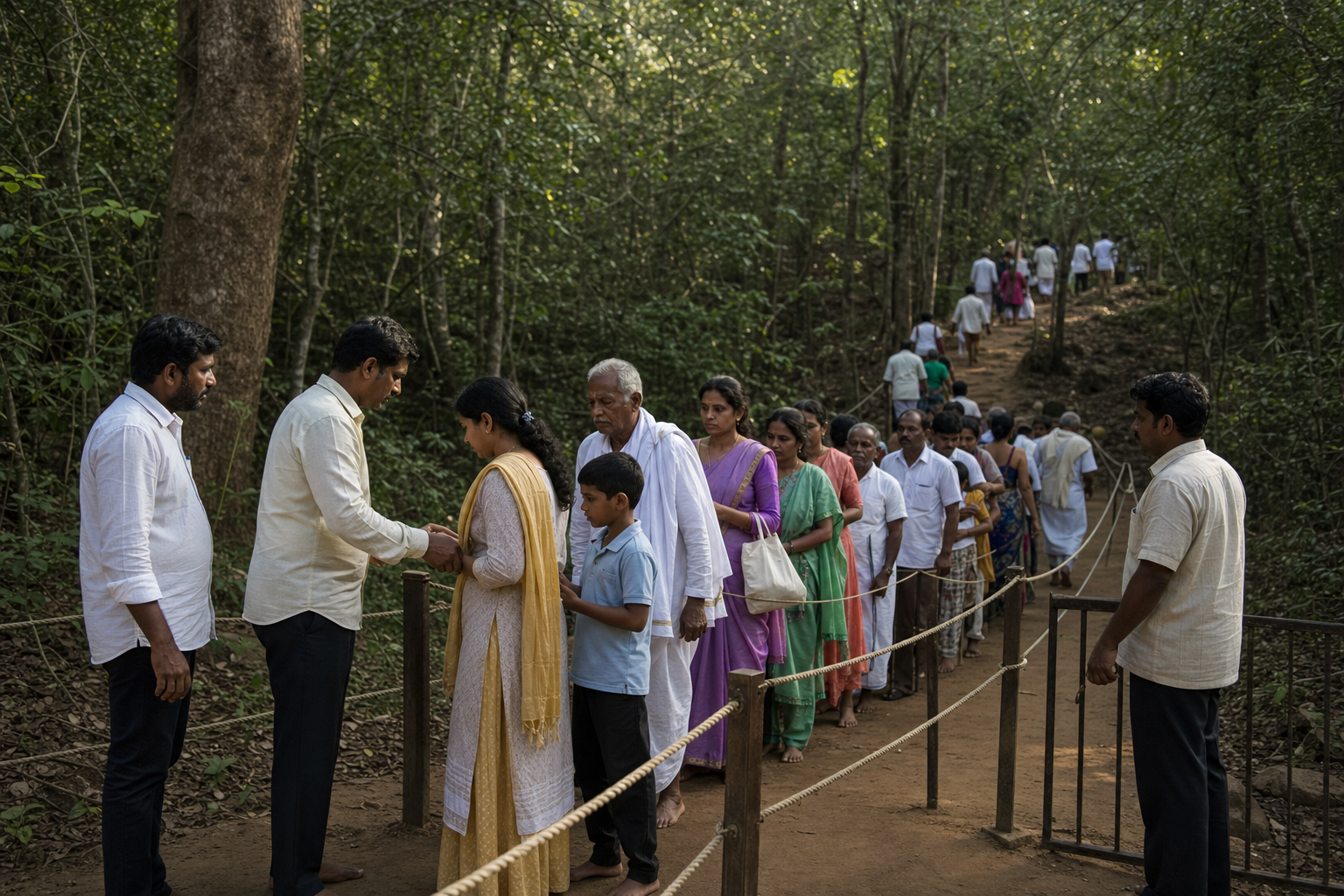
A barricade, queue or staff instruction is not an interruption of dharma. It protects the conditions in which everyone can worship. Do not push forward because a preferred muhurta is narrowing. Do not leave the approved route to seek a quieter or supposedly more potent place. Use designated water points and facilities, and accept that the permitted form of pilgrimage may differ from the one you imagined.
The same discipline applies to offerings. Use only what is permitted at the site, keep packaging and other waste with you until you reach a receptacle, and do not leave material in a spring or stream. Reverence for teertha is contradicted by conduct that burdens the water or the people responsible for cleaning the sacred landscape.
Seva also begins before any formal act of giving. Moving patiently, keeping shared spaces usable and reducing avoidable waste are forms of consideration for pilgrims you may never meet. This is where the values shared across the wider dharmic family become practical: self-restraint, compassion and service are not themes to contemplate after the journey. They determine how you make the journey.
Key takeaways for a Tirumala pilgrim
- Magha Purnima is the lunar observance; Ramakrishna Teertha Mukkoti is Tirumala’s sacred-water pilgrimage associated with it.
- In 2026, Magha Purnima fell on 1 February, with the tithi running from 5:52 AM on 1 February to 3:38 AM on 2 February IST.
- Do not reuse those hours for another year. Check a current panchang for the tithi and current Tirumala guidance for actual access.
- Build the day around a manageable sequence: sankalpa, permitted snan, focused prayer, concrete daan and gratitude.
- Local accounts of Sri Ramakrishna Maharshi’s connection with the teertha vary, while their devotional emphasis remains humility, discipline and reverence for sacred nature.
- Following queues, safety instructions and ecological rules is part of the observance, not merely its administration.
Before your next Magha Purnima visit, write down three things: the verified tithi, the current access instruction and the act of daan you will complete. Once those are settled, let the pilgrimage become quieter. Tirumala does not need a more elaborate performance from you; it asks for attention that remains disciplined at the teertha and continues after you return home.
References
- DharmaRenaissance Blog – Ramakrishna Teertha Mukkoti 2026, Tirumala: Magha Purnima Blessings and Pilgrim Experience
- DharmaRenaissance Blog – Magh Purnima (Maha Maghi) on 1 Feb 2026: Exact Purnima Timings, Ritual Insights, and Meaning
