
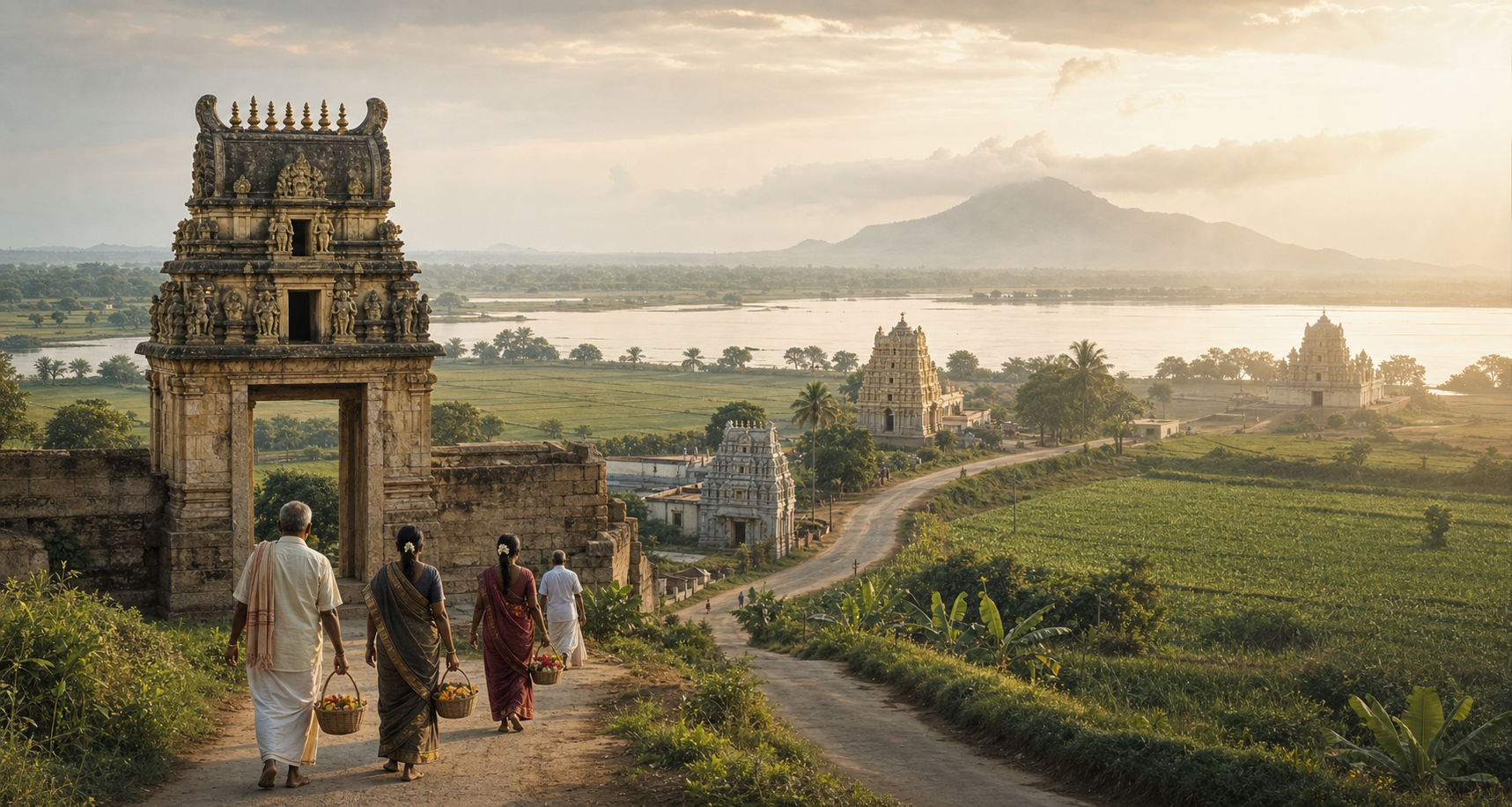
If you are planning a temple journey from Penuganchiprolu, the difficult choice is not whether there are enough shrines nearby. It is deciding how many you can visit without reducing darshan to a race between parking areas.
The most workable circuit begins with Tirupatamma Temple, continues toward Vedadri on the Krishna, and brings Tirumalagiri, Muktyala, and Nemali into the journey as time permits. These five temples form a coherent pilgrimage, but they do not need to be forced into a single hurried day. Your best plan depends on whether you want broad coverage or enough stillness to understand each shrine.
Key takeaways for planning the circuit
- Begin at Tirupatamma Temple in Penuganchiprolu. Its active community life makes it the natural spiritual and practical anchor for the journey.
- Protect enough time for Vedadri Lakshmi Narasimha Swamy Temple. Its position on the Krishna River is part of the experience, not merely a backdrop for a quick photograph.
- For a one-day trip, treat Tirupatamma and Vedadri as the two firm stops. Choose Tirumalagiri, Muktyala, or Nemali as an additional shrine according to your devotional interest and the time actually available.
- Use a weekend if visiting all five temples matters to you. The additional time lets you attend to ordinary worship, architecture, recitation, local accounts, and the river landscape.
- Confirm current opening hours, ritual schedules, road sequence, and photography rules locally before departure. A spiritually meaningful order is not the same thing as a verified turn-by-turn driving route.
Follow the five stops as a devotional sequence
You can read this circuit as a movement through five distinct forms of devotion: community participation, divine protection, disciplined service, liberation, and harmony. That sequence gives each stop a purpose. It also helps you decide what to omit when time is short.
1. Tirupatamma Temple: begin with the living tradition
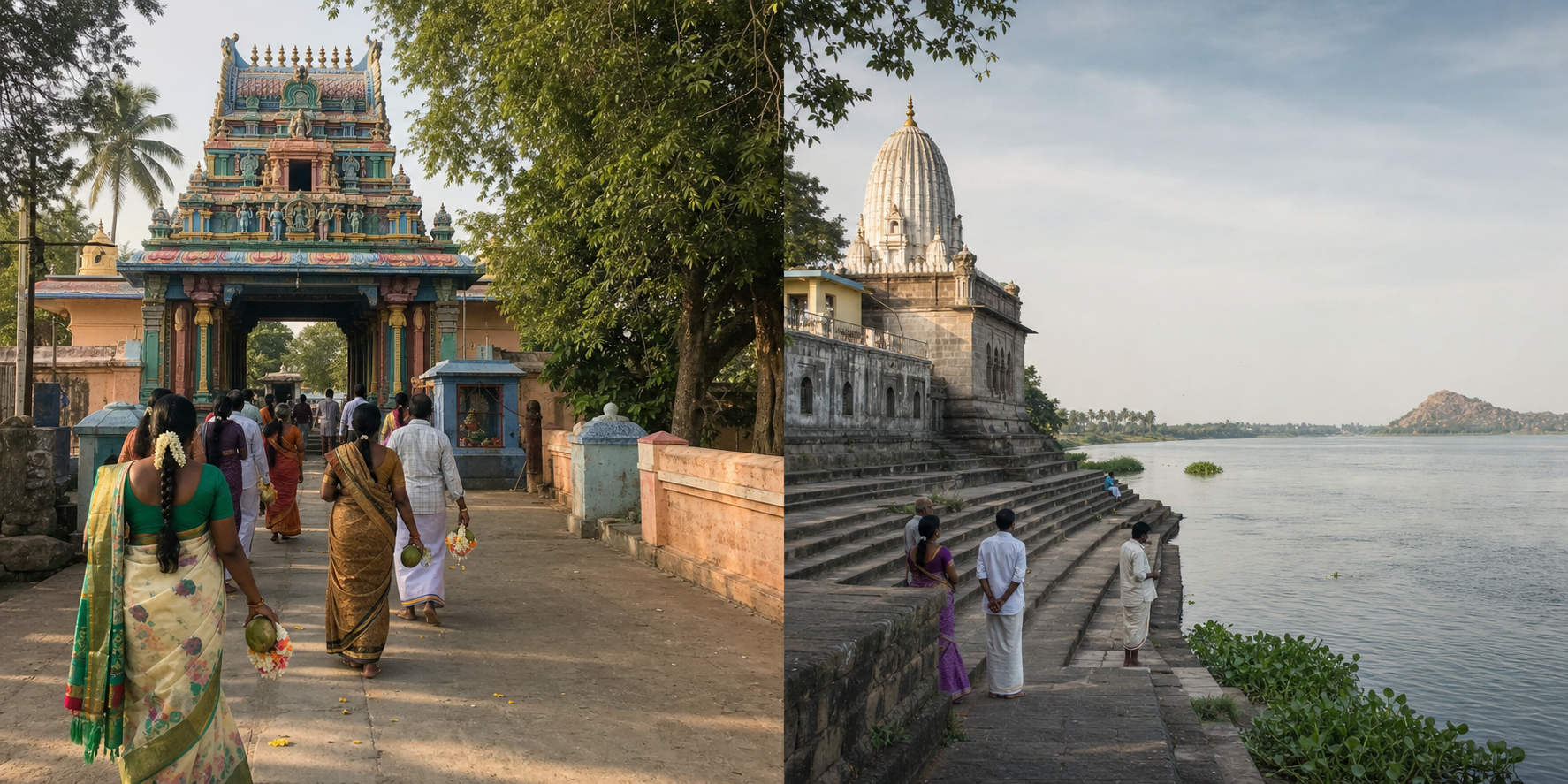
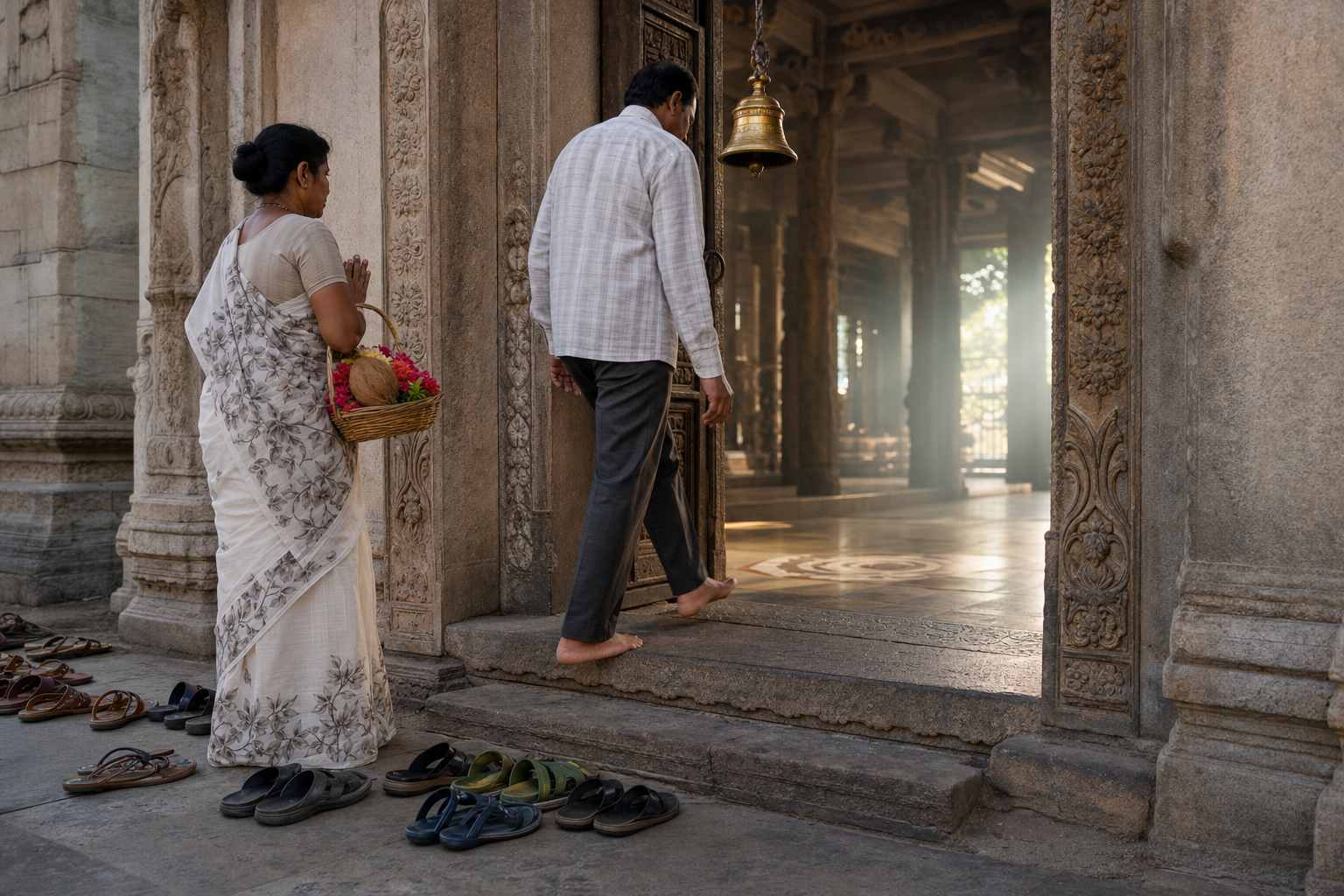
Tirupatamma Temple in Penuganchiprolu is the right starting point because worship here is closely bound to community participation and recurring local observances. Do not approach it only as the first landmark on a route. Watch how devotees enter, wait, offer worship, and respond to the temple’s daily rhythm. The living practice around a shrine often tells you more than an architectural checklist can.
If a local observance is under way, allow it to shape your visit rather than trying to preserve a rigid schedule. Listen when residents explain a custom, but do not turn worshippers into informal tour guides while they are performing their own duties. Your task at this first stop is simple: settle into the pilgrimage and let local practice establish its pace.
2. Vedadri: give Narasimha and the river enough time
Vedadri Lakshmi Narasimha Swamy Temple, associated with Sri Yogananda Lakshmi Narasimha Swamy, stands on the bank of the Krishna and is approximately 10 km from Jaggaiahpeta. This is the clearest geographical anchor in the circuit. Use Jaggaiahpeta when confirming your approach rather than assuming that every shrine described as being near Penuganchiprolu lies on one direct road.
Narasimha devotion places protective grace at the centre of this stop. The river setting adds a contemplative dimension, but contemplation requires time. Complete darshan before reaching automatically for your phone. Then, where access and local rules permit, pause long enough to notice the relation between the shrine and the Krishna. If your schedule allows only one unhurried riverside visit, make it this one.
3. Tirumalagiri: choose disciplined devotion over haste
At Tirumalagiri Venkateshwara Swamy Temple, the devotional emphasis shifts toward perseverance, humility, and seva. This makes Tirumalagiri a strong third stop when you want the day to remain primarily Vaishnava in orientation.
Listen for recitation and notice the cadence of routine worship if either is taking place during your visit. Look at the architecture only after orienting yourself to the sanctum and the conduct expected there. The useful question at Tirumalagiri is not how quickly you can complete another darshan. It is whether your conduct reflects the discipline that Venkateshwara worship asks you to consider.
4. Muktyala: bring Shaiva reflection into the route
Muktyala Mukteshwara Swamy Temple introduces a Shaiva focus associated with mukti, or liberation. Its proximity to the river and restrained atmosphere suit a quieter form of attention. Choose Muktyala as your additional stop when you want the circuit to place Vaishnava and Shaiva worship in deliberate conversation.
There is no contradiction in moving from Narasimha or Venkateshwara to Mukteshwara. A Hindu pilgrimage can hold distinct theological emphases without pretending that every deity, ritual, or lineage is interchangeable. At Muktyala, carry one clear question into the visit: what attachment, habit, or assumption are you asking to see more honestly? That gives the idea of liberation a practical place in your pilgrimage without inventing a ritual the temple has not prescribed.
5. Nemali: close with Venugopala’s harmonising presence
Nemali Venugopala Swamy Temple centres Krishna as the flute-playing cowherd. Its iconography evokes beauty, compassion, and the harmonising force of divine music, while the surrounding rural ambience supports the pastoral mood associated with Venugopala.
Nemali works especially well as the closing shrine when the verified road sequence and temple hours make that practical. By this point, you have moved from active community devotion through protection, service, and liberation to Krishna’s gentle ordering of life. Do not add Nemali merely to complete a set. Visit when you can arrive with enough attention to receive the change in mood.
Choose one day or a weekend before you leave
A precise clock-based itinerary would be misleading without current opening hours, ritual schedules, and road conditions. Make the more important decision first: is this a focused day of darshan or a complete five-temple pilgrimage?
For a focused one-day visit
Our practical recommendation is to make Tirupatamma and Vedadri non-negotiable. They establish the circuit’s two strongest anchors: Penuganchiprolu’s living devotional culture and the Krishna-side Narasimha shrine. Select only one additional temple in advance, then add another solely if the day remains genuinely open.
- Choose Tirumalagiri if you want to continue with Venkateshwara devotion and the themes of humility, perseverance, and seva.
- Choose Muktyala if a Shaiva shrine and contemplation of liberation are essential to your pilgrimage.
- Choose Nemali if Krishna as Venugopala and a quieter rural setting are the right way for you to conclude.
This priority system prevents the common planning failure of treating all five names as promises. When travel or worship takes longer than expected, remove an optional stop instead of compressing darshan at every remaining temple.
For a weekend pilgrimage
A weekend is the better choice if your purpose includes temple architecture, routine worship, recitations, local histories, and time beside the Krishna. Divide the shrines according to confirmed roads and current access, not according to an unverified online sequence. Keep Tirupatamma as the beginning and preserve Vedadri as a substantial riverside visit; arrange Tirumalagiri, Muktyala, and Nemali around those anchors.
The gain is not simply two more temple names. It is the ability to recognise how the atmosphere changes from one shrine to the next. That change is much harder to notice when every departure is governed by anxiety about the next closing time.
See unity without flattening the traditions
The circuit’s unity does not depend on making its temples identical. Tirupatamma devotion is expressed through a strong local and communal rhythm. Narasimha represents protective grace. Venkateshwara draws attention to perseverance and service. Mukteshwara turns the mind toward liberation. Venugopala brings compassion, beauty, and harmony into view.
That plurality is itself a Dharmic lesson. Different forms of worship can share sacred geography and moral concerns while retaining their own names, images, practices, and theological weight. Values such as compassion, ahimsa, self-discipline, and respect for sacred space also resonate across Hindu, Buddhist, Jain, and Sikh traditions. But this particular circuit is a journey through Hindu temples. You honour wider Dharmic kinship more faithfully by recognising that fact than by erasing meaningful differences.
To make this insight practical, carry one intention through all five shrines. It might concern protection, service, release from an attachment, or harmony within your family or community. At each stop, notice how that same concern looks different in the presence of a different deity and devotional tradition. The circuit then becomes more than geographical movement; it becomes a disciplined comparison within your own sadhana.
Protect the sanctity of the visit
Temple etiquette is not an accessory to pilgrimage. It is how you avoid making your convenience more important than someone else’s worship.
- Wear modest clothing suitable for active places of worship, and follow the instructions displayed or communicated at each temple.
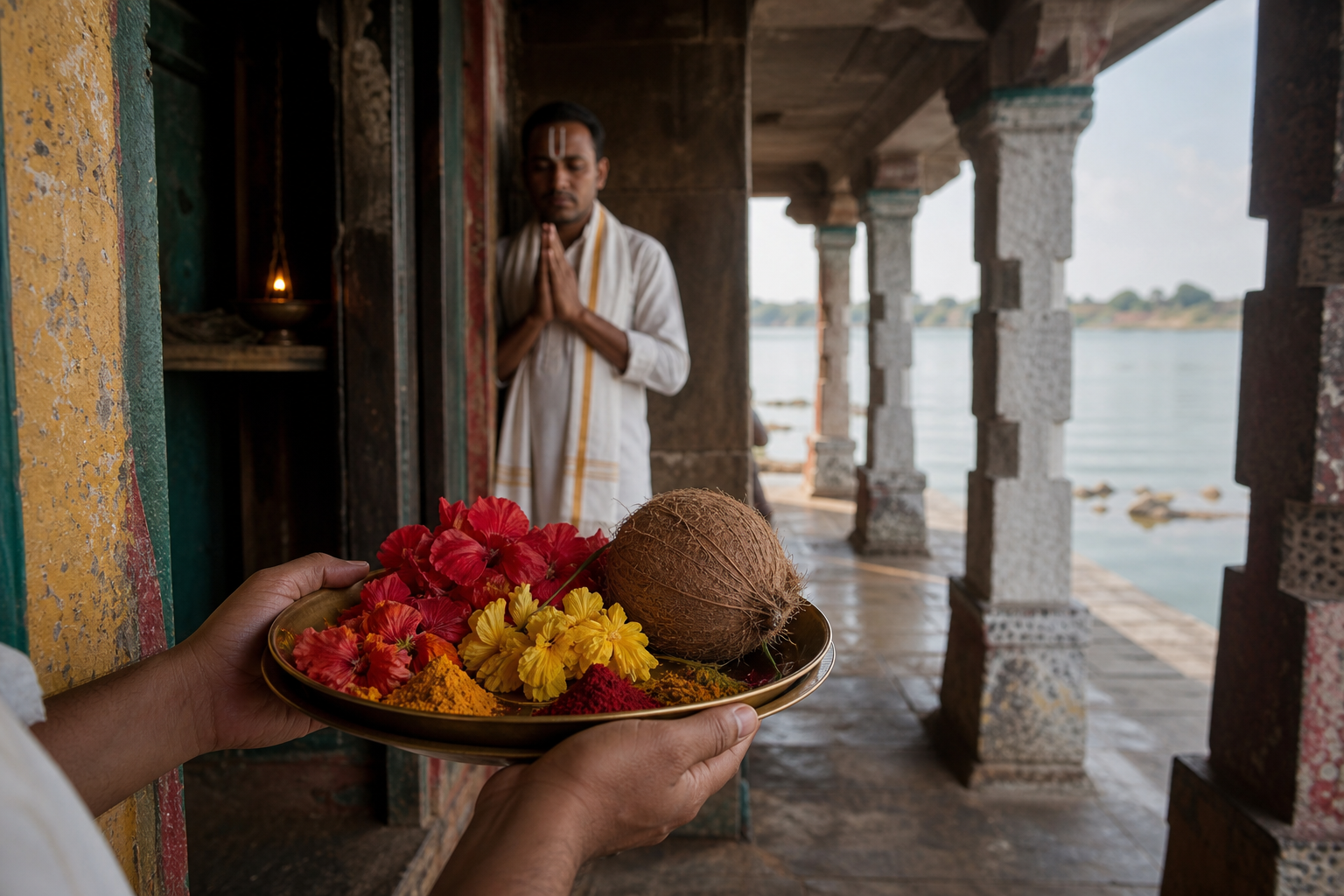
- Ask before taking photographs, especially near sanctums, rituals, devotees, or temple personnel. Permission at one shrine does not establish permission at the next.
- Keep your phone from directing the visit. Complete darshan and understand the setting before deciding whether a photograph is appropriate.
- Do not block queues, entrances, ritual movement, or a devotee’s line of sight while studying architecture.
- Listen respectfully to local histories and explanations, but ask questions at a suitable moment rather than during prayer or temple duties.
- Treat the Krishna riverbank as sacred space. Carry away what you bring and do not turn a contemplative pause into noise for everyone nearby.
Before you leave, write down three things: your two essential temples, your preferred optional shrine, and the devotional intention you will carry. Then confirm the current practical details locally. If all five temples fit without hurry, let the circuit expand. If they do not, complete fewer visits well and return for the rest. A pilgrimage is not diminished because you refused to rush it.
References
